Items Similar to Georgian Memorial or Mourning Portrait, Thomas Hudson, 1765
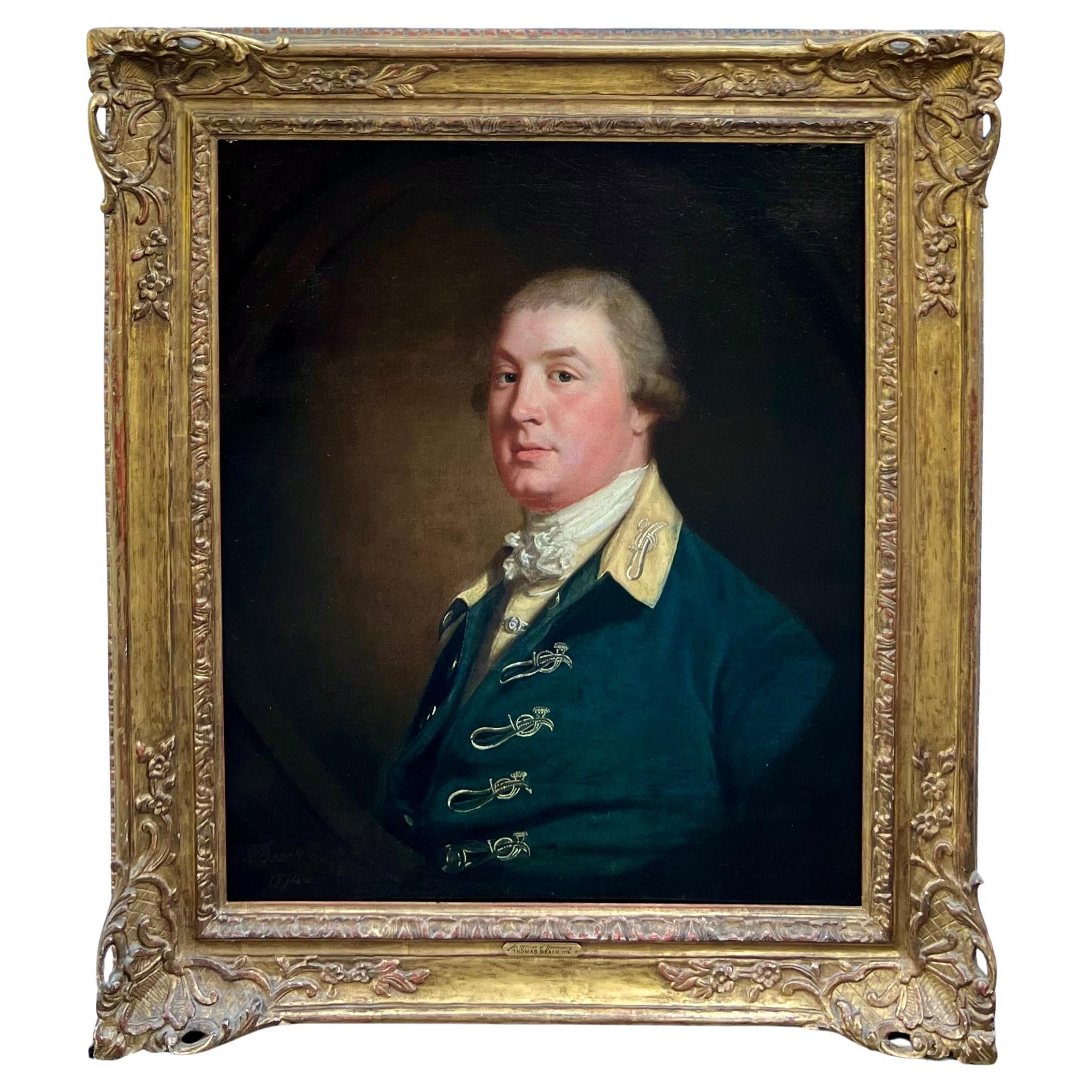
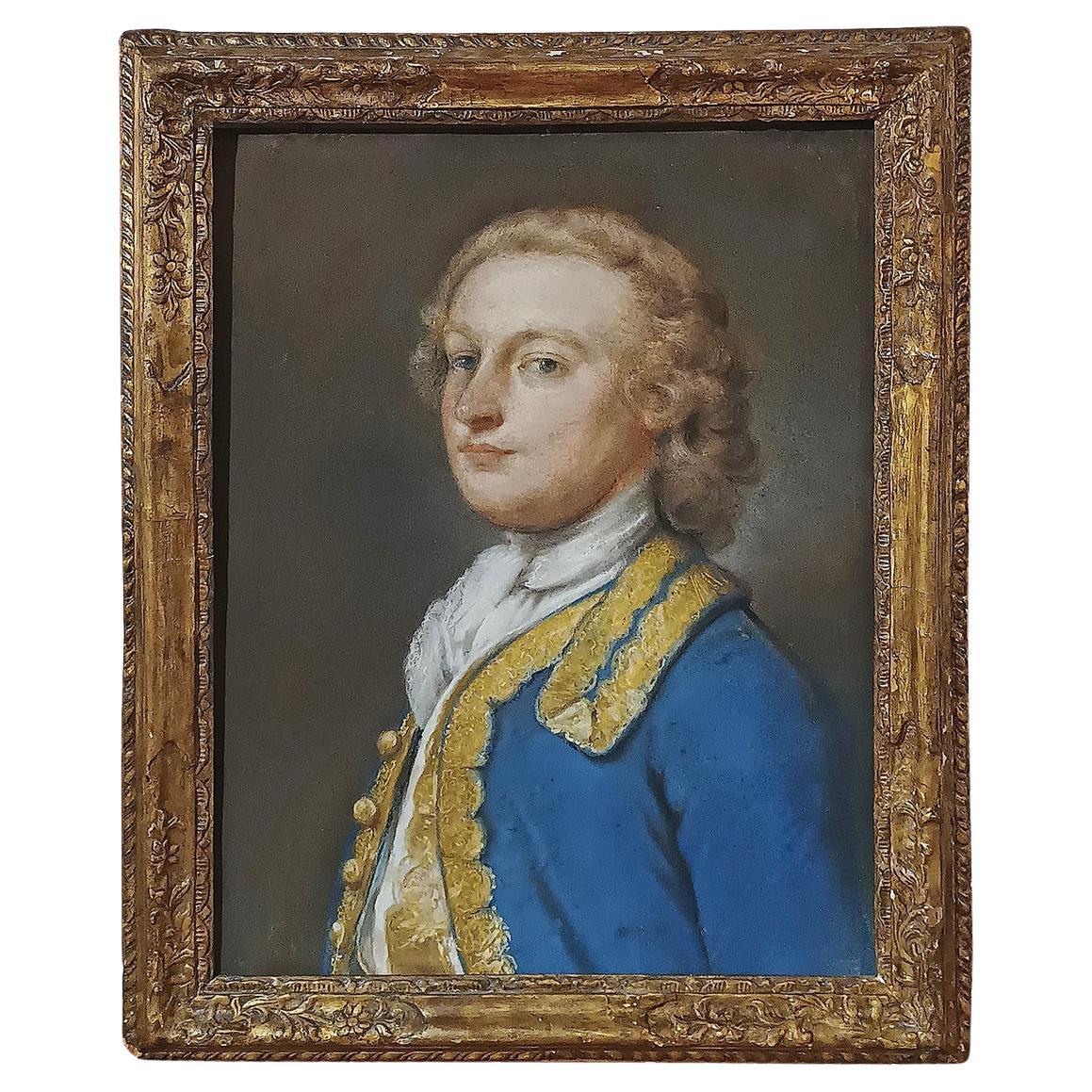
Want more images or videos?
Request additional images or videos from the seller
1 of 16
Georgian Memorial or Mourning Portrait, Thomas Hudson, 1765
$6,875
£5,238.88
€6,041.87
CA$9,764.56
A$10,491.47
CHF 5,628.65
MX$123,601.62
About the Item
Exceptional English George III period neoclassical memorial or mourning portrait of a gentleman attributed to famed London portraitist Thomas Hudson (1701-1779) depicting 'Edward Longdon' in architectural roundel resting on a plinth with a passage from Edward Young's poem 'Night Thoughts' and marble urn at lower right with the deceased's name, 5 April, 1765 death date, and his age of 38. Edward Longdon is listed as a successful London 'cordwainer' (Shoemaker) who died unmarried in his will, the original of which is in the Wiltshire and Swindon History Centre in Chippenham; a copy of the will be provided with the painting to the respective buyer and an optional modern giltwood frame should it be desired that measures 41.25" x 33.25" x 1.75".
Additional search terms: Neoclassical, classical, painter, old master, baroque, country house, grand tour
- Attributed to:Thomas Hudson (Artist)
- Dimensions:Height: 36 in (91.44 cm)Width: 27.75 in (70.49 cm)Depth: 0.75 in (1.91 cm)
- Style:George III (Of the Period)
- Materials and Techniques:
- Place of Origin:
- Period:
- Date of Manufacture:circa 1765
- Condition:Wear consistent with age and use.
- Seller Location:Kinderhook, NY
- Reference Number:1stDibs: LU1002115389882
About the Seller
5.0
Vetted Professional Seller
Every seller passes strict standards for authenticity and reliability
Established in 2012
1stDibs seller since 2013
160 sales on 1stDibs
Typical response time: <1 hour
- ShippingRetrieving quote...Shipping from: Kinderhook, NY
- Return Policy
More From This Seller
View AllPortrait of Louis George, Margrave of Baden-Baden, Oil on Canvas, Circa 1725
Located in Kinderhook, NY
A circa 1725 oil on canvas portrait of Louis George Simpert, as Hereditary Prince, the future Margrave of Baden-Baden (Deutsch: Ludwig Georg Simpert, Markgraf von Baden-Baden) portrayed one-quarter length in powdered wig and wearing ceremonial armor and crimson sash newly fitted in a period molded giltwood frame with bead-and-reel inner border from the Eli Wilner collection. Canvas measures 24.5" x 19.25". A related, but later portrait of circa 1735, attributed to the same unknown painter, is held in the collection of Lichtenthal Abbey, Baden-Baden.
Biography:
Louis George or Ludwig Georg Simpert, Margrave of Baden-Baden, born June 7, 1702 at Ettlingen Palace was the son of Louis William, Margrave of Baden-Baden and his wife, Princess Sibylle of Saxe-Lauenburg. Hereditary Prince of Baden-Baden from birth, at the death of his father in 1707, he succeeded as Margrave of Baden-Baden at the age of four. As such, his mother was regent of Baden-Baden until he reached his majority on 22 October 1727 at the age of 25. He married Maria Anna of Schwarzenberg April 8, 1721 at Český Krumlov Castle. The couple were the parents of four children, of whom only one survived infancy. After the death of the first Maria Anna in 1755, he married the Princess Maria Anna Josepha of Bavaria on July 10, 1755; the daughter of Charles VII, Holy Roman Emperor and his Austrian wife Archduchess Maria Amalia. The second marriage remained childless. Due to his passion for hunting instead of military service, he became known as "Jägerlouis", "hunter Louis", a play on his father's nickname of Türkenlouis ("Turk Louis") due to his famous heroics against the Turkish army at the Siege of Vienna...
Category
Antique Early 18th Century German Baroque Paintings
Materials
Canvas, Wood, Giltwood, Paint

Armorial Portrait Painting of a Nobleman, the Netherlands, circa 1760
Located in Kinderhook, NY
Exceptional quality oil on canvas portrait painting of a bewigged Dutch statesman in armour having architectural background of ancestral seat with heraldic crest at lower left. Later...
Category
Antique Mid-18th Century Dutch Baroque Paintings
Materials
Canvas, Paint, Wood
Portrait of
Mr. Bell
Attributed to Sir Godfrey Kneller, circa 1720
By Sir Godfrey Kneller
Located in Kinderhook, NY
An exquisite circa 1720 English George I period "Kit-kat" style portrait firmly attributed to royal court painter Sir Godfrey Kneller (8 August 1646 – ...
Category
Antique Early 18th Century English Baroque Paintings
Materials
Canvas, Wood, Paint
Portrait Painting of a Bewigged Gentleman, Prague, circa 1780
Located in Kinderhook, NY
A fine quality circa 1780 oil on canvas portrait painting of a gentleman in powdered wig, coat, waistcoat, and frilled shirt housed in a period giltwood frame having bead and lamb's tongue design. Red wax seal collection...
Category
Antique Late 18th Century Austrian Paintings
Materials
Canvas, Giltwood, Paint
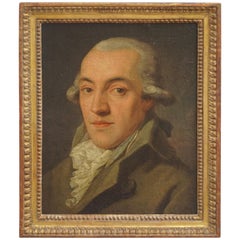
Portrait of a Gentleman with Piercing Blue Eyes, School of Raeburn, circa 1820
By Sir Henry Raeburn
Located in Kinderhook, NY
An exquisite circa 1820 Regency period portrait in the manner of Scottish royal portraitist Sir Henry Raeburn (4 March 1756 – 8 July 1823) of a...
Category
Antique Early 19th Century British Regency Paintings
Materials
Canvas, Wood, Birdseye Maple, Paint
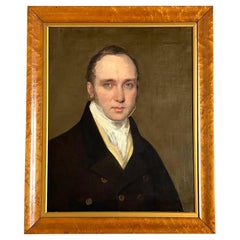
English Oil Painting of Horse and Groom Attributed to Ben Marshall, circa 1805
Located in Kinderhook, NY
A stunning circa 1805 English equestrian oil on canvas painting firmly attributed to prominent late-Georgian period artist Benjamin Marshall portrayi...
Category
Antique Early 19th Century English Regency Paintings
Materials
Giltwood, Canvas

You May Also Like
Portrait of a Gentleman, Oil on Canvas
Located in London, by appointment only
Oil on canvas
Portrait of a gentleman
18th century
Measures: Portrait framed 56 x 43 and 51 x 38.5.
Category
Antique 18th Century European Georgian Paintings
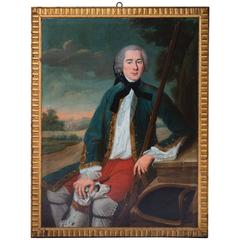
18th Century French Oil Painting of Nobleman
Located in Scottsdale, AZ
18th Century French Oil Painting of a Nobleman. Beautiful piece purchased in France. Age appropriate piece, see detailed photos or message us with details. Excellent condition.
Category
Antique 18th Century French Louis XVI Paintings
Materials
Giltwood, Paint
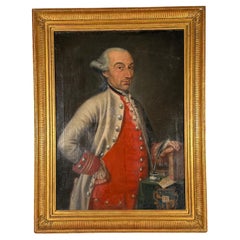
$2,800 Sale Price
20% Off
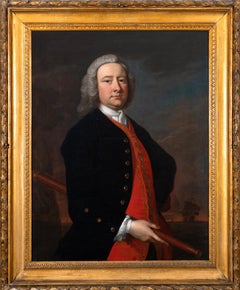
Portrait of a senior naval officer, c. 1750s
By Thomas Hudson
Located in Henley-on-Thames, England
Thomas Hudson (Devon 1701 - London 1779)
Portrait of a senior naval officer, c. 1750s
Probably a captain or admiral; half-length, holding a telescope, with a warship beyond
Oil on canvas
91.3 x 71.1 cm.; (within frame) 114.3 x 93.8 cm.
(Unsigned)
Provenance:
Christie’s, London, 22 November 1985, lot 105 (as Thomas Hudson);
Private collection, United Kingdom;
Haynes Fine Art, Broadway, Worcestershire;
Where acquired, private collection, United States, 16 August 1988;
Neal Auction, New Orleans, 14 September 2025, lot 302 (as Attributed to Thomas Hudson);
Where acquired by Haveron Fine Art.
Literature:
Bridgeman Art Library, The Bridgeman Art Library (London: The Library, 1995), p. 89
Christie’s, London, Important English Pictures (London: Christie’s, 22 November 1985)
Archival:
Witt Library, Courtauld Institute of Art (no. 061487);
Heinz Archive and Library, National Portrait Gallery, 1725-50, Thomas Hudson: Men Authentic (1) (Box)
This attractive and quintessential half-length is exemplary of Hudson’s leading portrait practice, produced at the height of his decade-long dominance over the London market beginning in 1749. Typical of Hudson's 1750s output, the portrait was likely made after his five-week visit to Rome and Naples, and bares the stylistic merits of this continental excursion. Indeed, the trip seemed to fortify a gradual refinement of Hudson’s technique: namely the emphasis of directional brushstrokes, which sensitively follow the contours of the facial features. The resulting feathery quality is combined here with a striking chiaroscuro effect, which Hudson borrowed directly from Rembrandt. Amalgamating the rich colouring of the Rococo with a mannered Baroque posing, Hudson renders the senior naval officer with a characteristic presence.
Resting one hand assuredly at his hip, the finely worked telescope illustrates the officer’s seniority; the warship sailing on the horizon beyond provides further indication of his commanding rank. The telescope is held by a hand modelled with sculptural poise, and the typically Van Dyck manner (seen elsewhere, e.g. Princess Amelia Sophia Eleonore of Great Britain, YCBA B2001.2.246) further illustrates Hudson's studied grounding. Despite the apparent stylistic placement of the work, an earlier date is possible, since the officer wears civilian clothes and not the naval officer’s uniform first introduced in 1747 (which officers afterwards invariably chose to be shown in). The officer has previously been suggested as Edward Henry Sartorius, of the prominent naval Sartorius family; however, this identification is improbable on biographical and documentary grounds.
Hudson was regularly commissioned by leading naval officers, and produced highly satisfactory portraits praised for their great likeness and genteel swagger. He charged 24 guineas for a standard 50 x 40 inch half-length in the 1750s period, and the present work (somewhat smaller in size) would have cost not much less. Comparable works include those of Admirals of the Fleet George Anson, 1st Baron Anson, and Sir John Norris; Admiral Sir George Pocock; Admiral Sir Peter Warren; Vice-Admiral The Honourable John Byng; and Rear-Admiral Richard Tyrrell. The present portrait is particularly similar in composition to Hudson’s Portrait of a Flag Officer of The White Squadron, which similarly employs the narrative device of a telescope held at a dynamic angle across the composition, with a warship to the left side of the officer’s retracted arm.
Thomas Hudson (Devon 1701 - London 1799)
Thomas Hudson rose to become the leading British portraitist of the mid-18th century, albeit in close competition with his Scottish counterpart Allan Ramsay. Born in Devon, Hudson studied alongside George Knapton under Jonathan Richardson the Elder (marrying his daughter in 1725, expressly against Richardson’s wishes), and inherited a dignified formality jointly derived from Van Loo. His work is first recorded in 1728, and between 1730-40 he practised in Bath and the West Country, where in addition to portrait commissions, he was employed to retouch and reline old pictures. He returned permanently to London thereafter, and devised a series of stock poses to which he would return with variation throughout his career. Beginning in 1745 with the death of Richardson and the departure of Van Loo, Hudson became the city’s most successful portraitist, and embarked on ambitious defining works such as his Portrait of Theodore Jacobsen ‒ not drastically unlike the continental heights of Pompeo Batoni in conception. Profiting from his success, he relocated from Lincoln’s Inn Fields to a house in Great Queen Street previously inhabited by Van Loo, and one door down from Kneller’s old rooms. An exceptionally productive period began in 1749 which lasted until the late 1750s. Among this output were highly praised portraits of the Prince and Princess of Wales, commissions for most of the preeminent aristocrats, and superlative group portraits including Benn’s Club of Aldermen, and those of the Thistlethwayte, Marlborough and Radcliffe families.
Hudson relocated to King Street, Covent Garden, operating a prolific studio operation which resulted in some four hundred paintings ‒ of which at least eighty were engraved. A prodigious assembly of young pupils included Sir Joshua Reynolds (1740-3), Joseph Wright of Derby (1751-3, 1756), Richard Cosway, John Hamilton Mortimer, and the drapery painters Joseph and Alexander van Aken (also employed by Ramsay). As one later reviewer expressed: ‘Hudson, his art may well display to sight / Who gave Mankind a Reynolds and a Wright’ (Miles, ‘Introduction’). The ambitious young Reynolds made many drawings from classical statuary under Hudson’s instruction, and wrote home that, ‘While doing this I am the happiest creature Alive (sic.)’ (Sweetser, p.12). However, he was later dismissed from his pupilage some two years prematurely for refusing to carry a painting to Van Aken’s studio in the rain. It was at this point that Reynolds returned to Plymouth (Devonport), and produced some thirty portraits of the local gentry (including one example presently owned by Haveron Fine Art).
Hudson was one of a number of artists who congregated in Old Slaughter’s Coffee House, alongside Hogarth, Ramsay, Hayman, and Rysbrack. Together they supported Thomas Coram’s Foundling Hospital, of which they each belonged to the 600 governors (in whom Hudson met many of his future clients), and promoted the building as London’s first public space of artistic exhibition. He visited the Netherlands and France for five weeks in 1748 accompanied by St Martin’s Lane colleagues, and was arrested with Hogarth for making drawings of the Bastille fortifications. He afterwards stayed in Rome and Naples in 1752 with Roubiliac, meeting Reynolds twice on the return journey. He returned to England and bought a house at Cross Deep, Twickenham (upstream from Pope’s villa), and made an effective museum of the space. He lived there with his second wife, a wealthy widow named Mrs Fynes. Having been involved with early attempts to establish a royal academy of the arts, Hudson exhibited at the Society of Arts in 1761 and 1766, although he had effectively retired from painting by the latter date. His last painting was in 1767, and he died at Twickenham in January 1779 aged seventy-eight.
Hudson was also exceptional for the extensive collection of artworks which he amassed during his lifetime. The collection was thoroughly impressive in extent, and included outstanding Old Masters: Breughel, Canaletto, van Dyck, Hals, Holbein, Kneller, Lely, Michelangelo, Parmigianino, Poussin, Raphael, Rembrandt, Rubens, Tintoretto, Titian, Vasari, and Velázquez. His earliest recorded purchase was in 1741, and he spent heavily at the sale of his father-in-law, even buying works jointly with Van Aken. Likewise, at the posthumous 1750 sale of Van Aken, Hudson spent £215 on the second day (nearly half that day’s sale total). As a pupil, Reynolds had been sent to bid for Hudson in Lord Oxford’s sale of 1742, and proudly recalled having been greeted with a handshake by Hudson’s friend Pope at another picture sale. Hudson also collected extensively from within his own generation, acquiring works by contemporaries including Gainsborough, Reynolds, Richardson, Rysbrack, Vanderbank, and his predecessor Van Loo. Following his death, the works were dispersed in two sales at Messrs. Langford, with the finer works sold at Christie’s in 1785 after the death of his second wife. However, his connoisseurship was not without flaw ‒ having outbid Benjamin Wilson for a Rembrandt drawing, Wilson etched and printed a new ‘Rembrandt’ plate...
Category
1750s Old Masters Portrait Paintings
Materials
Oil
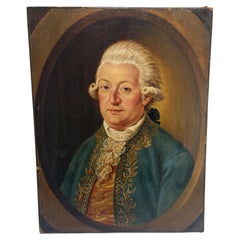
Fine Quality 18th Century Continental School Portrait of A Nobleman
Located in Atlanta, GA
This refined oil on canvas portrait captures a distinguished gentleman in half-length, presented within an illusionistic oval reserve against a darkened background. The sitter, portr...
Category
Antique 18th Century British Louis XVI Paintings
Materials
Canvas, Paint
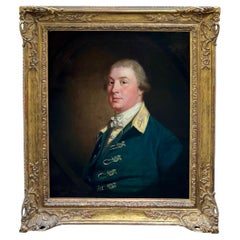
"Portrait of a British Officer" by Thomas Beach
By Thomas Beach
Located in Wiscasset, ME
A very fine portrait of a British military officer signed and dated Thomas Beach 1774 in the lower left. This oil on canvas is presented in a period gilt frame and is ready to hang....
Category
Antique 1770s English American Colonial Paintings
Materials
Paint
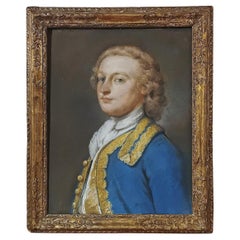
LATE 18th CENTURY PASTEL PORTRAIT OF A GENTLEMAN
Located in Firenze, FI
Refined pastel portrait on canvas, framed in a carved and gilded wooden frame protected by glass. The painting depicts the face of a gentleman, half-length, dressed in period attire....
Category
Antique Late 18th Century Italian Neoclassical Paintings
Materials
Canvas, Wood, Crayon
More Ways To Browse
Antique Georgian Portrait
Oil Painting Belgian 18th Century
Thayer Painting
Tiger Painting Midcentury
William A Drake
1960s Italian Oil
19th Century Hunting Paintings
Antique Chinese Ancestor Portrait
Apostles Painting
Bulgarian Artists
Byron Galvez
Edwardian Oil Paintings
Four Seasons Wall
Fragonard Painting
Francois Gerard
French Griffon
Italian Painting 1800
Large Kpm Plaques