Canvas Paintings
to
1,189
5,239
2,919
7,452
765
314
Height
to
Width
to
1,194
1,032
205
169
151
150
96
60
60
57
33
31
29
28
28
21
12
10
674
1,577
5,200
1,079
734
1,832
1,638
80
48
128
119
127
262
440
455
279
221
9,172
8,531
8,260
6,510
2,904
4,384
2,681
2,371
1,332
764
8,531
8,486
8,511
37
30
24
18
16
Material: Canvas
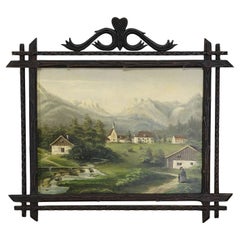
19th Century Alpine Landscape Oil Painting with Tyrolian Mountain Village
Located in Berghuelen, DE
19th Century Alpine Landscape Oil Painting with Tyrolian Mountain Village
The antique oil painting captures the charm of an Alpine landscape, featuring a picturesque Tyrolean mounta...
Category
Late 19th Century German Biedermeier Antique Canvas Paintings
Materials
Canvas, Wood
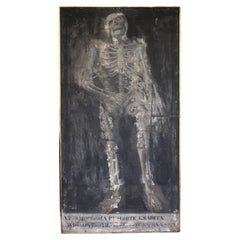
Early 19th Century Italian School Memento Mori Oil on Canvas Welcome Death
Located in Lowestoft, GB
A almost life size depiction of a human skeleton holding a length of chain, with a banner at the base.
We believe the piece to be Italian from the language used within the banner, ...
Category
19th Century Italian Antique Canvas Paintings
Materials
Canvas
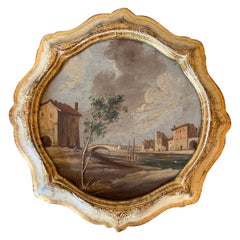
Vintage Italian Capriccio Framed Oil on Canvas Painting of Landscape With Ruins
Located in Elkhart, IN
A gorgeous Grand Tour style framed oil painting of an Italian Capriccio landscape with ruins
Italy, Mid-20th Century
Oil on canvas, gilt frame
Measures: 9.5"W x 1"D x 9.5"H.
Exce...
Category
Mid-20th Century Italian Grand Tour Canvas Paintings
Materials
Canvas, Giltwood, Paint
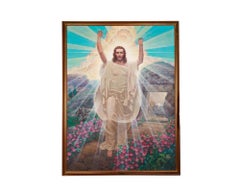
Ralph Pallen Coleman (American 1892-1968) A Monumental Painting of Jesus Christ
Located in Long Island City, NY
Ralph Pallen Coleman (American 1892-1968) A Monumental Painting of "The Resurrection of Jesus Christ", circa 1940.
Measuring 102" high x 77" wide (framed), this massive oil on canv...
Category
19th Century North American Antique Canvas Paintings
Materials
Canvas, Paint

$24,000 Sale Price
50% Off
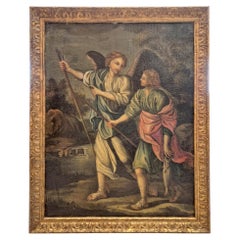
17th Century Oil-on-Canvas "The Archangel Raphael with Tobit"
Located in NICE, FR
The Archangel Raphael and Tobias, 17th-Century School
Oil on canvas
This 17th-century painting depicts one of the most renowned episodes from the Book of Tobit: the young Tobias, ac...
Category
Mid-17th Century Italian Baroque Antique Canvas Paintings
Materials
Canvas
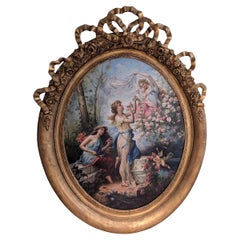
Fabulous Large original oil painting of maidens by Hans Zatzka 1859-1945
By Hans Zatzka
Located in Long Island City, NY
Large original painting of maidens by Hans Zatzka
A Fabulous And All Original Oil Painting On Canvas By Hans Zatska.(Austrian1859-1945) In untouched condition this painting is top q...
Category
Late 19th Century Austrian Antique Canvas Paintings
Materials
Canvas, Giltwood, Paint
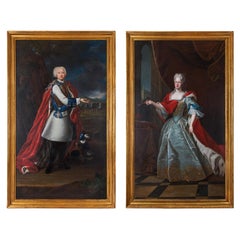
Pair of French 18th Century École Française Oil on Canvas Portraits
Located in West Palm Beach, FL
An extraordinary and monumental pair of 18th century École Française Oil on Canvas portraits of Marie-Josèphe of Habsbourg of Austria (1699-1757), wife of Frederick Augustus II of Saxony, Elector of Saxony, and of their son Frederick IV of Saxony (1722-1763), bearing the Imperial and Royal Order...
Category
18th Century French Antique Canvas Paintings
Materials
Canvas, Giltwood
Late 20th Century Abstract Expressionism Modern Art Painting signed
By (after) Mark Rothko
Located in Chula Vista, CA
For your consideration, an abstract expressionism modern art painting signed M Chavez.
Geometric art abstract expressionism painting. Oil on canvas board. In the style of Mark Rothko...
Category
Late 20th Century Mexican Expressionist Canvas Paintings
Materials
Canvas, Acrylic
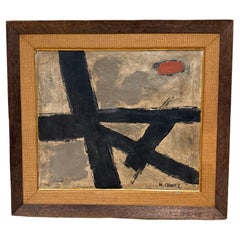
John David Rigsby Abstract Mixed Media on Canvas, American 1960
Located in Hudson, NY
A handsome and sophisticated mixed media on canvas by American artist John Rigsby. Found in a original state of preservation. His works are few and far between.
The following biography was submitted by John David Rigsby, Jr., son of the artist. The author is Lisa Rigsby Peterson, daughter of the artist, and owner of the copyright of the biography.
John David Rigsby was born on October 10, 1934, the seventh child of an Alabama Depression-era sharecropper's son. He and his family moved frequently, from one one-room structure to another, often with no running water, no plumbing, no heat but the stove. His father was killed in a car accident when Rigsby was just 9 years old. Life for the remaining eight family members proved tumultuous and difficult -- food wasn't plentiful, nor money. The family moved from place to place, following work -- Rigsby attended 30 different schools before graduating from high school. Despite living in poverty, Rigsby demonstrated academic and artistic aptitude at a young age. Two oil paintings on covers ripped off of old books that he painted when he was eight years old show the promise of an imaginative and gifted eye.
Rigsby was drafted by the U.S. Army in 1953. As he later wrote, "When basic training at Fort Jackson, South Carolina, was over, I was told to go out and find a job. Jasper Johns was painting visual aids for the 28th Regimental Headquarters. He suggested the Band Training Unit." Rigsby played the clarinet in that unit, and after 2 years of service, he enrolled at the University of Alabama on the G.I. Bill to study art. After just two years, he left school and followed his mentor (and one of the greatest and longest-lasting influences on his art), Japanese artist and U of A art instructor Tatsu Heima, to New York City. Heima introduced him to Isamu Noguchi and suggested that Rigsby work as Noguchi's assistant. Instead, Rigsby chose a job as a guard at the Metropolitan Museum of Art, since "the notion of seeing all of that art appealed more to me than the boring task of studio assistant." The opportunity was a rich one for Rigsby. He had a chance to study the masters, and cited Rembrandt with his simplicity and elegance as another of the most important influences on his work.
In the years between 1957 and 1963, when Rigsby eventually earned his BFA in sculpture, the artist traveled back and forth between New York and Tuscaloosa, alternating study with forays into the fertile New York art scene. Rigsby exhibited some of his early sculpture work in 1958 at a small New York gallery, which was also exhibiting the work of Willem and Elaine de Kooning and Theodore Stamos. Shortly thereafter, searching for an educational venue closer to New York City, Rigsby visited New Haven, Connecticut, and spent an afternoon speaking with Josef Albers at Yale. Albers agreed to accept Rigsby into the Yale program on the condition that he take freshman drawing all over again. A brilliant opportunity, but, in Rigsby's words, "When it was time to register, I was hitchhiking back to Alabama, looking for food and shelter."
Rigsby had his first one-man show at the University of Alabama in 1959. A visiting critic from New York, J.F. Goosen, reviewed the show and wrote "here is a talent which produces art because that is the thing for a gifted person to do. In his effortless ease of conception and execution, he has already achieved a goal that eludes many artists for a lifetime." Finally, in 1963, Rigsby received his degree in sculpture, dissolved a short-lived marriage, visited his family, packed up his car and headed permanently for New York. That year, his work was included in a group show at the Delgado Museum in New Orleans - which led to a one-man exhibit at the Delgado in 1964. During 1964, Rigsby took drawing classes at Columbia University, and worked at the General Post Office at night. He met his future wife, Linda Palmieri, and married. In 1965, his daughter Lisa was born, followed in 1966 by the birth of his son, John David Jr.
In 1966, Rigsby had a successful one-man show at the Pietrantonio Gallery in New York. Shortly thereafter, he and the family moved to Tunis, Tunisia at the suggestion of a colleague, who urged him to "come paint by the light of Klee." Rigsby worked for the United States Information Agency as a teacher, and he spent the next year and a half painting over ninety paintings inspired by the smells, light, and Phoenician and Roman art surrounding him. He also executed a number of character and landscape drawings, capturing the Tunisian way of life. During his time in Tunisia, Rigsby's work was shown there in two major exhibits.
Upon the family's return to the U.S. in 1968, Rigsby once again exhibited at the Pietrantonio Gallery. Later that year, Rigsby enrolled in Southern Connecticut State College's Urban Studies program, earning a master's degree in 1970. During his time at SCSU, Rigsby worked as the city of Bridgeport's Curator of Exhibits, driving a mobile art gallery from schools to neighborhood fairs and housing projects. After completing his degree, Rigsby had an exhibit at the Telfair Museum in Savannah, Georgia. This exhibit caught the attention of a member of the search committee looking to hire an artist for a newly-developed program in neighboring South Carolina.
In 1970, Rigsby was selected as the first Artist-in-Residence in the state of South Carolina for the National Endowment for the Arts Artists in Schools program. His work with the newly-integrated students at Beaufort (SC) High School over the term of his residency precluded substantial work on his own art. He did, however, set up a studio in downtown Beaufort, and was able to create a modest number of paintings, which were included in exhibits at the Columbia Museum in South Carolina in 1971 and Yale University in 1973.
At the end of his residency in 1974, Rigsby was named the National Visual Arts Coordinator of the Artists in Schools program for the NEA, a post he held for two years. In this position, Rigsby traveled the country, reviewing grant applications, meeting with state leaders in government, education and the arts to promote program concepts and explore local opportunities. The message he repeated over and over again echoed that of one of the other major influences on Rigsby as an artist - Ruth Asawa Lanier, whose words taught him that all of the work that the artist does is the artist's work, not simply the paintings he creates. In his capacity as National Coordinator, as well as many times in the future, Rigsby stressed that artists function in the same way as any other person in society, and deserved the same respect and place for their work as did all other professions. After two years traveling the country, Rigsby was ready for a change, saying "for the first time in my adult life, there was not a body of paintings to show for the years put into my work."
In 1976, a summer retreat to the mountain community of Central City, Colorado, led to a permanent relocation. Eventually settling in the small town of Evergreen, Rigsby followed his own advice about artists becoming actively involved in their communities, and he established the Evergreen Visual Arts Center. The Center provided working space for artists, classes for adults and children, and, most importantly, a place for Rigsby to create his own work. Buoyed by the opportunity to concentrate once again on his art, and inspired by his new surroundings, Rigsby entered an extremely prolific period in his career. In 1977, he organized a traveling exhibition of his paintings, which showed at the Kimball Arts Center in Utah, the Kennedy Center in Washington, D.C., and the Arvada Center in Colorado.
1978 brought more exhibits, notably in Aspen and Denver, as Rigsby's work continued. He took an extended trip to visit his mentor, Tatsu Heima, in Japan, where he climbed Mt. Fuji, followed by travels to Tehran, Delhi, and several European countries. He chronicled his impressions from his travels in a small collection of paintings upon his return to the U.S. - the beginning of a practice which would continue through the rest of his life. In 1979, Rigsby's marriage failed, and at the same time he lost the lease to his Evergreen studio to redevelopment plans. In response to the personal chaos around him, Rigsby began a series of what he called "hard-nosed process paintings," the watercolor paintings of dots which marked his work from this period. The paintings gained him an NEA Individual Artist grant in 1980, as well as a Yaddo fellowship in 1981. The polka dot paintings were followed by a series of cupcake-like images, again examining space and color.
During the early 1980s, Rigsby lived in a suite of old dentists' offices in a rundown part of Denver, with a studio in an area that reminded him of the Bowery in New York. In 1984, Rigsby founded the Progreso Gallery in the building where he lived, using the space both to show his own work and also to mount shows of the work of many Colorado artists. The gallery also served as a focal point for Denver's local arts community, hosting weekly discussion groups and classes. In 1984, Rigsby traveled to the Baja Peninsula and then in 1985 to Yugoslavia. After each sojourn, Rigsby returned to create vibrant and explosive paintings based on his experiences, showing them at his Progreso gallery and another alternative gallery in Denver, the Edge Gallery. The economic recession of the mid-eighties hit the art market and Rigsby hard, however, and although he continued to create new works of art, major exhibitions were difficult to come by.
In 1987, Rigsby decided to leave Denver and spent six months in Barcelona, Spain. It was an electrifying trip for him. Rigsby wrote of that time:
"The streets alone are a visual feast, and the additions of museums from Saarinen, Picasso and Miro to 12th century icons produced artistic indigestion. My paintings are always about the way things look and feel. Barcelona was a time machine extending those sensory and emotional concerns back to the Middle Ages. I felt the need to reduce my work to essential elements of color, scale, drawing and format. The [resulting] color studies speak eloquently for themselves, and in doing so, redefine all of the work I've done in the past 35 years of painting."
Rigsby completed over a hundred paintings while in Barcelona - color studies, street portraits of the characters he encountered on a daily basis, and a number of dark landscape paintings. He found time to run with the bulls in Pamplona, and began writing stories about his adventures that were later published.
Upon his return to Denver in 1988, Rigsby continued to explore the alter egos of the color studies - he concentrated on a series of dark paintings, all prominently featuring back. He commented about these black paintings that he " decided it was time to explore the perception of the eye and physical space as defined by low -light conditions…I find these paintings elegant, joyous and light-filled, with no feeling of heaviness at all." In mid-1988, Rigsby moved permanently to Houston, Texas, where he would spend the last five years of his life.
Once in Houston, Rigsby made a discovery that would serve as the inspiration and material for some of the last works of his career. In 1989, he discovered a salvage yard filled with scrap rubber, and he began working on black rubber sculptures, as well as paintings with rubber elements incorporated. He made strong connections in the Houston alternative arts scene, and became a regular contributor and art critic for a local weekly newspaper, The Public News. From 1989 through 1992, he exhibited his sculptures and paintings at Houston's Brent Gallery, Fountainhead Gallery, and Blaffer Gallery. He also produced an installation of his rubber sculptures on the roof of the Diverse Works Gallery in Houston. 1992 also marked Rigsby's return to Denver when he exhibited his sculptures at the Payton-Rule Gallery in Denver, leading to an Absolut Rigsby commission by Carillon Importers.
The 1990s were a tremendous struggle for Rigsby, with financial crises compounded by physical trauma (he accidentally sawed off the top joint of the index finger of his left hand while working in his studio). Although his work was being shown, it wasn't selling, and the tremendous financial pressure he felt weighed heavily upon him. He spent an increasing proportion of his time going to flea markets and garage sales, rehabilitating and repairing the things he bought there, and then re-selling them simply to raise enough money to keep a roof over his head. He had little time to paint or sculpt, the things in life that had always, no matter what the circumstances, brought him joy.
Rigsby's final works were a series of intricate paintings and drawings on used books that he purchased at the flea market. Most of these drawings, which he referred to as sculptural form drawings, were executed on page after page of science texts, music books, and a Korean bible and fill hundreds of pages. Additionally, Rigsby created an exquisite book he titled 28 de los Angeles, in which his twenty-eight simple and elegant drawings of angels resonated with the influence of Rembrandt he had so admired in his early days. In a sense, Rigsby's final works, art created on used books which were the only materials he could afford, brought his work and life full circle from his childhood days. Rigsby's life, though begun and ended in adversity, was nonetheless illuminated and enriched by the irresistible impulse he had to create art and beauty.
John David Rigsby was killed in a one-car accident in Colorado in August, 1993.
Biography from the Archives of askART
Following is a review by Michael Paglia of the artist's July 2004 retrospective at the Denver Museum of Contemporary Art. It was submitted by John Rigsby, Jr., son of the artist.
There's a magnificent retrospective at Denver's Museum of Contemporary Art devoted to the work of the late John David Rigsby, who was a major powerhouse in Colorado's art scene. "Dots, Blobs and Angels" surveys more than forty years' worth of the remarkable artist's paintings and sculptures.
The year 1993 was strange, and by that I mean terrible. Many of the city's galleries closed because of bad economic times, and then the artists started dying. In a matter of a few months, Denver lost three significant artists: Rigsby, experimental photographer Wes Kennedy...
Category
1960s American Mid-Century Modern Vintage Canvas Paintings
Materials
Canvas, Paint
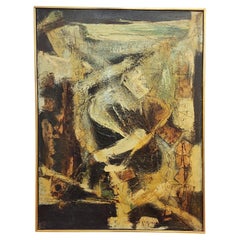
1970s Jaime Parlade Designer Hand Painting "Tiger" Oil on Canvas
Located in Marbella, ES
1970s Jaime Parlade designer hand painting "Tiger" oil on canvas.
Category
Late 20th Century Indian Canvas Paintings
Materials
Canvas
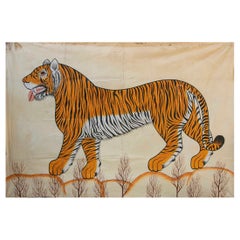
Large 1945 John Sennhouser Abstract Oil Painting On Canvas, Framed and Signed
Located in Miami, FL
Large 1945 John Sennhouser Abstract Oil Painting On Canvas, Framed and Signed
Offered for sale is a large 1945 John Sennhouser ((Swiss-American 1907-1978) abstract oil painting on ...
Category
Mid-20th Century American Mid-Century Modern Canvas Paintings
Materials
Giltwood, Paint, Canvas
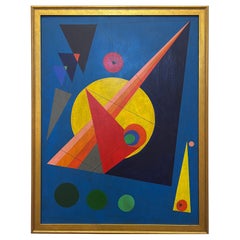
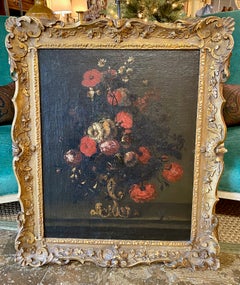
Old Master Floral Still Life Painting
Located in Pasadena, CA
This is a classic Italian late 17th century floral still life. Although the painting is not signed, it has all of the hallmarks of being created by a master painter. The painting and...
Category
Late 17th Century Italian Baroque Antique Canvas Paintings
Materials
Gold Leaf
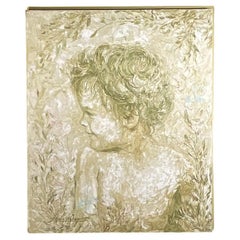
Lesver De Quiros A Cuban Postwar
Contemporary artist.
Located in Delray Beach, FL
Own a moment of timeless beauty with "Whispers of Innocence," an original oil painting on canvas by Cuban artist Lesver de Quiros ,that exudes tranquility and charm. This exquisite ...
Category
20th Century American Canvas Paintings
Materials
Canvas, Wood, Paint
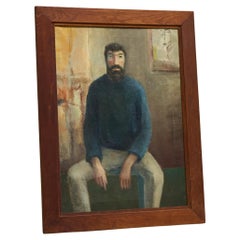
Portrait of a Sitting Man Oil and Tempera Paint on Canvas Belgium 1964
Located in Meer, VAN
Sitting Man Oil and Tempera Paint on Canvas Belgium 1964.
A large and very well painted portrait of a sitting man framed in solid oak - dated 1964.
Beautiful pose and very well cra...
Category
Mid-20th Century European Mid-Century Modern Canvas Paintings
Materials
Canvas, Oak, Paint
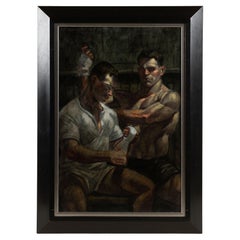
"The Boxers", Framed Oil on Canvas Painting, Mark Beard, US, 1995
Located in San Francisco, CA
The artist says this was one of the first paintings he created under the name Bruce Sargent (1898–1938). The Boxers is a striking double portrait of the ...
Category
Late 20th Century North American Canvas Paintings
Materials
Canvas, Wood
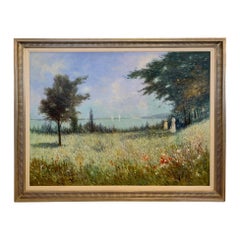
Monet Style Magnificent Large Landscape by James Llewelyn
Located in Hopewell, NJ
Magnificent large impressionist original landscape in the style of Monet, having two old fashioned ladies in white gowns strolling in a bucolic flower filled field with sailboats in ...
Category
1990s North American Canvas Paintings
Materials
Canvas
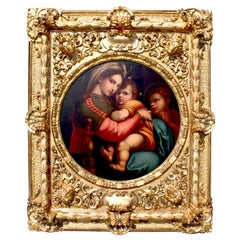
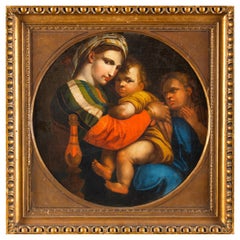
After Raffaello Sanzio 1483-1520 Raphael La Madonna della Seggiola Oil on Canvas
Located in Los Angeles, CA
A fine Italian 19th century oil painting on canvas "La Madonna della Seggiola" after Raphael (Raffaello Sanzio da Urbino 1483-1520) The circular canvas depicting a seated Madonna holding an infant Jesus Christ next to a child Saint John the Baptist, all within a massive carved gilt wood and gesso frame (all high quality gilt is original) which is identical to the frame on Raphael's original artwork. This painting is a 19th Century copy of Raphael's Madonna della Seggiola painted in 1514 and currently exhibited and part of the permanent collection at the Palazzo Pitti, Galleria Palatina, Florence, Italy. The bodies of the Virgin, Christ, and the boy Baptist fill the whole picture. The tender, natural looking embrace of the Mother and Child, and the harmonious grouping of the figures in the round, have made this one of Raphael's most popular Madonnas. The isolated chair leg is reminiscent of papal furniture, which has led to the assumption that Leo X himself commissioned the painting, circa 1890-1900.
Subject: Religious painting
Measures: Canvas height: 29 1/4 inches (74.3 cm)
Canvas width: 29 1/4 inches (74.3 cm)
Painting diameter: 28 1/4 inches (71.8 cm)
Frame height: 57 7/8 inches (147 cm)
Frame width: 45 1/2 inches (115.6 cm)
Frame depth: 5 1/8 inches (13 cm).
Raffaello Sanzio da Urbino (Italian, March 28 or April 6, 1483 - April 6, 1520), known as Raphael, was an Italian painter and architect of the High Renaissance. His work is admired for its clarity of form, ease of composition, and visual achievement of the Neoplatonic ideal of human grandeur. Together with Michelangelo and Leonardo da Vinci, he forms the traditional trinity of great masters of that period.
Raphael was enormously productive, running an unusually large workshop and, despite his death at 37, leaving a large body of work. Many of his works are found in the Vatican Palace, where the frescoed Raphael Rooms were the central, and the largest, work of his career. The best known work is The School of Athens in the Vatican Stanza della Segnatura. After his early years in Rome much of his work was executed by his workshop from his drawings, with considerable loss of quality. He was extremely influential in his lifetime, though outside Rome his work was mostly known from his collaborative printmaking.
After his death, the influence of his great rival Michelangelo was more widespread until the 18th and 19th centuries, when Raphael's more serene and harmonious qualities were again regarded as the highest models. His career falls naturally into three phases and three styles, first described by Giorgio Vasari: his early years in Umbria, then a period of about four years (1504–1508) absorbing the artistic traditions of Florence, followed by his last hectic and triumphant twelve years in Rome, working for two Popes and their close associates.
Raphael was born in the small but artistically significant central Italian city of Urbino in the Marche region, where his father Giovanni Santi was court painter to the Duke. The reputation of the court had been established by Federico III da Montefeltro, a highly successful condottiere who had been created Duke of Urbino by the Pope - Urbino formed part of the Papal States - and who died the year before Raphael was born. The emphasis of Federico's court was rather more literary than artistic, but Giovanni Santi was a poet of sorts as well as a painter, and had written a rhymed chronicle of the life of Federico, and both wrote the texts and produced the decor for masque-like court entertainments. His poem to Federico shows him as keen to show awareness of the most advanced North Italian painters, and Early Netherlandish artists as well. In the very small court of Urbino he was probably more integrated into the central circle of the ruling family than most court painters.
Federico was succeeded by his son Guidobaldo da Montefeltro, who married Elisabetta Gonzaga, daughter of the ruler of Mantua, the most brilliant of the smaller Italian courts for both music and the visual arts. Under them, the court continued as a centre for literary culture. Growing up in the circle of this small court gave Raphael the excellent manners and social skills stressed by Vasari. Court life in Urbino at just after this period was to become set as the model of the virtues of the Italian humanist court through Baldassare Castiglione's depiction of it in his classic work The Book of the Courtier, published in 1528. Castiglione moved to Urbino in 1504, when Raphael was no longer based there but frequently visited, and they became good friends. He became close to other regular visitors to the court: Pietro Bibbiena and Pietro Bembo, both later cardinals, were already becoming well known as writers, and would be in Rome during Raphael's period there. Raphael mixed easily in the highest circles throughout his life, one of the factors that tended to give a misleading impression of effortlessness to his career. He did not receive a full humanistic education however; it is unclear how easily he read Latin.
Early Life and Works
His mother Màgia died in 1491 when Raphael was eight, followed on August 1, 1494 by his father, who had already remarried. Raphael was thus orphaned at eleven; his formal guardian became his only paternal uncle Bartolomeo, a priest, who subsequently engaged in litigation with his stepmother. He probably continued to live with his stepmother when not staying as an apprentice with a master. He had already shown talent, according to Vasari, who says that Raphael had been "a great help to his father". A self-portrait drawing from his teenage years shows his precocity. His father's workshop continued and, probably together with his stepmother, Raphael evidently played a part in managing it from a very early age. In Urbino, he came into contact with the works of Paolo Uccello, previously the court painter (d. 1475), and Luca Signorelli, who until 1498 was based in nearby Città di Castello.
According to Vasari, his father placed him in the workshop of the Umbrian master Pietro Perugino as an apprentice "despite the tears of his mother". The evidence of an apprenticeship comes only from Vasari and another source, and has been disputed—eight was very early for an apprenticeship to begin. An alternative theory is that he received at least some training from Timoteo Viti, who acted as court painter in Urbino from 1495.Most modern historians agree that Raphael at least worked as an assistant to Perugino from around 1500; the influence of Perugino on Raphael's early work is very clear: "probably no other pupil of genius has ever absorbed so much of his master's teaching as Raphael did", according to Wölfflin. Vasari wrote that it was impossible to distinguish between their hands at this period, but many modern art historians claim to do better and detect his hand in specific areas of works by Perugino or his workshop. Apart from stylistic closeness, their techniques are very similar as well, for example having paint applied thickly, using an oil varnish medium, in shadows and darker garments, but very thinly on flesh areas. An excess of resin in the varnish often causes cracking of areas of paint in the works of both masters. The Perugino workshop was active in both Perugia and Florence, perhaps maintaining two permanent branches. Raphael is described as a "master", that is to say fully trained, in December 1500.
His first documented work was the Baronci altarpiece for the church of Saint Nicholas of Tolentino in Città di Castello, a town halfway between Perugia and Urbino. Evangelista da Pian di Meleto, who had worked for his father, was also named in the commission. It was commissioned in 1500 and finished in 1501; now only some cut sections and a preparatory drawing remain. In the following years he painted works for other churches there, including the Mond Crucifixion (about 1503) and the Brera Wedding of the Virgin (1504), and for Perugia, such as the Oddi Altarpiece. He very probably also visited Florence in this period. These are large works, some in fresco, where Raphael confidently marshals his compositions in the somewhat static style of Perugino. He also painted many small and exquisite cabinet paintings in these years, probably mostly for the connoisseurs in the Urbino court, like the Three Graces and St. Michael, and he began to paint Madonnas and portraits. In 1502 he went to Siena at the invitation of another pupil of Perugino, Pinturicchio, "being a friend of Raphael and knowing him to be a draughtsman of the highest quality" to help with the cartoons, and very likely the designs, for a fresco series in the Piccolomini Library in Siena Cathedral. He was evidently already much in demand even at this early stage in his career.
Influence of Florence
Raphael led a "nomadic" life, working in various centres in Northern Italy, but spent a good deal of time in Florence, perhaps from about 1504. Although there is traditional reference to a "Florentine period...
Category
19th Century Italian Baroque Antique Canvas Paintings
Materials
Gesso, Canvas, Wood
$19,850 Sale Price
42% Off
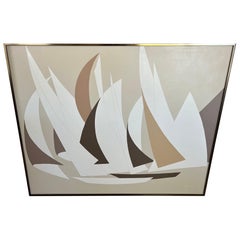
Monumental Sailboat Painting by Lee Reynolds Vanquard Studios
By Lee Reynolds
Located in Redding, CT
Monumental Sailboat Painting by Lee Reynolds of Vanguard studios. Minimalist design of sailboats in muted cream and brown tones. Framed in a gun metal colored frame. White glove ship...
Category
1970s Mid-Century Modern Vintage Canvas Paintings
Materials
Canvas, Wood, Paint
$4,400 Sale Price
20% Off
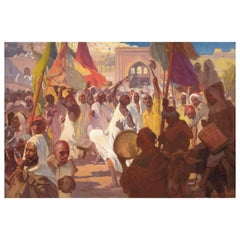
Very Fine and Large Orientalist Oil on Canvas Titled "Ashura Rituals, Tangier"
By Gordon B. Coutts 1
Located in Los Angeles, CA
Gordon B. Coutts (Scottish/American, 1868-1937) A very fine and large orientalist oil on canvas titled "Ashura Rituals, Tangier" (Arabic: عاشوراء ʻĀshūrā’ - Urdu: عاشورا - Persian: عاشورا - Turkish: Aşure Günü). Signed and inscribed: 'Gordon Coutts/TANGIER' (lower right), circa 1920.
Provenance:
The Fisher Art Museum, University of Southern California.
Gordon Coutts led a peripatetic career, born in Aberdeen, Scotland, he then studied and travelled to Glasgow, London, Paris and Rome before settling in Melbourne, Australia in 1891. In 1896 he moved to Sydney, where he taught at the Art Society of New South Wales, before returning back to Europe in 1899. With the climate of northern Europe detrimental to Coutts' poor health, he moved with his wife, Alice Grey, to the United States where he became a frequent exhibitor at the Bohemian Club in San Francisco. In 1920 he travelled to Tangiers, Morocco where, dressed as an Arab, he passed from tribe to tribe observing the lifestyle, customs and practices of the the village people and Bedouins.
The present work depicts the celebration of Ashura. The day of Ashura is commemorated by Shi'ite Muslims; "A day of pain, pilgrimage and pageantry, it is one of the holiest in their religion. The word Ashura means 10, and refers to the tenth day of Muharram, the first month of the Islamic calendar. This is a period of mourning and cleansing, which marks the martyrdom of Hussein, grandson of the Prophet Muhammad...
Category
Early 20th Century Moroccan Other Canvas Paintings
Materials
Canvas
Madonna Della Sedia, After Raffaello Santi, 19th Century
Located in Budapest, Budapest
Raphael's Madonna della Sedia dates to 1513/14 and is kept in the Palazzo Pitti in Florence. Originally it was part of the Uffizi collection, and has then been brough to Paris during...
Category
Mid-19th Century European Renaissance Revival Antique Canvas Paintings
Materials
Canvas, Paint
$3,322 Sale Price
20% Off
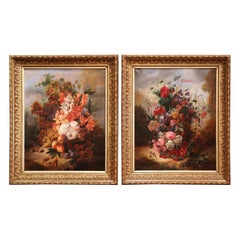
Pair of 19th Century French Floral Still Life Oil Paintings in Gilt Frames
Located in Dallas, TX
Invite color and elegance into your home with this large pair of antique floral paintings. Crafted in France circa 1870, each oil on canvas composition is set in its original, richly...
Category
Mid-19th Century French Antique Canvas Paintings
Materials
Canvas, Giltwood
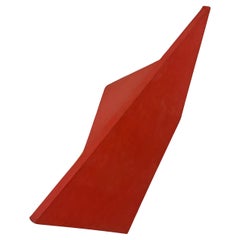
1967 Charles Hinman Red and Orange Shaped Canvas from Richard Himmel Estat
Located in West Palm Beach, FL
Created over 50 years ago, the painting is an artwork of great historical significance. Charles Hinman was a Pioneer of shaped canvases and a leader in abstract art in the 20th centu...
Category
1960s Mid-Century Modern Vintage Canvas Paintings
Materials
Canvas, Wood
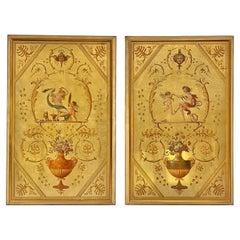
Paintings After Louis XVI Wall Panels in Marie Antoinette Boudoir
Located in New York, NY
Exceptional antique (late 19th to early 20th century) paintings on canvas laid on wooden panels after the door panels by Pierre Rousseau installed in 1786 in Marie Antoinette's boudo...
Category
Late 19th Century French Antique Canvas Paintings
Materials
Canvas, Wood
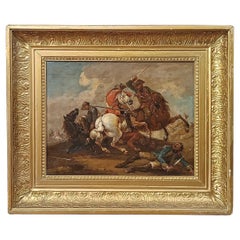
LATE 18th CENTURY PAINTING WITH A BATTLE SCENE
Located in Firenze, FI
Oil painting on wooden canvas, accompanied by a carved and gilded wooden frame, decorated with geometric and floral motifs. In the center, the scene depicts a battle, with two main c...
Category
Late 18th Century Austrian Antique Canvas Paintings
Materials
Canvas, Wood, Paint
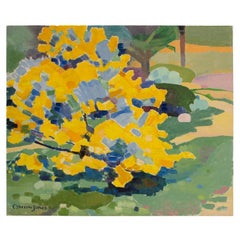
Ernest Yarrow-Jones
British
, "Yellow Bush" Oil Painting
Located in Philadelphia, PA
Ernest Yarrow-Jones (British, b. 1872-d. 1951) "Yellow Bush"
- Oil on Canvas , signed lower left.
Depicting an abstract yellow bush in a green field.
Category
Early 20th Century French Canvas Paintings
Materials
Canvas
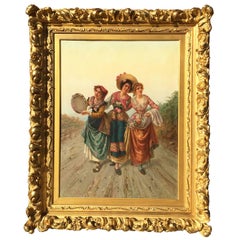
Pietro Gabrini Large Oil on Canvas "Three Singing Italian Beauties on The Road"
Located in Los Angeles, CA
Pietro Gabrini (Italian, 1856-1926) a very fine and large oil on canvas "Three Singing Italian Beauties on The Road" depicting three cheerful Village young maidens walking through a ...
Category
Late 19th Century Italian Baroque Revival Antique Canvas Paintings
Materials
Canvas, Wood
$29,850 Sale Price
60% Off
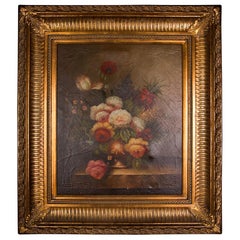
Decorative Oil Painting According to the 19th Century Style
Located in Berlin, DE
A dreamlike masterpiece inspired by the old masters of the Romantic period. Finely embraced in a magnificent silver plated wooden frame with numerous rocaille applications. Oil on ca...
Category
20th Century German Biedermeier Canvas Paintings
Materials
Canvas
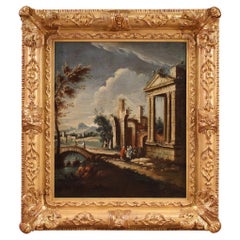
18th Century Oil on Canvas Architectural Capriccio Landscape Venetian Painting
Located in Vicoforte, Piedmont
Refined Italian landscape from the second half of the 18th century. Oil painting on canvas depicting a splendid view with ancient ruins and figures in Venetian dress...
Category
1760s Italian Antique Canvas Paintings
Materials
Canvas
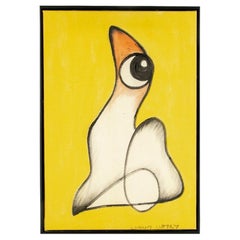
Wally Hatny
20th-21st Century
Signed Acrylic On Canvas, Abstract Animal
Located in Bridgeport, CT
Signed lower right and on verso with date Nov 9 11. In a J. Pocker frame.
An abstract animal in white on a yellow background.
23 x 15"
black frame 27 1/4 x 19"
Good condition. P...
Category
20th Century Mid-Century Modern Canvas Paintings
Materials
Canvas
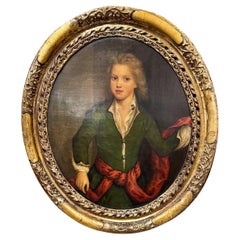
18th Century Painting of a Young Boy
Located in Pasadena, CA
This is a charming naive painting of a young John Davis, son of Gregory Davis of Norfolk, painted by Bridget Bereners (?). The exquisite quality of the framing is an indication of th...
Category
Mid-18th Century English Baroque Antique Canvas Paintings
Materials
Gold Leaf
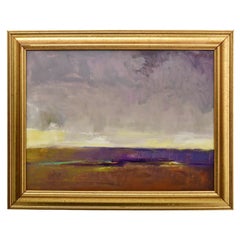
"Clearing Up" Original Painting by Ira Barkoff
Located in Wiscasset, ME
Oil on canvas signed in the upper right. Measurements listed include the frame. The canvas measures 30" x 40". It is in excellent condition and ready to hang.
Born in 1934 in B...
Category
21st Century and Contemporary American Modern Canvas Paintings
Materials
Canvas, Paint
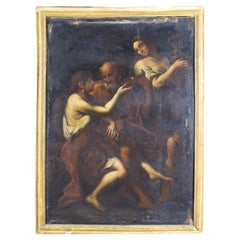
Italian 13th century oil on canvas painting "Lot and Daughters"
Located in Cesena, FC
Lot and his daughters, EMILIAN SCHOOL
XVIIIth century
Oil on canvas 175 x 126 cm
Lot and his daughters is one of the themes most frequently encountered by seventeenth-century pain...
Category
18th Century Italian Baroque Antique Canvas Paintings
Materials
Canvas, Paint
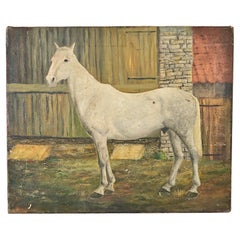
English Portrait of a White Horse by Dominic Fels
Located in Baton Rouge, LA
This touching portrait of a white horse by notable English artist Dominic Fels (circa 1958) is sure to put a smile on your face, transporting the viewer to a rural countryside. The d...
Category
20th Century English Other Canvas Paintings
Materials
Canvas, Wood
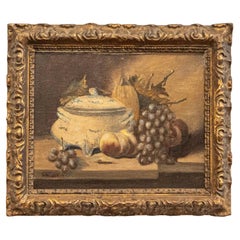
French 19th Century Framed and Signed Oil on Canvas Still-Life Painting
Located in Atlanta, GA
A French framed signed oil on canvas painting from the 19th century, depicting fruits and porcelain. Created in France during the 19th century, this framed still-life captures our attention with its depiction of mouth-watering peaches and grapes surrounding a blue and white soup terrine...
Category
19th Century French Antique Canvas Paintings
Materials
Canvas
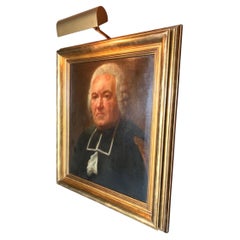
18th C. Portrait of a Lawyer Circle of Jacques Aved French School Oil on Canvas
Located in West Hollywood, CA
18th C. Portrait of a Lawyer Circle of Jacques Aved French School Oil on Canvas . Circle of Jacques-Andre-Joseph-Camelot Aved Portrait of a lawyer 1702-1766 French school mid-18th c...
Category
18th Century French Antique Canvas Paintings
Materials
Canvas, Wood, Paint
$12,800 Sale Price
20% Off
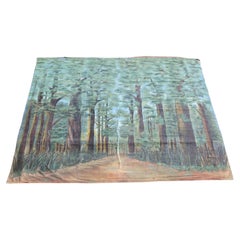
Large Antique French Trompe L
Oeil Painted Canvas Theater Backdrop, Circa 1920s
Located in Dallas, TX
Originally a scenic backdrop for a French theater during the 1920s, this large painted canvas can be considered a trompe-l’œil. A trompe-l’oeil (literally “deceive the eye”) is a sty...
Category
1920s French Vintage Canvas Paintings
Materials
Canvas, Paint
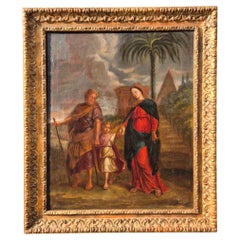
Oil on Canvas — The Return from Egypt - France, 17th Century
Located in NICE, FR
Elegant 17th-century oil on canvas depicting the Return from Egypt, a deeply spiritual and tender representation of the Holy Family.
At the heart of the composition, the Virgin Mary...
Category
Mid-17th Century French Louis XIV Antique Canvas Paintings
Materials
Canvas
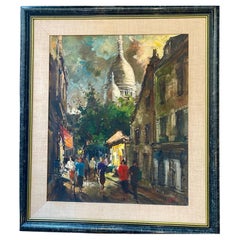
20Th. Century. Cityscape Paris by Night in Montmartre, Oil on Canvas, Signed
Located in West Palm Beach, FL
Just in, this 20Th. Century Paris Night Scene in Montmartre.
This is an Oil On Canvas, signed Carol on the lower right.
French school, this is very much an post impressionist painti...
Category
Mid-20th Century French Post-Modern Canvas Paintings
Materials
Canvas, Wood, Paint
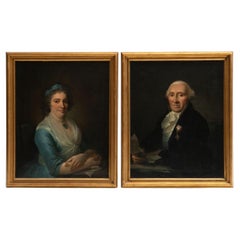
Pair of Noble Portraits, Late 18th Century
Located in Kastrup, DK
A distinguished pair of noble portraits
Likely painted by Hans Hansen (1769–1829) or another artist from Circle of Jens Juel.
These portraits are masterfull...
Category
Late 18th Century Danish Louis XVI Antique Canvas Paintings
Materials
Canvas, Wood
$5,357 / set
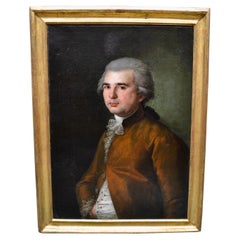
18th Century Portrait of a French Aristocratic Gentleman
Located in Vancouver, British Columbia
A fine half length portrait of a powder wigged 18th century French aristocratic gentleman simply dressed in a brown waistcoat over an embroidered buttoned vest in which he has placed...
Category
Late 18th Century French Louis XVI Antique Canvas Paintings
Materials
Canvas
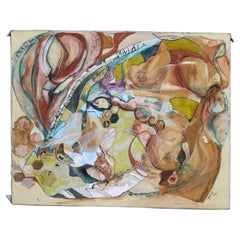
Mid Century Modern Abstract Impressionist Multimédia Painting on Canvas C1968
Located in Big Flats, NY
Mid Century Modern Abstract Impressionist Multimédia Painting Signed by Lynough C1973
Measures - 24.25"H x 30"W x .75"D
A captivating mid-century modern abstract impressionist pain...
Category
20th Century Mid-Century Modern Canvas Paintings
Materials
Canvas
$760 Sale Price
20% Off
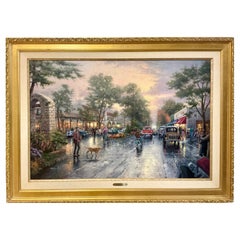
Thomas Kinkade "Carmel, Sunset on Ocean Avenue" on Canvas
Located in Bradenton, FL
1999 Limited Edition Print on Canvas of “Carmel, Sunset on Ocean Avenue” by Thomas Kinkade. This limited EP edition is #418 of 680 and features a romantic, nostalgic street scene of ...
Category
20th Century American Other Canvas Paintings
Materials
Canvas
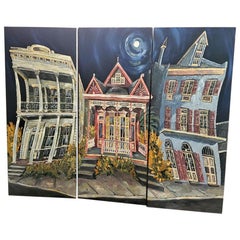
Monumental Triptych Oil on Canvas Panels Of New Orleans French Quarter Houses
Located in Dallas, TX
PRESENTING a simply beautiful, monumental and imposing original work of contemporary art, namely, a Triptych oil on canvas panels of New Orleans Colonial/French Quarter Houses.
Unsigned and undated, but most definitely inspired by the World Renowned New Orleans artist, James Michalopoulos.
These were not painted by Michalopoulos, but were clearly inspired by him and his famous depictions of ‘wavey’ New Orleans houses. Also, they were created and painted in New Orleans, contemporaneously to when Michalopoulos was starting to become recognized, in the New Orleans (and greater) artworld.
The 3 panels work perfectly together as a visual feast and ‘connected’ work of art.
The panel on the left features a wavy blue, grey and yellow, French Quarter style 2 Story Wooden house, complete with Corinthian Style Columns, decks, railings, storm shuttered windows, etc. It has a deep blue sky with shimmering light reflections. The garden to the front, has steps leading to the house and has shrubs and flowers, that are continued into the 2nd or middle/center panel.
The middle or center panel incorporates the other side of the garden plants etc for continuity and it features a single story pink, yellow and white wavy French Quarter style house, with fabulous decor and complete with decks, railings, storm shuttered windows, etc. It has a deep blue sky with shimmering light reflections and a white moon, emitting swirling patterns of light. The garden to the front, has steps leading to the house and has shrubs and flowers, that are continued into the 3rd or right panel.
The right panel, features a wavy light...
Category
20th Century American Organic Modern Canvas Paintings
Materials
Canvas
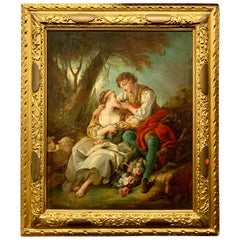
19th Century Oil Painting on Canvas after Francois Boucher
Located in Tarzana, CA
This magnificent painting dates to the 19th century after the original by Francois Boucher.
François Boucher was a French painter, draughtsman and et...
Category
19th Century European Antique Canvas Paintings
Materials
Canvas
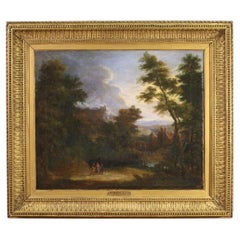
17th Century Oil on Canvas Flemish Landscape Painting Apparition of Jesus, 1650
Located in Vicoforte, Piedmont
Antique landscape with figures from the 17th century. Oil on canvas painting depicting a splendid Flemish landscape that frames a famous episode of the New Testament, the appearance ...
Category
1650s Dutch Antique Canvas Paintings
Materials
Canvas
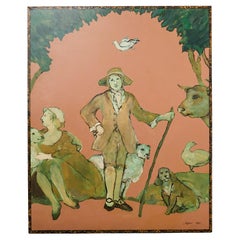
Ira Yeager Country French Farmer with Animals 8 Ft.
By Ira Yeager
Located in Rio Vista, CA
Grand imposing oil on canvas painting of a country French provincial farmer coup;e with various animals measuring 8 feet high and 6.5 feet wide by Ira Yeager (American 1938-2022). Th...
Category
20th Century American French Provincial Canvas Paintings
Materials
Canvas, Wood
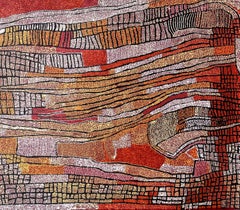
Large Stunning Australian Aboriginal Painting by Naata Nungurrayi
By Naata Nungurrayi
Located in Atlanta, GA
A large and stunning contemporary abstract painting by celebrated Australian Aboriginal artist Naata Nungurrayi (1932-2021), stretched and ready for display. A rare masterpiece of the museum quality dating from the peak of the artist's creative output in 2003. The canvas is singular in both the impressive size and tine quality, and it comes with full provenance and step by step photos (100 in total) recording the creation of this significant piece of work.
The artist used fine dots as the sole element to compose a complex dreamtime landscape where Women's Ceremony took place in her ancestral time. The place is located at Marrapinti and its surrounds, where many water soakage holes were located. Dots in brilliant shifting and contrasting colors form ceremonial Tingari symbols performed by the women, black crawling tracks that may be associated with a site called Karilywarra (two carpet snakes) and mesmerizing Tali (sandhill) movements surrounding the canvas. The work is of the signature style of the artist, singular and easily recognizable. The fine quality of this work is exemplary.
Medium: acrylic on Belgium Linen
Cat no. NN200315
Provenance: Yanda Aboriginal Art, NT.
The painting comes with a COA letter and an artist biograph issued by Yanda Aboriginal Art and a presentation album with 100 photos that documented the entire process of the creation of this large work of art. The edge of the painting bears name of the artist as well as the stamp of the gallery as shown.
Reference and further reading:
For a relevant work by the artist, See Plate 88 and Page 220-222 in the book "Past and Present Together: Fifty Years of Papunya Tula Artists" by Meyers and Skerritt.
Another similar work is illustrated on plate 13 in "Pintupi" by Hamiltons.
Artist's biography:
Naata Nungurrayi (1932-2021) is an Australian Aboriginal artist who was born at the site of Kumil, west of the Pollock Hills in Western Australia. She is from the Pintupi group from Kintore, Northern Territory and is one of the senior elders of the Kintore women artist movement. Naata is the sister of George Tjungurrayi and Nancy Nungurrayi, and her son is Kenny Williams Tjampitjinpa...
Category
21st Century and Contemporary Australian Modern Canvas Paintings
Materials
Canvas
Late 19th Century Italian Lakeside Oil on Canvas
Located in Los Angeles, CA
Antique oil on canvas made in Italy in the late 19th Century, depicting a lakeside view with trees all around and a fisherman on the back. It is protected by a carved giltwood frame....
Category
Late 19th Century Italian Antique Canvas Paintings
Materials
Canvas, Giltwood
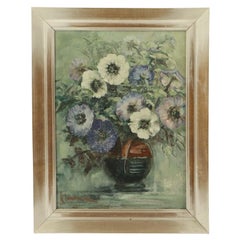
Vintage Flowers Still Life Amateur Painting Framed Signed
Located in Poperinge, BE
Nice vintage flower still life, painting of white and blue flowers in a two-tone vase, framed in a painted beech wood frame, signed lower left, circa second half of the 20th century,...
Category
1980s Belgian Vintage Canvas Paintings
Materials
Canvas, Wood
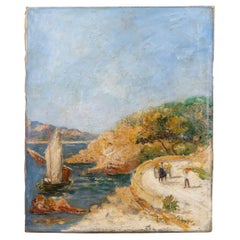
Cart on the Mediterranean Coast, Oil on Canvas – Alexis Gritchenko (1883-1977)
By Alexis Gritchenko
Located in TEYJAT, FR
“Charrette sur la Côte” / “Cart on the Coast” – Antique Oil Painting on Canvas, Circa 1920 - in the manner of Alexis Gritchenko (1883-1977), unsigned
A luminous and expressive oil p...
Category
Early 20th Century French Canvas Paintings
Materials
Canvas, Paint
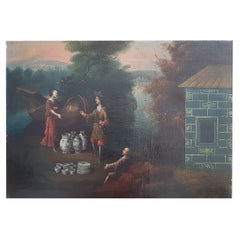
Oil on Canvas Depicting a Porcelain Sales Woman, Chinese School, 18th Century
Located in Langweer, NL
Interesting 18th century painting, Chinese School, for the European market, depicting a porcelain sales woman dealing with European traders.
Medium: Oil on canvas. Measures: 62.5 x...
Category
18th Century Chinese Antique Canvas Paintings
Materials
Canvas
$18,001 Sale Price
47% Off
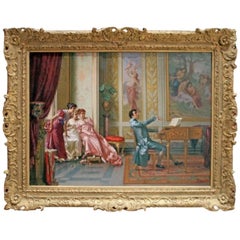
"La Romanza Preferita" Vittorio Reggianini, Signed Oil on Canvas
By Vittorio Reggianini
Located in West Palm Beach, FL
Vittorio Reggianini (1858-1938)
La Romanza Preferita
Signed with the artist monogrammed signature (lower right)
Oil on canvas
Measures: 27 x 36 in. (68 x 91cm.)
Provenance: Asso...
Category
Early 20th Century Canvas Paintings
Materials
Canvas
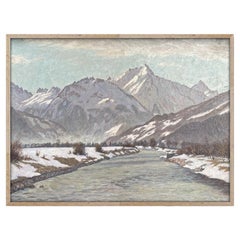
Snowy Landscape Oil On Canvas by Alex Weise - Dolomites 1930
Located in Vo
, Veneto
Snowy Landscape – Alex Weise
Work dimensions: 60 x 80 cm
Measurements with frame: 64 x 84cm
Technique: oil on canvas
Period: 1930s
One of this artist's favorite subjects: snow in t...
Category
1930s Italian Art Deco Vintage Canvas Paintings
Materials
Canvas
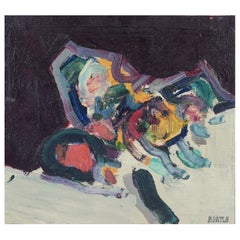
Lars Bertle, listed Swedish artist. Oil on canvas. Abstract composition. 1967
Located in København, Copenhagen
Lars Bertle (born 1925), listed Swedish artist.
Oil on canvas mounted on panel.
Abstract composition. Colorful palette. Impasto brushstrokes.
Title: "Natur...
Category
1960s Swedish Vintage Canvas Paintings
Materials
Canvas
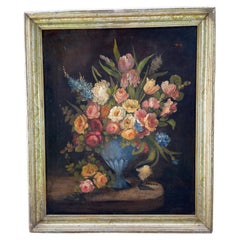
Large Antique Floral Still Life on Board
Located in Redding, CT
Large Antique Floral Still Life on Board. Dramatic dark background with blue urn full of flowers. Housed in a worn gold gilt frame. Ple...
Category
1950s Vintage Canvas Paintings
Materials
Canvas, Wood, Paint
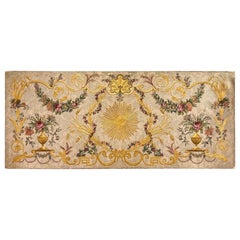
19th Century Italian Raised Gilt Gesso and Oil Painted Panel
Located in Dallas, TX
Outstanding 19th century Italian raised gilt gesso and oil painted panel. Very pretty images of leaves, flowers and urns. An exceptional piece!
Category
19th Century Italian Antique Canvas Paintings
Materials
Gesso, Canvas, Paint
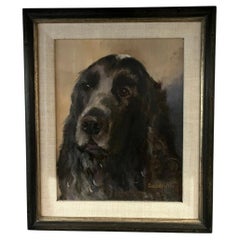
Oil on Canvas Cocker Spaniel Portrait
Located in Houston, TX
Oil on Canvas Cocker Spaniel Portrait by Houston artist Martha Goodrum
Category
21st Century and Contemporary American Other Canvas Paintings
Materials
Canvas, Paint
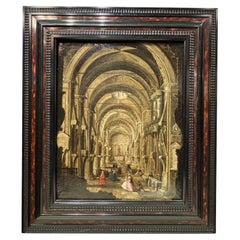
Interior of a cathedral in Flanders, attributed to Peter NEEFFS, 17th century.
Located in PARIS, FR
Oil on canvas, lined, showing the interior of a cathedral, probably Antwerp, with various scenes taking place there.
Wear and overpainting to be restored, but beautiful appearance.
M...
Category
17th Century Dutch Baroque Antique Canvas Paintings
Materials
Canvas
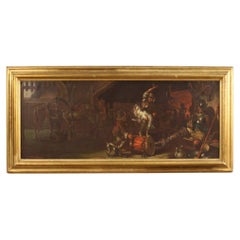
20th Century Oil on Canvas Italian Popular Scene Painting Signed Mattia Traverso
Located in Vicoforte, Piedmont
Italian painting from the first half of the 20th century. Oil painting on canvas, first canvas, depicting tavern in eighteenth-century style with characters and horses. Very pleasant...
Category
1920s Italian Vintage Canvas Paintings
Materials
Canvas
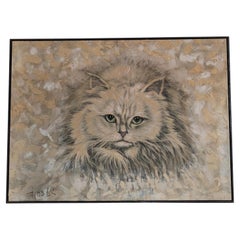
Huge vintage midcentury painting of a Persian cat, by Thomas Lee, USA 1970s
Located in Hastings, GB
An enormous mid century painting of a Persian cat, signed by Thomas Lee, USA 1970s. Great decorative piece. Heavily textured paint around the cat's head.
Some age-related wear to the...
Category
Mid-20th Century American Mid-Century Modern Canvas Paintings
Materials
Canvas, Softwood