Items Similar to Oil on Canvas; Hunting Scene, Circle of Francis Sartorius I (British, 1734-1804)
Want more images or videos?
Request additional images or videos from the seller
1 of 6
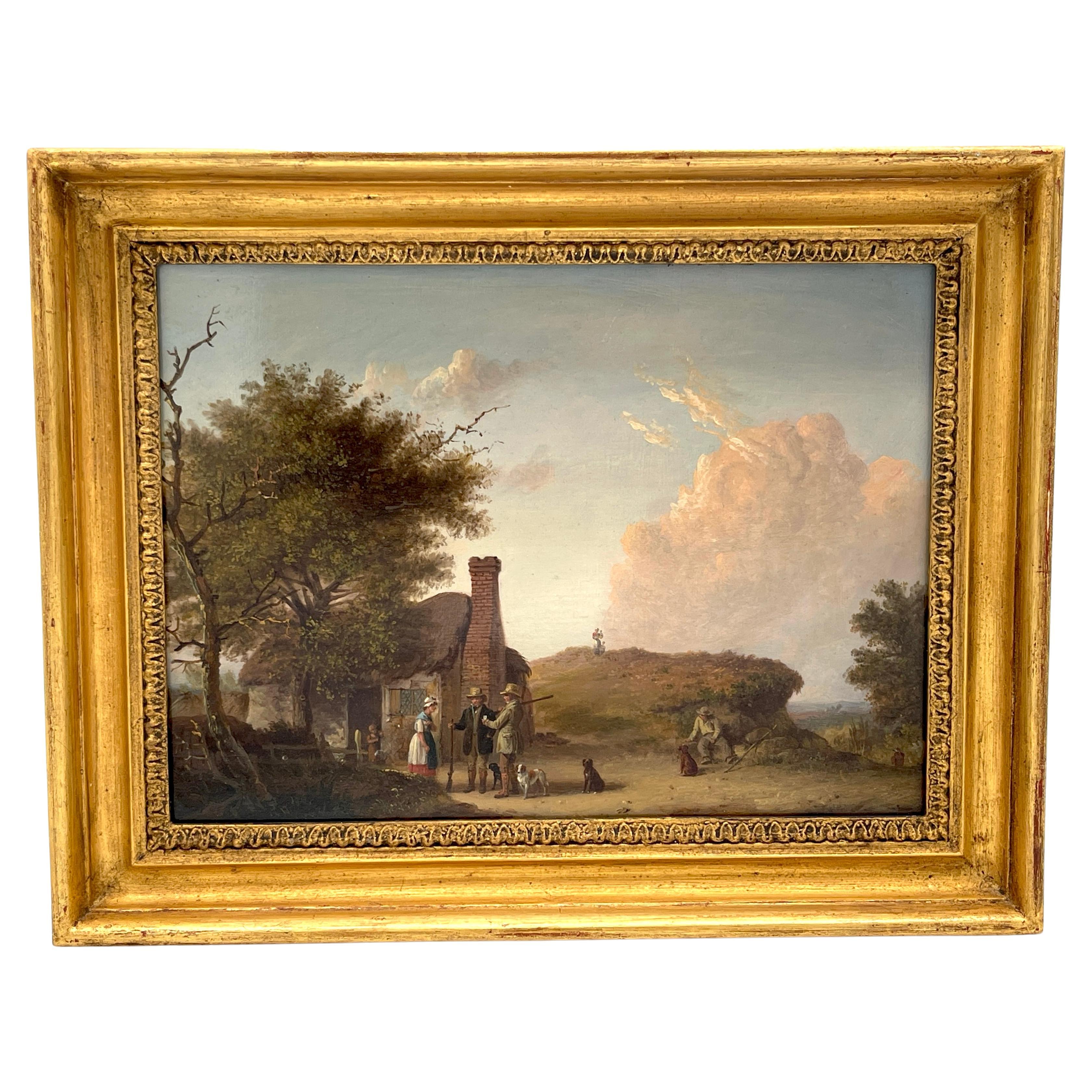
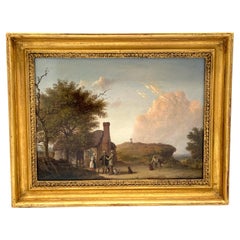
Oil on Canvas; Hunting Scene, Circle of Francis Sartorius I (British, 1734-1804)
$21,800.43
£16,000
€18,580.90
CA$30,011.02
A$32,807.93
CHF 17,356.87
MX$392,599.61
NOK 220,841.26
SEK 202,157.83
DKK 138,787.83
About the Item
This bucolic representation of the English countryside, animated by a hunting scene in the foreground, is characteristic of the tradition for sporting pictures that developed in Britain across the eighteenth century and counted among its exponents masters of the calibre of George Stubbs (1724-1806) and, into the twentieth century, Sir Alfred Munnings (1878-1959).
The composition, with the tree on the left acting as repoussoir – a device used to create perspectival depth, borrowed from the pastoral landscapes of French seventeenth-century painters such as Claude Lorrain and Nicolas Poussin – no doubt portrayed a specific location, with its church, sporting grounds and whitewashed house adjoining an earlier building in the centre. Paintings of this type were regularly commissioned by the owners of country residences, members of the nobility as well as landed gentry – many of whom would have enjoyed hunting – to immortalise their estates as part of the fabric of the national landscape. The demand was such that several artists in eighteenth-century Britain, including émigré European ones, specialised primarily in this field, which remains to this day indissolubly associated with the aesthetic of the British country house.
Prominent among them was Francis Sartorius (also known as Francis Sartorius I, or Senior, to distinguish him from a grandchild who became a marine painter), whose ancestor Jacob Christoph Sartorius (fl. 1694–1737) had been an engraver in the German city of Nuremberg. The family settled in London in the early eighteenth-century thanks to the enterprise of John, Francis Sr.’s father, who reputedly practiced as an animal painter, but it is only with Francis Sr. and, later, with his son John Nost (1759–1829), that the name Sartorius became established in Britain. A prolific painter of animals and sporting scenes, Francis Sr. regularly submitted pictures to exhibitions at the Society of Artists, the Free Society, and the Royal Academy in London. He was based in Soho, like many artists of his generation, but often travelled out of town to race meetings and country estates, where patrons commissioned from him portraits of their best horses and hounds. He counted the Duke of Cumberland and Lord Rockingham among his clients, and he is credited with having been one of the first sporting artists to visit and paint in Ireland, specifically for Edward Stratford, 2nd Earl of Aldborough, at Baltinglass, co. Wicklow (1787). In Britain, the National Trust holds many examples of Sartorius’ work in its collection, primarily at Antony – a Georgian house in Cornwall – but also at Penrhyn Castle in Wales, at Fenton House in London, and at Upton House in Warwickshire. In the United States, the Yale Center for British Art owns Sartorius’ Sir Charles Warre Malet’s String of Racehorses at Exercise (fig. 1), a sweeping view of the English countryside with a sporting theme in the foreground that can be compared in configuration to the present canvas. A collection of four, even more closely comparable compositions by Sartorius can be found at Lamport Hall in Northamptonshire, which document the phases of a day out hunting with hounds, against a backdrop of rolling hills (figs. 2-5)
- Dimensions:Height: 38.19 in (97 cm)Width: 60.24 in (153 cm)Depth: 1.58 in (4 cm)
- Materials and Techniques:
- Place of Origin:
- Period:
- Date of Manufacture:Late 18th Century
- Condition:Wear consistent with age and use.
- Seller Location:London, GB
- Reference Number:1stDibs: LU848142243622
About the Seller
No Reviews Yet
Vetted Professional Seller
Every seller passes strict standards for authenticity and reliability
Established in 2001
1stDibs seller since 2008
35 sales on 1stDibs
Typical response time: Several days
- ShippingRetrieving quote...Shipping from: Mitcham, United Kingdom
- Return Policy
More From This Seller
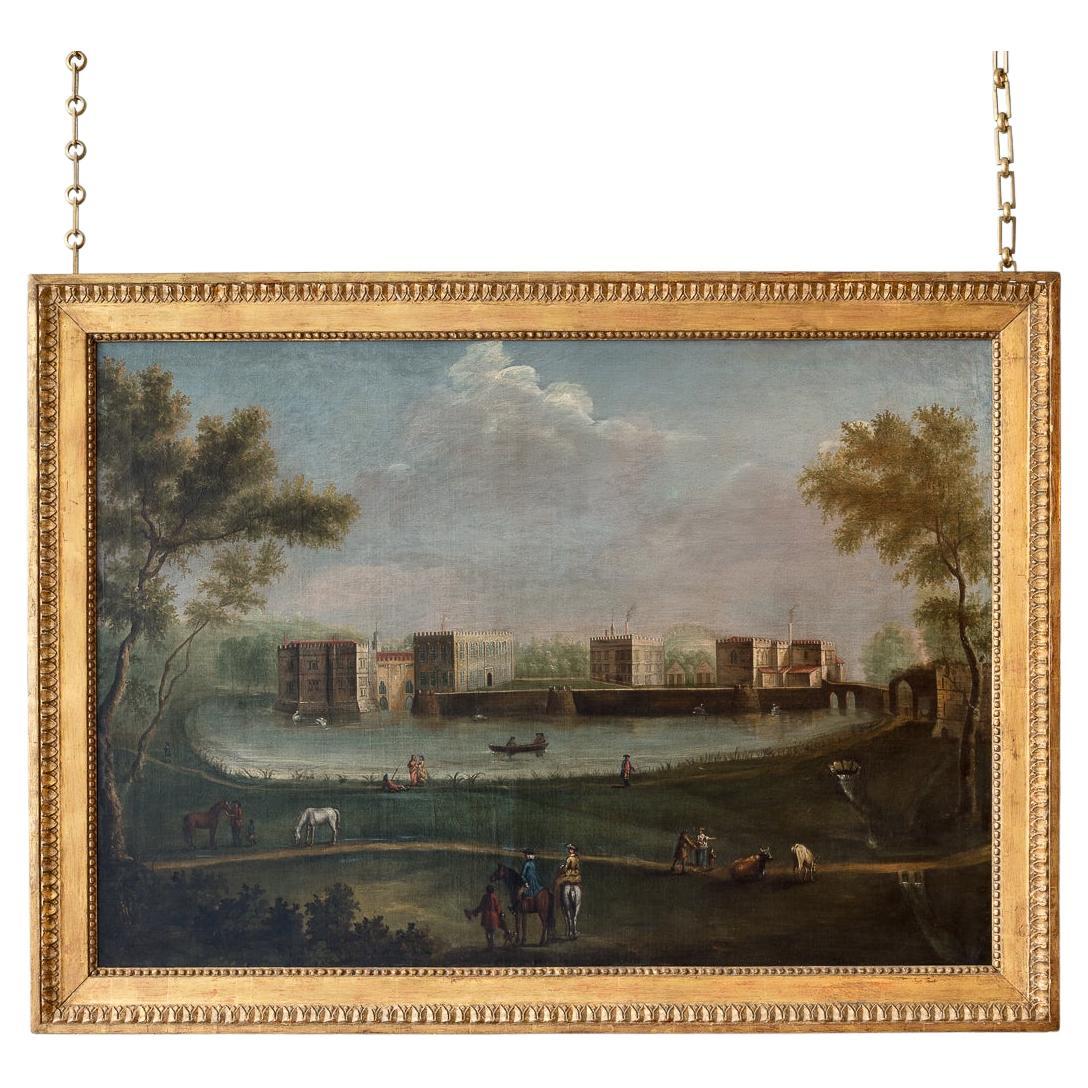
View AllOil on Canvas; The West Prospect of Leeds Castle, Kent, 18th Century British
Located in London, GB
This carefully observed view of Leeds Castle, enlivened by an array of figures and animals moving across its verdant grounds and medieval moat, is an important testimony of the build...
Category
Antique Mid-18th Century English Paintings
Materials
Paint
Capriccio of Architectural Ruins, Oil on Panel Painting, Early 18th Century
Located in London, GB
An Early 18th Century Oil on Panel Capriccio of Architectural Ruins
In later frame with small brass hanging loop, showing an arcadian landscape setting, with shepherds and their dog...
Category
Antique Early 18th Century Paintings
Oil on Canvas; Hounds Chasing a Stag, Studio of Frans Snyders, Antwerp 1579-1657
By Frans Snyders
Located in London, GB
This powerful hunting scene is closely associated to the work of Antwerp-born seventeenth century painter and draughtsman Frans Snyders, widely considered the “progenitor of Flemish Baroque still-life and animal painting.”
Having grown up surrounded by artists, Snyders was initially apprenticed to Pieter Brueghel the Younger (1564-1637/38), scion of a well-established family of painters. Like many of his contemporaries in Northern Europe, to complete his education he then travelled to Italy, staying mainly in Rome and Milan (1608-09). Once back in Flanders, his profile as a skilled young painter – who had refined his craft by studying the masters of Italian art – came to the attention of Sir Peter Paul Rubens (1577-1640), in whose Antwerp studio Snyders entered as an assistant in about 1610, and with whom he would go on to collaborate on a number of important commissions for years to come. In 1611, Snyders further strengthened his ties with the local community of painters by marrying Margaretha de Vos, sister to Cornelis and Paul de Vos, two artists with whom he would also regularly collaborate.
Thanks to the lessons learned in Italy and in Rubens’ studio, Snyders soon achieved the ability to create rhythmic and dynamic compositions, infused with vibrant colours and powerful naturalistic effects. Centred on the theme of the still life, his market scenes and representations of richly stocked pantries and larders embodied the buoyant and confident spirit of seventeenth-century Antwerp, a trading port with a wealthy merchant class and aristocracy (Still Life with Dead Game, Fruits, and Vegetables in a Market, 1614, The Art Institute of Chicago; Still-Life with Fowl and Game, 1614, Wallraf-Richartz Museum, Cologne). Flowers from all seasons and dead game are portrayed alongside baskets overflowing with fruit, precious gilt vessels and Chinese Wanli porcelain...
Category
Antique Early 17th Century Belgian Paintings
Materials
Paint
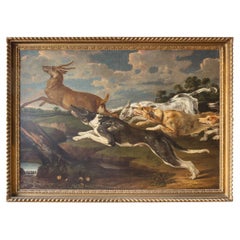
‘Scamp’, the Duke of Devonshire’s Racehorse Painting, 18th Century
Located in London, GB
An 18th Century Painting of ‘Scamp’, the Duke of Devonshire’s Racehorse; signed John Wootton
A charming equestrian painting, depicting the third Duke of Devonshire’s beloved racehor...
Category
Antique 18th Century Paintings
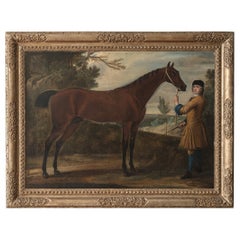
Oil on Canvas; Newfoundland off the English Coast, by Edmund Bristow (1787-1876)
Located in London, GB
The son of a heraldic painter, Edmund Bristow was born in Berkshire in 1787 ( (1 Apr 1787 – 12 Feb 1876), and lived all his life locally in Eton, after having attended school in near...
Category
Antique Early 19th Century English Victorian Paintings
Materials
Paint
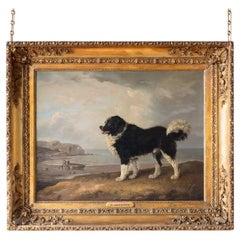
Portrait of a Hound within a Landscape
Located in London, GB
Oil on canvas. English, late 18th-early 19th century.
Category
Antique Late 18th Century English Paintings
Materials
Paint
You May Also Like
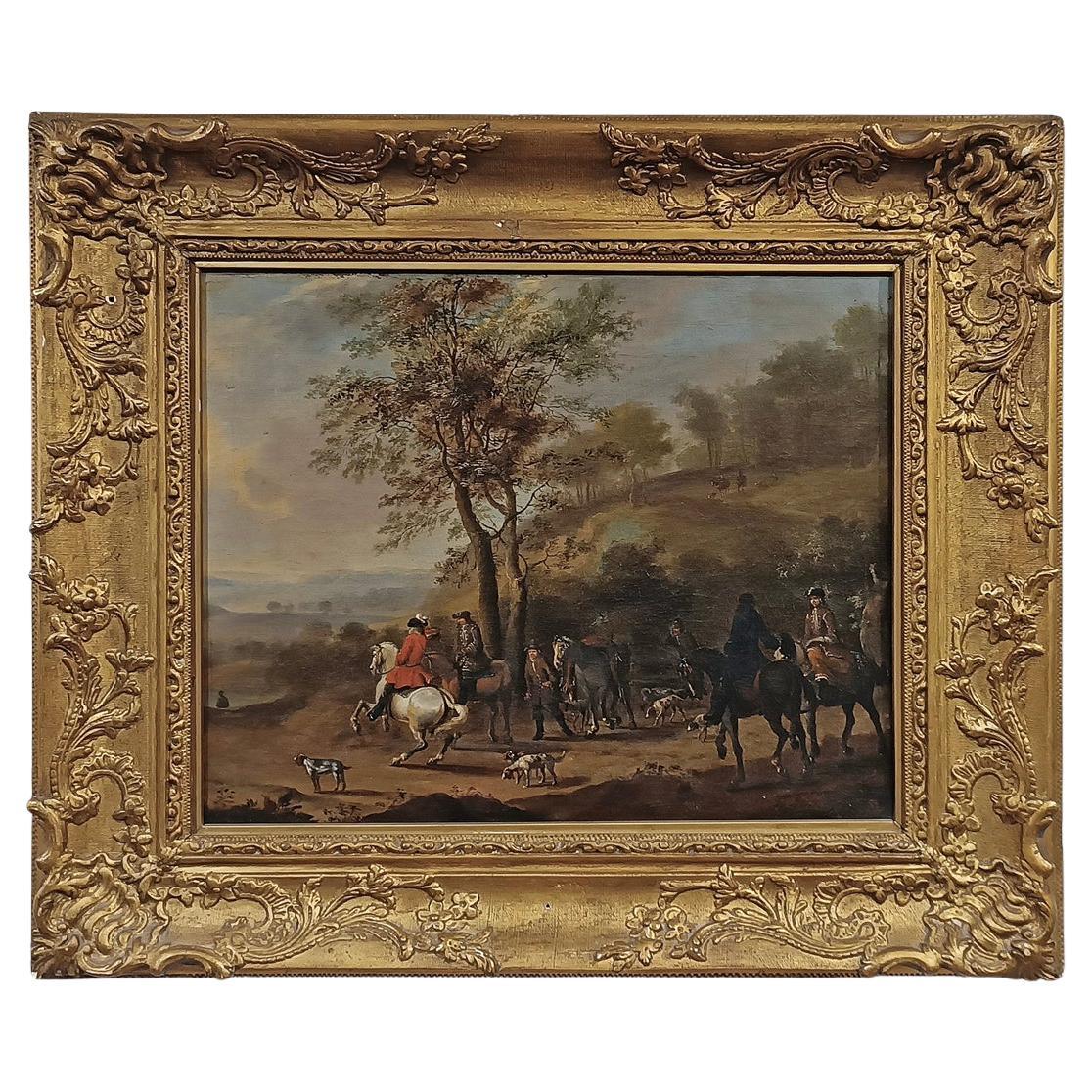
MID-18th CENTURY PAINTING WITH A HUNTING SCENE
Located in Firenze, FI
Beautiful oil painting on canvas, framed in carved wood and gilded with gold leaf. The scene depicts a hunt, with figures of hunters on horseback in the foreground and in the distanc...
Category
Antique Mid-18th Century English Paintings
Materials
Canvas, Wood, Paint
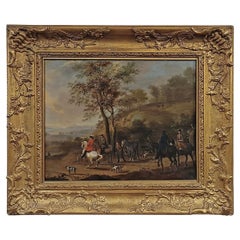
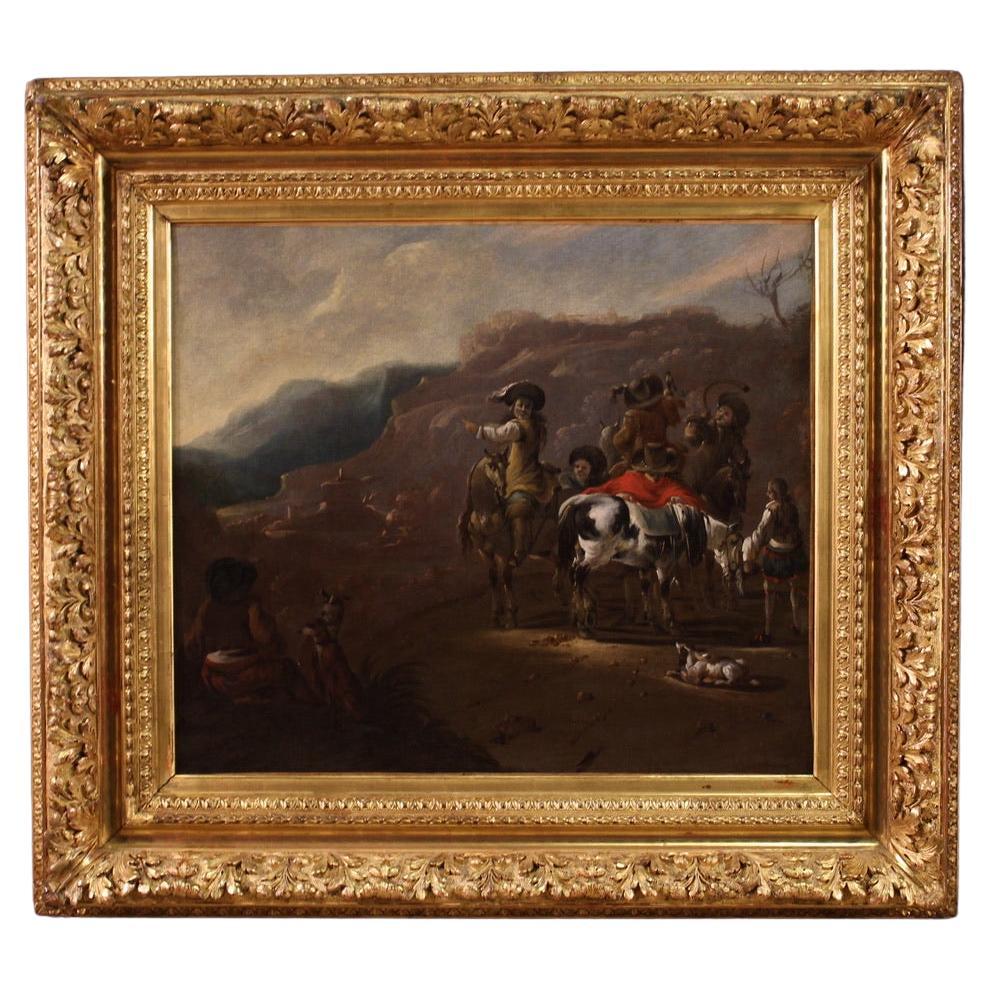
17th Century Oil on Canvas Flemish Antique Landscape Painting Hunting Scene 1660
Located in Vicoforte, Piedmont
Flemish school of the mid-17th century. Oil on canvas artwork depicting a splendid hunting scene. On the right is a group of characters dressed in the 17th-century fashion of Norther...
Category
Antique 1660s Dutch Paintings
Materials
Canvas
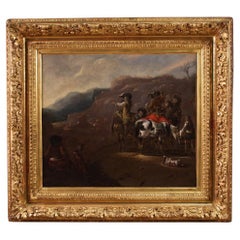
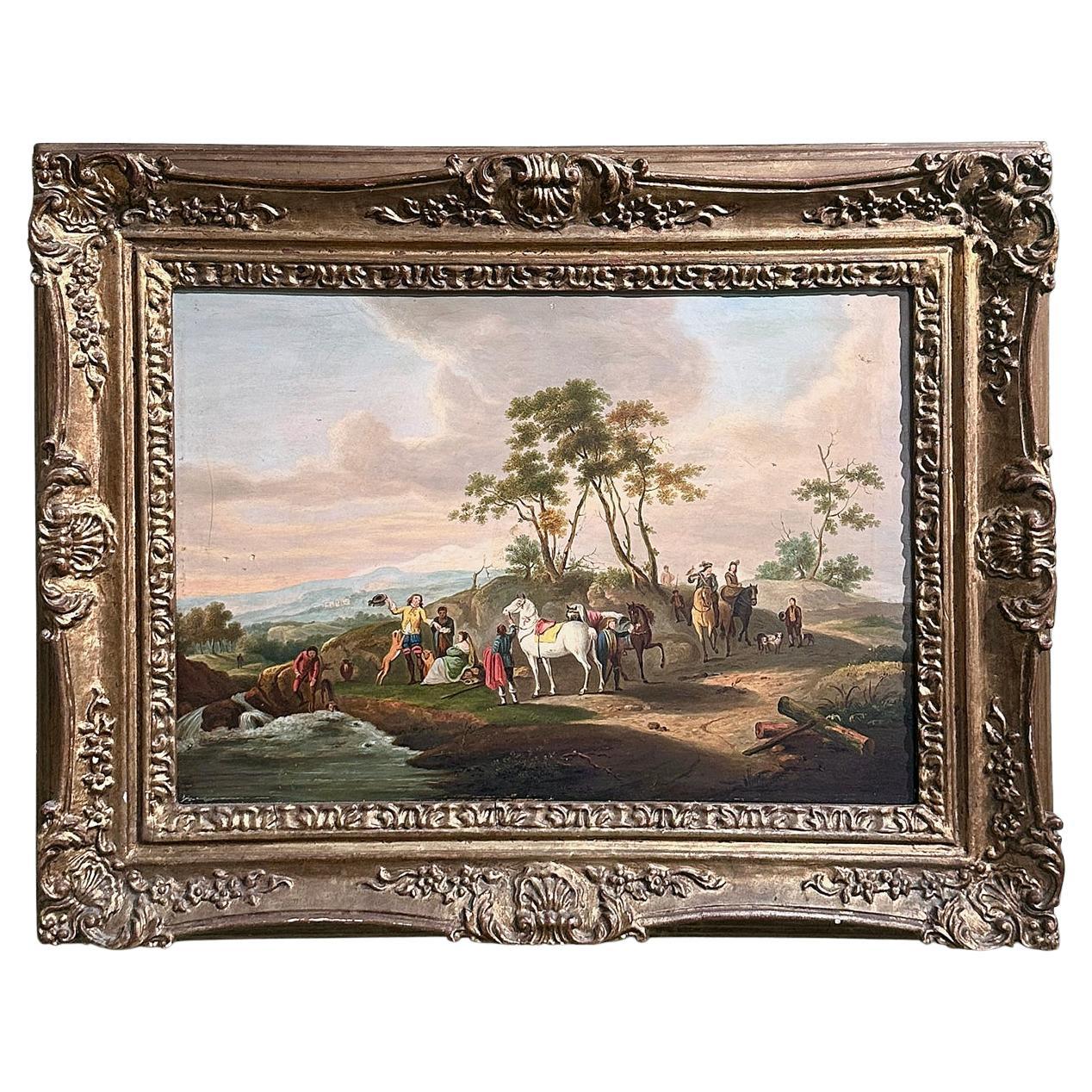
EARLY 19th CENTURY PAINTING WITH A COUNTRY SCENE
Located in Firenze, FI
A charming oil painting on oak panel, presented in a contemporary carved and gilded wooden frame with gold leaf. The work depicts a lively country scene, with figures resting along a...
Category
Antique Early 19th Century English Paintings
Materials
Gold Leaf
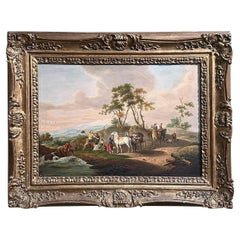
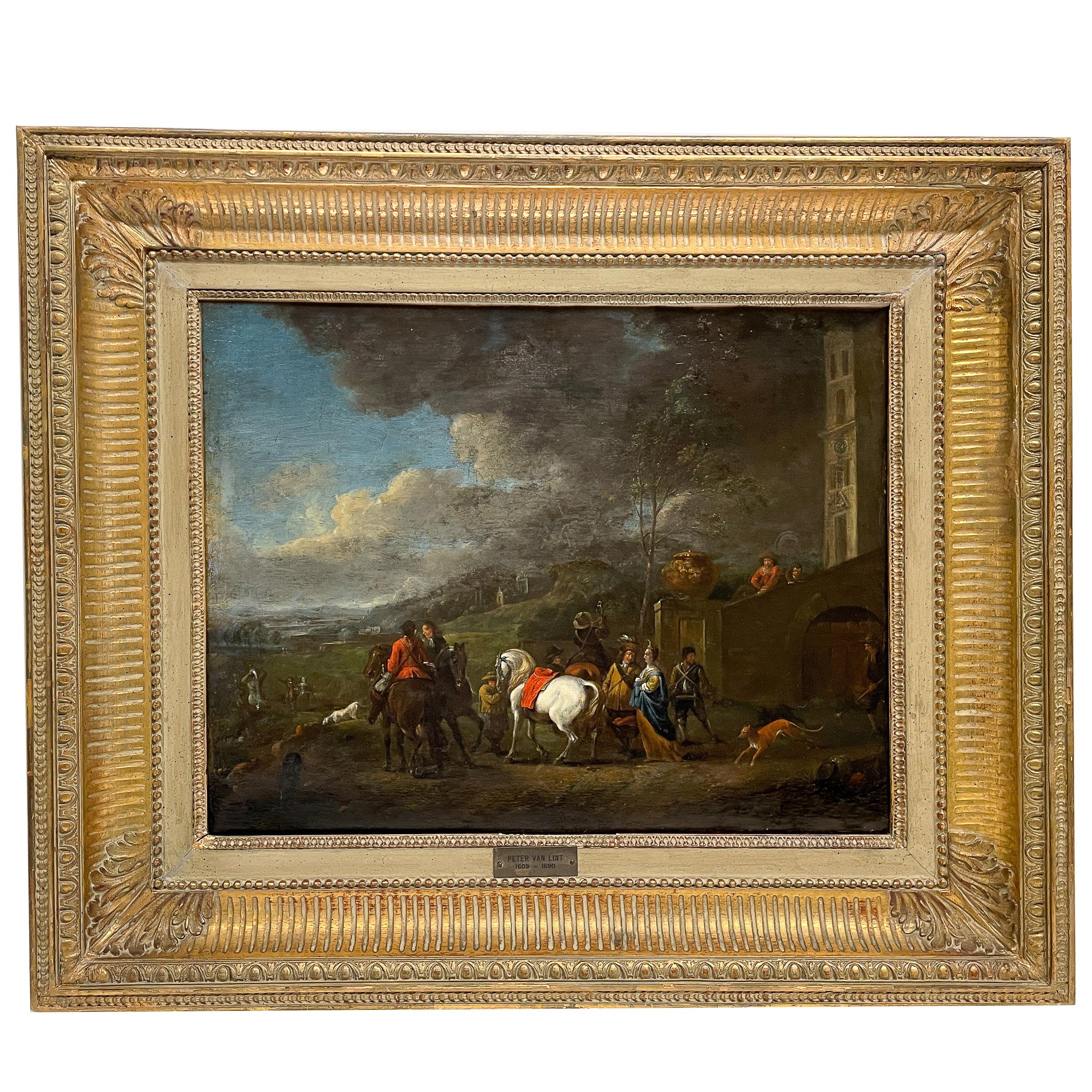
Flemish Early 17th Century Old Master Oil on Panel Painting Hunting Scene 1620
Located in Portland, OR
A highly important Flemish Old Master oil painting by Peter Van Lint (1609-1690), titled "Preparing for the Hunt", the painting is dated & signed by the artist, 1620. The painting wa...
Category
1620s Old Masters Landscape Paintings
Materials
Oil, Panel
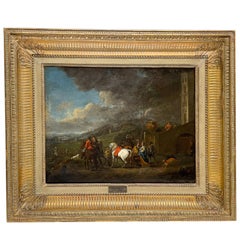
19th C English Sporting Landscape with Hunters
Dogs, by Edmund Bristow
Located in West Palm Beach, FL
19th C English Sporting Landscape with Hunters & Dogs, by Edmund Bristow
Provenance : Arthur Ackermann & Son Ltd. 33 New Bond Street London
Edmund Bristow (BRITISH, 1787–1876) 'Spo...
Category
Antique 19th Century English Sporting Art Paintings
Materials
Wood, Giltwood
$5,560 Sale Price
20% Off
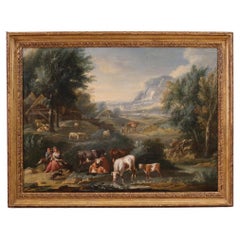
18th Century Oil on Canvas Italian Bucolic Landscape Painting, 1770
Located in Vicoforte, Piedmont
Venetian school of the second half of the 18th century. Oil painting on canvas depicting an Arcadian landscape of pastoral genre. This type of pictorial representation established it...
Category
Antique 1770s Italian Paintings
Materials
Canvas
More Ways To Browse
The Calibre
English Hunting Scene
Duke Of Cumberland
Starburst Sculpture
Tapestry French Romantic
The Dentist
Tudor Carved
Used Casement Windows
Vintage Asian Room Divider
Vintage Blue Glass Jug
Vintage Brass Belt Buckles
Vintage Sascha Brastoff
Vintage Wall Plaques
White Ceramic Bird
Wood Overlay
Wrought Iron Outdoor Tables
1930s Advertising
African Jungle