Items Similar to Oil on canvas Jesus child within garland of flowers 18th century
Want more images or videos?
Request additional images or videos from the seller
1 of 13
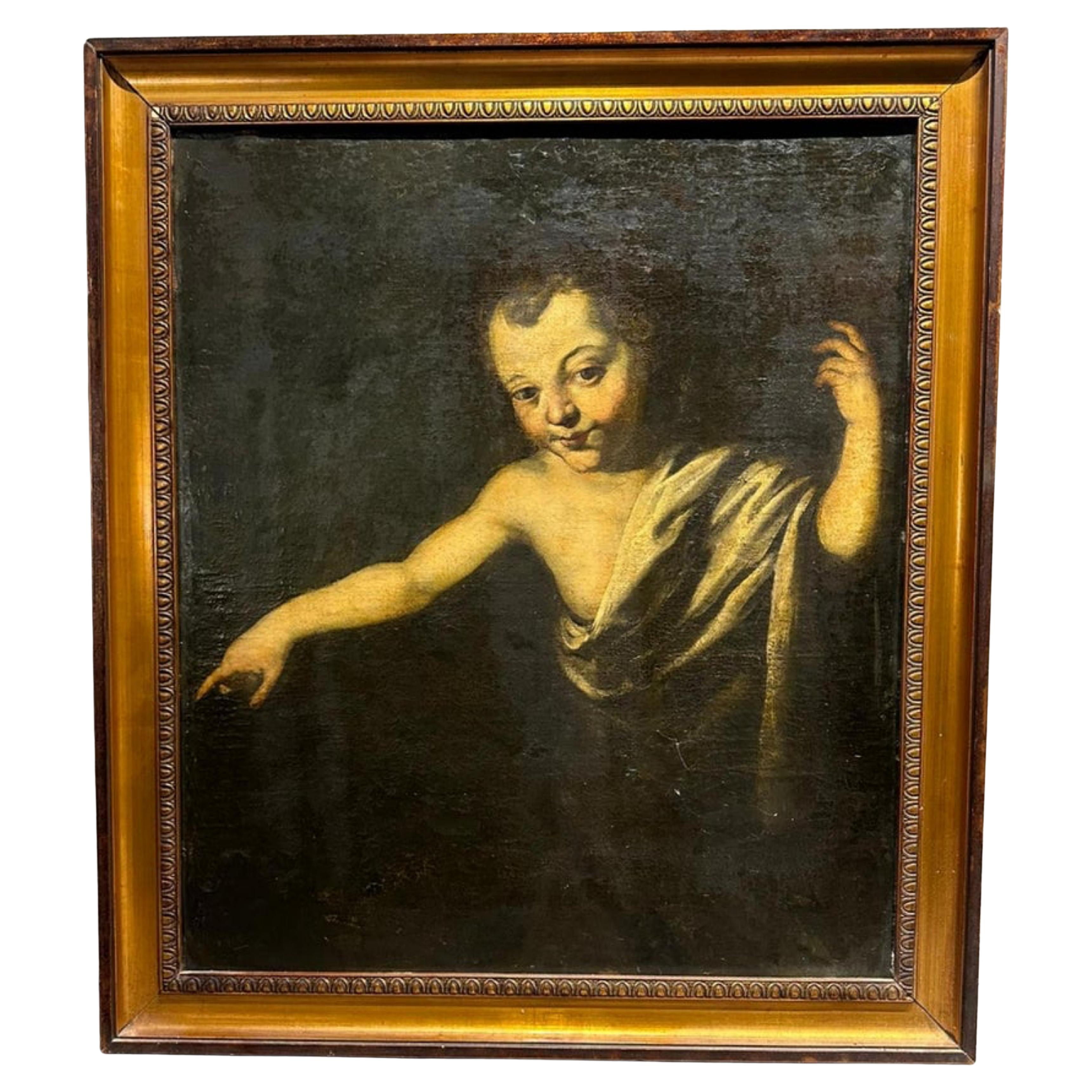
Oil on canvas Jesus child within garland of flowers 18th century
$4,323.23
£3,202
€3,600
CA$5,913.96
A$6,436.21
CHF 3,411.83
MX$77,432.50
NOK 43,272.94
SEK 39,591.71
DKK 27,432.62
About the Item
Lombard School, 17th century
Christ child with globe within garland of flowers
Oil on canvas, 72 x 61 cm
Framed 90, 5 x 80
The present painting, framed by a sumptuous antique frame, depicts the figure of the Christ Child with the globe within a floral garland.
The Italian evolution of the pictorial genre of the difiori garland, a devotional typology born of the intellectual collaboration between Cardinal Federico Borromeo and Jan Brueghel the Elder. Beginning in the second half of the 16th century, Lombard art was affected by a gradual diffusion of fiammingian models mainly attributable to two factors: the intensification of economic and commercial relations between Milan and Brussels related to the common Spanish rule and, subsequently, the passion for fiamming art of Cardinal Federico Borromeo
The co-presence of these elements, led in the early 17th century to the diffusion in the local art scene of the genres of landscape and still life, as well as the creation of a new iconografia: the Madonna and Child in a garland of fires. The garland genre then spread widely in the 17th and the first half of the 18th century not only in the Lombard area but also in Flanders and Spain.
The analysis of the pictorial evolution of the fiori garland constitutes a rather recent field of study that builds on an illuminating article by David Freedberg, published in 1981. For Freedberg, adorning a sacred image by means of a garland has not only a mere decorative function but also elevates the object from its earthly nature, emphasizing the importance of its supernatural and devotional function.
Pamela M. Jones states that Borromeo owes the conception of the motif to his adherence to the theological current called, Christian Optimism, according to which nature, and therefore also fires, are one of the manifestations of divine greatness. We also need to look at the custom of adorning religious images with wreaths of fires during processions, in the diffusion in northern Europe of the so-called Besloten Hofjes, or multidimensional compositions in which a statue of the Virgin and Child was decorated by means of fires, trees, and plants created in silk. In essence, the garland seems to incorporate popular, theological, and scIentific aspects of finish-sixteenth-century society, accumulating several factors that together contributed to its diffuseful commercial success in the seventeenth century. The earliest conception of Madonna and Child in the center of a floral garland is the Ambrosiana, attributed to Jan Brueghel with figures by Hendrick van Balen
Particular attention is given to the wreath production of Carlo Antonio Procaccini, a member of one of the most important families of artists of the time, who, in the latter part of his 30-year career, specialized in a curious variant of the genre in which the Virgin and Child are replaced by a fiamming-style landscape and New Testament episodes. This distinctively local declension constitutes a point of contact between Borromeo's invention and the Nordicizing development of Lombard art. From here Lombard painters reworked the garland motif by adding scenes from the gospels, landscapes, and as in our case, the figure of Christ Salvator Mundi inside.
- Dimensions:Height: 39.38 in (100 cm)Width: 31.5 in (80 cm)Depth: 1.97 in (5 cm)
- Materials and Techniques:
- Period:
- Date of Manufacture:18th Century
- Condition:Wear consistent with age and use.
- Seller Location:Milan, IT
- Reference Number:1stDibs: LU5918237153072
About the Seller
5.0
Vetted Professional Seller
Every seller passes strict standards for authenticity and reliability
Established in 2000
1stDibs seller since 2021
30 sales on 1stDibs
- ShippingRetrieving quote...Shipping from: Milan, Italy
- Return Policy
More From This Seller
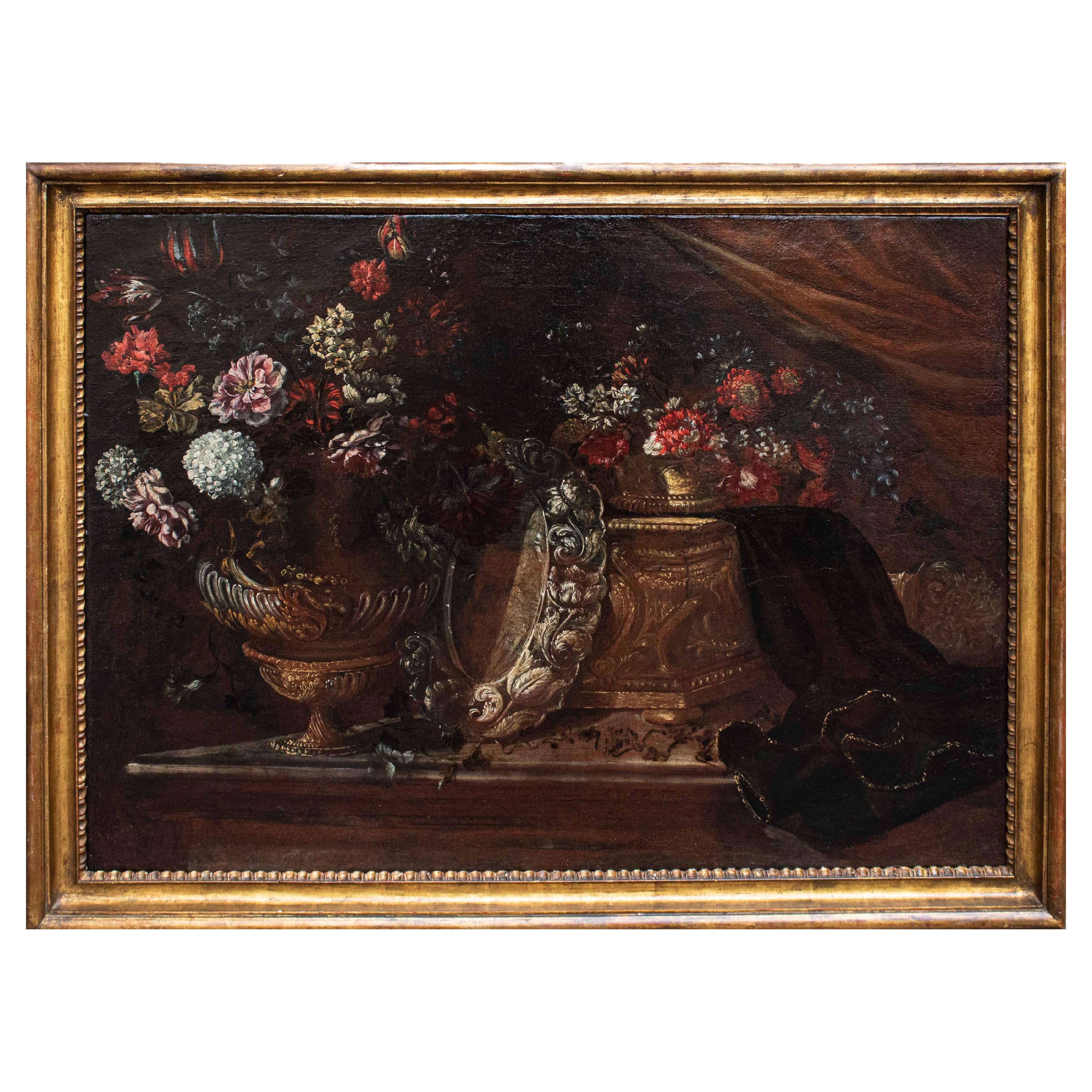
View AllOil painting on canvas depicting Still life Roman school of the 17th century
Located in Milan, IT
Roman School, 17th century
Still Life
Oil on canvas, 79 x 107 cm
Framed, 93 x 121 cm
The work under scrutiny, depicting a majestic still life of flowers, is ascribed to the 17th...
Category
Antique 17th Century Paintings
Materials
Canvas
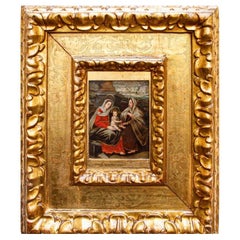
Flemish school, 16th century, St. Anne, the Virgin and Child
Located in Milan, IT
Flemish school, 16th century
St. Anne, the Virgin and Child
Oil on copper, 21 x 16 cm
With period frame, 65 x 56 cm
The painting depicts three central figures: the Madonna, Baby ...
Category
Antique 18th Century and Earlier Belgian Other Paintings
Materials
Copper
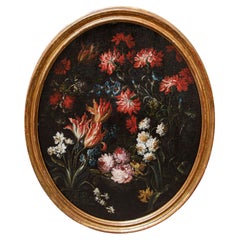
Lombard school, 17th century, Still life with flowers
Located in Milan, IT
Lombard School, 17th century
Still Life with Flowers
Oil on canvas, 52 x 60 cm
Framed, 67 x 76 cm
The oil on canvas under consideration, depicting a floral jubilation emerging f...
Category
Antique 17th Century Other Paintings
Materials
Canvas
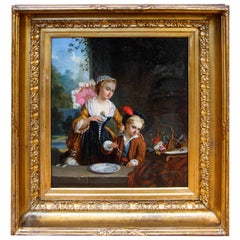
18th-19th century, French school, the soap bubbles
Located in Milan, IT
French school, 18th-19th century
The soap bubbles
Oil on panel, 44.5 x 36.5 cm
Framed, 60 x 54 cm
In this French school painting, with its leery and playful tone, but mother lovi...
Category
Antique 19th Century Other Paintings
Materials
Canvas
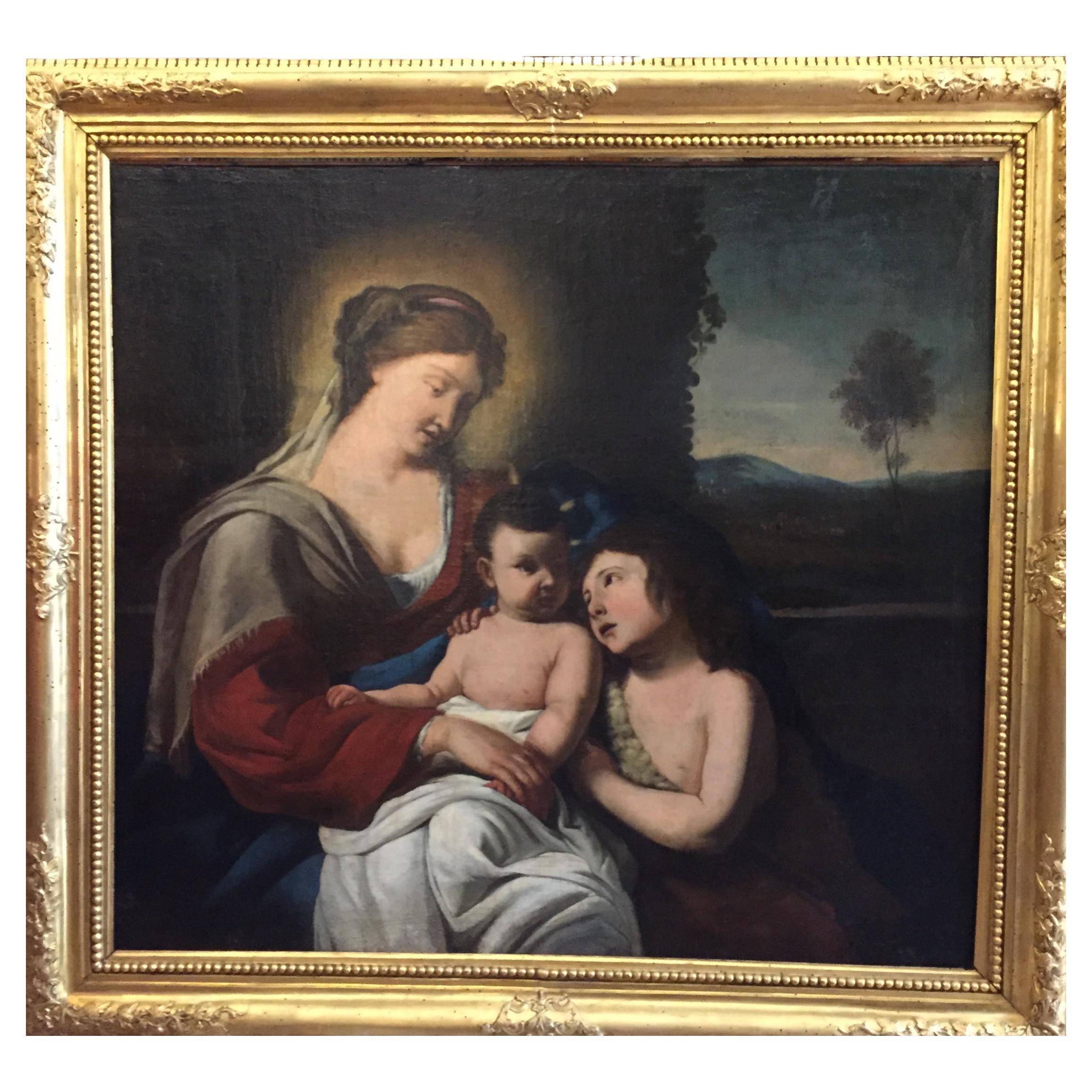
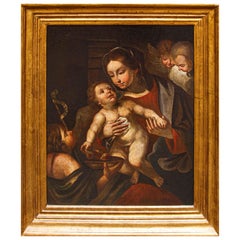
Italian school, 17th century, Madonna and Child with St. John
Located in Milan, IT
Italian School, 17th century
Madonna and Child with St. John
Oil on canvas, 86 x 99 cm
Framed, 113 x 93 cm
The seventeenth-century painting presents the Virgin intent on presenti...
Category
Antique 18th Century and Earlier Italian Other Paintings
Materials
Canvas
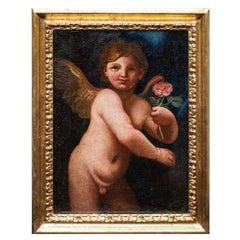
17th Century Putto with Rose Painting Oil on Canvas Emilian School
Located in Milan, IT
Emilian school, 17th century
Putto with rose
Oil on canvas, 43.5 x 32 cm - with frame 45 x 32.5 cm
The figure of the putto, when equipped with specific attributes, lends it...
Category
Antique 17th Century Italian Paintings
Materials
Canvas
You May Also Like
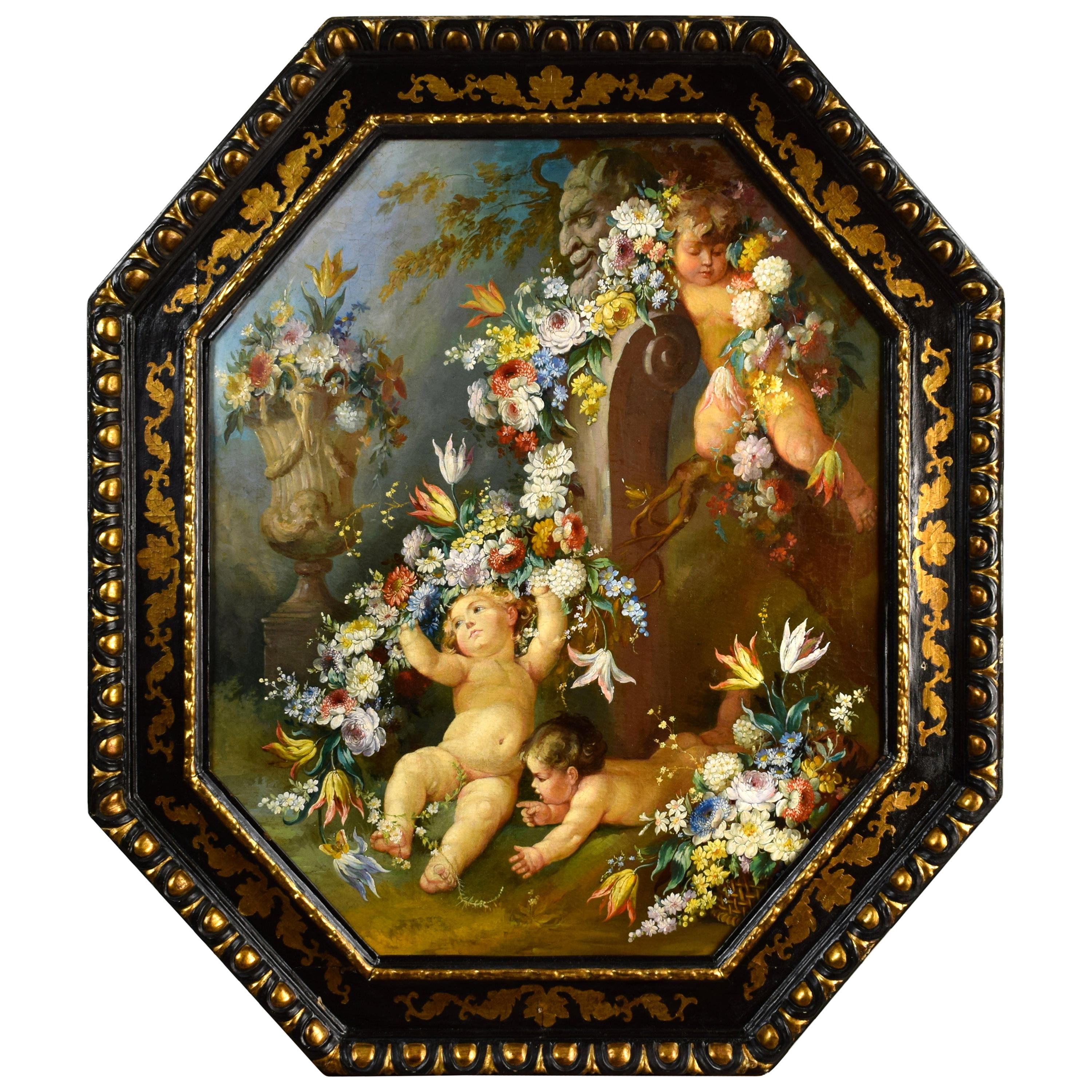
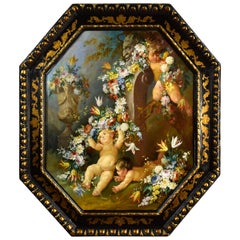
19th Century, Italian Painting with Still Life with Cherubs
Located in IT
19th century Roman painter
Still life with cherubs, flower festoons and herma with faun
Measures: Oil on canvas, cm H 78 x W 95 without frame
Cm H 122.00 x W 106 x D 8 with frame.
The work, painted in oil on canvas, octagonal in shape, represents a nature with three putti or cupids playing with flower festoons in a wooded environment in which is placed a herma with faun and, on the left, a large neoclassical marble vase...
Category
Antique 19th Century Italian Baroque Paintings
Materials
Canvas
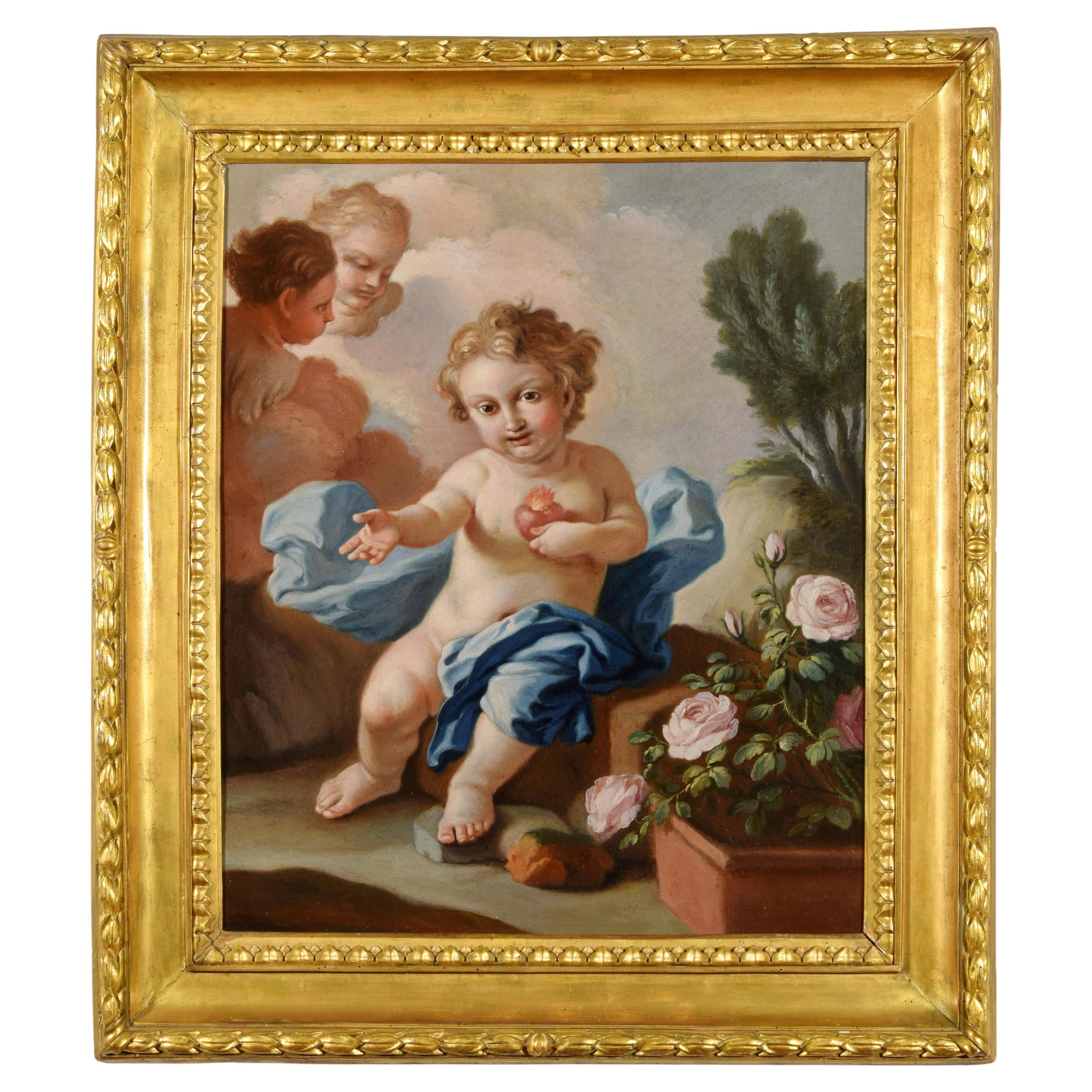
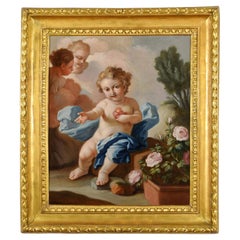
18th Century, Italian painting with Sacred Heart of the Child Jesus by Pietro Ba
By Pietro Bardellino
Located in IT
Pietro Bardellino (Italy - Naples, 1732 - 1806), attr., Sacred Heart of the Child Jesus
Measurements: with frame, cm L 86 x H 99 x P 8; only the canvas, cm L 78 x H 64
The painting, made in oil on canvas, represents the Sacred Heart of the Child Jesus. Stylistically the work is attributable to Pietro Bardellino (Italy, Naples, 1732 - Naples, 1806), a pupil of Francesco De Mura and considered by critics one of the most gifted and sensitive exponents of the Rococo style in Naples.
The canvas represents the Child Jesus, surrounded by flowers in an outdoor setting, while showing the sacred heart. The canvas has a well-balanced color and a strong sweetness of the child’s traits, which with the complicit gesture of the right hand, involves the viewer in the intimate and delicate sharing of the garden in which he sits. The roses, in addition to being a beautiful piece of still life, contribute to enrich the Christological message, being bearers of symbolic meanings. Marian attributes par excellence, are often side by side with Christ, whose thorns foreshadow the Passion. In the canvas, on the top left, two cherubim are observed: among them, according to the Old Testament, is God: the author therefore puts into place an iconographic and iconological hyperbole that amplifies its meaning. The iconographic theme of the Child Jesus with the Sacred Heart in his hand spread between the second half of the eighteenth century and the first of the following century. With the worship of the Sacred Heart of Jesus, the Catholic Church intends to honour the Heart of Jesus Christ, one of the organs symbolizing his humanity, which by intimate union with the Divinity, has the right to worship and love of the Saviour for men, of which His Heart is the symbol. It represents one of the fundamental devotions of Christian life, as it manifests the true face of God, who is prodigal and boundless love. It was the French mystic Saint Margaret Mary Alacoque...
Category
Antique Mid-18th Century Italian Baroque Paintings
Materials
Canvas
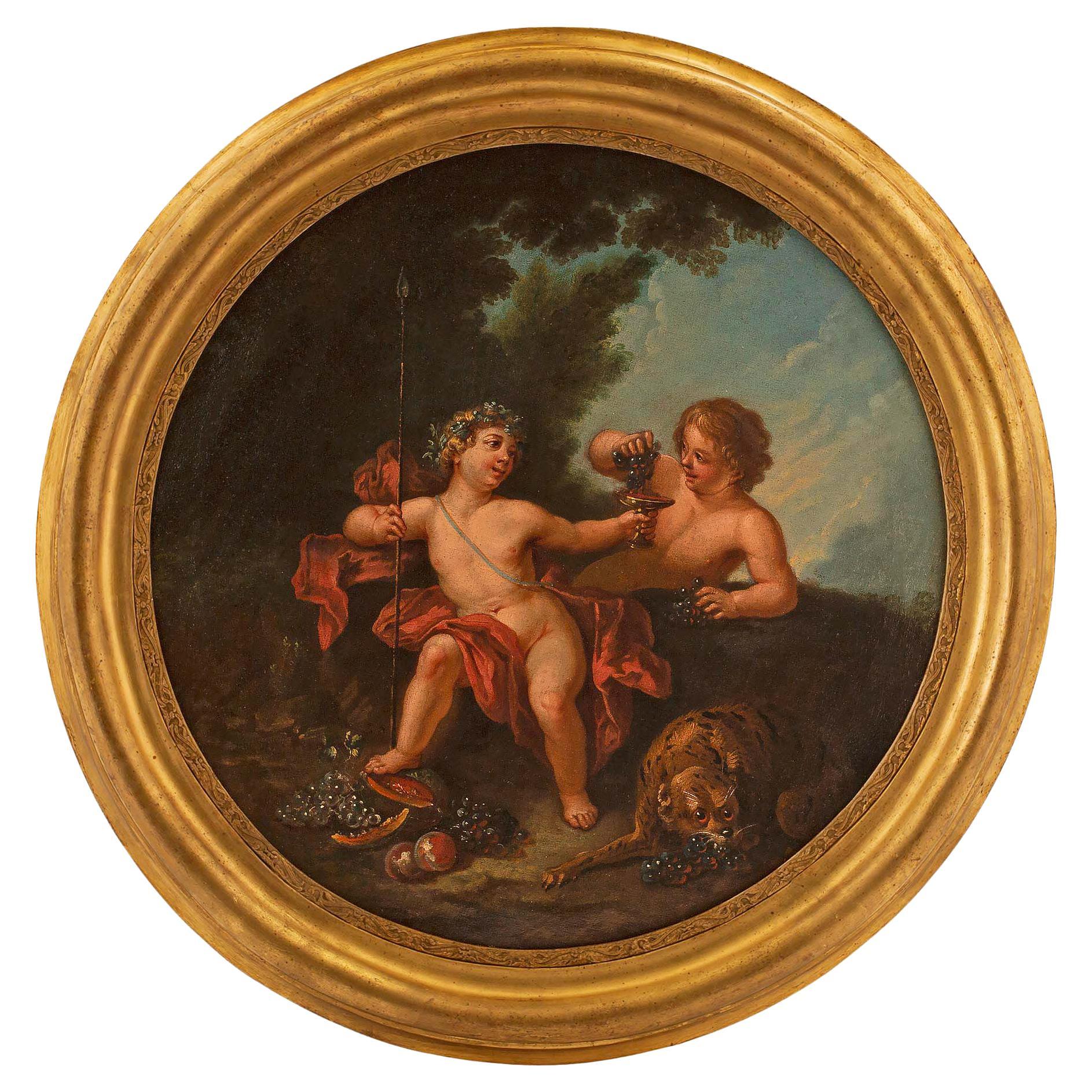
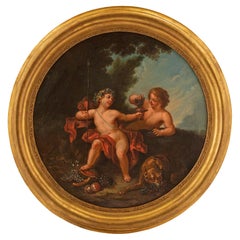
Italian 18th Century Neo-Classical Oil on Canvas Painting
Located in West Palm Beach, FL
An extremely charming Italian 18th century Neo-Classical oil on canvas painting. The circular painting retains its original giltwood frame with a beautiful mottled designs and finely...
Category
Antique 18th Century Italian Neoclassical Paintings
Materials
Canvas, Giltwood
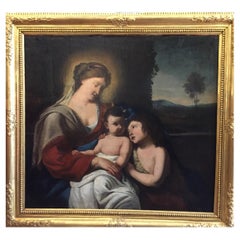
Madonna con Bambino e San Giovannino Dipinto Religioso Italiano 1650 circa
Located in Milano, MI
Dipinto religioso italiano di Scuola Lombarda Madonna con Bambino e San Giovannino circa 1650 con una buona composizione equilibrata ed armoniosa al centro della quale si trova il Bi...
Category
Antique Mid-17th Century Italian Baroque Paintings
Materials
Canvas, Giltwood
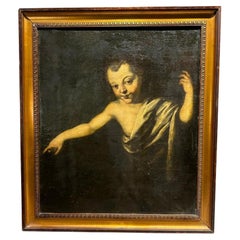
Giacinti Brandi ( 1621-1691 ) " S. Giovannino " 17th Century with Video
Located in Madrid, ES
Giacinti Brandi ( 1621-1691 ) " S. Giovannino " 17th Century
Important Baroque painting attributable to the hand of the great Roman old master Giacinto Brandi. It depicts San Giovannino who, with an expression of rare beauty and intensity, turns his gaze toward us who observe this small masterpiece. Giacinto Brandi (1621 – 19 January 1691) was an Italian painter from the Baroque era, active mainly in Rome and Naples. Born in Rome,he was part of the studio of Alessandro Algardi, a noted sculptor who noted that Brandi was more suited to painting. He joined the studio of Giovanni Giacomo Sementi. He traveled to Naples from 1638, and by 1647 had returned to Rome to work under Giovanni Lanfranco, where Brandi befriended Mattia Preti. The two artists would later on, often collaborate. His works are well distributed among baroque Churches of Rome including San Carlo al Corso ceiling frescoes (1670–1671), San Silvestro in Capite, Sant'Andrea al Quirinale, a canvas of Sant'Andrea (1650) in Santa Maria in Via Lata a painting of Martyrdom of the Forty (1660) for the Chiesa delle Santissima Stimmate di San Francesco a Coronation of the Virgin (1680) which serves as main altarpiece for the church of Gesù e Maria, a canvas of the Drunkedness of Noah in the Galleria Corsini, an Assumption (1655) for Santa Maria in Organo in Verona a fresco from Ovid's Metamorphoses (1651–1653) for Palazzo Pamphilj in Piazza Navona, and a Martyrdom of San Biagio for the church of San Carlo ai Catinari a Visione del beato Giovanni di San Facondo (1656) and a Estasi della beata Rita da Cascia (1660) in the Basilica di Sant'Agostino in Campo Marzio San Rocco intercede per i malati di peste (1673) and San Rocco in gloria (1674) in the Chiesa di San Rocco all'Augusteo; Compianto sul Cristo morto (1675–76) in the Chiesa di Sant'Andrea al Quirinale. In 1647, he joined the Congregazione dei Virtuosi al Pantheon in Rome and from 1651 was inducted into the Accademia di San Luca for painters. In 1663, he frescoed the life of Saint Erasmus...
Category
Antique 17th Century Italian Baroque Paintings
Materials
Paint
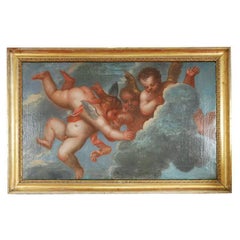
17th-18th Century Venetian Painting
Located in Pembroke, MA
Venetian School painting of four angels, allegorically depicting the variable winds of change and time. Unsigned, believed to be by a follower of Pietro Li...
Category
Antique 17th Century Italian Baroque Paintings
Materials
Giltwood, Canvas
$9,500 Sale Price
39% Off