Items Similar to Old Master Allegorical oil painting of “Erminia and The Shepherds”
Video Loading
Want more images or videos?
Request additional images or videos from the seller
1 of 19
Old Master Allegorical oil painting of “Erminia and The Shepherds”
$6,500
£4,926.25
€5,649.99
CA$9,081.73
A$9,907.68
CHF 5,254.83
MX$119,365.20
NOK 66,694.02
SEK 61,060.19
DKK 42,197
About the Item
A fully restored small northern Italian Baroque painting on canvas that may have been painted as a study, (or what is referred to as a bozzetto to a larger commissioned painting) depicting Erminia and the sheperds. The paining is presented in a modern frame sympathetic to the period
This scene depicted in the paining is drawn from “Jerusalem Delivered” (1581), an epic poem about the Crusades by Torquato Tasso. Tasso recounts the flight and disguise of the Muslim princess Erminia, who has fallen in love with the Christian knight Tancred. The painting represents the moment when Erminia approaches the home of an old shepherd and his family as she is fleeing crusaders in hot pursuit. In this painting the shepherd and his family including a young toddler appear frightened of the warrior but later in the poem the family’s reaction changes to admiration and astonishment when Erminia removes her helmet, revealing her identity as that of a beautiful young woman.
This episode of the poem plus the moment when Erminia removes her helmet has been painted many time by some very well known Baroque and Italian Renaissance artists. In fact this study bears many similarities to a paining of the subject by Guercino, although Guercino chose to depict the moment when Erminia removes her helmet to reveal her real identity to the shepherds and not the moment where her identity is still concealed.
The painting has been professionally restored and is unsigned. It is set in a 19thC frame that is sympathetic to the period.
- Similar to:Giovanni Francesco Barbieri (Il Guercino) (Artist)
- Dimensions:Height: 17 in (43.18 cm)Width: 13.5 in (34.29 cm)Depth: 2.5 in (6.35 cm)
- Style:Baroque (Of the Period)
- Materials and Techniques:
- Place of Origin:
- Period:
- Date of Manufacture:circa 1700
- Condition:Refinished. Wear consistent with age and use. The painting has been professionally restored and cleaned,. Dimensions below are for the canvas.
- Seller Location:Vancouver, CA
- Reference Number:1stDibs: LU4631214591511
About the Seller
4.9
Vetted Professional Seller
Every seller passes strict standards for authenticity and reliability
Established in 1981
1stDibs seller since 2019
165 sales on 1stDibs
Typical response time: 5 hours
- ShippingRetrieving quote...Shipping from: Vancouver, Canada
- Return Policy
More From This Seller
View AllBaroque Painting Depicting the Illicit Romance of Paolo and Francesca
Located in Vancouver, British Columbia
An exceptionally executed oil on canvas Baroque painting depicting "lovebirds" Paolo Malatesta and Francesca Da Rimini whispering to one another. At the feet of Paoio there is a dog symbol...
Category
Antique Early 18th Century Italian Baroque Paintings
Materials
Canvas
Italian Baroque Style Painting of Beauty and Old Age attributed to R. Manchetti
Located in Vancouver, British Columbia
An old master style 18th century allegorical painting representing youth and old age, and/or beauty and wisdom, depicted by a beautiful young ...
Category
Antique Mid-18th Century Italian Baroque Paintings
Materials
Canvas
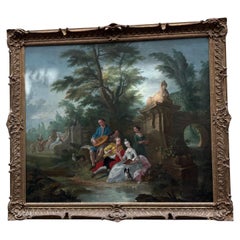
18th Century Painting Showing Figures in a Landscape Attributed to Pater
By Jean-Baptiste Pater
Located in Vancouver, British Columbia
A romantic 18th century oil painting on canvas depicting two young couples in an idyllic landscape, the figures sitting by a stream beside a garden folly, their pets with them. The two men serenade the women with their stringed instruments. The subject matter and style of painting...
Category
Antique Mid-18th Century French Louis XV Paintings
Materials
Canvas
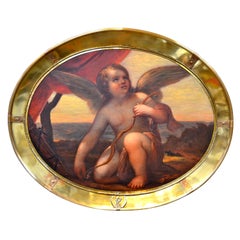
Venetian 17 Century Baroque Oil on Canvas Painting of Kneeling Cupid
By (after) Raphael (Raffaello Sanzio da Urbino)
Located in Vancouver, British Columbia
A fine and rare painting of a kneeling cupid holding a quiver, shown against an idyllic background. The style and subject matter are similar to works by Venetian masters from the 16t...
Category
Antique Early 17th Century Italian Baroque Paintings
Materials
Brass
$14,000 Sale Price
20% Off
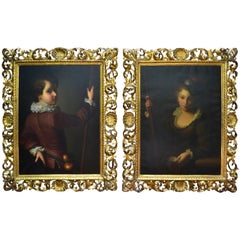
Pair of Paintings Depicting Pilgrims of Compostela After Grimou
Located in Vancouver, British Columbia
A complementary pair of 19th century Italian paintings in the "chiaro scuro" style depicting pilgrims gazing intently with a certain degree of sentimental...
Category
Antique Mid-19th Century Italian Baroque Paintings
Materials
Canvas
$8,000 Sale Price / set
33% Off
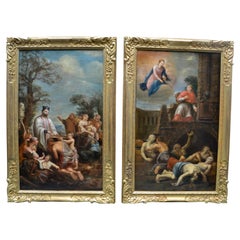
Pair of 18 Century Paintings of St Francis Xavier and St Carlo Borromeo
Located in Vancouver, British Columbia
A beautifully executed and rare complementary pair of oil on canvas paintings depicting two of the moist famous and important counter reformation catholic saints St Francis Xavier and St Carlo Borromeo shown in scenes of what the respective saints are mostly famous for. St Francis Xavier for the conversion to Christianity of many S. E Asian countries notably India and St Carlo Borromeo shown asking the Virgin Mary to intercede for the cessation of the terrible plague of 1576. The paintings are presented in refreshed gilded carved wooden frames and are unsigned.
St. Francis Xavier was born in Spanish Navarre in 1506 and in 1528, he met St. Ignatius of Loyola. He became one of the seven in 1534 who founded the Society of Jesus (Jesuit Order). In 1536, he left the University of Paris and joined St. Ignatius in Venice. He was ordained in 1537, and in 1540 after the Society was recognized by the Pope, he journeyed to the Far East. Francis Xavier first evangelized the Portuguese colony of Goa in India, then Travancore, Ceylon, Malacca, and the surrounding islands. From there he journeyed to Japan, where he gave Christianity such deep roots that it survived centuries of violent persecution. He died on Sancian Island in 1552, while he was seeking to penetrate into the great forbidden land of China.
Despite language problems, lack of funds, resistance from the Europeans as well as the natives, he persevered. St. Francis converted more people in his life than anyone since the Apostle St. Paul. He baptized over 3 million people, converted the entire town of Goa in India, and he labored in India, Pakistan, Bangladesh, Sri Lanka, Malaysia, Indonesia, Singapore, and Japan. He was truly a missionary par excellence.
St Carlo Borromeo (1538-1584), was a Cardinal of the Holy Roman Catholic Church and Archbishop of Milan from 1565 to 1583. He was described in the decree for his canonization, as “a man, even while the world smiles on him with the utmost flattery, he lives crucified to the world, spiritually, trampling earthly things, seeking continuously the things of heaven, emulating the life of the Angels on earth, in his thoughts and actions.
The plague began in the month of August that year. Milan was celebrating joyfully the arrival of Don John of Austria, on his way to Flanders, where he had been appointed governor. The city authorities were abuzz with excitement in their desire to bestow the highest honours on the Spanish prince, but Charles, who had been Archbishop of the diocese for six years, was following with concern the news coming from Trento, Verona and Mantua, where the plague had begun claiming victims. The first cases exploded in Milan on August 11th, right at the moment when Don John of Austria arrived. The victor of Lepanto, followed by the governor, Antonio de Guzmán y Zuñiga, departed the city, while Carlo Borromeo, who was in Lodi for the Bishop’s funeral, returned in haste.
Confusion and fear reigned in Milan and the Archbishop dedicated himself completely to assisting the sick and ordering public and private prayers. Dom Prosper Guéranger sums up his infinite charity in this way: “In the absence of local authorities, he organized the health service, founded or renewed hospitals, sought money and provisions, decreed preventive measures. Most importantly though, he took steps to ensure spiritual help, assistance to the sick and the burial of the dead. Unafraid of being infected, he paid in person, by visiting hospitals, leading penitential processions, being everything to everyone, like a father and true shepherd”
St. Carlo was convinced that the epidemic was “a scourge sent by Heaven” as chastisement for the sins of the people and that recourse to spiritual measures was necessary to fight against it: prayer and penitence. He rebuked the civil authorities for having placed their trust in human measures rather than divine ones. “Hadn’t they prohibited all the pious gatherings and processions during the time of the Jubilee? For him, and he was convinced of it, these were the causes of the chastisement. The magistrates who governed the city continued to oppose public ceremonies, out of fear that the large gathering of people would spread contagion, but Charles “who was guided by the Divine Spirit” – recounts another biographer – convinced them by citing various examples, among which was the one regarding St. Gregory the Great who had halted the plague devastating Rome in 590.
While the pestilence spread, the Archbishop then ordered three general processions to take place in Milan on the 3rd, 5th and 6th of October, “to placate the wrath of God”. On the first day, the Saint, despite it not being the Lenten season, placed ashes on the heads of the thousands gathered, exhorting them to penitence. Once the ceremony was over, the procession went to the Basilica of St. Ambrose. Charles put himself at the head of the people, dressed in a hooded purple robe, barefoot, penitential cord at his neck and large cross in his hand.
The second procession led by the Cardinal headed towards the Basilica of San Lorenzo. The third day the procession from the Duomo headed for the Basilica of Santa Maria at San Celso. St. Carlo carried in his hands a relique of Our Lord’s Holy Nail, which had been given by the Emperor Theodosius to St. Ambrose in the 5th century.
The plague didn’t show any signs of waning and Milan appeared depopulated, as a third of its citizens had lost their lives and the others were in quarantine or didn’t dare leave their homes. The Archbishop ordered about twenty stone columns with a cross at the top to be erected in the main squares and city crossroads, allowing the inhabitants from every quarter to take part in the Masses and public prayers - from the windows of their homes. One of Milan’s protectors was St. Sebastian, the martyr the Romans had recourse to during the plague in 672. St. Charles suggested that the magistrates of Milan reconstruct the sanctuary dedicated to him, which was falling into ruins, and to celebrate a solemn feast in his honour for ten years. Finally in July 1577, the plague ceased and in September the founding stone was laid in the civic temple of St. Sebastian, where on January 20th every year, even today a Mass is offered to recall the end of the scourge.
St.Carlo Borromeo died on November 3rd 1584 and was buried in the Duomo of Milan. His heart was solemnly translated to Rome, in the Basilica of Saints Ambrose...
Category
Antique Late 18th Century French Baroque Paintings
Materials
Canvas
You May Also Like
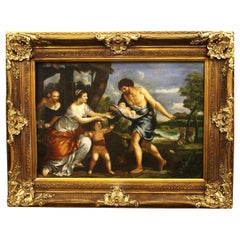
Oil painting on canvas, after Cortona
Located in Rome, IT
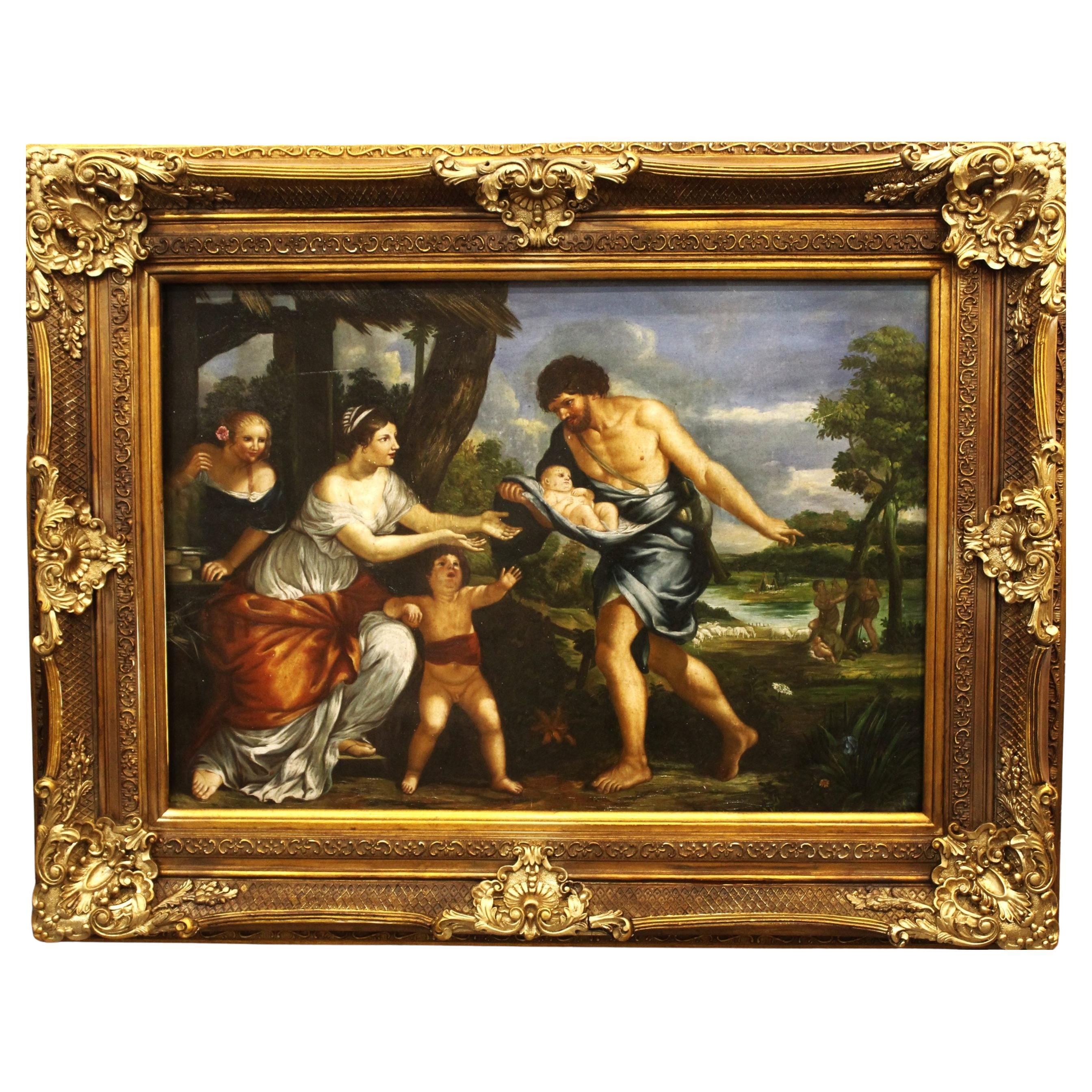
Oil on canvas painting, Romulus and Remus sheltered by Faustulus, 20th century artist, copy of Pietro da Cortona. ADDITIONAL PHOTOS, INFORMATION OF THE LOT AND SHIPPING INFORMATION C...
Category
Mid-20th Century Italian Paintings
Materials
Canvas
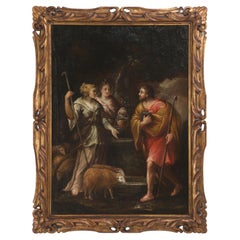
French Oil Painting c1700
s Biblical Story of Rebekah and Abraham
s Servant
Located in BENSENVILLE, IL
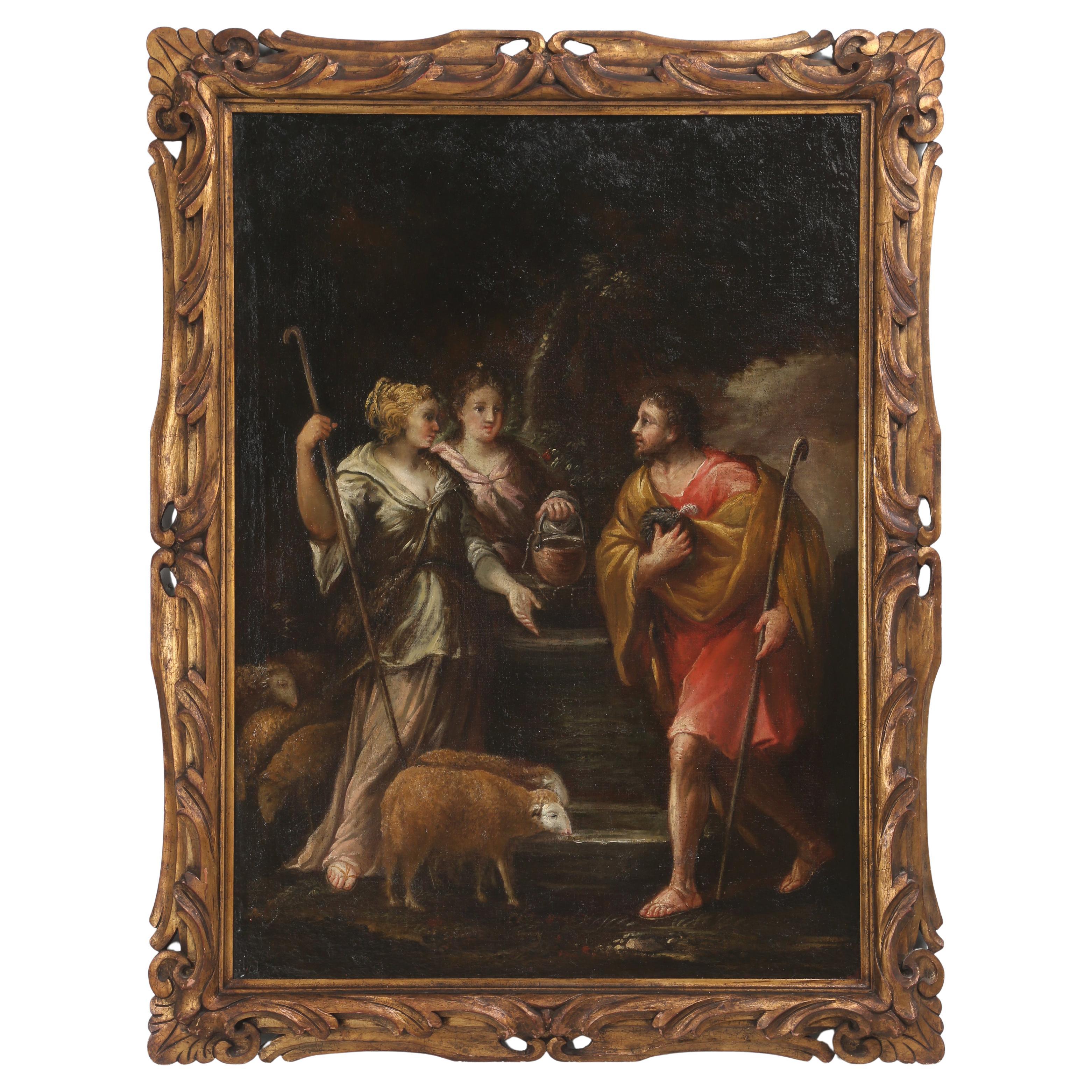
Our French Oil Painting is from the 1700's depicts the Biblical Story of Rebekah and Abraham's Servant, Rebekah is seen offering water to the servant and his camels as a true test of...
Category
Antique 1750s French Rococo Paintings
Materials
Canvas, Wood, Paint
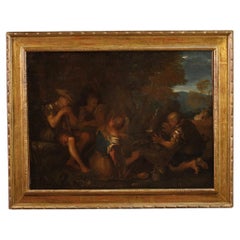
17th Century Oil on Canvas Venetian Style Landscape with Characters Painting
Located in Vicoforte, Piedmont
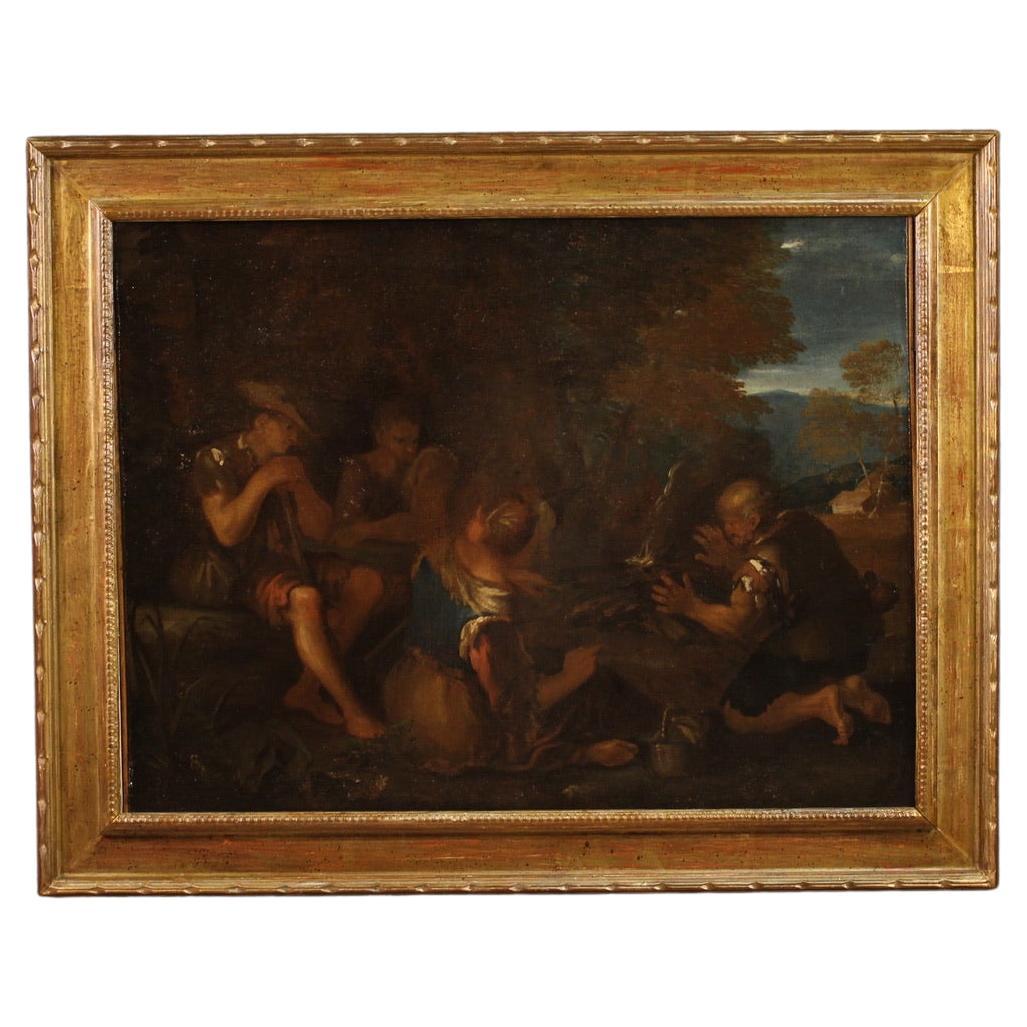
Antique Italian painting from the 17th century. Oil on canvas artwork depicting a landscape with figures from the Venetian school, of good pictorial quality. We see four characters a...
Category
Antique 1640s Italian Paintings
Materials
Canvas
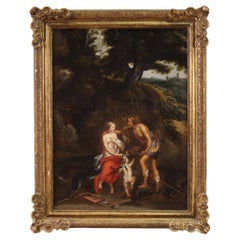
17th Century Oil on Canvas Flemish Mythological Antique Painting, 1660
Located in Vicoforte, Piedmont
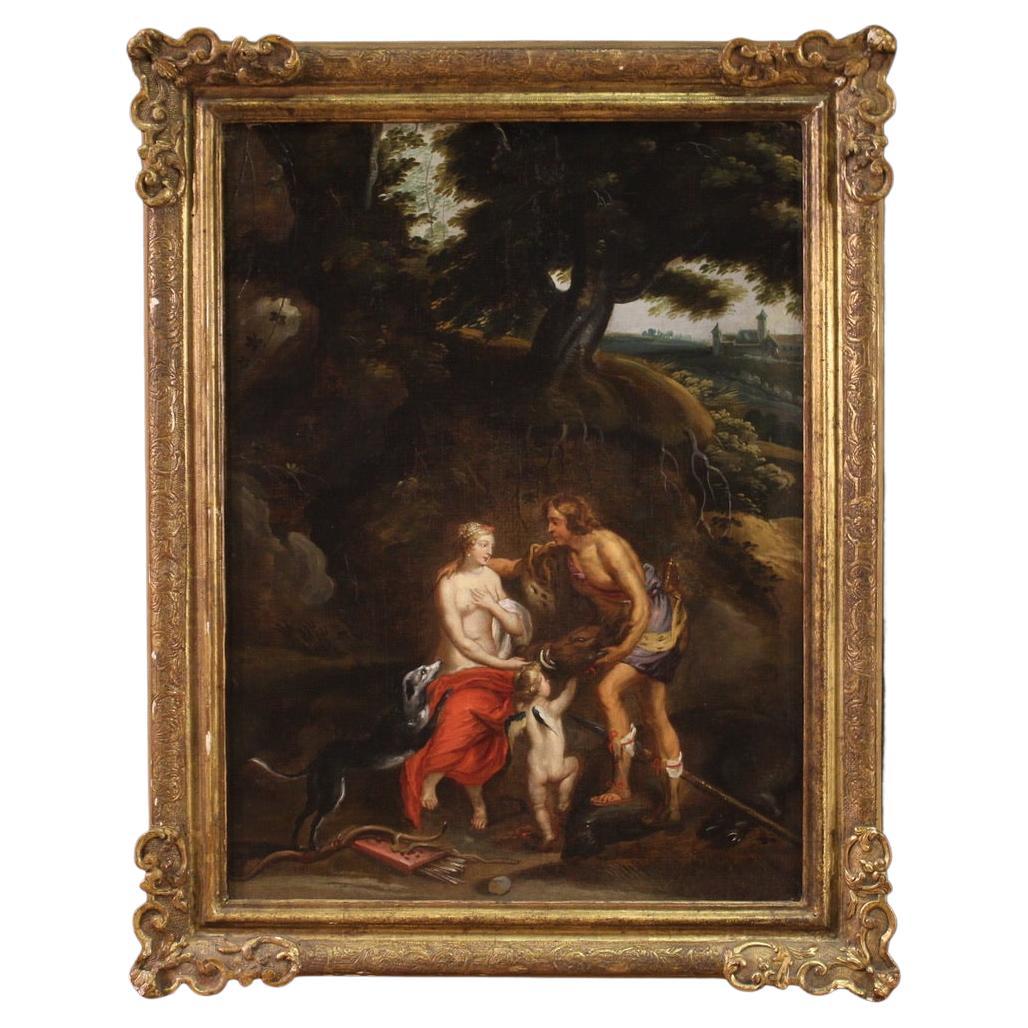
A splendid 17th century Flemish painting. Oil on canvas artwork depicting a mythological subject of great charm, Meleager offers the boar's head to Atalanta. The Fates had predicted ...
Category
Antique 1660s Dutch Paintings
Materials
Canvas
$8,617 Sale Price
20% Off
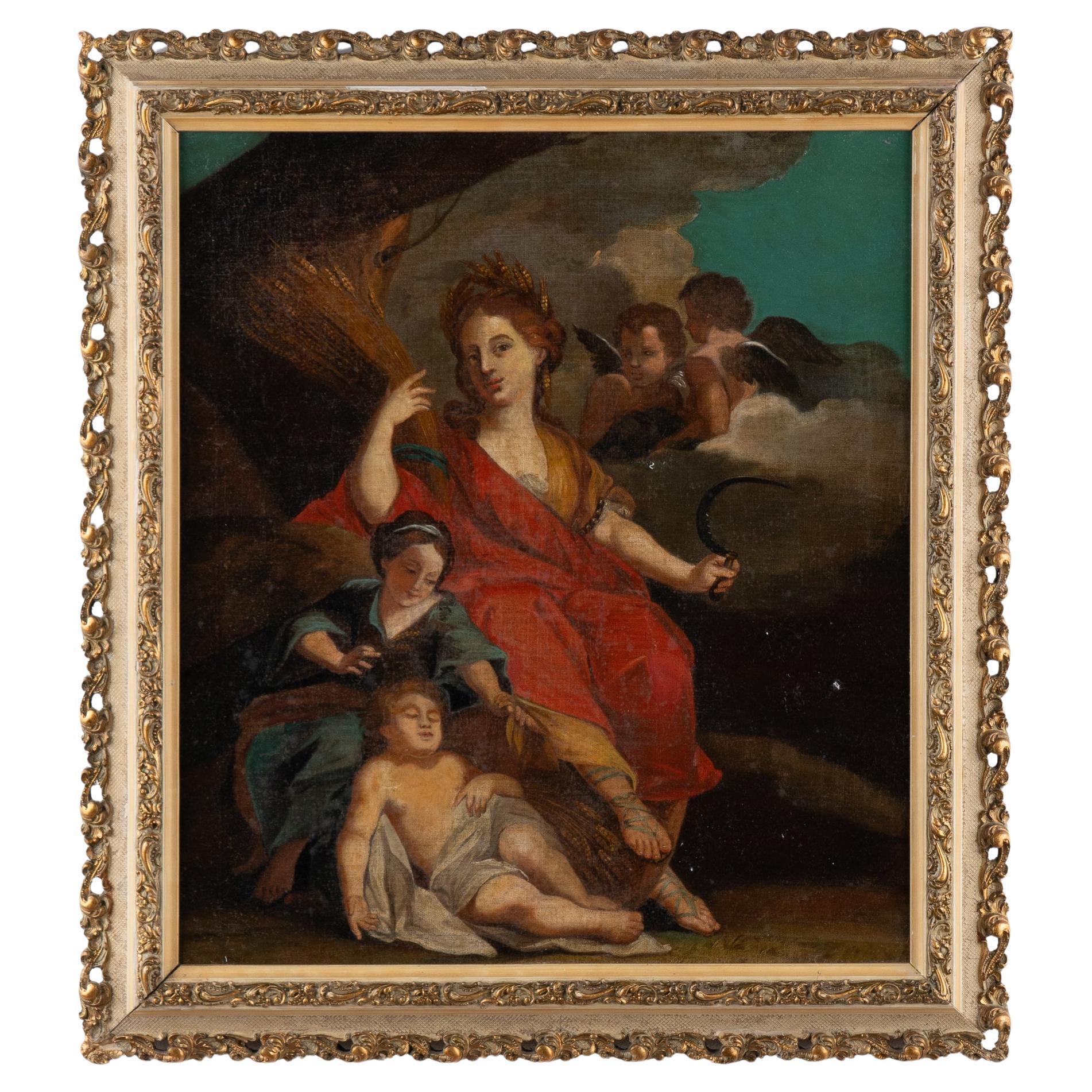
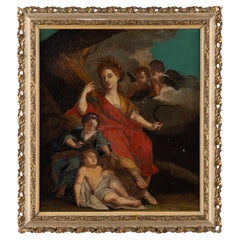
Oil on Canvas Allegorical Painting of Harvest with Demeter, Italy circa 1750-70
Located in Round Top, TX
Original oil on canvas allegorical paining of harvest represented by Demeter, goddess of agriculture with sheaf and scythe. Unsigned.
Painter unknown, 18th century Italian School.
C...
Category
Antique Mid-18th Century Italian Paintings
Materials
Canvas, Wood, Paint
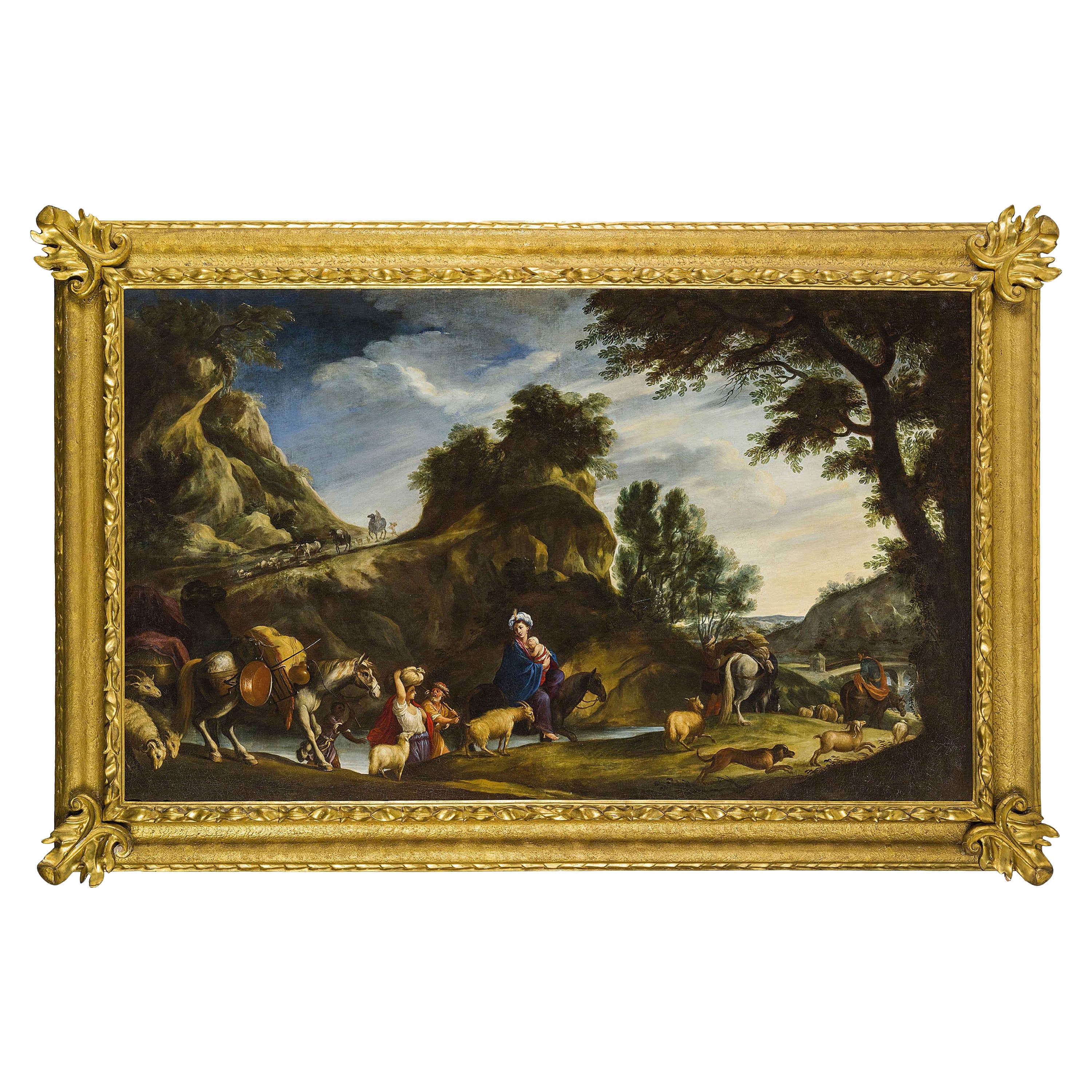
17th Century, Italian Painting by Pier Francesco Cittadini, Jacob and his Family
Located in IT
Pier Francesco Cittadini (Milan, 1616-Bologna, 1681)
"Jacob and his family go to Egypt"
Oil on canvas, cm 109 x 190 (canvas only)
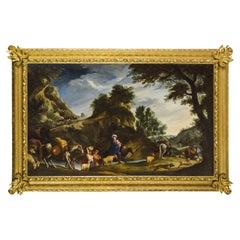
The valuable painting, made in oil on canvas, depicts Jacob and his family go to Egypt and we believe it can be, given the high quality painting, autograph work of Italian Pier Francesco Cittadini (Italy Milan, 1616 - Bologna, 1681) made after 1647. The work, in excellent condition is accompanied by a coeval frame in wood finely carved and golden.
The scene depicted, which was confused with the Flight to Egypt in the past years, is instead identified with the biblical episode of Jacob’s journey. In the foreground, reading the painting from left to right, we see a caravan composed of animals, including donkeys, dromedaries, goats, dogs and horses and people, women, men and slaves, who carry on their journey along the banks of a river, following a path that to the right, would seem to lead to the through of a bridge. In addition to the watercourse is described an environment characterized by large rocks and impervious come far to cover the entire verticality of the canvas. On the left, in the distance, we see the tail of the caravan that runs along the steep path. Large trees enliven and harmonize the environment, as well as white and grey clouds characterize the predominantly clear sky and illuminated on the right by sunlight.
The story is told in the Bible, Book of Genesis, 30, 25, passage in which is described the flight of Jacob from Haran after the contrasts with Laban, father of his wife Rachel. Jacob is the third great patriarch of the Bible. From his descendants originate the twelve generations of the people of Israel. He is the son of Isaac and Rebekah, who led him to flee from the wrath of Esau to Haran to seek refuge from his brother, Laban. At his uncle’s house Jacob met his daughter Rachel. As soon as he saw his cousin, Jacob was taken. Jacob will stay seven years in the service of Laban to marry his beloved Rachel. But Laban, with a deception, will give him in marriage first Lia, the least beautiful eldest daughter, and only after another seven years the splendid Rachel. From his first wife he will have several children, while Rachel will give birth to the beloved son, Joseph, who will become viceroy of Egypt.
After years of service, Jacob asked to be paid with every dark-coloured garment among the sheep and every spotted and dotted garment among the goats. Laban accepted and sent away from his sons all the leaders of that kind. So Jacob took fresh branches of poplar, almond and plane tree, and flayed them, and put them in the troughs. The optical suggestion induced the goats and the sheep to conceive and give birth to dark, striped and dotted garments. He also ensured that all the strongest and healthiest leaders of the flock of Laban would drink near the barked branches, thus assuring a genetic superiority to his part of the flock. His flocks grew numerous and strong and he became richer than his relative, arousing envy. It was clear that Laban would not respect him much longer. At the suggestion of the Lord, Jacob decided to return to Canaan. Trying to avoid any possible dispute, he left with his family while Laban was absent for shearing sheep. But when, three days later, his uncle returned home, he became angry, feeling offended because Jacob had gone secretly and had not allowed him to greet his daughters and grandchildren. In addition, his teraphim, statuettes, or idols, which depicted the family deities, had disappeared. After 7 days of pursuit, Laban and his men reached Jacob’s group on Mount Gilead, in the mountainous region west of the Euphrates River, where his uncle and grandson had a stormy conversation. The younger man was outraged at being accused of stealing idols and told Labano to rummage through his family’s tents at will. Neither of them could know or even imagine that it was Rachel who took the idols and hid them in the saddle of the camel. During the search, she sat down firmly on the saddle, apologizing for not being able to get up, «because I usually have what happens to women» (Gen 31:35). So the loot wasn’t discovered.
The author of this work was inspired by the composition of an engraving by Stefano Della Bella (1610-1664) of circa 1647. The engraving by Stefano della Bella bears the title "Iacob sur ses vieux jours quitte sans fascherie pour voir son filz Ioseph, sa terre et sa patrie" and is signed on the bottom left "Stef. of the Beautiful In. et fe." while on the right it is declared "Cum privil. Regis", that is with license of the king.
Stefano Della Bella (Italy - Florence, May 18, 1610-Florence, July 12, 1664) was born in a family of painters, sculptors and goldsmiths and was left early orphan of his father sculptor, he dedicated himself first to the art of goldsmith at the school of Giovanni Benedetto Castiglione and Gasparo Mola, then turning his attention to drawing and engraving. He soon began drawing figures and copying the etchings of Jacques Callot, which inspired his early works. Under the protection of the Medici, in particular of Don Lorenzo, cadet son of Grand Duke Ferdinand I, Della Bella has the opportunity to make study trips to Rome, where he stayed from 1633-1636; In Rome he met French engravers and publishers of prints such as Israël Henriet and François Langlois, who influenced his decision to move to Paris in 1639, four years after the death of Callot. In Paris he soon reached, thanks to the engravings commissioned by Cardinal Richelieu, the success also worldly; he frequented courtiers, theatre artists and writers, while refusing too oppressive honors. In 1646-1647 he continued his travels in the Netherlands to Amsterdam, Antwerp and Dordrecht. He returned to Florence in 1650 and resumed working under the protection of the Medici court, working for his patrons. In 1656 he became a member of the Academy of Apatists.
The painting object of this study is reasonably attributable to Pier Francesco Cittadini, or Pierfrancesco Cittadini, called the Milanese or the Franceschino (Italy - Milan, 1616-Bologna, 1681) as some exemplary stylistic comparisons proposed to follow can prove.
Pier Francesco Cittadini was an Italian baroque painter, mainly active in Bologna.
His artistic training first took place with the painter Daniele Crespi...
Category
Antique Mid-17th Century European Baroque Paintings
Materials
Canvas, Giltwood
More Ways To Browse
Torquato Tasso
Il Guercino
Chinese Silk Scroll
Enamel Painting On Copper
English Castle Furniture
Floral Paintings 18th Century
Jaime Parlade Tiger
Lee Reynolds Oil Painting
Oil Paintings Spanish Colonial Saints
Paintings Of Victorian Houses
Parlade Tiger
Scandinavian Artist Painting
The Hamptons Paintings
Vintage Floral Oil Painting
Vintage Kaufman Furniture
Adoration Of The Shepherds
Argentina Oil Painting
Enamel On Copper Painting