Japanese Paintings
to
20
201
28
267
2
Height
to
Width
to
5
2
2
1
35
99
133
2
67
31
8
11
1
9
4
1
3
4
170
135
112
108
80
14,168
9,671
6,516
5,815
2,844
269
269
269
2
2
2
1
1
Place of Origin: Japanese
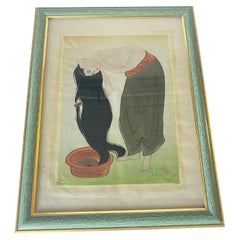
Japonaise Painting in a Wood Frame, Representing a Woman, Japan, XX Century
Located in Auribeau sur Siagne, FR
This is an genuine painting, of a woman, with green and orange colors. It has been made in Japan, during the XX Century. It is signed.
Category
20th Century Chinese Export Japanese Paintings
Materials
Wood, Paint

$258 Sale Price
20% Off
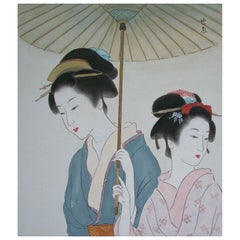
Vintage Japanese Watercolor Painting of Two Geisha, Signed, Late 20th Century
Located in Chatham, ON
Vintage watercolor painting of two Geisha under an umbrella - watercolor over graphite with gold gilt border - signed upper right (unidentified artist/maker...
Category
Late 20th Century Japonisme Japanese Paintings
Materials
Paint, Paper
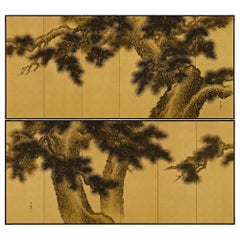
Early 20th Century Japanese Screen Pair - Ink Pine Trees on Gold
Located in Kyoto, JP
Imao Keisho (1902-1993)
Pine Trees
Early 20th Century, Circa 1930
Pair of six-panel Japanese screens. Ink on silk and gold leaf.
Dimensions: Each screen H. 67.5” x 148” (172 cm x 376 cm)
A pair of monumental six-panel Japanese pine screens by the renowned Nihonga artist Imao Keisho. Here Keisho entirely removed the background and brought the pine trees to the surface of the painting. This simplification of the elements makes the scene exceptionally direct and compelling and injects a very modern...
Category
Early 20th Century Showa Japanese Paintings
Materials
Gold Leaf
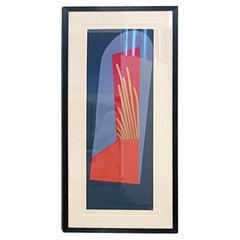
Mashiko Japanese Abstract Expressionist Serigraph, Untitled
Located in Queens, NY
Japanese Abstract Expressionist Serigraph, Signed & Numbered, (MASHIKO)
Category
20th Century Anglo-Japanese Japanese Paintings
Materials
Paper
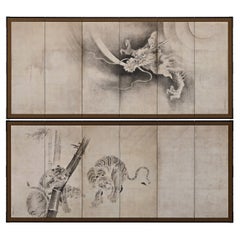
17th Century Japanese Screen Pair. Tiger
Dragon by Kaiho Yusetsu
Located in Kyoto, JP
Kaiho Yusetsu (1598-1677)
Tiger and Dragon
Early Edo Period, Circa 1650
A Pair of Six-fold Japanese Screens. Ink and slight color on paper.
Dimensions:
Each screen: H. 171 cm x W. 380 cm (67.5’’ x 149.5’’)
In this pair of early Edo period Japanese screens a group of tigers prowl in a bamboo grove whipped with fierce wind, while a dragon claws through clouds and mist. The dragon embodies elemental qualities - looming out of the mist, the coils of its body disappearing in the clouds. The dragon is calling for rain, symbolizing spring which is considered the fountain of life. On the other side, the tigers calls for the wind, symbolizing autumn which is considered the end of life. Tigers were familiar motifs within Japanese art from ancient times though the animals were imaginary to the people in the 17th century. While dragons and tigers are usually associated as sacred and ferocious, in this painting, both animals have rather amusing expressions. The tigers appear to glare at the dragon with cat-like eyes, and the look on the swirling dragon’s face appears almost affectionate - lending a playful flair to an otherwise magnificent theme.
The tiger and dragon are cosmological symbols of the balancing forces in the world. Screens such as this were originally meant to express the fluctuating nature of the world. For Japanese in the early Edo period, they likely suggested the powers of the cosmos. In Japan the tiger and dragon motif was originally absorbed into the circles of Zen monasteries before spreading into the secular world. The theme especially appealed to the military classes with the Kano school, the official painters to the Shogun and the samurai, being the leading contributors. The painter of this pair of screens, Kaiho Yusetsu (1598-1677), was closely patronized by the third Shogun Tokugawa Iemitsu. In his later years he worked with Kano school artists...
Category
Mid-17th Century Edo Antique Japanese Paintings
Materials
Silk, Wood, Paper
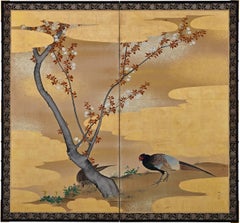
Early 19th Century Japanese Screen. Cherry Blossom
Pheasants by Mori Tetsuzan
Located in Kyoto, JP
Mori Tetsuzan (1775-1841)
Pheasants and Cherry Blossoms
Two-fold Japanese screen. Ink, color, gofun, gold and silver on paper.
A two-fold Japanese bir...
Category
Early 19th Century Edo Antique Japanese Paintings
Materials
Gold Leaf
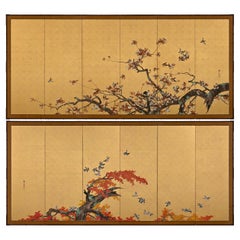
Meiji Era, Circa 1900 Japanese Screen Pair, Flowers
Birds of Spring
Autumn
Located in Kyoto, JP
Flowers & Birds of Spring and Autumn
Unknown artist.
Japan. Meiji period, circa 1900.
A pair of six-fold screens. Ink, color, gofun and gold leaf on paper.
Signed: Gaga S...
Category
1890s Meiji Antique Japanese Paintings
Materials
Gold Leaf
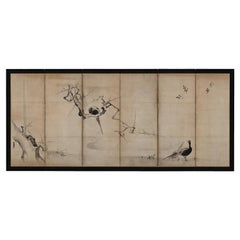
17th Century Japanese Screen. Ink Plum Tree
Birds by Kano Naonobu.
Located in Kyoto, JP
Kano Naonobu (1607-1650)
Plum Tree and Birds
Six-fold Japanese Screen. Ink and slight color on paper.
In this evocative ink work spread over a six-panel folding screen, we see the consummation of the elegance and refinement of the Edo Kano school. This 17th century screen is a rare surviving example of a large-scale bird and flower painting by Kano Naonobu, the younger brother of Kano Tanyu...
Category
17th Century Edo Antique Japanese Paintings
Materials
Wood, Paper
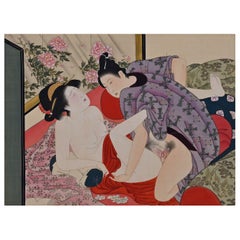
19th Century Japanese Shunga Hand-Scroll, Katsukawa School
Located in Kyoto, JP
Shunga
Unknown artist
Meiji era, circa 1880
Hand-scroll mounted with 12 paintings
Ink, pigment and gofun on silk
Dimensions:
Each image measures H. 23.2 cm x W. 34.4 cm (9.15” x 13.5”)
The hand-scroll measures H. 28 cm x W. 540 cm (11” x 212”)
A set of 12 late 19th century Japanese Shunga paintings mounted as a hand-scroll. Two of the leaves bear the signature and seal ‘Setsuzan’, although we are unable to confirm the identity of the artist using this art name. 6 of the 12 images are taken almost directly from Katsukawa Shuncho’s late 18th century woodblock series, ‘Erotic Pictures...
Category
Late 19th Century Meiji Antique Japanese Paintings
Materials
Silk
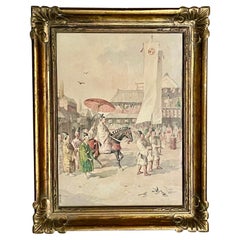
Evocative Japanese Watercolor of a Ceremonial Parade Scene in Giltwood Frame
Located in San Francisco, CA
An interesting Japanese watercolor on paper depicting a ceremonial parade scene, the central figure of a dignitary on horseback led by 2 robed figures bearing a tall standard with th...
Category
Early 20th Century Japanese Paintings
Materials
Paint, Paper
Pair of Japanese Edo Six Panel Screens the Seven Sages
Located in Rio Vista, CA
Fantastic pair of 19th century Japanese late Edo/early Meiji period six-panel screens titled The seven sages of the bamboo grove. The Kano school screens...
Category
19th Century Edo Antique Japanese Paintings
Materials
Brass, Gold Leaf

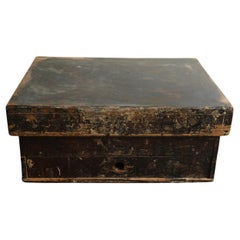
Wooden workbench of a Japanese lacquerware craftsman/20th century/wall-hanging
Located in Sammu-shi, Chiba
This is a lacquerware craftsman's workbench believed to have been actually used in Fukushima Prefecture and other areas in the Tohoku region between 1945 and 1960. This box-shaped st...
Category
20th Century Showa Japanese Paintings
Materials
Cedar, Lacquer
Pair of Japanese Edo Rimpa School Screens after Tawaraya Sōtatsu
Located in Rio Vista, CA
Impressive pair of 17th century Japanese Edo period Rinpa school screens made in the manner and style of Autumn Grasses by Tawaraya Sōtatsu (1570-1640). Beautifully decorated with wi...
Category
17th Century Edo Antique Japanese Paintings
Materials
Gold Leaf
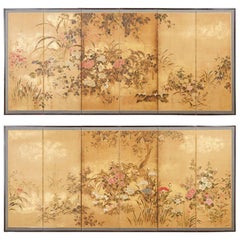
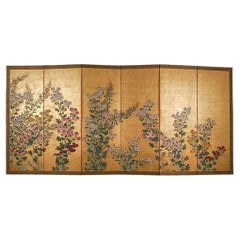
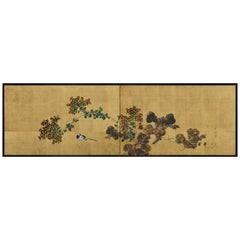
Japanese Six-Panel Screen Byobu With Chrysanthemums And Autumn Grass and Flower
Located in Torino, IT
The 19th Century Six-Panel Japanese folding screen "Byōbu" usually used in the most important Japanese house to stop wind and also to separate different space of the same big room de...
Category
Mid-19th Century Edo Antique Japanese Paintings
Materials
Gold Leaf
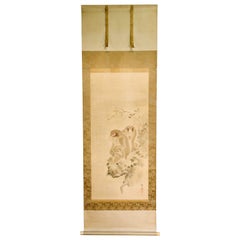
Japanese Silk Scroll Painting of Moneys Edo Period Mori Tetsuzan
Located in Atlanta, GA
A Japanese mounted vertical hanging scroll painting by Mori Tetsuzan (Japanese, 1775-1841) circa 19th century Edo period. The watercolor and ink on silk ...
Category
19th Century Japonisme Antique Japanese Paintings
Materials
Silk, Paper
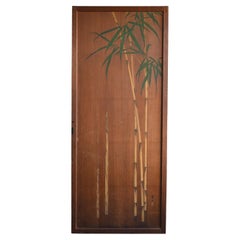
Wooden door with old Japanese bamboo painting/Wall hanging painting/Wooden door
Located in Sammu-shi, Chiba
This is a one-panel wooden door made in Japan around the 20th century. The material used is presumed to be Japanese cypress or Japanese cedar, and the delicately straight grain of th...
Category
20th Century Taisho Japanese Paintings
Materials
Cedar
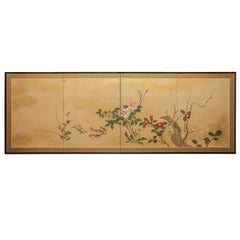
Japanese Four Panel Screen: Early Spring Into Summer
Located in Hudson, NY
Japanese Four Panel Screen: Early Spring Into Summer, Meiji period (1868 -1912) painting of plum in bloom with red camellias on the right and peony and thistle on the left. A clutc...
Category
Early 1900s Meiji Antique Japanese Paintings
Materials
Gold Leaf
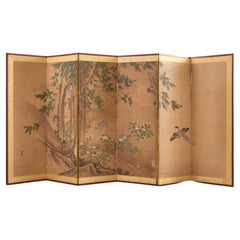
19th Century Japanese Edo Six Panel Kano School Landscape Screen
Located in Rio Vista, CA
Late Edo period 19th century Japanese six-panel landscape screen featuring a cypress tree over a flowering hibiscus with a pair of hototogisu birds. Kano school painted with ink and ...
Category
19th Century Edo Antique Japanese Paintings
Materials
Silk, Wood, Paper
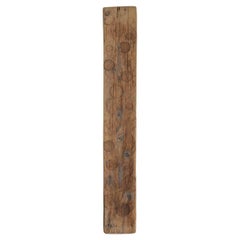
Antique Work Board Used by Japanese Craftsmen/1868-1920/Wabi-Sabi Wall Painting
Located in Sammu-shi, Chiba
If you want something special, we recommend purchasing items selected by Brood.
We sell carefully selected old Japanese items.
I've seen tens of thousands of items so far.
Based o...
Category
Late 19th Century Meiji Antique Japanese Paintings
Materials
Cedar
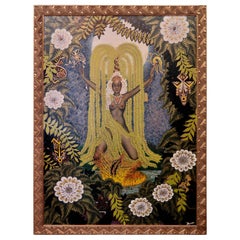
Mysterious Caribbean Princess
By Momoko
Located in Bronx, NY
The artist, Mokomo, demonstrates a unique style. The painting is an interesting depiction of a princess in an exotic fertility ritual. This sensual nude island...
Category
Mid-20th Century Japanese Paintings
Materials
Paint
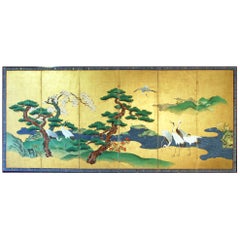
Japanese Folding Screen Six Panels Painted on Gold Leaf
By Japanese Studio
Located in Brescia, IT
Paravento a sei pannelli di scuola giapponese Kano: paesaggio con bellissime ed eleganti gru vicino al fiume, con alberi di pino e sakura.
Dipinto a mano con pigmenti minerali ed inc...
Category
Early 19th Century Edo Antique Japanese Paintings
Materials
Gold Leaf
Japanese Edo Six Panel Screen Yoshitsune and Benkei
Located in Rio Vista, CA
Spectacular 19th century Japanese late Edo period six-panel byobu screen depicting Yoshitsune and Benkei, two heroes of Japanese folklore. Crafted in ink and natural color pigments on mulberry paper with thick gold leaf borders on each panel. The character Yoshitsune is seated under a blossoming cherry tree in full armor holding a fan. The warrior priest or monk Benkei is depicted kneeling on a leopard skin...
Category
19th Century Edo Antique Japanese Paintings
Materials
Brass, Gold Leaf
$3,400 Sale Price
29% Off
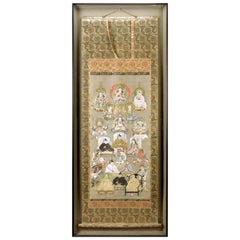
Japanese Silk Suijaku Scroll Nyorai-Kojin with Mixed Buddhism and Shinto Deities
Located in Atlanta, GA
A Japanese silk Suijaku hanging scroll beautifully presented in a custom wood shadow box frame from Edo period (circa 18-19th century). The scroll, surmounted on golden brocade was painted in fine details with gouache, ink and gold powder highlight, served as a Suijaku mandala for the worshippers. Honji Suijaku is a complicated religious concept uniquely developed in Japan. It mixed and hybrid the Buddism deities with native shinto spirits (known as Kami), which were seen as local manifestations (the suijaku, literally means a "trace") of Buddhist deities (the honji literally the original ground). The original idea may lie with the synergetic strategy to spread Buddism by making it more relatable to the local population who had already worshiped Shinto gods. The paradigm, adopted in the 10th century from an orignal Chinese concept, remained a defining feature of Japanese religious life up to the end of the Edo period (1868). Instead of being confined to deities, its application was often extended to historical figures as shown on this scroll.
This long hanging scroll depicts an arrangement of 21 figures including Buddhism and Shinto deities as well as two historical figures on the bottom. Each figure was name-tagged in Kanji for easy identification by the worshippers. It was used in the temple or shrine so that when the worshipper prayed in front the mandala, they prayed simultaneously to all the deities.
On the very top, sits Nyorai-Kojin, a hybrid deity of Nyorai Buddha and Kojin, the kaki for fire, stove and kitchen. From the top to bottom and left to right, here is the list of the deities: Kanon with Thousand Hands, Kanon with Willow Branch, Monju Bosatsu...
Category
Early 19th Century Edo Antique Japanese Paintings
Materials
Silk, Wood
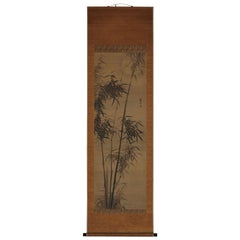
Japanese Painting, Hanging Scroll, 19th Century Bamboo in Moonlight
Located in Kyoto, JP
Bamboo in moonlight
Gamo Rakan (1784-1866)
Hanging scroll, ink on silk.
Dimensions:
Scroll: 201 cm x 58 cm
Image: 137 cm x 45 cm
In this early 19th century work by Gamo Rakan a light ink wash applied to the silk background silhouettes the moon and suggests the atmosphere of early evening. Even though it is a literati subject, Rakan’s bamboo is quite realistic with a strong decorative style. The painting finds its inspiration from Chinese Ming dynasty painters who often used a single-tone, jet black stroke to emphasize the calligraphic nature of bamboo.
In a different era, decorative would have been seen as somewhat unrefined. But increasingly in the Edo period, it was the hallmark of high style. The Japanese people, in particular the rising merchant class, had gradually become apathetic toward the traditional Sesshu and Kano schools of painting. Chinese professional and amateur painters living in the port of Nagasaki during the 18th century had a profound effect on Japanese painting and the freshness of their style and its decorative appeal contributed greatly to its popularity. Gamo Rakan’s teacher, Tani Buncho...
Category
Early 19th Century Edo Antique Japanese Paintings
Materials
Silk
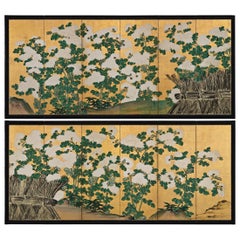
Mid-18th Century Japanese Screen Pair, One Hundred Flowers, Chrysanthemums
Located in Kyoto, JP
Omori Soun (b. 1704)
Chrysanthemums - One Hundred Flowers
A Pair of Six-fold Japanese Screens. Ink, color, gofun and gold leaf on paper.
Dating ...
Category
Mid-18th Century Edo Antique Japanese Paintings
Materials
Gold Leaf
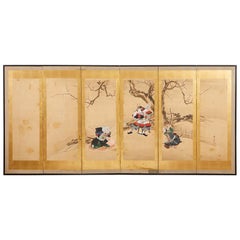
Japanese Six Panel Kano School Winter Landscape Screen
Located in Rio Vista, CA
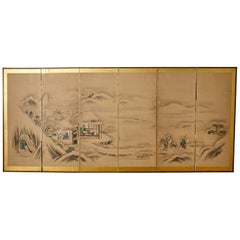
Large Japanese Meiji period six-panel screen depicting a winter landscape with a Chinese sage visiting friends in a country villa. Ink and vivid color pigments on mulberry paper mounted to a gilt background. Painted in the 19th century Kano school...
Category
19th Century Meiji Antique Japanese Paintings
Materials
Metal
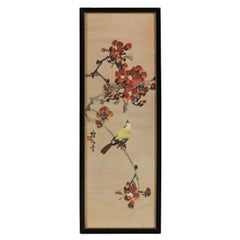
Framed Japanese Watercolor Painting of Bird on Flowering Branch
Located in Yonkers, NY
This delicate Japanese painting on paper captures a bright yellow bird perched among flowering branches in full bloom. Executed in watercolor with expressive brushwork and fluid ink ...
Category
Mid-20th Century Japanese Paintings
Materials
Glass, Paper
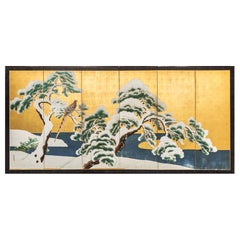
Japanese Six Panel Screen: Snow Scene
Located in Hudson, NY
Kano school painting of a pheasant in a snowy pine. Artist signature reads: Hokkyo Shunyo. Mineral pigments on gold leaf with silk brocade border.
Category
Early 19th Century Antique Japanese Paintings
Materials
Gold Leaf
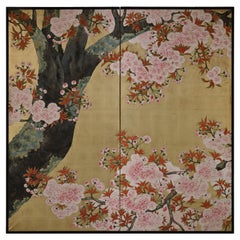
Early 20th Century Japanese Cherry Blossom Screen by Kano Sanrakuki
Located in Kyoto, JP
Cherry Blossoms
Kano Sanrakuki (1898-1981)
Showa period, circa 1930
2-panel Japanese Screen
Color, gofun and gold leaf on paper
Against a backdrop of gold-leafed ground, the lichen covered trunk and branches of the life-sized cherry blossom tree reach out and beyond the confines of the pictorial surface. The overall composition has a feeling of flatness which draws emphasis to the surface and the three-dimensionality of the cherry blossoms. Painstakingly built-up layers of thickly applied shell-white gofun detail the voluminous blossoms and cover large areas of this tour-de-force of Japanese Nihonga painting. By simplifying the background, minimizing the number of colors and depicting the blossoms with such heavy relief, the artist has emphasized the stunning presence of the cherry tree. The type of tree depicted is the Yae-Zakura; a double-layered type of cherry blossom famed for its beauty and strength. When we think of Japanese cherry blossoms, the first thing that comes to mind is Somei Yoshino variety, which has a single flower with five almost white petals. This type is fragile and easily blown away by strong wind or rain. Most of the double-flowered cherry blossoms begin to bloom when the Somei-Yoshino falls, and the flowering period lasts longer than that of the Somei-Yoshino.
Kano Sanrakuki originally studied painting at the Kyoto City Arts and Crafts School under the tutelage of Yamamoto Shunkyo...
Category
Early 20th Century Showa Japanese Paintings
Materials
Gold Leaf
Japanese woodblock print by Utagawa Kunisada (1786 – 1865) Edo Period
Located in Palm Springs, CA
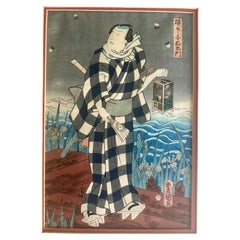
Original Japanese woodblock print by Utagawa Kunisada (1786 – 1865) created around 1855. It depicts the Kabuki actor Bandō Takesaburō I (or Seki Sanjuro) as Gokuin Sen'emon, a charac...
Category
1850s Antique Japanese Paintings
Materials
Wood, Paper
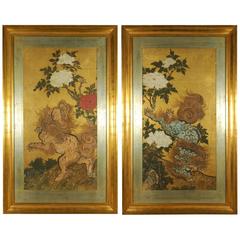
Pair of Antique Japanese Paintings of Karashishi, Edo Period, 18th Century
Located in Prahran, Victoria
A rare pair of antique Japanese Karashishi paintings in a landscape of rocks and peony flowers on gold leaf ground in fine handmade frames, Edo period, early 18th century. The Karash...
Category
Early 18th Century Edo Antique Japanese Paintings
Materials
Gold Leaf
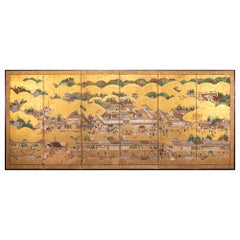
Japanese Six Panel Screen: Scenes in and Around Kyoto,
Rakuchu Rakugai-Zu
Located in Hudson, NY
The left two panels is the intersection of the Tokaido (an important and historical road that connects Kyoto with Tokyo) at Sanjo (Sanjo translates to "Third Street" and is the main ...
Category
18th Century Antique Japanese Paintings
Materials
Gold Leaf
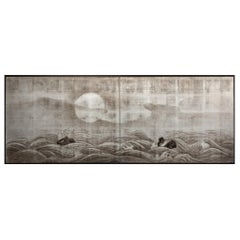
Japanese Two Panel Screen Moon Rising Over Turbulent Ocean Landscape
Located in Hudson, NY
Contemporary sumie (ink) painting on silver.
Category
1960s Showa Vintage Japanese Paintings
Materials
Paper
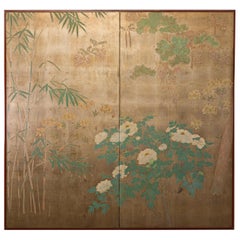
Japanese Two-Panel Screen Peony, Wisteria, Cherry and Bamboo on Soft Silver
Located in Hudson, NY
Japanese two-panel screen: Peony, Wisteria, cherry and bamboo on soft silver, Meiji period (1868-1912) painting of a garden in spring. Painted in mineral pigments on oxidized silver ...
Category
Early 1900s Meiji Antique Japanese Paintings
Materials
Silver Leaf
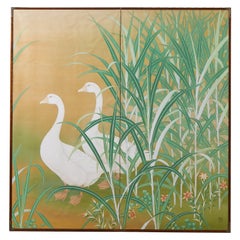
Japanese Meiji Two Panel Screen Geese and Reeds
Located in Rio Vista, CA
Fantastic Japanese late Meiji period two-panel byobu screen by Hashimoto Koshu. The large screen features two white geese amid brightly colored reeds. The symbolism of geese and reeds was introduced to Japan from China in the 13th century. This was a popular subject for Japanese zen artists of the period. Beautifully crafted with exceptional brush strokes and details. Made with natural pigments in dramatic vivid colors of white, pink, and mint green on a silk background of gilt. Circa 1900 with artist seal on bottom right corner. Koshu studied Western art under...
Category
20th Century Meiji Japanese Paintings
Materials
Silk, Wood, Paper
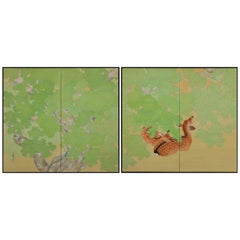
Early 20th Century Pair of Japanese Folding Screens, Deer Under Maple Trees
Located in Kyoto, JP
Deer under maples
Late Taisho period, circa 1925-1930
Pair of two-panel screens. Ink and pigment on silk.
Signature: Goho
Seal: Goho
A pair of two-fold Japanese silk screens...
Category
1920s Taisho Vintage Japanese Paintings
Materials
Wood, Paper, Silk
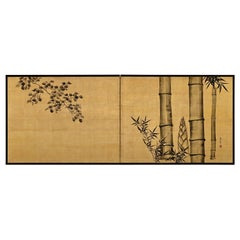
19th Century Japanese Screen for Tea-Ceremony, Ink Bamboo and Plum on Gold Leaf
Located in Kyoto, JP
Three Friends of Winter
Nakajima Raisho (1796-1871)
Late Edo period, circa 1850
Ink and gold leaf on paper.
This is a double-sided Japanese Furosaki or tea-ceremony screen from the mid 19th century; bamboo and plum on the front, young pines the back. It by Nakajima Raisho, a master painter of the Maruyama school in the late Edo and early Meiji periods. In this work Raisho combines exquisite ink brushwork with large open spaces of brilliant gold-leaf to inspire the viewers imagination. Rather than naturalism, he is searching for the phycological impression of the motifs, resulting in abstraction and stylization. His simplification of the motifs the result of looking to capture the inner nature of the objects. This art motif is known as Sho Chiku Bai, or the Three Friends of Winter. Evergreen pine connotes steadfastness, bamboo suggests both strength and flexibility, while plum blossoms unfurling on snow-laden branches imply hardiness. Combined, this trio is emblematic of Japanese new year. Chinese literati were the first to group the three plants together due to their noble characteristics. Like these resilient plants flowering so beautifully in winter, it was expected of the scholar-gentleman to cultivate a strong character with which he would be able to show the same degree of perseverance and steadfastness even during times of adverse conditions.
The screen would have been placed near the hearth of a room used for the Japanese tea ceremony, shielding the fire from draughts and also forming a stimulating and decorative backdrop behind the tea utensils. It would have been used in the Hatsugama, or first tea-ceremony of the new year.
Nakajima Raisho (1796-1871) originally studied under Watanabe Nangaku before entering the school of Maruyama Ozui. He was the highest ranking Maruyama school painter at the end of the Edo period and was known as one of the ‘Four Heian Families’ along with Kishi...
Category
Mid-19th Century Edo Antique Japanese Paintings
Materials
Gold Leaf
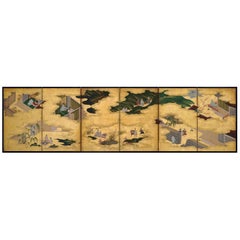
Japanese Screen Painting, Circa 1700
Tales of Ise
by Tosa Mitsusuke
By Tosa Mitsusuke 1
Located in Kyoto, JP
A six-fold Japanese screen by Tosa Mitsusuke (1675-1710), Japan 17th-18th century, Edo period.
The signature reads Shoroku-i ge Tosa sa Konoe Shogen Mit...
Category
Late 17th Century Edo Antique Japanese Paintings
Materials
Gold Leaf
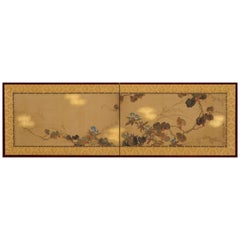
Japanese Screen Painting, Early 19th Century, Autumn Flowers by Sakai Hoitsu
Located in Kyoto, JP
A two-fold Japanese screen by the Rimpa school artist Sakai Hoitsu (1761-1828), Japan, 19th century, Edo period.
This small Japanese folding screen pai...
Category
Early 19th Century Edo Antique Japanese Paintings
Materials
Wood, Silk
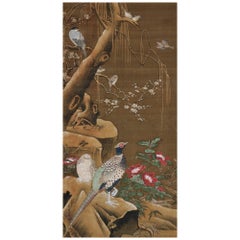
Japanese Painting. Bird and Flower. 19th century copy of Lu Ji by Ogata Tomin.
Located in Kyoto, JP
Ogata Tomin (1839 -1895)
Birds in a spring landscape
Ink and colour on silk.
Inscription reads:
“Copy of Lu Ji, painted with heartfelt appreciation”
“Painted by Tomin Ogat...
Category
Late 19th Century Ming Antique Japanese Paintings
Materials
Silk
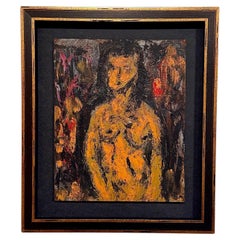
Mojin Nagasaki Abstract Nude 1952 Japan
Located in Oakland, CA
This beautiful vintage oil painting abstract nude by Japanese artist Morin Nagasaki, created around 1952, was acquired in Tokyo. It boasts an amazing texture and execution, beautiful...
Category
1950s Modern Vintage Japanese Paintings
Materials
Wood, Paint, Paper
Japanese Screen, Early 20th Century Wagtail
Chrysanthemum by Ishizaki Koyo
Located in Kyoto, JP
Ishizaki Koyo (1884-1947)
Wagtail & Chrysanthemum
Early 20th century
Folding screen in two-panels. Ink, pigments and gofun on gold leaf.
Sign: Koyo
Seal: Koyo
This ...
Category
Early 20th Century Taisho Japanese Paintings
Materials
Gold Leaf
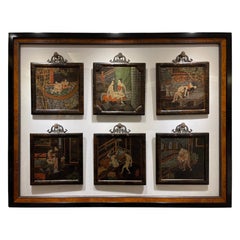
Set of Six Japanese Ido Period Shunga
Erotica
Hanging Lacquered Wood Panels
Located in North Miami, FL
These magnificent lacquered wood panels have been mounted together on a lucite panel. Each panel has its original hanging handle. The panels are hanging on antique railroad...
Category
18th Century Edo Antique Japanese Paintings
Materials
Metal, Iron
18th Century Japanese Two-Panel Screen Collection of Fans on Gold
Located in Hudson, NY
18th century Japanese Screen of a Collection of Fans. Paintings on fans depict famous Japanese painting subjects, this screen was most li...
Category
18th Century Edo Antique Japanese Paintings
Materials
Gold Leaf

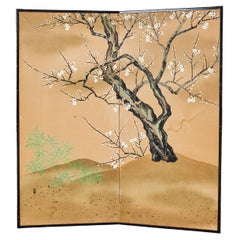
Japanese Showa Two Panel Screen Blossoming Prunus Tree
Located in Rio Vista, CA
Serene Japanese Showa period two-panel folding byobu screen depicting a large spring blossoming prunus tree or plum tree. Beautifully painted with ink and natural color pigments on m...
Category
20th Century Showa Japanese Paintings
Materials
Brass
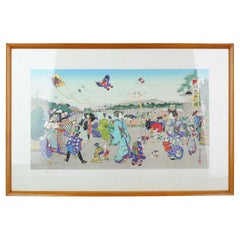
Antique Japanese Blockprint Painting Japan Edo or Meiji
Located in Amsterdam, Noord Holland
Antique Japanese Blockprint Painting Japan Edo or Meiji.
A very nice blockprint.
Additional information:
Type: Paintings, Scrolls & Prints
Region of Origin: Japan
Country of Manufa...
Category
19th Century Antique Japanese Paintings
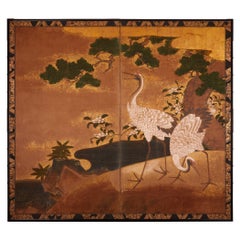
Japanese Two-Panel Screen: Cranes on Gold
Located in Hudson, NY
Early Kano School painting of pine trees overlooking two beautifully painted cranes and floral design in a natural setting by water’s edge. Mineral pig...
Category
Late 18th Century Antique Japanese Paintings
Materials
Gold, Gold Leaf
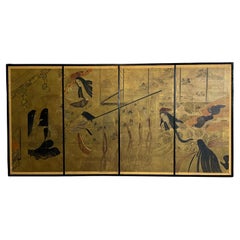
Large Painting of a Japanese Scene After the Tale of Genji
Located in Pasadena, CA
This painting is an illustration of the classic Japanese novel, "The Tale of Genji," written by Murasaki Shikibu. It captures the aristocratic atmosp...
Category
19th Century Han Antique Japanese Paintings
Materials
Paper, Paint
$2,200 Sale Price
31% Off
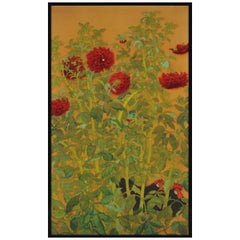
Japanese Painting, Framed Panel, Dahlias and Roosters, circa 1920
Located in Kyoto, JP
Tanaka Tessen (b.1890)
Dahlias and Roosters
Taisho period, circa 1920
Framed painting. Mineral pigments and ink on silk.
Dimensions (framed):
H. 159 cm x W. 97 cm x D. 2.5 cm (62.5” x 38” x 1”)
An ornate and complex composition in which the artist explores almost the entire painting surface. The coloration is bold and evocative and the tinted silk ground recreates the warm golden glow of sunset. Soft, luminous brushwork details the black feathers of the roosters, which seem to cloud and blur in counterpoint to the sharper points of the eyes and beaks. Their brilliant red combs balance the composition, echoing the rich burgundy hues of the dahlias; the flowers exquisite and lifelike. Dahlias were an exotic subject favored by painters of the Taisho era.
The painting belongs to the school of Kyoto Nihonga, exemplifying the principles of decorative elegance and consumate brush technique with which it was intimately associated. Painters of the time relied on the Shijo school method, basing the forms of the composition from life sketches. Sometimes they were then integrated with elements derived from Chinese bird and flower...
Category
1920s Taisho Vintage Japanese Paintings
Materials
Wood, Silk
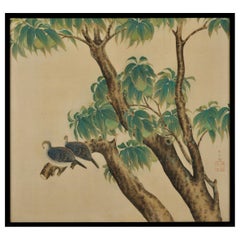
Japanese Framed Silk Painting, Turtledoves and Peaches, Taisho Era, circa 1920
Located in Kyoto, JP
Nakamura Daizaburo
Turtledoves in a Peach Tree
Taisho period, circa 1920
Framed painting. Mineral pigments, ink and gofun on silk
Signed: Daizaburo
Dimensions (framed)...
Category
1910s Taisho Vintage Japanese Paintings
Materials
Wood, Silk
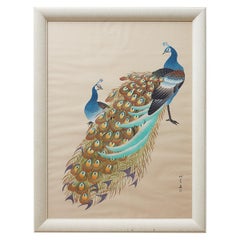
Japanese Showa Period Peacocks Painted on Silk
Located in Rio Vista, CA
Colorful Japanese ink and color on silk Showa painting of a pair of peacocks. Vivid colors and beautiful details with a signature and seal on right side bottom. Framed in a midcentur...
Category
20th Century Showa Japanese Paintings
Materials
Silk, Plexiglass, Paper, Wood
$1,440 Sale Price
20% Off
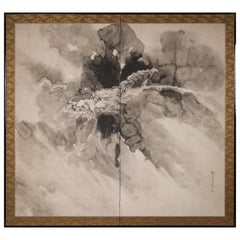
Japanese Two Panel Screen Dragon in the Mist
Located in Hudson, NY
Ink (Sumi) on paper. Signature and Seal read: Kishi Ganku It is backed with paper covered in gold and silver flake. Kishi Ganku (1749 or 1756-1839) was the...
Category
Early 19th Century Edo Antique Japanese Paintings
Materials
Wood, Paper
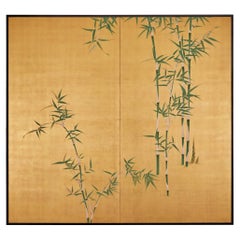
Japanese Two Panel Screen: Young Bamboo on Gold
Located in Hudson, NY
Symbolizing the Sun, gold is often used in shrines and temples in Japan. Gold has been extensively recognized to represent wealth, while bamboo is said to bring good luck due to its ability to regenerate in the forest. A beautiful composition of the two together...
Category
Late 19th Century Antique Japanese Paintings
Materials
Gold
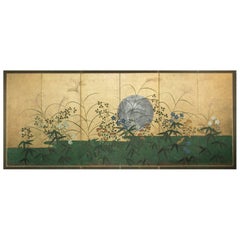
19th Century Japanese Six Panel Screen: Silver Moon Rising Over Summer Field
Located in Hudson, NY
Japanese Six Panel Screen: Silver Moon Rising Over Summer Field. Rimpa Style painting of a moon rising over summer flowers and grasses, including cockscomb and blue bellflowers. Pa...
Category
Late 19th Century Meiji Antique Japanese Paintings
Materials
Gold Leaf
Set of 6 Large Kakemonos Japanese Mythology, 19th Century Japan circa 1800 Edo
Located in Beuzevillette, FR
Beautiful set of 6 large kakemonos from 19th century Japanese mythology.
Paper support with a canvas pasted on the paper
Wonderful set that is part of Japan's history and beliefs
When not hung, the Kakemonos are rolled up.
circa 1800 - Japan - Edo Period
A kakemono translates as "object to hang". In Japan this refers to a painting or calligraphy, most often done on silk or paper framed in a scroll that was intended to be hung on walls or in public lighting. This particular form, which allows them to be in a roll, dates back to the Tang dynasty in China (this would be related to the copying and preservation of ancient Buddhist texts). A Kami is a deity or spirit worshipped in the Shinto religion. A Yokai is a spirit, ghost, demon, or strange apparition from the creatures of Japanese folklore.
Each of these kakemonos represents a unique story:
- A kami, a Japanese deity, is shown painting a rainbow. Indeed, he performs the action with his right hand while his left hand holds a kind of basket with three pots of paint. This kami has a rather closed attitude. He is standing in a dark and tormented sky. Below this figure, 8 villagers are dressed in traditional Japanese clothes. Their faces are softened. They are not afraid of the elements made by the kami above their heads.
- A character with an unreal look is holding a kind of jar with his two hands, which he spills on human figures above. This being is floating in the air, probably a character from mythology, perhaps Susanoo. Underneath, villagers on umbrellas. They are trying to protect themselves as best they can from what is falling on them. One of them is carrying baskets with fish on her shoulders. A character in the background is thrown forward and falls.
- On this kakemono, the god Raijin, dressed in a white and blue outfit, strikes the sky with his two drum hammers to create lightning and its thunderous sound. Surrounded by Tomoe and a long red scarf, Raijin, enraged and with dishevelled hair, creates a dark and violent storm. The villagers seem frightened by this meteorological phenomenon. One of the villagers can be seen fainting in the arms of a man. This scene may seem chaotic, but Japanese legend tells us that once a field is struck by lightning, the harvest is good.
- On this kakemono, we see an unreal-looking figure holding a fan, as if he were sweeping away the bad weather, or simply producing gusts of wind. He is probably the kami of wind and air, Shina tsu-hiko. The figures below him seem surprised by so much wind. An umbrella flies away on the left, the women hold their hair and scarf, the clothes are caught in the power of the wind, there is even a woman on the ground on the bottom left.
- This Kakemono represents a short moment. This Raiju is a yokai (ghost spirit...
Category
19th Century Edo Antique Japanese Paintings
Materials
Paper
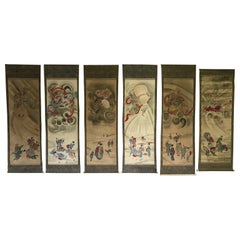
$2,583 Sale Price / set
20% Off
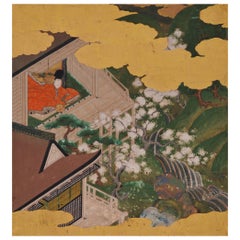
Japanese Painting, 17th Century, Tale of Genji, Tosa School
Located in Kyoto, JP
Illustration to an unidentified chapter of the Tale of Genji (Genji Monogatari)
Tosa School (second half of the 17th Century)
Ink, pigment, gofun and...
Category
Late 17th Century Edo Antique Japanese Paintings
Materials
Gold Leaf
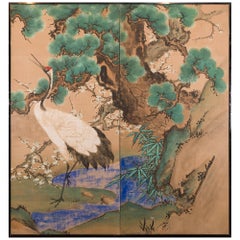
Japanese Two Panel Screen Manchurian Crane and Turtles
Located in Hudson, NY
In Japan, cranes symbolize fidelity as they mate for life and turtles symbolize longevity. Additionally, this screen also has the Japanese motif of sho-chiku-bai, or the three friends of winter (pine, plum, and bamboo). So called the three friends of winter because all three flourish during the cold months. This screen was originally fusuma doors...
Category
Mid-19th Century Edo Antique Japanese Paintings
Materials
Paper
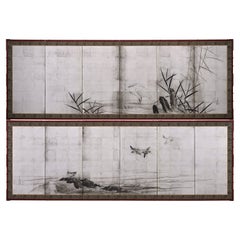
Japanese Silver Screen Pair, Meiji Period, Herons
Plovers, Shijo School
Located in Kyoto, JP
Heron & Plovers
Ink and silver leaf on paper
Maekawa Bunrei (1837-1917)
A pair of low six-panel Japanese screens by Maekawa Bunrei, a later master of the Kyoto based Shijo school of painting. On the right screen a solitary white heron stands motionless in a stream. On the left screen plovers play along a shoreline. The elegant forms are executed employing fluid, minimalistic ink brushstrokes. The soft brushstrokes and the sharp light of the silver leaf lend the scenes a sense of translucence. The sophisticated composition superbly exploits the long, horizontal pictorial surface of the pair of folding screens...
Category
Early 1900s Meiji Antique Japanese Paintings
Materials
Silver Leaf
Japanese Six-Panel Screen Buck and Doe at Dawn
Located in Hudson, NY
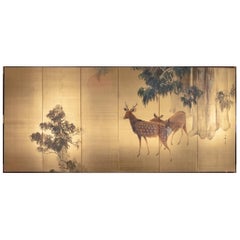
Japanese six-panel screen: Buck and doe at dawn. Showa period (1926-1989) painting of a rising sun seen through a woodland scene with a pair of deer. In Japan, deer are thought to be...
Category
Early 20th Century Showa Japanese Paintings
Materials
Bronze
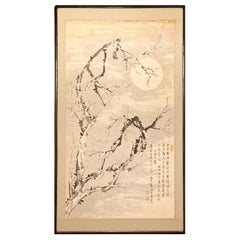
Japanese Single Panel Painting Moon and Plum Design
Winter Scene
Located in Hudson, NY
Meiji period (1868-1912) ink painting of plum branches in bloom against a full moon with calligraphy. The calligraphy is a poem about winter. Signature reads: Matsuura Ryosai, Dated:...
Category
Late 19th Century Meiji Antique Japanese Paintings
Materials
Paper
Still Thinking About These?
All Recently ViewedMore Ways To Browse
Gold Coin Glasses
Gold Match Box
Grand Tour Oil Lamp
Grand Tour Red
Grape Bucket
Green Porcelain Parrots
Green Tara Statue
Greyhound Table
Guan Yu
Gucci Bar Set 1970
Guilloche Pill Box
Gunnar Tibergaard Nielsen
Haeger Sculpture
Hampton And Sons
Hand Painted Accent Cabinet
Handblown Glass Decanter
Hart Iron
Headrest Ceramic