Early 1900s Paintings
to
24
102
79
190
Height
to
Width
to
18
8
7
4
4
4
1
1
1
1
1
1
1,293
3,705
12,638
2,496
1,702
4,630
3,986
190
110
320
463
412
649
1,046
1,102
623
492
95
80
76
53
45
134
47
16
14
14
190
190
190
3
2
1
1
1
Period: Early 1900s
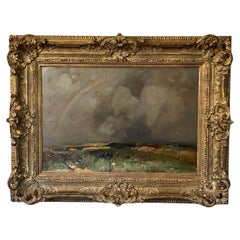
Rural Landscape with Rainbow, Toni (Anton) Von Stadler, Austrian, 1850-1917
Located in Toronto, CA
Toni (Anton) von Stadler, Austrian, 1850-1917.
Rural Landscape with Rainbow
Signed, inscribed, and dated 'T Stadler. / M 1906' in the lower right.
A stunning painting depicting a la...
Category
Austrian Antique Early 1900s Paintings
Materials
Canvas, Paint
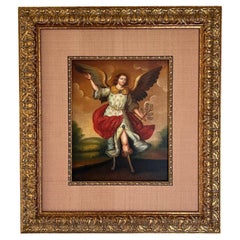
Cuzco School Revival Painting, C. 1900
Located in Ross, CA
Cuzco School Revival painting on board of the Archangel Ariel, professionally framed and matted in linen, painted in Peru in the early late 19th / early 20th century.
Painting by si...
Category
Peruvian Spanish Colonial Antique Early 1900s Paintings
Materials
Paint
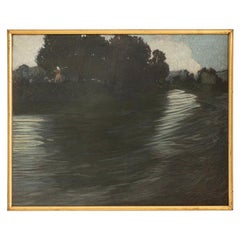
Oil painting "Weiden" Rudolf Quittner ca. 1904
Located in Klosterneuburg, AT
Oil painting, Rudolf Quittner, around 1904, signed ‘Rud. Quittner’, titled, ‘Weiden’
Signed ‘Rud. Quittner’ on the front, no. ‘26’ on the reverse; no. “417”, ‘Quittner’ in pencil on...
Category
Austrian Jugendstil Antique Early 1900s Paintings
Materials
Canvas

$26,433 Sale Price
20% Off
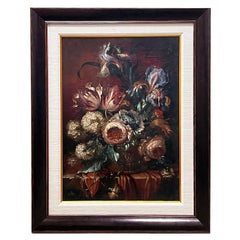
Max Luber (Munich 1879-1950) Floral Still Life; Oil on Canvas
Located in San Francisco, CA
the lushly painted still life depicting a woven basket full of finely painted bearded irises, parrot tulips, hydrangeas and peonies with discreetly painted bees and a snail; all rest...
Category
German Rococo Revival Antique Early 1900s Paintings
Materials
Canvas
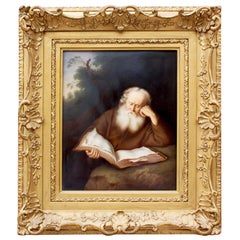
Berlin K.P.M. Porcelain Plaque "Der Eremit"
The Hermit
After Salomon Koninck
Located in Los Angeles, CA
A late 19th early 20th century Berlin K.P.M. Porcelain Plaque titled "Der Eremit" (The Hermit) After the painting by Salomon Koninck (Dutch, 1609-1659)...
Category
German Baroque Antique Early 1900s Paintings
Materials
Porcelain, Giltwood
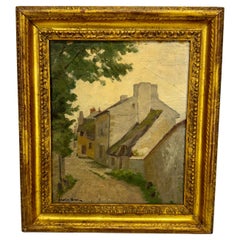
European Landscape Oil Painting signed Maurice Braun
Located in Haddonfield, NJ
Oil Painting on Canvas signed Maurice Braun, 1902 Listed Artist
A very lifelike rendering of a European street scene with houses. This early 20th Century painting features houses ...
Category
French Romantic Antique Early 1900s Paintings
Materials
Wood, Paint
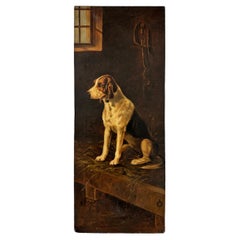
Early 20th Century English Hound Painting
Located in Chicago, IL
In this captivating early 20th-century English oil on canvas painting, the essence of rural life is vividly captured as a majestic hound sits regally amidst the rustic charm of a hay loft, ready for the morning hunt...
Category
English Country Antique Early 1900s Paintings
Materials
Canvas, Paint
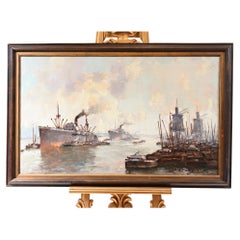
Oil Painting Ostend Maritime Ship Signed Pauwels Antique Art
Located in Potters Bar, GB
Wonderful expressionist treatment of a maritime seascape
Oil painting is by Henri Joseph Pauwels and features ships in the Belgium port of Ostend circa 1930s
Henri Joseph Pauwels (19...
Category
Antique Early 1900s Paintings
Materials
Paint
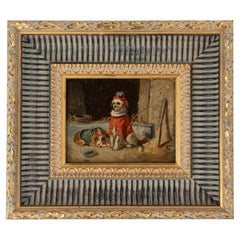
Early 20th Century Oil Painting of Circus Dogs
Located in Casteren, Noord-Brabant
A sweet little painting depicting two dressed up circus dogs. The dogs are painted against a sober background.
The painting is oil on panel and dates from...
Category
Belgian Other Antique Early 1900s Paintings
Materials
Wood, Paint
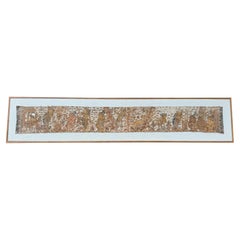
Bali Hindu Textile Framed
Kamasan
Painting, Indonesia C. 1900
Located in Jimbaran, Bali
This Antique Balinese Kamasan painting, rendered on handwoven cotton, beautifully captures the timeless elegance of classical Wayang-style storytellin...
Category
Balinese Folk Art Antique Early 1900s Paintings
Materials
Cotton, Paint
$1,360 Sale Price
20% Off
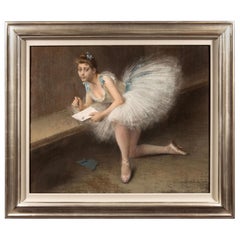
"The Ballerina" by Pierre Carrier-Belleuse
Located in Wiscasset, ME
Pastel on canvas, signed lower right, measuring 38" x 48.25" including the frame.
Pierre Carrier-Belleuse
His first studies were with his father, the sculptor Albert-Ernest Carri...
Category
French Art Nouveau Antique Early 1900s Paintings
Materials
Paint
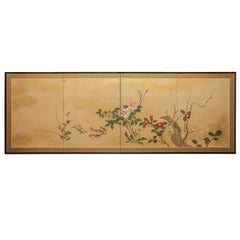
Japanese Four Panel Screen: Early Spring Into Summer
Located in Hudson, NY
Japanese Four Panel Screen: Early Spring Into Summer, Meiji period (1868 -1912) painting of plum in bloom with red camellias on the right and peony and thistle on the left. A clutc...
Category
Japanese Meiji Antique Early 1900s Paintings
Materials
Gold Leaf
Painting by JOSÉ FELIPE ABÁRZUZA RODRÍGUEZ DE ARIAS (Cádiz, 1871-Puerto Real
Located in Marbella, ES
JOSÉ FELIPE ABÁRZUZA RODRÍGUEZ DE ARIAS (Cádiz, 1871-Puerto Real, 1948).
"Moors at Dusk".
Oil on canvas.
On the lower part there is a plaque with the artist's name and title.
Frame f...
Category
Spanish Antique Early 1900s Paintings
Materials
Canvas, Wood
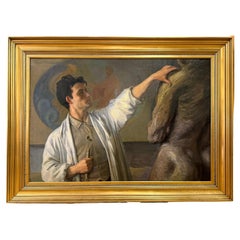
"Sculpting the Nude, " Monumental and Important Painting, Denmark, Belle Epoch
By Oscar Matthiesen
Located in Philadelphia, PA
Brilliantly capturing the intensity and artistry of the sculptor at work, this large and important painting by Oscar Matthiesen depicts his subject with wild, unkempt hair and a lean...
Category
Danish Belle Époque Antique Early 1900s Paintings
Materials
Paint
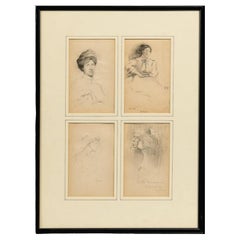
Antique 4 Drawings by a Boston Artist, Signed 1908, D1
Located in Norton, MA
4 Drawings by a Boston Artist, Signed from 1908 D1
Four drawings of figures, each 7.25" x 4.5", were drawn in the early 20th century, 2 "Framed (16.75" x 22.5") under glass.
Category
American Antique Early 1900s Paintings
Materials
Wood, Paper
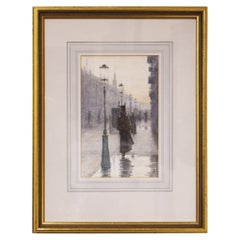
C. 1900 "London Street in the Mist" Watercolor by Edward Van Goethem
Located in Chapel Hill, NC
Circa 1900 Watercolor by E. van Goethem "London Street in the Mist". Edward van Goethem, British, 1857-1924. Signed lower left "E. van Goethem". Traces of period gallery label preser...
Category
British Antique Early 1900s Paintings
Materials
Paper
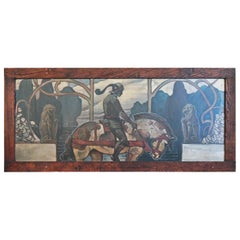
"Knight on Horseback, " Arts
Crafts and Art Nouveau Medieval Revival Mural
By Harvey Ellis
Located in Philadelphia, PA
A rare and magnificent example of a mural influenced by both the Arts & Crafts and Art Nouveau movements, this painting of a plumed knight on horseback...
Category
American Arts and Crafts Antique Early 1900s Paintings
Materials
Paint
$14,800 Sale Price
20% Off
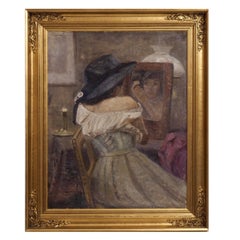
Very Fine Impressionist Painting, Signed, Oil on Canvas, circa 1880-1910
Located in Aalsgaarde, DK
Very fine impressionist painting, signed, oil on canvas, circa 1880-1910. Good condition, and original frame.
Measures: H. 83 W. 65 cm.
H...
Category
French Antique Early 1900s Paintings
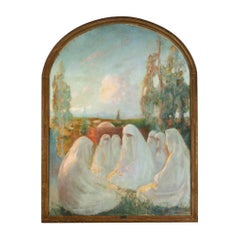
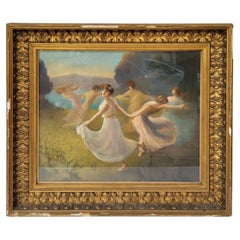
Art Nouveau Pastel on paper “Dance” Leopold François Kowalski
s studio
Located in Valladolid, ES
One of a kind pastel depicting a group of women dancing in a romantic, ethereal spring landscape. The delicate figures, soft, luminous tones, and warm, almost golden atmosphere that...
Category
French Art Nouveau Antique Early 1900s Paintings
Materials
Giltwood, Paint, Paper
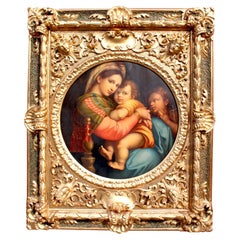
After Raffaello Sanzio 1483-1520 Raphael La Madonna della Seggiola Oil on Canvas
Located in Los Angeles, CA
A Fine Italian 19th Century Oil Painting on Canvas "La Madonna della Seggiola" after Raphael (Raffaello Sanzio da Urbino 1483-1520). The circular painted canvas depicting a seated Madonna holding an infant Jesus Christ next to a child Saint John the Baptist, all within a massive carved two-tone gilt wood, gilt-patinated and gesso frame, which is identical to the frame on Raphael's original artwork. This painting is a 19th Century copy of Raphael's Madonna della Seggiola painted in 1514 and currently exhibited and part of the permanent collection at the Palazzo Pitti, Galleria Palatina, Florence, Italy. The bodies of the Virgin, Christ, and the boy Baptist fill the whole picture. The tender, natural looking embrace of the Mother and Child, and the harmonious grouping of the figures in the round, have made this one of Raphael's most popular Madonnas. The isolated chair leg is reminiscent of papal furniture, which has led to the assumption that Leo X himself commissioned the painting. Circa: 1890-1900.
Subject: Religious painting
Painting diameter: 28 inches (71.1 cm)
Frame height: 55 1/8 inches (140 cm)
Frame width: 46 inches (116.8 cm)
Frame depth: 5 1/8 inches (13 cm)
Raffaello Sanzio da Urbino (Italian, March 28 or April 6, 1483 - April 6, 1520), known as Raphael, was an Italian painter and architect of the High Renaissance. His work is admired for its clarity of form, ease of composition, and visual achievement of the Neoplatonic ideal of human grandeur. Together with Michelangelo and Leonardo da Vinci, he forms the traditional trinity of great masters of that period.
Raphael was enormously productive, running an unusually large workshop and, despite his death at 37, leaving a large body of work. Many of his works are found in the Vatican Palace, where the frescoed Raphael Rooms were the central, and the largest, work of his career. The best known work is The School of Athens in the Vatican Stanza della Segnatura. After his early years in Rome much of his work was executed by his workshop from his drawings, with considerable loss of quality. He was extremely influential in his lifetime, though outside Rome his work was mostly known from his collaborative printmaking.
After his death, the influence of his great rival Michelangelo was more widespread until the 18th and 19th centuries, when Raphael's more serene and harmonious qualities were again regarded as the highest models. His career falls naturally into three phases and three styles, first described by Giorgio Vasari: his early years in Umbria, then a period of about four years (1504–1508) absorbing the artistic traditions of Florence, followed by his last hectic and triumphant twelve years in Rome, working for two Popes and their close associates.
Raphael was born in the small but artistically significant central Italian city of Urbino in the Marche region, where his father Giovanni Santi was court painter to the Duke. The reputation of the court had been established by Federico III da Montefeltro, a highly successful condottiere who had been created Duke of Urbino by the Pope - Urbino formed part of the Papal States - and who died the year before Raphael was born. The emphasis of Federico's court was rather more literary than artistic, but Giovanni Santi was a poet of sorts as well as a painter, and had written a rhymed chronicle of the life of Federico, and both wrote the texts and produced the decor for masque-like court entertainments. His poem to Federico shows him as keen to show awareness of the most advanced North Italian painters, and Early Netherlandish artists as well. In the very small court of Urbino he was probably more integrated into the central circle of the ruling family than most court painters.
Federico was succeeded by his son Guidobaldo da Montefeltro, who married Elisabetta Gonzaga, daughter of the ruler of Mantua, the most brilliant of the smaller Italian courts for both music and the visual arts. Under them, the court continued as a centre for literary culture. Growing up in the circle of this small court gave Raphael the excellent manners and social skills stressed by Vasari. Court life in Urbino at just after this period was to become set as the model of the virtues of the Italian humanist court through Baldassare Castiglione's depiction of it in his classic work The Book of the Courtier, published in 1528. Castiglione moved to Urbino in 1504, when Raphael was no longer based there but frequently visited, and they became good friends. He became close to other regular visitors to the court: Pietro Bibbiena and Pietro Bembo, both later cardinals, were already becoming well known as writers, and would be in Rome during Raphael's period there. Raphael mixed easily in the highest circles throughout his life, one of the factors that tended to give a misleading impression of effortlessness to his career. He did not receive a full humanistic education however; it is unclear how easily he read Latin.
Early Life and Works
His mother Màgia died in 1491 when Raphael was eight, followed on August 1, 1494 by his father, who had already remarried. Raphael was thus orphaned at eleven; his formal guardian became his only paternal uncle Bartolomeo, a priest, who subsequently engaged in litigation with his stepmother. He probably continued to live with his stepmother when not staying as an apprentice with a master. He had already shown talent, according to Vasari, who says that Raphael had been "a great help to his father". A self-portrait drawing from his teenage years shows his precocity. His father's workshop continued and, probably together with his stepmother, Raphael evidently played a part in managing it from a very early age. In Urbino, he came into contact with the works of Paolo Uccello, previously the court painter (d. 1475), and Luca Signorelli, who until 1498 was based in nearby Città di Castello.
According to Vasari, his father placed him in the workshop of the Umbrian master Pietro Perugino as an apprentice "despite the tears of his mother". The evidence of an apprenticeship comes only from Vasari and another source, and has been disputed—eight was very early for an apprenticeship to begin. An alternative theory is that he received at least some training from Timoteo Viti, who acted as court painter in Urbino from 1495.Most modern historians agree that Raphael at least worked as an assistant to Perugino from around 1500; the influence of Perugino on Raphael's early work is very clear: "probably no other pupil of genius has ever absorbed so much of his master's teaching as Raphael did", according to Wölfflin. Vasari wrote that it was impossible to distinguish between their hands at this period, but many modern art historians claim to do better and detect his hand in specific areas of works by Perugino or his workshop. Apart from stylistic closeness, their techniques are very similar as well, for example having paint applied thickly, using an oil varnish medium, in shadows and darker garments, but very thinly on flesh areas. An excess of resin in the varnish often causes cracking of areas of paint in the works of both masters. The Perugino workshop was active in both Perugia and Florence, perhaps maintaining two permanent branches. Raphael is described as a "master", that is to say fully trained, in December 1500.
His first documented work was the Baronci altarpiece for the church of Saint Nicholas of Tolentino in Città di Castello, a town halfway between Perugia and Urbino. Evangelista da Pian di Meleto, who had worked for his father, was also named in the commission. It was commissioned in 1500 and finished in 1501; now only some cut sections and a preparatory drawing remain. In the following years he painted works for other churches there, including the Mond Crucifixion (about 1503) and the Brera Wedding of the Virgin (1504), and for Perugia, such as the Oddi Altarpiece. He very probably also visited Florence in this period. These are large works, some in fresco, where Raphael confidently marshals his compositions in the somewhat static style of Perugino. He also painted many small and exquisite cabinet paintings in these years, probably mostly for the connoisseurs in the Urbino court, like the Three Graces and St. Michael, and he began to paint Madonnas and portraits. In 1502 he went to Siena at the invitation of another pupil of Perugino, Pinturicchio, "being a friend of Raphael and knowing him to be a draughtsman of the highest quality" to help with the cartoons, and very likely the designs, for a fresco series in the Piccolomini Library in Siena Cathedral. He was evidently already much in demand even at this early stage in his career.
Influence of Florence
Raphael led a "nomadic" life, working in various centres in Northern Italy, but spent a good deal of time in Florence, perhaps from about 1504. Although there is traditional reference to a "Florentine period...
Category
Italian Baroque Antique Early 1900s Paintings
Materials
Canvas, Giltwood
$19,880 Sale Price
20% Off
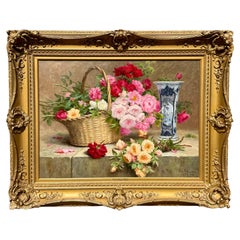
"Still Life of Flowers and a Blue and White Vase" by Desire Alfred Magne
Located in Wiscasset, ME
Oil on canvas, signed in the lower right and presented in a wonderful gilt frame. This vibrant still life measures 33.5" x 41.5" including the frame.
1855-1936, French
Desire Alfred Magne...
Category
French Victorian Antique Early 1900s Paintings
Materials
Paint
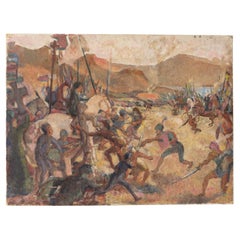
A Medieval Battle Scene Antique Original Oil Painting, Early 20th Century
Located in Bristol, GB
Antique Original Oil on Canvas Painting
A wonderfully energetic depiction of an Eastern battle scene, probably depicting the medieval Crusades including knights on horseback, pikem...
Category
Antique Early 1900s Paintings
Materials
Canvas, Paint, Wood
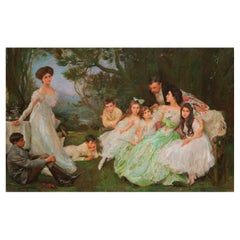
John Henry Frederick Bacon, A.R.A. Life-size English Family Portrait
Located in New York, US
Our magnificent oil on canvas by John Henry Frederick Bacon, A.R.A. (1868-1914), entitled The Golden Butterfly, depicts the family of John and Julietta Boyd-Harvey at Tondu House in South Wales in 1907. It was exhibited at the Royal Academy in London in 1907, no. 572.
This very large painting depicts the Boyd-Harvey family on the lawn of Tondu House in South Wales, with the mountain and valley of Tondu in the background. John Bacon...
Category
British Edwardian Antique Early 1900s Paintings
Materials
Canvas
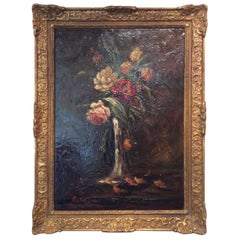
Ornately Giltwood Framed Floral Painting by Charles Franzini D’issoncourt
Located in Miami, FL
Magnificent French Floral Oil Painting by Charles Henri Franzini d’Issoncourt
A striking original oil on canvas by the distinguished French artist Charles Henri Franzini d’Issoncour...
Category
French Baroque Antique Early 1900s Paintings
Materials
Canvas, Paint, Giltwood
$3,896 Sale Price
42% Off
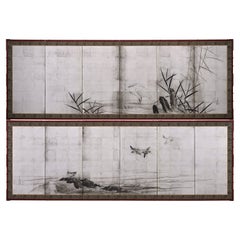
Japanese Silver Screen Pair, Meiji Period, Herons
Plovers, Shijo School
Located in Kyoto, JP
Heron & Plovers
Ink and silver leaf on paper
Maekawa Bunrei (1837-1917)
A pair of low six-panel Japanese screens by Maekawa Bunrei, a later master of the Kyoto based Shijo school of painting. On the right screen a solitary white heron stands motionless in a stream. On the left screen plovers play along a shoreline. The elegant forms are executed employing fluid, minimalistic ink brushstrokes. The soft brushstrokes and the sharp light of the silver leaf lend the scenes a sense of translucence. The sophisticated composition superbly exploits the long, horizontal pictorial surface of the pair of folding screens...
Category
Japanese Meiji Antique Early 1900s Paintings
Materials
Silver Leaf
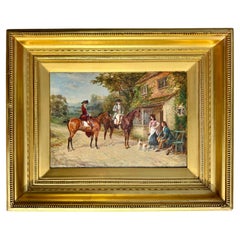
"Outside the Inn" by Heywood Hardy
Located in Wiscasset, ME
An oil on panel signed and dated in the lower left depicting two riders on horseback sharing a drink outside a country inn. The painting measures 17.75" x 21.75" including the frame...
Category
English Victorian Antique Early 1900s Paintings
Materials
Paint
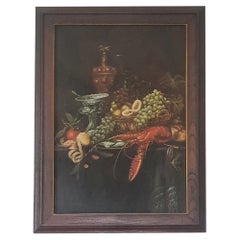
A Large imposing Edwardian still life Oil Painting in original Mahogany frame
Located in London, GB
This is a beautiful, elegant and striking still life oil painting of a Lobster with fruit on an overflowing laid table with silverware, basket or fruit, foliage an upturned crab and ...
Category
European Edwardian Antique Early 1900s Paintings
Materials
Canvas, Mahogany, Giltwood, Paint
$818 Sale Price
25% Off
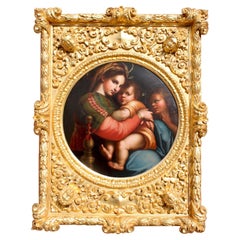
After Raffaello Sanzio 1483-1520 Raphael La Madonna della Seggiola Oil on Canvas
Located in Los Angeles, CA
A Fine Italian 19th Century Oil Painting on Canvas "La Madonna della Seggiola" after Raphael (Raffaello Sanzio da Urbino 1483-1520). The circular painted canvas depicting a seated Madonna holding an infant Jesus Christ next to a child Saint John the Baptist, all within a massive carved gilt wood and gesso frame, which is identical to the frame on Raphael's original artwork. This painting is a 19th Century copy of Raphael's Madonna della Seggiola painted in 1514 and currently exhibited and part of the permanent collection at the Palazzo Pitti, Galleria Palatina, Florence, Italy. The bodies of the Virgin, Christ, and the boy Baptist fill the whole picture. The tender, natural looking embrace of the Mother and Child, and the harmonious grouping of the figures in the round, have made this one of Raphael's most popular Madonnas. The isolated chair leg is reminiscent of papal furniture, which has led to the assumption that Leo X himself commissioned the painting. A retailer's label reads " Fred K/ Keer's Sons - Framers and Fine Art Dealers - 917 Broad St. Newark, N.J." - Another label from the gilder reads "Carlo Bartolini - Doratore e Verniciatori - Via Maggio 1924 - Firenze". Circa: 1890-1900.
Subject: Religious painting
Canvas diameter: 28 inches (71.1 cm)
Frame height: 54 inches (137.2 cm)
Frame width: 42 1/2 inches (108 cm)
Frame depth: 5 1/2 inches (14 cm)
Raffaello Sanzio da Urbino (Italian, March 28 or April 6, 1483 - April 6, 1520), known as Raphael, was an Italian painter and architect of the High Renaissance. His work is admired for its clarity of form, ease of composition, and visual achievement of the Neoplatonic ideal of human grandeur. Together with Michelangelo and Leonardo da Vinci, he forms the traditional trinity of great masters of that period.
Raphael was enormously productive, running an unusually large workshop and, despite his death at 37, leaving a large body of work. Many of his works are found in the Vatican Palace, where the frescoed Raphael Rooms were the central, and the largest, work of his career. The best known work is The School of Athens in the Vatican Stanza della Segnatura. After his early years in Rome much of his work was executed by his workshop from his drawings, with considerable loss of quality. He was extremely influential in his lifetime, though outside Rome his work was mostly known from his collaborative printmaking.
After his death, the influence of his great rival Michelangelo was more widespread until the 18th and 19th centuries, when Raphael's more serene and harmonious qualities were again regarded as the highest models. His career falls naturally into three phases and three styles, first described by Giorgio Vasari: his early years in Umbria, then a period of about four years (1504–1508) absorbing the artistic traditions of Florence, followed by his last hectic and triumphant twelve years in Rome, working for two Popes and their close associates.
Raphael was born in the small but artistically significant central Italian city of Urbino in the Marche region, where his father Giovanni Santi was court painter to the Duke. The reputation of the court had been established by Federico III da Montefeltro, a highly successful condottiere who had been created Duke of Urbino by the Pope - Urbino formed part of the Papal States - and who died the year before Raphael was born. The emphasis of Federico's court was rather more literary than artistic, but Giovanni Santi was a poet of sorts as well as a painter, and had written a rhymed chronicle of the life of Federico, and both wrote the texts and produced the decor for masque-like court entertainments. His poem to Federico shows him as keen to show awareness of the most advanced North Italian painters, and Early Netherlandish artists as well. In the very small court of Urbino he was probably more integrated into the central circle of the ruling family than most court painters.
Federico was succeeded by his son Guidobaldo da Montefeltro, who married Elisabetta Gonzaga, daughter of the ruler of Mantua, the most brilliant of the smaller Italian courts for both music and the visual arts. Under them, the court continued as a centre for literary culture. Growing up in the circle of this small court gave Raphael the excellent manners and social skills stressed by Vasari. Court life in Urbino at just after this period was to become set as the model of the virtues of the Italian humanist court through Baldassare Castiglione's depiction of it in his classic work The Book of the Courtier, published in 1528. Castiglione moved to Urbino in 1504, when Raphael was no longer based there but frequently visited, and they became good friends. He became close to other regular visitors to the court: Pietro Bibbiena and Pietro Bembo, both later cardinals, were already becoming well known as writers, and would be in Rome during Raphael's period there. Raphael mixed easily in the highest circles throughout his life, one of the factors that tended to give a misleading impression of effortlessness to his career. He did not receive a full humanistic education however; it is unclear how easily he read Latin.
Early Life and Works
His mother Màgia died in 1491 when Raphael was eight, followed on August 1, 1494 by his father, who had already remarried. Raphael was thus orphaned at eleven; his formal guardian became his only paternal uncle Bartolomeo, a priest, who subsequently engaged in litigation with his stepmother. He probably continued to live with his stepmother when not staying as an apprentice with a master. He had already shown talent, according to Vasari, who says that Raphael had been "a great help to his father". A self-portrait drawing from his teenage years shows his precocity. His father's workshop continued and, probably together with his stepmother, Raphael evidently played a part in managing it from a very early age. In Urbino, he came into contact with the works of Paolo Uccello, previously the court painter (d. 1475), and Luca Signorelli, who until 1498 was based in nearby Città di Castello.
According to Vasari, his father placed him in the workshop of the Umbrian master Pietro Perugino as an apprentice "despite the tears of his mother". The evidence of an apprenticeship comes only from Vasari and another source, and has been disputed—eight was very early for an apprenticeship to begin. An alternative theory is that he received at least some training from Timoteo Viti, who acted as court painter in Urbino from 1495.Most modern historians agree that Raphael at least worked as an assistant to Perugino from around 1500; the influence of Perugino on Raphael's early work is very clear: "probably no other pupil of genius has ever absorbed so much of his master's teaching as Raphael did", according to Wölfflin. Vasari wrote that it was impossible to distinguish between their hands at this period, but many modern art historians claim to do better and detect his hand in specific areas of works by Perugino or his workshop. Apart from stylistic closeness, their techniques are very similar as well, for example having paint applied thickly, using an oil varnish medium, in shadows and darker garments, but very thinly on flesh areas. An excess of resin in the varnish often causes cracking of areas of paint in the works of both masters. The Perugino workshop was active in both Perugia and Florence, perhaps maintaining two permanent branches. Raphael is described as a "master", that is to say fully trained, in December 1500.
His first documented work was the Baronci altarpiece for the church of Saint Nicholas of Tolentino in Città di Castello, a town halfway between Perugia and Urbino. Evangelista da Pian di Meleto, who had worked for his father, was also named in the commission. It was commissioned in 1500 and finished in 1501; now only some cut sections and a preparatory drawing remain. In the following years he painted works for other churches there, including the Mond Crucifixion (about 1503) and the Brera Wedding of the Virgin (1504), and for Perugia, such as the Oddi Altarpiece. He very probably also visited Florence in this period. These are large works, some in fresco, where Raphael confidently marshals his compositions in the somewhat static style of Perugino. He also painted many small and exquisite cabinet paintings in these years, probably mostly for the connoisseurs in the Urbino court, like the Three Graces and St. Michael, and he began to paint Madonnas and portraits. In 1502 he went to Siena at the invitation of another pupil of Perugino, Pinturicchio, "being a friend of Raphael and knowing him to be a draughtsman of the highest quality" to help with the cartoons, and very likely the designs, for a fresco series in the Piccolomini Library in Siena Cathedral. He was evidently already much in demand even at this early stage in his career.
Influence of Florence
Raphael led a "nomadic" life, working in various centres in Northern Italy, but spent a good deal of time in Florence, perhaps from about 1504. Although there is traditional reference to a "Florentine period...
Category
Italian Baroque Antique Early 1900s Paintings
Materials
Canvas, Giltwood
$19,850 Sale Price
39% Off
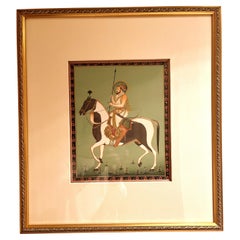
Fine Indian Brush Painting of a Nobleman Riding on a Horse
Located in Greenwich, CT
refined Indian brush painting of a nobleman riding on a horse, intricate detail, ink, color and gold gilt on paper, Conservation framed
Category
Indian Antique Early 1900s Paintings
Materials
Paper
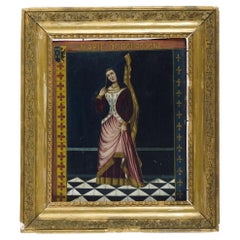
Oil on Wood Panel Religious Painting of Marie De Bourgonne by Moerenhout
Located in Montreal, QC
Oil on panel of Marie de Bourgonne signed: Moerenhout Gent 1902
Mary of Burgundy (French: Marie de Bourgogne; Dutch: Maria van Bourgondië; 13 Februa...
Category
French Antique Early 1900s Paintings
Materials
Wood
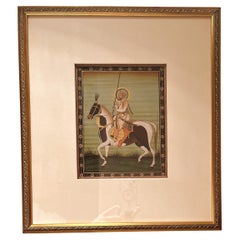
Fine Indian Brush Painting of a Nobleman Riding on a Horse
Located in Greenwich, CT
refined Indian brush painting of a nobleman riding on a horse, intricate detail, ink, color and gold gilt on paper, Conservation framed
Category
Indian Antique Early 1900s Paintings
Materials
Paper
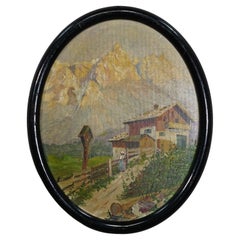
Painting with Summerly High Mountain Landscape ca. 1900s
Located in Berghuelen, DE
Painting with Summerly High Mountain Landscape ca. 1900s
A beautiful impressionist oil painting depicting a summerly high mountain landscape with a mountain hut and peasant woman in...
Category
German Country Antique Early 1900s Paintings
Materials
Wood, Paper
French Still Life Floral Painting by Charles Franzini d
Issoncourt
Located in Miami, FL
Magnificent French Floral Oil Painting from Paris Universal Exposition in 1900.
This captivating 19th-century still life oil painting by the award-winning French artist Charles Henr...
Category
French Baroque Antique Early 1900s Paintings
Materials
Canvas, Paint, Giltwood
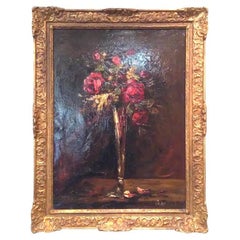
$3,896 Sale Price
42% Off
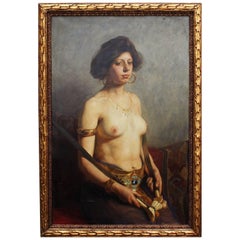
Karl Viktor Mayr, Austrian Oil on Canvas "An Exotic Nude Girl"
By Karl Viktor Mayr
Located in Los Angeles, CA
Karl Viktor Mayr (Austrian, 1882-1974) a very fine Austrian oil on canvas "An Exotic Nude Girl" depicting a young semi-nude woman, revealing her breast...
Category
Austrian Folk Art Antique Early 1900s Paintings
Materials
Canvas, Giltwood
$9,850 Sale Price
20% Off
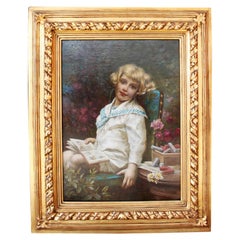
Hans Zatzka, Austrian (1859-1945) Oil on Canvas "Young Girl in a Sailor
s Suit
By Hans Zatzka
Located in Los Angeles, CA
Hans Zatzka, Austrian (1859-1945) A Fine Oil on Canvas "Portrait of Haunz Javorasky Als Knabe Dressed as a Sailor" within a carved gildwood frame. The charming portrait depicts a sea...
Category
Austrian Belle Époque Antique Early 1900s Paintings
Materials
Canvas, Giltwood
$23,850 Sale Price
31% Off
Pair of Indian painting
Located in Miami, FL
The painting is H 5.25 x W 4
Lands cape with female character in a peaceful garden
Category
Indian Anglo-Indian Antique Early 1900s Paintings
Materials
Paper

$1,590
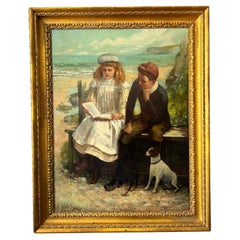
A Painting By Walter Herbert Roe Ca
1900
Located in St.Petersburg, FL
An outstanding painting by British artist Walter Herbert Roe , ca' early 20th century. Masterfully depicting 2 children reading a book and a dog at their attention-as if time stood still...
Category
Antique Early 1900s Paintings
Materials
Canvas
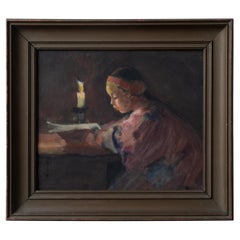
Helen Hyde - Girl Reading by Candlelight, Japanisme Watercolor, c.1900
By Helen Hyde
Located in Savannah, GA
Helen Hyde
(American, 1868-1919)
Watercolor on paper depicting a girl reading by candlelight, circa 1900.
sight: 8 ½ by 7 ¼ inches
frame: 11 ¾ by 10 ½ inches
Category
American Antique Early 1900s Paintings
Materials
Glass, Wood, Paper
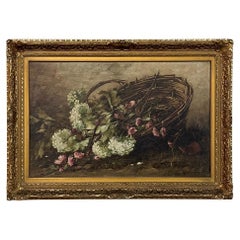
Antique Framed Oil Painting on Canvas by Jan Deckers
Located in Dallas, TX
Antique Framed Oil Painting on Canvas by Jan Deckers (1865-1942) is a stunningly realistic depiction of a basket of fresh-picked flowers that seems to have escaped the grasp of the gardener. The leaves and flower petals were depicted at the canted angle for visual interest, held in a much-used wicker basket...
Category
Belgian Belle Époque Antique Early 1900s Paintings
Materials
Canvas, Giltwood
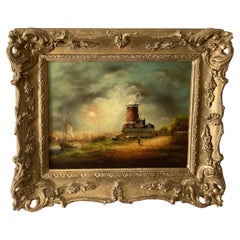
Charming Dutch School, Oil Painting On Board COastal Scene with Windmill
Located in Lambertville, NJ
Oil Painting, Dutch School (20th Century) Oil on Board. A coastal scene with boat, windmill and figure, initialed at the lower right. The signature, illegible, framed in a beautiful...
Category
Antique Early 1900s Paintings
Materials
Giltwood, Masonite, Paint
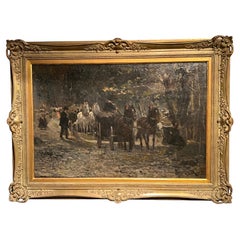
Country Wedding
Located in Houston, TX
BERKES, ANTAL (1874-1938)
Well listed Hungarian artist. Active: Paris, Budapest, Munich, Vienna. Berkes studied at The Academy of Fine Arts between 1889 and 1894 in Budapest, Hungar...
Category
Hungarian Other Antique Early 1900s Paintings
Materials
Canvas
$8,500
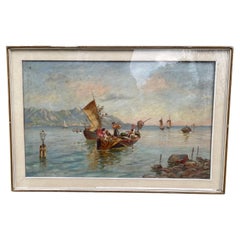
dipinto Adolfo Polaroli, raffigurazione napoletana di pescatori -olio su tela
Located in Milano, MI
raffigurazione napoletana di pescatori
olio su tela
inizio ventesimo secolo
ottime condizioni generali
dimensioni
altezza 88 cm
larghezza 127 cm.
Category
Italian Antique Early 1900s Paintings
Materials
Canvas
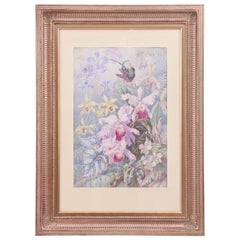
Exquisite Orchid
Hummingbird Watercolor by William Morley, Antique Oversize
By William H. Morley
Located in West Palm Beach, FL
You will not be disappointed in this wonderfully hand painted piece by the world reknown William Morley. Retaining its original Gilded Age frame and in very nice condition. A waterco...
Category
American Belle Époque Antique Early 1900s Paintings
Materials
Paint, Parchment Paper
$3,950 Sale Price
21% Off
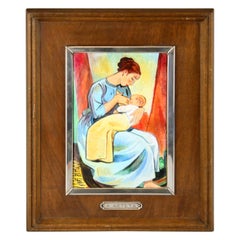
"La Crianza" by Aurelio Arteta, Enamel on Porcelain Hand Painted with Silver
By Aurelio Arteta
Located in Braintree, GB
Aurelio Arteta Errasti (2 December 1879, Bilbao - 10 November 1940,
Mexico City) was a Basque painter who worked in several styles;
including Symbolism, Cubism and Social Realism. ...
Category
Antique Early 1900s Paintings
Materials
Silver
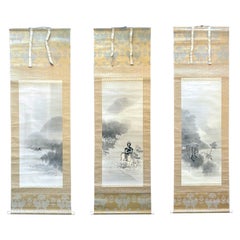
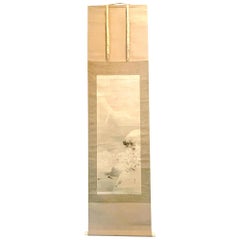
Rare Triptych Scroll Paintings by Watanabe Seitei Meiji Period
Located in Atlanta, GA
A set of three paintings of ink and watercolor on silk mounted within brocade borders as scrolls by Watanabe Seitei (1851-1918). This is a very rare an...
Category
Japanese Japonisme Antique Early 1900s Paintings
Materials
Brocade, Silk, Wood
Japanese Ink and Wash Scroll Painting by Watanabe Seitei
Located in Atlanta, GA
Watanabe Seitei, also known as Watanabe Shotei (1851–1918), was born in late Edo period. He was one of the earliest Japanese artists who visited and be...
Category
Japanese Japonisme Antique Early 1900s Paintings
Materials
Brocade, Silk, Paper
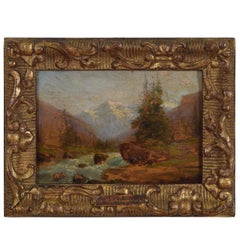
Oil on Wooden Panel Signed Charles Malfroy Alpine River Scene, 19th-20th Century
Located in Atlanta, GA
Signed lower right, in period gilt-gesso frame, the artist's biography as follows:
Charles Malfroy was an accomplished French artist who specialized...
Category
French Antique Early 1900s Paintings
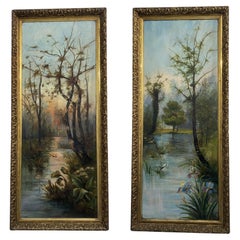
Antica coppia di dipinti a olio "Paesaggio"firmati , Germania, Jugendstil, 1901
Located in Traversetolo, IT
Questa splendida coppia di dipinti a olio "Paesaggio" si basa formalmente su un naturalismo che insegue una verosomiglianza nella rappresentazione della realta',anche attraverso un pittoricismo che abbozza la forma con una pittura veloce,carica di vibrazioni luminose e cromatiche.A livello compositivo le due tele sono in linea con un elegante gusto Jugendstil,con una composizione che predilige forme esili e sfrutta le forme vegetali per comporre prezioso intreccio decorativo.L'autrice di questa coppia di paesaggi presenta una notevole tecnica di formazione accademica,che si esplica in un'alta ricerca di resa naturalistica.L'artista mostra anche di essere un rappresentante dell'ambito Art Nouveau di inizio XX secolo ,in una composizione dal disegno complesso e che riporta anche qualche ispirazione di gusto esotico,soprattutto dall'arte giapponese...
Category
German Jugendstil Antique Early 1900s Paintings
Materials
Canvas, Wood
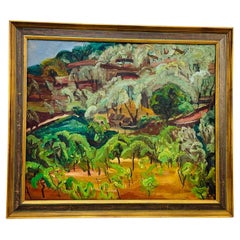
Gorgeous oil painting by Lucie Bayard
Located in Evanston, IL
Lucia Bayard was an American artist active in the early 20th century.
Known for her evocative landscapes and still-life compositions, she studied under George Luke and Robert Henr...
Category
French Expressionist Antique Early 1900s Paintings
Materials
Wood
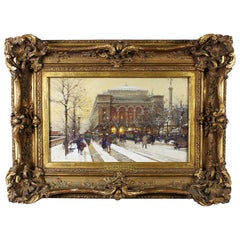
Eugène Galien-Laloue "Theatre du Chatelet" Watercolor and Gouache
Located in Los Angeles, CA
Eugène Galien-Laloue (1854-1941) "Theatre du Chatelet" watercolor and gouache on paper signed 'E Galien Laloue' lower left, within a giltwood and gesso c...
Category
French Belle Époque Antique Early 1900s Paintings
Materials
Glass, Giltwood, Paper
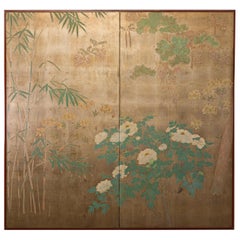
Japanese Two-Panel Screen Peony, Wisteria, Cherry and Bamboo on Soft Silver
Located in Hudson, NY
Japanese two-panel screen: Peony, Wisteria, cherry and bamboo on soft silver, Meiji period (1868-1912) painting of a garden in spring. Painted in mineral pigments on oxidized silver ...
Category
Japanese Meiji Antique Early 1900s Paintings
Materials
Silver Leaf
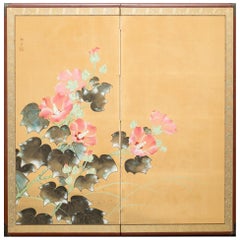
Japanese Two-Panel Screen, Hibiscus In Bloom
Located in Hudson, NY
Japanese Two Panel Screen: Hibiscus in Bloom, Meiji period (1868 - 1912) painting of hibiscus flowers reaching for the sun in full bloom. Mineral pigments on silk with a silk brocad...
Category
Japanese Meiji Antique Early 1900s Paintings
Materials
Silk, Wood, Paper
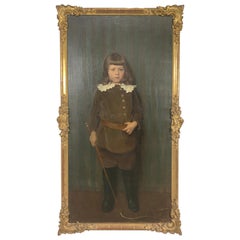
Large Antique 19th Century Genre Portrait of a Boy by Adolf Heller, Oil Painting
By Adolphe Keller
Located in Buffalo, NY
Large antique 19th century Genre Portrait of a boy by listed artist Adolf Heller, (German , 1874 -1914) A beautifully executed portrait that captures the ...
Category
German Early Victorian Antique Early 1900s Paintings
Materials
Wood, Paint
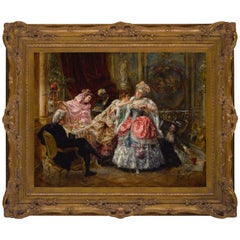
Eduardo León Garrido (Spanish, 1856-1949) Oil on Panel "Dressing for the Ball"
Located in Los Angeles, CA
Eduardo León Garrido (Spanish, 1856-1949) A very Fine oil on panel "Dressing for the Ball" depicting 18th century interior scene of a young 'High Society' maiden getting dressed for ...
Category
Spanish Rococo Antique Early 1900s Paintings
Materials
Wood, Paint
$48,750 Sale Price
42% Off
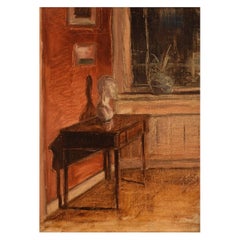
Axel Salto
1889-1961
, Oil on Board, Living Room Interior, Dated 1908
Located in København, Copenhagen
Axel Salto (1889-1961). Oil on board.
Living room interior. Dated 1908.
Rare and early work by Salto.
The board measures: 32.5 x 23.5 cm.
The frame measures: 4 cm.
In excellen...
Category
Danish Antique Early 1900s Paintings
Materials
Other
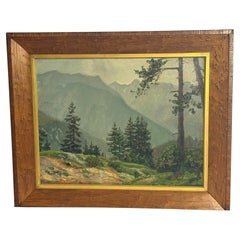
Masterful landscape by Louis Mayer
By Louis Mayer
Located in Evanston, IL
Masterful oil landscape of Carmel California by American regionalist, Louis Mayer, whose work reflects a deep appreciation for natural light and seasonal changes.
Category
American Antique Early 1900s Paintings
Materials
Canvas, Birdseye Maple
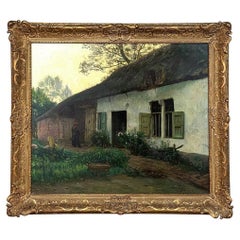
Antique Framed Oil Painting on Canvas by Omer Coppens (1864–1926)
Located in Dallas, TX
Antique Framed Oil Painting on Canvas by Omer Coppens (1864–1926) is a splendid study in realism by the artist, at once depicting a typical day in a rural life while simultaneously i...
Category
Belgian Beaux Arts Antique Early 1900s Paintings
Materials
Canvas, Giltwood
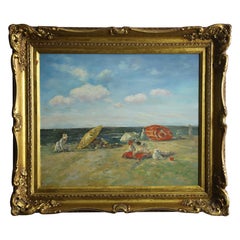
George William Sotter
At The Seaside
ca. 1906
By George William Sotter
Located in Sittard, LI
We are proud to present this early work by American Impressionist George William Sotter (1879–1953), created during his time at the Pennsylvania Academy of the Fine Arts. This painti...
Category
American Antique Early 1900s Paintings
Materials
Paint
Impressionist Painting by Auguste Boulard "Vase De Fleurs", circa 1900
By Auguste Boulard
Located in Lambertville, NJ
A charming French impressionist painting by Auguste Boulard Jr (1852-1927) Oil on linen canvas in a giltwood frame titled "Vase De Fleues" The painting with orange and white floral bouquet in a cup and saucer with a dark hued background in umber, sage. The original frame with original gilt with wear with a linen filler around that painting. Measures: 16.5 inches wide, 14.5 inches tall framed...
Category
French Antique Early 1900s Paintings
Materials
Giltwood, Canvas

"Urania" by Giuseppe Mazzei
Located in Dubai, AE
A large painting by Italian artist Giuseppe Mazzei, depicts muse Urania with her classic attributes – globe, sun sphere, and compass in oak branches. Her d...
Category
Italian Art Deco Antique Early 1900s Paintings
Materials
Canvas, Giltwood

$47,921
Still Thinking About These?
All Recently ViewedMore Ways To Browse
Henredon Dresser Pulls
Henredon Tall Cabinet
Hepplewhite Cherry
Heron Screen
Heywood Wakefield Bed Frame
Heywood Wakefield Headboard
Hickory Chair Chest
Hidden Compartment Box
Hong Kong Plate
Horse Acrylic Sculpture
Horse Bell
Hotei Japan
Hotel Metropole
Hubley Cast Iron Door Stops
Hugo Franca
Hunter Statue
Hutch With Shelves
Imperial Robe