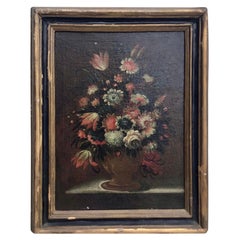
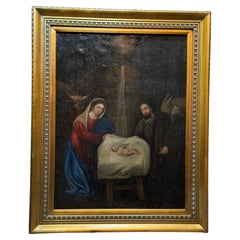
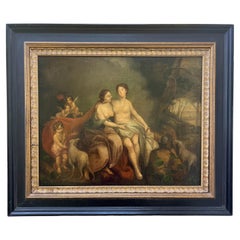
Baroque Paintings

BAROQUE STYLE

The decadence of the Baroque style, in which ornate furnishings were layered against paneled walls, painted ceilings, stately chandeliers and, above all, gilding, expressed the power of the church and monarchy through design that celebrated excess. And its influence was omnipresent — antique Baroque furniture was created in the first design style that truly had a global impact.

Theatrical and lavish, Baroque was prevalent across Europe from the 17th to mid-18th century and spread around the world through colonialism, including in Asia, Africa and the Americas. While Baroque originated in Italy and achieved some of its most fantastic forms in the late-period Roman Baroque, it was adapted to meet the tastes and materials in each region. French Baroque furniture informed Louis XIV style and added drama to Versailles. In Spain, the Baroque movement influenced the elaborate Churrigueresque style in which architecture was dripping with ornamental details. In South German Baroque, furniture was made with bold geometric patterns.

Compared to Renaissance furniture, which was more subdued in its proportions, Baroque furniture was extravagant in all aspects, from its shape to its materials.

Allegorical and mythical figures were often sculpted in the wood, along with motifs like scrolling floral forms and acanthus leaves that gave the impression of tangles of dense foliage. Novel techniques and materials such as marquetry, gesso and lacquer — which were used with exotic woods and were employed by cabinetmakers such as André-Charles Boulle, Gerrit Jensen and James Moore — reflected the growth of international trade. Baroque furniture characteristics include a range of decorative elements — a single furnishing could feature everything from carved gilded wood to gilt bronze, lending chairs, mirrors, console tables and other pieces a sense of motion.

Find a collection of authentic antique Baroque tables, lighting, decorative objects and other furniture on 1stDibs.

to
69
285
144
445
2
Height
to
Width
to
2,826
2,499
843
690
362
242
148
108
103
80
69
58
56
52
41
41
30
307
89
49
2
18
13
5
8
3
1
1
1
3
1
2
217
207
203
144
58
423
173
58
45
42
447
447
447
26
5
4
2
2
Style: Baroque
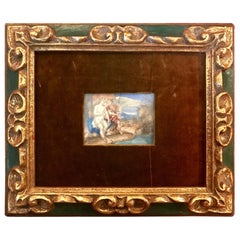
Monumental 18th Century Painting, Oil on Canvas, Italian School
Located in Toronto, CA
This is a monumental and spectacular 18th century, or possibly early 19th, oil on canvas of the Italian school. The canvas depicts a shepherd serenading a maiden in a wooded glen. B...
Category

18th Century Italian Antique Baroque Paintings

Materials

Canvas

Portrait of Louis George, Margrave of Baden-Baden, Oil on Canvas, Circa 1725
Located in Kinderhook, NY
A circa 1725 oil on canvas portrait of Louis George Simpert, as Hereditary Prince, the future Margrave of Baden-Baden (Deutsch: Ludwig Georg Simpert, Markgraf von Baden-Baden) portrayed one-quarter length in powdered wig and wearing ceremonial armor and crimson sash newly fitted in a period molded giltwood frame with bead-and-reel inner border from the Eli Wilner collection. Canvas measures 24.5" x 19.25". A related, but later portrait of circa 1735, attributed to the same unknown painter, is held in the collection of Lichtenthal Abbey, Baden-Baden. Biography: Louis George or Ludwig Georg Simpert, Margrave of Baden-Baden, born June 7, 1702 at Ettlingen Palace was the son of Louis William, Margrave of Baden-Baden and his wife, Princess Sibylle of Saxe-Lauenburg. Hereditary Prince of Baden-Baden from birth, at the death of his father in 1707, he succeeded as Margrave of Baden-Baden at the age of four. As such, his mother was regent of Baden-Baden until he reached his majority on 22 October 1727 at the age of 25. He married Maria Anna of Schwarzenberg April 8, 1721 at Český Krumlov Castle. The couple were the parents of four children, of whom only one survived infancy. After the death of the first Maria Anna in 1755, he married the Princess Maria Anna Josepha of Bavaria on July 10, 1755; the daughter of Charles VII, Holy Roman Emperor and his Austrian wife Archduchess Maria Amalia. The second marriage remained childless. Due to his passion for hunting instead of military service, he became known as "Jägerlouis", "hunter Louis", a play on his father's nickname of Türkenlouis ("Turk Louis") due to his famous heroics against the Turkish army at the Siege of Vienna...
Category

Early 18th Century German Antique Baroque Paintings

Materials

Canvas, Wood, Giltwood, Paint

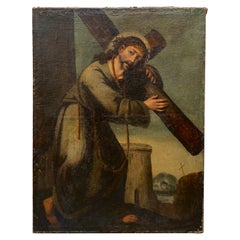
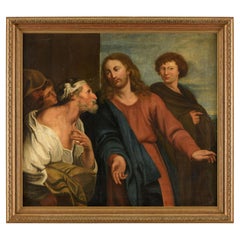
Oil Painting of Jesus Christ Carrying The Cross, Italy Early 18th Century
Located in Haddonfield, NJ
A Religious oil painting on canvas of Jesus Christ carrying the cross on the way to his crucifixion. This European piece of art is probably 17th-18th Century. This art piece was disc...
Category

Early 18th Century Italian Antique Baroque Paintings

Materials

Canvas, Wood

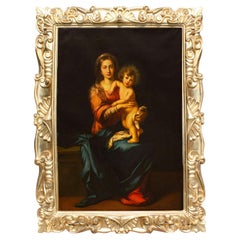
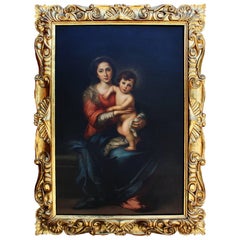
Large Impressive Oil on Canvas "Madonna Child" After Murillo - V. Bianchini
Located in Los Angeles, CA
A Large and Impressive Early 20th Century Oil on Canvas "Madonna and Child" After Bartolomé Esteban Murillo (Spanish, 1618-1682) depicting a seated Virgin Mary with a baby Jesus Chri...
Category

1910s Italian Vintage Baroque Paintings

Materials

Canvas, Giltwood

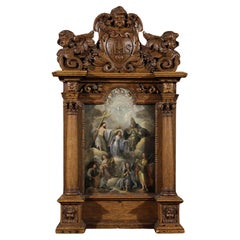
Spanish School Panel Painting, 17th Century "The Adoration of Mary"
Located in Madrid, ES
Spanish School Panel Painting, 17th Century "The Adoration of Mary" Oil on panel. 78 x 25.5 cm Original carved wooden frame Good condition
Category

17th Century Spanish Antique Baroque Paintings

Materials

Wood, Paint

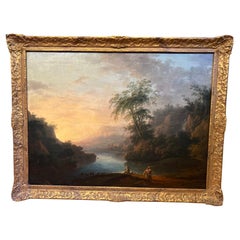
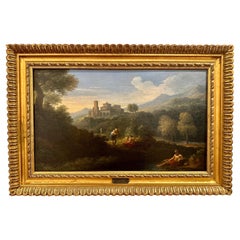
18th Century, Old Master European Landscape Painting Italian School
Located in Atlanta, GA
Italian School, 18th century. A masterful example of 18th-century Italian School artistry, this Old Master landscape painting captures the sublime beauty of an idealized European co...
Category

18th Century Italian Antique Baroque Paintings

Materials

Canvas, Giltwood, Paint

17th Century Old Master Painting, Large Battle Scene, Oil on Canvas
Located in Bradenton, FL
17th Century Large Old Master Battle Scene Painting. Flemish School, circa 1610 - 1680. Oil on canvas painting depicts a dynamic battle scene fi...
Category

17th Century Dutch Antique Baroque Paintings

Materials

Canvas

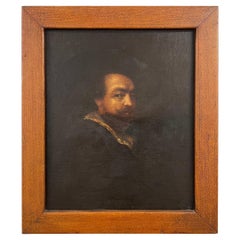
19th Century Study of a Self Portrait by Peter Paul Rubens
Located in Chicago, IL
In this compelling 19th-century art student study, we encounter a mesmerizing self-portrait by the eminent Baroque master, Peter Paul Rubens. The painting captures Rubens adorned in ...
Category

19th Century American Antique Baroque Paintings

Materials

Linen, Paint

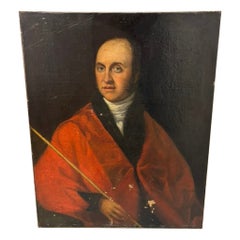
18th Century English Portrait Of an Architect or Scholar Old Master Painting
Located in Stamford, CT
18th century English or Continental old master portrait of a gentleman wearing a red robe with a black fur collar, holding a stick in his right hand. The stick might be the attribute...
Category

Early 18th Century English Antique Baroque Paintings

Materials

Canvas, Paint

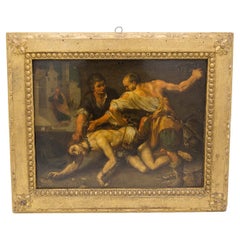
Caravaggesque Oil on Copper "Flagellation of Christ" Baroque Sicilian, 17th Cent
Located in Milano, IT
Splendid 17th-century Italian painting by unknown artist, but certainly a follower of Caravaggio, relying on style and drawing. The painting has a very beautiful gilded wooden frame, with a subtle greek with spheres and an overlying rectangular frame with sinuous flowers on each corner, very elegant and beautiful. The painting depicts one of the most depicted religious scenes ever, the scourging of Christ, and is entirely done in oil on copper. The scourging of Jesus is an episode narrated in the Gospels (Mk15:15-16; Mt27:26-27; Lk23:16-26; Jn19:1-17[1]). Scourging is a flogging, particularly bloody, by means of sticks, rods or cat-o-nine-tails, the latter instrument consisting, in the Roman typology, of a short stick to which were secured several strings ending in metal claws, leads and bone splinters that caused tremendous lacerations and fractures to the tortured person. Chains are used in this scene, both to immobilize Jesus Christ and to flog him, as we can see in the upper right hand of the scourger. According to some personal research, it turned out that the actual scourging of Christ was mostly depicted at the column, while this Christ is on the ground, so presumably Christ here is scourged during the Way of the Cross at one of those stages where he fell. The painting has a very dark coloring, which is why this painting is believed to faithfully follow Caravaggio's style of dry, authoritarian brushstrokes. The painting shows a figure agonizing on the ground that continues to receive beatings and floggings of all kinds, representing Christ; his face is crucified in a loquacious expression of pain, he turns his eyes to heaven as if to invoke God, but at the same time those same eyes admonish the wickedness and arrogance inherent in humanity. Christ has one hand resting on the ground in the act of holding himself, while the other takes a completely unnatural stance against the barren ground. His body appears hardened to wanting to parry the blows, his legs are curled up on his knees as he takes kicks from the soldier above him. Christ is depicted pinned down from the neck with a very large and strong black iron bolt held by the other soldier. The soldier on the right in the foreground wears a one-shoulder tunic with an orange tunic and blue pants. On his feet he wears gray shoes, at his waist he has a belt with an iron helmet...
Category

17th Century Italian Antique Baroque Paintings

Materials

Copper

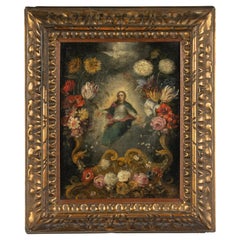
Early 18th Century Flemish Painting - Oil on Copper - The Immaculate Conception
Located in Casteren, Noord-Brabant
A fine 17th century Flemish oil painting on copper depicting the Virgin Mary in a radiant vision of the Immaculate Conception, surrounded by a lavish garland of flowers including tul...
Category

Early 18th Century Belgian Antique Baroque Paintings

Materials

Copper

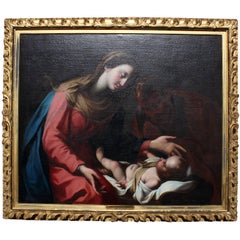
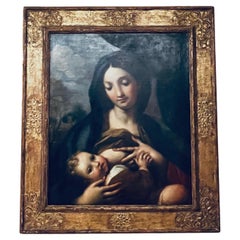
Italian 18th Century Oil on Canvas "Madonna and Child" after Giovanni Lanfranco
By Giovanni Lanfranco
Located in Los Angeles, CA
A very fine Italian 18th century oil on canvas "Madonna and Child" after Giovanni Lanfranco (Italian, 1582-1647). The young Virgin Mary attending to...
Category

18th Century Italian Antique Baroque Paintings

Materials

Canvas, Giltwood

Attributed to Giorgio Lucchesi, Oil on Canvas "Madonna Child" After Murillo
Located in Los Angeles, CA
Attributed to Giorgio Lucchesi (1855-1941) A large and impressive early 20th century oil on canvas "Madonna and Child" after Bartolomé Esteban Murillo...
Category

1910s Italian Vintage Baroque Paintings

Materials

Canvas, Giltwood

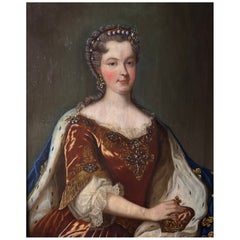
Portrait of Queen Marie Leszczynska, Wife of Louis XV, oil on canvas, 18th centu
Located in Madrid, ES
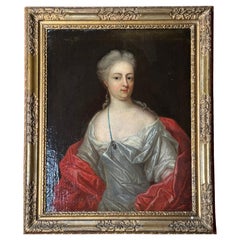
Portrait of Queen Marie Leszczynska, Wife of Louis XV, oil on canvas, 18th century Oil on canvas depicting Marie Leszczynska, Queen of France and wife of Louis XV, dressed in a luxu...
Category

18th Century French Antique Baroque Paintings

Materials

Paint

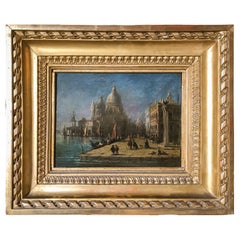
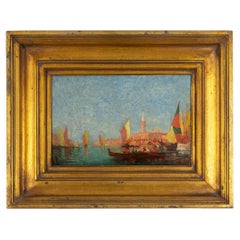
Venetian Capriccio, Santa Maria della Salute - Italian School, 18th century
Located in TEYJAT, FR
Venetian Capriccio with Santa Maria della Salute and Figures Italian School, 18th Century Oil on Oak Panel Dimensions: Panel – 16 x 21.5 cm (6.3 x 8.5 in). Provenance: Private Europe...
Category

Late 18th Century Italian Antique Baroque Paintings

Materials

Oak

Antique 17th Century Madonna with Child, Rome Carlo Maratta Oil on Canvas
By Carlo Maratta
Located in Doha, QA
C. Maratta went to Rome in 1636 and became an apprentice in the Studio of Andrea Sacchi. Pope Alexander VII commissioned many paintings from him. Maratta’s paintings of the later 165...
Category

17th Century Italian Antique Baroque Paintings

Materials

Canvas

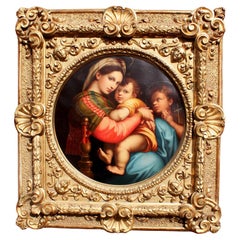
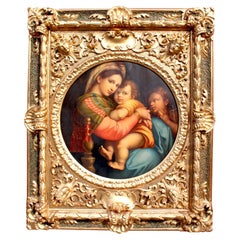
After Raffaello Sanzio 1483-1520 Raphael La Madonna Della Seggiola Oil on Canvas
Located in Los Angeles, CA
A fine Italian 19th century oil painting on canvas "La Madonna della Seggiola" after Raphael (Raffaello Sanzio da Urbino 1483-1520). The circular painted canvas depicting a seated Ma...
Category

Late 19th Century Italian Antique Baroque Paintings

Materials

Canvas, Giltwood

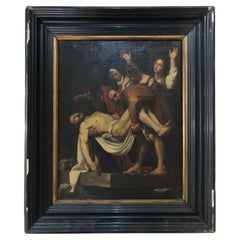
Excellent 17th-century Italian School. After Michelangelo Merisi, as Caravaggio
Located in Madrid, ES
Excellent 17th-century Italian School. After Michelangelo Merisi, known as Caravaggio. "Deposition of Christ" Canvas 42 x 31 cm - 16 9/16 x 12 3/16 in. Good condition The Deposition...
Category

17th Century Italian Antique Baroque Paintings

Materials

Paint

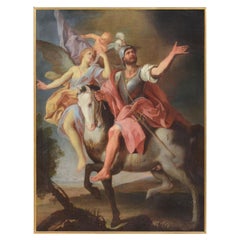
Magnificent 18th-Century French School Painting "Holy Knight Guided by an Angel"
Located in Madrid, ES
Magnificent 18th-Century French School Painting "Holy Knight Guided by an Angel" Oil on canvas, 95.5 x 75 cm 105.5 x 85 cm with frame Good condition
Category

18th Century French Antique Baroque Paintings

Materials

Paint

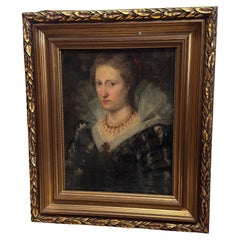
Portrait of a Noble Lady, Spanish or Flemish School, oil on canvas, 17th century
Located in Madrid, ES
Portrait of a Noble Lady, Spanish or Flemish School, oil on canvas, 17th century Oil on canvas depicting a high-ranking lady, dressed in rich jewels and lace typical of 17th-century...
Category

17th Century Spanish Antique Baroque Paintings

Materials

Paint

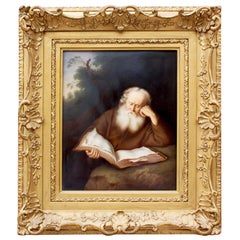
Berlin K.P.M. Porcelain Plaque "Der Eremit" The Hermit After Salomon Koninck
Located in Los Angeles, CA
A late 19th early 20th century Berlin K.P.M. Porcelain Plaque titled "Der Eremit" (The Hermit) After the painting by Salomon Koninck (Dutch, 1609-1659)...
Category

Early 1900s German Antique Baroque Paintings

Materials

Porcelain, Giltwood

18th Century German Old Master Painting “Diana and Endymion" Signed.
Located in Vero Beach, FL
18th Century German Old Master Painting “ Diana and Endymion “ Signed This exceptional and beautiful allegorical painting is executed in oil on canvas. The canvas is painted in a ma...
Category

18th Century German Antique Baroque Paintings

Materials

Canvas

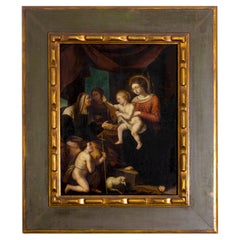
Oil on canvas of the Holy Family with the Child Jesus, Spanish School, 18th–19th
Located in Madrid, ES
Oil on canvas of the Holy Family with the Child Jesus, Spanish School, 18th–19th century Medium-sized oil on canvas (approx. 60 cm), depicting the Virgin Mary and Saint Joseph holdi...
Category

Late 18th Century Spanish Antique Baroque Paintings

Materials

Paint

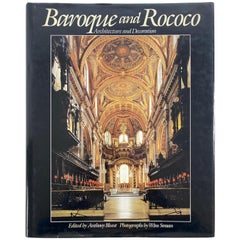
Baroque and Rococo Architecture and Decoration Great Large Heavy Art Table Book
Located in Moreno Valley, CA
Baroque and Rococo Architecture and Decoration Book by Alastair Laing, Anthony Blunt, and Christopher Ernest Tadgell. A study of a period in art ...
Category

1970s Italian Vintage Baroque Paintings

Materials

Paper

Large Still Life with Birds after Hondecoeter
By Melchior d Hondecoeter
Located in W Allenhurst, NJ
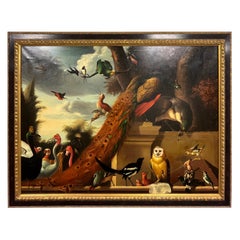
Beautiful large canvas landscape featuring peacock, owl, hawk, and a variety of birds landscape. Vivid colors. Signed L. Cassidy. Wonderfully framed. Curbside to NYC/Philly $450
Category

20th Century Unknown Baroque Paintings

Materials

Canvas, Paint

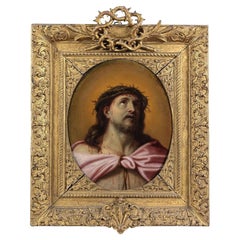
Italian 17th Century Oil on Canvas Head of Christ Crowned with Thorns, Mignard
By (circle of) Pierre Mignard
Located in Los Angeles, CA
A very fine Italian 17th century oval oil on canvas "Head of Christ Crowned with Thorns" Circle of Pierre Mignard (French, 1612-1695) within...
Category

17th Century French Antique Baroque Paintings

Materials

Canvas, Giltwood

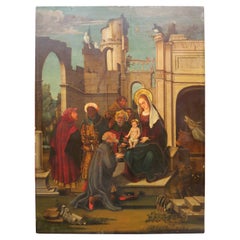
Adoration of the Magi Paiting, Italian Baroque Religious Art, 18th Century
Located in Lisbon, PT
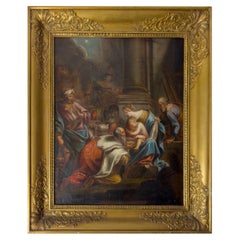
This 18th century Italian painting captures one of the most iconic biblical moments: the Adoration of the Magi. The mysterious travelers kneel in reverence before the Infant Jesus, ...
Category

18th Century Italian Antique Baroque Paintings

Materials

Canvas

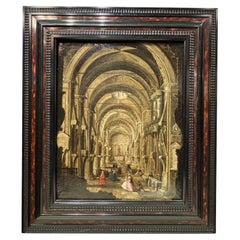
Interior of a cathedral in Flanders, attributed to Peter NEEFFS, 17th century.
Located in PARIS, FR
Oil on canvas, lined, showing the interior of a cathedral, probably Antwerp, with various scenes taking place there. Wear and overpainting to be restored, but beautiful appearance. M...
Category

17th Century Dutch Antique Baroque Paintings

Materials

Canvas

Rare Portrait of Maria Theresa of Austria, Queen Consort of France, 17th Century
Located in Madrid, ES
Portrait of Maria Theresa of Austria, Queen Consort of France, 17th Century Oil on canvas, European School, ca. 1660–1680, late 17th century Oil on canvas depicting Maria Theresa of...
Category

17th Century Spanish Antique Baroque Paintings

Materials

Paint

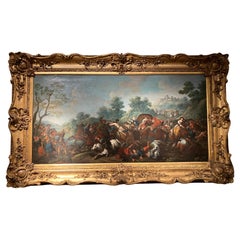
Italian 17th Century Baroque Battle Scene Oil on Canvas Painting Giltwood Frame
Located in Firenze, IT
This large Italian Baroque oil on canvas, dating from the late 17th century represents an exceptionally vivid battle scene with the unusual subject of a brigand ambush on a stagecoac...
Category

17th Century Italian Antique Baroque Paintings

Materials

Gold Leaf

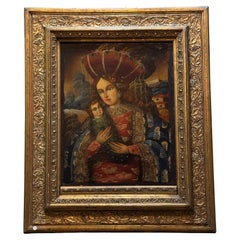
Virgin and Child, Cuzco School, oil on canvas, 18th century
Located in Madrid, ES
Virgin and Child, Cuzco School, oil on canvas, 18th century Magnificent oil on canvas from the Cuzco School (Viceroyalty of Peru), dated to the 18th century. It depicts the Virgin h...
Category

18th Century Spanish Antique Baroque Paintings

Materials

Paint

Flemish School Painting, Adoration of the Child, 18th Century, Religious Art
Located in Lisbon, PT
This 18th-century Flemish oil on wood painting depicts the moment of adoration of the Child Jesus, in the loving arms of the Virgin Mary. Kneeling at their feet is the young Saint J...
Category

18th Century Dutch Antique Baroque Paintings

Materials

Wood

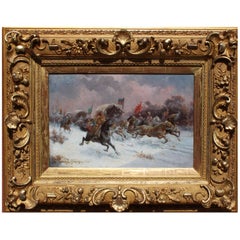
Adolf Constantin Baumgartner Stoiloff Oil on Board Cossacks Warriors on Horsback
By Adolf Constantin Baumgartner-Stoiloff
Located in Los Angeles, CA
Adolf Constantin Baumgartner Stoiloff (Austrian/Russian, 1850-1924) a fine oil on board "Charging Cossack Warriors on Horseback" within an ornate giltwood frame, circa 1890 Born in 1850 in Linz (Austria) Stoiloff died in Vienna in 1924. According to a research of Russian literature, he studied in the 1880s at St. Petersburg Imperial Academy of Fine Arts. He was very well known for his Russian horse...
Category

Late 19th Century Russian Antique Baroque Paintings

Materials

Gesso, Canvas, Giltwood, Paint

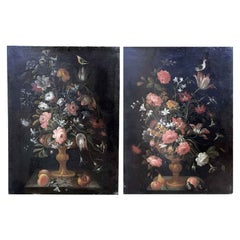
Coppia di Nature morte di FIori Frutta e Uccelli Due Dipinti Italiani 1650 circa
Located in Milano, MI
Nature morte di fiori in vaso di scuola italiana del XVII secolo, coppia di due dipinti senza cornice. Olio su tela con sfondo scuro e fiori finemente definiti. Questi dipinti, natur...
Category

17th Century Italian Antique Baroque Paintings

Materials

Canvas

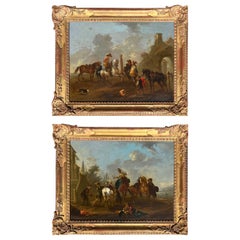
"An Elegant Hawking Party" A Pair of Paintings by August Querfurt
Located in Wiscasset, ME
Pair of old master paintings by August Querfurt (1696-1761). Oil on panel, one signed with initials in the lower left. Two scenes depicting hawking parties from the 18th century. ...
Category

18th Century Austrian Antique Baroque Paintings

Materials

Paint

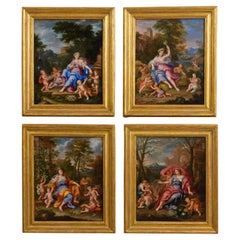
17th century, Four French Paintings Depicting The Seasons, Circle of Noel Coypel
Located in IT
Four paintings depicting the seasons, circle of Noel Coypel, second half of the 17th century Oil on canvas, unsigned Measures: cm W 37 x H 46 x D 2 cm (canvas) The four paintings, pr...
Category

Late 17th Century French Antique Baroque Paintings

Materials

Canvas

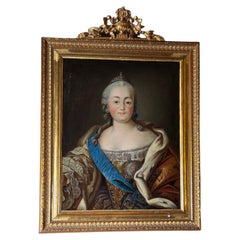
Rare Portrait of Elizabeth Petrovna of Russia (1709-1762) 18th Century Sign
Located in Madrid, ES
Rare Portrait of Elizabeth Petrovna of Russia (1709-1762) 18th Century Signature Signed by court painter Magnificent oil on canvas depicting Empress Elizabeth Petrovna (1709-1762),...
Category

18th Century Italian Antique Baroque Paintings

Materials

Paint

Religious Oil on Canvas – European School, 18th Century
Located in Madrid, ES
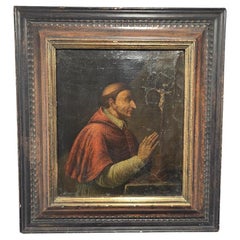
Religious Oil on Canvas – European School, 18th Century Dimensions: 50 x 45 cm (frame), 34 x 29 cm (view): San Carlos Borromeo, Archbishop of Milan (1538-1584) A serene and contempl...
Category

18th Century European Antique Baroque Paintings

Materials

Canvas

18th Century, Venetian School Italian Landscape Oversize Painting
Located in Milano, MI
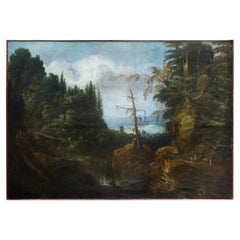
Early 18th century Italian Venetian inland painting, a large size oil on canvas Baroque mountain landscape with stream, bridge, waterfall, wayfarers and a village in the background. The woodland is animated by figures, a caravan with horsemen fishermen. This monumental Italian Baroque landscape painting has a strong impact and an excellent composition balance, as it depicts in the center the luminous perspective of a fortified village, whose side wings consist of two mountain rocks with dark wooded vegetation crowded by characters, horsemen, paths, streams.On the left side, with respect to the observer, there is a path that runs alongside a stream that flows into a waterfall in the center of the composition. from a caravan of travelers on foot and on horseback traveling along it in both directions: going up the slope on the mountainous coast you can see a church and a village near the top. The right part of the painting depicts a more sparse and dry vegetation, painted in the chromatic tones of ocher, inside of which there are dead plant, dry branches and a smaller number of figures on the rugged mountain. The iconographic inspiration of this wooded representation seems to be in the large trunk of the withered conifer in a central position, which represents a dead tree, as a? reminder of the transience of everything in life, whose phases are summarized in the two mountainous coasts. In the background a village painted in light and soft blue colors, in stark contrast to the previous scene, seems  to reassure and project us into a future season. With a suggestive theatrical effect, more than 250 cm wide, this Baroque Italian painting comes from a private collection of Milan, the canvas has been lined and shows minor painting retouches at a horizontal seam of the canvas. It is unframed, it has just a wooden profile covering the canvas edge. It is an antique Italian landscape, the perfect opportunity to make a statement. Get the perfect size painting for a great living room, to create that eye-catching focal point. You can make an impact with a single large work by hanging this early 18th century Italian Baroque painting...
Category

Early 18th Century Italian Antique Baroque Paintings

Materials

Canvas

After Raffaello Sanzio 1483-1520 Raphael La Madonna della Seggiola Oil on Canvas
Located in Los Angeles, CA
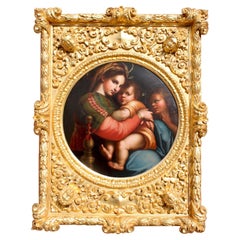
A Fine Italian 19th Century Oil Painting on Canvas "La Madonna della Seggiola" after Raphael (Raffaello Sanzio da Urbino 1483-1520). The circular painted canvas depicting a seated Madonna holding an infant Jesus Christ next to a child Saint John the Baptist, all within a massive carved two-tone gilt wood, gilt-patinated and gesso frame, which is identical to the frame on Raphael's original artwork. This painting is a 19th Century copy of Raphael's Madonna della Seggiola painted in 1514 and currently exhibited and part of the permanent collection at the Palazzo Pitti, Galleria Palatina, Florence, Italy. The bodies of the Virgin, Christ, and the boy Baptist fill the whole picture. The tender, natural looking embrace of the Mother and Child, and the harmonious grouping of the figures in the round, have made this one of Raphael's most popular Madonnas. The isolated chair leg is reminiscent of papal furniture, which has led to the assumption that Leo X himself commissioned the painting. Circa: 1890-1900. Subject: Religious painting Painting diameter: 28 inches (71.1 cm) Frame height: 55 1/8 inches (140 cm) Frame width: 46 inches (116.8 cm) Frame depth: 5 1/8 inches (13 cm) Raffaello Sanzio da Urbino (Italian, March 28 or April 6, 1483 - April 6, 1520), known as Raphael, was an Italian painter and architect of the High Renaissance. His work is admired for its clarity of form, ease of composition, and visual achievement of the Neoplatonic ideal of human grandeur. Together with Michelangelo and Leonardo da Vinci, he forms the traditional trinity of great masters of that period. Raphael was enormously productive, running an unusually large workshop and, despite his death at 37, leaving a large body of work. Many of his works are found in the Vatican Palace, where the frescoed Raphael Rooms were the central, and the largest, work of his career. The best known work is The School of Athens in the Vatican Stanza della Segnatura. After his early years in Rome much of his work was executed by his workshop from his drawings, with considerable loss of quality. He was extremely influential in his lifetime, though outside Rome his work was mostly known from his collaborative printmaking. After his death, the influence of his great rival Michelangelo was more widespread until the 18th and 19th centuries, when Raphael's more serene and harmonious qualities were again regarded as the highest models. His career falls naturally into three phases and three styles, first described by Giorgio Vasari: his early years in Umbria, then a period of about four years (1504–1508) absorbing the artistic traditions of Florence, followed by his last hectic and triumphant twelve years in Rome, working for two Popes and their close associates. Raphael was born in the small but artistically significant central Italian city of Urbino in the Marche region, where his father Giovanni Santi was court painter to the Duke. The reputation of the court had been established by Federico III da Montefeltro, a highly successful condottiere who had been created Duke of Urbino by the Pope - Urbino formed part of the Papal States - and who died the year before Raphael was born. The emphasis of Federico's court was rather more literary than artistic, but Giovanni Santi was a poet of sorts as well as a painter, and had written a rhymed chronicle of the life of Federico, and both wrote the texts and produced the decor for masque-like court entertainments. His poem to Federico shows him as keen to show awareness of the most advanced North Italian painters, and Early Netherlandish artists as well. In the very small court of Urbino he was probably more integrated into the central circle of the ruling family than most court painters. Federico was succeeded by his son Guidobaldo da Montefeltro, who married Elisabetta Gonzaga, daughter of the ruler of Mantua, the most brilliant of the smaller Italian courts for both music and the visual arts. Under them, the court continued as a centre for literary culture. Growing up in the circle of this small court gave Raphael the excellent manners and social skills stressed by Vasari. Court life in Urbino at just after this period was to become set as the model of the virtues of the Italian humanist court through Baldassare Castiglione's depiction of it in his classic work The Book of the Courtier, published in 1528. Castiglione moved to Urbino in 1504, when Raphael was no longer based there but frequently visited, and they became good friends. He became close to other regular visitors to the court: Pietro Bibbiena and Pietro Bembo, both later cardinals, were already becoming well known as writers, and would be in Rome during Raphael's period there. Raphael mixed easily in the highest circles throughout his life, one of the factors that tended to give a misleading impression of effortlessness to his career. He did not receive a full humanistic education however; it is unclear how easily he read Latin. Early Life and Works His mother Màgia died in 1491 when Raphael was eight, followed on August 1, 1494 by his father, who had already remarried. Raphael was thus orphaned at eleven; his formal guardian became his only paternal uncle Bartolomeo, a priest, who subsequently engaged in litigation with his stepmother. He probably continued to live with his stepmother when not staying as an apprentice with a master. He had already shown talent, according to Vasari, who says that Raphael had been "a great help to his father". A self-portrait drawing from his teenage years shows his precocity. His father's workshop continued and, probably together with his stepmother, Raphael evidently played a part in managing it from a very early age. In Urbino, he came into contact with the works of Paolo Uccello, previously the court painter (d. 1475), and Luca Signorelli, who until 1498 was based in nearby Città di Castello. According to Vasari, his father placed him in the workshop of the Umbrian master Pietro Perugino as an apprentice "despite the tears of his mother". The evidence of an apprenticeship comes only from Vasari and another source, and has been disputed—eight was very early for an apprenticeship to begin. An alternative theory is that he received at least some training from Timoteo Viti, who acted as court painter in Urbino from 1495.Most modern historians agree that Raphael at least worked as an assistant to Perugino from around 1500; the influence of Perugino on Raphael's early work is very clear: "probably no other pupil of genius has ever absorbed so much of his master's teaching as Raphael did", according to Wölfflin. Vasari wrote that it was impossible to distinguish between their hands at this period, but many modern art historians claim to do better and detect his hand in specific areas of works by Perugino or his workshop. Apart from stylistic closeness, their techniques are very similar as well, for example having paint applied thickly, using an oil varnish medium, in shadows and darker garments, but very thinly on flesh areas. An excess of resin in the varnish often causes cracking of areas of paint in the works of both masters. The Perugino workshop was active in both Perugia and Florence, perhaps maintaining two permanent branches. Raphael is described as a "master", that is to say fully trained, in December 1500. His first documented work was the Baronci altarpiece for the church of Saint Nicholas of Tolentino in Città di Castello, a town halfway between Perugia and Urbino. Evangelista da Pian di Meleto, who had worked for his father, was also named in the commission. It was commissioned in 1500 and finished in 1501; now only some cut sections and a preparatory drawing remain. In the following years he painted works for other churches there, including the Mond Crucifixion (about 1503) and the Brera Wedding of the Virgin (1504), and for Perugia, such as the Oddi Altarpiece. He very probably also visited Florence in this period. These are large works, some in fresco, where Raphael confidently marshals his compositions in the somewhat static style of Perugino. He also painted many small and exquisite cabinet paintings in these years, probably mostly for the connoisseurs in the Urbino court, like the Three Graces and St. Michael, and he began to paint Madonnas and portraits. In 1502 he went to Siena at the invitation of another pupil of Perugino, Pinturicchio, "being a friend of Raphael and knowing him to be a draughtsman of the highest quality" to help with the cartoons, and very likely the designs, for a fresco series in the Piccolomini Library in Siena Cathedral. He was evidently already much in demand even at this early stage in his career. Influence of Florence Raphael led a "nomadic" life, working in various centres in Northern Italy, but spent a good deal of time in Florence, perhaps from about 1504. Although there is traditional reference to a "Florentine period...
Category

Early 1900s Italian Antique Baroque Paintings

Materials

Canvas, Giltwood

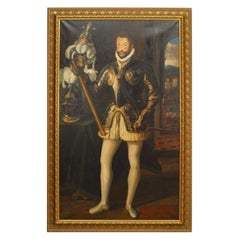
Emanuele Filiberto Portrait
Located in Queens, NY
Copy of a portrait of "Emanuele Filiberto", Italian military leader of the 1500's
Category

Late 20th Century Italian Baroque Paintings

Materials

Paint

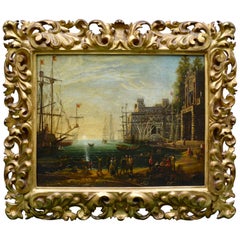
18th Century Painting of "Port Scene with the Villa Medici" after Claude Lorrain
By Claude Lorrain
Located in Vancouver, British Columbia
A late 18th century copy of a painting by Claude Lorrain titled, "Port scene with the Villa Medici" the original painted in 1637 and now hanging in the Uffizi Gallery in Florence. Th...
Category

Late 18th Century Italian Antique Baroque Paintings

Materials

Canvas

Alberto Carlieri, Capriccio with Christ and the Adulteress, Oil on Canvas
By Alberto Carlieri
Located in IT
Alberto Carlieri (Italy-Roma 1672-1720), "Christ and the adulteress", Oil on canvas, with frame cm H 115 x L 151 x 6.5, only canvas H 98.5 x L 135 cm...
Category

Late 17th Century Italian Antique Baroque Paintings

Materials

Canvas

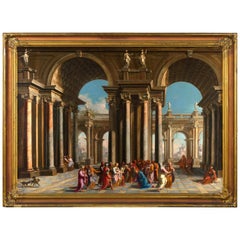
Alberto Carlieri, Painting with Architectural Capriccio
By Alberto Carlieri
Located in IT
Alberto Carlieri (Rome 1672-1720) "Architectural capriccio with the preaching of Saint Paul in the Areopagus of Athens" Oil on canvas, measures with...
Category

Late 17th Century European Antique Baroque Paintings

Materials

Canvas

Italian School 17th century "Christ in the Temple"
Located in Madrid, ES
Italian School 17th century "Christ in the Temple" Oil/canvas/double, 106 x 118 cm. good condition
Category

Early 17th Century Italian Antique Baroque Paintings

Materials

Paint

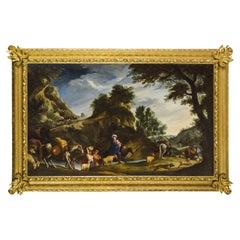
17th Century, Italian Painting by Pier Francesco Cittadini, Jacob and his Family
Located in IT
Pier Francesco Cittadini (Milan, 1616-Bologna, 1681) "Jacob and his family go to Egypt" Oil on canvas, cm 109 x 190 (canvas only) The valuable painting, made in oil on canvas, depicts Jacob and his family go to Egypt and we believe it can be, given the high quality painting, autograph work of Italian Pier Francesco Cittadini (Italy Milan, 1616 - Bologna, 1681) made after 1647. The work, in excellent condition is accompanied by a coeval frame in wood finely carved and golden. The scene depicted, which was confused with the Flight to Egypt in the past years, is instead identified with the biblical episode of Jacob’s journey. In the foreground, reading the painting from left to right, we see a caravan composed of animals, including donkeys, dromedaries, goats, dogs and horses and people, women, men and slaves, who carry on their journey along the banks of a river, following a path that to the right, would seem to lead to the through of a bridge. In addition to the watercourse is described an environment characterized by large rocks and impervious come far to cover the entire verticality of the canvas. On the left, in the distance, we see the tail of the caravan that runs along the steep path. Large trees enliven and harmonize the environment, as well as white and grey clouds characterize the predominantly clear sky and illuminated on the right by sunlight. The story is told in the Bible, Book of Genesis, 30, 25, passage in which is described the flight of Jacob from Haran after the contrasts with Laban, father of his wife Rachel. Jacob is the third great patriarch of the Bible. From his descendants originate the twelve generations of the people of Israel. He is the son of Isaac and Rebekah, who led him to flee from the wrath of Esau to Haran to seek refuge from his brother, Laban. At his uncle’s house Jacob met his daughter Rachel. As soon as he saw his cousin, Jacob was taken. Jacob will stay seven years in the service of Laban to marry his beloved Rachel. But Laban, with a deception, will give him in marriage first Lia, the least beautiful eldest daughter, and only after another seven years the splendid Rachel. From his first wife he will have several children, while Rachel will give birth to the beloved son, Joseph, who will become viceroy of Egypt. After years of service, Jacob asked to be paid with every dark-coloured garment among the sheep and every spotted and dotted garment among the goats. Laban accepted and sent away from his sons all the leaders of that kind. So Jacob took fresh branches of poplar, almond and plane tree, and flayed them, and put them in the troughs. The optical suggestion induced the goats and the sheep to conceive and give birth to dark, striped and dotted garments. He also ensured that all the strongest and healthiest leaders of the flock of Laban would drink near the barked branches, thus assuring a genetic superiority to his part of the flock. His flocks grew numerous and strong and he became richer than his relative, arousing envy. It was clear that Laban would not respect him much longer. At the suggestion of the Lord, Jacob decided to return to Canaan. Trying to avoid any possible dispute, he left with his family while Laban was absent for shearing sheep. But when, three days later, his uncle returned home, he became angry, feeling offended because Jacob had gone secretly and had not allowed him to greet his daughters and grandchildren. In addition, his teraphim, statuettes, or idols, which depicted the family deities, had disappeared. After 7 days of pursuit, Laban and his men reached Jacob’s group on Mount Gilead, in the mountainous region west of the Euphrates River, where his uncle and grandson had a stormy conversation. The younger man was outraged at being accused of stealing idols and told Labano to rummage through his family’s tents at will. Neither of them could know or even imagine that it was Rachel who took the idols and hid them in the saddle of the camel. During the search, she sat down firmly on the saddle, apologizing for not being able to get up, «because I usually have what happens to women» (Gen 31:35). So the loot wasn’t discovered. The author of this work was inspired by the composition of an engraving by Stefano Della Bella (1610-1664) of circa 1647. The engraving by Stefano della Bella bears the title "Iacob sur ses vieux jours quitte sans fascherie pour voir son filz Ioseph, sa terre et sa patrie" and is signed on the bottom left "Stef. of the Beautiful In. et fe." while on the right it is declared "Cum privil. Regis", that is with license of the king. Stefano Della Bella (Italy - Florence, May 18, 1610-Florence, July 12, 1664) was born in a family of painters, sculptors and goldsmiths and was left early orphan of his father sculptor, he dedicated himself first to the art of goldsmith at the school of Giovanni Benedetto Castiglione and Gasparo Mola, then turning his attention to drawing and engraving. He soon began drawing figures and copying the etchings of Jacques Callot, which inspired his early works. Under the protection of the Medici, in particular of Don Lorenzo, cadet son of Grand Duke Ferdinand I, Della Bella has the opportunity to make study trips to Rome, where he stayed from 1633-1636; In Rome he met French engravers and publishers of prints such as Israël Henriet and François Langlois, who influenced his decision to move to Paris in 1639, four years after the death of Callot. In Paris he soon reached, thanks to the engravings commissioned by Cardinal Richelieu, the success also worldly; he frequented courtiers, theatre artists and writers, while refusing too oppressive honors. In 1646-1647 he continued his travels in the Netherlands to Amsterdam, Antwerp and Dordrecht. He returned to Florence in 1650 and resumed working under the protection of the Medici court, working for his patrons. In 1656 he became a member of the Academy of Apatists. The painting object of this study is reasonably attributable to Pier Francesco Cittadini, or Pierfrancesco Cittadini, called the Milanese or the Franceschino (Italy - Milan, 1616-Bologna, 1681) as some exemplary stylistic comparisons proposed to follow can prove. Pier Francesco Cittadini was an Italian baroque painter, mainly active in Bologna. His artistic training first took place with the painter Daniele Crespi...
Category

Mid-17th Century European Antique Baroque Paintings

Materials

Canvas, Giltwood

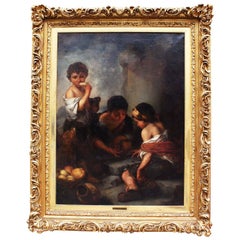
Large Oil on Canvas "Beggar Boys Playing Dice" After Bartolomé Esteban Murrillo
Located in Los Angeles, CA
A fine and large 19th century oil on canvas after Bartolomé Esteban Murrillo's (Spanish, 1617-1682) "Beggar Boys Playing Dice" (The original work by Murillo was painted in 1675). The impressive artwork depicts two young boys playing dice while another eats a piece of fruit as his dog watches on., within an ornate gildwood and gesso frame bearing a label from the faming company Bigelow & Jordan. The original work by Murillo is currently at the Alte Pinakothek Museum in Munich, Germany. The present work is signed: L. Rüber. Circa: Munich, Late 19th Century. Bartolomé Esteban Murillo (born late December 1617, baptized January 1, 1618 – April 3, 1682) was a Spanish Baroque painter. Although he is best known for his religious works, Murillo also produced a considerable number of paintings of contemporary women and children. These lively, realist portraits of flower girls, street urchins, and beggars constitute an extensive and appealing record of the everyday life of his times. Murillo was born to Gaspar Esteban and María Pérez Murillo. He may have been born in Seville or in Pilas, a smaller Andalusian town. It is clear that he was baptized in Seville in 1618, the youngest son in a family of fourteen. His father was a barber and surgeon. His parents died when Murillo was still very young, and the artist was largely brought up by his aunt and uncle. Murillo began his art studies under Juan del Castillo in Seville. There he became familiar with Flemish painting and the "Treatise on Sacred Images" of Molanus (Ian van der Meulen or Molano). The great commercial importance of Seville at the time ensured that he was subject to influences from other regions. His first works were influenced by Zurbarán, Jusepe de Ribera and Alonzo Cano, and he shared their strongly realist approach. As his painting developed, his more important works evolved towards the polished style that suited the bourgeois and aristocratic tastes of the time, demonstrated especially in his Roman Catholic religious works. In 1642, at the age of 26, he moved to Madrid, where he most likely became familiar with the work of Velázquez, and would have seen the work of Venetian and Flemish masters in the royal collections; the rich colors and softly modeled forms of his subsequent work suggest these influences. In 1645 he returned to Seville and married Beatriz Cabrera y Villalobos, with whom he eventually had eleven children. In that year, he painted eleven canvases for the convent of St. Francisco el Grande in Seville. These works depicting the miracles of Franciscan saints vary between the Zurbaránesque tenebrism of the Ecstasy of St Francis and a softly luminous style (as in Death of St Clare...
Category

Late 19th Century German Antique Baroque Paintings

Materials

Gesso, Canvas, Wood

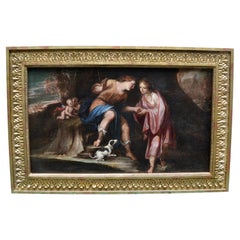
Baroque Painting Depicting the Illicit Romance of Paolo and Francesca
Located in Vancouver, British Columbia
An exceptionally executed oil on canvas Baroque painting depicting "lovebirds" Paolo Malatesta and Francesca Da Rimini whispering to one another. At the feet of Paoio there is a dog symbol...
Category

Early 18th Century Italian Antique Baroque Paintings

Materials

Canvas

Jan Frans van Bloemen called Orizzonte (Antwerp 1662-Rome 1749), Roman Landscape
Located in CH
Jan Frans van Bloemen, called Orizzonte (Antwerp, 1662 – Rome, 1749) A Late 17th–Early 18th Century Italian Landscape with Figures of the Roman Campagna...
Category

Late 17th Century Dutch Antique Baroque Paintings

Materials

Canvas

Religious Art, Oil on Cooper Painting, Baroque Holy Family, 18th Century
Located in Lisbon, PT
This 18th-century Baroque painting presents a tender depiction of The Holy Family with an Angel. Rendered in oil on copper panel, a common technique of that period for its durability...
Category

18th Century Italian Antique Baroque Paintings

Materials

Copper

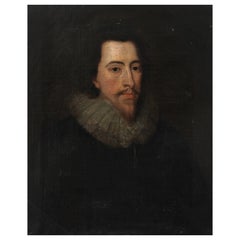
English School 17th Century "Portrait of George Villiers Duke of Buckingham"
Located in Madrid, ES
English School 17th Century "Portrait of George Villiers Duke of Buckingham" Oil on canvas 66X53 cm size without frame George Villiers, 1st Duke of Buckingham (Brooksby, 28 August 1...
Category

17th Century English Antique Baroque Paintings

Materials

Paint

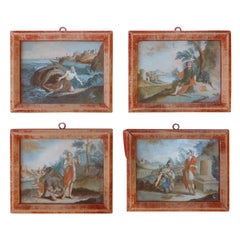
Four Neapolitan underglaze paintings with frame
Located in Milano, IT
The four 18th-century Neapolitan posthumously framed under-glass paintings depict biblical scenes from The Book of Jonah, specifically: 1. Jonah vomited by the Whale; 2. Elisha and t...
Category

18th Century Italian Antique Baroque Paintings

Materials

Glass, Wood

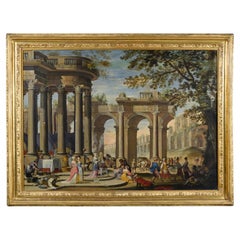
18th Century, Painting Architectural Capriccio, att. to Isaac De Moucheron
Located in IT
18th Century, Painting with Architectural Capriccio with figures, attributed to Isaac De Moucheron Measures: canvas cm H 108 x L 152; with frame cm H 132 x L 176 x 8 The painting i...
Category

18th Century Dutch Antique Baroque Paintings

Materials

Canvas

Painting with Duck and Plants, Oil on Plywood
Located in Barntrup, DE
A Baroque style oil painting from the first third of the 20th Century. This beautiful painting depicts a duck with plants, painted on a plywood panel in brown, green, and yellow ton...
Category

1930s European Vintage Baroque Paintings

Materials

Wood, Paint, Plywood

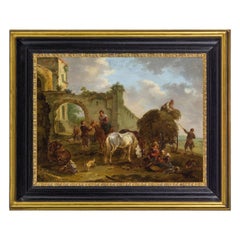
18th Century, Baroque Austran Painting by August Querfurt
Located in IT
August Querfurt (1696, Wolfenbüttel - 1761, Vienna) Farmers and villagers at the entrance of a village Oil on panel , cm 38,5 x 51. frame 66 x 53,5 x 4,5 cm The valuable painting, ...
Category

18th Century Austrian Antique Baroque Paintings

Materials

Wood

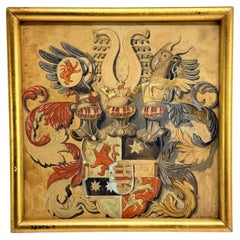
19th C. Heraldic Watercolor of a Composite Noble Achievement, Signed E. Wenzel
Located in Atlanta, GA
A finely rendered heraldic watercolor on paper depicting an elaborate composite coat of arms, signed lower right “E. Wenzel” and likely executed in the late 19th century. The work pr...
Category

19th Century German Antique Baroque Paintings

Materials

Giltwood, Paint

Important Portrait of the Princess of Ruspoli, 18th Century, Italian School
Located in Madrid, ES
Important Portrait of the Princess of Ruspoli, began 18th Century, Italian School Began 18th-century oil on canvas depicting the Princess of Ruspoli, a member of one of the most in...
Category

18th Century Italian Antique Baroque Paintings

Materials

Paint

Italian Baroque Style Painting of Beauty and Old Age attributed to R. Manchetti
Located in Vancouver, British Columbia
An old master style 18th century allegorical painting representing youth and old age, and/or beauty and wisdom, depicted by a beautiful young ...
Category

Mid-18th Century Italian Antique Baroque Paintings

Materials

Canvas

Antwerp School, 17th Century "Portrait of Archimedes"
Located in Madrid, ES
Antwerp School, 17th Century "Portrait of Archimedes" Oil on canvas, coated 97 x 79 cm, framed 116 x 99 cm good condition
Category

17th Century Belgian Antique Baroque Paintings

Materials

Paint

Set of 3, 19th Century Allegorical Reverse Glass Paintings
Located in Atlanta, GA
**Set of 3, 19th Century Allegorical Reverse Glass Paintings** This captivating set of **three 19th-century allegorical reverse glass paintings** presents richly detailed narratives imbued with symbolism and classical themes. Each painting is executed in the traditional reverse glass technique, providing a smooth and reflective surface that enhances the vibrant palette and fine detailing. 1. **Painting 1 (Left Panel):** This scene portrays a dramatic encounter, likely a moment of judgment or persuasion, set against a distant landscape. A figure in a flowing blue robe gestures emphatically toward a well-dressed couple, perhaps symbolizing conflict, intervention, or moral decision-making. The background includes a sweeping view of the countryside, with figures in the distance adding depth and context. 2. **Painting 2 (Center Panel):** The central panel features a pastoral scene steeped in allegorical significance. A central figure dressed in red, resembling a shepherd, commands attention under a radiant sunburst. Surrounding characters appear in moments of tension and repose, including a reclining figure and a soldier-like character. This composition evokes themes of guidance, struggle, and divine providence, with the bright sky and natural elements reinforcing the allegorical tone. 3. **Painting 3 (Right Panel):** The final panel depicts an intimate interior scene, with two seated women engaged in conversation, one gesturing emphatically as a standing male figure observes. The setting includes detailed furnishings, such as a writing desk, a red draped curtain, and objects hinting at scholarly or domestic pursuits. This tableau may represent themes of wisdom, counsel, or moral reflection, supported by the characters' thoughtful expressions and elaborate dress. Each painting is framed in its **original dark wooden frame**, complementing the vibrant colors and enhancing their display value. The set embodies the **19th-century European fascination with allegory and storytelling**, making it a significant piece for collectors of reverse glass art...
Category

Mid-19th Century Italian Antique Baroque Paintings

Materials

Glass, Paint

Baroque paintings for sale on 1stDibs.

Find a broad range of unique Baroque paintings for sale on 1stDibs. Many of these items were first offered in the 21st Century and Contemporary, but contemporary artisans have continued to produce works inspired by this style. If you’re looking to add vintage paintings created in this style to your space, the works available on 1stDibs include wall decorations, more furniture and collectibles, decorative objects and other home furnishings, frequently crafted with fabric, canvas and other materials. If you’re shopping for used Baroque paintings made in a specific country, there are Europe, Italy, and France pieces for sale on 1stDibs. While there are many designers and brands associated with original paintings, popular names associated with this style include Europa Antiques, KPM Porcelain, Coduri of Lyon, France, and Eugen Adam. It’s true that these talented designers have at times inspired knockoffs, but our experienced specialists have partnered with only top vetted sellers to offer authentic pieces that come with a buyer protection guarantee. Prices for paintings differ depending upon multiple factors, including designer, materials, construction methods, condition and provenance. On 1stDibs, the price for these items starts at $65 and tops out at $200,000 while the average work can sell for $7,004.

Still Thinking About These?

All Recently Viewed