Edo Paintings

EDO STYLE

Edo furniture was created during a flourishing time for the decorative arts owing to the stability of the Tokugawa shogunate rule in Japan. Spanning from 1603 to 1867, this era of peace and economic growth supported artistic advancements in lacquer, woodblock printing, porcelain and other artisanal trades. Because the country was largely isolated, there was little outside influence, leading to centuries of exceptional attention to the design of its furnishings and the quality of its traditional arts.

Unlike during the Meiji period that followed, with an increase in domestic and international markets, furniture during the Edo period was predominately commissioned by the ruling class, although people from across social groups benefited from the burgeoning metropolitan hubs for artisanal trades. For instance, Kyoto became a major center for lacquer art. Most furniture pieces were made from wood such as cedar or ash, including the era’s sashimono cabinets, which involved fine joinery and were rooted in the Heian period.

Sashimono cabinets, which were built by master craftsmen in a range of different wood types owing to the various trees that populate Japan, occasionally featured a stack of slender drawers as well as sliding doors. They were popular with everyone from samurai to kabuki actors. Tansu storage chests crafted from wood with metal fittings were also common in Edo-period homes. Some were designed to be easily portable while others were made to double as staircases.

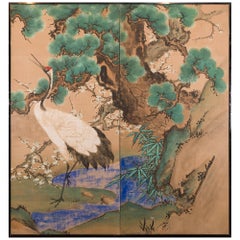
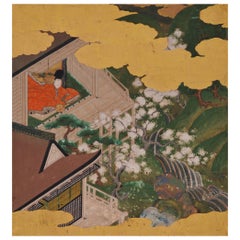
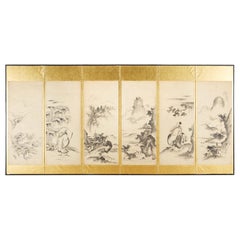
Painted folding screens, called byōbu, were also fashionable, with Japanese artists inspired by nature, literature and scenes of history and daily life to create vivid works. In Buddhist temples and the palatial homes of the aristocratic class, fusuma, or large sliding panels, would sometimes be adorned with gold or silver leaf. These dividers allowed interiors to change throughout the day, closing in small spaces for personal use or reflecting candlelight to illuminate communal spaces after dark.

Find a collection of Edo tables, lighting, decorative objects, wall decorations and more furniture on 1stDibs.

to
27
31
25
81
Height
to
Width
to
2,799
2,479
815
685
448
365
242
148
108
103
80
68
58
57
55
39
36
27
30
44
7
2
2
55
54
43
32
24
56
50
50
81
81
81
2
1
1
1
1
Style: Edo
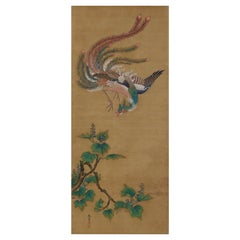
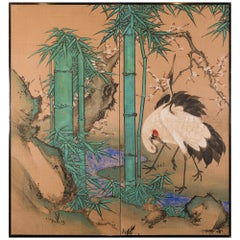
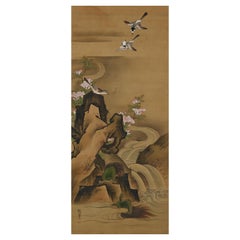
19th Century Japanese Silk Painting by Kano Chikanobu, Phoenix Paulownia
Located in Kyoto, JP
Birds & Flowers of the seasons Pheasants & Plum in Snow Unframed painting. Ink, pigment and gofun on silk Kano Chikanobu 1819-1888 Signature...
Category

Mid-19th Century Asian Antique Edo Paintings

Materials

Silk

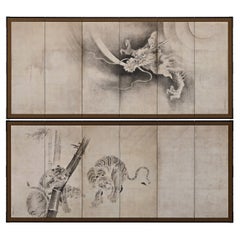
17th Century Japanese Screen Pair. Tiger Dragon by Kaiho Yusetsu
Located in Kyoto, JP
Kaiho Yusetsu (1598-1677) Tiger and Dragon Early Edo Period, Circa 1650 A Pair of Six-fold Japanese Screens. Ink and slight color on paper. Dimensions: Each screen: H. 171 cm x W. 380 cm (67.5’’ x 149.5’’) In this pair of early Edo period Japanese screens a group of tigers prowl in a bamboo grove whipped with fierce wind, while a dragon claws through clouds and mist. The dragon embodies elemental qualities - looming out of the mist, the coils of its body disappearing in the clouds. The dragon is calling for rain, symbolizing spring which is considered the fountain of life. On the other side, the tigers calls for the wind, symbolizing autumn which is considered the end of life. Tigers were familiar motifs within Japanese art from ancient times though the animals were imaginary to the people in the 17th century. While dragons and tigers are usually associated as sacred and ferocious, in this painting, both animals have rather amusing expressions. The tigers appear to glare at the dragon with cat-like eyes, and the look on the swirling dragon’s face appears almost affectionate - lending a playful flair to an otherwise magnificent theme. The tiger and dragon are cosmological symbols of the balancing forces in the world. Screens such as this were originally meant to express the fluctuating nature of the world. For Japanese in the early Edo period, they likely suggested the powers of the cosmos. In Japan the tiger and dragon motif was originally absorbed into the circles of Zen monasteries before spreading into the secular world. The theme especially appealed to the military classes with the Kano school, the official painters to the Shogun and the samurai, being the leading contributors. The painter of this pair of screens, Kaiho Yusetsu (1598-1677), was closely patronized by the third Shogun Tokugawa Iemitsu. In his later years he worked with Kano school artists...
Category

Mid-17th Century Japanese Antique Edo Paintings

Materials

Silk, Wood, Paper

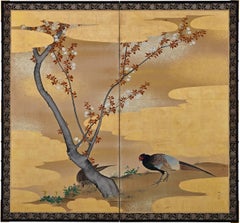
Early 19th Century Japanese Screen. Cherry Blossom Pheasants by Mori Tetsuzan
Located in Kyoto, JP
Mori Tetsuzan (1775-1841) Pheasants and Cherry Blossoms Two-fold Japanese screen. Ink, color, gofun, gold and silver on paper. A two-fold Japanese bir...
Category

Early 19th Century Japanese Antique Edo Paintings

Materials

Gold Leaf

Pair of Japanese Edo Six Panel Screens the Seven Sages
Located in Rio Vista, CA
Fantastic pair of 19th century Japanese late Edo/early Meiji period six-panel screens titled The seven sages of the bamboo grove. The Kano school screens...
Category

19th Century Japanese Antique Edo Paintings

Materials

Brass, Gold Leaf

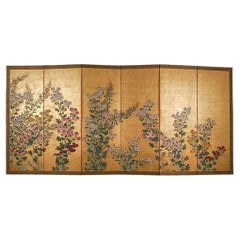
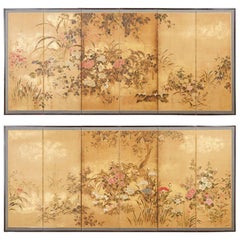
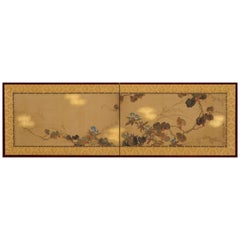
Japanese Six-Panel Screen Byobu With Chrysanthemums And Autumn Grass and Flower
Located in Torino, IT
The 19th Century Six-Panel Japanese folding screen "Byōbu" usually used in the most important Japanese house to stop wind and also to separate different space of the same big room de...
Category

Mid-19th Century Japanese Antique Edo Paintings

Materials

Gold Leaf

Pair of Japanese Edo Rimpa School Screens after Tawaraya Sōtatsu
Located in Rio Vista, CA
Impressive pair of 17th century Japanese Edo period Rinpa school screens made in the manner and style of Autumn Grasses by Tawaraya Sōtatsu (1570-1640). Beautifully decorated with wi...
Category

17th Century Japanese Antique Edo Paintings

Materials

Gold Leaf

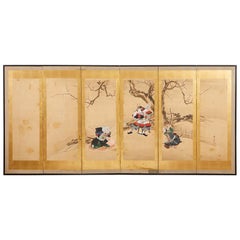
Japanese Edo Six Panel Screen Yoshitsune and Benkei
Located in Rio Vista, CA
Spectacular 19th century Japanese late Edo period six-panel byobu screen depicting Yoshitsune and Benkei, two heroes of Japanese folklore. Crafted in ink and natural color pigments on mulberry paper with thick gold leaf borders on each panel. The character Yoshitsune is seated under a blossoming cherry tree in full armor holding a fan. The warrior priest or monk Benkei is depicted kneeling on a leopard skin...
Category

19th Century Japanese Antique Edo Paintings

Materials

Brass, Gold Leaf

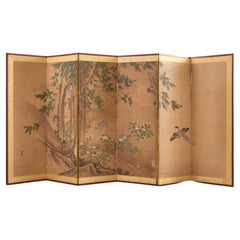
19th Century Japanese Edo Six Panel Kano School Landscape Screen
Located in Rio Vista, CA
Late Edo period 19th century Japanese six-panel landscape screen featuring a cypress tree over a flowering hibiscus with a pair of hototogisu birds. Kano school painted with ink and ...
Category

19th Century Japanese Antique Edo Paintings

Materials

Silk, Wood, Paper

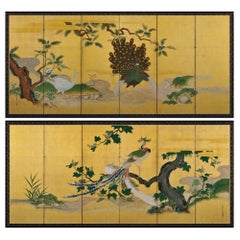
Japanese Screen Pair, circa 1730, Peacocks and Phoenix, Kano School
Located in Kyoto, JP
Phoenix and Peacocks. A pair of six-panel Japanese folding screens by Tsunetake Yotei (n.d.) First half of the 18th century. The signature reads 67 year old Tsunetake. The seals read: -Tsunetake no in, -Yotei, -Seishin Dimensions: Each screen – H. 69” x W. 149” (176 cm x 378 cm) A pair of Kano Grand Picture (Waga) screens depicting phoenix and peacocks rich with symbolic meaning. Dating to the first half of the 18th century, from the Kobikicho Kano school in Edo, this pair of folding...
Category

Early 18th Century Asian Antique Edo Paintings

Materials

Gold Leaf

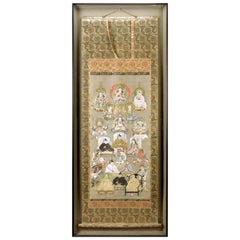
Japanese Silk Suijaku Scroll Nyorai-Kojin with Mixed Buddhism and Shinto Deities
Located in Atlanta, GA
A Japanese silk Suijaku hanging scroll beautifully presented in a custom wood shadow box frame from Edo period (circa 18-19th century). The scroll, surmounted on golden brocade was painted in fine details with gouache, ink and gold powder highlight, served as a Suijaku mandala for the worshippers. Honji Suijaku is a complicated religious concept uniquely developed in Japan. It mixed and hybrid the Buddism deities with native shinto spirits (known as Kami), which were seen as local manifestations (the suijaku, literally means a "trace") of Buddhist deities (the honji literally the original ground). The original idea may lie with the synergetic strategy to spread Buddism by making it more relatable to the local population who had already worshiped Shinto gods. The paradigm, adopted in the 10th century from an orignal Chinese concept, remained a defining feature of Japanese religious life up to the end of the Edo period (1868). Instead of being confined to deities, its application was often extended to historical figures as shown on this scroll. This long hanging scroll depicts an arrangement of 21 figures including Buddhism and Shinto deities as well as two historical figures on the bottom. Each figure was name-tagged in Kanji for easy identification by the worshippers. It was used in the temple or shrine so that when the worshipper prayed in front the mandala, they prayed simultaneously to all the deities. On the very top, sits Nyorai-Kojin, a hybrid deity of Nyorai Buddha and Kojin, the kaki for fire, stove and kitchen. From the top to bottom and left to right, here is the list of the deities: Kanon with Thousand Hands, Kanon with Willow Branch, Monju Bosatsu...
Category

Early 19th Century Japanese Antique Edo Paintings

Materials

Silk, Wood

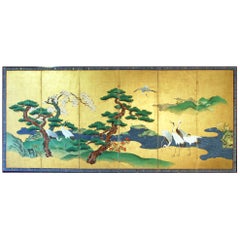
Japanese Folding Screen Six Panels Painted on Gold Leaf
Located in Brescia, IT
Paravento a sei pannelli di scuola giapponese Kano: paesaggio con bellissime ed eleganti gru vicino al fiume, con alberi di pino e sakura. Dipinto a mano con pigmenti minerali ed inc...
Category

Early 19th Century Japanese Antique Edo Paintings

Materials

Gold Leaf

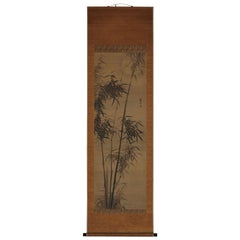
Japanese Painting, Hanging Scroll, 19th Century Bamboo in Moonlight
Located in Kyoto, JP
Bamboo in moonlight Gamo Rakan (1784-1866) Hanging scroll, ink on silk. Dimensions: Scroll: 201 cm x 58 cm Image: 137 cm x 45 cm In this early 19th century work by Gamo Rakan a light ink wash applied to the silk background silhouettes the moon and suggests the atmosphere of early evening. Even though it is a literati subject, Rakan’s bamboo is quite realistic with a strong decorative style. The painting finds its inspiration from Chinese Ming dynasty painters who often used a single-tone, jet black stroke to emphasize the calligraphic nature of bamboo. In a different era, decorative would have been seen as somewhat unrefined. But increasingly in the Edo period, it was the hallmark of high style. The Japanese people, in particular the rising merchant class, had gradually become apathetic toward the traditional Sesshu and Kano schools of painting. Chinese professional and amateur painters living in the port of Nagasaki during the 18th century had a profound effect on Japanese painting and the freshness of their style and its decorative appeal contributed greatly to its popularity. Gamo Rakan’s teacher, Tani Buncho...
Category

Early 19th Century Japanese Antique Edo Paintings

Materials

Silk

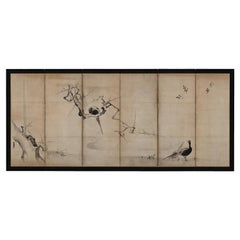
17th Century Japanese Screen. Ink Plum Tree Birds by Kano Naonobu.
Located in Kyoto, JP
Kano Naonobu (1607-1650) Plum Tree and Birds Six-fold Japanese Screen. Ink and slight color on paper. In this evocative ink work spread over a six-panel folding screen, we see the consummation of the elegance and refinement of the Edo Kano school. This 17th century screen is a rare surviving example of a large-scale bird and flower painting by Kano Naonobu, the younger brother of Kano Tanyu...
Category

17th Century Japanese Antique Edo Paintings

Materials

Wood, Paper

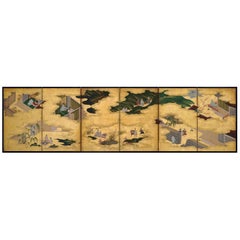
Japanese Screen Painting, Circa 1700 Tales of Ise by Tosa Mitsusuke
By Tosa Mitsusuke 1
Located in Kyoto, JP
A six-fold Japanese screen by Tosa Mitsusuke (1675-1710), Japan 17th-18th century, Edo period. The signature reads Shoroku-i ge Tosa sa Konoe Shogen Mit...
Category

Late 17th Century Japanese Antique Edo Paintings

Materials

Gold Leaf

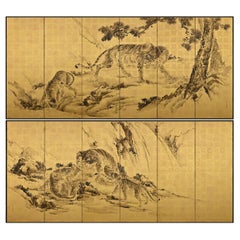
Japanese Screen Pair, Tigers by Kishi Renzan, Late Edo Period
Located in Kyoto, JP
Kishi Renzan (1804-1859) Tigers Pair of six-panel Japanese screens. Ink and gold-leaf on paper. In this monochromatic pair of six-fold Japanese screens painted on gold-leaf, Kishi Renzan has created a breathtaking composition of a family of tigers. The screens are filled with a sense of drama which is conveyed by both the subject matter and the wet, expressive brushwork. The running mountain stream and the towering waterfall allude to refreshment during the summer months and we feel the tiger families familiarity and security within their environment. Renzan’s master, Kishi Ganku...
Category

Mid-19th Century Asian Antique Edo Paintings

Materials

Gold Leaf

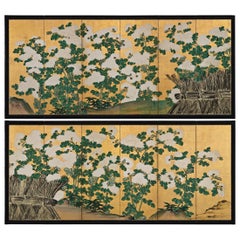
Mid-18th Century Japanese Screen Pair, One Hundred Flowers, Chrysanthemums
Located in Kyoto, JP
Omori Soun (b. 1704) Chrysanthemums - One Hundred Flowers A Pair of Six-fold Japanese Screens. Ink, color, gofun and gold leaf on paper. Dating ...
Category

Mid-18th Century Japanese Antique Edo Paintings

Materials

Gold Leaf

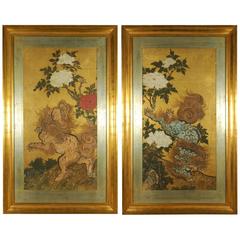
Pair of Antique Japanese Paintings of Karashishi, Edo Period, 18th Century
Located in Prahran, Victoria
A rare pair of antique Japanese Karashishi paintings in a landscape of rocks and peony flowers on gold leaf ground in fine handmade frames, Edo period, early 18th century. The Karash...
Category

Early 18th Century Japanese Antique Edo Paintings

Materials

Gold Leaf

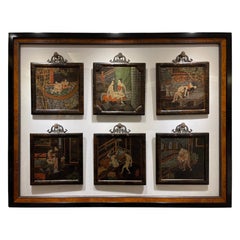
Set of Six Japanese Ido Period Shunga Erotica Hanging Lacquered Wood Panels
Located in North Miami, FL
These magnificent lacquered wood panels have been mounted together on a lucite panel. Each panel has its original hanging handle. The panels are hanging on antique railroad...
Category

18th Century Japanese Antique Edo Paintings

Materials

Metal, Iron

Japanese Screen Painting, Early 19th Century, Autumn Flowers by Sakai Hoitsu
Located in Kyoto, JP
A two-fold Japanese screen by the Rimpa school artist Sakai Hoitsu (1761-1828), Japan, 19th century, Edo period. This small Japanese folding screen pai...
Category

Early 19th Century Japanese Antique Edo Paintings

Materials

Wood, Silk

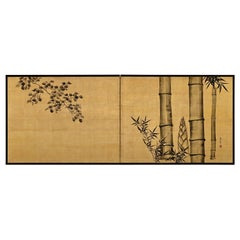
19th Century Japanese Screen for Tea-Ceremony, Ink Bamboo and Plum on Gold Leaf
Located in Kyoto, JP
Three Friends of Winter Nakajima Raisho (1796-1871) Late Edo period, circa 1850 Ink and gold leaf on paper. This is a double-sided Japanese Furosaki or tea-ceremony screen from the mid 19th century; bamboo and plum on the front, young pines the back. It by Nakajima Raisho, a master painter of the Maruyama school in the late Edo and early Meiji periods. In this work Raisho combines exquisite ink brushwork with large open spaces of brilliant gold-leaf to inspire the viewers imagination. Rather than naturalism, he is searching for the phycological impression of the motifs, resulting in abstraction and stylization. His simplification of the motifs the result of looking to capture the inner nature of the objects. This art motif is known as Sho Chiku Bai, or the Three Friends of Winter. Evergreen pine connotes steadfastness, bamboo suggests both strength and flexibility, while plum blossoms unfurling on snow-laden branches imply hardiness. Combined, this trio is emblematic of Japanese new year. Chinese literati were the first to group the three plants together due to their noble characteristics. Like these resilient plants flowering so beautifully in winter, it was expected of the scholar-gentleman to cultivate a strong character with which he would be able to show the same degree of perseverance and steadfastness even during times of adverse conditions. The screen would have been placed near the hearth of a room used for the Japanese tea ceremony, shielding the fire from draughts and also forming a stimulating and decorative backdrop behind the tea utensils. It would have been used in the Hatsugama, or first tea-ceremony of the new year. Nakajima Raisho (1796-1871) originally studied under Watanabe Nangaku before entering the school of Maruyama Ozui. He was the highest ranking Maruyama school painter at the end of the Edo period and was known as one of the ‘Four Heian Families’ along with Kishi...
Category

Mid-19th Century Japanese Antique Edo Paintings

Materials

Gold Leaf

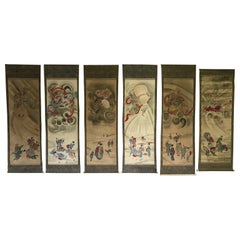
Set of 6 Large Kakemonos Japanese Mythology, 19th Century Japan circa 1800 Edo
Located in Beuzevillette, FR
Beautiful set of 6 large kakemonos from 19th century Japanese mythology. Paper support with a canvas pasted on the paper Wonderful set that is part of Japan's history and beliefs When not hung, the Kakemonos are rolled up. circa 1800 - Japan - Edo Period A kakemono translates as "object to hang". In Japan this refers to a painting or calligraphy, most often done on silk or paper framed in a scroll that was intended to be hung on walls or in public lighting. This particular form, which allows them to be in a roll, dates back to the Tang dynasty in China (this would be related to the copying and preservation of ancient Buddhist texts). A Kami is a deity or spirit worshipped in the Shinto religion. A Yokai is a spirit, ghost, demon, or strange apparition from the creatures of Japanese folklore. Each of these kakemonos represents a unique story: - A kami, a Japanese deity, is shown painting a rainbow. Indeed, he performs the action with his right hand while his left hand holds a kind of basket with three pots of paint. This kami has a rather closed attitude. He is standing in a dark and tormented sky. Below this figure, 8 villagers are dressed in traditional Japanese clothes. Their faces are softened. They are not afraid of the elements made by the kami above their heads. - A character with an unreal look is holding a kind of jar with his two hands, which he spills on human figures above. This being is floating in the air, probably a character from mythology, perhaps Susanoo. Underneath, villagers on umbrellas. They are trying to protect themselves as best they can from what is falling on them. One of them is carrying baskets with fish on her shoulders. A character in the background is thrown forward and falls. - On this kakemono, the god Raijin, dressed in a white and blue outfit, strikes the sky with his two drum hammers to create lightning and its thunderous sound. Surrounded by Tomoe and a long red scarf, Raijin, enraged and with dishevelled hair, creates a dark and violent storm. The villagers seem frightened by this meteorological phenomenon. One of the villagers can be seen fainting in the arms of a man. This scene may seem chaotic, but Japanese legend tells us that once a field is struck by lightning, the harvest is good. - On this kakemono, we see an unreal-looking figure holding a fan, as if he were sweeping away the bad weather, or simply producing gusts of wind. He is probably the kami of wind and air, Shina tsu-hiko. The figures below him seem surprised by so much wind. An umbrella flies away on the left, the women hold their hair and scarf, the clothes are caught in the power of the wind, there is even a woman on the ground on the bottom left. - This Kakemono represents a short moment. This Raiju is a yokai (ghost spirit...
Category

19th Century Japanese Antique Edo Paintings

Materials

Paper

Japanese Two Panel Screen Manchurian Crane and Turtles
Located in Hudson, NY
In Japan, cranes symbolize fidelity as they mate for life and turtles symbolize longevity. Additionally, this screen also has the Japanese motif of sho-chiku-bai, or the three friends of winter (pine, plum, and bamboo). So called the three friends of winter because all three flourish during the cold months. This screen was originally fusuma doors...
Category

Mid-19th Century Japanese Antique Edo Paintings

Materials

Paper

Japanese Painting, 17th Century, Tale of Genji, Tosa School
Located in Kyoto, JP
Illustration to an unidentified chapter of the Tale of Genji (Genji Monogatari) Tosa School (second half of the 17th Century) Ink, pigment, gofun and...
Category

Late 17th Century Japanese Antique Edo Paintings

Materials

Gold Leaf

Japanese Edo Six-Panel Haboku Landscapes of Seasons
Located in Rio Vista, CA
19th century Japanese Edo period six-panel screen painted in Haboku (splashed ink) style. Depicts Four Seasons landscape scenes with two portraits of Chinese sages. One sage is trave...
Category

19th Century Japanese Antique Edo Paintings

Materials

Gold Leaf

Japanese Painting, Hanging Scroll, Mid 19th Century, Koi and Water Plants
By Iwase Hirotaka
Located in Kyoto, JP
Iwase Hirotaka (1808-1877) Koi and Water Plants Hanging scroll, ink, color, gold wash and gold flecks on silk Inscription: Hirotaka Seal: Ille...
Category

1860s Japanese Antique Edo Paintings

Materials

Silk

Lovely Japanese 18th c Edo Scroll by Tamamine Hasegawa , Flowers 19th c
Located in Amsterdam, Noord Holland
The following is a beautiful work of Fuyo drawn by Hasegawa using a skillful brush.    [Hasegawa]   1822-1879 Painter from the late Edo period to the Meiji period.   *Painter born...
Category

19th Century Antique Edo Paintings

Materials

Silk

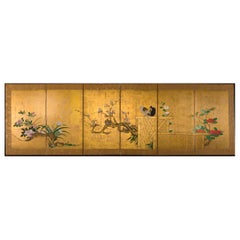
Japanese Six-Panel Screen Late Winter into Early Spring
Located in Hudson, NY
Japanese six-panel screen: Late winter into early spring, Rimpa style painting of a garden scene with doves on a bamboo fence. Flowers in bloom including ...
Category

Early 19th Century Japanese Antique Edo Paintings

Materials

Gold Leaf

Late 18th Century Japanese Framed Painting, God of Thunder by Yamaguchi Soken
Located in Kyoto, JP
Raijin - God of Thunder Yamaguchi Soken (1759-1818) Mid to Late Edo period, circa 1800. Framed painting. Ink and light color on paper. This humorous painting depicts the Thunder God, Raijin, tumbling from the sky, presumably being struck down by one of his own lighting bolts. He clings to one drumstick as the other is in free-fall along with his Taiko drums...
Category

Late 18th Century Asian Antique Edo Paintings

Materials

Paper

Japanese Six Panel Screen, Snow Scene at Water’s Edge
Located in Hudson, NY
Japanese Six Panel Screen: Snow Scene at Water's Edge with Flowers and Waterfowl. Edo period painting (mid 19th century) of plum, bamboo, white camellias, cranes and mandarin ducks ...
Category

Mid-19th Century Japanese Antique Edo Paintings

Materials

Gold Leaf

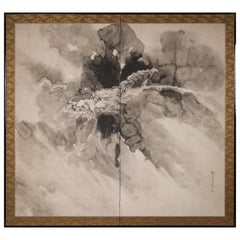
Japanese Two Panel Screen Dragon in the Mist
Located in Hudson, NY
Ink (Sumi) on paper. Signature and Seal read: Kishi Ganku It is backed with paper covered in gold and silver flake. Kishi Ganku (1749 or 1756-1839) was the...
Category

Early 19th Century Japanese Antique Edo Paintings

Materials

Wood, Paper

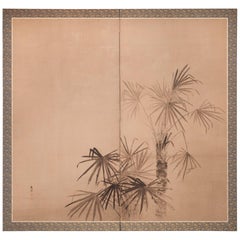
Japanese Two-Panel Screen Ink Painting of Palm Trees on Paper
Located in Hudson, NY
Japanese two-panel screen: ink painting of Palm Trees on paper, Edo period (1787) beautiful painting of Japanese windmill palm trees. Ink paint...
Category

18th Century Japanese Antique Edo Paintings

Materials

Silk, Wood, Paper

18th Century Japanese Two-Panel Screen Collection of Fans on Gold
Located in Hudson, NY
18th century Japanese Screen of a Collection of Fans. Paintings on fans depict famous Japanese painting subjects, this screen was most li...
Category

18th Century Japanese Antique Edo Paintings

Materials

Gold Leaf

Japanese Nihonga Painting 19th c Edo Scroll by Seiki Yokoyama Landscape Shijo
Located in Amsterdam, Noord Holland
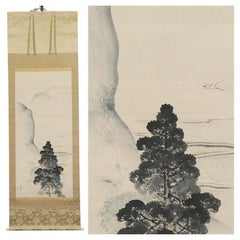
[Authentic work] ◆ Seiki Yokoyama ◆ Landscape ◆ Rural landscape ◆ Japanese painting ◆ Shijo school ◆ Hand-painted ◆ Paperback ◆ Hanging scroll ◆ Seiki Yokoyama [Art yearbook appra...
Category

19th Century Antique Edo Paintings

Materials

Silk

Japanese Six Panel Screen Battle of Uji Bridge
Located in Hudson, NY
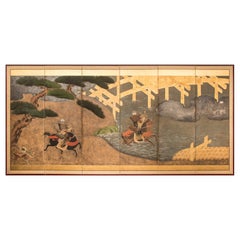
The first battle at Uji was in 1180 and was the beginning of the Heike Wars. This screen depicts a famous scene from the Heike Wars. Two Heike generals, Sasaki Takatsuna and Kajiwa...
Category

Early 19th Century Japanese Antique Edo Paintings

Materials

Gold Leaf

Japanese Two Panel Screen: Mandarin Ducks and Geese Among Bamboo and Flowers
Located in Hudson, NY
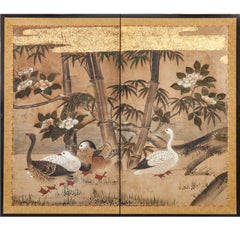
Japanese Two Panel Screen: Mandarin Ducks and Geese Among Bamboo and Flowers, Edo period painting (c. 1850) of mandarin ducks and geese on a grassy sh...
Category

Mid-19th Century Japanese Antique Edo Paintings

Materials

Gold

19th Century Japanese Scroll Painting, Birds Flowers of the Four Seasons
Located in Kyoto, JP
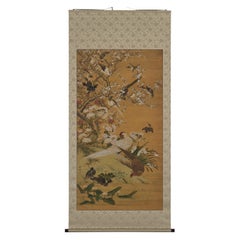
Birds and flowers of the four seasons Early to mid-19th century Ink, pigment and gofun on silk Unidentified artist Signature: S...
Category

1830s Japanese Antique Edo Paintings

Materials

Silk

Japanese Two Panel Screen Amorous Cranes and Turtles
Located in Hudson, NY
Japanese two panel screen: Amorous Cranes and Turtles. In Japan, cranes symbolize fidelity as they mate for life and turtles symbolize longevity. Additionally, this screen also has the Japanese motif of sho-chiku-bai, or the three friends of winter (pine, plum, and bamboo). So called the three friends of winter because all three flourish during the cold months. This screen was originally fusuma doors...
Category

1850s Japanese Antique Edo Paintings

Materials

Wood, Paper

Japanese Two Panel Screen: Mountain Landscape with Calligraphy
Located in Hudson, NY
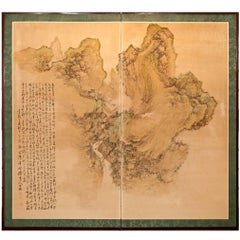
Japanese Two Panel Screen: Mountain Landscape with Calligraphy. Late Edo (c. 1850) painting of a dramatic mountainside carved by a waterfall with a crane flying in the foreground an...
Category

Mid-19th Century Japanese Antique Edo Paintings

Materials

Silk, Wood, Paper

Antique Japanese Buddhist pagoda hanging scroll /Buddhist painting/Edo
Located in Sammu-shi, Chiba
This is a slightly different Buddhist painting believed to have been created by a Japanese temple monk during the Edo period (late 17th to 19th century). Rendered in ink on paper, th...
Category

18th Century Japanese Antique Edo Paintings

Materials

Paper

Huge 2 meter Large Chinese Porcelain Plaque Painting Flowers Ca 1960 - 1980 Fenc
Located in Amsterdam, Noord Holland
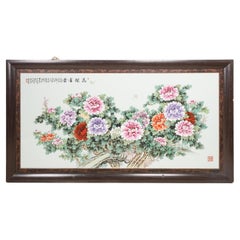
Lovely painting with carved frame. Balinese style. Very well made. Very nice shaped. Condition Overall Condition some small usage signs to frame. Size 1920 x 1050mm Period 20th cent...
Category

20th Century Edo Paintings

Materials

Silk

17th Century Japanese Screen Pair by Soga Nichokuan, Hawks on Pine Plum Trees
Located in Kyoto, JP
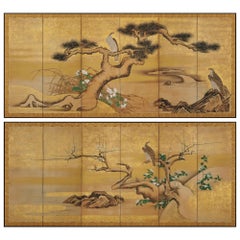
Hawks on plum and pine Soga Nichokuan (active circa 1625-1660) Pair of six-fold screens. Ink, mineral pigments, gofun, gold and speckled gold l...
Category

1640s Japanese Antique Edo Paintings

Materials

Wood, Paper

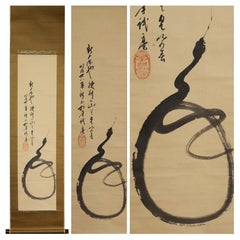
Japanese Painting Meiji 1903 Scroll Suzuki Shoutoshi Nihonga New Year s Day 1903
Located in Amsterdam, Noord Holland
Product Description This is a work drawn by Matsutoshi Suzuki on New Year's Day, 1903, as you can see. The figure of the zodiac ``Snake'' and a jewel are depicted, and a poem of praise is attached to the top. 《Suzuki Shoutoshi》 Separate issue is a hundred times at first. A painter from Kyoto and a child of 100 years. He learned painting techniques from his father and was good at landscapes, flowers, and birds. He was a teacher at Kyoto Prefectural Painting School and Uemura Shoen...
Category

Early 1900s Antique Edo Paintings

Materials

Silk

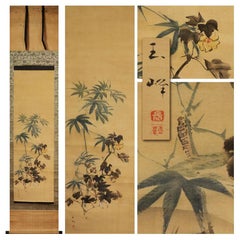
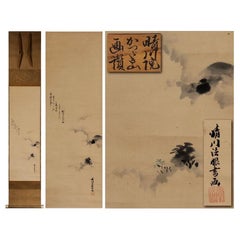
19th Century Japanese Silk Painting by Kano Chikanobu, Turtles Azalea
Located in Kyoto, JP
Birds & flowers of the seasons Pheasants & plum in snow Unframed painting. Ink, pigment and gofun on silk Kano Chikanobu 1819-1888 Signature...
Category

Mid-19th Century Asian Antique Edo Paintings

Materials

Silk

Lovely Japanese 18/19th c Edo Scroll Kano Osanobu Nihonga Painting Mountain
Located in Amsterdam, Noord Holland
Kano Osanobu (狩野養信) Osanobu Kano (born August 18, 1796; died June 12, 1846) was the ninth painter of the Kobikicho Kano School in the Edo period. His common name was Shozaburo. His father was Naganobu KANO, and Tadanobu KANO was his son. His Go (pen name) was Osanobu Seisenin, Kaishinsai, and Gyokusen. Brief Personal History He was born the eldest son of Naganobu ISENIN during the Edo period. He was first sent to serve at Edo Castle at the age of 15, and it appears that he was apparently pushed by his father to perform various public tasks for the Kanon School. He kept a diary for 36 years, starting from the day before he first went into service at Edo Castle until the day before he died. The diary is entitles "Official Service Diary" (it consists of 52 volumes that are maintained at the Tokyo National Museum, and 4 volumes that are separately maintained at the different families), and have become the focus of a lot of attention in recent years for the detailed information they present on the daily life and work of a prestigious official painter. The reading of the characters of his name was originally "Takenobu"; however, with the birth of the first son of the Shongun Ieyoshi TOKUGAWA in 1813, whose name was Takechiyo, having a sylable with the same pronunciation of "Take"was deemed to be inappropriate, and was therefore changed to "Osanobu". Because Takenobu died the following year, after which he was referred to as Gyokujuin, Osanobu changed his pen name Gyokusen he had used until that point to Seisenin, in order to avoid using the same Chinese charcter pronounced alike. In 1819, he attained the second highest rank for a Buddhist priest, Hogen, and assumed the role of head of the family after his father passed away in 1828. In 1834 he attained the highest rank for a Buddhist priest, Hoin. He oversaw the rennovation of the wall paintings of Nishinomaru Palace of Edo Castle from 1838 to 1839, and Honmaru Palace of it from 1844 to 1846. It is thought that Osanobu later died due to the fatigue...
Category

18th Century Antique Edo Paintings

Materials

Silk

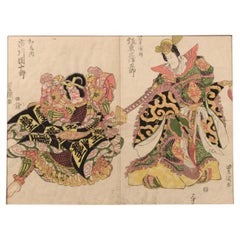
Antique Japanese Woodblock by Utagawa Toyokuni l, 1816
Located in Amsterdam, Noord Holland
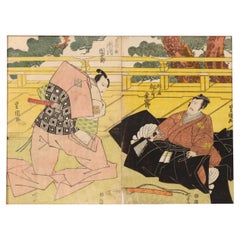
Antique Japanese Woodblock – Utagawa Toyokuni l – 1816 (Honjo, Edo Period 1786-1865 Edo), Diptych, Actors Bandô Mitsugorô (R) and Ichikawa Danjûrô (L) Date: Japanese, Edo period Pro...
Category

19th Century Japanese Antique Edo Paintings

Materials

Paper

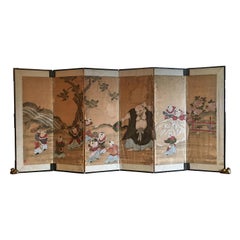
Japanese Six Panel Screen with Hotei, Edo Period, Early 19th Century
Located in Austin, TX
A delightful Japanese six panel painted paper screen featuring the beloved figure Hotei, Edo Period, early 19th century. Hotei, called Budai in China, and known as the Laughing Buddha or Fat Buddha in the West, is considered to be an emanation of Maitreya, the Buddha of the Future. In Japan, he also holds a special place as one of the Seven Lucky Gods, being the god of fortune, and protector of children. He is always portrayed as a mirthful and corpulent man, dressed in loose robes that show off his round belly. He carries a sack with him, said to be filled with treasure. As the protector of children, he is often portrayed with them playing on or around him, as he is here. The children portrayed in this screen are dressed in Chinese style clothing...
Category

Early 19th Century Japanese Antique Edo Paintings

Materials

Silk, Paper

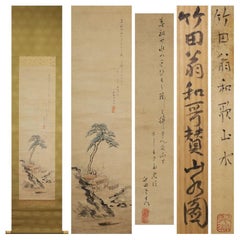
Japanese Nihonga Painting 18/19th c Edo Scroll Tanomura Chikuden Self Portrait
Located in Amsterdam, Noord Holland
Tanomura Takeda's handwritten self-portrait hymn "Painted Landscape" with himself working in a hut Takeda Tanomura and depicts fields and mountains in spring,   and is accompanied by a self-written waka poem that is thought to be about the scene. [Tanomura Takeda] A painter from Takeda Village, Naoniri District, Bungo Province (present-day Takeda City). His family was born as the second son of Ken'an, who had been a samurai physician in the Oka domain for generations. He first studied medicine, but preferred learning over medicine, and studied Chinese studies under Kimizan Karahashi, a He also learned painting techniques from Buncho Tani, and after returning to Japan, he served as the president of a domain school. He resigned his post in 1812 and traveled between Keihan and Osaka, where he interacted with Raizanyo, Shinozaki Kotake, Urakami Gyokudo, Okada Yonezanjin, Unka Shonin, Aoki Mokubei...
Category

18th Century Antique Edo Paintings

Materials

Silk

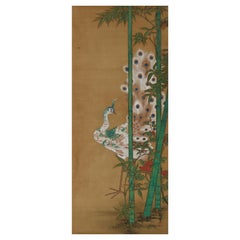
19th Century Japanese Silk Painting by Kano Chikanobu, Peacock Bamboo
Located in Kyoto, JP
Birds & Flowers of the Seasons Pheasants & Plum in Snow Unframed painting. Ink, pigment and gofun on silk Kano Chikanobu 1819-1888 Signature...
Category

Mid-19th Century Asian Antique Edo Paintings

Materials

Silk

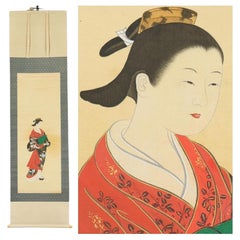
Japanese Nihonga Painting 19th Meiji Scroll Ukiyo-E Beautifull Lady
Located in Amsterdam, Noord Holland
◆ Ukiyo-e ◆ Beautiful woman painting ◆ Japanese painting ◆ Hand-painted painting ◆ Silk ◆ Hanging scroll ◆ This work is drawn by hand and on...
Category

19th Century Antique Edo Paintings

Materials

Silk

Japanese Painting 19th Meiji Scroll Hiroyo Terasaki Landscape Shijo School
Located in Amsterdam, Noord Holland
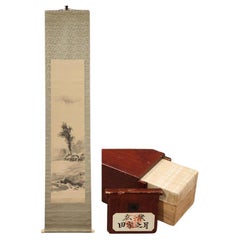
[ Authentic work] ◆ Kogyo Terasaki (Hiroyo Terasaki) ◆ Tie no Tsuki ◆ Toriya Hatayama Box ◆ Double box ◆ Handpainted ◆ Paperback ◆ Hanging scroll ◆ Kogyo Terasaki (Hiroyo Terasaki) ...
Category

19th Century Antique Edo Paintings

Materials

Silk

Antique Japanese 17th c Edo Scroll Kano Yosanobu Buddhist Painting
Located in Amsterdam, Noord Holland
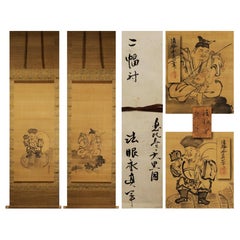
Eishin Kano's Ebisu/Great Country Map, double-width/comes with an old box. The auspicious statues of Ebisu and Daikoku are standing in a double-width hanging scroll with a smiling fa...
Category

18th Century Antique Edo Paintings

Materials

Silk

19th Century Japanese Scroll Painting by Igarashi Chikusa, Poppies Butterflies
Located in Kyoto, JP
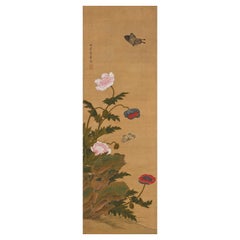
Poppies & Butterflies Ink, pigment and gofun on silk Igarashi Chikusa (1774-1844) Signature: Chikusa Ran Zen Upper Seal: Ran Shuzen Lower Seal: Kyoho Dimensions: Scroll: H. 68” x W. 18” (172cm x 45cm) Image: H. 38.5’’ x W. 12.5’’ (98cm x 32cm) This composition shows elegant images of poppies and the butterflies that are inevitably drawn to them. It captures a momentary glimpse into a world both visually dazzling and startlingly realistic. The painting is infused with sensitivity and attention to seasonal change and weather conditions. The thin and fragile poppies are beautifully depicted with brilliant colors and the butterflies are similarly infused with life. The painting is on silk which requires extremely precise painting skills as no element once painted can be removed. Poppies were a favorite subject of Rinpa school artists through the ages. Originally they were somewhat abstracted but by the age of Sakai Hoitsu...
Category

Early 19th Century Japanese Antique Edo Paintings

Materials

Silk

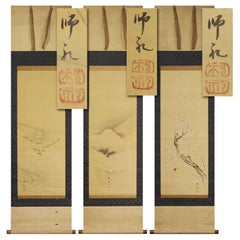
Japanese Painting 17th c Edo Scroll Triptyque Kano Chikanobu Buddhist Painting
Located in Amsterdam, Noord Holland
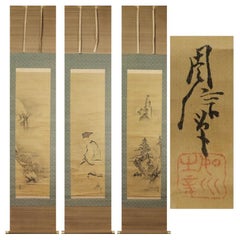
TheItem below was painted approximately 300 years ago by Kano Chikanobu. In the center is a depiction of a deer hermit, on the right is a landscape of a tower that gives a sense of ...
Category

17th Century Antique Edo Paintings

Materials

Silk

Lovely Japanese 18/19th c Edo Scroll Triptyque , Fuji, Dragon Flowers
Located in Amsterdam, Noord Holland
This is a pair of Edo period pieces, each with a beautiful ``cherry blossoms and swallow'', ``Fuji and rising dragon'', and ``wild geese'' . ■Silk book, handpainted ■Condition:   T...
Category

18th Century Antique Edo Paintings

Materials

Silk

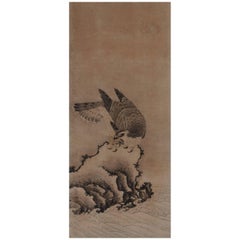
17th century Japanese Falcon Painting, Mitani Toshuku, Unkoku School
Located in Kyoto, JP
Mitani Toshuku (1577-1654) “Falcon” Wall panel, ink and light color on paper. Upper Seal: Mitani Lower Seal: Toshuku Dimensions: Each 118.5 cm x 51 cm x 2 cm (46.5” x 20” x .75”) Individual falcon paintings by Mitani Toshuku (1577-1654), an early artist of the Unkoku School. Founded by Unkoku Togan (1547–1618), a master of the Momoyama period, the Unkoku school enjoyed long lasting patronage in southern Japan. Togan was a retainer of the Mori family in present day Yamaguchi prefecture. Members of the school considered themselves to be in the artistic lineage of Sesshu Toyo...
Category

Early 17th Century Japanese Antique Edo Paintings

Materials

Paper

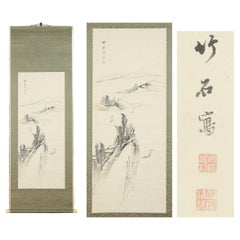
Japanese Painting 18c Edo Scroll Chikuseki Nagamachi Nihonga Landscape Painting
Located in Amsterdam, Noord Holland
[Authentic Artwork] ◆ Nagamachi Chikuseki ◆ Landscape ◆ Edo Period ◆ Mitsuishi Origin ◆ Kagawa Prefecture ◆ Handwritten ◆ Paperback ◆ Hanging Scroll ◆ k891 ◆ Nagamachi Chikuseki Explore the artistry of Chikuseki Nagamachi...
Category

18th Century Antique Edo Paintings

Materials

Silk

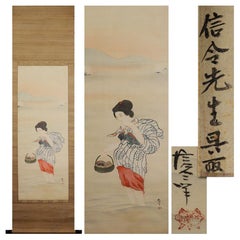
Japanese Nihonga Painting 19th Meiji Scroll Ukiyo-E Lady picking Clams
Located in Amsterdam, Noord Holland
Product Description This piece   depicts a beautiful woman with her skirts   rolled up as she hunts for clams on a shallow shore ,   giving it an indescribably impressive expression....
Category

19th Century Antique Edo Paintings

Materials

Silk

Antique Japanese Woodblock by Utagawa Kunisada I, 19th C
Located in Amsterdam, Noord Holland
Utagawa Kunisada I (Honjo, Edo 1786-1865 Edo), Diptych, The actors Matsumoto Koshiro as Wakasanosuke and Ichikawa Danjuro as Moronoo, signed: Toyokuni ga, publisher; Kawaguchina Uhei...
Category

19th Century Japanese Antique Edo Paintings

Materials

Paper

Lovely Japanese 19th c Edo Scroll Okumura Sekiran Nihonga Painting Mountain
Located in Amsterdam, Noord Holland
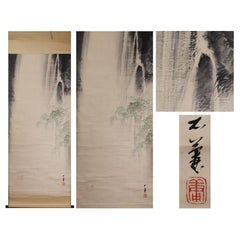
 "Early Summer Colored Waterfall" is a work drawn by Sekiran Okumura as you can see.   The brilliance of the fresh greenery and the cool, powerful presence of the waterfall are overw...
Category

18th Century Antique Edo Paintings

Materials

Silk

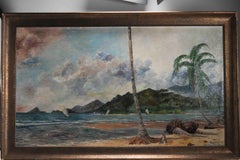
Antique Painting Indonesia 1931 Sumatra Telok betong Sea Landscape Van Zengen
Located in Amsterdam, Noord Holland
Beautifully painted Condition Good condition. Size. 88x 69 cm
Category

20th Century Edo Paintings

Materials

Silk

Edo paintings for sale on 1stDibs.

Find a broad range of unique Edo paintings for sale on 1stDibs. Many of these items were first offered in the Early 20th Century, but contemporary artisans have continued to produce works inspired by this style. If you’re looking to add vintage paintings created in this style to your space, the works available on 1stDibs include wall decorations, asian art and furniture and other home furnishings, frequently crafted with fabric, paper and other materials. If you’re shopping for used Edo paintings made in a specific country, there are Asia, East Asia, and Japan pieces for sale on 1stDibs. While there are many designers and brands associated with original paintings, popular names associated with this style include Mitani Toshuku, Rimpa School, Tosa Mitsusuke, and Yanagisawa Kien. It’s true that these talented designers have at times inspired knockoffs, but our experienced specialists have partnered with only top vetted sellers to offer authentic pieces that come with a buyer protection guarantee. Prices for paintings differ depending upon multiple factors, including designer, materials, construction methods, condition and provenance. On 1stDibs, the price for these items starts at $1,000 and tops out at $230,000 while the average work can sell for $8,900.

Still Thinking About These?

All Recently Viewed