Items Similar to Village Scene by George René Sinicki
Want more images or videos?
Request additional images or videos from the seller
1 of 8
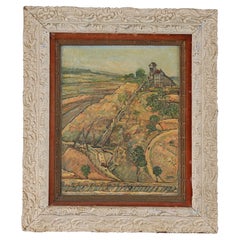
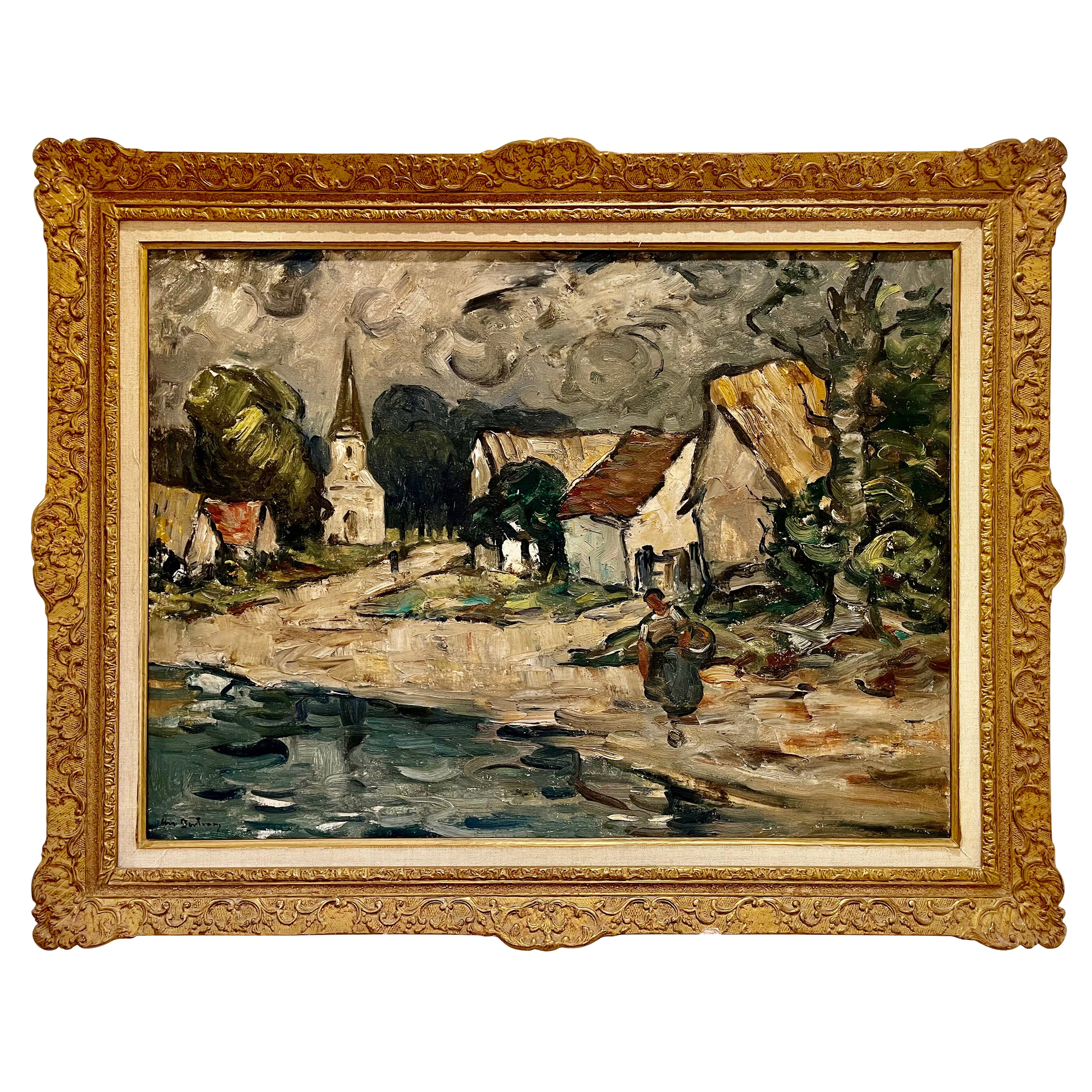
Village Scene by George René Sinicki
$1,800
£1,372.91
€1,563.42
CA$2,529.55
A$2,758.83
CHF 1,461.44
MX$33,074.44
NOK 18,612.27
SEK 17,019.54
DKK 11,680.26
About the Item
Mid-20th century French oil on canvas by George René Sinicki depicting a quiet village with church spire and red-roofed houses beneath a soft, overcast sky. Painted in a post-impressionist style, the work features loose, expressive brushwork and a restrained palette characteristic of Sinicki’s atmospheric landscapes
- Dimensions:Height: 22 in (55.88 cm)Width: 24 in (60.96 cm)Depth: 3 in (7.62 cm)
- Materials and Techniques:
- Place of Origin:
- Period:
- Date of Manufacture:unknown
- Condition:Wear consistent with age and use.
- Seller Location:Charlottesville, VA
- Reference Number:1stDibs: LU9639247516312
About the Seller
No Reviews Yet
Vetted Professional Seller
Every seller passes strict standards for authenticity and reliability
Established in 1985
1stDibs seller since 2024
64 sales on 1stDibs
Typical response time: <1 hour
- ShippingRetrieving quote...Shipping from: Charlottesville, VA
- Return Policy
More From This Seller
View AllStill Life by Karl Mattern (1892–1969)
Located in Charlottesville, VA
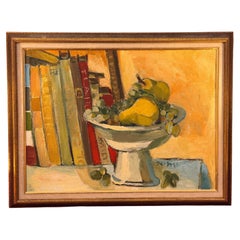
Oil on canvas still life by Karl Mattern, depicting a pedestal bowl filled with fruit set beside a row of books. The composition blends structured form with soft tonal balance, chara...
Category
Vintage 1950s Paintings
Materials
Canvas, Paint
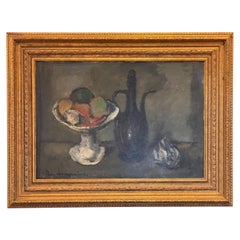
Still Life Oil Painting by Theo Swagemakers
Located in Charlottesville, VA
Moody still life painting by Dutch artist Theo Swagemakers, featuring a white compote of fruit, a dark ewer, and a garlic bulb rendered in earthy tones. The work is signed lower left...
Category
Vintage 1950s Dutch Paintings
Materials
Canvas, Paint
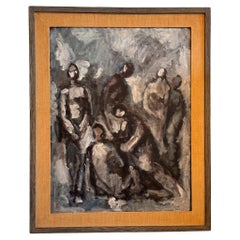
1950s Abstract Figurative Painting by Maurice Golabon, Framed
Located in Charlottesville, VA
A nice abstract of people. Great look.
Category
Vintage 1950s Paintings
Materials
Textile
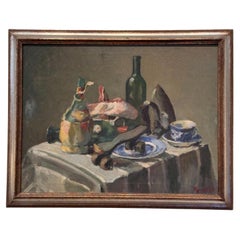
Painting by Mark Farmer "Ballet Shoes"
Located in Charlottesville, VA
A very pleasing still life .Food and wine.
Category
Vintage 1960s Paintings
Materials
Canvas, Paint
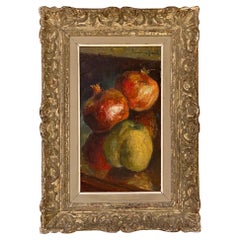
Mid 20th Century Fruits Still Life Oil Painting, Framed
Located in Charlottesville, VA
A small still life of fruits . In a lovely painted frame
Category
Vintage 1950s Paintings
Materials
Wood, Paint
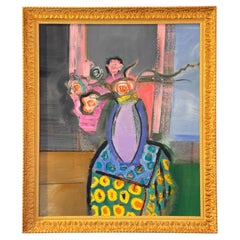
Palm Sunday by James Brewer
Located in Charlottesville, VA
Expressive still life painting by James Brewer featuring a vase of abstracted flowers on a boldly patterned cloth. Rich in color and movement, the work blends figural and geometric f...
Category
21st Century and Contemporary American Paintings
Materials
Canvas, Paint
You May Also Like
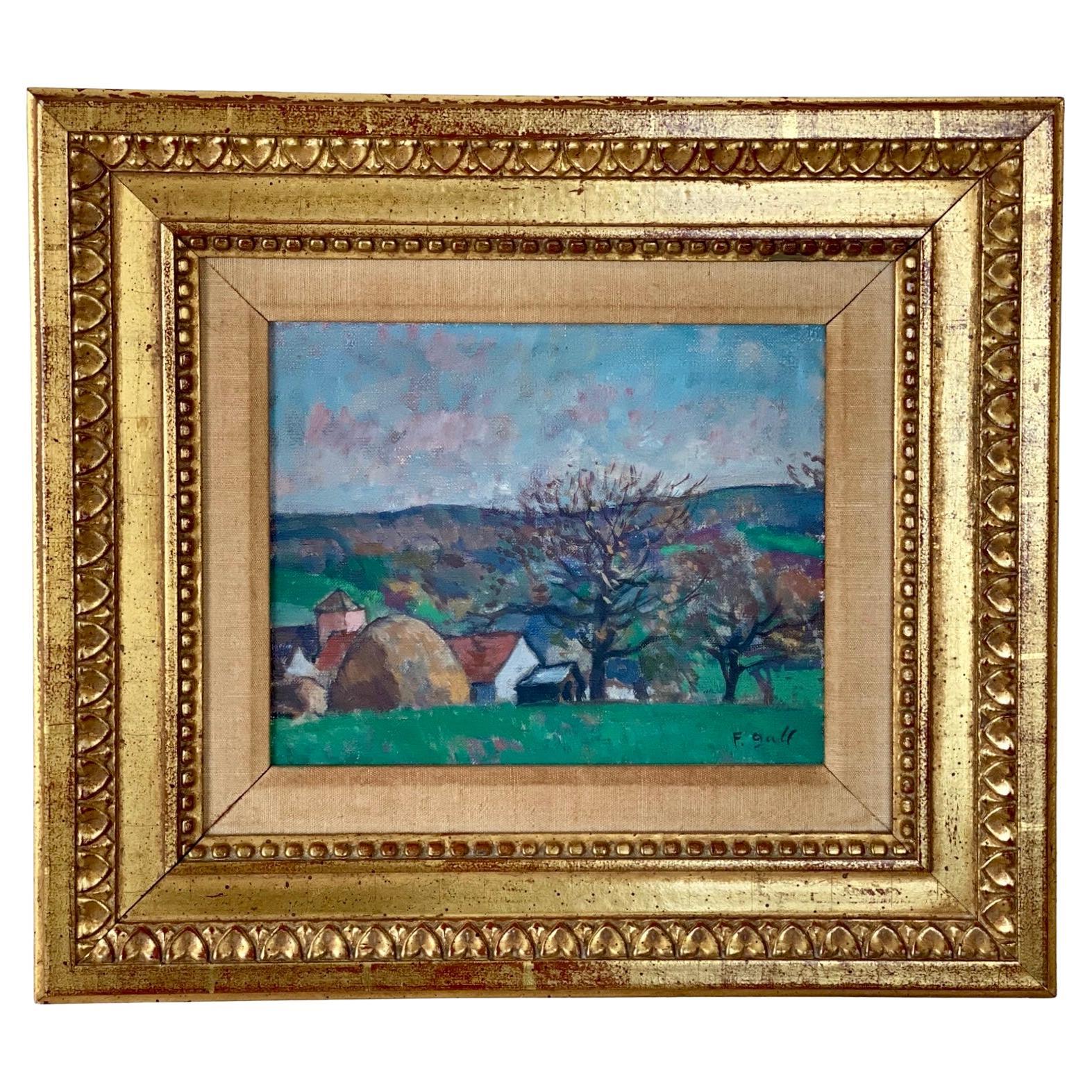
"The Farm" by François Gall
By François Gall
Located in Wiscasset, ME
Oil on canvas, signed in the lower right.
Measures 176" x 18.5" including the frame and 8" x 10.5" sight.
Francois Gall 1912-1987 French
Well listed artist in the Benezit. ...
Category
Mid-20th Century French Beaux Arts Paintings
Materials
Paint
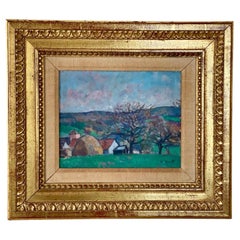
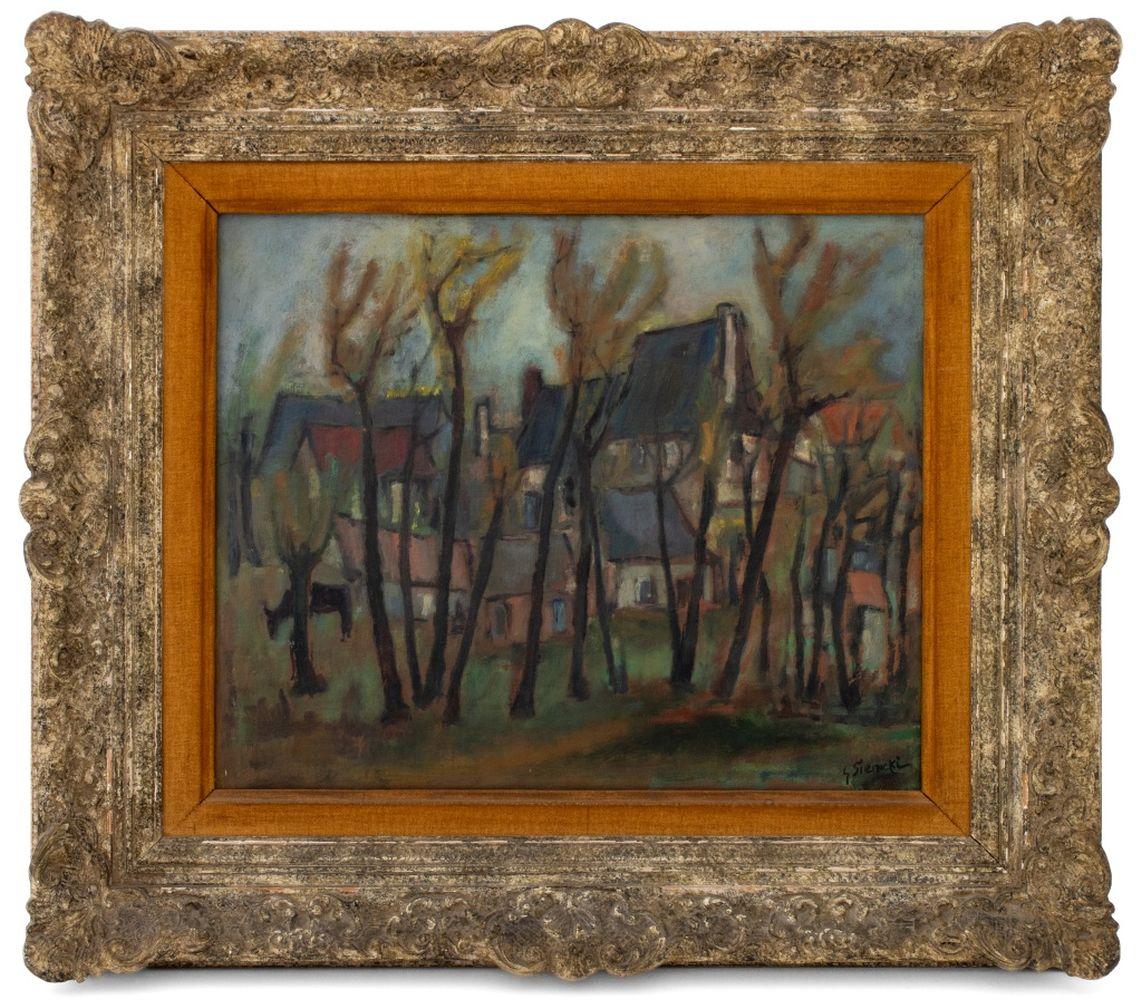
Village Landscape Scene
Located in Astoria, NY
George Rene Sinicki (Russian/French, b. 1910), Village Landscape Scene, Oil on Canvas, depicting a forest path beside a town with buildings visible throug...
Category
20th Century Post-Impressionist Landscape Paintings
Materials
Canvas, Oil
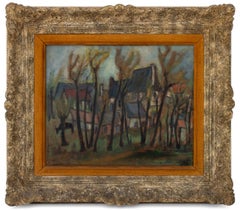
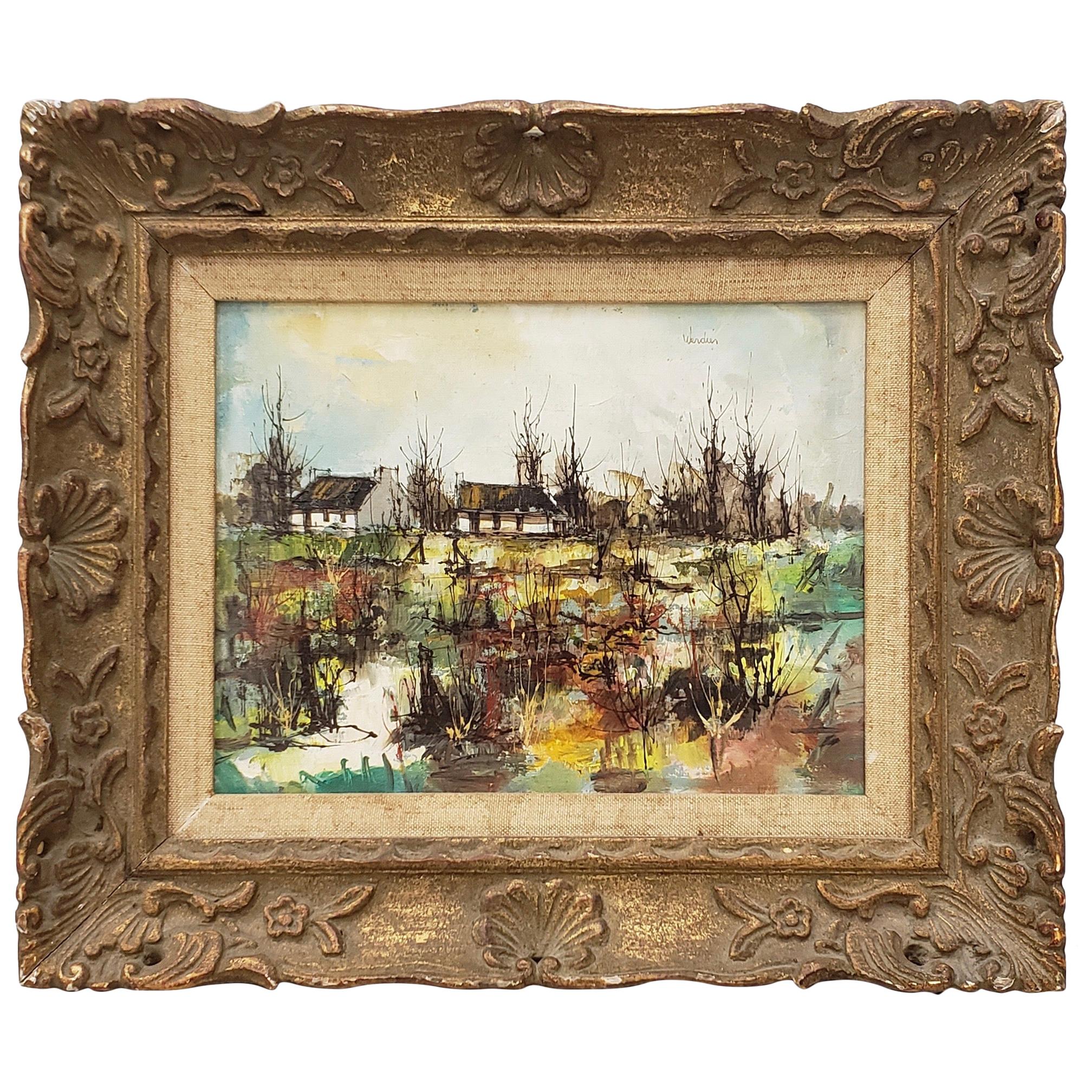
Jean Claude Werdier Vintage Normandy Village Landscape, circa 1970s
Located in San Francisco, CA
Jean Claude Werdier (French painter Jean Claude Werdier was born in 1922. He later moved to the U.S. where he painted surrealist landscapes.) created this fine vintage Normandy villa...
Category
Mid-20th Century French Mid-Century Modern Paintings
Materials
Canvas
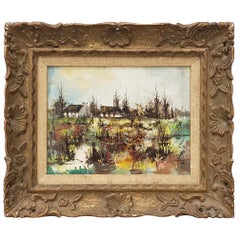
Abel Bertram - Village Scene, Oil On Canvas, 19th century
By Abel Bertram 2
Located in Beaune, FR
Oil on canvas painting signed Abel Bertram lower left. It represents a village scene and is in very good condition.
Dimensions
with frame - H 69cm x W 89cm
Without frame - H 54cm x 73cm
Category
Antique 19th Century European Paintings
Materials
Paint
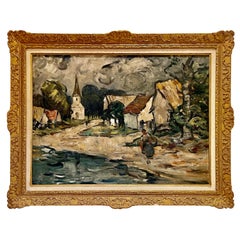
French Vintage Framed Painting of a Homestead
Located in Baton Rouge, LA
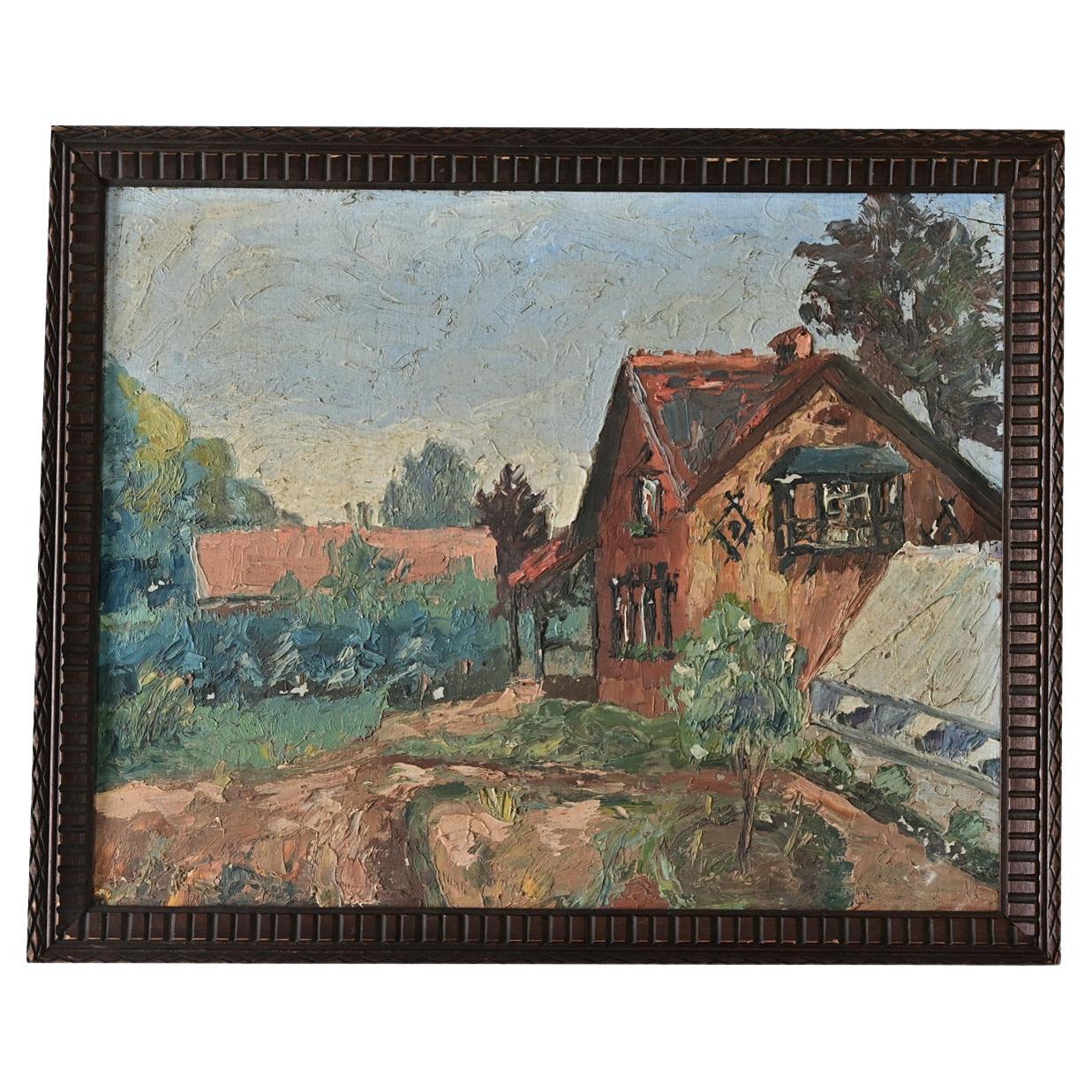
This French vintage 20th century oil on board painting illustrates a modest homestead in a rustic, country landscape. Impasto technique to build up the paint adds organic texture to ...
Category
20th Century French Rustic Paintings
Materials
Paint, Wood
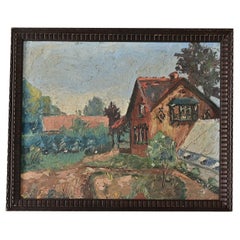
Pfoutz Original Farm Scene Oil Painting
Located in Annville, PA
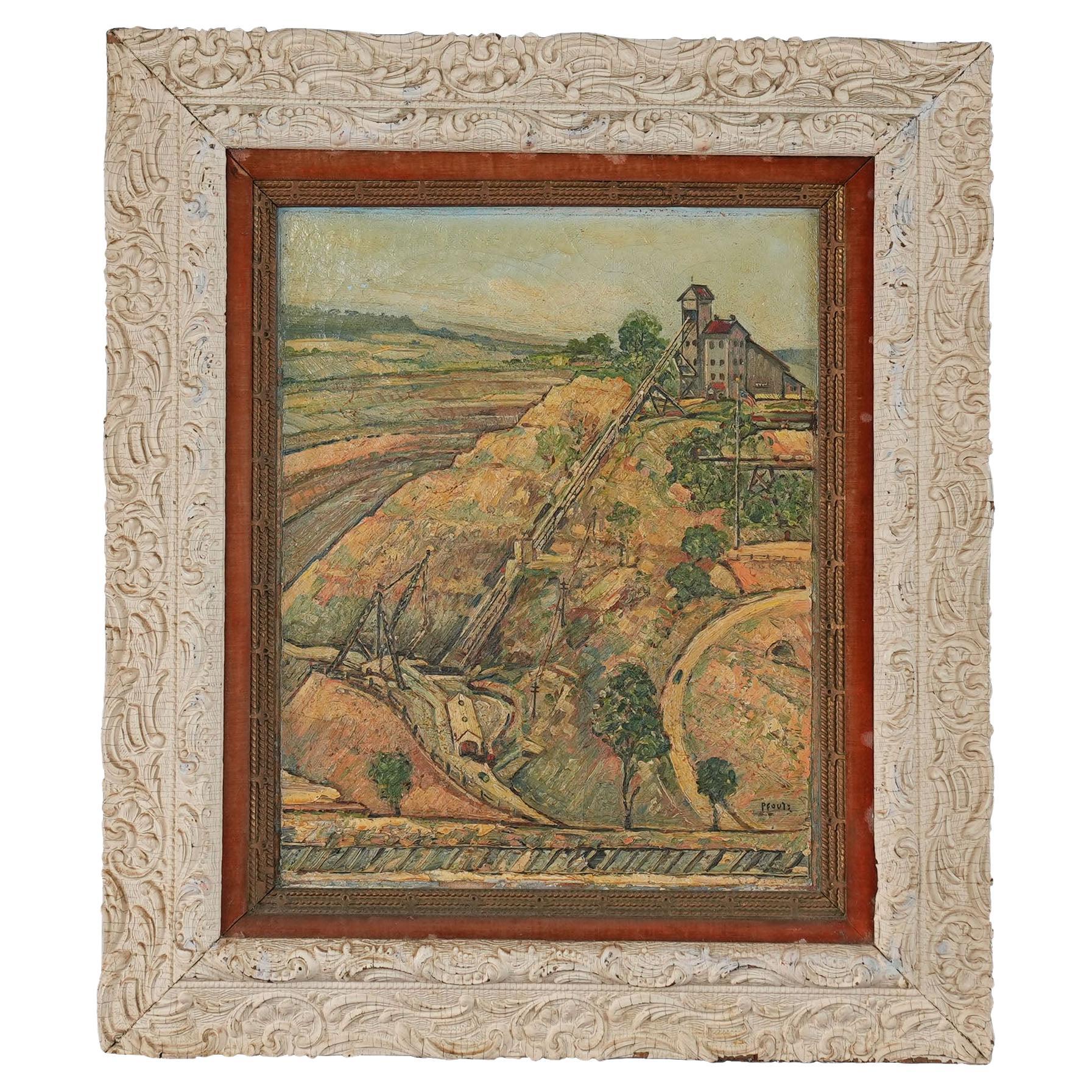
A very interesting and unusual Pfoutz Original Farm Scene Oil Painting by artist J. Earle Pfoutz. The painting is produced on artist and comes complete with what appears to be an original artist decorated/painted frame. The Pfoutz Original Farm Scene Oil Painting is signed on the front by the artist and appears to be dated 1948 on the rear. Known for his unusual subjects Pfoutz outdid himself with this effort, capturing the essence of a Lancaster County farm but with the startling twist of portraying a large turkey vulture in the foreground. Definitely unique.
Overall frame Size approximately 33″ wide x 3″ deep x 26″ high
J. Earle Pfoutz had a long and distinguished career as a self trained artist. More can be learned about him from reading this article produced by Gary Hawbaker at askART
Earle Pfoutz Born: 1891 – Lancaster, Pennsylvania
Died: 1957
Known for: Landscape, figure, still life painting
An image of J Earle Pfoutz
Biography from the Archives of askART
J. Earle Pfoutz (John Earle Pfoutz) – (Oct 23, 1891-Nov 9, 1957)
“A seventh generation descendant of a Swiss family which arrived in America early in the 17th Century, J. Earle Pfoutz was born in Lancaster, PA, son of John Bachman and Susan Allison Pfoutz. He painted houses for a living and pictures for a life.
A self-taught artist, described as a primitive, he was distinctive for his vivid imagination and bold color application. He painted hundreds of Lancaster County scenes. Pfoutz traveled through the hills near his home and along the Susquehanna River in search of scenes. He began painting with a brush when he was fourteen, but added a palette knife after suffering an eye injury. He completed eighth grade in the Lancaster Public Schools and there his formal education ended. However, the Department of Public Instruction of the State of Pennsylvania thought so highly of his work as an artist that officials certified him as an art instructor and he taught for a year in the York (PA) public schools. He also was an art instructor under the program for disabled veterans, sponsored by the Veterans Administration, when he gave private instruction to veterans in their homes.
In 1947, J. Earle Pfoutz finally earned national recognition as an artist. His painting, Opalescent October, was chosen by the Museum of Art of Dayton Ohio, to travel all over the country for a year with its Group Exhibition. Described as a “very colorful, calm scene, iridescent in color, sweeping in design,” the painting started on its journey around the country early in 1948. In an interview with the Sunday News (Lancaster, PA – Nov 2, 1947), Pfoutz stated that he didn’t know whether he was a “primitive” or an “impressionist.” No master taught him, no school channeled his style. “Sometimes I didn’t eat, but I always managed to paint,” he recalled. Many of his hundreds of canvases -most of them not sold, but given away to friends – found their way to other parts of the country. “I never remember the day when I did not love color,” Pfoutz said. “I was about 12 years old when I saw my first palette – a string of different colored paint paddles that graced the stores of that day. As a boy I had two great desires. One was to be able to eat all the strawberry jam I could, and the other to possess a string of those beautiful paint paddles. Well, I’ve got my fill of jelly, but I’ve never yet got my fill of beautiful colors.”
In 1950, Pfoutz’s one man show of paintings made front page headlines in the Lancaster Intelligencer Journal: “Most of the twenty oil paintings on exhibition are landscapes, although there are several interesting figure studies. Colors again, as in all Pfoutziana are rich and full-bodied, but for the most part not as startlingly as in some of the earlier work. Most of the paintings were done during the past year, and also reveal the painter’s characteristic heavy impasto technique, in which the rich swirls of paint carry their own message. Among the figures, The Banjo Picker, and The Magician, are the most provocative. Both are character studies; the first being of a tramp musician whose drab clothing is set-off by a luminous aqua blue background. Modern in feeling and treatment is The Magician, a clown-faced wizard whose spinning ball in the air suggests the fourth dimension – space. The use of the primary colors in this picture serves to emphasize the theme effectively.
A large colorful landscape, Opalescent October, depicting rolling hills against a late afternoon sky is new to Lancastrians, as it has just returned from Dayton, Ohio, where it hung in the Dayton Art Institute. Another landscape with soft dreamy colors is Fantasie D’Autumne, and one of the loveliest pictures in the show. Pennsylvania Dutch Country is another with eye appeal, and was one of the works which was hung in the Old Customs House in Philadelphia during Pennsylvania Week, and before that in a collection of Pfoutz work in the same place. In deep contrast to the sunny skies and brilliant foliage of many of the pictures, is the somewhat morbid Worry, in which the center of interest is a tremendous rat. This, the painter explains, was symbolic of 1948 in China, which was ‘The Year of The Rat’ in the Chinese calendar. Background material for the picture was furnished to Pfoutz by author Pearl Buck.
Other pictures include Autumn Prelude, Miners Village, painted at Cornwall, PA; Humid Day, Saint Peters Kierch, at Middletown, PA; Lady Pfoutz, inspired by the painter’s wife; Sun Flowers, Sentimental Journey, Gyne, Luzon Woman, Old Bridge, The Cow Path. Lemures, based on Roman mythology, and Ethiopian, painted from an ebony wood carving from Kenya Province, S. Africa.”
In 1953, Pfoutz was installed as President of the Lancaster County Art Association. A. Z. Kruse, New York City artist, writer and member of the faculty of the Brooklyn College and the Cartoonists and Illustrators School, Manhattan, was the guest speaker. In January of 1953, thirty-five Pfoutz oils were exhibited at the Old Custom House in Philadelphia, PA under the sponsorship of the Carl Schurz Memorial Foundation. Several Lancaster County landscapes and covered bridges were included as well as Katy, a Pennsylvania Dutch scene. Symbolic paintings included End of the Second Day, the artist’s visualization of the second coming of Christ, and Twilight, typifying the grief of mothers of all lands for sons lost in battle.
In June of 1953, a Pfoutz oil made history in Lancaster. From the Lancaster New Era: “For the first in local art history, a painting has been withdrawn from an exhibition because of objections from viewers and hostesses serving at the show. The painting, Jeune Fille, a standing nude done by Pfoutz, was one of the paintings in the annual spring exhibition of the Art Association and had become the center of the controversy. Pfoutz said he took the painting down… ‘graciously but reluctantly.’ ‘From an artistic standpoint, there is nothing offensive about the painting,’ Pfoutz said. ‘This community just wants its nudes with clothes on.’ “It is most brilliant in color, and because it is so brilliant I thought it would make a nice lively spot for the show. This is the first time I’ve had to take a picture off the walls. I substituted a seascape for it.’ Pfoutz said he felt the painting brought a lot of viewers to the show because it was so controversial. It had never been exhibited before. ‘If this had been shown in a metropolitan city,’ he commented, ‘people wouldn’t have given it a second glance. But the viewpoint here is more conservative, even though I don’t think moderns would have minded.’ He said he felt the painting was neither ‘objectionable nor pornographic,’ but had complied with the wishes of fellow members of the Art Association who telephoned him to relay the protests they had received. The art controversy was the first to arise here publicly since the showing of Amish Grandmother, an oil by William Gropper which was part of the Gimbel Pennsylvania exhibit at the Griest Building several years ago. — Numerous viewers of Amish Grandmother, [a painting showing an Amish woman holding a white goose], expressed themselves quite vocally, calling it an affront to the Plain Folk. But it stayed on exhibit throughout the length of the Gimbel show. Pfoutz expressed no rancor, implying that if Gropper could take it so could he.”
After his death, there were several shows of Pfoutz’ work organized by his son J. Earle, Jr. J. Earle, Jr. also saw to it that President Eisenhower would receive an oil called The Cow’s Path. The president first saw the painting in 1950 when, as president of Columbia University, he visited Lancaster to address a student assembly at Franklin and Marshall College. After his address was over, the then Gen. Eisenhower stopped at the Fackenthal Library on the campus to view an exhibition of Pfoutz’s paintings. The Cow’s Path intrigued him. For some time, as his aides fumed to get him back on his time schedule, Eisenhower and Pfoutz talked, as artist to artist. Prior to his death, Pfoutz requested that The Cow’s Path be given to the President if he wanted it. The painting was presented to Ike at the White House in November of 1959. Mrs. Eisenhower owned a Pfoutz painting titled, In the Manor.
Though house painting was his livelihood, he worked for Millersville State Teachers College (now a university) for a time during World War II, and called himself “the Chimney Sweep of MSTC.” During that period he knocked out a dizzying canvas in the surrealist style (he thought it was terrible) and got into the campus newspaper when one of the students spotted it.
Earle Pfoutz was not the humble, downtrodden artist, not the Douanier Rousseau type at all. As he developed his skill and style through the years, he also fashioned a resilient confidence in himself as an artist. Whether he was building his own home (he built two) or painting one for somebody else, he never lost faith in his ultimate recognition—though he was never sure he would live to see it.
Whether he was working as a rigger for a hoisting company, in the Stehli Silk Mill of Lancaster, carving Cloister-style chairs, decorating old chests, cementing bricks from the old Safe...
Category
Vintage 1940s American Paintings
Materials
Paint