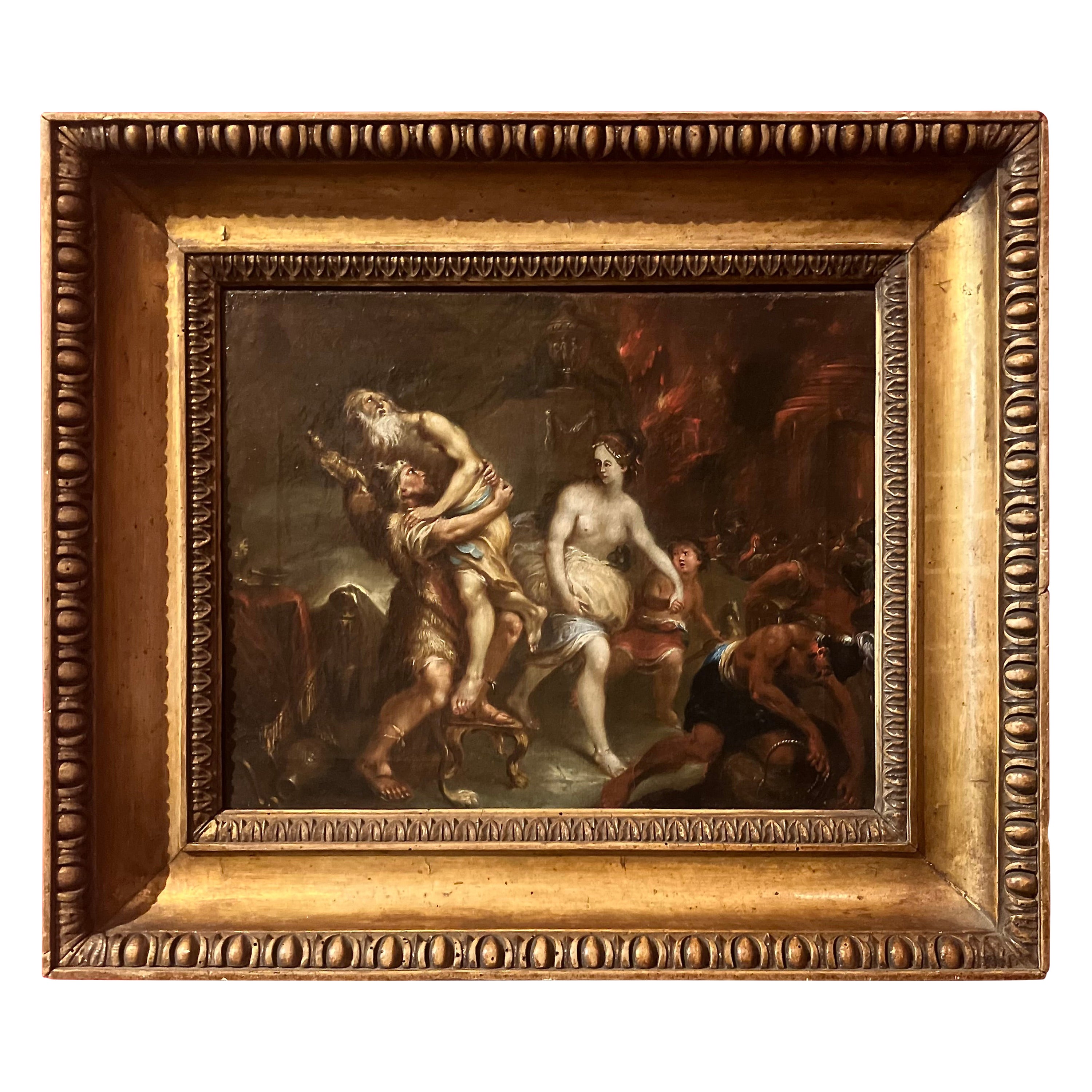
Items Similar to WILLEM VAN MIERIS (1662-1747)"Aeneas flees from burning Troy"by Federico Barocci
Want more images or videos?
Request additional images or videos from the seller
1 of 15
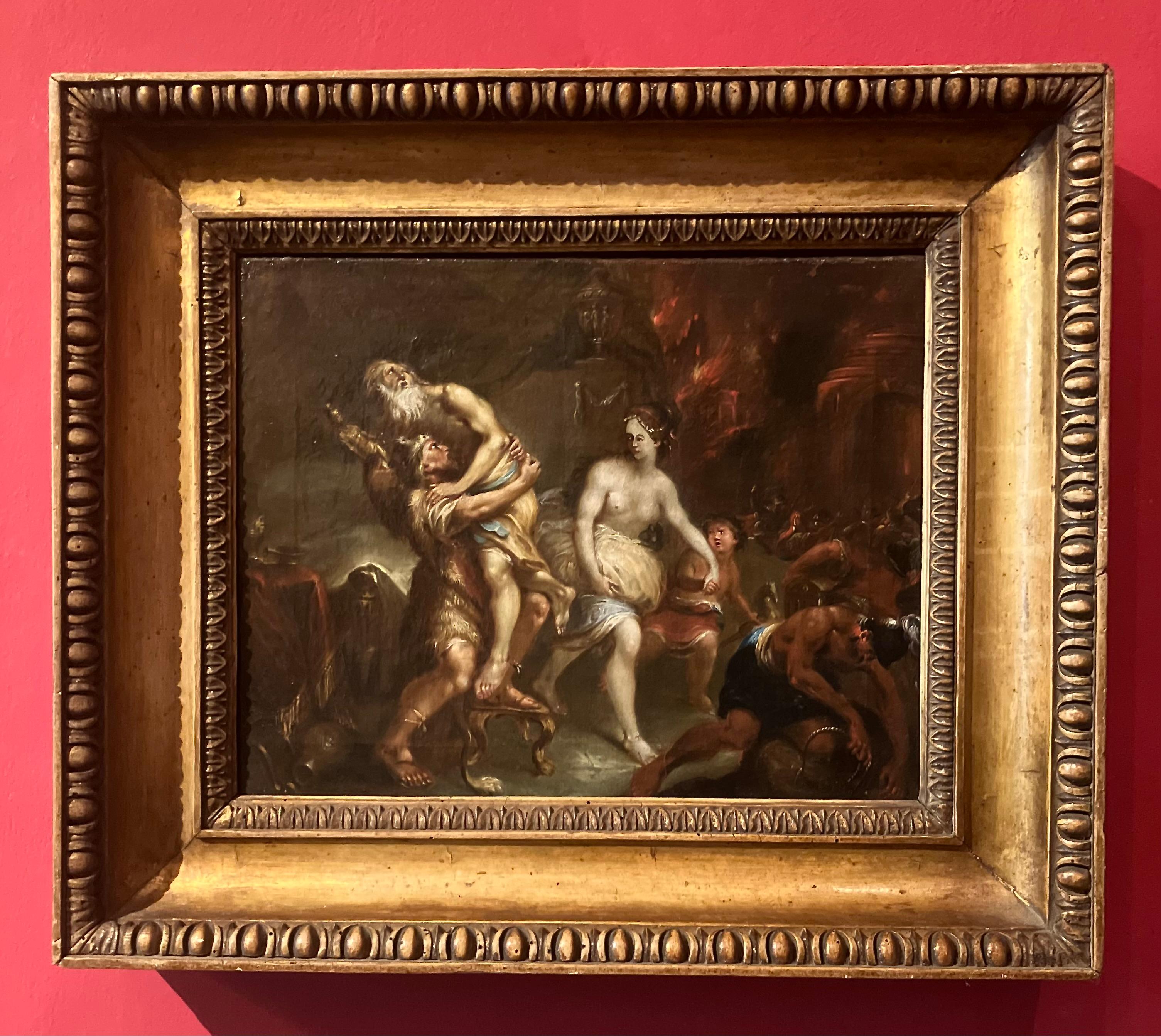
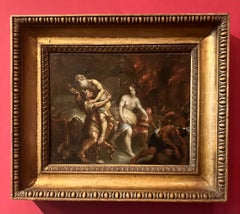
WILLEM VAN MIERIS (1662-1747)"Aeneas flees from burning Troy"by Federico Barocci
$30,322.92
£22,648.07
€25,340
CA$41,775.37
A$45,527.80
CHF 24,108.93
MX$546,836.82
NOK 305,224.42
SEK 280,623.83
DKK 193,046.94
About the Item
WILLEM VAN MIERIS CIRCLE (1662-1747)
"Aeneas flees from burning Troy" by Federico Barocci
Oil on canvas.
Restorations.
Dim.: 117 x 170 cm
good condition
- Dimensions:Height: 46.07 in (117 cm)Width: 66.93 in (170 cm)Depth: 2.76 in (7 cm)
- Style:Baroque (Of the Period)
- Materials and Techniques:Paint,Oiled
- Place of Origin:
- Period:
- Date of Manufacture:17th Century
- Condition:Wear consistent with age and use. good condition.
- Seller Location:Madrid, ES
- Reference Number:1stDibs: LU5779237751802
About the Seller
4.8
Platinum Seller
Premium sellers with a 4.7+ rating and 24-hour response times
Established in 2005
1stDibs seller since 2021
392 sales on 1stDibs
Typical response time: 1 hour
- ShippingRetrieving quote...Shipping from: Madrid, Spain
- Return Policy
More From This Seller
View AllJan Abel WASSENBERGH (1689-1750) "The Continence of Scipio" Signed
Located in Madrid, ES
Jan Abel WASSENBERGH (1689-1750) "The Continence of Scipio"
Oil on canvas,
signed below center
92 x 107 cm unframed
99cm x 114cm framed
(small old restorations)
Jan Abel Wassenbergh (18 January 1689, Groningen – ca. 20 July 1750, Groningen), was an 18th-century painter from the Dutch Republic.
According to Jan van Gool...
Category
Antique Early 18th Century Dutch Baroque Wallpaper
Materials
Paint
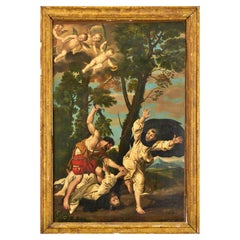
Italian School according to Domenichino 18th century "Martyrdom of St Peter"
Located in Madrid, ES
Italian school according to Domenichino from the 18th century.
"Martyrdom of St. Peter of Verona"
oil on canvas
(90x60.5cm)
in frame 95cm x 65.5cm
good condition
Category
Antique Early 18th Century Italian Baroque Wallpaper
Materials
Paint
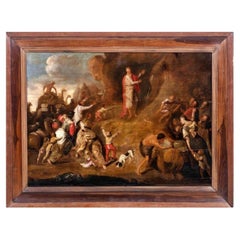
Dutch School, 17th Century "Moses on the Stone"
By Flemish
Located in Madrid, ES
Title: Moses on the Stone
Date/period: XVII century
Dimension: measure without frame 60cm x 83cm, frame 13cm in noble wood
Materials: oil on wood
Additional information: Dutch School...
Category
Antique 17th Century Dutch Baroque Paintings
Materials
Paint
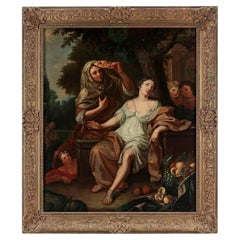
Circle of CASPAR NETSCHER (1635/39-1684), ALLEGORY Sec. XVII
Located in Madrid, ES
Circle of CASPAR NETSCHER (1635/39-1684), ALLEGORY
oil on canvas.
Small antique restoration.
Dimensions: 94.5x77.5 cm.
good conditions
Of German origin, according to Arnold Houbrake...
Category
Antique 17th Century German Baroque Paintings
Materials
Paint
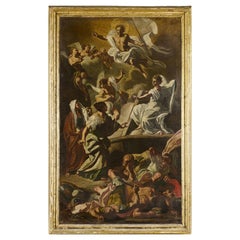
Attribution to Francesco Solimena "Resurrection of Christ" 18th Century
By Francesco Solimena
Located in Madrid, ES
Attribution to Francesco Solimena "Resurrection of Christ" 18th Century
oil on canvas (129x77 cm.)
framed
good condition for the period
Francesco Solimena, also called l'Abate C...
Category
Antique Early 18th Century Italian Baroque Wallpaper
Materials
Paint
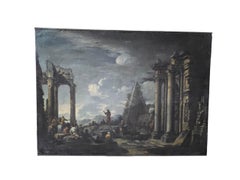
18th Century Italian Oil on Canvas Depicting Roman Ruins and Figures
Located in Madrid, ES
Antique oil on canvas painting, dating from the 18th century, depicting classical Roman ruins with figures in period dress. The composition reflects the Grand Tour aesthetic, celebra...
Category
Antique Mid-18th Century Paintings
Materials
Hardwood
You May Also Like
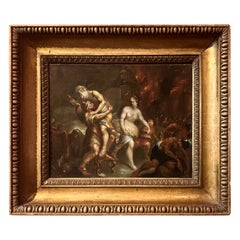
Aeneas Fleeing the Burning of Troy, 17th Century Flemish Oil on Canvas Painting
Located in Firenze, IT
This oil painting on canvas, created by an artist from the 17th Century Flemish School, depicts one of the most significant scenes from Greco-Roman mythology: Aeneas saving his famil...
Category
Antique 17th Century Dutch Baroque Paintings
Materials
Giltwood, Paint
Painting "David conquering Goliath", school of Pietro da Cortona 1596-1669
By Pietro da Cortona
Located in Chorzów, PL
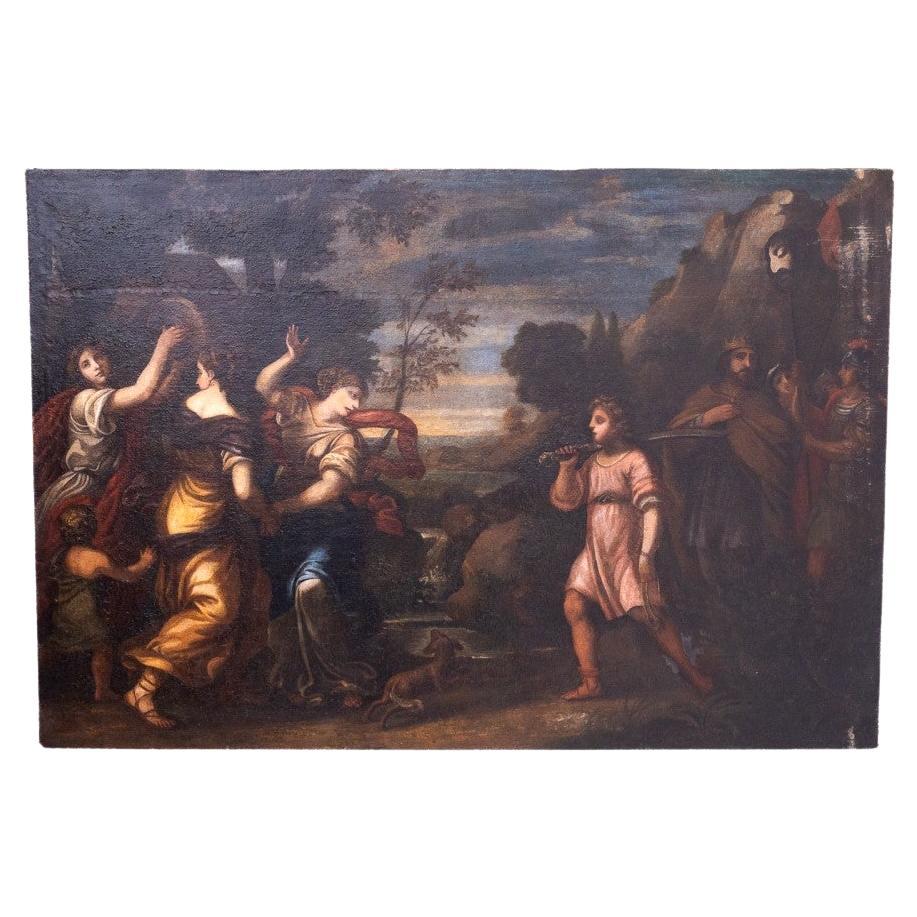
This evocative Baroque painting, titled David Conquering Goliath, is attributed to the school of Pietro da Cortona (1596–1669), a leading figure of Italian High Baroque. The dramatic...
Category
Antique 17th Century Baroque Paintings
Materials
Canvas, Paint
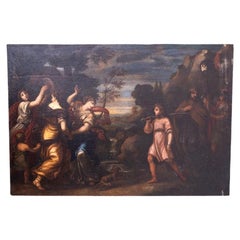
"Perseus Rescuing Andromeda" Oil on Canvas Large Old Master Painting
Located in Bradenton, FL
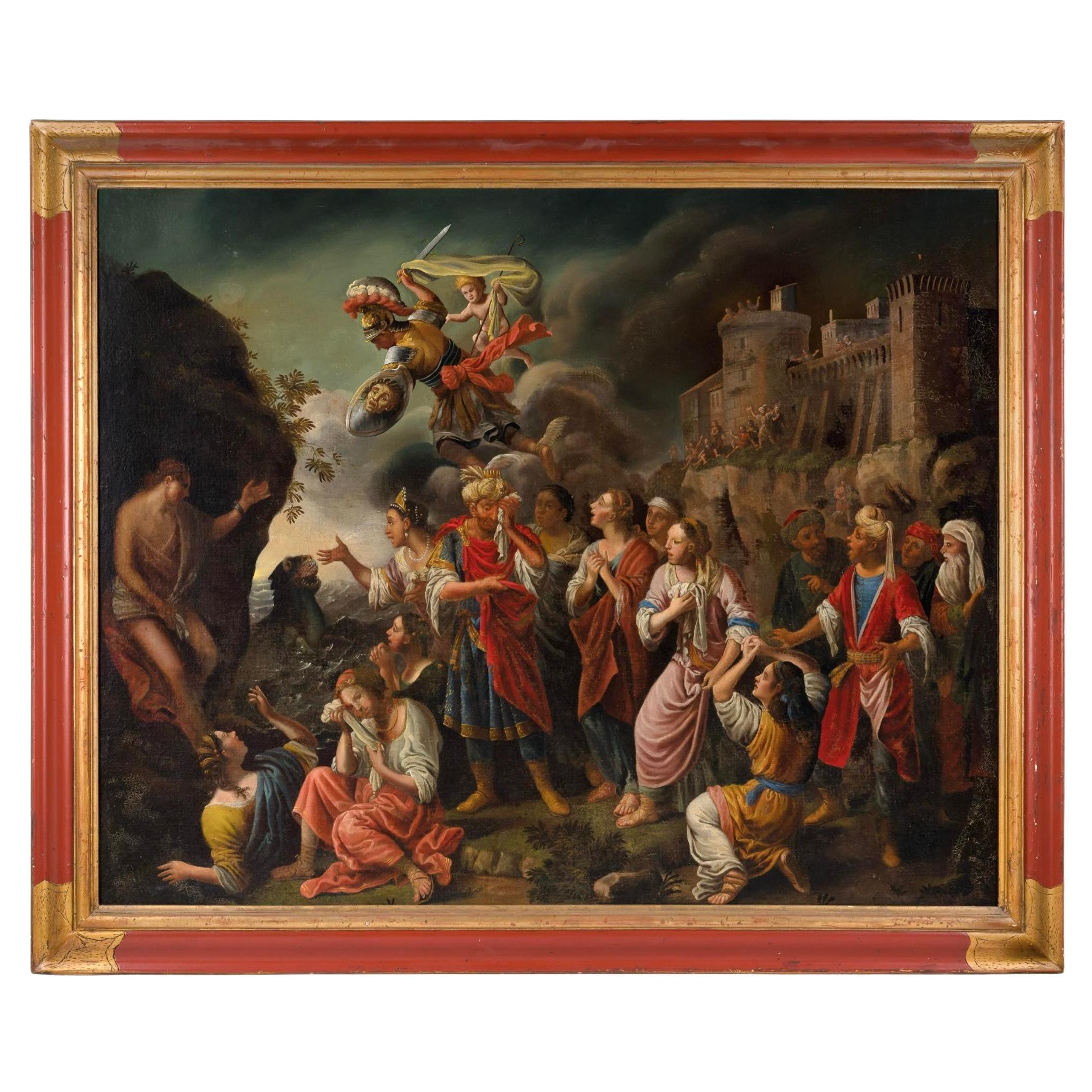
"Perseus Rescuing Andromeda" Masterful Old Master Oil on Canvas Painting, Large size, framed. Painting depicts the dramatic scene from Greek mythology where Perseus, the hero, saves ...
Category
Antique 18th Century Italian Renaissance Paintings
Materials
Canvas, Paint
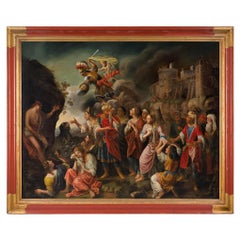
Aeneas Fleeing the Burning of Troy, 17th Century Flemish Oil on Canvas Painting
Located in Firenze, IT
This oil painting on canvas, created by an artist from the 17th Century Flemish School, depicts one of the most significant scenes from Greco-Roman mythology: Aeneas saving his famil...
Category
17th Century Dutch School Figurative Paintings
Materials
Canvas, Oil
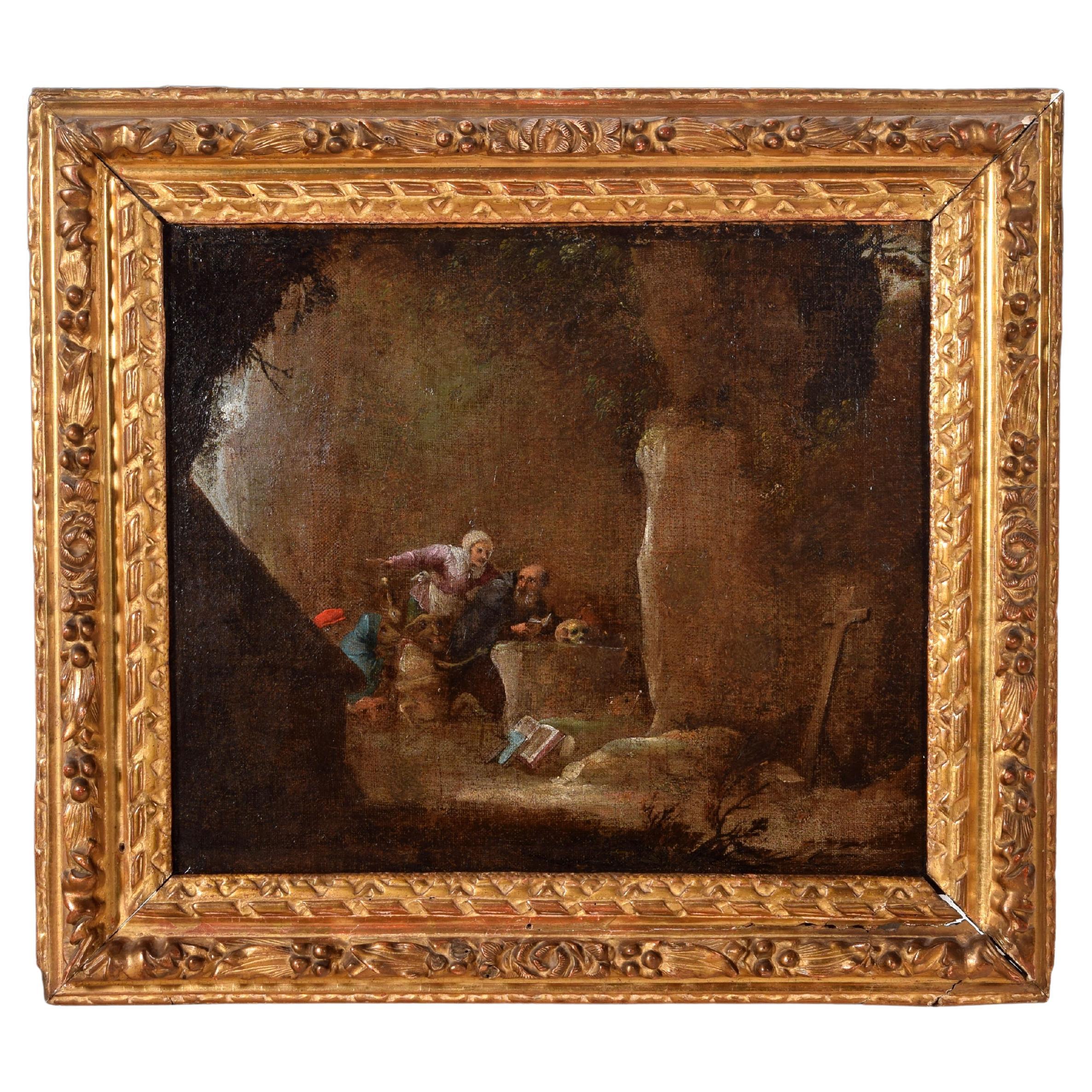
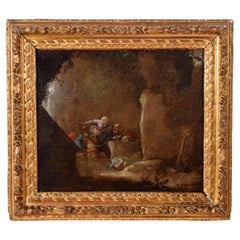
The temptation of St Anthony. Oil on canvas. 17th c., after David Teniers II
By David Teniers the Younger
Located in Madrid, ES
Temptations of San Antonio Abad. Oil on canvas. 17th century, following the model of David Teniers II (Antwerp, 1610-Brussels, 1690).
Oil on canvas showing a figurative scene located inside a cave. To the right, you can see a cross standing, supported; to the left, a hut; and in the center of the painting appears an elderly, bearded man, leaning on a table on which there is a ceramic jug and a skull, with an open book at the foot of it. The man looks towards a woman, who points to something outside, and appears accompanied by a large frog and a series of ghostly beings or monsters dressed in brightly colored cloth and clothing.
San Antonio Abad or Antonio Magno (251-356) was a Christian monk, considered the founder of the eremitical movement. He was tempted numerous times by the devil while he was in the desert, becoming a subject frequently represented in art (as can be seen in this oil painting). He is represented in a black habit because the Order of the Knights of the Hospital of San Antonio (Hospitals) was placed under his patronage, being the color of the habits of the members of this order (the tau or Egyptian cross was also the symbol chosen by they).
David Teniers II or El Joven was a prominent Flemish painter and engraver, son of David Teniers El Viejo or I and father of David Teniers III, much appreciated at the time for his scenes of villagers and common people, his paintings of monkey painters, etc. . He dealt with the theme of the Temptations of Saint Anthony...
Category
Antique 17th Century European Baroque Paintings
Materials
Other
18th Century Italian Oil on Canvas Painting with Battle by Antonio Calza
By Antonio Calza
Located in IT
Antonio Calza (Italy, Verona, 1653-18th April 1725)
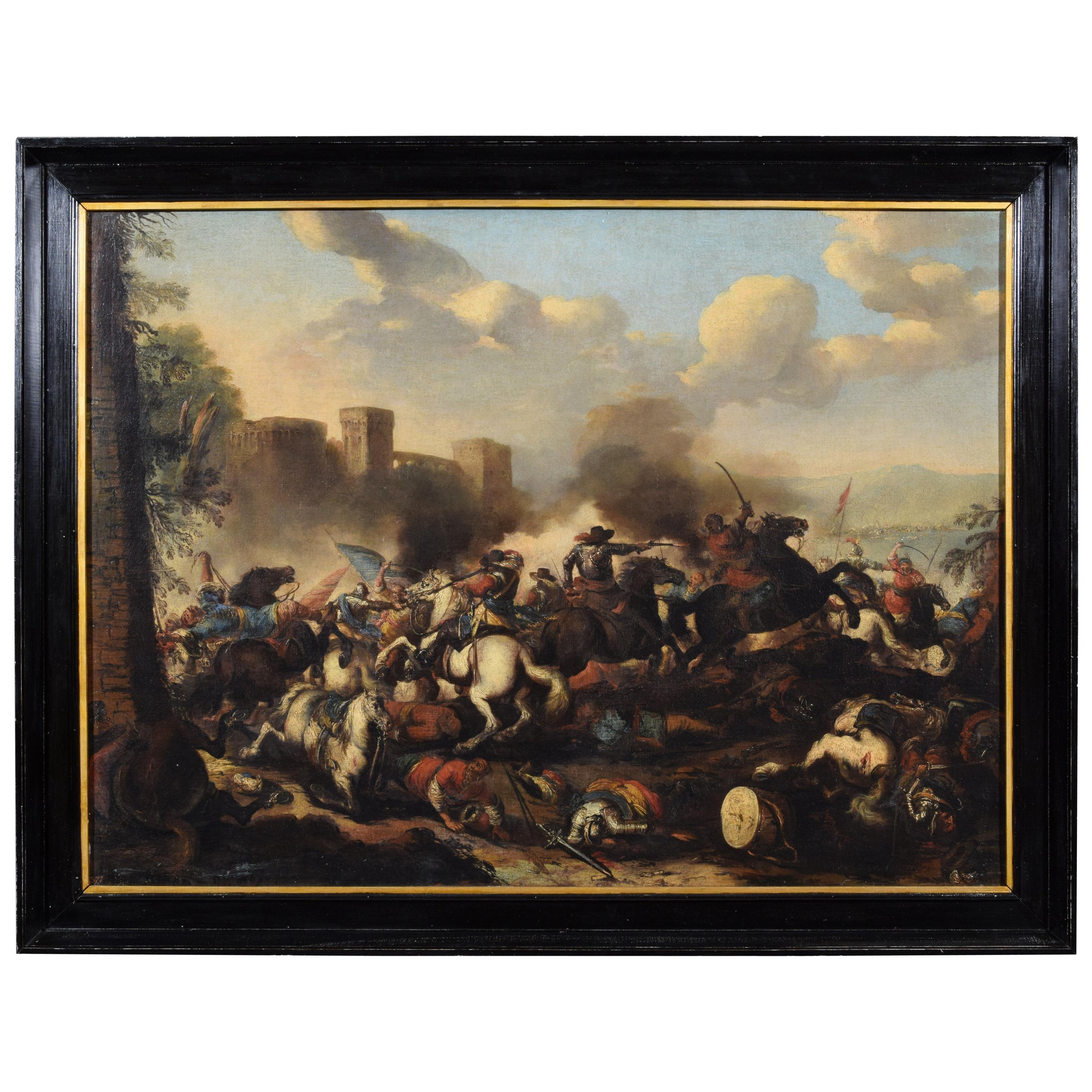
"Battle between Christian and Turkish cavalry with castle"
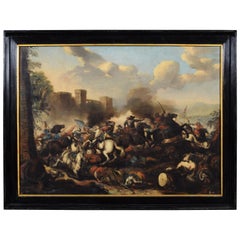
The painting depicts a bloody battle between Christian and Turkish cavalry. Characterized by dynamism, intensity of color and light, the main scene occupies the lower horizontal section of the canvas, optically interrupted by the black fumes of the shots from which emerge, on the left, the towers of a fortress. On the right, in the distance you can see the combat in progress in the countryside, beyond which you can see the pale presence of hills that create a fifth, marking the horizon. To frame the scene contributes to the left, against light and in the foreground, a portion of the wall. The painter, however, introduces a horse on the ground, of which we see only the back, a ruse to involve the observer making him become active and participate in the scene. In the foreground, lifeless bodies, wounded horses and, scattered on the ground, weapons and a drum enhance the drama of the clash.
The excitement and expressive force, the intense chromatic range attentive to the conditions of light and the fine brushstrokes, decisive and dramatic, suggests the attribution to Antonio Calza, one of the most important painters of battles of the seventeenth century, excellent student and continuator of the greatest interpreter of the genre, Jacques Courtois called il Borgognone (Saint-Hyppolite 1621 - Rome 1676). Il Borgognone, although not having had a real school or direct students, places itself as a primary reference point by the Italian and foreign "battaglisti".
The genre of battle painting found great success in the collections of the Italian and European nobility of the seventeenth and eighteenth centuries. The battles of the Italian Renaissance, in which the scene converged towards a precise protagonist, evolve towards a type of combat "without hero". The bloody realism of the details and the dynamic development of the narrative confuse the figure of the protagonist, when present, to give importance to the swirl of horses and armed fighters, among which, moreover, does not emerge a winner.
The certain documents relating to the life and movements of Antonio Calza are scarce; it was equally difficult to reconstruct, from the critics, a catalogue of autograph works. Through paintings in private collections, in museums and paintings passed on the antiques market it has been possible to identify a copious corpus of works that can be traced back to his hand. The work of art historians, together with that of antique dealers, in conferring proper attributions in order to best outline the figure of Calza, continues but studies are still in progress. In this sense, the work of Giancarlo Sestieri should certainly be noted, who investigated the artistic production of the battaglisti and Calza, thus allowing the comparison of the numerous photographic works reported, to identify and recognize the stylistic qualities that distinguish the corpus of paintings assigned to him today.
Antonio Calza was born in 1653 in Italy, in Verona and in 1664 he entered the school of Carlo Cignani in Bologna, dedicating himself to painting battles and landscapes. He then perfected in Rome, where he knew the works of the then undisputed head of the sector, Jacques Courtois called the Burgundian. In 1675 he returned to Verona and married an 88-year-old widow who, dying, left him a rich inheritance. Much appreciated by the nobility and the bourgeoisie, he received numerous commissions. Bartolomeo Dal Pozzo (Le Vite de' pittori, de gli scultori et architetti veronesi, 1718) praises "three great paintings of battles...
Category
Antique Late 17th Century Italian Baroque Paintings
Materials
Canvas