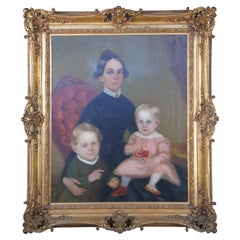
Mid-19th Century Wall Decorations

to
1,930
4,492
659
5,233
Height
to
Width
to
155
102
60
35
16
16
15
12
11
8
8
5
4
2
1
8,472
18,007
37,968
11,110
5,787
14,970
10,714
964
454
1,303
1,864
1,537
2,995
3,771
3,844
2,185
1,351
4,323
564
434
239
202
2,013
832
614
450
233
5,233
5,233
5,233
102
30
15
9
7
Period: Mid-19th Century
Antique Print of Chinese Soldiers by D Urville (1853)
Located in Langweer, NL
Antique print titled 'Mandarin, Artilleur et Soldats Chinois'. Original print of Chinese soldiers. This print originates from volume 1 of 'Voyage Autou...
Category

Antique Mid-19th Century Wall Decorations

Materials

Paper

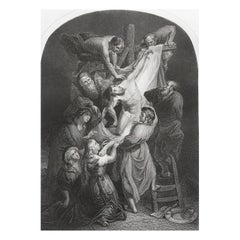
Original Antique Print After Rubens, Jesus Christ Descent from the Cross, C.1850
Located in St Annes, Lancashire
Wonderful image after Rubens Fine steel engraving. Published C.1850 Unframed.
Category

English Renaissance Antique Mid-19th Century Wall Decorations

Materials

Paper

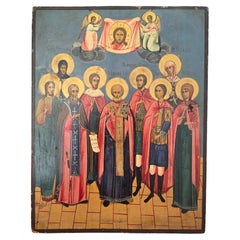
19th Century Orthodox Icon - Convention of Saints
Located in Madrid, ES
Presenting a magnificent 19th-century Orthodox icon depicting The Convention of Saints. This piece is painted in tempera on a wooden panel, exemplifying traditional religious artistr...
Category

Antique Mid-19th Century Wall Decorations

Materials

Wood

Bird’s-Eye View of Charleston, South Carolina – Panoramic City Engraving, 19th C
Located in Langweer, NL
Bird’s-Eye View of Charleston, South Carolina – Panoramic City Engraving, 19th C. This impressive 19th-century engraving titled Bird’s-Eye View of Charleston presents a sweeping pan...
Category

French Antique Mid-19th Century Wall Decorations

Materials

Paper

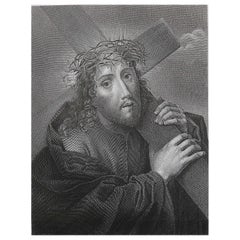
Original Antique Print of Ecce Homo After Carlo Dolci. C.1850
Located in St Annes, Lancashire
Great image after Carlo Dolci Fine steel engraving Published circa 1850 Unframed. Free shipping
Category

English Renaissance Antique Mid-19th Century Wall Decorations

Materials

Paper

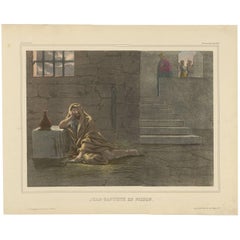
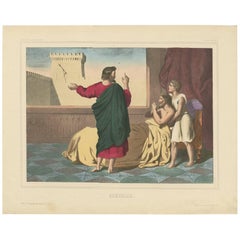
Antique Religious Print No. 17 Apostle Paul in Prison, circa 1840
Located in Langweer, NL
Antique print titled ‘Histoire Sainte, Nouveau Testament, Jean-Baptiste en Prison.’ This plate shows a scene from the New Testament; Apostle Paul in Priso...
Category

Antique Mid-19th Century Wall Decorations

Materials

Paper

Antique Religious Print No. 19 Hezekiah, circa 1840
Located in Langweer, NL
Antique print titled ‘Histoire Sainte, Ancient Testament, Ézéchias.’ This plate shows a scene from the Old Testament; Hezekiah.’ This print originates from a rare set of plates sh...
Category

Antique Mid-19th Century Wall Decorations

Materials

Paper

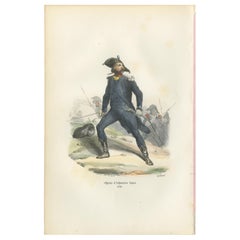
Napoleonic Light Infantry Officer 1795, French Military Uniform Print, 1843
Located in Langweer, NL
Napoleonic Light Infantry Officer 1795, French Military Uniform Print, 1843 This finely hand-colored 19th-century engraving depicts an officer of the French light infantry (infanter...
Category

French Antique Mid-19th Century Wall Decorations

Materials

Paper

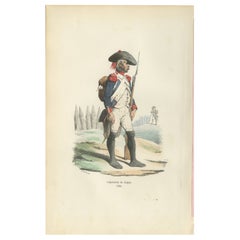
French Line Infantry Soldier 1795, Napoleonic Uniform Print – Vernet, 1843
Located in Langweer, NL
French Line Infantry Soldier 1795, Napoleonic Uniform Print – Vernet This finely hand-colored 19th-century print depicts a soldier of the French Line Infantry (Infanterie de Ligne) ...
Category

French Antique Mid-19th Century Wall Decorations

Materials

Paper

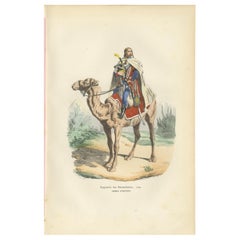
French Dromedary Regiment 1798, Napoleon Egypt Campaign Military Print, 1843
Located in Langweer, NL
French Dromedary Regiment 1798, Napoleon Egypt Campaign Military Print This striking hand-colored 19th-century engraving depicts a soldier of the French Dromedary Regiment during th...
Category

French Antique Mid-19th Century Wall Decorations

Materials

Paper

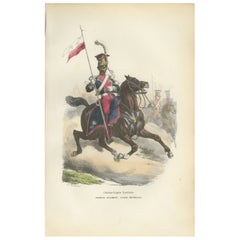
Chevau-Léger Lancer, Imperial Guard, Napoleonic Cavalry Print, 1843
Located in Langweer, NL
Chevau-Léger Lancer, Imperial Guard, Napoleonic Cavalry Print, 1843 This striking hand-coloured 19th-century engraving depicts a Chevau-Léger Lancer of the First Regiment of the Imp...
Category

French Antique Mid-19th Century Wall Decorations

Materials

Paper

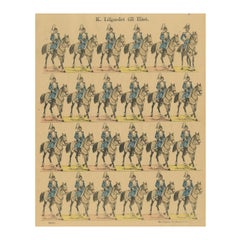
Swedish Life Guards on Horseback – Royal Cavalry Uniforms, c.1860
Located in Langweer, NL
Swedish Life Guards on Horseback – Royal Cavalry Uniforms, c.1860 Description This finely hand-colored military print depicts the Swedish Royal Life Guards on horseback, presenting ...
Category

German Antique Mid-19th Century Wall Decorations

Materials

Paper

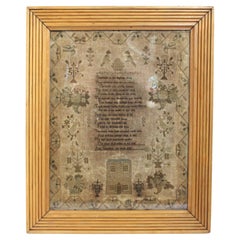
1833 Sampler Made by Ann Crehlow in Antique Pine Frame, English
Located in Chapel Hill, NC
1833 Sampler made by Ann Crehlow(?) in antique pine frame, English. A huge, William IV period pictoral sampler with a hymn of praise called: The Beauties of Nature, Gratitude to the Supreme Being, Nature's Call to Gratitude. It dates from the late 18th century, reading "How cheerful along the gay mead, the daisies and cowslips appear". The whole is filled with typical sampler iconography. Stains, small losses. Georgian stone townhouse at base. Doves with olive branches...
Category

English Antique Mid-19th Century Wall Decorations

Materials

Linen, Silk

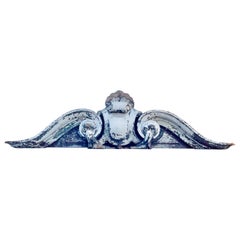
Victorian Over Door Architectural Element
Located in Hanover, MA
Victorian over-door architectural element in distressed old paint. Wired on verso for hanging on a wall or simply place on top of a tallboy. From a Beacon Hill, Boston townhouse.
Category

American Victorian Antique Mid-19th Century Wall Decorations

Materials

Wood

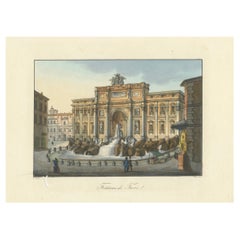
Trevi Fountain Rome – Antique Hand-Coloured Italian View by Gigli (c.1850)
Located in Langweer, NL
Trevi Fountain Rome – Antique Hand-Coloured Italian View by Gigli (c.1850) This finely hand-coloured 19th-century view shows the celebrated Fontana di Trevi in Rome, rendered with c...
Category

Italian Antique Mid-19th Century Wall Decorations

Materials

Paper

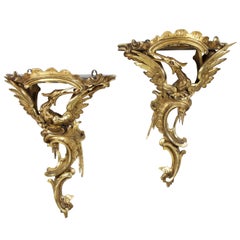
Pair of George III Giltwood Wall Brackets
Located in Essex, MA
Each with rocaille galleried shelf over a pair of phoenix birds over trailing icicles and C-scrolls.
Category

British Rococo Antique Mid-19th Century Wall Decorations

Materials

Pine, Giltwood

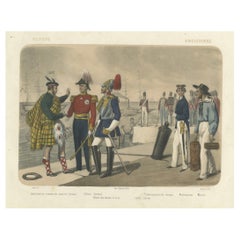
British and Scottish Costumes – Officers, Guards, and Sailors, c.1845
Located in Langweer, NL
Title: British and Scottish Costumes – Officers, Guards, and Sailors, c.1845 Description: This fine hand-colored lithograph, titled “Europe – Angleterre,” comes from *Le Monde en Es...
Category

French Antique Mid-19th Century Wall Decorations

Materials

Paper

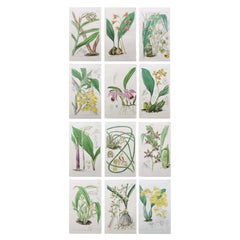
Set of 12 Original Antique Botanical Prints- Orchids. Curtis. Dated 1837
Located in St Annes, Lancashire
Wonderful set of 12 orchid prints. Lithographs after drawings mainly by W.Fitch Original hand color Published by Curtis. Dated 1837 and 1838 Unframed. Free shipping
Category

English Georgian Antique Mid-19th Century Wall Decorations

Materials

Paper

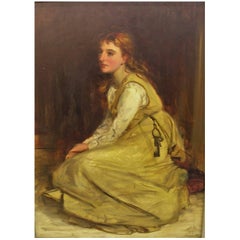
Robert Herdman Painting
By Robert Herdman
Located in Hamilton, Ontario
Robert Herdman (Scottish 1829-1888) oil on board. Nicely framed by Robert Herdman depicting woman sitting with keys. Measures: Size without frame 17.5" wide X 23.5" high Size with...
Category

Scottish Victorian Antique Mid-19th Century Wall Decorations

Materials

Paint

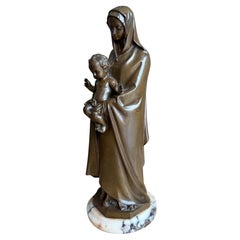
Religious Antique Fine Bronze Mary and Child Sculpture Mounted on an Marble Base
By Poussielgue-Rusand
Located in Lisse, NL
Stylish, meaningful and deeply serene, this refined work of religious art carries with it both artistic mastery and spiritual symbolism. This finely modelled bronze Madonna and Chil...
Category

French Gothic Revival Antique Mid-19th Century Wall Decorations

Materials

Marble, Bronze

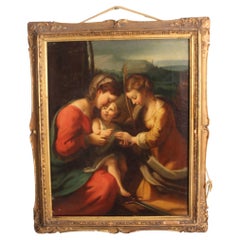
18th century Antonio Correggio The Mystic Marriage of St Catherine
By Antonio da Correggio
Located in Seaford, GB
Antonio Correggio’s The Mystic Marriage of St. Catherine This stunning 18th-century copy draws inspiration from the masterpiece The Mystic Marriage of Saint Catherine, originally pa...
Category

Italian Renaissance Antique Mid-19th Century Wall Decorations

Materials

Canvas

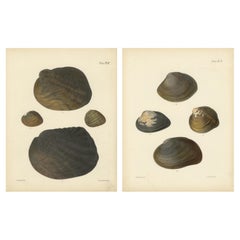
Antique Shell Lithographs “Unio” – Hand-Colored Plates by Sowerby, 1842
Located in Langweer, NL
Antique Shell Lithographs “Unio” – Hand-Colored Plates by Sowerby, 1860s A pair of beautifully detailed 19th-century hand-colored lithographs depicting various species of freshwater...
Category

British Antique Mid-19th Century Wall Decorations

Materials

Paper

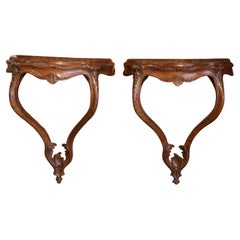
Pair of 19th Century Louis XV Carved Walnut Wall Brackets Consoles from Provence
Located in Dallas, TX
Decorate an entry wall or living room with this elegant pair of antique brackets. Crafted in Southern France, circa 1860, each fruitwood wall ...
Category

French Louis XV Antique Mid-19th Century Wall Decorations

Materials

Walnut

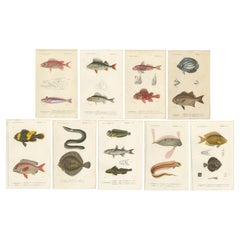
Set of 9 Antique Prints of Various Handcolored Fish Species
Located in Langweer, NL
Set of 9 original antique prints of many fish species. These prints originate from 'Dictionnaire universel d'Histoire Naturelle' by d'Orbigny. Published 1861. Charles Henry Dessalines d'Orbigny was a French botanist and geologist specializing in the Tertiary of France. At the National Museum of Natural History in Paris, d'Orbigny identified many of the flowering plant species returned to France from his brother's natural history collecting...
Category

Antique Mid-19th Century Wall Decorations

Materials

Paper

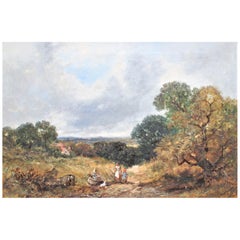
Original Antique James Edwin Meadows Framed Oil Painting on Canvas Untitled
By James Edwin Meadows
Located in Hamilton, Ontario
This antique original oil painting on canvas was done by James Edwin Meadows, a known British artist, in approximately 1860 in the period Victorian style. The painting depicts an Eng...
Category

English Victorian Antique Mid-19th Century Wall Decorations

Materials

Gesso, Canvas

Mid-19th Century Spanish Oil Painting of Saint Francis
Located in Round Top, TX
A very beautiful mid-19th century oil-on-canvas painting of a young Saint Francis praying at an altar, circa 1860. The artist is Juaquin Vayreda (1843-1894). This painting is a copy ...
Category

European Antique Mid-19th Century Wall Decorations

Materials

Canvas

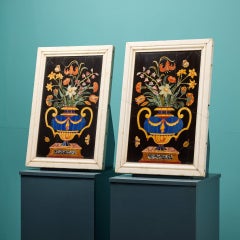
Pair of Large Scale Italian Pietra Dura Panels, after Corbarelli
Located in Wormelow, Herefordshire
An outstanding pair of large 19th century antique pietra dura panels after the Italian Corbarelli workshops. Each highly decorative panel is exceptionally made, depicting twin handled floral filled vases formed using precise inlays of various marbles and semi-precious stones. These include lapis lazuli, agate, verde antico and Siena, specially chosen for their natural variations in colour and tone. A black background draws attention to the striking vibrancy of the stones with each framed in white marble. The Corbarelli Family Originating from Florence, the Corbarelli were an important 17th and 18th century family...
Category

Italian Georgian Antique Mid-19th Century Wall Decorations

Materials

Carrara Marble, Marble

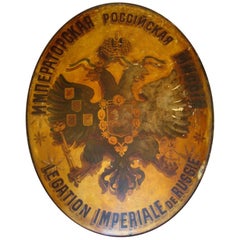
Romanoff Arms of the Russian Empire Embassy or Consulate Painted Sign
Located in Buenos Aires, Olivos
Early Embassy or Consulate painted sign. Sign says Legation Imperiale de Russie, this sign was used from 1850 to 1917, it is very rare to find these things with the Russian Empire Ca...
Category

Russian Art Nouveau Antique Mid-19th Century Wall Decorations

Materials

Tin

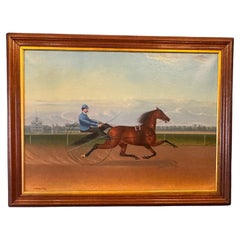
Large Mid-19th Century Oil on Canvas Folk Art Painting by John McAulliffe
Located in Middleburg, VA
"Harry Lathrop Driven by Dan Mace" by John McAulliffe This large mid-19th century, oil on canvas painting depicts a horse, son of Blood's Black Hawk, driven by Dan Mace. Mace was on...
Category

American Folk Art Antique Mid-19th Century Wall Decorations

Materials

Canvas, Paint

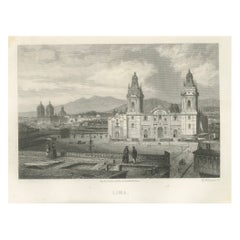
Rare Antique Engraving – Lima, Peru with Cathedral and Plaza Mayor, 1867
Located in Langweer, NL
Antique Engraving of Lima, Cathedral and Plaza Mayor, 1867 Detailed 19th-century engraving titled Lima, published in 1867. The view captures the grand Plaza Mayor of the Peruvian ca...
Category

French Antique Mid-19th Century Wall Decorations

Materials

Paper

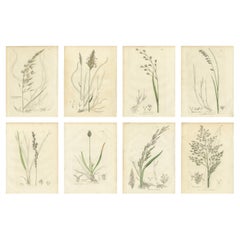
Antique Grasses Sedges – Hand-Colored Botanical Engravings, c.1830 (Set of 8)
Located in Langweer, NL
Antique Grasses Sedges – Hand-Colored Botanical Engravings, c.1830 (Set of 8) This beautifully preserved set of eight antique hand-colored botanical engravings features a vari...
Category

British Antique Mid-19th Century Wall Decorations

Materials

Paper

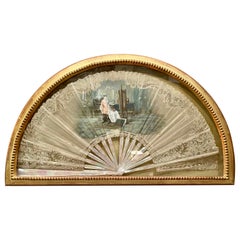
Antique Hand-Painted Mother-of-Pearl Fan Screen Shadow Box, Circa 1840.
Located in New Orleans, LA
Antique Hand-Painted Mother-of-Pearl Fan Screen Shadow Box, Circa 1840.
Category

Antique Mid-19th Century Wall Decorations

Materials

Mother-of-Pearl

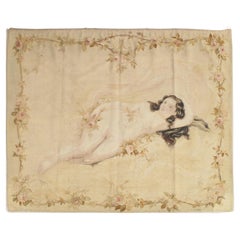
19th Century French Aubusson Tapestry, Finely Woven, Nude Woman, Soft Colors
Located in Port Washington, NY
Never to be seen again! A splendid example of a finely woven antique Aubusson tapestry, this particular piece illustrates the exquisiteness of one of the most fabulous tapestries we ...
Category

French Aubusson Antique Mid-19th Century Wall Decorations

Materials

Wool

Large Antique Italian Micro Mosaic plaque of St. Peters Square, Rome mid 1800 s
By Vatican Mosaic Studio
Located in New York, NY
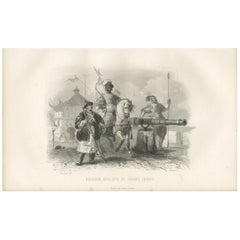
A Very Large and Exceptionally Fine Quality Antique Italian Micro-Mosaic Plaque Depicting "The Saint Peter Square" in Rome. The center medallion surrounded by a beautiful Laurel Wreath in multiple shades of Green Mosaic amidst a black Belgium Marble border. The interior rounded subject depicts Saint Peter Square which is found in Rome, Italy. The entire center panel is made up of a captivating array of tesserae in a variety of shapes and colors, which create this stunning mosaic construct. When inspected from up-close, small rectangular tesserae are found in an assortment of colors, which include: white, green, blue, red, black, brown, orange etc. When the subject is seen from afar, a fantastic image of the entire Saint Peter Square can be viewed as if a painting has been created. The oil on canvas of this scene, by was sold in Christie's Auction for over $2,000,000 USD. The plaque rests in a custom ebonized and gilt square frame. This can be used as a decorative object on the wall to serve as a painting, or, be converted to a table-top by mounting it on a table stand. Rome, Circa: 1850 Giovanni Paolo Panini (Piacenza 1691-1765 Rome), View of Saint Peter's Square, Rome. From Christie's Auction: Giovanni Paolo Panini arrived in Rome in 1711, painting capricci and architectural pieces in a vigorous if slightly eccentric style, and by 1719, when he was admitted to the Academy of St. Luke and the virtuosi al Pantheon, he was a rising star in the Roman art world. From around 1719-1726 he was much in demand for decorative frescoes, including quadratura, ornament and landscape and other genres, often in collaboration with figure or flower painters. During this period he worked for Cardinal Patrizi at Villa Patrizi, Cardinal Annibale Albani at Palazzo Albani (now del Drago) alle Quattro Fontane, Livio de Carolis at Palazzo de Carolis, Cardinal Alberoni at Palazzo Alberoni, Innocent XIII Conti in the Quirinal and in the library of S. Croce in Gerusalemme. In 1724 he married Caterina Gosset, the sister-in-law of Nicolas Vleughels, the director of the French Academy in Rome, to which he was admitted in 1732, and as a result he was much patronized by the French. During the 1720s he developed his figure style away from the awkwardness of his early works into one that concentrated on groups of stylishly-dressed aristocrats and skillfully modelled bystanders, sibyls and pseudo-antique figures. These he noted down in drawings (such as a sketchbook in the British Museum) that he drew upon to populate his paintings. He also began to receive commissions to design and record temporary festivals, often for French ambassadors to Rome. By the beginning of the 1730s Panini was developing a distinctive subgenre of the capriccio in which recognizable monuments are placed in imaginary topographical relationships, which were well-received in the classicizing era of Clement XII Corsini. In 1732 he was one of the panel of judges for the competition instituted by Clement for the Lateran façade, and in the following year painted an impressive View of Piazza del Quirinale for the pope. At about this time he was developing his best-known topographical subjects, interior views of St Peter's and the Pantheon, which were much in demand, to judge by the number of extant versions extending into the 1750s. By about 1734 he was beginning to attract the attention of English patrons, who ordered sets of Roman views, such as those at Marble Hill House (1738) and Castle Howard. In 1736, through Filippo Juvarra, he received important commissions from Philip V of Spain for scenes of the life of Christ in the Chinoiserie room at La Granja in Spain (1736). From as early as the 1720s he had been producing some vedute (view-paintings), initially based on prototypes by Gaspar van Wittel, and he developed the genre in subsequent decades in works that would include impressive panoramic views of the Forum or Palatine, although his staple genre was the capriccio rather than the veduta. He also expanded his repertory of church interiors, adding such churches as S. Paolo fuori le Mura and S. Agnese in Piazza Navona, as well as church interiors recording special events. His son by his first marriage, Giuseppe (1718-1805), began to support him in architectural and festival design projects. By the 1740s Panini was at the peak of his powers, and evidently had a considerable workshop helping him meet demand, especially of capricci to be used as overdoors and other decorative installations. Giovanni Paolo was successful in elevating himself socially above the usual artisanal status of genre painters, and would sometimes include a self-portrait in paintings commissioned by the great and powerful. He also appears to have been successful financially, and owned a substantial palazzo in via Monserrato. He increasingly concentrated on important commissions, such as a view of the Lottery in Piazza Montecitorio (London, National Gallery, 1743-1744), the designs for the festival decorations for the birth of the Dauphin in Palazzo Farnese (Waddesdon Manor, 1751), or the view of an imaginary picture gallery housing the collection of Cardinal Valenti Gonzaga (Wadsworth Atheneum, 1749). In the mid-1750s he received an important series of commissions from the Duc de Choiseul, French ambassador to Rome and soon to become one of the most powerful men in France, that included his best-known compositions, Ancient Rome (Roma Antica) and Modern Rome (Roma Moderna). These large paintings, of which there are three sets (in Boston and Stuttgart, the Metropolitan Museum, and the Louvre) represent imaginary picture galleries based on the Valenti Gonzaga composition but hung with what purport to be Panini's own vedute of ancient and modern sites respectively (with corresponding pieces of sculpture). These paintings sum up the eighteenth-century canon of the greatest works of architecture and sculpture, and the equivalence between modern and ancient Rome. By this time Panini was being assisted by his son by his second marriage, Francesco (1748-1800), who was a skilled draughtsman and painter who continued his father's work after his death in 1765. The Farnborough Hall paintings The Piazza S. Pietro and the Campidoglio are important vedute by Panini painted in 1750 and originally installed, with other works by Panini and Canaletto, in the seat of the Holbech family, Farnborough Hall, Warwickshire (National Trust). Farnborough Hall had been inherited in 1717 by William Holbech (circa 1699-1771), who is documented on the Grand Tour in Florence, Rome and Venice from late 1732 until his return home at the end of April 1734 with his brother Hugh. Holbech is said to have gone on the Grand Tour to recover from a broken heart and to have spent a considerable time there prior to these documented appearances. During his time in Rome he acquired two Paninis, which were seen by an anonymous antiquary around 1746, who referred to various sculptures "all brought from Rome with two pictures, one of the Rotunda, and the other of diverse buildings by Panino" (British Library, Add. MS 6230, pp. 31-32). The Rotunda (the Pantheon) is a painting now in a private collection in New York, and is signed and dated 1734. The Diverse Buildings, which was probably one of Panini's capricci, has not been identified. On his Grand Tour Holbech seems also to have acquired two Canalettos, although they are not mentioned by the antiquary, who may only have had eyes for things Roman. In about 1746-1747, Holbech remodelled the house by creating a Saloon, now the dining room, at the back of the house. This room, the entrance hall, the staircase, library and closet were stuccoed by William Perritt of York, and a bill for this work dated 14 November 1750 survives (or survived until recently; G. Beard, Decorative Plasterwork in Great Britain, London, 1975, p. 233). The two Canalettos acquired on the Grand Tour were installed in the Saloon, together with two new works commissioned from Canaletto, who was then in England and working nearby at Warwick Castle in 1748. The two Paninis acquired on the Grand Tour may have been installed in the Library, as Alastair Laing assumes (op. cit.), while three new works commissioned from Panini in Rome were placed in the Hall and Saloon: the Piazza S. Pietro for the overmantel in the Hall (fig. 1), the Campidoglio as the overmantel in the Saloon (fig. 2), and an Interior of St Peter's (now in Detroit) (fig. 3) on the adjacent wall facing the windows. Two of the Canalettos flanked the Campidoglio, while the others were on the opposite wall. The Interior of St Peter's was therefore effectively the fifth member of the Canaletto set, distinct from the two overmantels. Holbech's installation of his Canalettos and Paninis in fixed stucco frames was unusual for England in 1750, and had probably been inspired by what he had seen on his Grand Tour in Northern Italy, where fixed stucco installations of canvases were common in the 1720s and 1730s (Cornforth, II, p. 51). The Campidoglio and the Interior of St Peter's are both signed and dated 1750, a date that corresponds to the payments for the stucco. The commission for the new Paninis would have been made through an agent, possibly the Roman dealer in antiquities Belisario Amidei from whom some of the antique busts in the Hall were acquired in 1745, who was also a picture dealer; or perhaps the painter Pietro Berton, who on 7 December 1750 shipped a Panini to England. The paintings were sold to Savile Gallery in 1929 and replaced by copies by one Mohammed Ayoub. The four Canalettos were exhibited at Savile Gallery in 1930 and entered the London art trade, finding their way at various times to Augsburg, Melbourne, Ottawa and a private collection. The Paninis seem to have been resold immediately to Knoedler & Co. in New York. When the stucco was removed from the library by Holbech's great-grandson, another William Holbech, shortly after his succession in 1812, the Interior of the Pantheon and the Diverse Buildings may have been taken down. Although there is no record of either painting being at Farnborough subsequently, the Interior of the Pantheon at least must have remained there, since it appeared at Knoedler's in 1930 at about the same time as the other Paninis, and was presumably acquired at the same time from the same source. The Campidoglio was a rare subject for Panini: this is the only known extant version, apart from fictive versions in the Metropolitan Museum (1757) (figs. 4) and Louvre (1759) versions of his Roma Moderna composition (but not in the first Boston version of 1757). Probably Holbech insisted on the choice of subject in order to represent the centre of Rome's civic administration to complement the religious one of St Peter's. The Campidoglio may have been of interest to English patrons because it represented the seat of a form of government they were more comfortable with than the papacy. For example, Canaletto painted the subject, together with English subjects, for Thomas Hollis, 'the most bigoted of all Republicans' in 1755, who may have wanted to 'represent London as the heir to the legacy of Ancient Rome and Renaissance Italy' (see Michael Liversidge and Jane Farrington, eds., Canaletto and England, exhibition catalogue, Birmingham Museums and Art Gallery, London, 1993, p. 25). Canaletto also painted the subject for Sir Richard Neave, Ist Baronet (1731-1814) of Dagnam Park, Essex, at the end of his English stay or shortly afterwards (i.e. 1755-1766) (sold, Sotheby's, London, 10 July 2002, lot 8). Like Holbech, Neave mixed Venetian and Roman subjects, but his Roman subjects steer clear of St Peter's: the others were the Piazza del Quirinale and Piazza Navona. While Holbech had gone to both Venice and Rome and commissioned views of both cities, Rome sets the keynote for his decoration: antique busts line the Hall, and its religious and civic centres are the overmantels in the Hall and Saloon respectively. The Piazza S. Pietro The Piazza S. Pietro shows the piazza much as it appears today, apart from the absence of Valadier's late eighteenth-century clocks on the towers. Bernini's colonnade (1656-1667), both ends of which are visible, reaches out its arms to embrace the viewer. In the center of the piazza is the obelisk moved by Sixtus V in 1586 from the left side of the church where it had formed part of the Circus of Nero. On either side are two fountains, the one on the right by Carlo Maderno (1613) and the one on the left created to match it by Carlo Fontana in 1677. Beyond is the rectangular forecourt to the church, the piazza retta, leading to the façade by Maderno, completed in 1610, and the dome by Michelangelo, Giacomo della Porta and Domenico Fontana. To the right of the façade the roof of the Sistine Chapel is just visible, followed by the Cortile di S. Damaso, the palace of the Swiss Guards and the palace of Paul V. A Cardinal is being driven in a carriage across the piazza at the right in the direction of the Borgo Nuovo and Ponte S. Angelo with his blue-liveried retinue and subsidiary carriages. Unlike the later versions of the subject that depict the Duke de Choiseul, there seems to be no intent to portray any particular cardinal: the procession of a cardinal here is presented simply as characteristic activity within the piazza. Various groups of figures, including well-dressed women in brightly colored dresses, Swiss Guards, priests, gentlemen, idlers and a pilgrim are distributed around the piazza. In the foreground an imaginary heap of fallen masonry provides visual interest in an otherwise dead space. Panini painted the Piazza S. Pietro on a number of occasions, and his works falls into two types, one with the viewpoint shifted slightly to left of the axis, as in the Farnborough Hall version, and one with it shifted slightly to the right. The first type is based on a composition by Gaspar van Wittel, of which there are numerous versions from 1684 until 1721 (Fig. 9 van Wittel). The work by Panini that seems closest to Van Wittel and therefore probably the earliest is the version in the Circolo della Caccia, Rome, which has been dated to the second half of the 1730s, but is probably a decade or so earlier. Another, on the London art market in 2002-2009, and a version with workshop participation at Sotheby's, Milan (20 November 2007, lot 137) and currently on the art market in Rome, are closer to an important painting in Toledo (Arisi no. 308) that is signed and dated 1741 (fig. 6). Van Wittel employed a wide format (about 2:1), showed both of the end faces of the colonnade almost to their full extent, and introduced the theme of a heap of masonry to enliven the foreground. His choice of perspective implies a viewpoint located in the small piazza between the Borgo Nuovo and Borgo Vecchio, now the Piazza Pio XII at the top of the Via della Conciliazione. From this viewpoint a building at the left tended to interfere with the view of the end of the left arm, as can be seen from the Nolli map...
Category

Italian Louis XVI Antique Mid-19th Century Wall Decorations

Materials

Glass

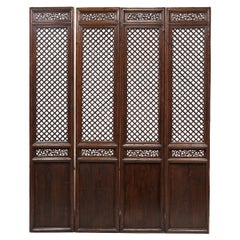
Set of Four Chinese Courtyard Lattice Panels, c. 1850
Located in Chicago, IL
A hallmark of Qing-dynasty domestic architecture, tall lattice panels such as these were used in provincial courtyard homes to allow light and air into a room whilst maintaining priv...
Category

Chinese Qing Antique Mid-19th Century Wall Decorations

Materials

Elm

Early 19th Century French Roques Botanical Engravings
Located in Gloucestershire, GB
Early 19th Century French engraved and hand coloured botanical studies. Including Belladonna, Datura, Digitalis and Poppy from 'Phytography médicale, histoire des substances héroiqu...
Category

French Country Antique Mid-19th Century Wall Decorations

Materials

Paper

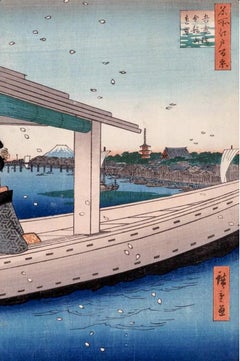
Japanese Woodblock Print One Hundred Famous Views of Edo by Utagawa Hiroshige
Located in Atlanta, GA
Artist: Utagawa Hiroshige (1797 - 1858) Series: One Hundred Famous Views of Edo (1856-58) Number: 39 Distant View of Kinryuzan Temple and Azuma Bridge Publisher: Uoya Eikichi Format: Vertical Oban Number of Prints: 120/120 (inc. title page and a replacement print by Hiroshige II) Medium: Woodblock Print Date: 1857 (Ansei 4), 8th month Size (H x W): 14" x 9.25" print only. Signature: Hiroshige ga Censor's seals: aratame, Snake 8 No blockcutter's mark Reference: For a similar print, see the collection of Art Institution Chicago Accession Number 1938.536 and 1965.1062; MFA Boston...
Category

Japanese Edo Antique Mid-19th Century Wall Decorations

Materials

Paper

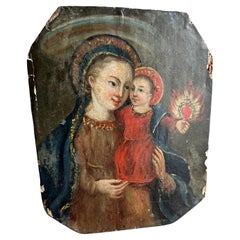
Mid-19th Century Alpine Oil Painting on Wood – Madonna /Child with Flaming Heart
Located in Hamburg, DE
This remarkable mid-19th century alpine oil painting on wood captures a Madonna and Child in a deeply symbolic composition. The child holds a flaming heart adorned with a crown of th...
Category

Austrian Biedermeier Antique Mid-19th Century Wall Decorations

Materials

Wood

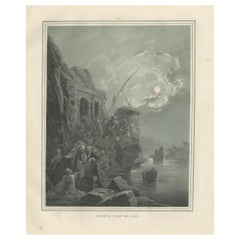
Antique Hyena Hunt on the Nile Moonlight Scene from Maximilian, 1846
Located in Langweer, NL
Antique Hyena Hunt on the Nile Moonlight Scene from Maximilian, 1846 This atmospheric and dramatic 19th-century Orientalist engraving depicts a nocturnal hyena hunt along the banks ...
Category

Antique Mid-19th Century Wall Decorations

Materials

Paper

19th Century Orthodox Icon
Located in Madrid, ES
Presenting a magnificent 19th-century Orthodox icon:The Pantocrator. This piece is painted in tempera on a wooden panel, exemplifying traditional religious artistry from this era. ...
Category

Antique Mid-19th Century Wall Decorations

Materials

Wood

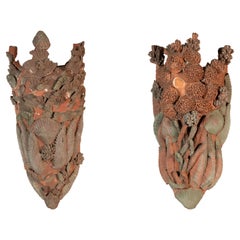
19th Century Terra Cotta Sea Foliage Sconces
Located in New York, NY
Hand-picked by buyers at Ann-Morris Inc.
Category

English Antique Mid-19th Century Wall Decorations

Materials

Terracotta

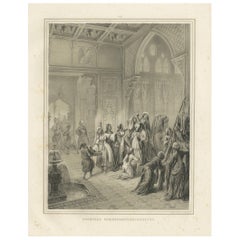
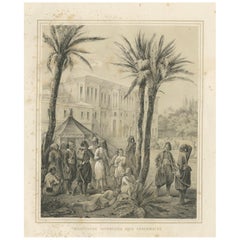
Antique Arabian Engagement Ceremony Interior Scene, Maximilian Egypt 1846
Located in Langweer, NL
Antique Arabian Engagement Ceremony Interior Scene, Maximilian Egypt 1846 Description: This refined 19th-century Orientalist interior scene depicts an Arabian engagement ceremony ta...
Category

German Antique Mid-19th Century Wall Decorations

Materials

Paper

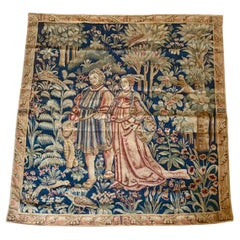
19th Century French Aubusson Tapestry
Located in New York, NY
Handwoven in Aubusson, France in the 19th Century, this lovely Tapestry features a nobleman and noblewoman on a stroll through the forest in a classic Millefleur background and it ha...
Category

French Aubusson Antique Mid-19th Century Wall Decorations

Materials

Tapestry, Wool, Silk

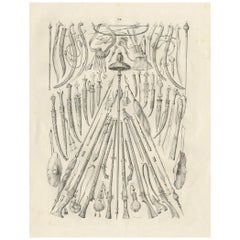
Antique Oriental Arms and Daggers Study from Maximilian in Bavaria, 1846
Located in Langweer, NL
Antique Oriental Arms and Daggers Study from Maximilian in Bavaria, 1846 This exceptionally rich and visually striking 19th-century Orientalist engraving presents a comprehensive st...
Category

Antique Mid-19th Century Wall Decorations

Materials

Paper

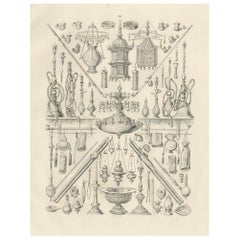
Antique Islamic Lamps and Hookahs Object Study, Maximilian Egypt 1846
Located in Langweer, NL
Antique Islamic Lamps and Hookahs Object Study, Maximilian Egypt 1846 This highly detailed 19th-century Orientalist reference engraving presents a comprehensive visual inventory of ...
Category

German Antique Mid-19th Century Wall Decorations

Materials

Paper

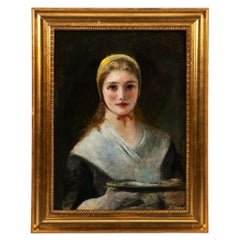
Elisabeth Jerichau-Baumann – Portrait of a Young Woman Holding a Tray
Located in Kastrup, DK
Elisabeth Jerichau-Baumann (1819–1881) Portrait of a Young Woman Holding a Tray. Executed in oil on canvas. Visible image size: 66 × 49 cm. Signed lower right: “Elisa Jerichau”. Th...
Category

Antique Mid-19th Century Wall Decorations

Materials

Canvas, Wood

Antique Egyptian Infantry Guard Scene from Maximilian in Bavaria, 1846
Located in Langweer, NL
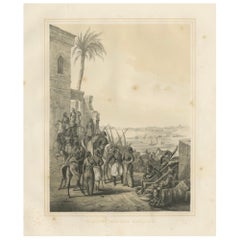
Antique Egyptian Infantry Guard Scene from Maximilian in Bavaria, 1846 This refined and historically rich 19th-century Orientalist engraving depicts an Egyptian infantry detachment ...
Category

Antique Mid-19th Century Wall Decorations

Materials

Paper

Antique Egyptian Regular Cavalry on the Nile from Maximilian in Bavaria, 1846
Located in Langweer, NL
Antique Egyptian Regular Cavalry on the Nile from Maximilian in Bavaria, 1846 Description: This impressive 19th-century Orientalist engraving depicts...
Category

Antique Mid-19th Century Wall Decorations

Materials

Paper

Antique Egyptian Horsemen Javelin Game Scene from Maximilian, 1846
Located in Langweer, NL
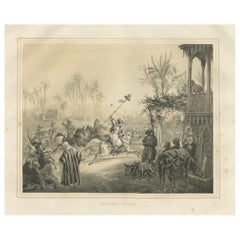
Antique Egyptian Horsemen Javelin Game Scene from Maximilian, 1846 This vibrant and action-filled 19th-century Orientalist engraving depicts a traditional mounted javelin-throwing g...
Category

Antique Mid-19th Century Wall Decorations

Materials

Paper

John J. NAPIER – Women dressed in the Antique Style
Located in PARIS, FR
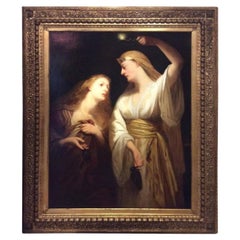
John J. NAPIER - English School late 19th century This paintings illustrates the Parable of the Wise and Foolish Virgins or the Parable of the ten bridesmaids, is one of the parables...
Category

Antique Mid-19th Century Wall Decorations

Materials

Canvas

Mid 19th Century Coat of Arms
Located in New York, NY
Hand-picked by buyers at Ann-Morris Inc.
Category

English Antique Mid-19th Century Wall Decorations

Materials

Steel

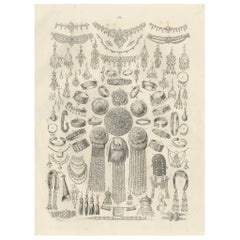
Antique Oriental Jewelry Adornment Study from Maximilian in Bavaria, 1846
Located in Langweer, NL
Antique Oriental Jewelry & Adornment Study from Maximilian in Bavaria, 1846 This exceptionally refined 19th-century Orientalist engraving presents an extensive and highly detailed study of Middle Eastern jewelry...
Category

Antique Mid-19th Century Wall Decorations

Materials

Paper

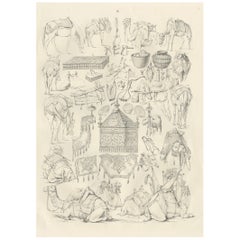
Antique Camel Caravan Equipment Studies from Maximilian in Bavaria, 1846
Located in Langweer, NL
Antique Camel & Caravan Equipment Studies from Maximilian in Bavaria, 1846 This exceptionally detailed 19th-century Orientalist engraving presents a comprehensive visual study of ca...
Category

Antique Mid-19th Century Wall Decorations

Materials

Paper

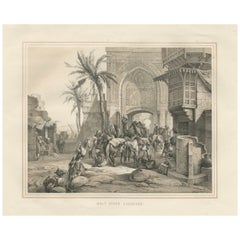
Antique Orientalist Caravan at Rest City Gate Scene from Maximilian, 1846
Located in Langweer, NL
Antique Orientalist Caravan at Rest City Gate Scene from Maximilian, 1846 This richly detailed 19th-century Orientalist engraving portrays a caravan halted at the gate of an Eastern...
Category

German Antique Mid-19th Century Wall Decorations

Materials

Paper

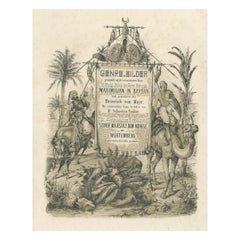
Antique Orientalist Title Page Maximilian in Bavaria Expedition, 1846
Located in Langweer, NL
Orientalist Title Page Print - Maximilian in Bavaria, Middle East - 19th Century Description: This highly decorative and visually powerful antique title page engraving introduces th...
Category

Antique Mid-19th Century Wall Decorations

Materials

Paper

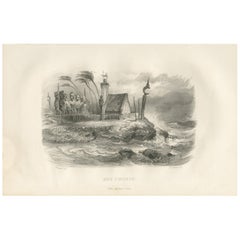
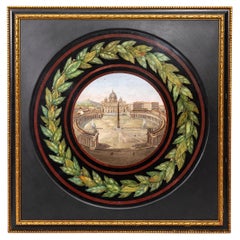
Antique Print of the Hale o Keawe of Hawaii by D Urville, 1853
Located in Langweer, NL
Antique print titled 'Moraï d'Honaunau'. Original print of the Hale o Keawe of Hawaii. Hale o Keawe was an ancient Hawaiian heiau originally built in ap...
Category

Antique Mid-19th Century Wall Decorations

Materials

Paper

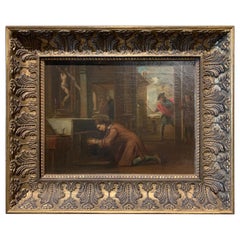
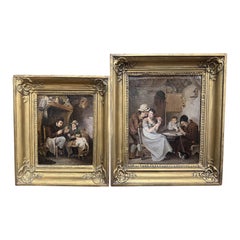
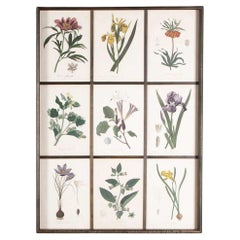
19th Century French Oil on Canvas Genre Paintings in Giltwood Frames, Set of Two
Located in Dallas, TX
Decorate an office, study, or powder room with this delightful "Fausse Paire" of antique genre paintings. Crafted in France circa 1850 and set in their original carved giltwood frame...
Category

French Antique Mid-19th Century Wall Decorations

Materials

Canvas, Giltwood

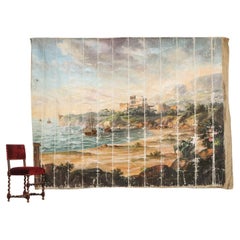
Extremely Large Monumental Wall Painting of Monaco, 19th Century
Located in OOSTERHOUT, NL
This impressive monumental painting, dating from the mid-19th century, is a remarkable piece of wall art. The oil on canvas work depicts an atmospheric Mediterranean scene with the P...
Category

Monacan Romantic Antique Mid-19th Century Wall Decorations

Materials

Canvas

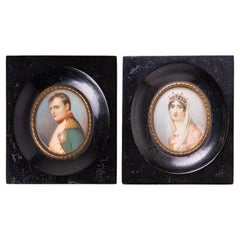
Pair of Napoleonic Portraits
Located in Alessandria, Piemonte
Rare set of portraits of Napoleon with his wife Marie Louise of Austria. Hand painted and framed in ebony. ref. O/7439/2.
Category

French Empire Revival Antique Mid-19th Century Wall Decorations

Materials

Fruitwood

Antique Victorian American Folk Art Portrait Oil Painting Woman Children
Located in Dayton, OH
An exceptional large Mid-19th century American School Victorian Folk Art portrait. The painting features a young, well-dressed mother seated in a tufted balloon-back chair with her ...
Category

American Victorian Antique Mid-19th Century Wall Decorations

Materials

Canvas, Hardwood, Giltwood, Paint

Read More

Punk Rock and Rebellion Animate London’s Hit Yoshitomo Nara Show

The exhibition includes his portraits of wide-eyed kids with mayhem on their minds, as well as some of the artist’s personal belongings.

Whether Painted or Papered, Muraled Walls Make Bold Statements in the Home

The ancient practice of covering walls in artistic scenery is back.

In Francks Deceus’s ‘Mumbo Jumbo #5,’ the Black Experience Is . . . Complicated

Despite the obstacles, the piece’s protagonist navigates the chaos without losing his humanity.

12 Floral-Accented Rooms with a Handmade, Folkloric Feel

Who needs a flower garden? Just use your imagination — and some beautifully patterned wallpaper or fabric — to bring the outdoors in.

This Wolf Kahn Pastel Is the Epitome of Beauty at Its Most Essential

A longtime admirer of Kahn’s work, 1stDibs editorial director Anthony Barzilay Freund explores why it’s relevant now more than ever.

Why Jules Chéret Was the King of the Modern Poster

The streets of fin-de-siècle Paris were set aglow with colorful poster ads, thanks to the printing techniques invented by Jules Chéret. Now, the Milwaukee Art Museum is celebrating this undersung talent in America's first solo show dedicated his exuberant works.

Anna Condo’s Multifaceted Career Spans Film, Photography and NFTs

From her historic Manhattan townhouse, the talented creator and curator of 1stDibs' latest NFT exhibition tells us about the art in her home and how she got involved with cryptoart.

How Keith Rivers Went from NFL Linebacker to Blue-Chip Art Aficionado

The former football player is as serious about becoming a great contemporary-art patron as he once was about making tackles. Here, Rivers tells us how he got the collecting bug and how his tastes have evolved over the years.

Still Thinking About These?

All Recently Viewed