Items Similar to Antique Japanese Actor Portraits: Four Kabuki Figures in Edo-Period Style, 1882
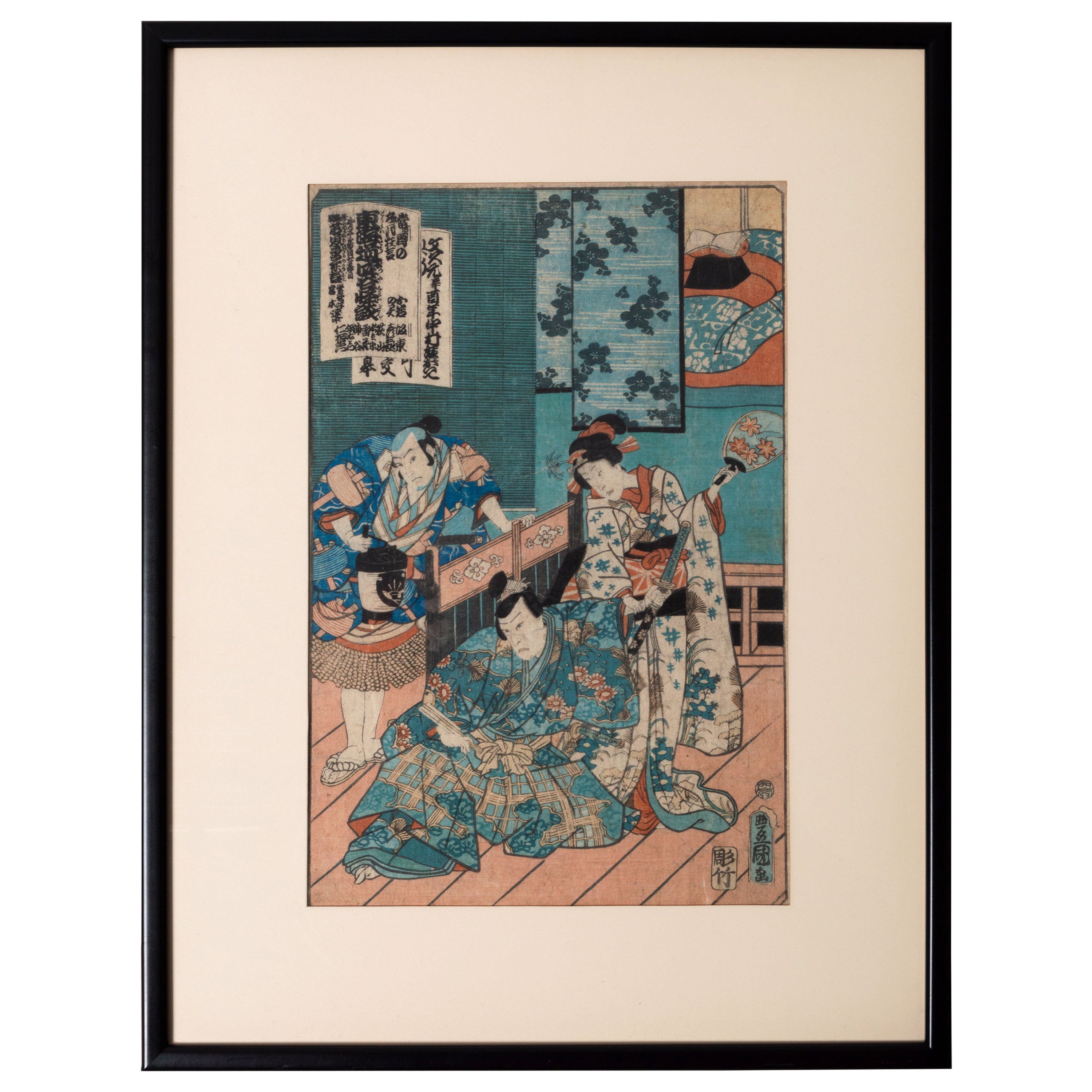
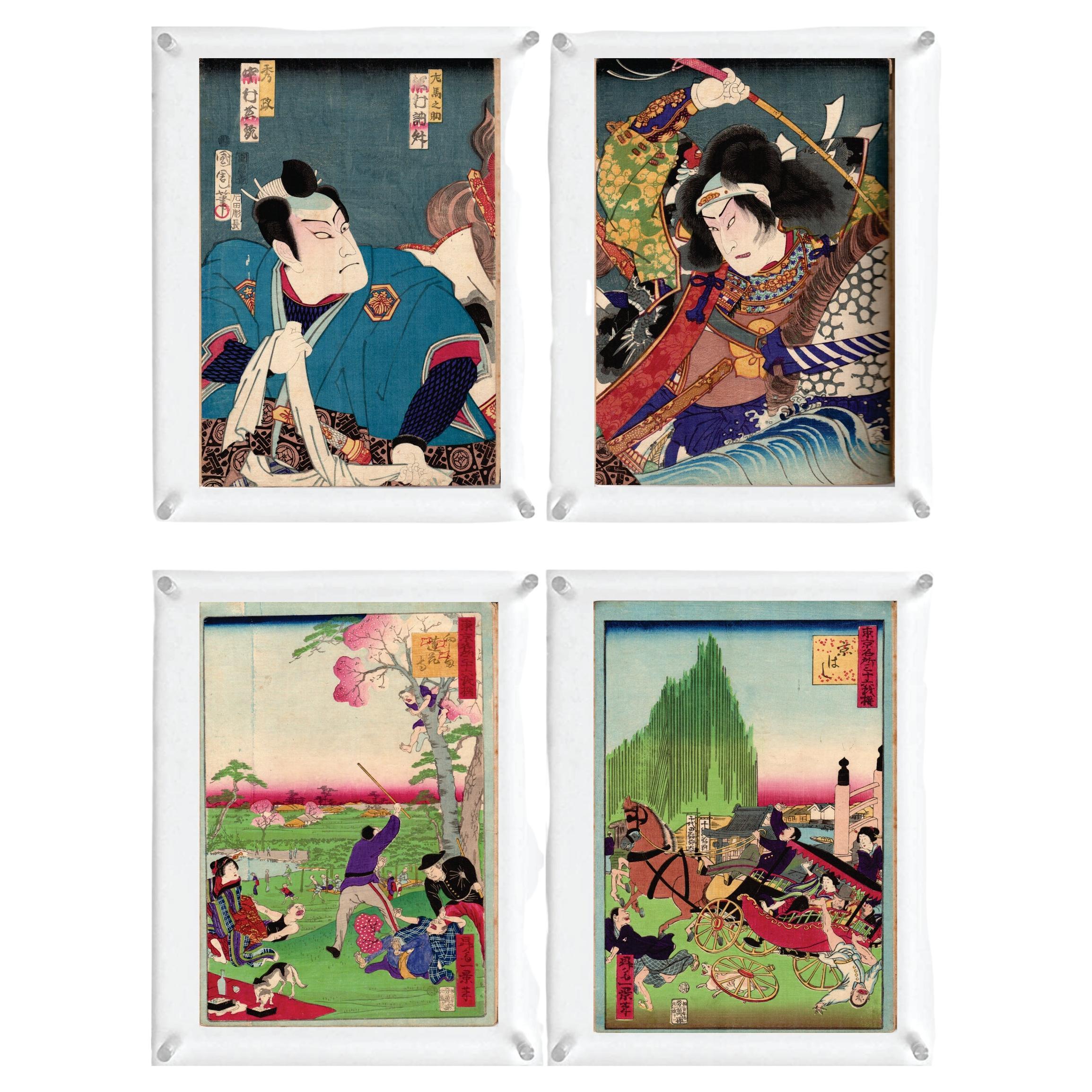
Want more images or videos?
Request additional images or videos from the seller
1 of 10
Antique Japanese Actor Portraits: Four Kabuki Figures in Edo-Period Style, 1882
$288.24
£213.51
€240
CA$394.38
A$429.12
CHF 227.21
MX$5,162.60
NOK 2,885.11
SEK 2,639.67
DKK 1,829
About the Item
Title:
Antique Japanese Actor Portraits: Four Kabuki Figures in Edo-Period Style
Description:
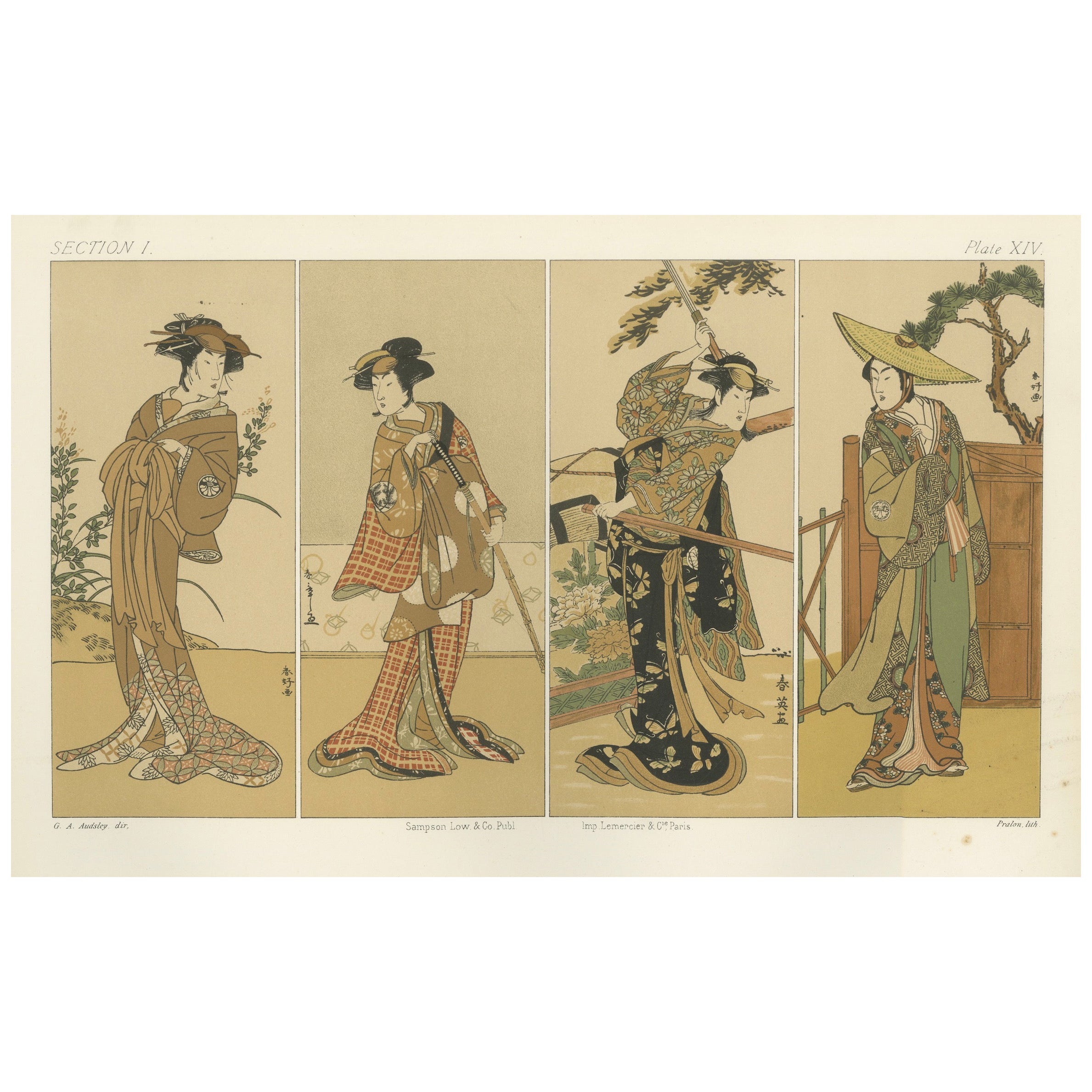
This 19th-century Japanese print features four dignified male figures, each dressed in elaborate Edo-period attire and rendered with striking clarity and grace. Published by Sampson Low
Co. and lithographed in Paris by Imp. Lemercier
Cie, the work was directed by G. A. Audsley, a noted champion of Japanese art in the West. These men are likely kabuki actors depicted in various roles, reflecting the rich tradition of theater in Edo-period Japan.
The prints capture the elegance and power of kabuki performance, where actors wore sumptuously patterned kimono that conveyed status and character. Each figure is carefully posed against a minimalist background, which allows the subtle details of their costumes to shine: geometric motifs, floral patterns, and luxurious fabrics that symbolize refinement and cultural sophistication. These garments not only highlight the wealth and social standing of the figures but also communicate layers of meaning through pattern and color.
The restrained palette of muted greens, golds, and deep blacks lends a timeless quality to the prints, while the distinctive hairstyles and facial expressions suggest the theatrical intensity of kabuki drama. Whether wielding a staff, holding a container, or standing in quiet contemplation, these figures offer a glimpse into the world of Edo-period performance, where art and life seamlessly intertwined.
Collectors of Japanese art or those interested in the history of kabuki theater will find this print a striking addition to their collection, offering a window into the rich tapestry of Edo cultural life.
The connection between kabuki theater and the vivid visual language of these prints:
Kabuki, an iconic form of Japanese theater that emerged in the early 17th century, is renowned for its stylized performances, elaborate costumes, and powerful storytelling. It played a key role in Edo-period entertainment, and its themes—ranging from historical epics to romantic tales and supernatural legends—reflected the values, anxieties, and dreams of the time.
Actors in kabuki performances were often depicted in woodblock prints known as yakusha-e (actor pictures). These prints, like the one you’re listing, allowed fans and collectors to bring home the larger-than-life presence of their favorite performers. The images captured not only the appearance of the actors but also the essence of the roles they played, immortalizing moments of intense drama and elegant beauty.
The clothing of these figures carries significant symbolic weight. The bold geometric patterns and luxurious fabrics, seen in the prints, were part of the elaborate stage presence that set kabuki apart from other theatrical forms. Specific patterns, such as tortoiseshell, cranes, or pine trees, signified longevity, strength, and auspicious fortune—qualities highly prized in Edo society. Even the manner in which a kimono was worn or tied could indicate the character’s social class, age, or moral standing.
These four dignified figures also illustrate the subtle artistry of the kabuki actor—conveying complex emotions through controlled posture, refined gesture, and expressive facial features. In the prints, their calm intensity and careful staging mirror the poise and ritual of kabuki performances, blending the ephemeral nature of theater with the enduring artistry of printmaking.
By adding this context to your listing, you not only highlight the refined craftsmanship of the piece but also its deep cultural resonance, offering potential buyers an opportunity to own a fragment of Japan’s rich theatrical heritage.
Condition Report:
This print is in very good condition, with only minor foxing and slight toning at the margins. The colors remain rich and the linework crisp, preserving the refined artistry of this piece.
Framing Tips:
A simple dark wood or black lacquer frame with a white or cream mat will complement the elegant color scheme and focus attention on the intricate patterns of the kimono and the dignified bearing of these figures.
- Dimensions:Height: 10.83 in (27.5 cm)Width: 15.75 in (40 cm)Depth: 0.01 in (0.2 mm)
- Materials and Techniques:
- Period:
- Date of Manufacture:circa 1882
- Condition:This print is in very good condition, with only minor foxing and slight toning at the margins. The colors remain rich and the linework crisp, preserving the refined artistry of this piece.
- Seller Location:Langweer, NL
- Reference Number:Seller: BG-14034-1-201stDibs: LU3054345212162
About the Seller
5.0
Recognized Seller
These prestigious sellers are industry leaders and represent the highest echelon for item quality and design.
Platinum Seller
Premium sellers with a 4.7+ rating and 24-hour response times
Established in 2009
1stDibs seller since 2017
2,816 sales on 1stDibs
Typical response time: 1 hour
- ShippingRetrieving quote...Shipping from: Langweer, Netherlands
- Return Policy
More From This Seller
View AllAntique Japanese Costume Print: Four Elegant Women in Edo-Period Kimono, 1882
Located in Langweer, NL
Antique Japanese Costume Print: Four Elegant Women in Edo-Period Kimono
This refined 19th-century Japanese print features four beautifully dressed women in elegant kimono, each capt...
Category
Antique 1880s Prints
Materials
Paper
Japanese Geisha Portrait Print: Vibrant Kimono and Serene Poise, c.1882
Located in Langweer, NL
Title:
Japanese Geisha Portrait Print: Vibrant Kimono and Serene Poise
Description:
This captivating Japanese print is a masterful example of traditional artistry, depicting a seren...
Category
Antique 1880s Prints
Materials
Paper
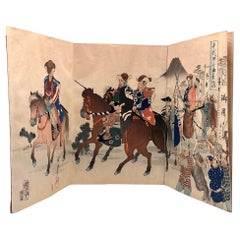
Chikanobu Triptych – Shogun Returns from the Hunt in Koganehara, c.1897
Located in Langweer, NL
Chikanobu Triptych – Shogun Returns from the Hunt in Koganehara, c.1897
This powerful and dynamic triptych by Toyohara Chikanobu (1838–1912) depicts the Shogun and his retinue returning from a falconry hunt across the vast grasslands of Koganehara. The print is part of the celebrated Meiji-era series Chiyoda no Omote (Outer Palace of Chiyoda), which portrayed ceremonial and military scenes from the life of the Tokugawa shogunate. This series blends historical reverence with a modern Meiji sensibility, celebrating Japan’s warrior heritage at a time of rapid transformation.
Rendered in rich color and vivid linework, the triptych shows a noble procession in motion: the mounted Shogun at center turns back toward the viewer, while falconers and warriors in elaborate dress surround him. Attendants carry game and falconry equipment, and a dense forest line marks the horizon behind them. The sweeping composition emphasizes both movement and status, with the central figure visually dominant and placed against a pale, open sky.
The triptych is signed by Chikanobu with the toshidama cartouche and published by Fukuda Hatsujirō around 1897. Chikanobu, one of the last great ukiyo-e masters, was celebrated for his ability to capture imperial ceremony, samurai culture, and the feminine elegance of the court — often in triptych format for dramatic impact.
While the work shows some age-related signs, it retains strong visual appeal and is a compelling historical document of samurai-era tradition as imagined through Meiji eyes.
Condition report: Good overall condition considering age. The three sheets are mounted together on old Japanese paper backing (verso), which is loosening slightly along the joins. Light overall toning and minor wrinkling across the panels. Colors remain well preserved with strong impression and no major losses or tears. Margins present, minor handling wear visible. A stable and attractive display piece.
Framing tips: We recommend float mounting the full triptych in a custom horizontal frame, allowing the slight backing and joins to remain visible as part of its historical charm. Use a dark walnut or black lacquer frame with an off-white or light beige acid-free mat. Proper archival mounting can help preserve the integrity of the backing while enhancing its display quality.
Technique: Woodblock print (ōban triptych)
Maker: Toyohara Chikanobu, Japan, c.1897
Publisher: Fukuda Hatsujirō
Keywords:
Chikanobu triptych, samurai falconry print, Japanese woodblock print, Meiji print, Chiyoda no Omote, shogun artwork, Koganehara, antique Japanese triptych...
Category
Antique 1890s Japanese Prints
Materials
Paper
Antique Lithograph: Kyoto Geisha with Traditional Instruments, Late 19th Century
Located in Langweer, NL
This is an antique lithograph portraying a Japanese woman, likely a geisha or maiko (apprentice geisha), holding traditional Japanese musical instruments, including a drum (possibly ...
Category
Antique Late 19th Century Prints
Materials
Paper
$307 Sale Price
20% Off
Exceptional Rare Lithograph of Kōnu Genzou from Kyoto in Japan, circa 1880
Located in Langweer, NL
This is an original antique lithograph of a Japanese woman, likely from the Meiji period (1868-1912), as suggested by the style of the kimono and hair accessories. The print shows a ...
Category
Antique 1880s Prints
Materials
Paper
$307 Sale Price
20% Off
Antique Japanese Folklore Print: Six Mythical Scenes in Rich Color, 19th Century
Located in Langweer, NL
Antique Japanese Folklore Print: Six Mythical Scenes in Rich Color, 19th Century
This captivating 19th-century Japanese print offers a vibrant tapestry of six distinct scenes from J...
Category
Antique 1880s Prints
Materials
Paper
You May Also Like
Toyohara Kunichika Japanese Triptych Woodblock Print of Kabuki Theater Actors
By Toyohara Kunichika
Located in Studio City, CA
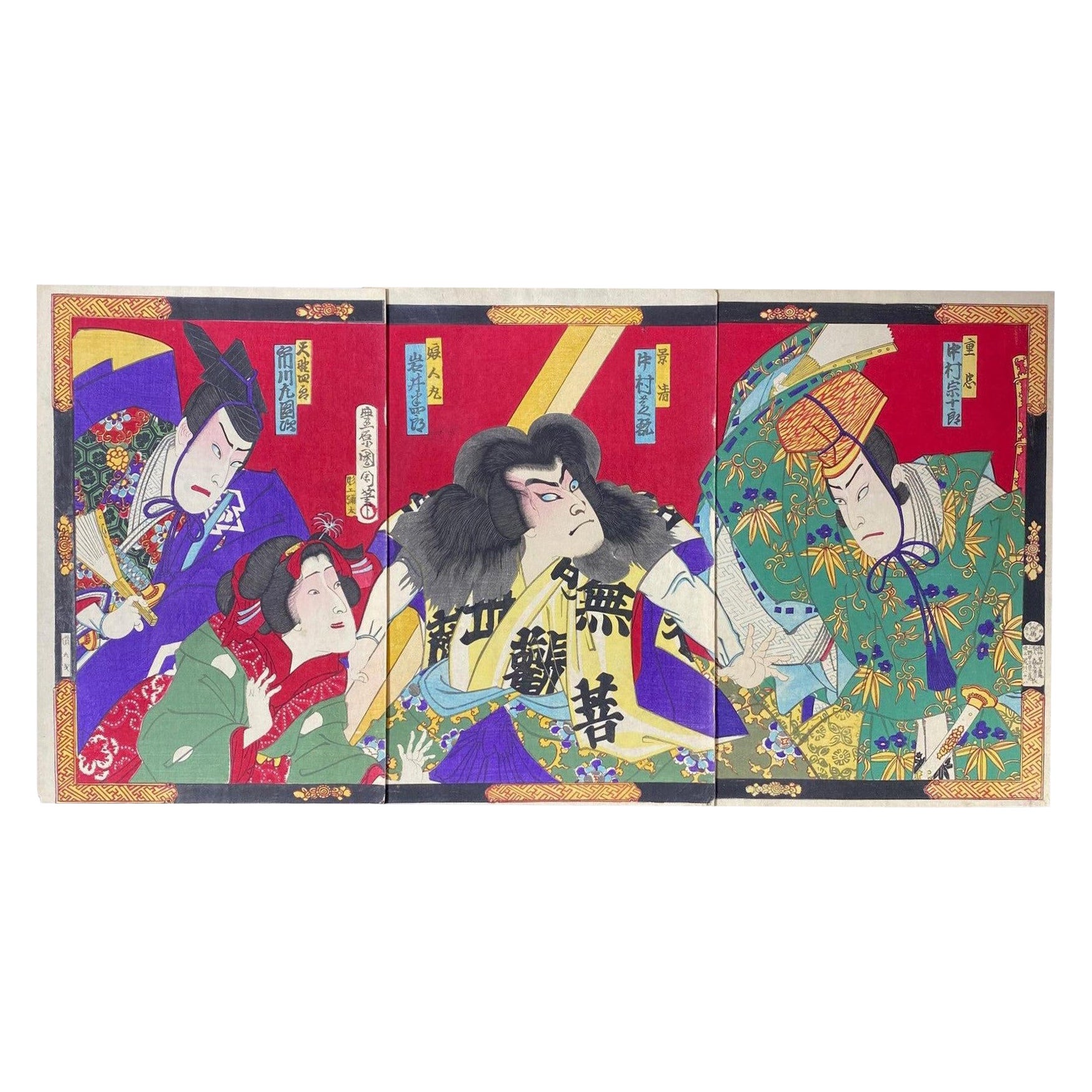
A wonderfully composed, beautifully, and richly colored triptych woodblock print by famed Japanese artist Toyohara Kunichika featuring four dramatic and quite intense Kabuki theatre ...
Category
Early 20th Century Japanese Meiji Prints
Materials
Paper
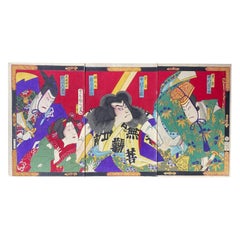
Framed Japanese Kabuki Triptych Print with Samurai and Courtesan Actors
Located in Yonkers, NY
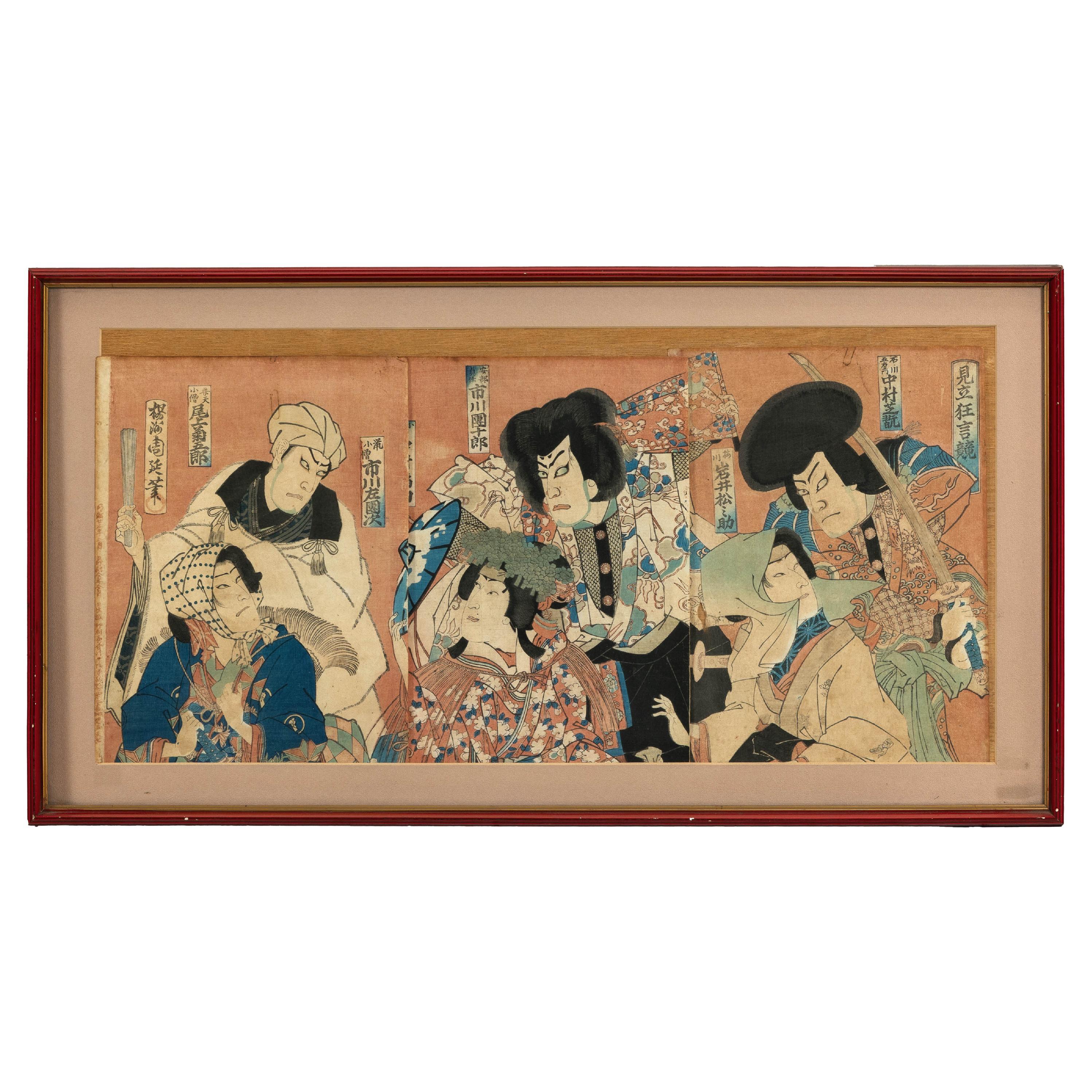
A Japanese ukiyo-e triptych, this framed Kabuki theater woodblock print captures the energy and drama of Edo-period performance. The scene unfolds across three panels, each meticulou...
Category
Antique Late 19th Century Japanese Meiji Prints
Materials
Glass, Wood, Paint, Paper
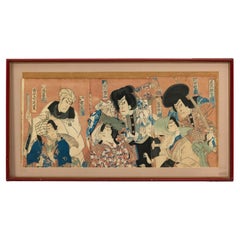
19th Century Japanese Woodblock Framed Triptych Scene Of A Kabuki Performance
Located in London, GB
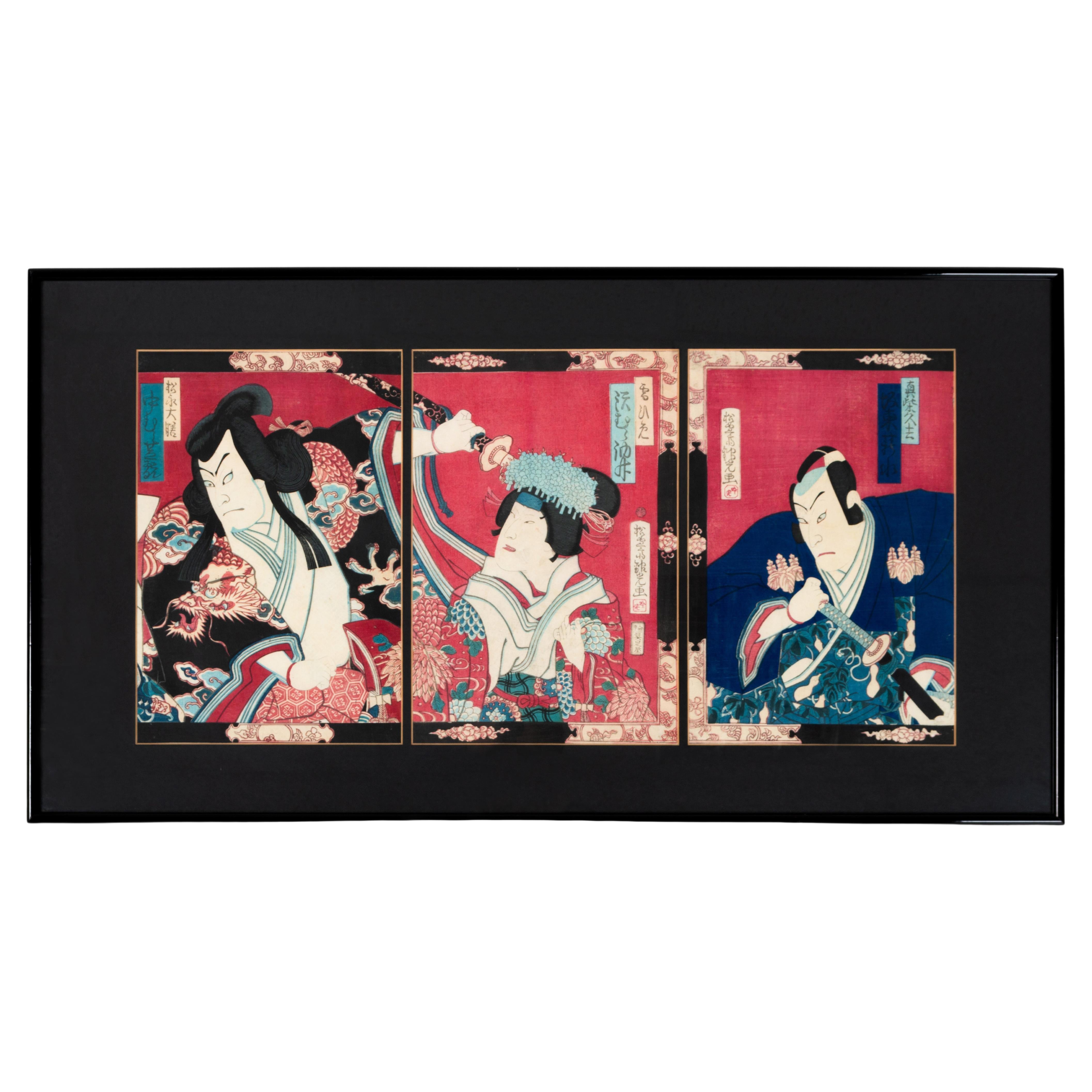
Japanese Woodblock Triptych Scene Of A Kabuki Theatrical Performance
Toyohara Kunichika (1835 - 1900)
Framed, each woodblock print: 23 ...
Category
Antique 19th Century Japanese Prints
Materials
Paper
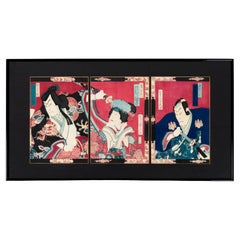
Framed Japanese 19th Century Woodblock Print of Kabuki Actors Toyokuni III
Located in London, GB
Japanese 19th Century Woodblock Print of Kabuki Actors Toyokuni III
Original Woodcut by Toyokuni III (1786 - 1864)
Of the Kabuki actors Bando Hikosab...
Category
Antique 19th Century Japanese Prints
Materials
Paper
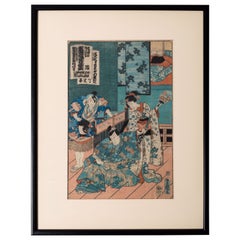
4 Japanese Woodblock Prints
Double-Side
, Toyohara Kunichika
Shosai Ikkei#2.3
Located in Norton, MA
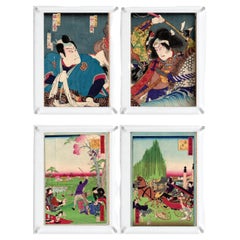
Four Japanese Woodblock Prints (Double-Side) by Toyohara Kunichika (Diptych), and Shosai Ikkei - from Thirty-Six Comics of the Famous Places of Tokyo.
Note: These are only two pie...
Category
Antique Mid-19th Century Japanese Prints
Materials
Paper
4 Japanese Woodblock Prints
Double-Side
, Toyohara Kunichika
Shosai Ikkei #2
Located in Norton, MA
4 Japanese Woodblock Prints (Double-Side) by Toyohara Kunichika (Diptych), and Shosai Ikkei - from Thirty-Six Comics of the Famous Places of Tokyo.
Note: These are only two pieces o...
Category
Antique Mid-19th Century Japanese Prints
Materials
Paper
More Ways To Browse
Antique Imperial Furniture Table
Antique Slate Clock Clocks
Antique Tv Stand
Apple And Pear Glass
Art Deco Bulldog
Art Deco Heron
Art Glass Seal
Asian Carved God
Asian Fabric Panels
Asian Painted Drawers
Asian Stone Head
Asian Wall Plates
Asian Warrior Sculpture
Atomic Orange
Aubock Tray
Audoux Et Minet
Automata
Bakelite Marbled