1 of 1
Botanical Fruit: Lemons
$1,800List Price
About the Item
Oder Grunliche Beschreibung der Elden
Citronat, Citronen,und Pomerantzen Fruchte.
Drawn by Decker and Volckamer. Engraved by Glotsch, Kenckel, Krieger, Montalegre, Pfan and Steinberger. Engraving with later hand color.
Nuremberg, 1708. 115 plates Vol I, 132 plates Vol II ( 1714).
Of all fruit-bearing trees, orange and lemon trees were the most attractive to seventeenth and eighteenth century botanists, gardeners, art lovers and painters. Orangeries were tremendously popular--almost every residence, palace, botanical garden and university possessed one--and, exotic and sweet-smelling, they became a favorite area for strolling, painting, and contemplation. Versailles, Fontainebleau and Meudon favored orange, lemon, pomegranate and jasmine grown in pots or wooden tubs placed around their terraces and flower beds. Rare plants and fruits cultivated in conservatories were the pride of their owners and gardeners.
The marvels of these gardens were often recorded to immortalize the successes of the collections. Volckamer, who was a wealthy Nuremberg merchant, had a fine orangery, and engaged a variety of artists and engravers, among the latter being Paul Dedker, to execute his plates, which were uncolored and later finished by hand. The plates are most interesting and unique as the fruit is depicted on a large scale at the top of the plate before a background of a view of a garden, building, landscape or village. Some views of small town gardens show very clearly details of the formal gardens and were valued highly for this information alone. Clearly influenced by Ferrarius, Italy, 1646, the fruit are tied up with ribbons as though for country dances through the streets. Drawn in gouache and watercolor, sometimes on a leafy branch, the ribbons bearing the name of each species were added in the final engravings. Generally the fruit was shown whole or cut in two horizontally to highlight its flesh and seeds. These species, their size, shape, color, frangrance and taste, made them unique and exotic to a world hungry for information of foreign lands. Truly an extraordinary work, its value is tri-fold: the charming landscapes and architecture; the fruits themselves; and, most notably, their eccentric presentation.
Reference: Great FlowerBooks 1700-1900. Sitwell. Atlantic Monthly Press. NY, 1990.
Flower Fruit Prints. Dunthorne. Da Capo Press. Washington, D.C., 1938.
- Creator:Johann Christoph Volkamer (Artist)
- Dimensions:Height: 21 in (53.34 cm)Width: 17 in (43.18 cm)
- Materials and Techniques:Glazed
- Place of Origin:
- Period:
- Date of Manufacture:1708
- Condition:
- Seller Location:Florham Park, NJ
- Reference Number:Seller: 7.30.141stDibs: LU85711235540
Authenticity Guarantee
In the unlikely event there’s an issue with an item’s authenticity, contact us within 1 year for a full refund. DetailsMoney-Back Guarantee
If your item is not as described, is damaged in transit, or does not arrive, contact us within 7 days for a full refund. Details24-Hour Cancellation
You have a 24-hour grace period in which to reconsider your purchase, with no questions asked.Vetted Professional Sellers
Our world-class sellers must adhere to strict standards for service and quality, maintaining the integrity of our listings.Price-Match Guarantee
If you find that a seller listed the same item for a lower price elsewhere, we’ll match it.Trusted Global Delivery
Our best-in-class carrier network provides specialized shipping options worldwide, including custom delivery.You May Also Like
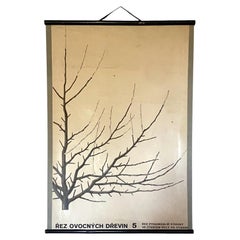
Botanical Fruit tree pruning school poster, Czechoslovakia 1960s
Located in Firenze, IT
Pruning fruit trees didactic board
Czechoslovakia 1960s
Paper
100 x 70 cm
Conditions: good consistent with age and use
Category
Vintage 1960s Czech Mid-Century Modern Prints
Materials
Paper
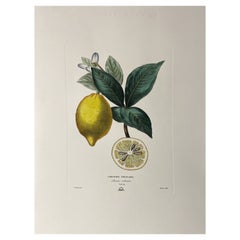
Italian Contemporary Hand Painted Botanical Green Yellow Print "Lemon" 2 of 2
Located in Scandicci, Florence
Print from the Collection Botanique Vegetables representing a big Lemon Citrus enriched with green and yellow colors and nuances of watercolor. This print is paired with Lemon Citrus...
Category
21st Century and Contemporary Italian Decorative Art
Materials
Paper
$137 / item
H 18.12 in W 12.6 in D 0.2 in
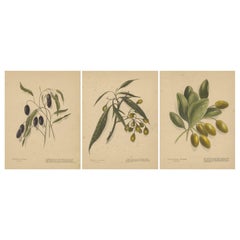
New Zealand Botanical Fruit Studies – Set of Three Lithographs, 1890
Located in Langweer, NL
New Zealand Botanical Fruit Studies – Set of Three Lithographs, 1890
A captivating trio of hand-colored lithographs from the rare 1890 publication New Zealand Berries, this set show...
Category
Antique Late 19th Century New Zealand Prints
Materials
Paper
$645 / set
H 12.29 in W 9.57 in D 0.01 in
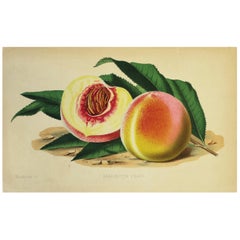
European Fruit Peach Botanical Wall Art Chromo, circa 19th Century
Located in New York, NY
A beautiful original "Barrington Peach" botanical color chromo print (aka, Chromolithography), by artist: J L Macfarland del, circa 19th century, Europe. Item is original, not a repr...
Category
Antique Late 19th Century French Prints
Materials
Paper
European Exotic Fruit Botanical Wall Art Litho, circa 19th Century
Located in New York, NY
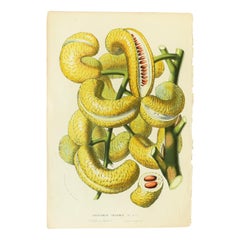
A very beautiful original Belgian exotic botanical vibrant off-set lithograph, 'Decaisnea Insignis', by artis Horto Van Houtteano, circa 19th century, Belgium. 'Decaisnea Insignis' i...
Category
Antique Late 19th Century Belgian Prints
Materials
Paper
European Botanical White Apple Fruit Wall Art Chromo, 19th Century
Located in New York, NY
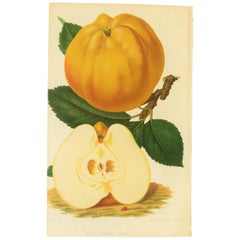
A beautiful original Belgian exotic 'White Calville Apple' botanical color chromo print (aka, Chromolithography), by artist de G. Severeyns, circa 19th century, Belgium. Item is orig...
Category
Antique Late 19th Century Belgian Prints
Materials
Paper
2 Large Botanical Prints Fruit Stem Indian Fig
Crown Imperial Fritillary 46"
Located in Dayton, OH
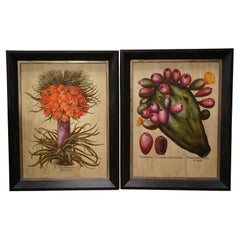
Pair of very large and impressive colored botanical prints on canvas depicting "Fruit and Stem of the Indian Fig" and "Multiflorous Crown - Imperial Fritillary," after originals by 1...
Category
Late 20th Century Prints
Materials
Canvas
$822 Sale Price / set
30% Off
H 46 in W 36 in D 2.75 in
Vintage Botanical Fruit Prints of Apples, Pears and Peaches, Engravings of c1820
Located in Langweer, NL
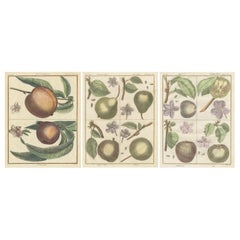
Antique Fruit Prints by Poiteau and Turpin, Hand-Colored Botanical Engravings
Description:
This exquisite compilation features three antique bot...
Category
Antique 1820s Prints
Materials
Paper
$274
H 10.44 in W 8.47 in D 0.01 in
Exquisite Botanical Illustrations from Curtis’s Botanical Magazine (1847)
Located in Langweer, NL
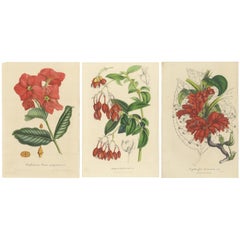
These beautiful hand-colored botanical illustrations, drawn and lithographed by the renowned artist Walter Hood Fitch, were featured in Sir William Jackson Hooker's *"Curtis's Botanical Magazine,"* published in London in 1847. Fitch was one of the most prolific and skilled botanical illustrators of the 19th century, known for his ability to capture the intricate details and vibrant hues of the plants he depicted.
Sir William Jackson Hooker, a famous British botanist and the director of the Royal Botanic Gardens, Kew, commissioned these illustrations as part of his work to document newly discovered plants from around the world. The *Curtis’s Botanical Magazine* has been published since 1787 and remains one of the longest-running botanical periodicals.
Detailed Descriptions of Each Plant
#### 1. **Dipladenia Rosa-campestris** (*Hortul. ex Veitch*)
- **English Name**: Rose Dipladenia
- **Description**: This illustration showcases *Dipladenia rosa-campestris*, a striking flowering plant known for its showy pink to deep red trumpet-shaped flowers. Native to tropical regions of South America, particularly Brazil, *Dipladenia* belongs to the family Apocynaceae and is prized in horticulture for its vibrant blooms and ability to climb. Fitch's illustration emphasizes the waxy leaves and the vivid color of the petals, bringing the plant to life on the page.
#### 2. **Begonia fuchsioides** (*Hook.*)
- **English Name**: Fuchsia-flowered Begonia
- **Description**: The *Begonia fuchsioides* is depicted with its characteristic red, pendulous flowers, which closely resemble the blooms of fuchsia plants. This species of Begonia is native to tropical regions and is popular for its delicate, bell-shaped flowers and glossy leaves. Fitch’s attention to the arrangement of the leaves and the contrast between the flowers' vibrant red and the soft green leaves provides a lifelike representation of this exotic plant.
#### 3. **Agalmyla staminea** (*Blume*)
- **English Name**: Staminate Agalmyla
- **Description**: This illustration captures the unique red tubular flowers of *Agalmyla staminea*, a plant native to Southeast Asia. The species is part of the Gesneriaceae family and is known for its bright, showy flowers that grow in dense clusters. Fitch’s careful rendering of the plant’s leaves and the intricate veining, along with the vibrant red flowers, highlights his talent for bringing the botanical subject to life with both scientific accuracy and artistic flair.
### About the Makers
#### **Walter Hood Fitch** (Artist and Lithographer)
Walter Hood Fitch (1817–1892) was one of the most influential botanical artists of the 19th century, working primarily with Sir William Hooker and later his son, Joseph Dalton Hooker, at Kew Gardens. He produced thousands of illustrations for various botanical publications, including *Curtis’s Botanical Magazine*, where he was responsible for the majority of its plates from 1834 to 1877. Fitch’s mastery of lithography allowed him to create richly detailed and accurate depictions of plants, with a particular talent for illustrating both the botanical structure and the vibrant colors of flowers.
#### **Sir William Jackson Hooker** (Director and Editor)
Sir William Jackson Hooker (1785–1865) was a prominent British botanist and the director of the Royal Botanic Gardens, Kew. Under his leadership, Kew Gardens expanded its collection of plants from around the world, and Hooker was instrumental in promoting the scientific study and illustration of these species. As the editor of *Curtis’s Botanical Magazine*, Hooker collaborated with Fitch to document and share the beauty and diversity of plants with the scientific community and the public.
### The Lithographic Technique
Lithography, particularly chromolithography, was a crucial innovation in botanical illustration. Fitch was skilled in the traditional method of lithography, where an image was drawn onto a stone plate with a greasy substance and then inked for printing. Hand-coloring was often applied afterward to bring the prints to life, as seen in these illustrations. This method allowed for highly detailed, accurate representations of plants and their botanical features, making it invaluable for both scientific study and aesthetic appreciation.
### Conclusion
These prints from *Curtis’s Botanical Magazine* reflect the height of botanical art in the mid-19th century. The combination of Walter Fitch...
Category
Antique 1840s Prints
Materials
Paper
$411 Sale Price / set
20% Off
H 9.53 in W 6.46 in D 0 in
Botanical Flower Engravings from The Botanic Garden, London 1836
Located in Langweer, NL
Pair of Botanical Engravings from *The Botanic Garden* by B. Maund, London c.1836
A charming pair of original hand-colored botanical engravings from *The Botanic Garden* by Benjamin...
Category
Antique 1830s British Prints
Materials
Paper
$406 / set
H 9.45 in W 7.09 in D 0.01 in
Still Thinking About These?
All Recently ViewedMore Ways To Browse
Lemon Botanical Print
Fruit Press
Volkamer Prints
Vintage Fichu
Vintage Vargas Prints
Antique Cat Prints
Francesco Bartolozzi
J Harrison
Neoclassical Architectural Prints
Antique Architecture Book
Antique Fish Engravings
Antique Furniture Lebanon
Antique Hospital Furniture
Antique Nautical Prints
Antique Rabbit Print
Antique Reptile Print
Antique Whale Print
Black Mountain College