Items Similar to Botanical Marvels of India: Bamboo and Durian in De Bry
s 1601 Copper Engraving
Want more images or videos?
Request additional images or videos from the seller
1 of 10
Botanical Marvels of India: Bamboo and Durian in De Bry
s 1601 Copper Engraving
$396.33
$660.5540% Off
£293.58
£489.3040% Off
€330
€55040% Off
CA$542.28
CA$903.8040% Off
A$590.04
A$983.4040% Off
CHF 312.42
CHF 520.7040% Off
MX$7,098.58
MX$11,830.9740% Off
NOK 3,967.02
NOK 6,611.7040% Off
SEK 3,629.55
SEK 6,049.2540% Off
DKK 2,514.87
DKK 4,191.4540% Off
About the Item
This 1601 engraving by Theodore de Bry, a master engraver and publisher of the late Renaissance period, depicts the flora of India with a remarkable degree of detail and artistry. The print is titled "DE ALGA SEV ARVNDINE INDICA, BAMBVS DICTA, ITEM DE arbore radicosa:
tandem de arbore Duryeons," which translates to "About the Seaweed or Reed of India, called Bamboo, also about the root tree: and finally about the Duryeons tree."
In the illustration, we see a lush depiction of a bamboo grove, with its characteristic tall and slender form, showcasing the plant's extensive root system and dense foliage. To the left, there is a tree bearing large, round fruits, likely the durian, labeled here as "Duryeons." The durian is known for its distinctive size, unique aroma, and spiky husk. The image captures both the exotic appeal and the utilitarian value of these plants, which were of great interest to European audiences unfamiliar with such tropical vegetation.
The visual composition conveys the tropical abundance and biodiversity of the Indian subcontinent. De Bry's engravings like this were highly sought after in Europe for their exotic subject matter and served to educate and fascinate the European public about the natural wonders of the world beyond their borders. As a historical document, this engraving provides insight into the botanical knowledge and the artistic conventions of the period, making it a valuable piece for both its historical significance and its aesthetic beauty.
De Bry's work is renowned for its attention to detail, and this print is a testament to his ability to capture the essence of exotic lands and their natural abundance. His engravings were among the first visual records to reach Europe from the New World and the East, fueling curiosity and fascination with distant lands. This particular piece is not only a work of art but also a historical document, offering insight into the botanical wealth of India as seen through the eyes of early modern Europeans.
As an original piece from the first edition of Part VII of "Indiae Orientalis," this work is a valuable collector's item, not only for its historical significance but also for its aesthetic beauty and the window it opens onto the perceptions and curiosities of a bygone era. It stands as a testament to the wonder and allure that the flora and fauna of India held for the European mind, and it would serve as a prestigious and conversation-evoking piece for any collection.
The text provided is in Latin. Here is the English translation:
"This palm, or rather nut-bearing tree, is native to India and produces an abundance of fruit. Moreover, the nuts themselves are food, and a very swift drink is also made from them. From this tree, the Indians also obtain the material needed to make the necessary items, such as sails for ships, ropes, and other things of this sort in great quantity; so much so, that life and sustenance for them depend solely on this tree.
This table also expresses the Indian fig, which is consumed throughout the year, and the Indians eat it daily in large amounts.
Finally, the Areca tree is depicted, which bears the Areca fruit, which the Indians, after chewing the leaves of the Betel, consume all day long, as is explained in the history of the fruit itself."
This plate is part of the "Petit Voyages" or "Small Voyages," a series that complemented the "Grands Voyages" or "Great Voyages." Theodore de Bry, a noted engraver and publisher from Liège, Belgium, began these works to illustrate the New World and the Far East based on accounts and drawings from explorers. His works grew to comprise 30 volumes, with later editions published by his children after his death. This particular engraving is a testament to the enduring allure of the unknown that captivated the minds of Europeans during the Age of Exploration.
This piece forms part of a larger corpus of works produced under the supervision of the de Bry family, a lineage of renowned engravers and publishers based in Frankfurt. Initiated by Theodore de Bry in 1590, this series aimed to visually document the epoch of European global exploration and the encounters with the natural world that ensued.
The engraving is a page from Part IV of de Bry's "Petits Voyages," which narrates significant expeditions to the East Indies, including those led by Jan Juygen van Linschoten and Cornelis de Houtman between 1595-97, as well as the journey by Jacob van Neck and Wybrandt van Warwijck in 1598-99. These works were not merely artistic endeavors but also ethnographic records, showcasing indigenous peoples, fauna, flora, and the diverse riches of lands like India, Madagascar, and the East Indies.
Though Theodore de Bry began this ambitious project, it was continued posthumously by his family and later completed by his son-in-law, Matthaus Merian, in 1644. This particular engraving, rich in detail and drama, offers a window into the perilous and wondrous experiences of early explorers, and the ways in which these moments were captured and communicated to a European audience hungry for knowledge of the wider world.
- Dimensions:Height: 11.82 in (30 cm)Width: 7.88 in (20 cm)Depth: 0.01 in (0.2 mm)
- Materials and Techniques:Paper,Engraved
- Place of Origin:
- Period:Early 17th Century
- Date of Manufacture:1601
- Condition:The condition of the print is very good, considering its age of over 400 years. Light brownish toning and some soiling due to handling, mainly around the edges. Flattened wrinkles at the lower part. Please study this image carefully.
- Seller Location:Langweer, NL
- Reference Number:Seller: BG-13596-141stDibs: LU3054337755852
About the Seller
5.0
Recognized Seller
These prestigious sellers are industry leaders and represent the highest echelon for item quality and design.
Platinum Seller
Premium sellers with a 4.7+ rating and 24-hour response times
Established in 2009
1stDibs seller since 2017
2,816 sales on 1stDibs
Typical response time: 1 hour
- ShippingRetrieving quote...Shipping from: Langweer, Netherlands
- Return Policy
More From This Seller
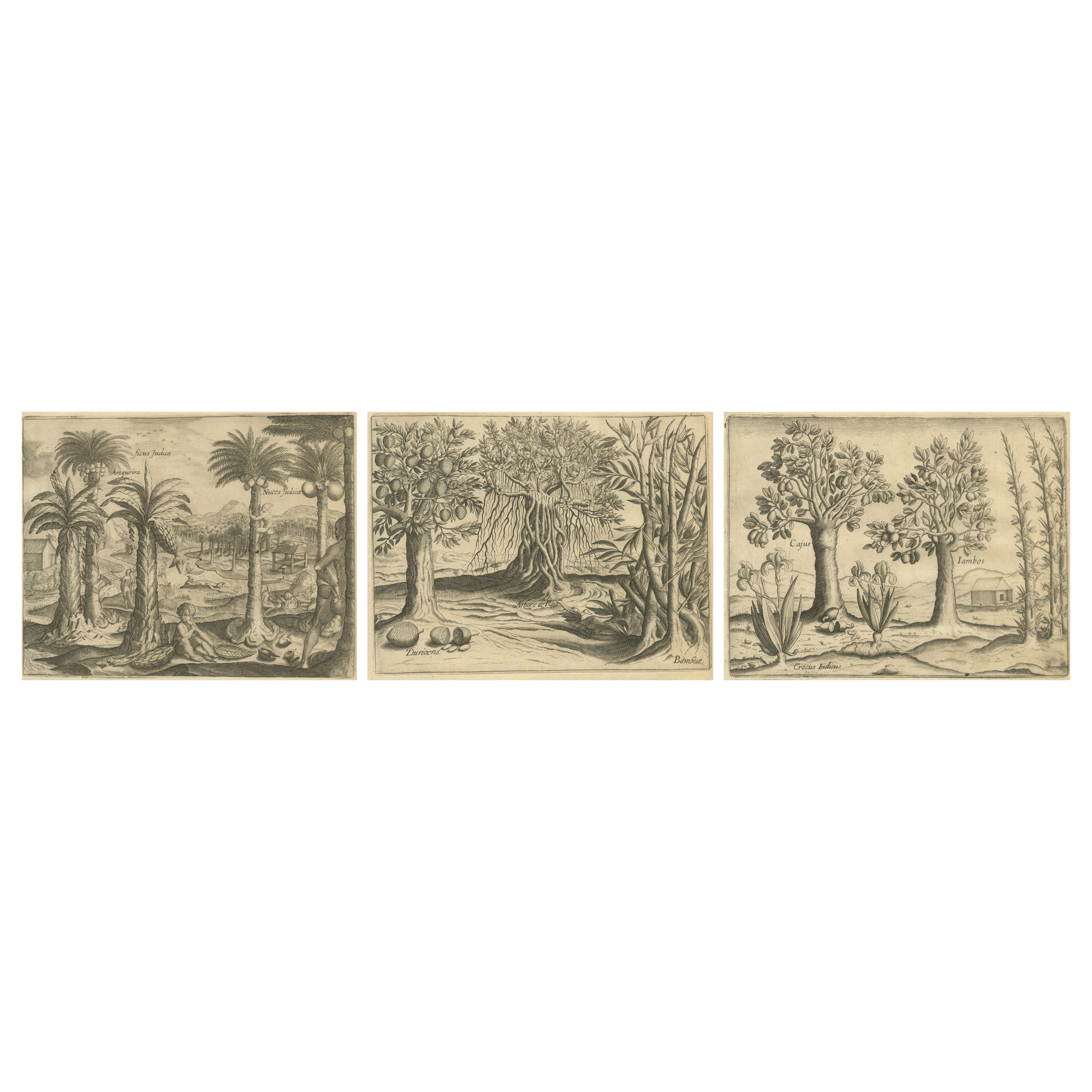
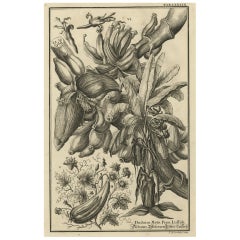
View AllDe Bry Indian Botanical Engravings – Coconut, Bamboo
Cashew Trees, c.1598
Located in Langweer, NL
Set of Three De Bry Botanical Engravings of Indian Trees and Fruits, c.1598 – Coconut, Bamboo, and Cashew
Description:
A rare and beautifully matching set of three original copper e...
Category
Antique 16th Century German Prints
Materials
Paper
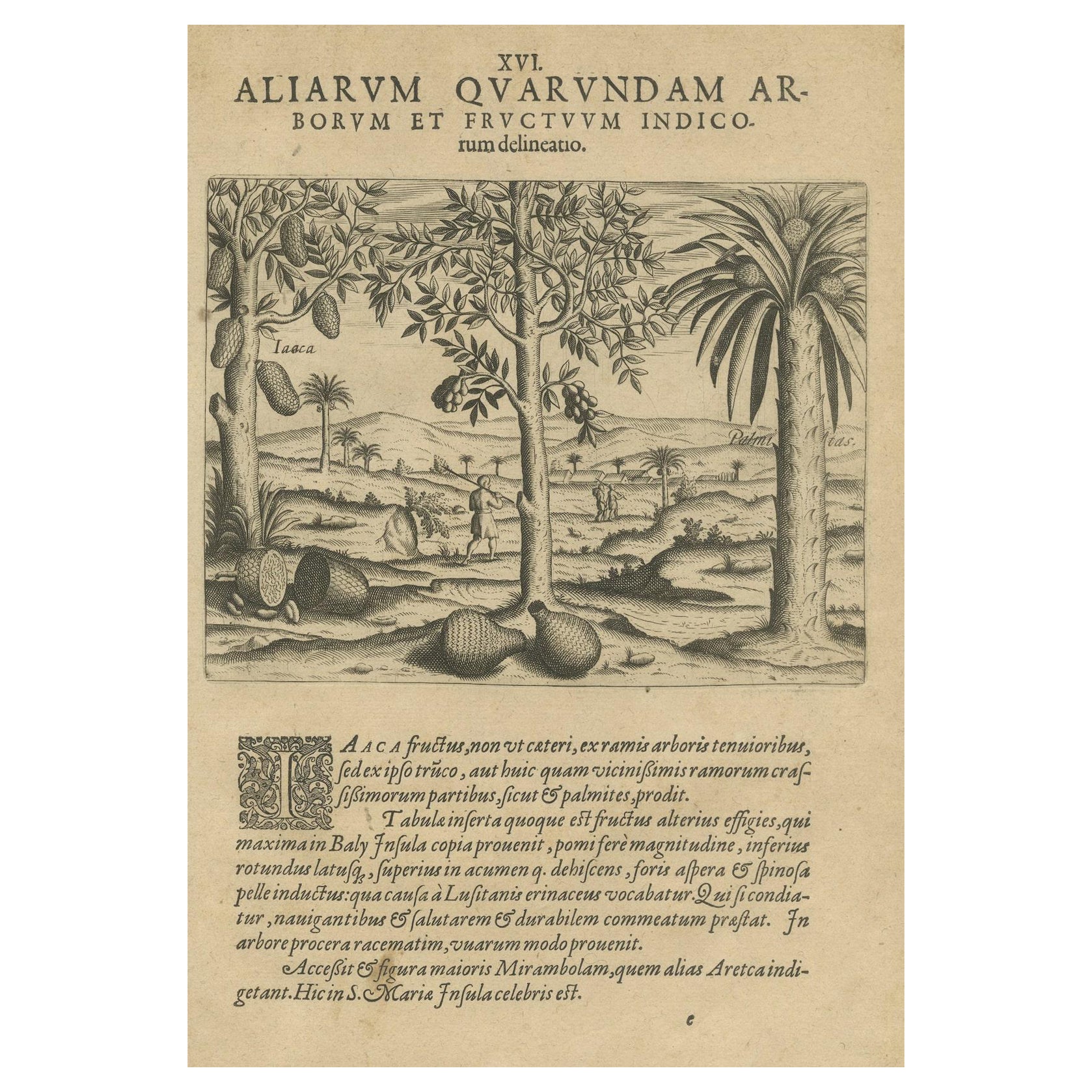
Tropical Abundance: The Jackfruit and Palm Trees in De Bry
s 1601 Engraving
Located in Langweer, NL
"Tropical Abundance: The Jackfruit and Palm Trees in De Bry's 1601 Engraving"
Description: This remarkable 1601 engraving by Theodore de Bry illustrates the lush vegetation of India...
Category
Antique Early 17th Century Dutch Prints
Materials
Paper
$429 Sale Price
35% Off
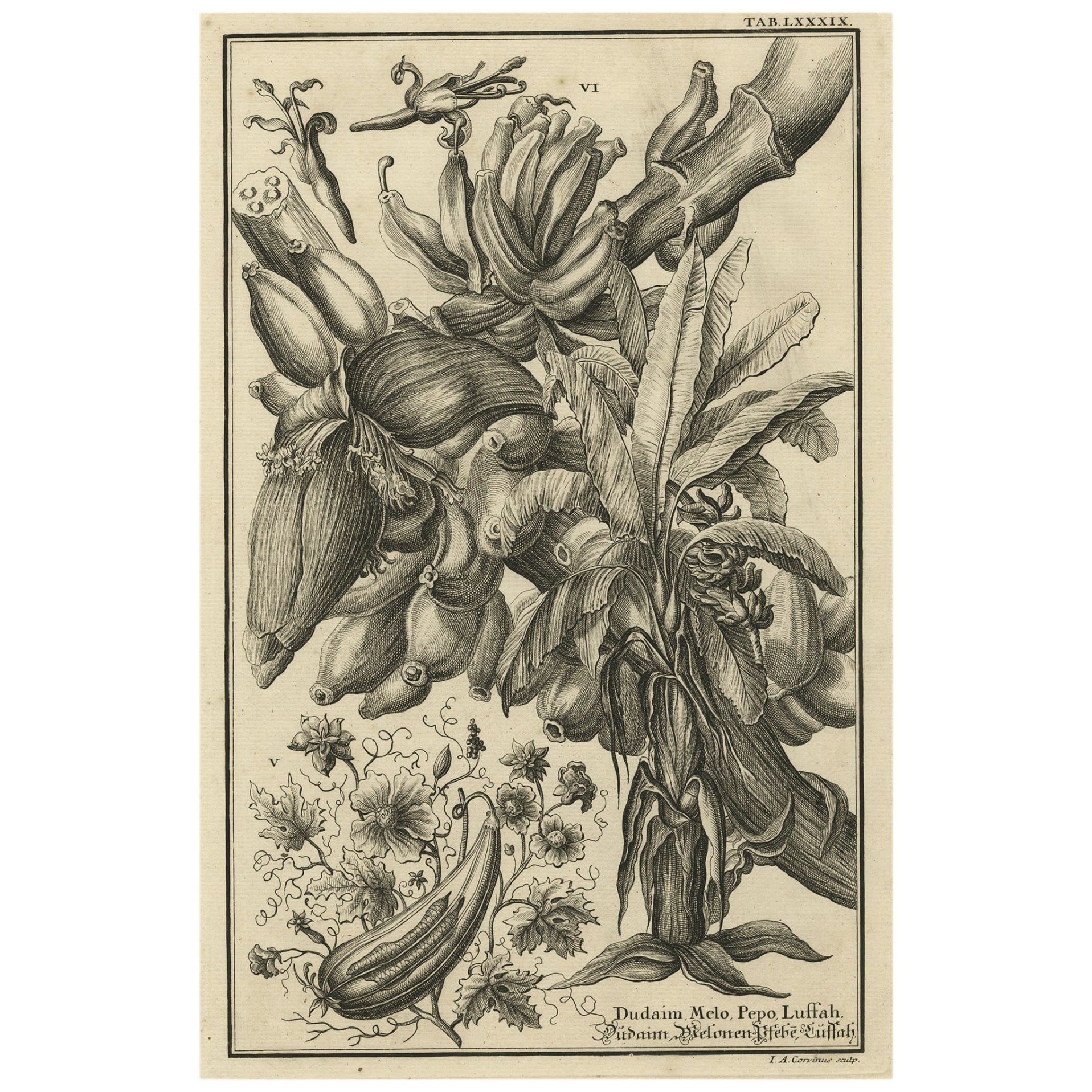
Biblical Botanical Print – Dudaim Melon Engraving by Corvinus, 1731
Located in Langweer, NL
Dudaim Melon Botanical Engraving – Corvinus after Scheuchzer, 1731
This antique botanical print, titled ‘Dudaim, Melo, Pepo, Luffah,’ depicts the Dudaim Melon (Cucumis melo var. dudaim) alongside flowering vines and fruits in striking baroque style. It originates from Johann Jakob Scheuchzer’s monumental work Physica Sacra...
Category
Antique 1730s Swiss Prints
Materials
Paper
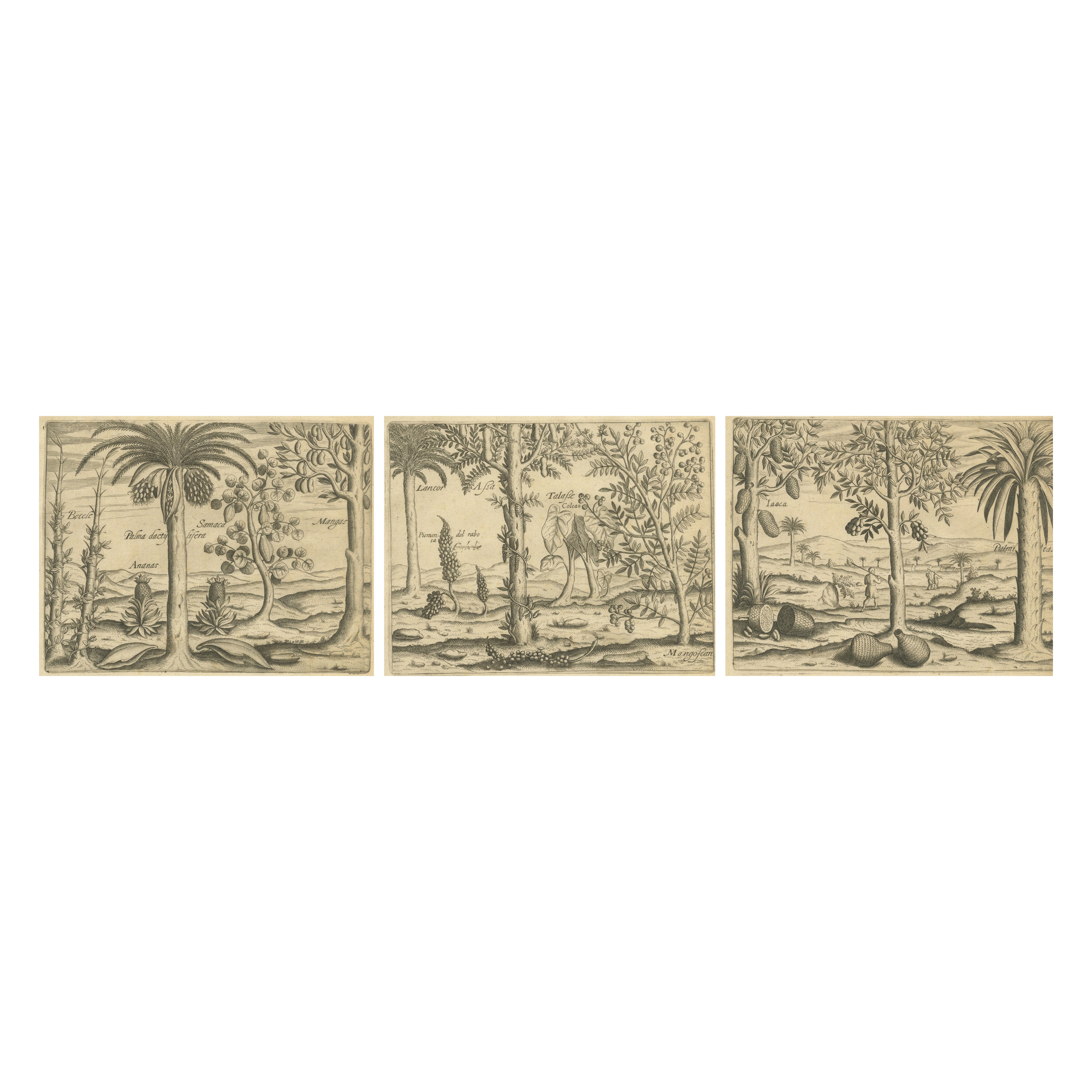
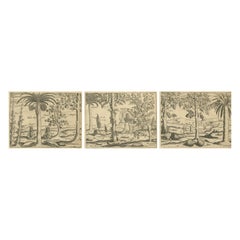
De Bry Botanical Engravings – Pineapple, Mango
Pepper Plants, c.1598
Located in Langweer, NL
Set of Three De Bry Botanical Engravings of Indian Fruits and Spices, c.1598 – Pineapple, Mango, and Pepper
An exceptional trio of original copper engravings from Theodor de Bry’s P...
Category
Antique 16th Century German Prints
Materials
Paper
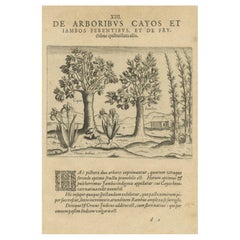
Exotic Flora of the Indies: The Cajus and Jambos Trees Copper Engraved in 1601
Located in Langweer, NL
Title: "Exotic Flora of the Indies: The Cajus and Jambos Trees in De Bry's 1601 Engraving"
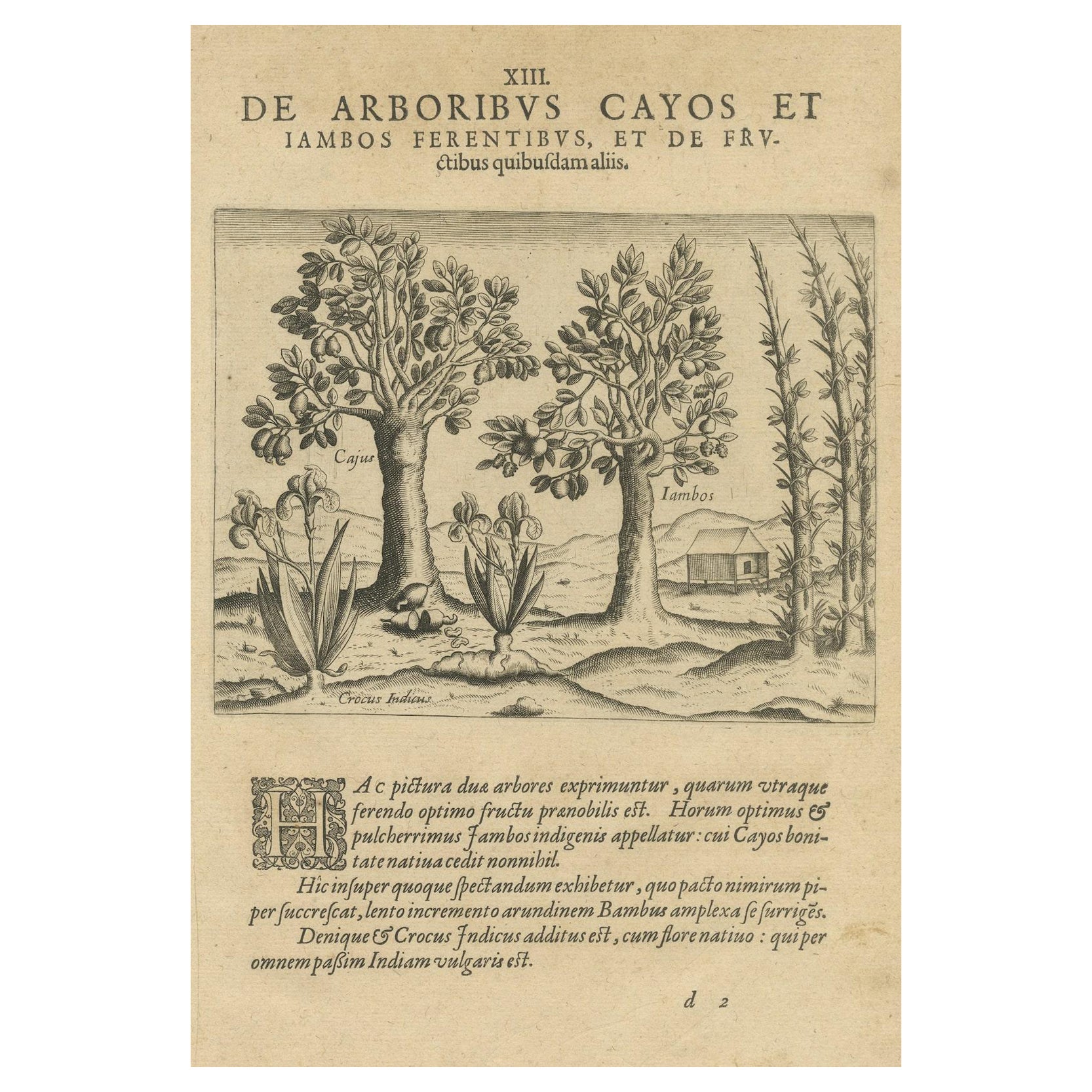
Description: This detailed engraving by Theodore de Bry, dating back to 1601, beautifully illustrates two tropical trees, the Cajus and the Jambos, both renowned for their delectable fruits in the regions of India. The Cajus tree, likely referring to what is known today as the cashew, is depicted with its distinctive fruit that dangles below the swollen pedicel, commonly called the cashew apple. The Jambos tree, with its lush, dense foliage and abundant fruiting, could be related to the rose apple, known for its fragrant, rose-scented fruit.
Included in the scene is a depiction of the Indian Crocus, adding a touch of the diverse understory vegetation of the tropical climate. The image conveys a peaceful coexistence with nature, as indicated by a modest dwelling in the background, suggesting the integration of these trees into the daily lives of the local inhabitants for both nourishment and commerce.
The text is in Latin, and here is the English translation:
"In this picture, two trees are shown, each of which bears the most excellent and noble fruit. The best of these is called the Jambos, native to the region, which the inhabitants call Cayos. On this tree, nothing of note is bestowed.
Moreover, this also represents a marvelous spectacle, in which the slow-growing cane bamboo surrounds itself. Finally, the Indian Crocus has been added, which blooms with its native flower; which is widespread throughout all of India."
De Bry's engravings were pivotal in bringing the natural wealth of the New World and the East Indies to the European imagination. His work not only served as an artistic endeavor but also as an educational tool that fed the European appetite for knowledge about the vast diversity of the world's flora and fauna. This engraving, with its precision and attention to botanical detail, remains a significant historical record of the natural world as seen through the lens of the early modern European...
Category
Antique Early 17th Century Dutch Prints
Materials
Paper
$429 Sale Price
35% Off
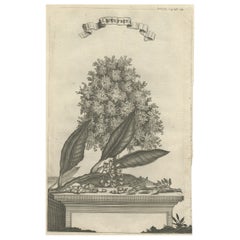
Rare Old Copper Engraving of a Clove Tree in the East Indies, Asia, 1659
Located in Langweer, NL
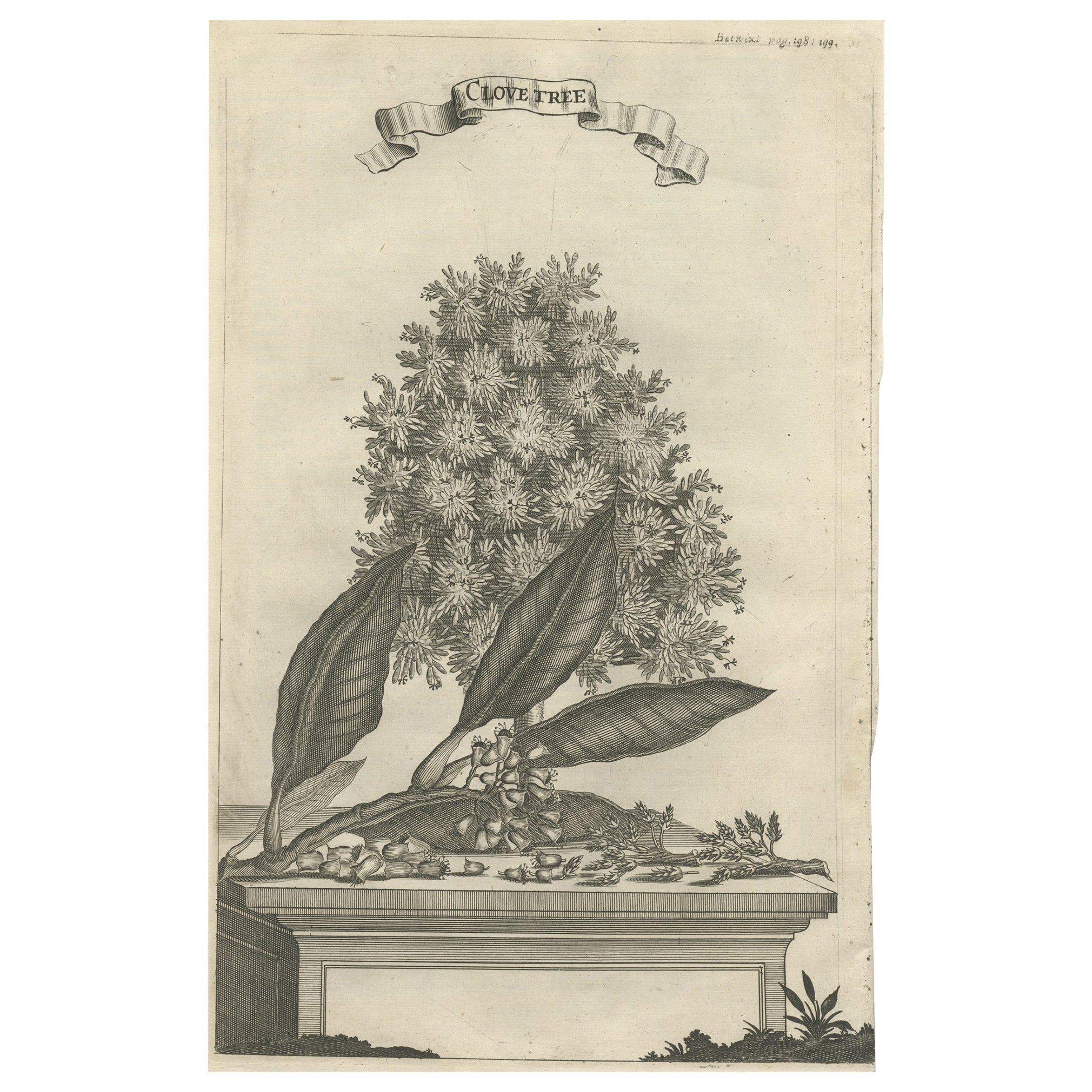
Antique print titled 'Clove Tree'.
Copper engraving of a clove tree. This print originates from 'Voyages and Travels to the East-Indies' by J. Nieuhof.
Artists and engravers:...
Category
Antique 1650s Prints
Materials
Paper
$269 Sale Price
20% Off
You May Also Like
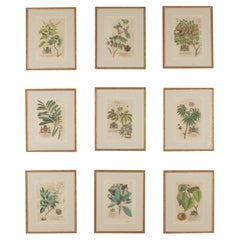
Collection of Nine 18th Century Tropical Botanical Engravings by Georg Dionysius
By Georg Dionysius Ehret
Located in Tetbury, Gloucestershire
Collection of nine 18th Century tropical botanical engravings by Georg Dionysius Ehret.
Hand coloured prints depicting local flora of Barbados. Each is dedicated to a prominent perso...
Category
Antique 18th Century German Prints
Materials
Paper
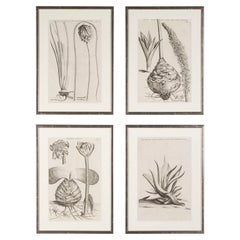
Set of 4, 17th Century Botanical Engravings by Jan and Caspar Commelin
Located in Gloucestershire, GB
Beautiful set of 4, 17th century botanical engravings by Jan and Caspar Commelin.
Presented in silver frames with hessian mounts and AR70 Artglass for optimal clarity.
Jan Commelin...
Category
Antique 17th Century Dutch Prints
Materials
Paper
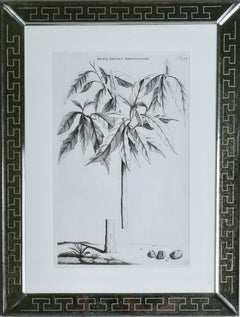
Jan
Caspar Commelin: 17th Century Botanical Engravings, 1st Edition
By Jan
Caspar Commelin
Located in Richmond, GB
""Horti Medici Amstelodamensis Rariorum"" (Rarities of the Amsterdam Physic Garden),
1st edition, 1697 - 1701. ( Ref: Dunthorne: 81)
Jan Commelin (1629-1692) was Director of the Am...
Category
17th Century Paintings
Materials
Silver
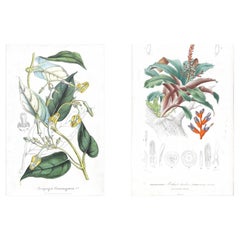
Set of Two Rare Botanical Engravings by D’Orbigny — 1849
Located in Fukuoka, JP
Set of Two Rare Botanical Engravings by D’Orbigny — Dictionnaire Universel d’Histoire Naturelle, Paris, 1849
An exquisite pair of original hand-colored botanical engravings from the...
Category
Antique 19th Century French Prints
Materials
Paper
Early 19th Century French Roques Botanical Engravings
Located in Gloucestershire, GB
Early 19th Century French engraved and hand coloured botanical studies.
Including Belladonna, Datura, Digitalis and Poppy from 'Phytography médicale, histoire des substances héroiqu...
Category
Antique Mid-19th Century French Country Prints
Materials
Paper
Botanical Engravings by John Curtis 19th century
Located in Seaford, GB
19th Century Botanical Engravings: A Timeless Art Form
The Legacy of John Curtis and 19th-Century Botanical Engravings
🖋 Provenance Story – 19th Century Botanical Engravings with ...
Category
Antique 19th Century British Victorian Prints
Materials
Paper
$1,817 Sale Price / set
20% Off
More Ways To Browse
Murano Red Fish
O Brien Used Furniture
Oggetti Murano Vintage
Ole Bjorn Kruger
Onyx 19th Century French Mantel Clock
Onyx Cube
Owl Japanese
Oyster Burl
Painted Black Lacquer Chest
Painted Red Distressed
Papier Mache Head
Paradis Paris
Pea Pod
Persian Calligraphy
Perugia Italy
Pink Glass Bird
Plaster Angels
Polychrome Chest Of Drawers