Items Similar to Botanical Splendor: Laburnum and Florae in 18th Century Etching, 1748
Want more images or videos?
Request additional images or videos from the seller
1 of 6
Botanical Splendor: Laburnum and Florae in 18th Century Etching, 1748
$585.79
£437.19
€490
CA$808.05
A$883.88
CHF 465.39
MX$10,552.61
NOK 5,931.41
SEK 5,425.83
DKK 3,732.99
About the Item
Artist or Maker: Johann Wilhelm Weinmann
Title: "Laburnum, seu Anasyris flore luteo"
Medium: Colored etching
Catalog Number: N.655
This image is an colored etching from J.W. Weinmann's botanical collection, "Duidelyke vertoning eeniger duizend in alle vier waerelds deelen wassende bomen, stammen, kruiden," dating back to 1748. The etching, numbered "N.618" in the top right corner.
The print features various plants, including what appears to be a depiction of the Laburnum, as indicated by the label "Laburnum, seu Anasyris flore luteo," which refers to the golden chain tree known for its yellow flowers. The image is finely detailed, showing different stages of plant growth and flower anatomy, which was typical of botanical illustrations of that period.
The Latin inscription at the bottom of the etching identifies the plants depicted and can be translated as follows:
- **a. Laburnum, seu Anagyris flore luteo**: This refers to the Laburnum, commonly known as the golden chain tree, which is characterized by its cascading yellow flowers. "Flore luteo" means "with yellow flower."
- **b. Cytisus hirsutus**: This likely refers to a species of the Cytisus genus, possibly a hairy or rough-textured plant, as "hirsutus" means "hairy."
- **c. Cytisus laburnum**: This is another name for the common Laburnum. The Cytisus genus is known for its pea-like flowers and belongs to the Fabaceae family.
- **d. Cytisus sessilifolius**: This could refer to a type of broom with sessile leaves, which are leaves that grow directly from the stem without a petiole.
- **e. Cytisus supinus**: This term could describe a type of broom that has a prostrate or low-growing habit.
- **f. Lithospermum arvense**: Commonly known as corn gromwell or field gromwell, this plant is known for its small white flowers and hard, seed-like fruits.
- **g. Lithospermum purpurocaeruleum**: This might refer to a plant from the Lithospermum genus with purple-blue flowers.
The golden chain tree or Laburnum is noteworthy for its beautiful yellow flowers that hang in dense clusters, resembling chains. The genus name "Laburnum" is derived from the ancient Latin name for the plant. It is a popular ornamental plant in gardens and parks, valued for its vibrant floral display. However, it is important to note that all parts of the Laburnum are highly toxic if ingested.
The Cytisus genus includes various species of broom, which are shrubs with small leaves and often brightly colored flowers. These plants are also used ornamentally, and some species are native to the Mediterranean region.
The Lithospermum genus includes plants that are commonly known for their nutlet seeds, which are hard and stone-like. The mention of "Lithospermum arvense" indicates a species that is likely found in fields or arable land, while "Lithospermum purpurocaeruleum" is noted for its striking purple-blue flowers.
These plants would have been of interest in the 18th century not only for their botanical significance but also for their medicinal properties, as many plants were used for healing purposes during this time. This print serves both as an artistic representation and a scientific record of these species.
- Dimensions:Height: 16.74 in (42.5 cm)Width: 9.65 in (24.5 cm)Depth: 0 in (0.02 mm)
- Materials and Techniques:
- Period:1740-1749
- Date of Manufacture:1748
- Condition:Good. Slightly unevenly trimmed left blank margin (remaining width of blank margin still at least 1 cm.), otherwise fine in old handcoloring. Study the images carefully.
- Seller Location:Langweer, NL
- Reference Number:Seller: BG-13716-41stDibs: LU3054338130092
About the Seller
5.0
Recognized Seller
These prestigious sellers are industry leaders and represent the highest echelon for item quality and design.
Platinum Seller
Premium sellers with a 4.7+ rating and 24-hour response times
Established in 2009
1stDibs seller since 2017
2,809 sales on 1stDibs
Typical response time: 1 hour
- ShippingRetrieving quote...Shipping from: Langweer, Netherlands
- Return Policy
More From This Seller
View AllAntique Botany Print
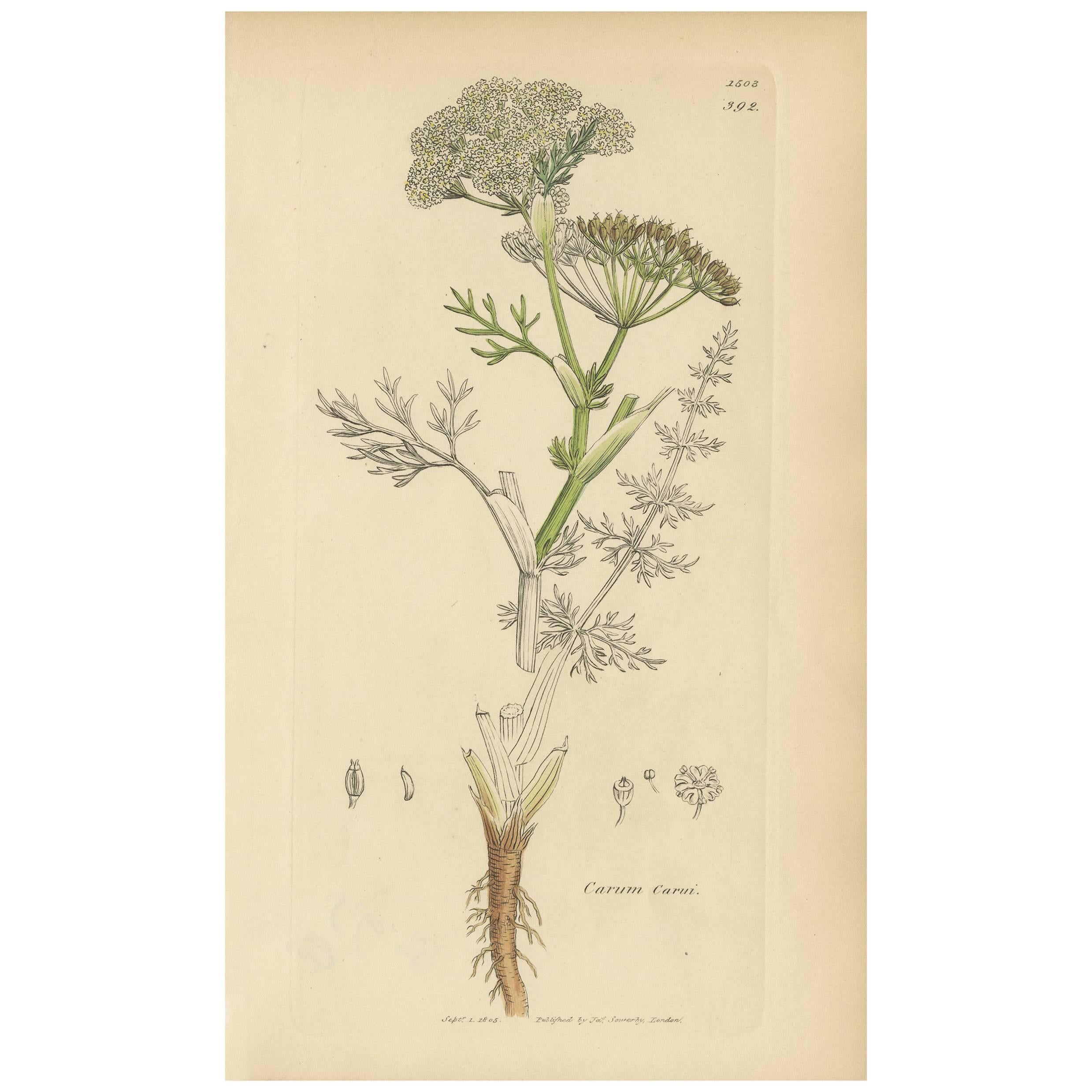
Carum Carui
J. Sowerby, 1805
Located in Langweer, NL
Antique print titled 'Carum Carui'. This print originates from Sowerby's English Botany, or Coloured Figures of British Plants, 1805.
Category
Antique Early 19th Century Prints
Materials
Paper
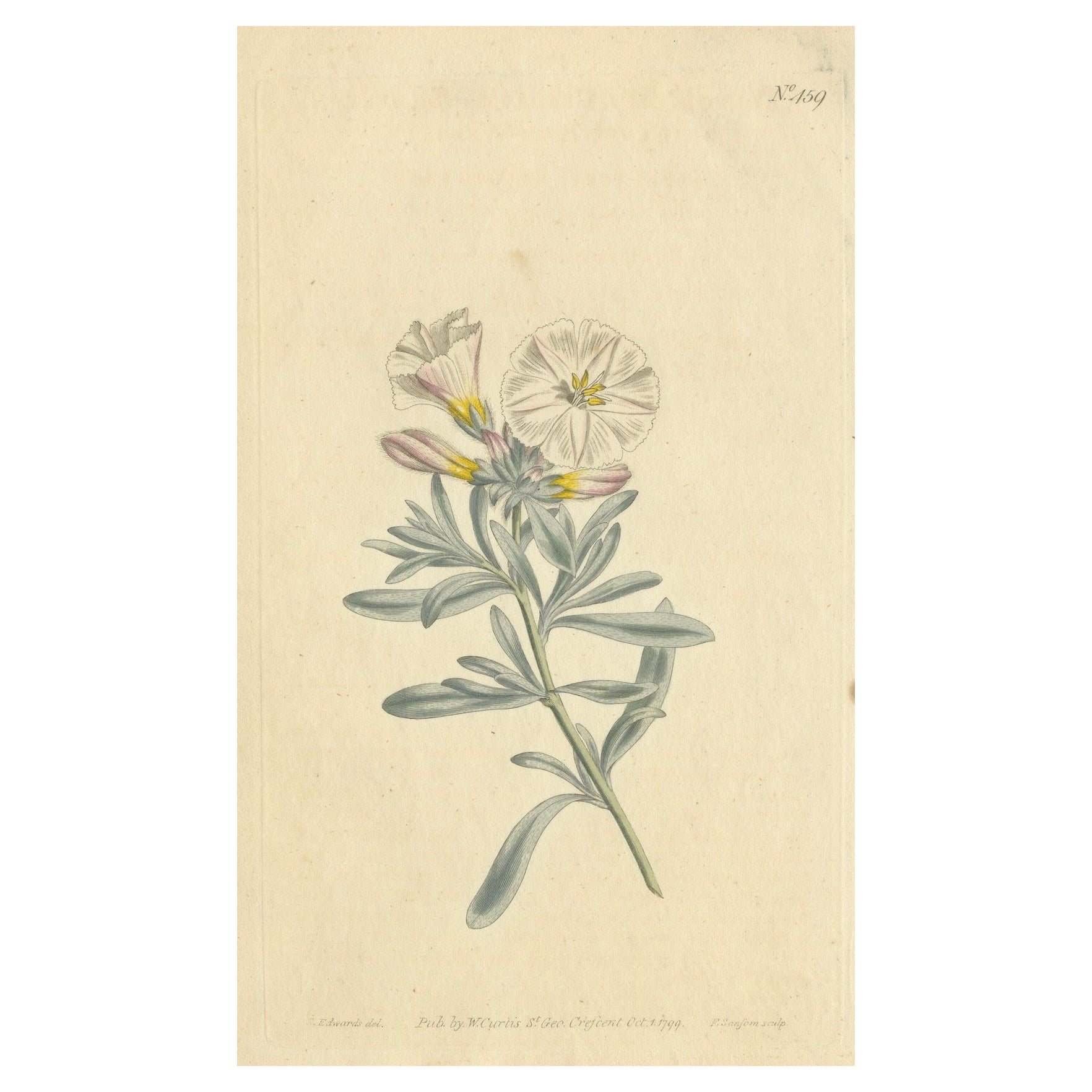
Antique Botanical Engraving of Silverbush - Rare 1799 Floral Print by Curtis
Located in Langweer, NL
Antique Botanical Engraving of Convolvulus Cneorum - Rare 1799 Floral Print by William Curtis
This engraving is from the publication "The ...
Category
Antique 1790s Prints
Materials
Paper
$133 Sale Price
20% Off
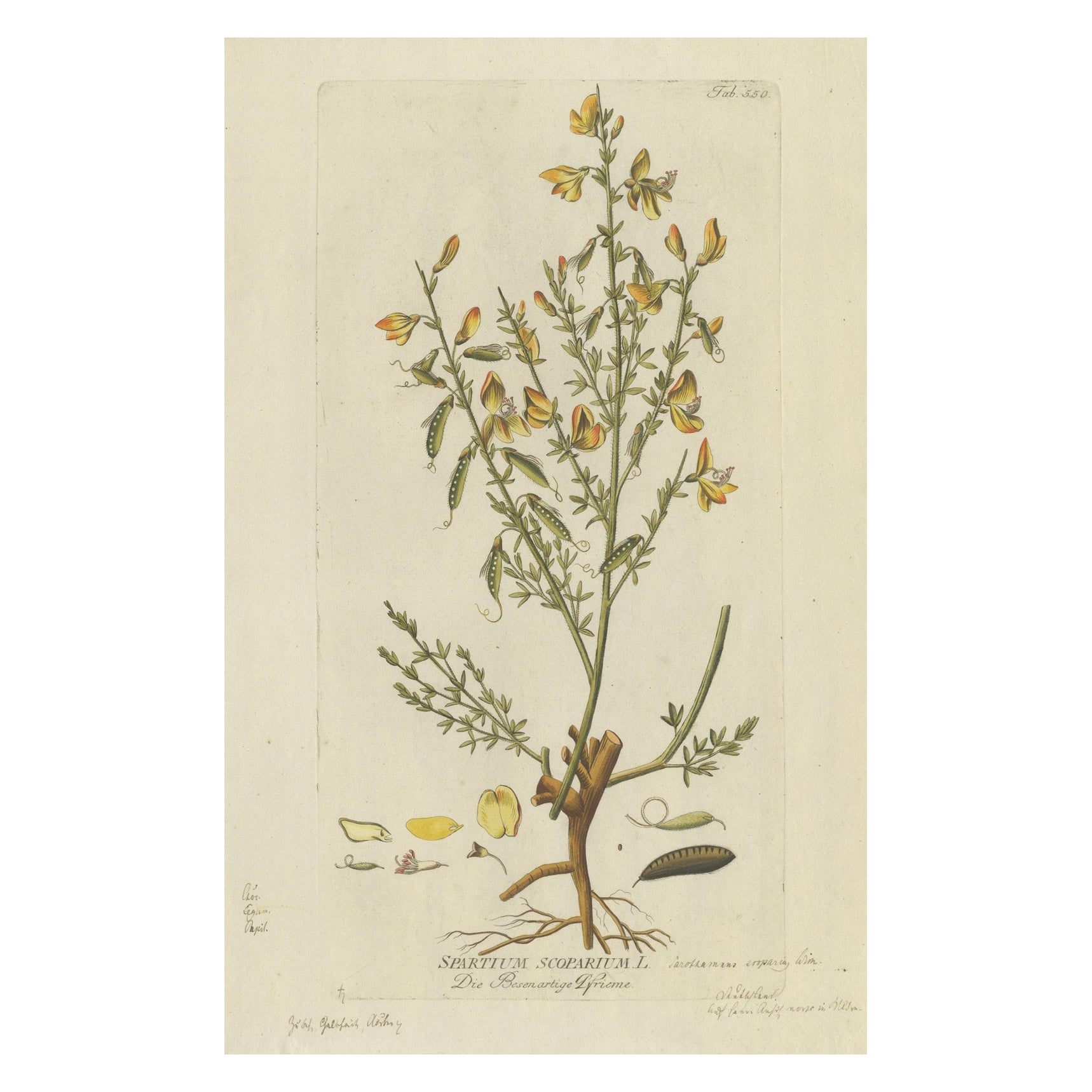
Scotch Broom Botanical Engraving - Icones Plantarum Medicinalium, 1788
Located in Langweer, NL
"Scotch Broom Botanical Engraving - Icones Plantarum Medicinalium, 1788"
Description
This hand-colored engraving features the Scotch Broom (Spartium scoparium), a medicinal shrub kn...
Category
Antique 1780s Prints
Materials
Paper
$277 Sale Price
20% Off
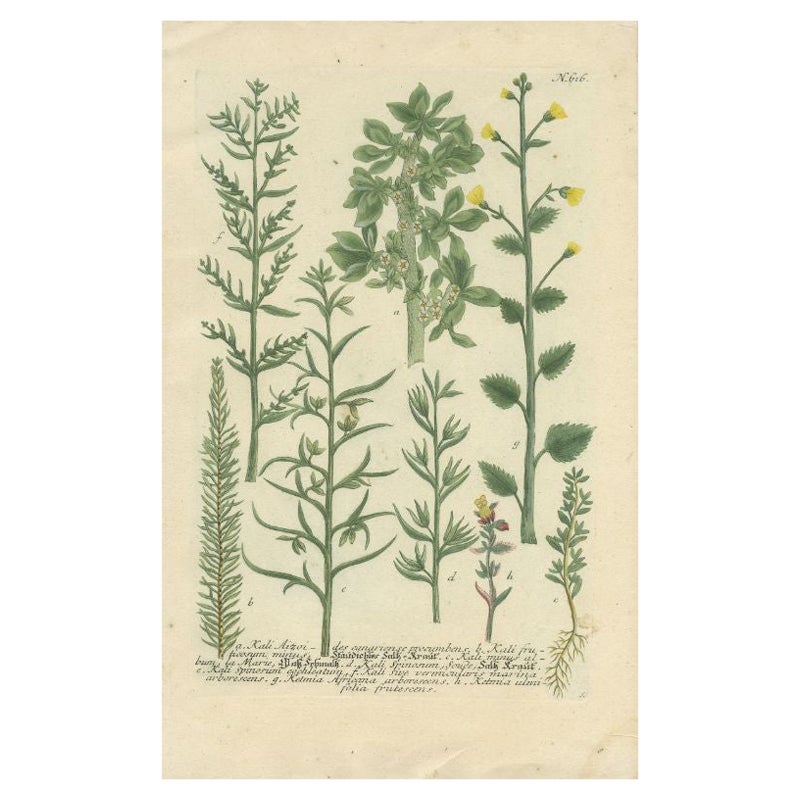
Antique Hand-Coloured Botany Print of Various Plants, 1742
Located in Langweer, NL
Antique botany print titled 'Kali Aizoides canariense procumbens (..)'. Copper engraving of various plants. This print originates from 'Phytanthoza Iconographia' by J.W. Weinmann.
...
Category
Antique 18th Century Prints
Materials
Paper
$277 Sale Price
20% Off
Exquisite Hand-Colored Botanical Engraving with Medicinal Plants, 1805
Located in Langweer, NL
Title: Hand-Colored Botanical Plate from Bertuch's "Bilderbuch für Kinder" (1805)
Description: This vibrant hand-colored copperplate engraving is part of Friedrich Johann Bertuch...
Category
Antique Early 1800s Prints
Materials
Paper
Antique Botany Print
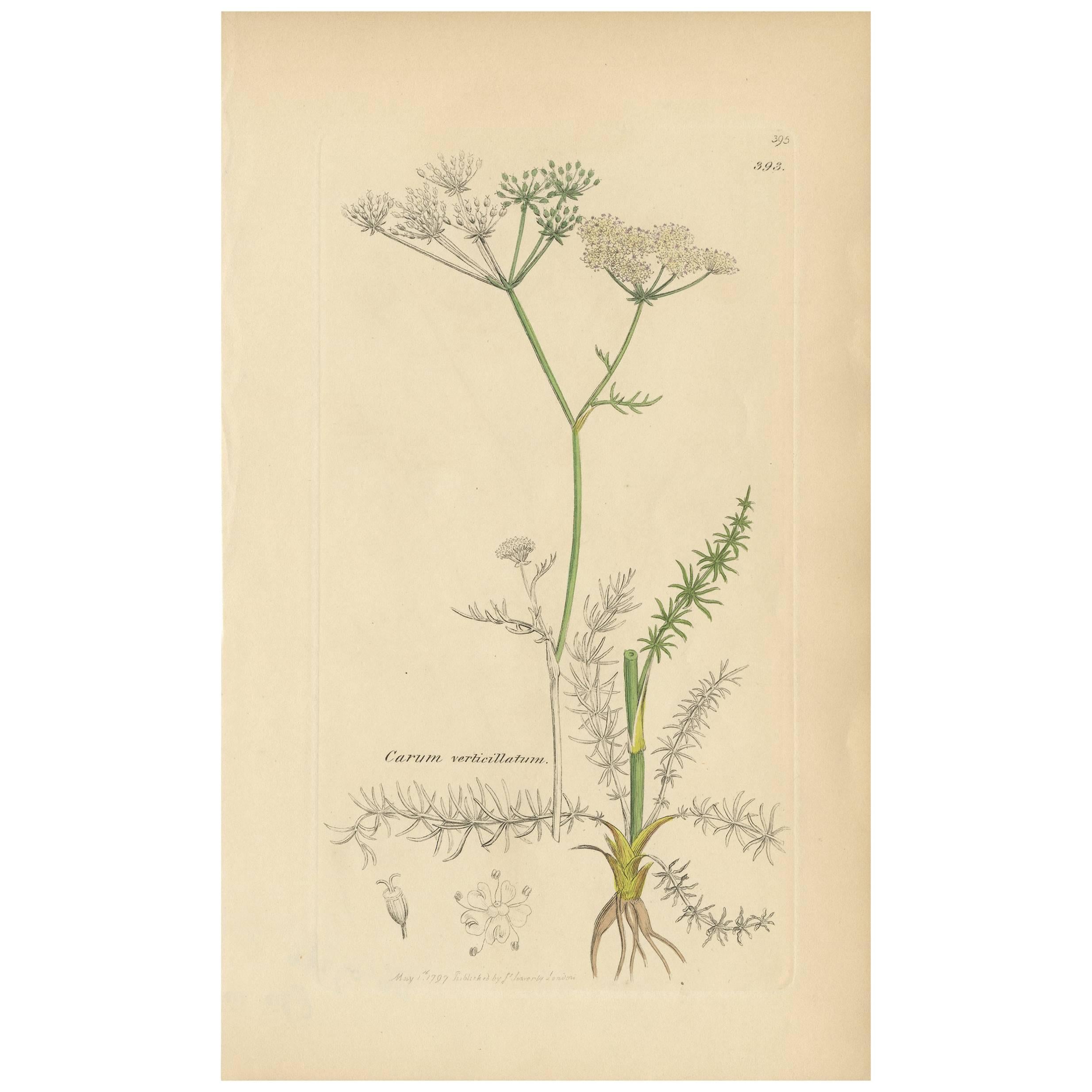
Carum Verticillatum
by J. Sowerby, 1797
Located in Langweer, NL
Antique print titled 'Carum verticillatum'. This print originates from Sowerby's English Botany, or Coloured Figures of British Plants, 1797.
Category
Antique Late 18th Century Prints
Materials
Paper
You May Also Like
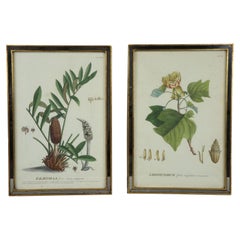
Two 18th Century Hand Colored Botanical Engraving of Plants from (1771)
Located in Stockholm, SE
Adorning the walls, two gracefully framed botanical engravings from 1771 capture nature's elegance in exquisite detail. Delicate strokes of...
Category
Antique 1770s European George III Decorative Art
Materials
Paper
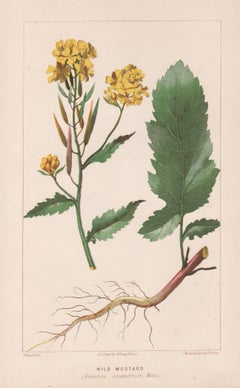
Wild Mustard (Brassica sinapistrum), antique botanical lithograph
Located in Melbourne, Victoria
'Wild Mustard (Brassica sinapistrum. Boiss.)'
Colour lithograph, 1909.
Category
Early 20th Century Naturalistic More Prints
Materials
Lithograph
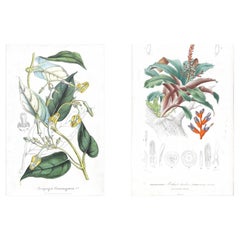
Set of Two Rare Botanical Engravings by D’Orbigny — 1849
Located in Fukuoka, JP
Set of Two Rare Botanical Engravings by D’Orbigny — Dictionnaire Universel d’Histoire Naturelle, Paris, 1849
An exquisite pair of original hand-colored botanical engravings from the...
Category
Antique 19th Century French Prints
Materials
Paper
1850 12 Hand Coloured Botanical Plates From the American Practice of Medicine
Located in Lowestoft, GB
A collection of 12 mid-19th century hand colured engravings of botanical specimens from the American Practice of Medicine, 1850
Each has been professionally mounted and framed in a ...
Category
Antique Mid-19th Century American Victorian Decorative Art
Materials
Paper
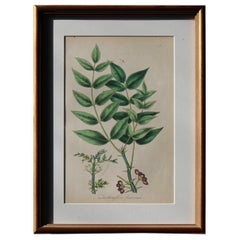
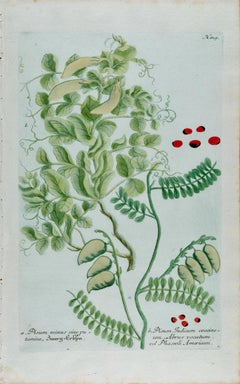
Cultivated Pea Plants: An 18th C. Hand-colored Botanical Engraving by Weinmann
By Johann Wilhelm Weinmann
Located in Alamo, CA
This hand-colored botanical mezzotint and line engraving by Johann Wilhelm Weinmann (1683-1741) is entitled "a. Pisum Minus sine Putamine, b. Pisa Indicum". It is plate 819 in Weinma...
Category
Mid-18th Century Naturalistic Still-life Prints
Materials
Engraving, Mezzotint
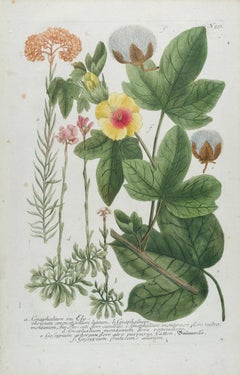
Flowering Cotton Plant: 18th Century Hand-colored Weinmann Botanical Engraving
By Johann Wilhelm Weinmann
Located in Alamo, CA
This striking hand-colored botanical mezzotint and line engraving is entitled "Gnaphalium, Gossypium (Cotton Plant)". It is plate 551 in Johann Weinmann's monumental publication "Phy...
Category
Mid-18th Century Naturalistic Still-life Prints
Materials
Engraving, Mezzotint
More Ways To Browse
White Cockatoo
White Elephant Sculpture
White Lacquer Asian
White Marble Top Commode
White Queen Anne
White Tara
Wide Chest Drawers
Wood And Painted Elephant
Wood Caryatids
Wood Skeleton Skeleton
Wooden Monkeys
Yukimi Lanterns
16th Century Tudor
17th Century Pearl
18th Century Russian Icon
1920s Wicker Furniture
1968 Desk
1970s Mirrored Bar