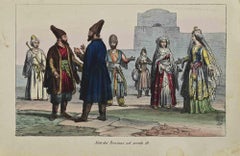
Items Similar to Cultural Warriors: Traditional Attire of Iranian and Afghan Tribes, 1844
Want more images or videos?
Request additional images or videos from the seller
1 of 9
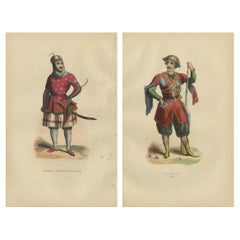
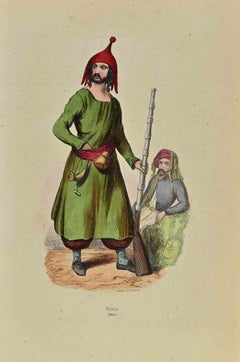
Cultural Warriors: Traditional Attire of Iranian and Afghan Tribes, 1844
$208.84per set
$261.04per set20% Off
£155.74per set
£194.67per set20% Off
€176per set
€220per set20% Off
CA$290.69per set
CA$363.36per set20% Off
A$311.97per set
A$389.97per set20% Off
CHF 167.23per set
CHF 209.04per set20% Off
MX$3,754.47per set
MX$4,693.09per set20% Off
NOK 2,108.53per set
NOK 2,635.66per set20% Off
SEK 1,922.69per set
SEK 2,403.36per set20% Off
DKK 1,341.01per set
DKK 1,676.27per set20% Off
About the Item
Handcoloured lithographs, heightened with Arabic gum on wove (vellin) paper.
From the Asia volume of “Moeurs, Usages et Costumes de tous les Peuples de Monde” by Auguste Wahlen. This was published in Paris: Poiree, Pilout, Duterte and Martinon, 1844.
Made by an anonymous engraver after ‘Auguste Wahlen’. Author: Auguste Wahlen. Various artists are responsible for the illustrations, most notably Evrard Duverger, L. Markaert and R. King.
Karian – Iranian Traditional Costume
The figure labeled "Karian" is shown in traditional Iranian attire, drawing his sword, which is a typical representation of readiness and martial prowess. The costume likely includes elements like a long robe, a cummerbund, and perhaps a headpiece, indicative of the attire worn historically by men in the Hormozgan Province, specifically the Karian District. This region, located along the southern coast of Iran, has a rich history connected to trade and maritime activities due to its proximity to the Persian Gulf, which could explain the martial aspect of the attire, possibly suggesting readiness for defending against piracy or involvement in trade protection.
Douran – Tribesman from Afghanistan
The figure labeled "Douran" represents a member of a tribe from what is now known as Afghanistan, equipped with a musket and a sword. The traditional robes could be indicative of the ethnic Pashtun dress, known for its utility in the rugged, mountainous terrain of Afghanistan. The Douran might represent one of the many tribes in the region, historically known for their roles as fierce warriors and often involved in conflicts due to the strategic importance of the area in trade routes and military campaigns, especially during the era of the Great Game where British and Russian interests collided in Central Asia.
Historical and Cultural Significance
Both prints highlight the martial readiness and distinct cultural attire of their respective regions, showcasing the importance of self-defense and military skill in their societies. These attributes were often essential for survival and autonomy, especially in regions fraught with external pressures and internal conflicts over resources and territory.
Artistic and Ethnographic Interest
The attention to detail in these prints not only serves an aesthetic purpose but also provides ethnographic insights into the clothing, weaponry, and posture typical of men in these regions during the 19th century. For historians and cultural enthusiasts, such prints are invaluable for understanding how people from different parts of the world were perceived and represented during this period, reflecting both the realities and the exotic imaginations of European artists and audiences.
These depictions, while rooted in specific local contexts, are part of a broader European endeavor during the 19th century to catalog and depict the diversity of global cultures, often with a mix of accuracy and artistic interpretation.
When searching for prints like the ones depicting the Karian and Douran figures, people often use keywords that highlight various aspects of the prints, such as their cultural, artistic, and historical dimensions. Here are some useful keywords and phrases:
1. **Historical costumes**
2. **Cultural attire prints**
3. **19th-century lithographs**
4. **Auguste Wahlen**
5. **Chromolithography**
6. **Traditional dress prints**
7. **Asian historical clothing**
8. **Ethnographic prints**
9. **Martial attire in art**
10. **Iranian traditional costume**
11. **Afghanistan tribes in art**
12. **Antique cultural lithographs**
These keywords help users find specific prints that offer insights into the dress and customs of historical figures from different cultural backgrounds, as depicted in 19th-century lithographic art.
- Dimensions:Height: 10.12 in (25.7 cm)Width: 6.7 in (17 cm)Depth: 0 in (0.02 mm)
- Sold As:Set of 2
- Materials and Techniques:
- Period:
- Date of Manufacture:1844
- Condition:Condition: Good, given age. Faintly browned, and with some small stains. Some glue remains (from binding) in the far left margin (not affecting image). General age-related toning and/or occasional minor defects from handling. Please study the scans.
- Seller Location:Langweer, NL
- Reference Number:Seller: BG-12722-18, BG-12722-191stDibs: LU3054341390052
About the Seller
5.0
Recognized Seller
These prestigious sellers are industry leaders and represent the highest echelon for item quality and design.
Platinum Seller
Premium sellers with a 4.7+ rating and 24-hour response times
Established in 2009
1stDibs seller since 2017
2,830 sales on 1stDibs
Typical response time: 1 hour
- ShippingRetrieving quote...Shipping from: Langweer, Netherlands
- Return Policy
More From This Seller
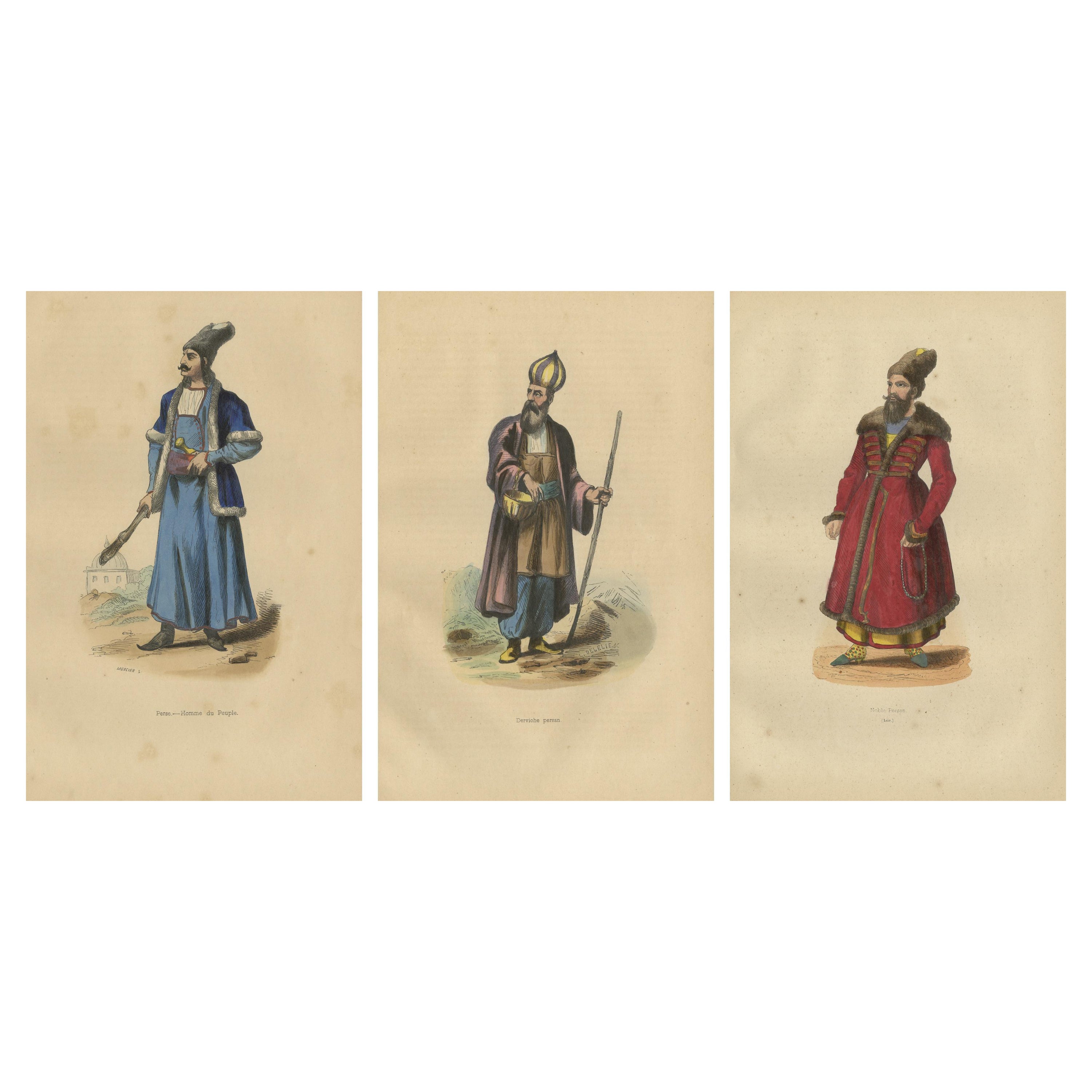
View All1844 Persian Cultural Figures: Engraved Prints of Traditional Attires
Located in Langweer, NL
Title: "1844 Persian Cultural Figures: Engraved Prints of Traditional Attires"
Description: This compilation features three handcoloured lithographs representing traditional Persian figures: a common man, a dervish, and a noble, from the esteemed 1844 collection "Moeurs, Usages et Costumes de tous les Peuples de Monde" by Auguste Wahlen.
Published in Paris, these prints are crafted through lithography, a popular 19th-century technique, and are enhanced with Arabic gum on wove (vellin) paper. The vivid depiction of their cultural attire and the distinct portrayal of each social stratum make these prints particularly captivating. They offer a glimpse into the historical socio-cultural fabric of Persia, making them highly sought after by collectors and enthusiasts of Middle Eastern art and history.
In the three prints you provided of Persian figures, each character holds something distinct that signifies their role or status within their culture:
1. Persé - Homme du Peuple (Common Man):
- Holding: This figure holds a walking stick or cane, which is a common accessory that could be used for practical purposes like walking support or herding animals.
- Outfit: He wears traditional attire with a long coat and a large hat, indicative of a common man's clothing in historical Persian society. His outfit and the stick both emphasize his everyday, practical life.
2. Derviche Persan (Dervish):
- Holding: The Dervish holds a stick and a begging bowl. Dervishes are known for their ascetic piety, often connected with Sufism in Islam. The stick (or staff) symbolizes their travels and spiritual journey, while the bowl is used to receive alms, reflecting their vow of poverty.
- Interesting Fact: Dervishes are part of a mystical spiritual ascetic practice within Islam, focusing on the universal values of love and service. Their clothing and accessories reflect simplicity and spiritual richness.
3. Noble Persan (Nobleman):
- Holding: The nobleman carries a sword, which is a symbol of power, authority, and martial prowess. It is commonly featured in depictions of nobility as a sign of their status and ability to command.
- Outfit: His clothing is significantly more elaborate and colorful compared to the others, with fur trim and decorative patterns, signifying wealth and high social status.
These accessories and their attire provide a deep insight into the roles and societal positions of each figure within Persian culture, reflecting a wide range of personal and social identities from the common man to spiritual seekers and the ruling elite. Each element, from the practical walking stick to the symbolically rich begging bowl and the authoritative sword, offers a narrative about their life, status, and societal roles during that historical period.
Keywords:
- Antique Persian prints...
Category
Antique 1840s Prints
Materials
Paper
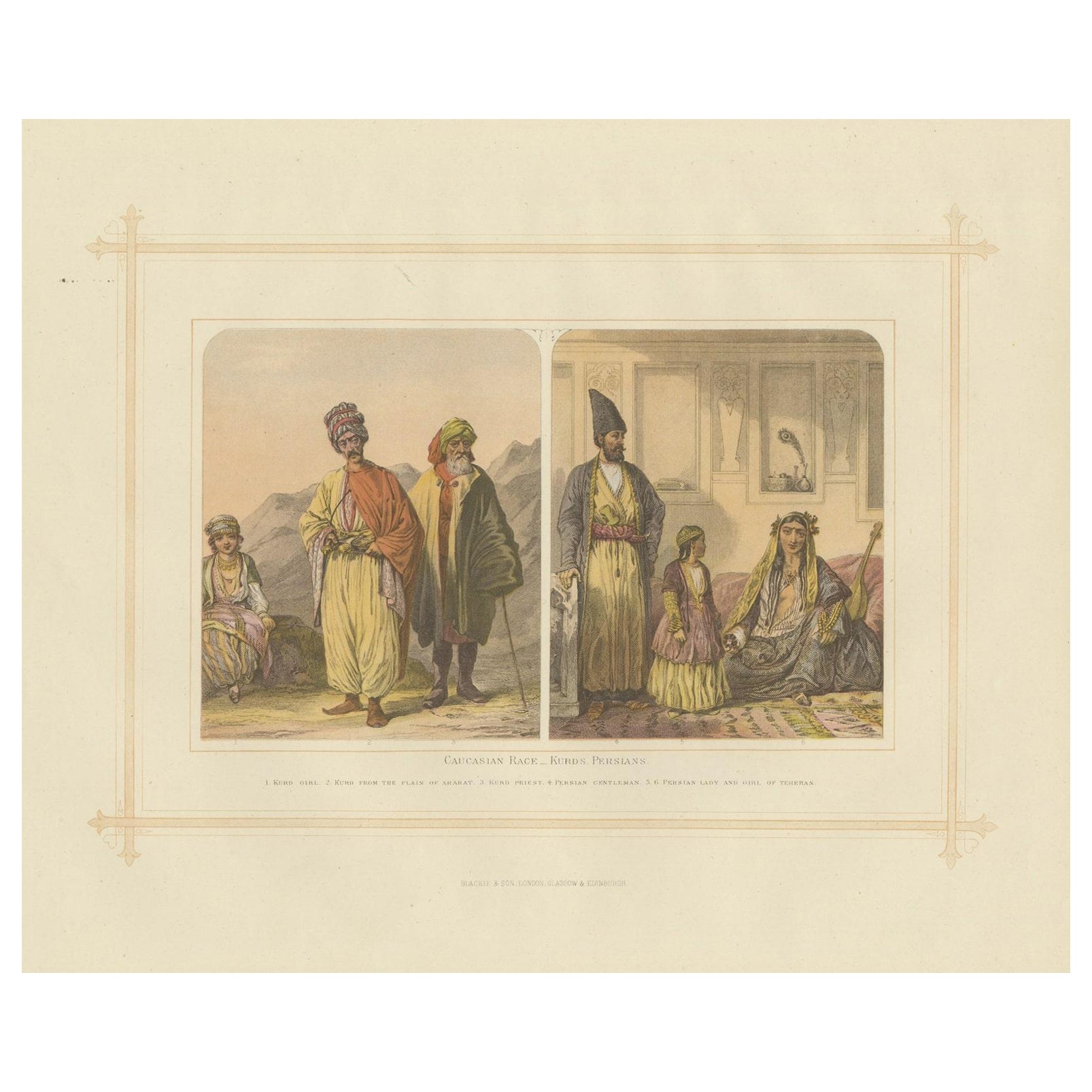
Antique Lithograph of the Caucasian Race - Kurds, Persians, 1882
Located in Langweer, NL
Experience a captivating glimpse into the world of 19th-century ethnography with the "Caucasian Race - Kurds, Persians", an antique print from Blackie's Comprehensive Atlas and Geogr...
Category
Antique 1880s British Prints
Materials
Paper
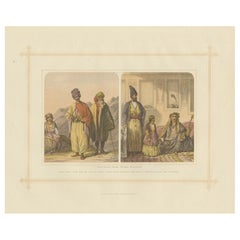
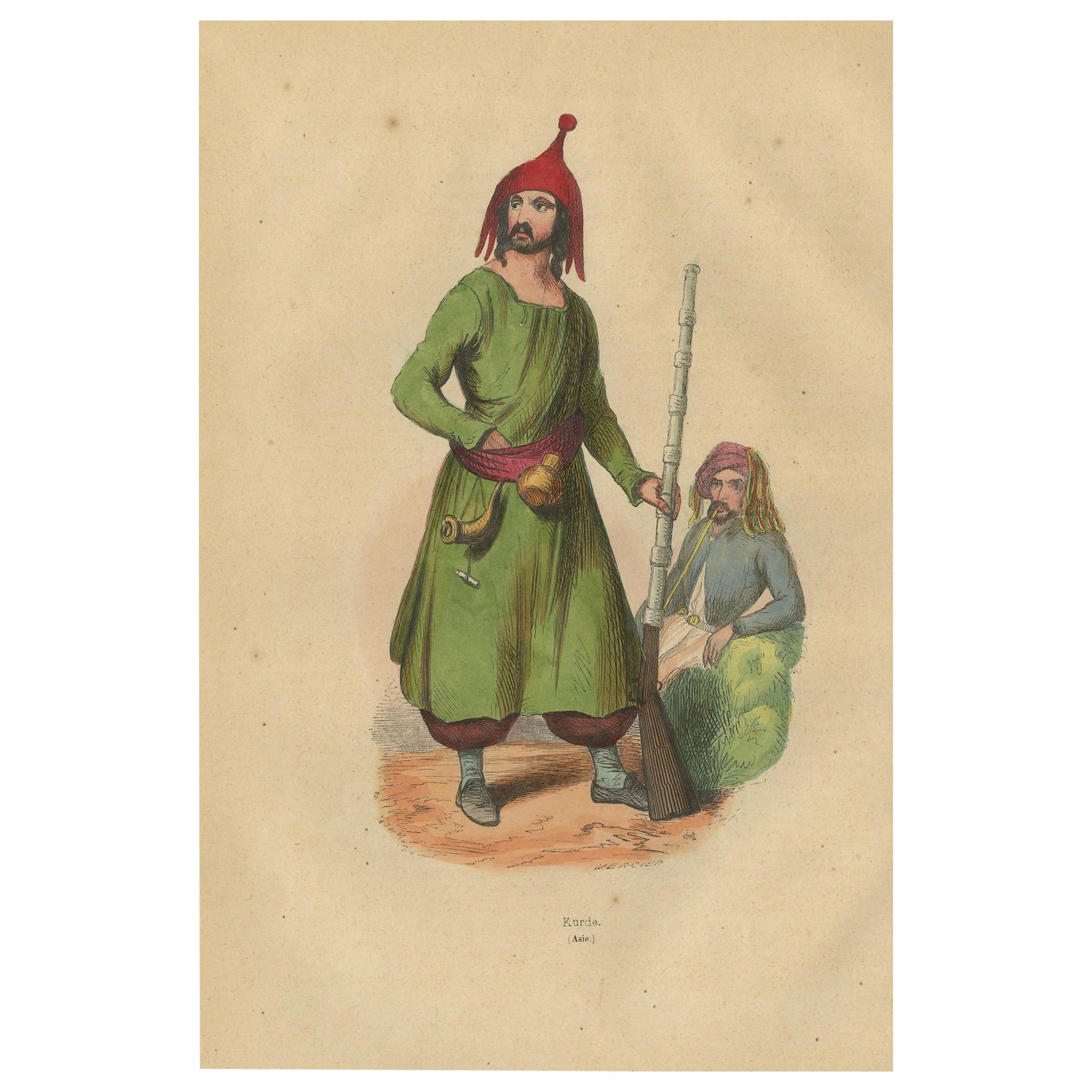
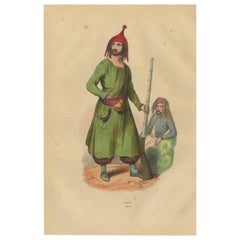
Kurdish Warrior in Traditional Attire from 19th Century Lithograph
Located in Langweer, NL
Title: "Kurdish Warrior in Traditional Attire from 19th Century Lithograph"
This hand-colored lithograph titled "Kurda" showcases a Kurdish man in traditional attire, complete with ...
Category
Antique 1840s Prints
Materials
Paper
$151 Sale Price
20% Off
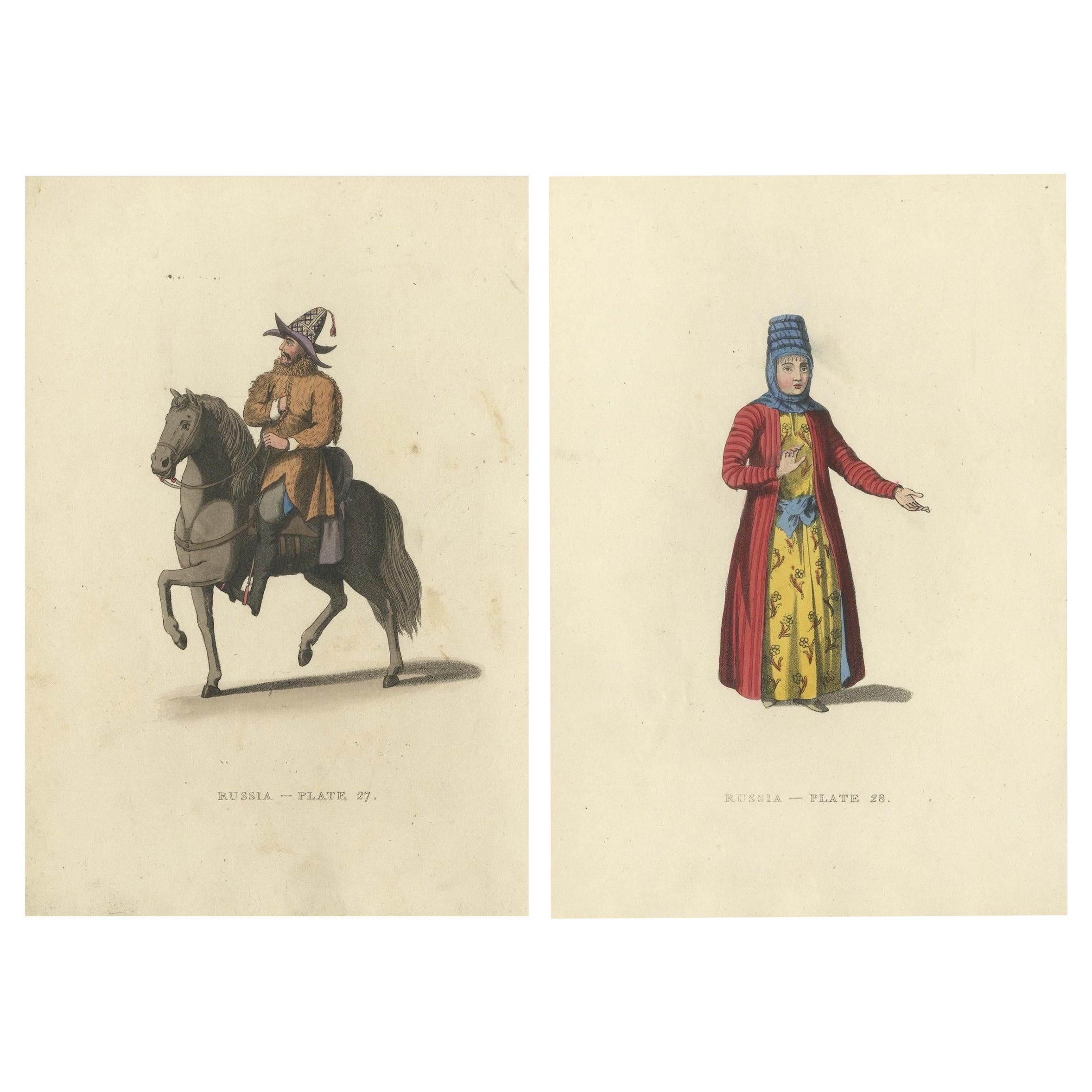
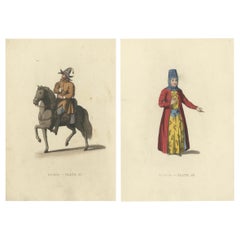
Kirghiz Elegance Engraved: A Study of 19th Century Central Asian Attire, 1814
Located in Langweer, NL
The two engravings vividly capture the traditional attire of the Kirghiz, a group native to the steppes of Central Asia.
1. The first engraving portrays a Kirghiz man mounted on hor...
Category
Antique 1810s Prints
Materials
Paper
$227 Sale Price / set
20% Off
Free Shipping
1844 Lithograph of a Bukharan Uzbek: Traditional Attire and Craft
Located in Langweer, NL
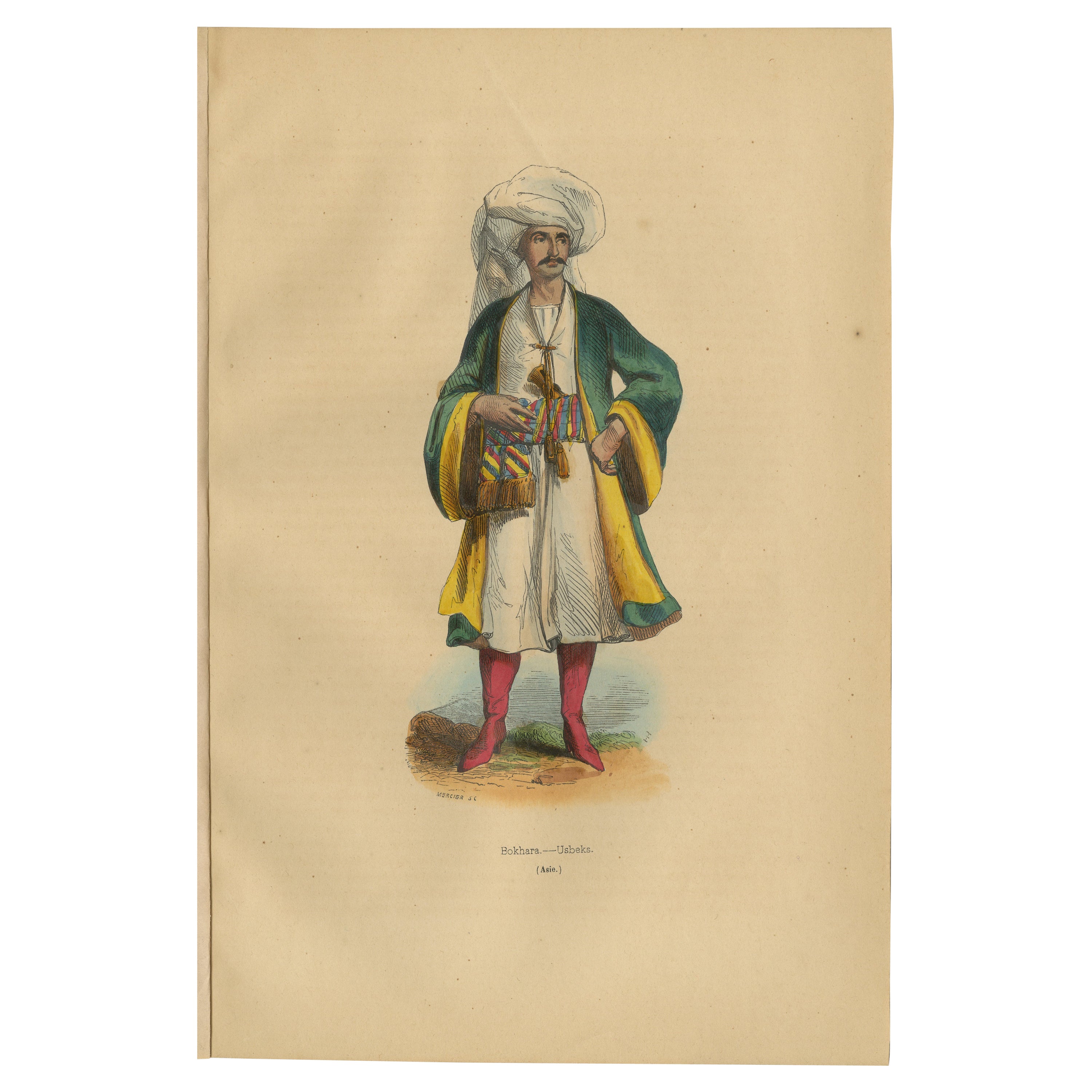
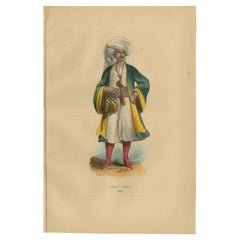
"1844 Lithograph of a Bukharan Uzbek: Traditional Attire and Craft"
Description: This 1844 lithograph captures a traditional Bukharan Uzbek man, from the renowned series "Moeurs, Usages et Costumes de tous les Peuples de Monde" by Auguste Wahlen.
Published in Paris using the technique of handcoloured lithography, enhanced with Arabic gum on vellin paper, this print vividly portrays the rich cultural attire unique to Bukhara, Uzbekistan.
The man's elaborate robe and distinctive headwear highlight the regional fashion and craftsmanship. The print’s appeal lies in its detailed depiction of historical dress and accessories, offering a window into the cultural diversity of Central Asia. Such prints are treasured for their historical value and intricate artistry, making them highly desirable to collectors and enthusiasts of ethnographic art.
The lithograph depicting a man from Bukhara, Uzbekistan, offers several intriguing cultural and historical insights:
1. Traditional Attire: The attire of the Bukharan man, particularly the elaborate robe and turban, is a rich display of Uzbek textile craftsmanship. Traditional robes, often made from silk and cotton, are adorned with intricate ikat patterns—a dyeing technique where threads are dyed before weaving. This style is emblematic of Uzbekistan's well-known textile industry.
2. Turban Significance: The turban, known locally as a "doppa" or "tubeteika," is more than just practical headwear; it serves as a cultural symbol of status and identity. The style, color, and way it is worn can convey information about the wearer's social status, region, and even his clan affiliations.
3. Historical Context: Bukhara was a pivotal Silk Road city, making it a melting pot of cultures, languages, and religions. The diverse influences are reflected in the traditional clothing, which blends Persian, Turkic, and nomadic styles.
4. Artistic Technique: The use of handcoloured lithography in the 19th century allowed for high-quality, detailed prints that were more accessible to the European public. This technique involved drawing on limestone with a greasy medium, then using water and oil-based ink to print vibrant images, which were then painted by hand.
5. Cultural Preservation: Prints like this serve not only as artwork but also as historical documents that preserve and share the cultural heritage of regions less known to the Western world at the time. They played a crucial role in educating and influencing perceptions about distant cultures during the 19th century.
This print, therefore, is not just a beautiful piece of art but a deep well of cultural history and craftsmanship, reflecting the rich tapestry of life in Central Asia during the 19th century.
Keywords:
- Antique Uzbek prints
- Handcoloured lithography
- 19th-century Central Asian costumes
- Auguste Wahlen lithographs
- Traditional Bukharan attire
- Ethnographic art prints
- Collectible cultural lithographs
- Historical Uzbek fashion
- Asian historical prints
- Vintage Uzbek art...
Category
Antique 1840s Prints
Materials
Paper
$142 Sale Price
20% Off
Circassian and Imeretian Princes in Traditional Attire, 1844 Lithographs
Located in Langweer, NL
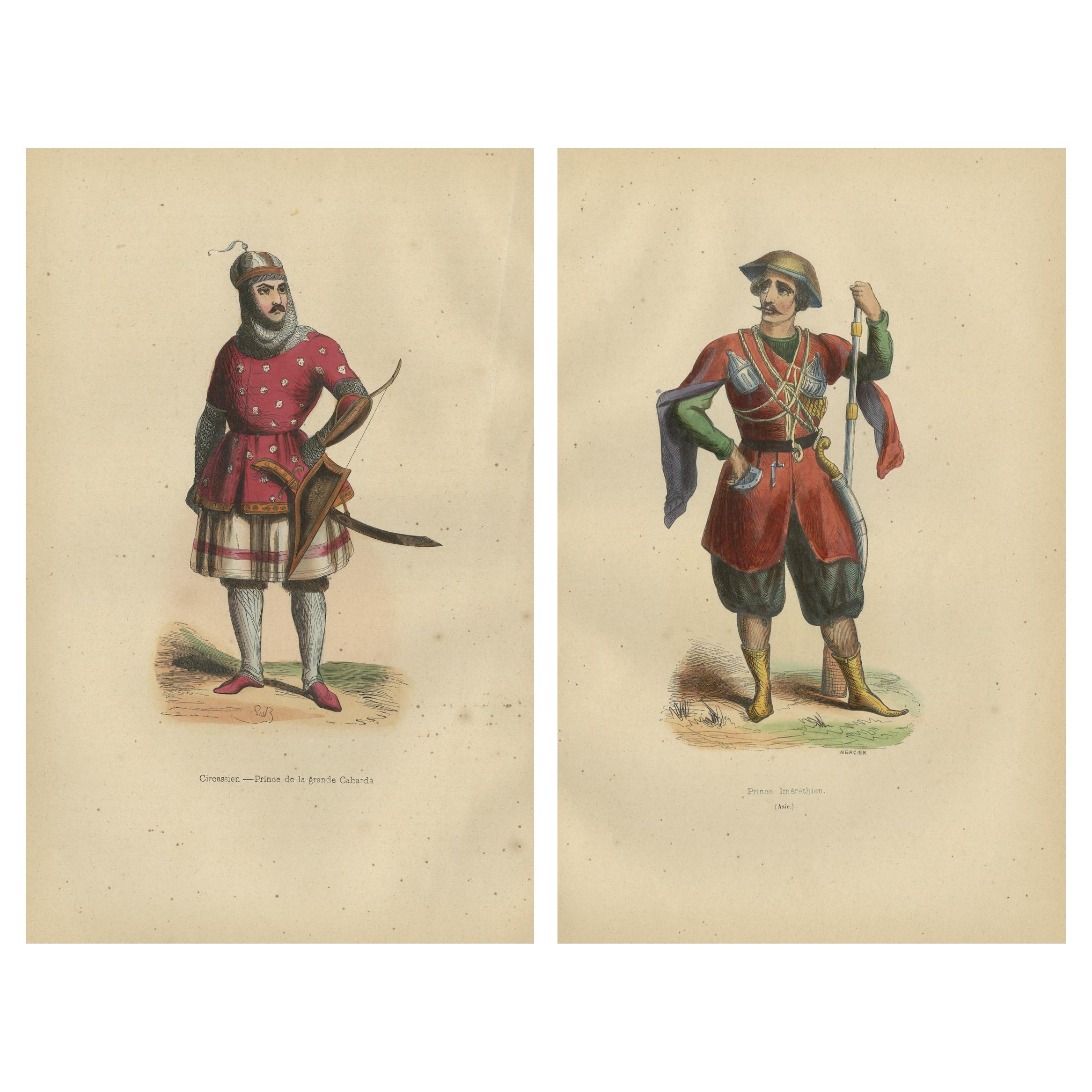
Title:"Circassian and Imeretian Princes in Traditional Attire, 1844 Lithographs"
This horizontal compilation features two lithographs from Auguste Wahlen's 1844 series, "Moeurs, Usages et Costumes de tous les Peuples de Monde," depicting princes from Circassia and Imeretia in traditional attire.
These prints, made using handcoloured lithography, highlight the distinctive cultural dress and accessories of these regions in Asia.
The Circassian prince is adorned in a decorative military-style outfit, complete with armor and a bow, symbolizing his warrior status. The Imeretian prince's attire is similarly martial but incorporates more vivid colors and a less formal style, reflecting the different ceremonial and functional aspects of his region's attire.
The attractiveness of these prints lies in their vibrant coloration and meticulous detail, which not only make them visually striking but also serve as valuable historical records of cultural heritage and traditional dress. The technique of handcoloured lithography allows for precise detail and rich hues, enhancing the visual impact and historical authenticity of each figure.
Keywords:
- Antique Circassian prints
- Imeretian historical attire
- Handcoloured lithographs
- 19th-century cultural costumes
- Auguste Wahlen artwork
- Collectible historical prints
- Traditional warrior attire lithographs
- Asian prince...
Category
Antique 1840s Prints
Materials
Paper
$246 Sale Price / set
20% Off
You May Also Like
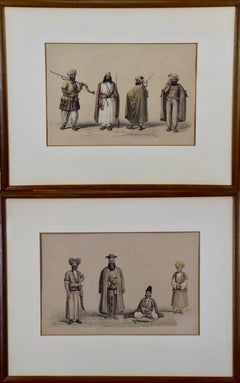
A Pair of 19th C. Engravings Depicting the Costumes and Weapons of Afghani Men
Located in Alamo, CA
These hand-colored lithographs are from "Character and Costumes of Afghanistan", written by Lockyer Willis Hart (of the 22nd Bombay Native Infantry). The lithographs were created by ...
Category
1840s Realist Portrait Prints
Materials
Lithograph
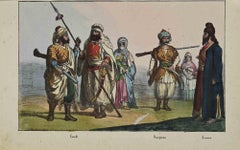
Customs - Asian Costume - Lithograph - 1862
Located in Roma, IT
Customs -Asian Costume is an Hand-colored lithograph on paper realized in 1862.
Titled on the lower.
The artwork belongs to the Suite Uses and customs of all the peoples of the uni...
Category
1860s Modern Figurative Prints
Materials
Lithograph
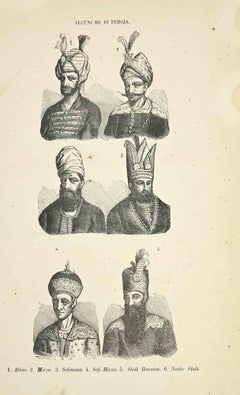
Customs - Persian Kings - Lithograph - 1862
Located in Roma, IT
Customs - Persian Kings is a lithograph on paper realized in 1862.
Titled on the lower.
The artwork belongs to the Suite Uses and customs of all the peoples of the universe: " Hist...
Category
1860s Modern Figurative Prints
Materials
Lithograph
Kurdish - Lithograph by Auguste Wahlen - 1844
Located in Roma, IT
Kurdish is a lithograph made by Auguste Wahlen in 1844.
Hand colored.
Good condition.
At the center of the artwork is the original title "Kurde".
The work is part of Suite Moeurs...
Category
1840s Modern Figurative Prints
Materials
Lithograph
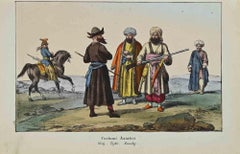
Asian Costume - Lithograph - 1862
Located in Roma, IT
Customs -Asian Costume is a Hand-colored lithograph on paper realized in 1862.
Titled on the lower.
The artwork belongs to the Suite Uses and customs of all the peoples of the univ...
Category
1860s Modern Figurative Prints
Materials
Lithograph
Persian Cloth in 19th Century- Lithograph - 1862
Located in Roma, IT
Persian Cloth in 19th Century is a Hand-colored lithograph on paper realized in 1862.
The artwork belongs to the Suite Uses and customs of all the peoples of the universe: " History...
Category
1860s Modern Figurative Prints
Materials
Lithograph