Items Similar to De Bry Engraving Expressio Germinum – Exotic Plants of St. Lawrence Island, 1598
Want more images or videos?
Request additional images or videos from the seller
1 of 9
De Bry Engraving Expressio Germinum – Exotic Plants of St. Lawrence Island, 1598
$430.79
£321.76
€360
CA$593.49
A$646.80
CHF 342.51
MX$7,768.79
NOK 4,336.26
SEK 3,986.76
DKK 2,742.58
About the Item
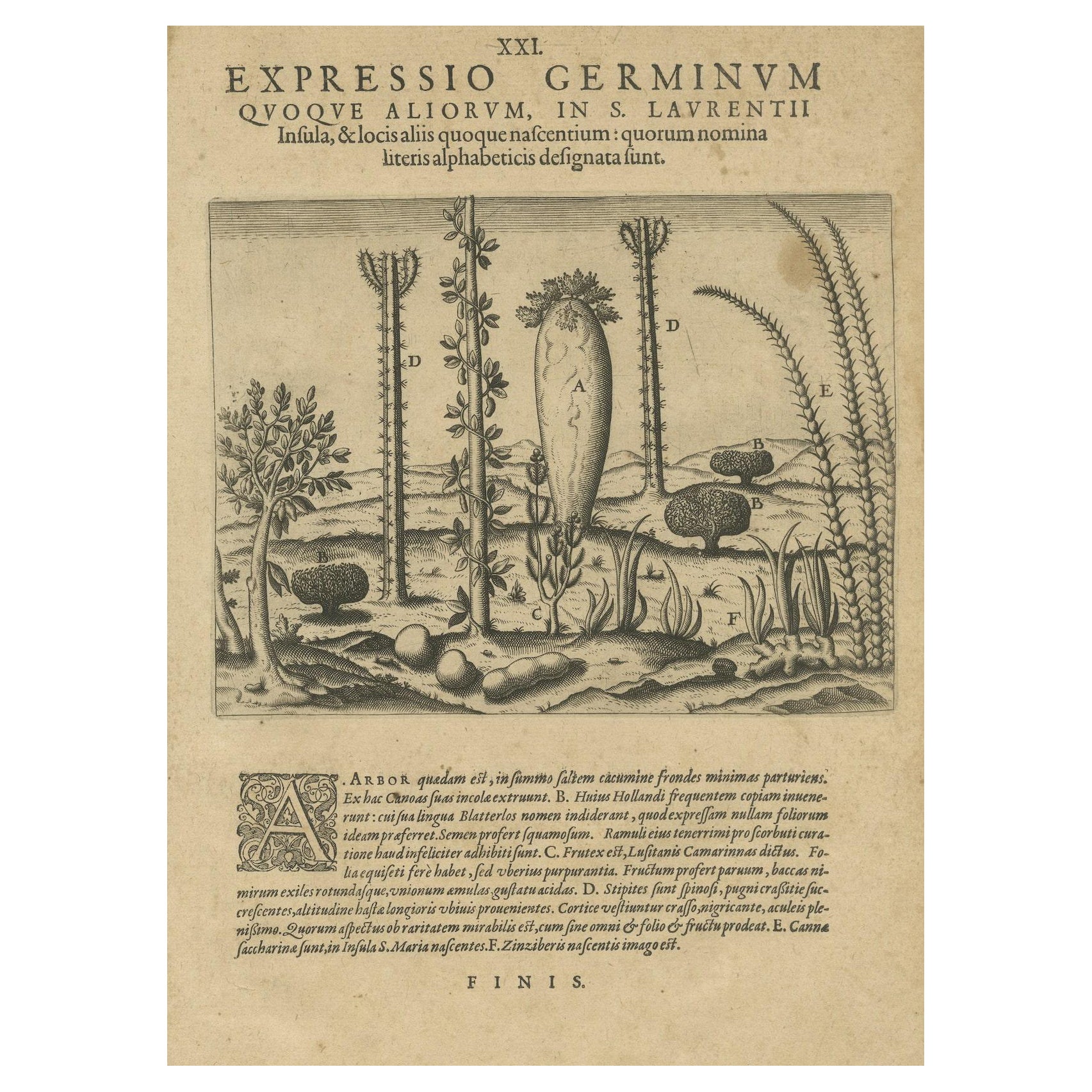
De Bry Engraving “Expressio Germinum” – Exotic Plants of St. Lawrence Island, c.1598
A fascinating original 16th-century copper engraving from Theodor de Bry’s Petits Voyages (Frankfurt am Main, circa 1598–1601), titled Expressio Germinum Quoque Aliorum, in S. Laurentii Insula. This detailed botanical composition illustrates a variety of rare and unfamiliar plants said to grow on the island of St. Lawrence (present-day Madagascar) and nearby regions, as encountered by early European explorers.
Each plant in the engraving is labeled alphabetically (A–F), accompanied by an explanatory Latin text beneath, describing their distinctive forms and supposed uses. The central specimen (A) shows a tall, tuberous plant with a swollen trunk, surrounded by slender flowering stalks, branching shrubs, and cane-like grasses. The background suggests a tropical landscape, with rolling hills and sparse vegetation.
The accompanying text offers early naturalist speculation, linking these exotic plants to the flora known from Asia and Africa. De Bry’s engravings were among the first printed attempts to classify and visually document tropical vegetation based on explorers’ reports, combining scientific curiosity with Renaissance imagination.
This plate is the concluding image of De Bry’s celebrated series on the flora of the Indies, closing the sequence with the word *FINIS* at the bottom — marking it as the final leaf of the botanical section in the *Petits Voyages*.
Condition: Very good impression on laid paper with full margins. Mild toning and a few small foxing marks consistent with age. Binding trace along left edge. Clean and well-preserved, with strong plate mark visible.
Framing tips: This elegant composition works beautifully as a standalone botanical engraving. It can be framed in a simple dark oak or black wood frame with a cream mat to highlight the fine engraving lines and Latin typography.
Technique: Copper engraving with Latin letterpress text on laid paper
Maker: Theodor de Bry (1528–1598), Frankfurt am Main, circa 1598–1601
Estimated value: €600–€800 retail
- Dimensions:Height: 12.01 in (30.5 cm)Width: 7.88 in (20 cm)Depth: 0.01 in (0.2 mm)
- Materials and Techniques:Paper,Engraved
- Place of Origin:
- Period:
- Date of Manufacture:circa 1598
- Condition:Condition: Very good impression on laid paper with full margins. Mild toning and a few small foxing marks consistent with age. Binding trace along left edge. Clean and well-preserved, with strong plate mark visible.
- Seller Location:Langweer, NL
- Reference Number:Seller: BG-13596-531stDibs: LU3054346964112
About the Seller
5.0
Recognized Seller
These prestigious sellers are industry leaders and represent the highest echelon for item quality and design.
Platinum Seller
Premium sellers with a 4.7+ rating and 24-hour response times
Established in 2009
1stDibs seller since 2017
2,788 sales on 1stDibs
Typical response time: <1 hour
- ShippingRetrieving quote...Shipping from: Langweer, Netherlands
- Return Policy
More From This Seller
View AllDe Bry Botanical Engravings – Pineapple, Mango
Pepper Plants, c.1598
Located in Langweer, NL
Set of Three De Bry Botanical Engravings of Indian Fruits and Spices, c.1598 – Pineapple, Mango, and Pepper
An exceptional trio of original copper engravings from Theodor de Bry’s P...
Category
Antique 16th Century German Prints
Materials
Paper
De Bry Botanical Engravings – Cinnamon, Aloe
Aromatic Plants, c.1598
Located in Langweer, NL
Set of Four De Bry Botanical Engravings of Exotic Spices and Plants, c.1598 – Cinnamon, Aloe, and Aromatics of the Indies
A fine and complete set of four original copper engravings ...
Category
Antique 16th Century German Prints
Materials
Paper
Botanical Illustration of Saint Lawrence
s (Madagascar) Seeds and Plants, 1601
Located in Langweer, NL
"Botanical Illustration of Saint Lawrence's Seeds and Plants by De Bry, 1601"
Description: This engraving from Theodore de Bry's collection, produced in 1601, features a botanical study of various seeds and plants native to the island of Saint Lawrence, also known as Madagascar. Each plant is meticulously rendered with Latin letters corresponding to a legend that identifies them. This careful study was part of De Bry’s extensive work to document and illustrate the flora and fauna encountered by European explorers during their voyages to exotic lands.
The illustration captures the diverse plant life from the island, from the bulbous shapes of the roots in the foreground to the towering forms of the trees in the background. The detail in the image reflects the European fascination with new and foreign natural history, a subject that was growing in popularity and significance during the Age of Exploration. De Bry's works served not only as scientific records but also as means to captivate and educate his contemporaries about the wonders of the natural world.
Translation of the Latin text:
"There is a certain tree, its summit dividing into the smallest of branches. From this, the Chaonas nuts are collected. B. The House of...
Category
Antique Early 17th Century Dutch Prints
Materials
Paper
$427 Sale Price
30% Off
De Bry Indian Botanical Engravings – Coconut, Bamboo
Cashew Trees, c.1598
Located in Langweer, NL
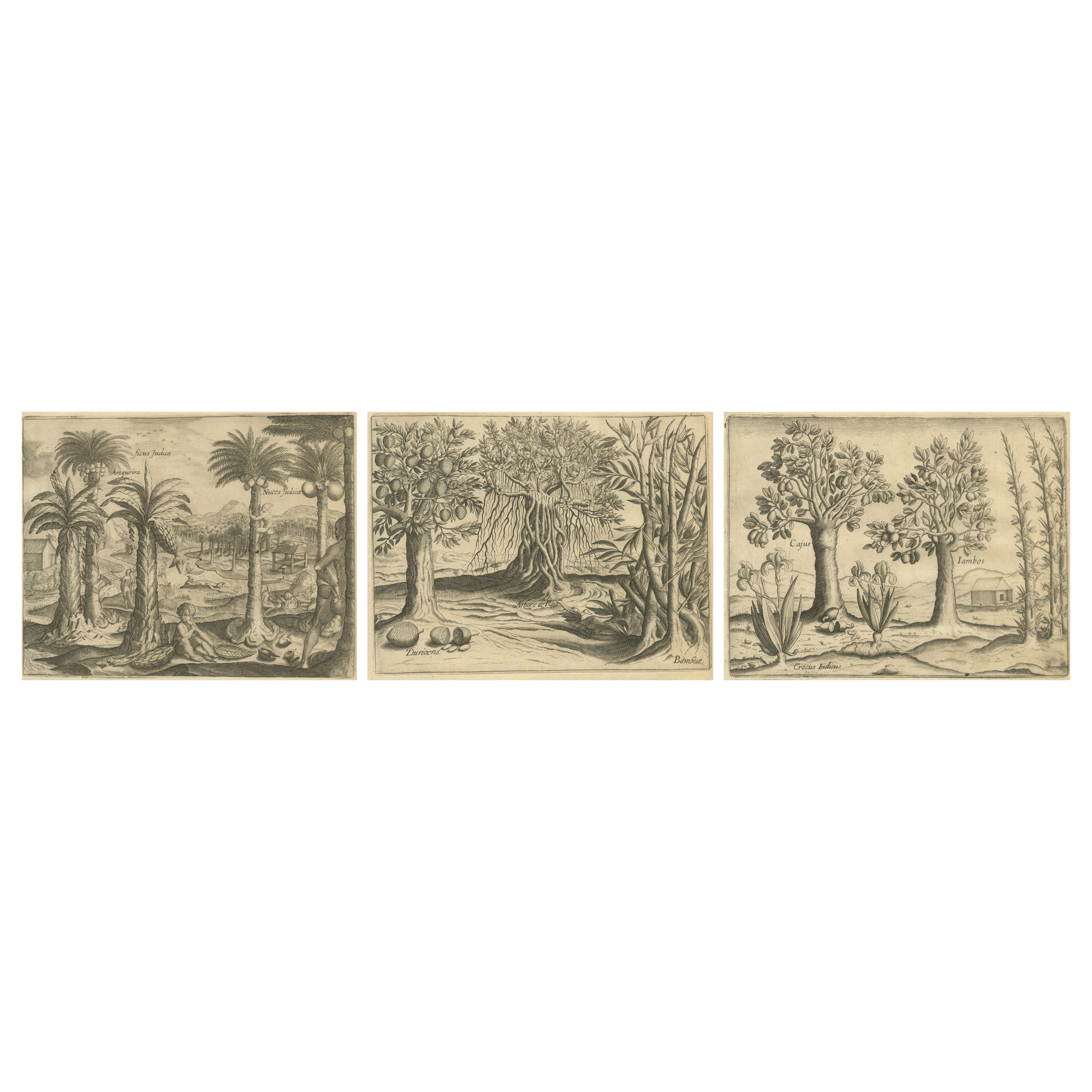
Set of Three De Bry Botanical Engravings of Indian Trees and Fruits, c.1598 – Coconut, Bamboo, and Cashew
Description:
A rare and beautifully matching set of three original copper e...
Category
Antique 16th Century German Prints
Materials
Paper
Decorative Antique Prints – Marine Plants and Cactus Engravings, c.1770
Located in Langweer, NL
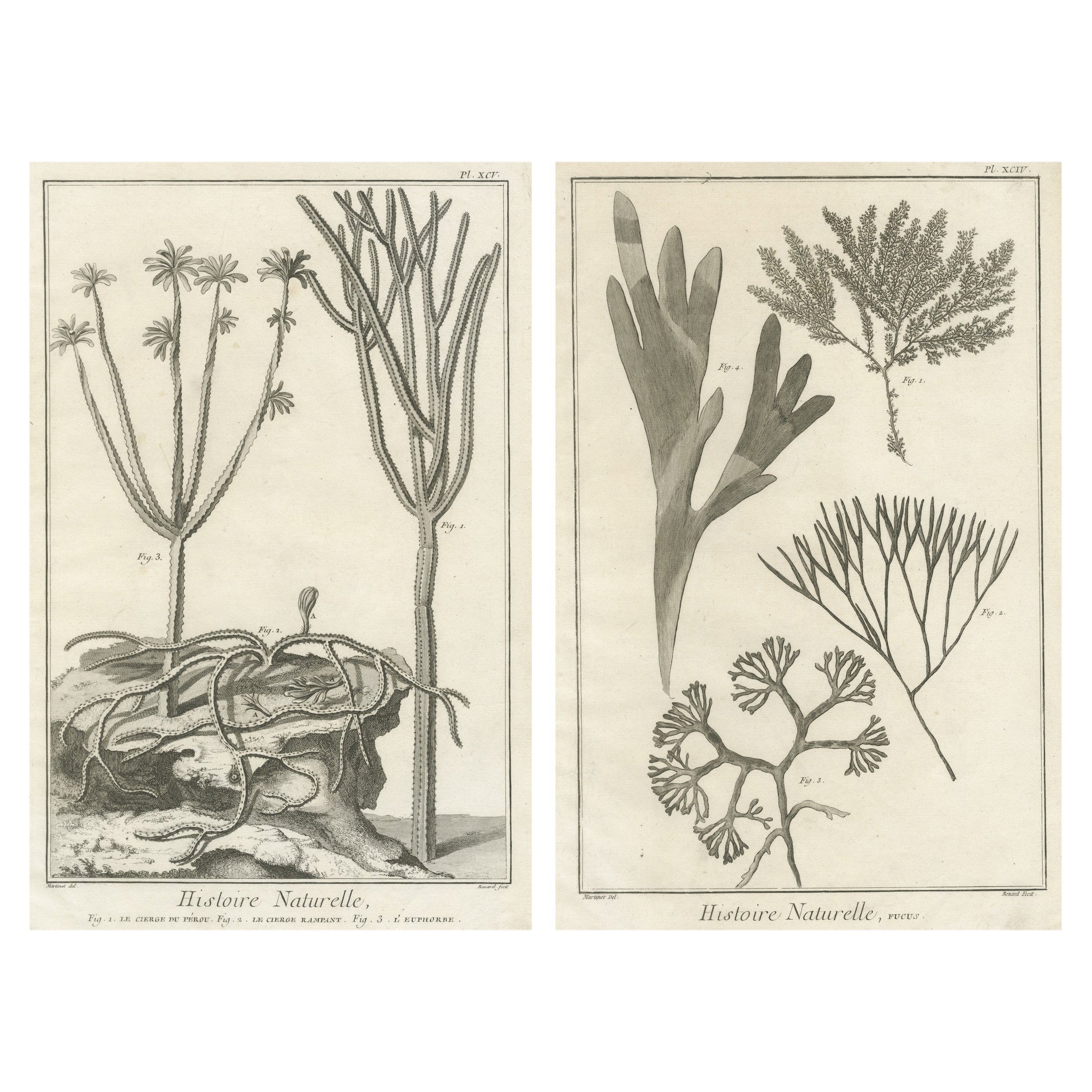
Pair of Antique Engravings of Marine Plants and Cactus Forms from Diderot’s Encyclopédie, ca. 1770
A pair of copperplate engravings from Denis Diderot and Jean le Rond d’Alembert’s ...
Category
Antique 1770s French Prints
Materials
Paper
Botanical Engraving of Tithymalus Aiz Arbor from Caspar Commelin’s Work, 1706
Located in Langweer, NL
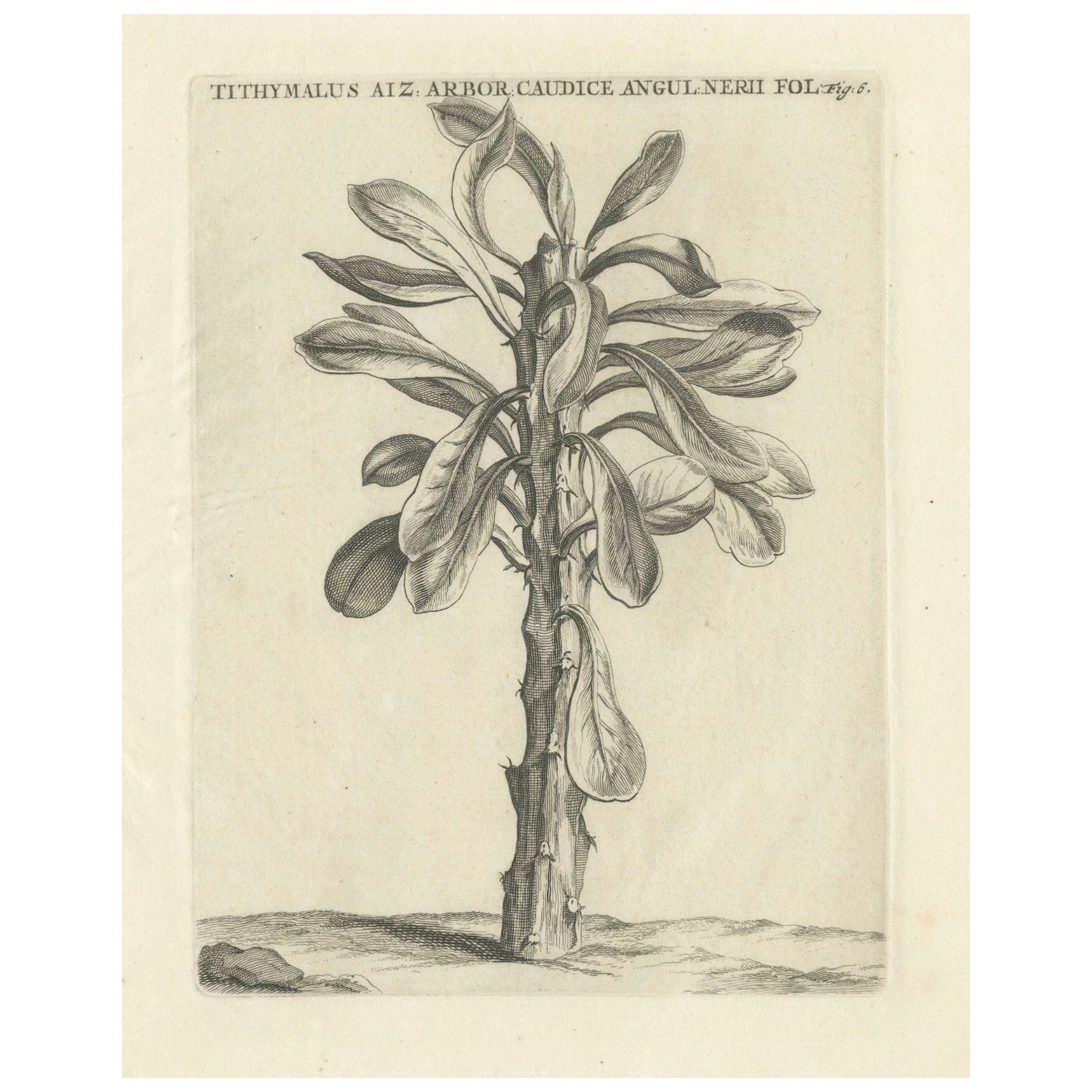
Botanical Engraving of Tithymalus Aiz Arbor from Caspar Commelin’s Work, 1706
This engraving is possibly a botanical illustration from Caspar Commelin's "Praeludia Botanica," publis...
Category
Antique Early 1700s Prints
Materials
Paper
$277 Sale Price
20% Off
You May Also Like
Citamerdu (Amrita) Plant: 17th Century Botanical Engraving by Hendrik van Rheede
Located in Alamo, CA
This is a rare 17th century engraving of a plant entitled "Citamerdu" by the Dutch botanist Hendrik van Rheede tot Drakenstein, plate 21 from his 'Hortus Indicus Malabaricus' (Garden of Malabar), published in Amsterdam in 1686 by Johann van Someren. The engraving depicts the Citamerdu plant, also known as Tinospora cordifolia plant or Amrita and Guduchi. It is a deciduous plant with heart-shaped leaves, greenish flowers, and pea-shaped fruits. Rheede's 19th century publication featured illustrations of exotic plants and fruits labelled with script in the upper right corner in Latin, Malay, Arabic, and Sanskrit. Hortus Indicus Malabaricus is believed to be the earliest comprehensive published work on the flora of Asia and the tropics. The 17th century treatise featured important illustrations of 740 plants of the region, including Indian medicinal plants.
The engraving is printed on 17th century laid, chain-linked paper, watermarked with an elaborate crown design. The sheet measures 15.75" high by 18.75" wide. There is a central fold, as issued. There are a few small spots, but the print is otherwise in excellent condition.
There are additional Rheede botanical engravings from his 'Hortus Indicus Malabaricus' publication that are listed on my 1stdibs storefront and online website. These would make for an impressive display grouping. A discount is available for purchase of two or more of the prints.
Hendrik Adriaan van...
Category
Late 17th Century Naturalistic Landscape Prints
Materials
Engraving
Streptanthera cuprea, antique botanical flower engraving
Located in Melbourne, Victoria
Engraving with original hand-colouring. 1834. 230mm by 155mm. From Paxton's 'Magazine of botany and register of flowering plants' by Sir Joseph Paxton.
Category
Mid-19th Century Naturalistic More Prints
Materials
Engraving
Fever Nut Plant "Ban Caretti": A 17th Century Engraving by Hendrik van Rheede
Located in Alamo, CA
This is a 17th century engraving of a fever or bonduc nut plant entitled "Ban Caretti" by Hendrik van Rheede tot Drakenstein, plate 20 from his 'Hortus Indi...
Category
Late 17th Century Naturalistic Landscape Prints
Materials
Engraving
Pee-amerdu Plant: A Rare 17th Century Botanical Engraving by H. van Rheede
Located in Alamo, CA
This is a rare 17th century engraving of a plant entitled "Pee-amerdu" by the Dutch botanist Hendrik van Rheede tot Drakenstein, plate 19 from his 'Hortus Indicus Malabaricus' (Garden of Malabar), published in Amsterdam in 1686 by Johann van Someren. The engraving depicts the Pee-amerdu plant, a large leafed plant climbing plant off the Malabar Coast in India. The plant is noted for its medicinal uses. It may be related to Tinospora species. Rheede's 19th century publication featured illustrations of exotic plants and fruits labelled with script in the upper right corner in Latin, Malay, Arabic, and Sanskrit. Hortus Indicus Malabaricus is believed to be the earliest comprehensive published work on the flora of Asia and the tropics. The 17th century treatise featured important illustrations of 740 plants of the region, including Indian medicinal plants.
The engraving is printed on 17th century laid, chain-linked watermarked paper. The sheet measures 14.88" high by 18.75" wide. There is a central fold, as issued. There are a few faint smudges, a spot in the upper margin and there is minimal irregularity of the left edge of the paper where the print was previously bound in the 17th century publication. The print is otherwise in very good condition.
There are additional Rheede botanical engravings from his 'Hortus Indicus Malabaricus' publication that are listed on my 1stdibs storefront and online website. These would make for an impressive display grouping. A discount is available for purchase of two or more of the prints.
Hendrik Adriaan van Rheede tot Drakenstein...
Category
Late 17th Century Naturalistic Landscape Prints
Materials
Engraving
Caunga Cucumber Plant: A 17th Century Botanical Engraving by Hendrik van Rheede
Located in Alamo, CA
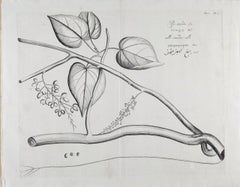
This is a rare 17th century engraving of a plant entitled "Caunga" by the Dutch botanist Hendrik van Rheede tot Drakenstein, plate 6 from his 'Hortus Indicus Malabaricus' (Garden of Malabar), published in Amsterdam in 1686 by Johann van Someren. The engraving depicts the caunga plant, also known as Inca cucumber or horned squash, which is a climbing vine that produces edible, cucumber-like fruits. Rheede's 19th century publication featured illustrations of exotic plants and fruits labelled with script in the upper right corner in Latin, Malay, Arabic, and Sanskrit. Hortus Indicus Malabaricus is believed to be the earliest comprehensive published work on the flora of Asia and the tropics. The 17th century treatise featured important illustrations of 740 plants of the region, including Indian medicinal plants.
The engraving is printed on 17th century laid, chain-linked paper, watermarked with an elaborate crown design. The sheet measures 15.25" high by 18.88" wide. There is a central fold, as issued. There is a small dark spot on the left which appears to represent a paper inclusion which occurred when the hand-made paper was produced. The print is otherwise in excellent condition.
There are additional Rheede botanical engravings from his 'Hortus Indicus Malabaricus' publication that are listed on my 1stdibs storefront and online website. These would make for an impressive display grouping. A discount is available for purchase of two or more of the prints.
Hendrik Adriaan van Rheede tot Drakenstein...
Category
Late 17th Century Naturalistic Landscape Prints
Materials
Engraving
Quivisia; Portesia /// Antique Botanical Botany Plants Science Engraving Buffon
By Georges-Louis Leclerc, Comte de Buffon
Located in Saint Augustine, FL
Artist: Georges-Louis Leclerc, Comte de Buffon (French, 1707-1788)
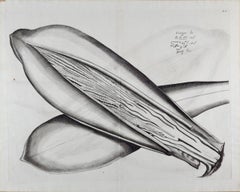
Title: "Quivisia; Portesia" (Octandreie, Monogynie, Plate 302)
Portfolio: Histoire Naturelle
Year: 1749-1789
Medium...
Category
1740s Old Masters Still-life Prints
Materials
Watercolor, Laid Paper, Engraving, Intaglio