Items Similar to The Delicate Predator: Botanical Illustrations of Drosera, 1777
Want more images or videos?
Request additional images or videos from the seller
1 of 10
The Delicate Predator: Botanical Illustrations of Drosera, 1777
$307.47
$384.3420% Off
£227.96
£284.9620% Off
€256
€32020% Off
CA$422.40
CA$52820% Off
A$461.11
A$576.3920% Off
CHF 242.78
CHF 303.4820% Off
MX$5,523.62
MX$6,904.5220% Off
NOK 3,105.10
NOK 3,881.3720% Off
SEK 2,835.01
SEK 3,543.7620% Off
DKK 1,950.63
DKK 2,438.2820% Off
About the Item
The plant depicted in the illustration is identified as "Drosera rotundifolia," which is commonly known as the round-leaved sundew. It is a species of sundew, a carnivorous plant that captures and digests insects using sticky, glandular leaves.
This illustration is from "Flora Londinensis", which was a comprehensive study of the plants found in the vicinity of London around the 18th century.
It was initially authored by William Curtis. The illustrations for this work involved several artists over time, including Sydenham Edwards, James Sowerby, and William Kilburn, among others. However, the specific artist responsible for this particular illustration of Lotus corniculatus is not stated. More research is needed. It would typically be one of the artists who regularly contributed to Curtis's publications. To determine the exact artist, one would need to refer to the specific volume and edition of "Flora Londinensis" in which this illustration appears, as the artist might be credited therein.
The text accompanying the image describes the botanical characteristics of this plant, which includes details about its roots, stalks, leaves, flowers, and seeds. It is a detailed botanical depiction, with notations pointing to various parts of the plant to aid in identification and understanding of its structure and form. Birds-foot Trefoil is known for its use in medicine, agriculture, and other fields, as noted in the text.
It is a hand-colored engraving from the "Flora Londinensis". This kind of print was commonly made in the following way during the 18th century:
1. **Engraving**: The illustration would have been carefully engraved onto a metal plate, typically copper, by a skilled craftsman.
2. **Printing**: Ink would then be applied to the plate, and it would be pressed onto paper to create the print.
3. **Hand-Coloring**: After printing, the black and white image would often be hand-colored by an artist using watercolors.
This process allowed for high detail in the prints and individual color application, making each print unique. It was a labor-intensive method commonly used before the advent of color printing technology.
More specifics about the plant:
Drosera rotundifolia, commonly known as the round-leaved sundew, is a small, carnivorous plant that grows in bogs, fens, and other wet, acidic soils. Here are some specifics about its habitat and characteristics:
**Habitat:**
- **Geographical Distribution:** The round-leaved sundew is found in Europe, Asia, and North America. It has a circumboreal distribution, meaning it is found throughout the northern parts of the Northern Hemisphere, particularly in temperate regions.
- **Environment:** It thrives in open, sunny, wet environments where the soil is poor in nutrients, especially nitrogen. This is why the plant has adapted to obtain nutrients by catching and digesting insects.
**Characteristics:**
- **Leaves:** The leaves of Drosera rotundifolia are round, hence its common name, and covered with sticky hairs that secrete a dew-like substance. This substance glistens in the sun, attracting unsuspecting insects. When an insect becomes ensnared, the leaf slowly curls around the prey to digest it.
- **Flowers:** It produces small, white to pink flowers on a single, slender stalk that rises above the basal rosette of sticky leaves.
- **Growth:** It is a perennial plant, regrowing each spring from a root system that includes a central, vertical rhizome and fibrous roots.
- **Propagation:** Seed dispersal occurs through the wind, and the plant can also reproduce vegetatively through leaf cuttings.
**Adaptations:**
- The round-leaved sundew has evolved several adaptations to survive in nutrient-poor environments. The most notable are the sticky glands on its leaves that trap insects, which are then digested to supplement the plant's nutrient intake.
**Conservation:**
- In some areas, Drosera rotundifolia is considered rare or threatened, largely due to habitat destruction, such as the draining of wetlands and peat bogs for agriculture or development. Conservation efforts are important to preserve its natural habitats.
- Dimensions:Height: 19.18 in (48.7 cm)Width: 11.3 in (28.7 cm)Depth: 0 in (0.02 mm)
- Materials and Techniques:Paper,Engraved
- Place of Origin:
- Period:1770-1779
- Date of Manufacture:1777
- Condition:Good, given age. General age-related toning and/or occasional minor defects from handling. Please study scan carefully. Comes with double sided text leave.
- Seller Location:Langweer, NL
- Reference Number:Seller: BG-13714-11stDibs: LU3054338482262
About the Seller
5.0
Recognized Seller
These prestigious sellers are industry leaders and represent the highest echelon for item quality and design.
Platinum Seller
Premium sellers with a 4.7+ rating and 24-hour response times
Established in 2009
1stDibs seller since 2017
2,811 sales on 1stDibs
Typical response time: 1 hour
- ShippingRetrieving quote...Shipping from: Langweer, Netherlands
- Return Policy
More From This Seller
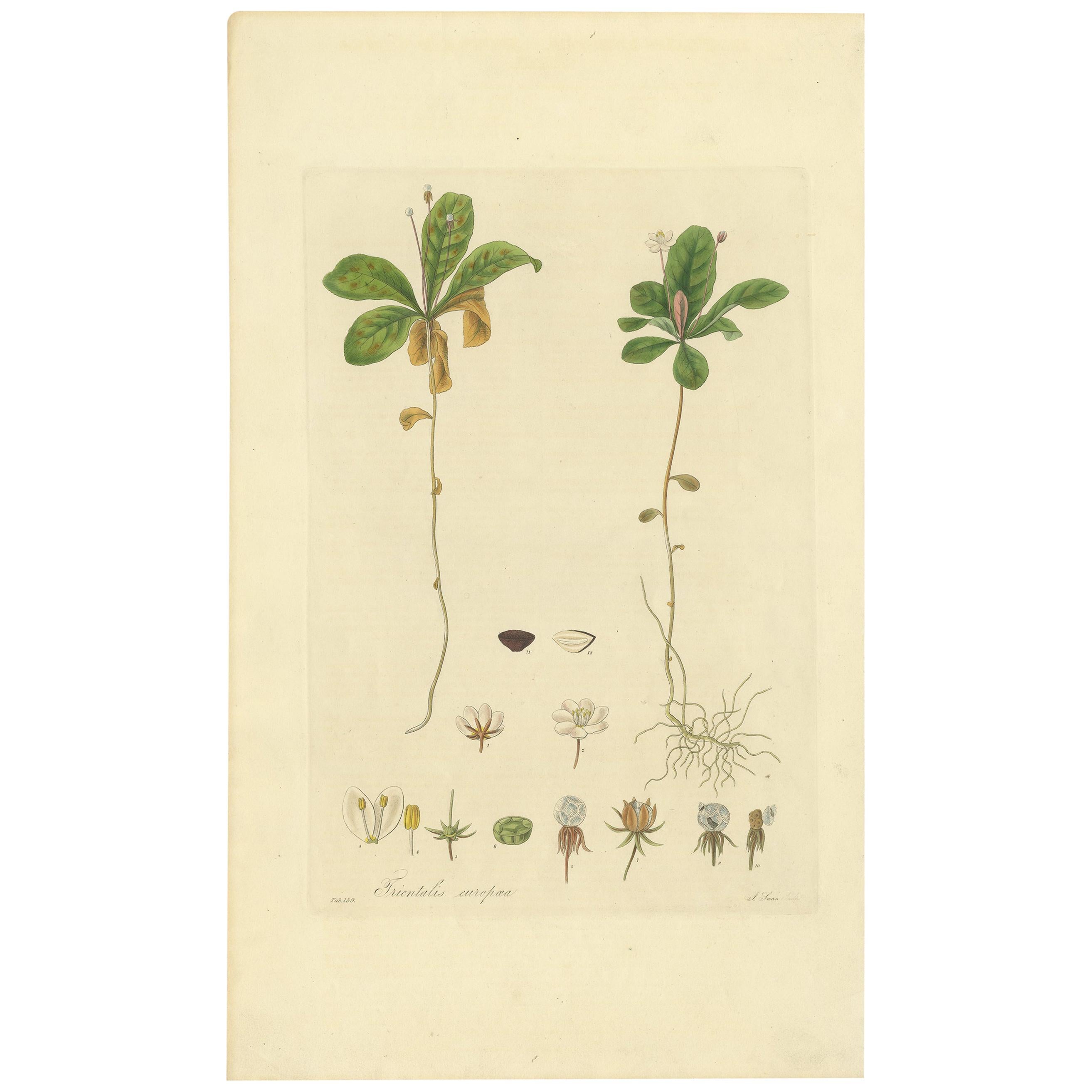
View AllAntique Botany Print of Trientalis Europea by Curtis,
circa 1817
Located in Langweer, NL
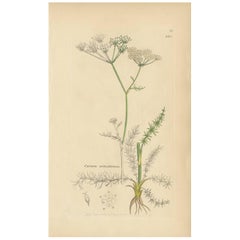
Antique botany print titled 'Trientalis Europaea'. Hand colored engraving of trientalis europaea, also known as chickweed-wintergreen or arctic starflower. This print originates from...
Category
Antique Early 19th Century Prints
Materials
Paper
$288 Sale Price
20% Off
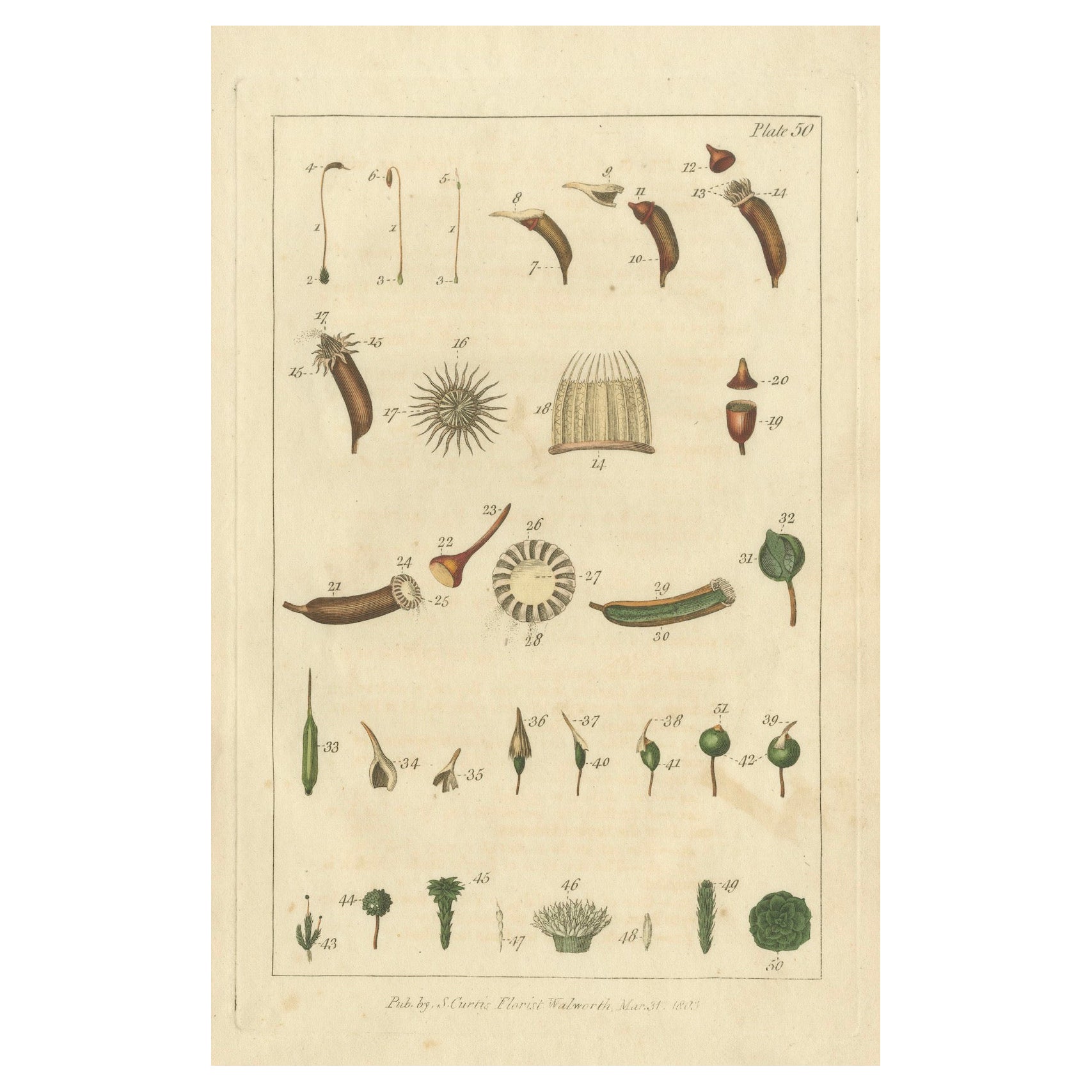
Botanical Study of Various Plant Structures in an Original Engraving, 1803
Located in Langweer, NL
Botanical Study of Various Plant Structures
This engraving is from the publication "Flora Londinensis," an illustrated work detailing the flora found around London. The specific pla...
Category
Antique Early 1800s Prints
Materials
Paper
$134 Sale Price
20% Off
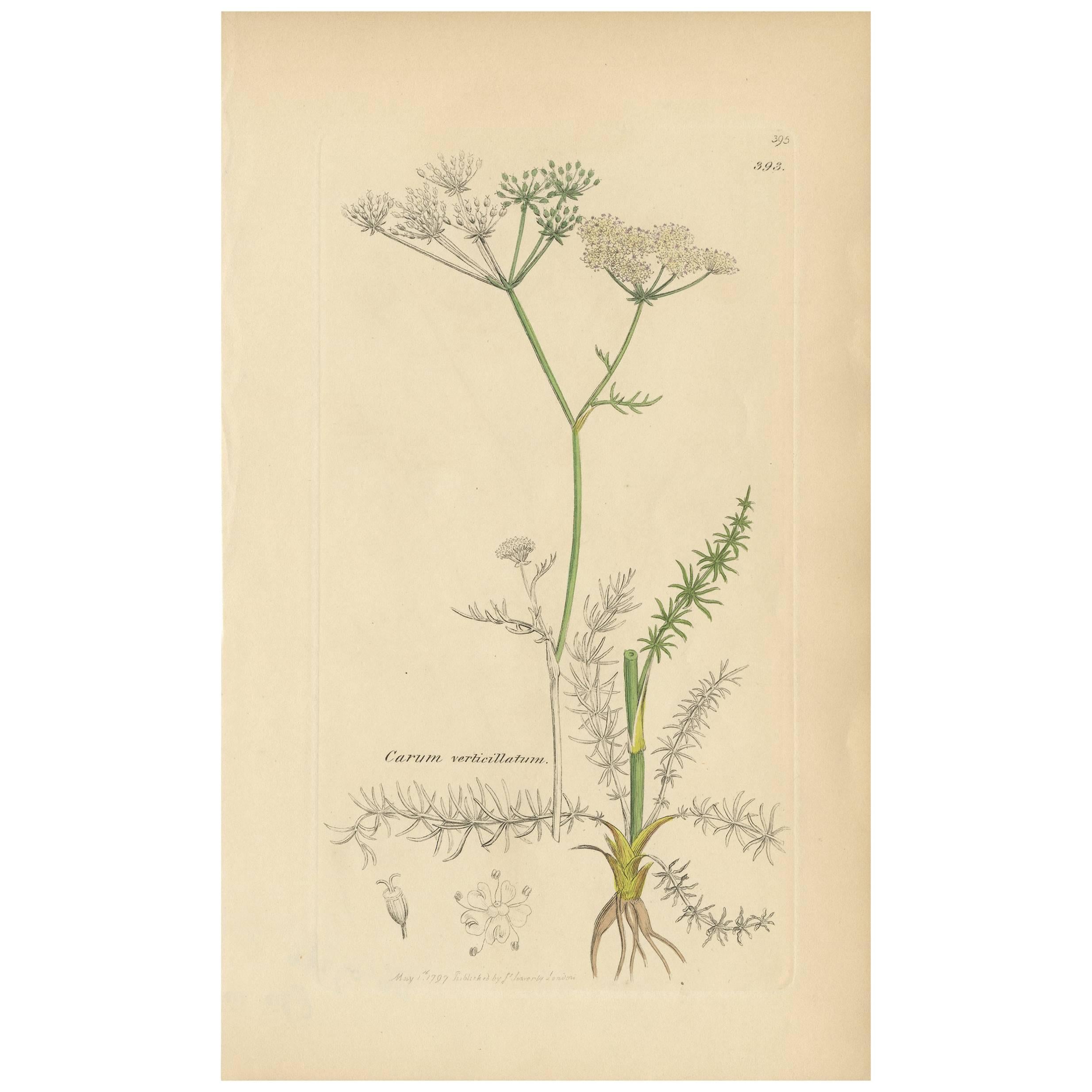
Antique Botany Print
Carum Verticillatum
by J. Sowerby, 1797
Located in Langweer, NL
Antique print titled 'Carum verticillatum'. This print originates from Sowerby's English Botany, or Coloured Figures of British Plants, 1797.
Category
Antique Late 18th Century Prints
Materials
Paper
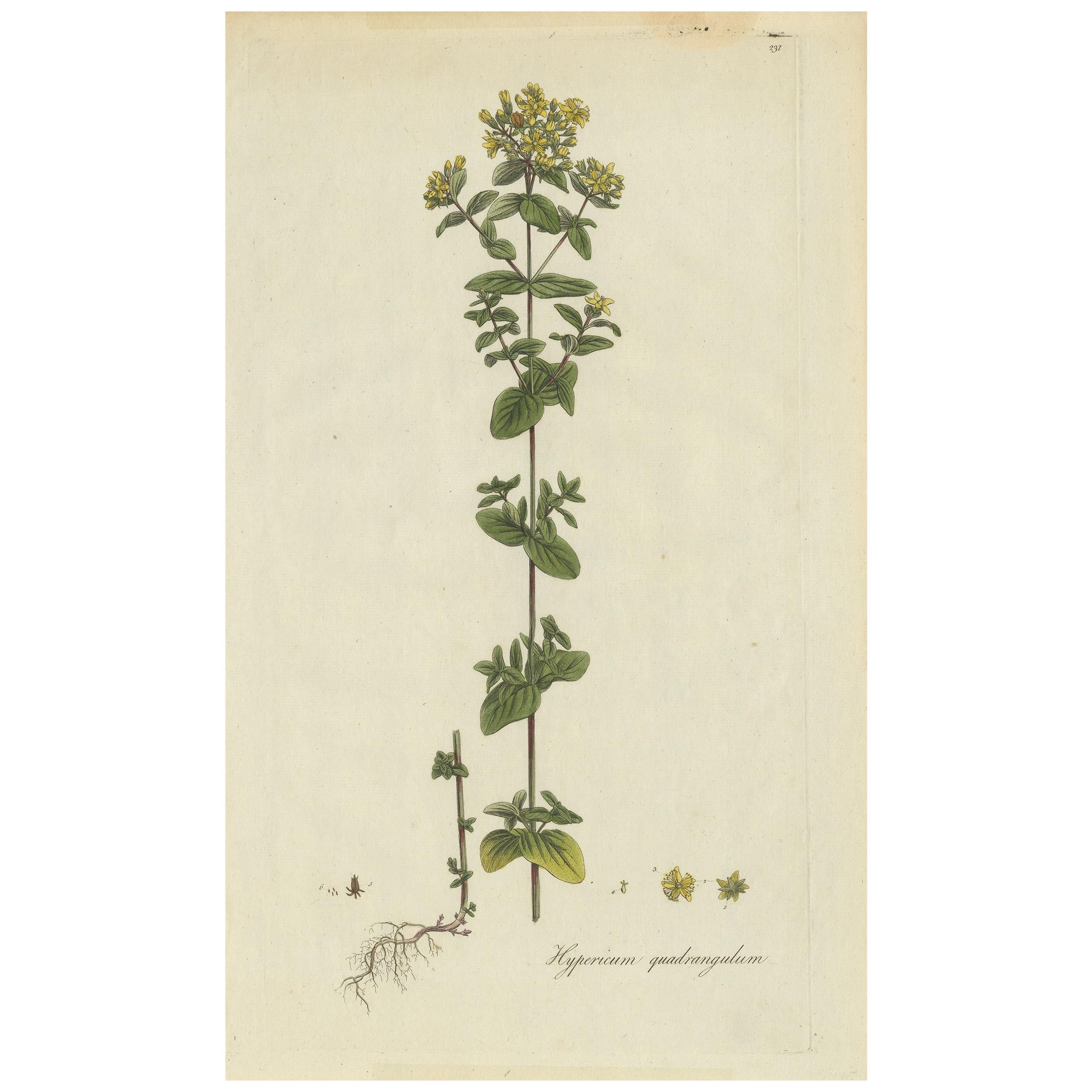
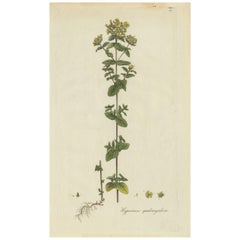
Antique Botany Print of a Species of St. Johnswort by Curtis, circa 1777
Located in Langweer, NL
Antique botany print titled 'Hypericum Quadrangulum'. Hand colored engraving of a species of St. Johnswort. This print originates from 'Flora Londinensis' by William Curtis.
Category
Antique Late 18th Century Prints
Materials
Paper
$288 Sale Price
20% Off
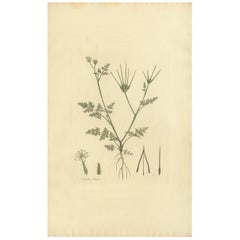
Antique Botany Print of Scandix Pecten-Veneris by Curtis
circa 1817
Located in Langweer, NL
Antique botany print titled 'Scandix Pecten'. Hand colored engraving of scandix pecten-veneris also known as shepherd's-needle, Venus' comb or Stork's needle. This print originates f...
Category
Antique Early 19th Century Prints
Materials
Paper
$240 Sale Price
20% Off
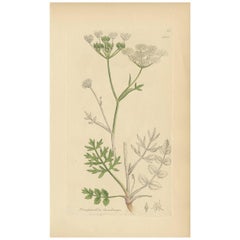
Antique Botany Print
Pimpinella Saxifraga
by J. Sowerby, 1797
Located in Langweer, NL
Antique print titled 'Pimpinella Saxifraga'. This print originates from Sowerby's English Botany, or colored figures of British plants, 1797.
Category
Antique Late 18th Century British Prints
Materials
Paper
You May Also Like
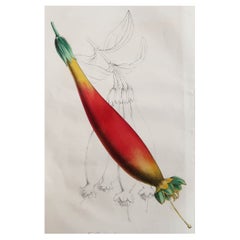
Original Antique Botanical Print, Lisianthus Princeps, circa 1835
Located in St Annes, Lancashire
Wonderful botanical print.
Lithograph by J & J Parkin and D.Hayes
After C.W Harrison
Original hand color
Published, circa 1835
Unframed.
Category
Antique 1830s English Chinoiserie Prints
Materials
Paper
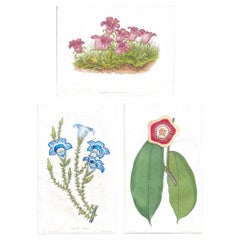
Campanula Allionii – Original Antique Botanical Print, France, 19th Century
Located in Fukuoka, JP
Hand-colored lithograph from the 1800s
A finely detailed and richly colored 19th-century botanical print depicting Campanula Allionii, a charming alpine bellflower native to the sou...
Category
Antique 19th Century British Prints
Materials
Paper
Framed Victorian 19th Century Botanical Drawing, "Haplanthus Tentaculatus"
Located in Queens, NY
American Victorian (19th Century) watercolor, ink, and pencil botanical drawing depicting a Haplanthus Tentaculatus plant in green tones against a beige background, matted in a bevel...
Category
Antique 19th Century American Victorian Paintings
Materials
Paint
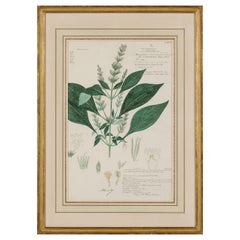
Framed Victorian 19th Century Botanical Drawing, "Justicia Tranquebariensis"
Located in Queens, NY
American Victorian (19th Century) watercolor, ink, and pencil botanical drawing depicting a Justicia Tranquebariensis plant in green tones against a beige background, matted in a bev...
Category
Antique 19th Century American Victorian Paintings
Materials
Paint
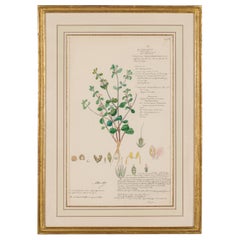
Two 18th Century Hand Colored Botanical Engraving of Plants from (1771)
Located in Stockholm, SE
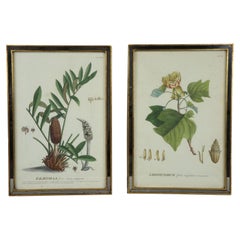
Adorning the walls, two gracefully framed botanical engravings from 1771 capture nature's elegance in exquisite detail. Delicate strokes of...
Category
Antique 1770s European George III Decorative Art
Materials
Paper
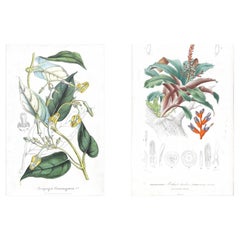
Set of Two Rare Botanical Engravings by D’Orbigny — 1849
Located in Fukuoka, JP
Set of Two Rare Botanical Engravings by D’Orbigny — Dictionnaire Universel d’Histoire Naturelle, Paris, 1849
An exquisite pair of original hand-colored botanical engravings from the...
Category
Antique 19th Century French Prints
Materials
Paper
More Ways To Browse
Antique Wedgwood Dishes
Antique Wood Beams
Arabia Finland Kaj Franck
Arabic Plates
Art Deco Automobile
Art Deco Lizard
Art Nouveau Horn
Arte Vetraria Muranese (AVEM) On Sale
Ashford Marble
Ashley Wood
Asian Coins
Astronomical Clock
Austrian Pug
Aztec Stone
B Altman Vintage
Beetles Sculpture
Bencharong Porcelain
Biedermeier Marble Top