Items Similar to Ecce Homo, 1899 German Chromolithograph of Christ with Crown of Thorns (Dresden)
Want more images or videos?
Request additional images or videos from the seller
1 of 10
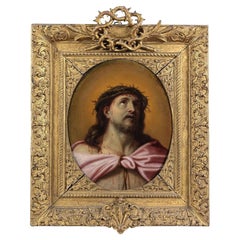
Ecce Homo, 1899 German Chromolithograph of Christ with Crown of Thorns (Dresden)
$586.40
£438.98
€490
CA$807.25
A$882.49
CHF 466.88
MX$10,560.38
NOK 5,940.32
SEK 5,437.76
DKK 3,733.20
About the Item
Ecce Homo, 1899 German Chromolithograph of Christ with Crown of Thorns (Dresden)
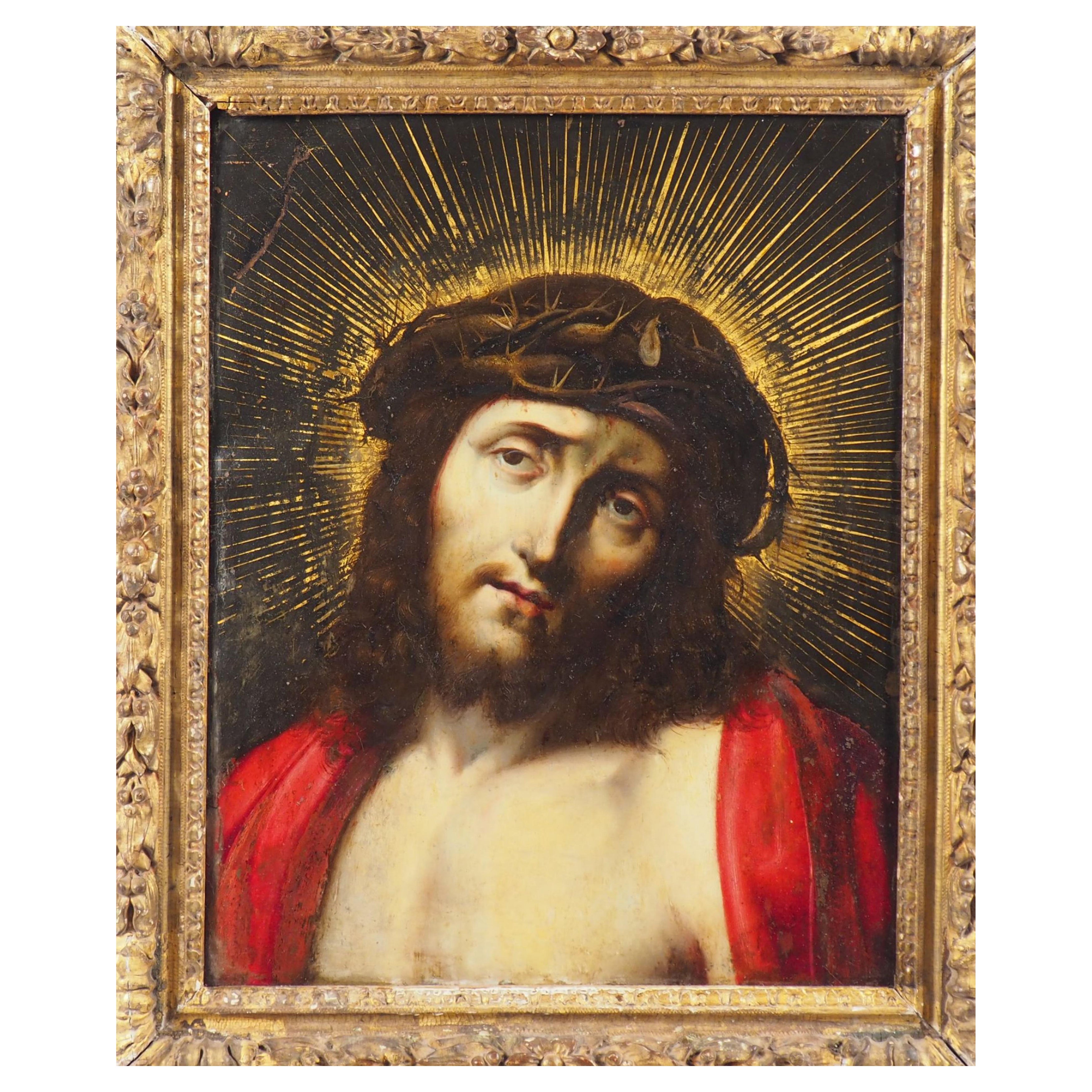
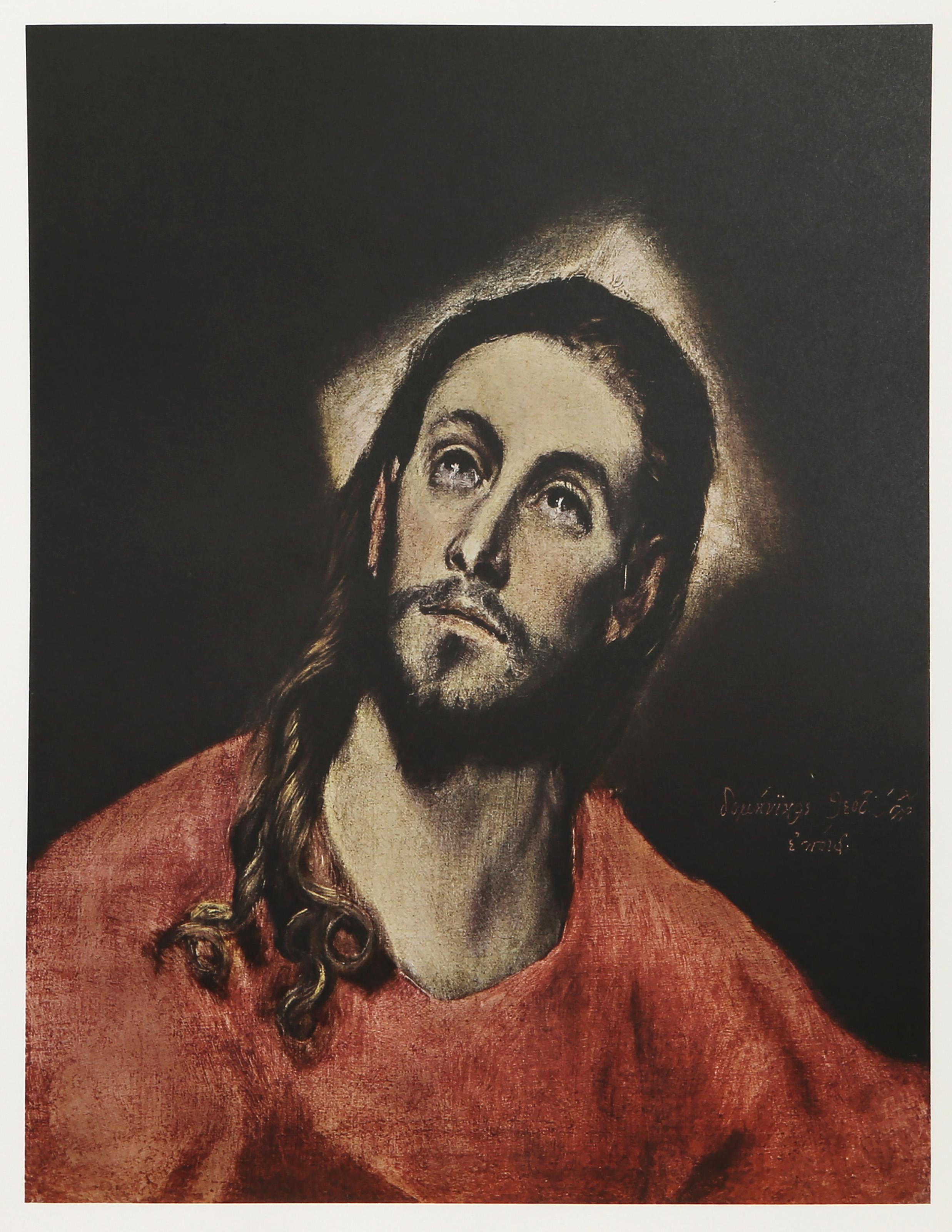
This moving late-19th-century chromolithograph of Christ as “Ecce Homo” was printed in Dresden in 1899 and represents one of the finest examples of German devotional chromolithography of the period. German presses—particularly those based in Dresden, Munich, and Cologne—were renowned for their technical mastery, producing richly saturated devotional images intended for Catholic and Lutheran households throughout Europe. This edition displays the hallmark qualities of that tradition: velvety shadows, luminous highlighting, and a carefully layered palette of stone-based inks that give the work exceptional depth and emotional resonance.
Christ is shown in three-quarter view, wearing the crown of thorns and gazing upward with a serene but sorrowful expression. The dramatic interplay of light and shadow across the face, along with the soft golden halo behind the head, reflects the influence of the 17th-century Italian “Ecce Homo” paintings frequently attributed to Carlo Dolci and his studio. Dolci’s devotional realism—gentle, introspective, and profoundly human—became a model for chromolithographic publishers across Europe, who translated these emotional compositions into detailed colour prints for domestic devotion.
The bottom margin bears the identifying imprint: “No. 46. Ecce Homo.” along with the publication note “Dresden 1899” and the designation “Printed in Germany.” This confirms the print’s origin in one of Germany’s major artistic printing centres during the peak of chromolithographic production. Its date—1899—places it squarely within the final decade of the 19th century, when chromolithography had reached its highest technical refinement before the transition to new printing technologies in the early 20th century.
An important note for collectors: this is unquestionably an original 19th-century chromolithograph, not a modern reproduction. The colour structure shows authentic stone-layering rather than digital dot patterns, and the paper surface exhibits the natural age toning and matte fibre texture characteristic of late-1800s chromolithographic stock. The presence of the period German imprint—“Dresden 1899. Printed in Germany.”—further authenticates the piece. The glowing halo, deep red garment, and sculptural modelling of Christ’s features are all consistent with genuine 19th-century devotional prints and cannot be replicated by modern printing processes without visible differences.
Condition Report: Very good condition. Colours bright and unfaded. Minor age toning at the margins and small handling traces consistent with age. Plate margins intact with full imprint line visible. A few small tears into the margins, not disturbing.
Tips for Framing: Ideal for framing in a dark wood or gilded moulding to complement the warm halo and deep red garment. A cream or ivory mat enhances the tonal range, while a slim black frame with a wide mat offers a striking contemporary presentation.
Technique: Chromolithograph
Maker: German Devotional Press, Dresden, 1899
Printed in Germany
ecce homo
christ with crown of thorns
carlo dolci
dolci school
religious art
catholic art
devotional art
jesus print
christian iconography
19th century chromolithograph
antique lithograph
german devotional print
dresden print
printed in germany
chromolithography
holy face
sacred art
religieuse
chromolitho
antique christian
late 19th century print
fine chromolitho
religious ephemera
- Dimensions:Height: 20.48 in (52 cm)Width: 15.6 in (39.6 cm)Depth: 0.01 in (0.2 mm)
- Materials and Techniques:
- Place of Origin:
- Period:
- Date of Manufacture:1899
- Condition:Very good condition. Colours bright and unfaded. Minor age toning at the margins and small handling traces consistent with age. Plate margins intact with full imprint line visible. A few small tears into the margins, not disturbing.
- Seller Location:Langweer, NL
- Reference Number:Seller: BG-14165-61stDibs: LU3054347801232
About the Seller
5.0
Recognized Seller
These prestigious sellers are industry leaders and represent the highest echelon for item quality and design.
Platinum Seller
Premium sellers with a 4.7+ rating and 24-hour response times
Established in 2009
1stDibs seller since 2017
2,792 sales on 1stDibs
Typical response time: <1 hour
- ShippingRetrieving quote...Shipping from: Langweer, Netherlands
- Return Policy
More From This Seller
View AllChrist on the Mount of Olives, Antique German Chromolithograph c.1900
Located in Langweer, NL
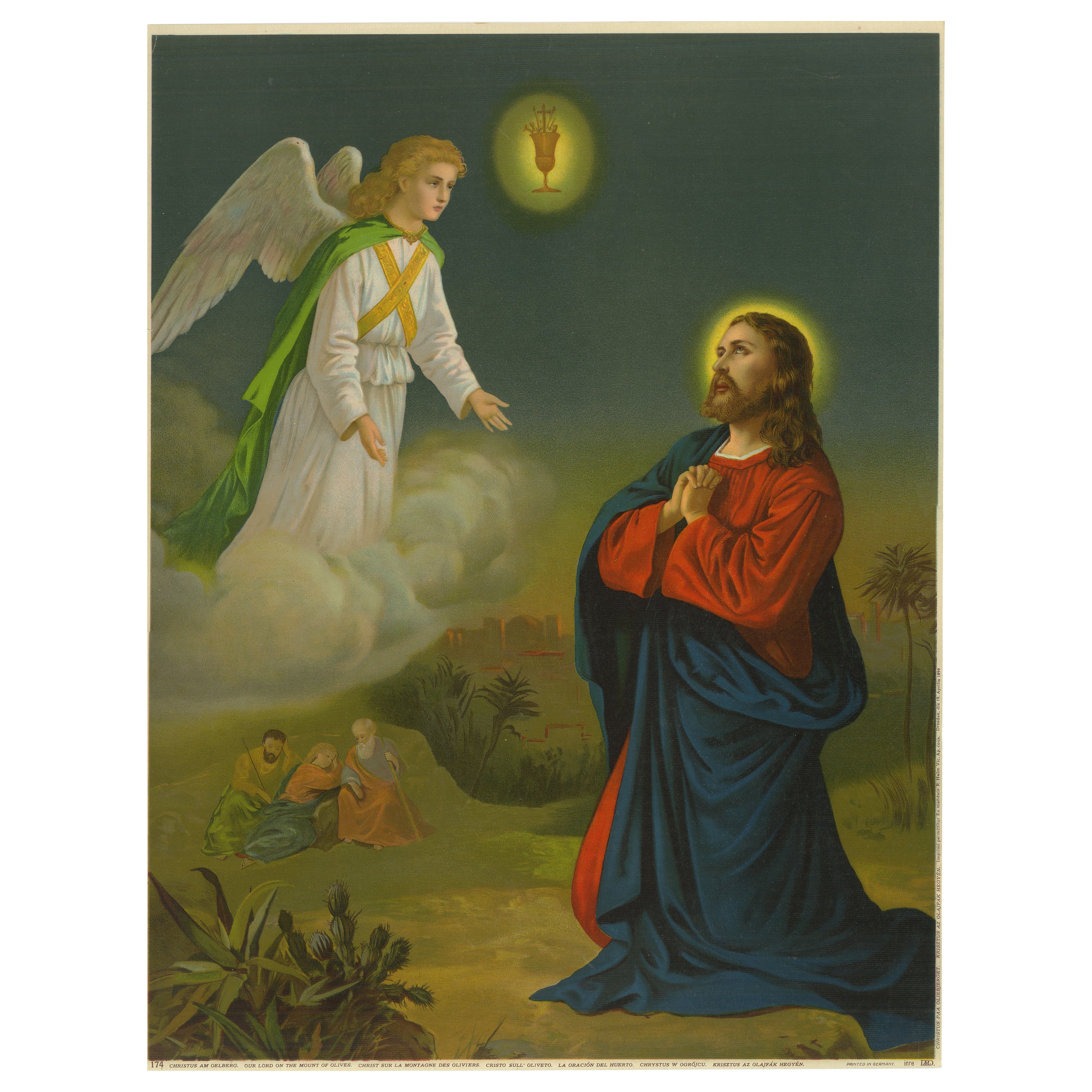
Christ on the Mount of Olives, Antique German Chromolithograph c.1900
This striking late 19th to early 20th century German chromolithograph depicts Christ in the Garden of Gethsemane, the solemn moment of prayer and surrender before His arrest. Christ kneels in contemplation beneath the night sky, gazing upward toward a descending angel who brings the chalice of suffering, symbolizing the Passion that is about to unfold. At the left, the sleeping apostles Peter, James, and John lie overcome with weariness, emphasizing the solitude of Christ’s sacrifice.
The composition is rich in devotional symbolism. Christ’s folded hands, bowed posture, and softly glowing halo express humility and obedience to divine will. The angel’s flowing white robes and green mantle are dramatically illuminated against the darkened sky, while the radiant chalice floats above as a direct reference to Luke 22:42, “Father, if thou be willing, remove this cup from me: nevertheless not my will, but thine, be done.” Palm trees and distant buildings subtly root the scene in the Holy Land.
This image was created for private devotion and contemplation and would originally have been displayed in chapels, monasteries, religious schools, or Catholic homes. Passion scenes of this size and quality were specifically intended to guide prayer during Lent and Holy Week. The calm dignity of the composition, paired with its dramatic spiritual symbolism, makes this a powerful and emotionally resonant devotional work.
The print was produced using the demanding chromolithographic process, requiring multiple stone plates to achieve its luminous color depth and fine tonal transitions. The halo effects, delicately layered drapery, and atmospheric landscape demonstrate the high technical standards of German devotional printing at the turn of the century. This is a genuine period chromolithograph and not a later reproduction.
The printed attribution along the lower margin confirms German production for the Catholic market. Large-format Passion scenes in strong, unfaded condition are increasingly scarce and are highly sought after by collectors of Catholic iconography and museum-quality devotional art.
Condition report: Very good overall condition. Colors remain strong and unfaded. Light age toning mostly confined to the margins. Minor handling wear consistent with age. No major tears, losses, water damage, or restoration observed. The image area remains clean and vivid.
Framing tips: This work presents beautifully in an antiqued gold-leaf or warm gilt frame to enhance the sacred glow of the halos. An ivory or soft parchment mat complements the night sky without overpowering the colors. A dark walnut frame also works well for church or monastery interiors.
Technique: Chromolithograph
Maker: German devotional press, printed in Germany, circa 1900
christ mount of olives
agony in the garden
garden of gethsemane print
christ praying chromolithograph
antique catholic devotional art
religious german chromolithograph
passion of christ print
holy week wall art
lenten devotion image
christ angel chalice
biblical prayer scene
antique christian wall art
sacred jesus artwork
turn of the century devotional
printed in germany religious
catholic passion art
jesus gethsemane
antique religious lithograph...
Category
Antique Late 19th Century German Prints
Materials
Paper
Antique Religious Print "No. 34" Jesus Carrying the Cross, circa 1840
Located in Langweer, NL
Antique print titled ‘Histoire Sainte, Nouveau Testament, Jésus portant sa Croix, console les filles de Jérusalem.’ This plate shows a scene from the New Testament; Jesus carrying the Cross...
Category
Antique Mid-19th Century Prints
Materials
Paper

$248 Sale Price
20% Off
Mater Dolorosa, 1899 German Chromolithograph of the Sorrowful Mother, Dresden
Located in Langweer, NL
Mater Dolorosa, 1899 German Chromolithograph of the Sorrowful Mother, Dresden
This exquisite late-19th-century chromolithograph of the Mater Dolorosa—“Sorrowful Mother”—was printed ...
Category
Antique Late 19th Century German Prints
Materials
Paper
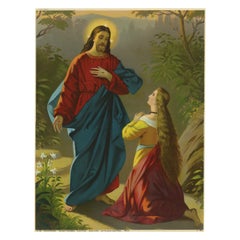
Jesus Appears to Mary Magdalene – Antique German Chromolithograph, c. 1895
Located in Langweer, NL
Jesus Appears to Mary Magdalene – Antique German Chromolithograph, c. 1895
This striking late 19th-century German chromolithograph depicts the moving biblical moment in which the risen Christ appears to Mary Magdalene following the Resurrection. Christ is shown standing in quiet majesty, halo radiant with divine light, His right hand placed gently over His heart in a gesture of compassion and reassurance. Mary Magdalene kneels before Him with deep devotion, her long flowing hair and rich garments emphasizing both humility and reverence.
The composition is set within a tranquil garden landscape, traditionally associated with the Resurrection narrative, reinforcing the spiritual symbolism of rebirth, forgiveness, and divine mercy. Christ’s red tunic and deep blue mantle radiate warmth and solemnity, while the soft golden halo creates a luminous focal point that draws the eye immediately to His face.
This scene, known in Christian tradition as *Noli Me Tangere* (“Touch Me Not”), represents one of the most emotionally powerful moments of the Gospel story. It became a highly favored subject in Catholic devotional art of the late 19th century, commonly displayed in prayer corners, chapels, religious schools, and family interiors.
Produced using high-quality chromolithography, this print achieves exceptional painterly depth, with delicate shading in the flesh tones, refined folds in the drapery, and beautifully layered landscape colors. The gold highlights of the halos and the saturated reds and blues are especially well preserved, reflecting the superior production standards of German devotional publishers during this period.
This is a visually commanding and spiritually meaningful artwork, highly desirable for Catholic collectors, sacred art interiors, and serious devotional art collections.
CONDITION REPORT
Good antique condition overall. Light, even age toning to the paper consistent with late 19th-century chromolithographs. Minor edge wear and very gentle corner softening visible upon close inspection. No major stains, no tears, and no restoration observed. Colors remain strong and vivid.
FRAMING TIPS
This print will display beautifully in a classic gilt or softly antiqued gold wooden frame to echo the sacred halo tones. For a more restrained interior, a dark walnut or black lacquer frame with a wide ivory mat and museum glass will create a dramatic devotional presentation.
TECHNIQUE
Chromolithography
MAKER
German devotional publisher, Germany, circa 1895
KEYWORD BLOCK
Jesus and Mary Magdalene, Noli Me Tangere, resurrection scene, antique catholic print...
Category
Antique Late 19th Century German Prints
Materials
Paper
Christ the Shepherd, Beautiful Catholic Chromolithograph Artwork, ca.1900
Located in Langweer, NL
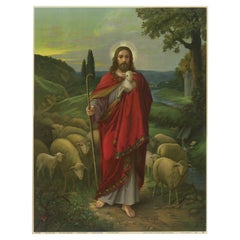
The Good Shepherd, c.1900 German Devotional Chromolithograph (Printed in Germany)
This early 20th-century German chromolithograph presents one of the most iconic and comforting Christian images: Christ as the Good Shepherd. Produced around 1900 by a major German devotional press, the print exemplifies the luminous colour layering, soft modelling, and serene atmosphere characteristic of high-quality chromolithography from this period. These works were widely distributed throughout Europe and the Americas and became treasured objects in Catholic homes, chapels, and pastoral settings.
Christ stands barefoot in a verdant landscape, gently holding a lamb to his chest while a flock gathers around him. The rich red cloak, delicate golden halo, and pastoral backdrop are rendered with exceptional detail and depth, achieved through multiple stone plates typical of fine chromolithographic production. The artwork conveys both theological symbolism and emotional warmth: the shepherd guiding and protecting his flock, the gentle lamb symbolising innocence, and the tranquil landscape offering a sense of peace and reassurance.
The lower margin features multilingual titles identifying the subject for international Catholic distribution: “Der Gute Hirt. The Good Shepherd. Le Bon Pasteur. Il Buon Pastore. El Divino Pastor.” This multilingual caption format is typical of German devotional publishers active from the late 19th into the early 20th century. The imprimatur line, “Imprimi permittitur. Ordinariatus episcopalis Limburgensis,” confirms that the image was officially approved for devotional use by the Catholic Church. The imprint “Printed in Germany” situates the work within one of the major German chromolithographic centres, likely Munich or Cologne, renowned for their beautifully saturated and technically refined religious images.
This is unquestionably an original chromolithograph, not a modern reproduction. The velvety colour fields, warm matte lithographic paper, subtle stippling, and natural toning all align with authentic early 20th-century stone-based printing. The crisp border text and preserved pigments further confirm its originality. The Good Shepherd was among the most cherished devotional themes of the period, and examples in this level of condition are increasingly rare and desirable among collectors of sacred art.
Condition Report: Very good condition. Colours bright and unfaded. Minor age toning and small, expected handling marks at the outer margins. No tears, creases, losses, or repairs. The plate text and imprimatur are sharp and fully legible.
Tips for Framing: Ideal for framing in a warm walnut or gilded frame to enhance the halo and red cloak. A cream or ivory mat complements the pastoral greens and highlights the central figure. A clean black frame with a wide mat offers a more contemporary presentation while keeping the devotional character intact.
Technique: Chromolithograph
Maker: German Devotional Press, printed in Germany, c.1900
the good shepherd
christ the shepherd
jesus with lamb
pastoral christ
catholic art
devotional art
religious art
german chromolithograph
printed in germany
antique lithograph
chromolithograph
imprimi permittitur
church imprimatur
holy shepherd
pastoral scene
sacred art
early 20th century religious print
fine chromolitho
religious ephemera
christian iconography
christ among the sheep
antique christian art...
Category
Antique Late 19th Century German Prints
Materials
Paper
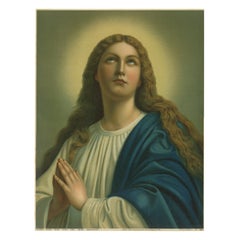
Holy Mary in Prayer – Antique German Marian Chromolithograph, 1904
Located in Langweer, NL
Jesus Appears to Mary Magdalene – Antique German Chromolithograph, c. 1895
This striking late 19th-century German chromolithograph depicts the moving biblical moment in which the risen Christ appears to Mary Magdalene following the Resurrection. Christ is shown standing in quiet majesty, halo radiant with divine light, His right hand placed gently over His heart in a gesture of compassion and reassurance. Mary Magdalene kneels before Him with deep devotion, her long flowing hair and rich garments emphasizing both humility and reverence.
The composition is set within a tranquil garden landscape, traditionally associated with the Resurrection narrative, reinforcing the spiritual symbolism of rebirth, forgiveness, and divine mercy. Christ’s red tunic and deep blue mantle radiate warmth and solemnity, while the soft golden halo creates a luminous focal point that draws the eye immediately to His face.
This scene, known in Christian tradition as *Noli Me Tangere* (“Touch Me Not”), represents one of the most emotionally powerful moments of the Gospel story. It became a highly favored subject in Catholic devotional art of the late 19th century, commonly displayed in prayer corners, chapels, religious schools, and family interiors.
Produced using high-quality chromolithography, this print achieves exceptional painterly depth, with delicate shading in the flesh tones, refined folds in the drapery, and beautifully layered landscape colors. The gold highlights of the halos and the saturated reds and blues are especially well preserved, reflecting the superior production standards of German devotional publishers during this period.
This is a visually commanding and spiritually meaningful artwork, highly desirable for Catholic collectors, sacred art interiors, and serious devotional art collections.
CONDITION REPORT
Good antique condition overall. Light, even age toning to the paper consistent with late 19th-century chromolithographs. Minor edge wear and very gentle corner softening visible upon close inspection. No major stains, no tears, and no restoration observed. Colors remain strong and vivid.
FRAMING TIPS
This print will display beautifully in a classic gilt or softly antiqued gold wooden frame to echo the sacred halo tones. For a more restrained interior, a dark walnut or black lacquer frame with a wide ivory mat and museum glass will create a dramatic devotional presentation.
TECHNIQUE
Chromolithography
MAKER
German devotional publisher, Germany, circa 1895
KEYWORD BLOCK
Jesus and Mary Magdalene, Noli Me Tangere, resurrection scene, antique catholic print...
Category
Early 20th Century German Prints
Materials
Paper
You May Also Like
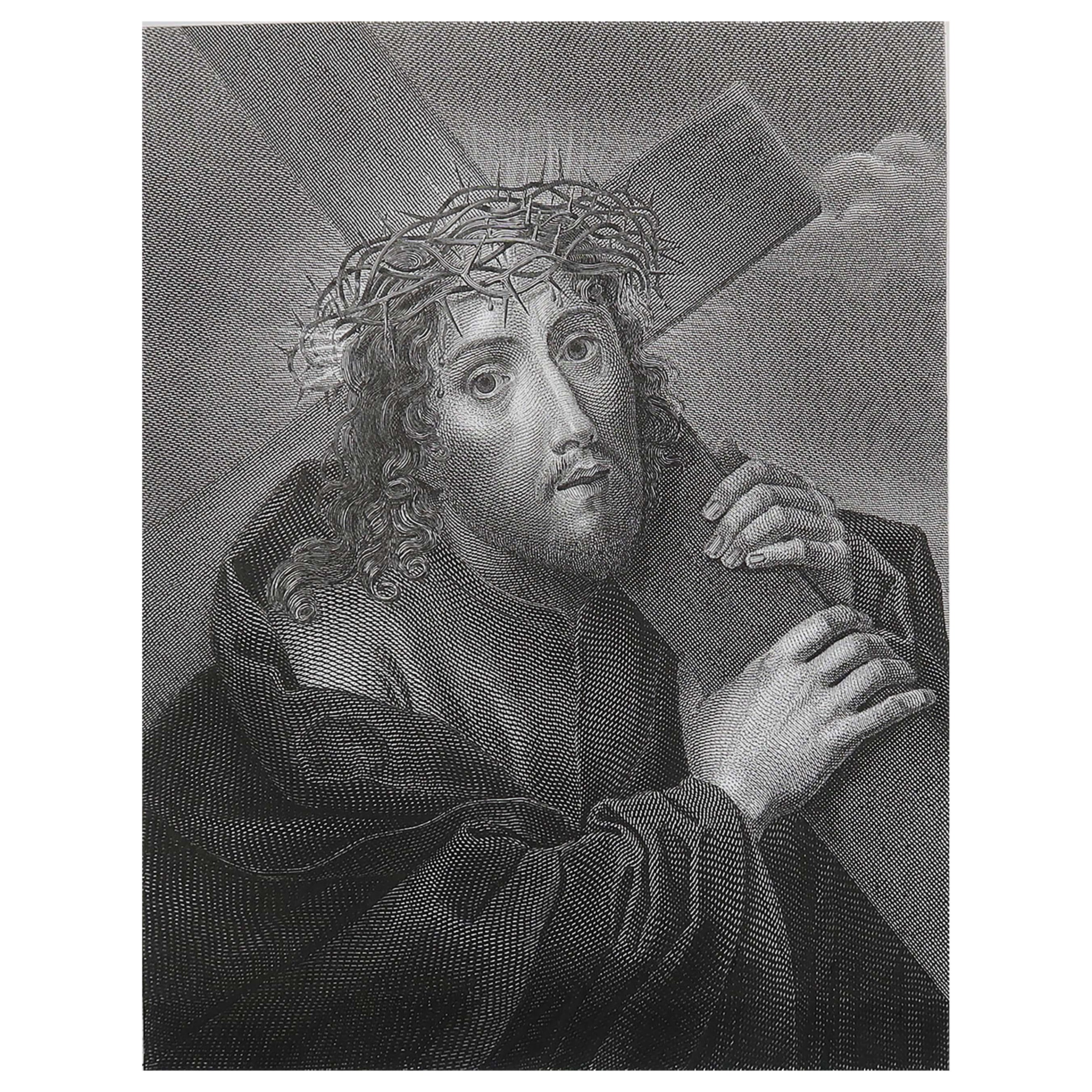
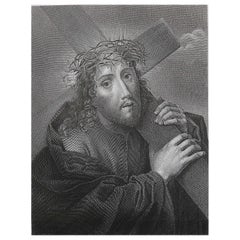
Original Antique Print of Ecce Homo After Carlo Dolci. C.1850
Located in St Annes, Lancashire
Great image after Carlo Dolci
Fine steel engraving
Published circa 1850
Unframed.
Free shipping
Category
Antique 1850s English Renaissance Prints
Materials
Paper
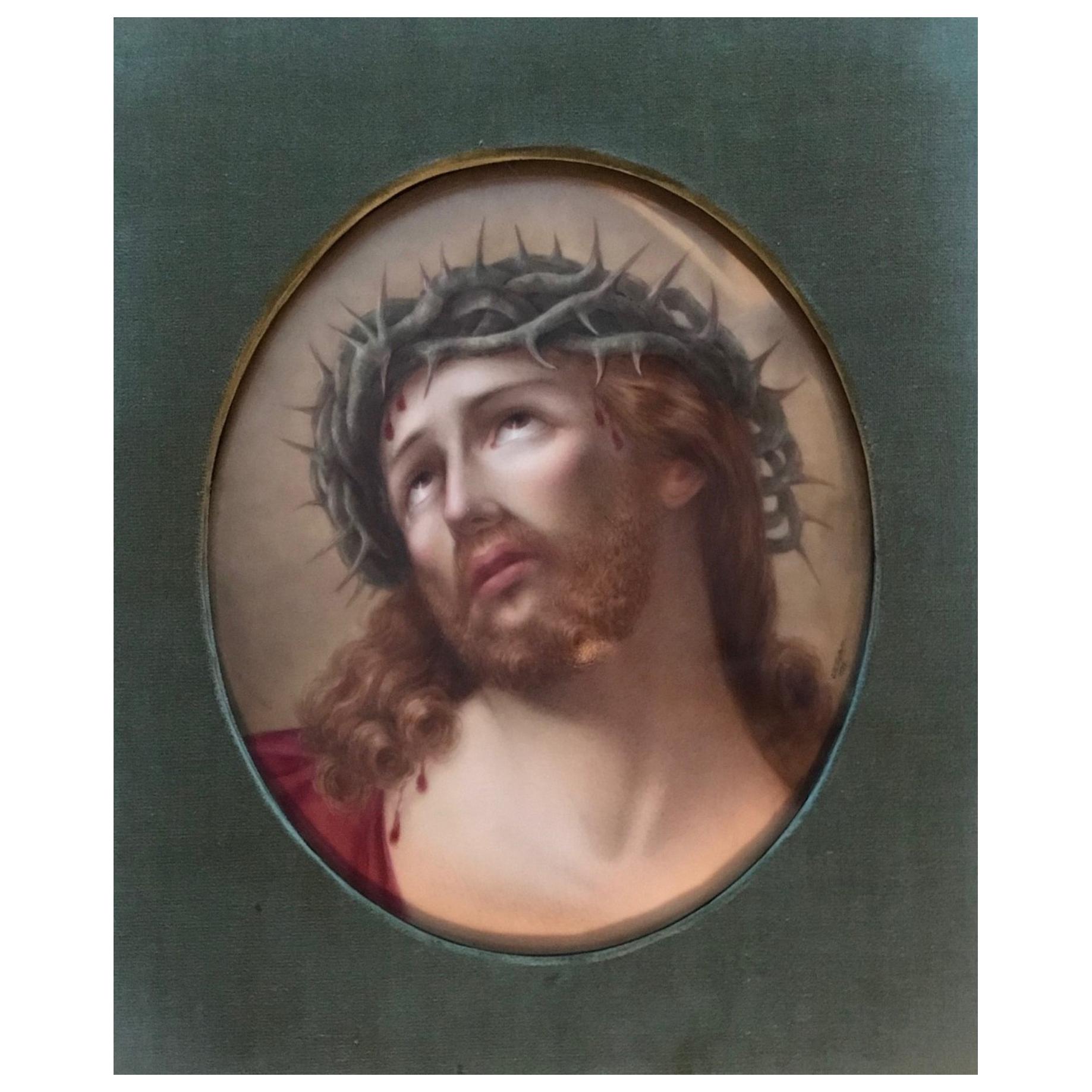
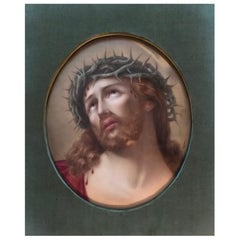
Large German Hutschenreuther Hand Painted Porcelain Plaque Head of Christ
By Hutschenreuther
Located in Vero Beach, FL
This is a superb portrait of Christ. It is hand painted in extraordinary quality with polychrome enamel on an oval porcelain plaque after the original painting -Head of Christ...
Category
Early 20th Century German Renaissance Revival Paintings
Materials
Velvet, Porcelain
$2,030 Sale Price
30% Off
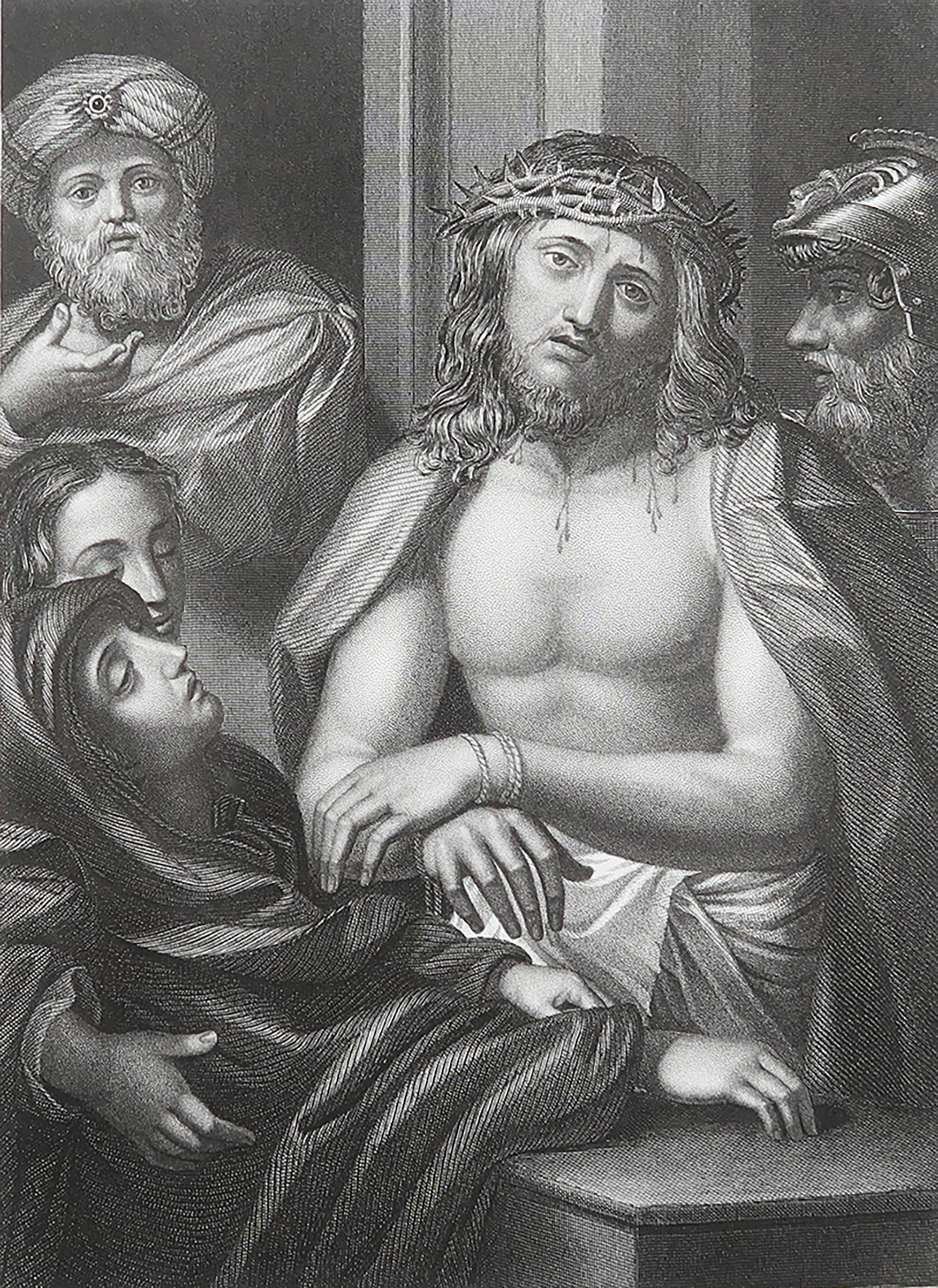
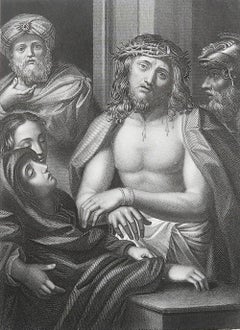
Original Antique Print After Correggio, Ecce Homo, circa 1850
Located in St Annes, Lancashire
Wonderful image after Correggio
Fine Steel engraving.
Published Fisher, London, circa 1850
Unframed.
Category
Antique 1850s English Renaissance Prints
Materials
Paper
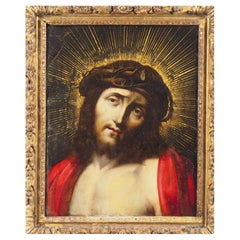
17th Century Flemish School after Le Correge, "Ecce Homo"
Located in Madrid, ES
17th-century Flemish School, after Le Correge, "Ecce Homo,"
oil on copper in a Louis XVI frame
51 x 41 cm
(small parts missing),
with collector's inscriptions on the back
good condit...
Category
Antique 17th Century Dutch Baroque Paintings
Materials
Paint
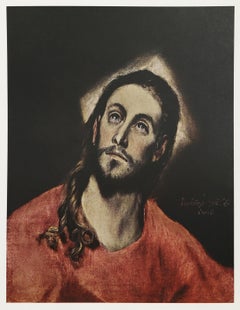
Head of Christ, Renaissance Poster after Doménikos Theotokópoulos
Located in Long Island City, NY
Doménikos Theotokópoulos, After, Greek (1541 - 1614) - Head of Christ, Year: Printed: circa 1970, Medium: Poster, Image Size: 23.5 x 18 inches, Size: 29 x 23 in. (73.66 x 58.42 c...
Category
1970s Renaissance Portrait Prints
Materials
Offset
Italian 17th Century Oil on Canvas Head of Christ Crowned with Thorns, Mignard
By (circle of) Pierre Mignard
Located in Los Angeles, CA
A very fine Italian 17th century oval oil on canvas "Head of Christ Crowned with Thorns" Circle of Pierre Mignard (French, 1612-1695) within...
Category
Antique 17th Century French Baroque Paintings
Materials
Canvas, Giltwood
$44,850 Sale Price
30% Off