Items Similar to Exquisite Botanicals from Revue Horticole: A 19th-Century Garden Showcase
Want more images or videos?
Request additional images or videos from the seller
1 of 6
Exquisite Botanicals from Revue Horticole: A 19th-Century Garden Showcase
$326.64per set
$408.31per set20% Off
£241.93per set
£302.41per set20% Off
€272per set
€340per set20% Off
CA$446.83per set
CA$558.54per set20% Off
A$486.29per set
A$607.86per set20% Off
CHF 257.78per set
CHF 322.23per set20% Off
MX$5,850.46per set
MX$7,313.07per set20% Off
NOK 3,269.51per set
NOK 4,086.89per set20% Off
SEK 2,991.37per set
SEK 3,739.22per set20% Off
DKK 2,072.69per set
DKK 2,590.86per set20% Off
About the Item
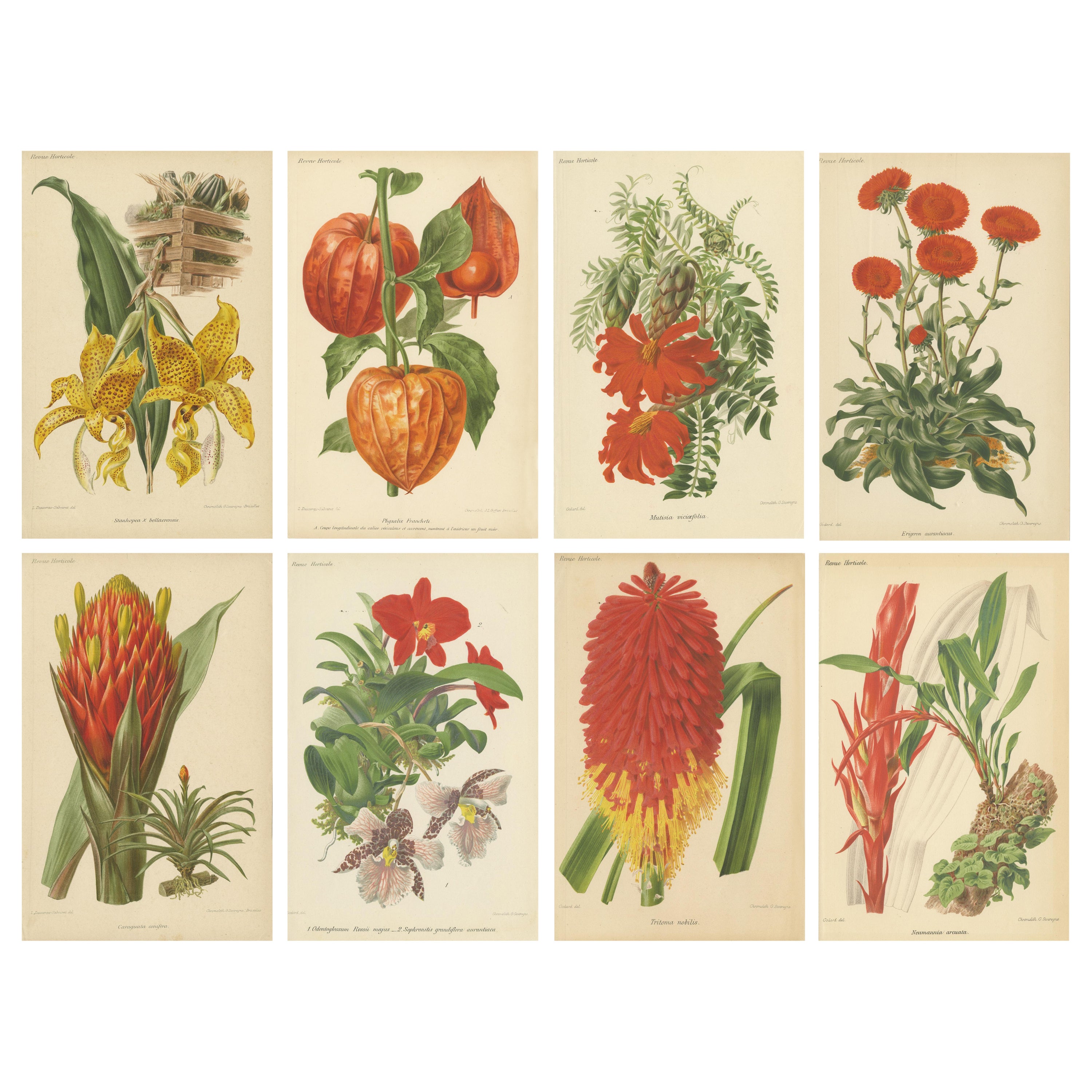
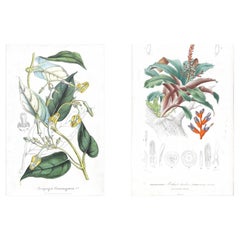
Magnificent Botanical Chromolithographs from Revue Horticole, Circa 1885
Artist and Lithographer Details:
- Artist (Del. - Delineavit): The mention of "Godard del." signifies that the artist who drew or designed the prints is referred to as Godard. In art, "del." is an abbreviation for "delineavit," meaning "he/she drew it." This term indicates that Godard was responsible for the original drawing from which the lithograph was made.
- Lithographer (Chromolith. by G. Severeijns): The term "chromolith. by G. Severeijns" identifies G. Severeijns as the lithographer who produced the color lithographs. Chromolithography is a method for making multi-color prints, known for its ability to vividly reproduce color and detail, which was particularly valued for botanical illustrations.
Details of the Prints and Plants:
First Print - Tritoma Saundersi:
Botanical Name: Tritoma Saundersi
Common English Name: Saunders' Red Hot Poker
Description: Known for its cylindrical, densely flowered spikes that are orange to red in color, this plant is prized in ornamental horticulture for its dramatic flowering spikes that add a burst of color to gardens.
Second Print - Tritoma caulescens:
Botanical Name: Tritoma caulescens
Common English Name: Caulescent Red Hot Poker
Description: This species features robust, upright inflorescences with vibrant red and yellow flowers. It's valued for its striking appearance and its ability to thrive in a variety of climates, making it a popular choice for gardeners looking to add visual impact.
Third Print - Encephalartos villosus:
Botanical Name: Encephalartos villosus
Common English Name: Woolly Cycad
Description: This cycad is distinguished by its thick trunk and arching, pinnate leaves. Cycads like this are ancient plants that add a prehistoric feel to landscapes, highly sought after for their unique, architectural foliage.
Based on your detailed context and the estimated publication year of 1885, here is a revised and complete description for the collection of botanical prints from "Revue Horticole":
---
Magnificent Botanical Chromolithographs from Revue Horticole, Circa 1885
In the latter part of the nineteenth century, an era marked by the zenith of botanical exploration, "Revue Horticole" emerged as a premier publication, beautifully marrying art and science. Founded in 1829, this Parisian journal was initially inspired by the authors of "du Bon Jardinier," and it catered to a growing audience of botanical art collectors and horticultural enthusiasts. By 1885, the publication had perfected the art of chromolithography—a technique involving up to 20 different lithographic stones for each color separation—to produce some of the most vivid and detailed representations of flora ever printed.
The illustrations, crafted by notable artists such as Godard and expertly lithographed by G. Severeijns, showcase an exquisite array of botanical specimens. These prints feature plants like the Tritoma Saundersi, commonly known as Saunders' Red Hot Poker, and the Encephalartos villosus, or Woolly Cycad, highlighting their unique botanical and aesthetic characteristics. Such illustrations not only served as a tool for scientific study but also as a testament to the artistic capabilities of the period.
"Revue Horticole" was particularly known for its focus on the spectacular rather than the mundane, choosing to illustrate showy plants that would be more likely found in the ornamental gardens of its readership. This strategic choice reflected a broader trend in botanical publications of the time, which sought to blend utility with beauty, providing gardeners and botanists alike with a source of inspiration and practical information.
These prints, now held in esteem at institutions like the Kew Gardens—referred to as the queen of the world's herbaria—remain a vital part of the historical record. They reflect not only the scientific knowledge of the era but also an unparalleled artistic endeavor that continues to fascinate and inform audiences today.
**Key Features:**
- **Publication Year**: Circa 1885
- **Journal**: Revue Horticole, founded in 1829
- **Technique**: Advanced chromolithography with up to 20 color separations
- **Contributors**: Godard (artist), G. Severeijns (lithographer)
- **Notable Specimens**: Tritoma Saundersi, Encephalartos villosus
- **Context**: Peak of botanical exploration and artistic expression in printmaking
This comprehensive description aims to encapsulate the significance of "Revue Horticole" as a hallmark of both botanical documentation and chromolithographic artistry during a pivotal time in the history of botanical sciences and horticulture.
- Dimensions:Height: 9.85 in (25 cm)Width: 6.3 in (16 cm)Depth: 0 in (0.02 mm)
- Sold As:Set of 3
- Materials and Techniques:
- Period:
- Date of Manufacture:circa 1855
- Condition:Condition: Very good, given age. General age-related toning and/or occasional minor defects from handling. Please study scan carefully.
- Seller Location:Langweer, NL
- Reference Number:Seller: BG-13761,-14 BG-13761-15, BG-13761-171stDibs: LU3054341416422
About the Seller
5.0
Recognized Seller
These prestigious sellers are industry leaders and represent the highest echelon for item quality and design.
Platinum Seller
Premium sellers with a 4.7+ rating and 24-hour response times
Established in 2009
1stDibs seller since 2017
2,813 sales on 1stDibs
Typical response time: 1 hour
- ShippingRetrieving quote...Shipping from: Langweer, Netherlands
- Return Policy
More From This Seller
View AllOriginal Vintage Botanical Illustrations from Revue Horticole, circa 1855
Located in Langweer, NL
Here are descriptions of the eight botanical illustrations, including the Latin and English names of the plants, why they are significant, and details about the creators and the tech...
Category
Antique 1850s French Prints
Materials
Paper
Vibrant Botanical Portraits: Exquisite Plant Illustrations from the 19th Century
Located in Langweer, NL
These illustrations, executed with precision and rich coloration, are fine examples of chromolithography, a technique popular in the 19th century for its ability to produce vivid, mu...
Category
Antique 1870s Prints
Materials
Paper
$365 Sale Price / set
20% Off
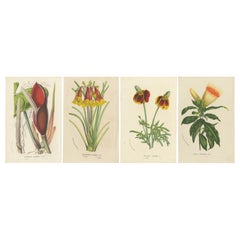
Flora Illustrated: A Collection of 19th Century Botanical Art, Published c.1875
Located in Langweer, NL
The prints depict various botanical species, each illustrated with detailed attention to the morphology of the plants, including leaves, flowers, and sometimes fruits or seeds. These...
Category
Antique 1870s Prints
Materials
Paper
$326 Sale Price / set
20% Off
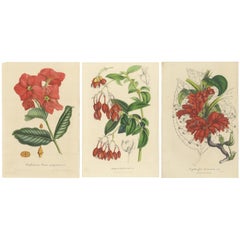
Exquisite Botanical Illustrations from Curtis’s Botanical Magazine (1847)
Located in Langweer, NL
These beautiful hand-colored botanical illustrations, drawn and lithographed by the renowned artist Walter Hood Fitch, were featured in Sir William Jackson Hooker's *"Curtis's Botanical Magazine,"* published in London in 1847. Fitch was one of the most prolific and skilled botanical illustrators of the 19th century, known for his ability to capture the intricate details and vibrant hues of the plants he depicted.
Sir William Jackson Hooker, a famous British botanist and the director of the Royal Botanic Gardens, Kew, commissioned these illustrations as part of his work to document newly discovered plants from around the world. The *Curtis’s Botanical Magazine* has been published since 1787 and remains one of the longest-running botanical periodicals.
Detailed Descriptions of Each Plant
#### 1. **Dipladenia Rosa-campestris** (*Hortul. ex Veitch*)
- **English Name**: Rose Dipladenia
- **Description**: This illustration showcases *Dipladenia rosa-campestris*, a striking flowering plant known for its showy pink to deep red trumpet-shaped flowers. Native to tropical regions of South America, particularly Brazil, *Dipladenia* belongs to the family Apocynaceae and is prized in horticulture for its vibrant blooms and ability to climb. Fitch's illustration emphasizes the waxy leaves and the vivid color of the petals, bringing the plant to life on the page.
#### 2. **Begonia fuchsioides** (*Hook.*)
- **English Name**: Fuchsia-flowered Begonia
- **Description**: The *Begonia fuchsioides* is depicted with its characteristic red, pendulous flowers, which closely resemble the blooms of fuchsia plants. This species of Begonia is native to tropical regions and is popular for its delicate, bell-shaped flowers and glossy leaves. Fitch’s attention to the arrangement of the leaves and the contrast between the flowers' vibrant red and the soft green leaves provides a lifelike representation of this exotic plant.
#### 3. **Agalmyla staminea** (*Blume*)
- **English Name**: Staminate Agalmyla
- **Description**: This illustration captures the unique red tubular flowers of *Agalmyla staminea*, a plant native to Southeast Asia. The species is part of the Gesneriaceae family and is known for its bright, showy flowers that grow in dense clusters. Fitch’s careful rendering of the plant’s leaves and the intricate veining, along with the vibrant red flowers, highlights his talent for bringing the botanical subject to life with both scientific accuracy and artistic flair.
### About the Makers
#### **Walter Hood Fitch** (Artist and Lithographer)
Walter Hood Fitch (1817–1892) was one of the most influential botanical artists of the 19th century, working primarily with Sir William Hooker and later his son, Joseph Dalton Hooker, at Kew Gardens. He produced thousands of illustrations for various botanical publications, including *Curtis’s Botanical Magazine*, where he was responsible for the majority of its plates from 1834 to 1877. Fitch’s mastery of lithography allowed him to create richly detailed and accurate depictions of plants, with a particular talent for illustrating both the botanical structure and the vibrant colors of flowers.
#### **Sir William Jackson Hooker** (Director and Editor)
Sir William Jackson Hooker (1785–1865) was a prominent British botanist and the director of the Royal Botanic Gardens, Kew. Under his leadership, Kew Gardens expanded its collection of plants from around the world, and Hooker was instrumental in promoting the scientific study and illustration of these species. As the editor of *Curtis’s Botanical Magazine*, Hooker collaborated with Fitch to document and share the beauty and diversity of plants with the scientific community and the public.
### The Lithographic Technique
Lithography, particularly chromolithography, was a crucial innovation in botanical illustration. Fitch was skilled in the traditional method of lithography, where an image was drawn onto a stone plate with a greasy substance and then inked for printing. Hand-coloring was often applied afterward to bring the prints to life, as seen in these illustrations. This method allowed for highly detailed, accurate representations of plants and their botanical features, making it invaluable for both scientific study and aesthetic appreciation.
### Conclusion
These prints from *Curtis’s Botanical Magazine* reflect the height of botanical art in the mid-19th century. The combination of Walter Fitch...
Category
Antique 1840s Prints
Materials
Paper
$413 Sale Price / set
20% Off
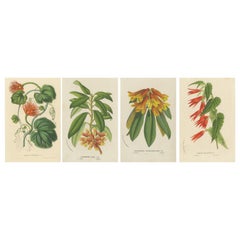
Lush and Vibrant: A Collection of Exotic Botanical Illustrations, circa 1875
Located in Langweer, NL
The prints depict a selection of exotic plants with a remarkable detail and vibrant color, showcasing the beauty and diversity of botanical life. Each illustration is a testament to ...
Category
Antique 1870s Prints
Materials
Paper
$393 Sale Price / set
20% Off
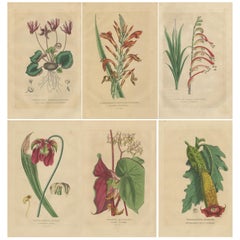
Botanical Rarities: Pristine Hand-Colored Engravings from 1845
Located in Langweer, NL
This image is a beautiful collage of antique hand-colored botanical engravings from 1845, each showcasing a different plant species with exceptional detail and vibrant colors. The en...
Category
Antique Mid-19th Century French Prints
Materials
Paper
$532 Sale Price / set
24% Off
Free Shipping
You May Also Like
Bignonia venusta – Antique Botanical Chromolithograph, 1880s
Located in Fukuoka, JP
A striking original botanical print from the 1880s, featuring Bignonia venusta, also known as flame vine or orange trumpet vine. This brilliantly colored illustration captures the dr...
Category
Antique 19th Century French Prints
Materials
Paper
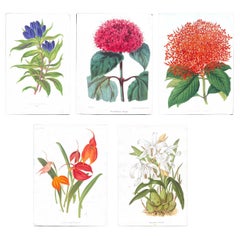
Early 20th Century, Italian Botantical Prints
Located in Long Island City, NY
Early 20th century, Italian Botantical prints. 8 Available.
Category
20th Century Italian Prints
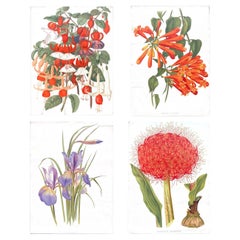
Original 1880s Botanical Print of Hæmanthus Kalbreyeri — Vibrant Antique Chromol
Located in Fukuoka, JP
A striking original chromolithograph from the 1880s, this botanical print features the dramatic Hæmanthus kalbreyeri, also known as the blood lily. Characterized by its intense red s...
Category
Antique 19th Century French Prints
Materials
Paper
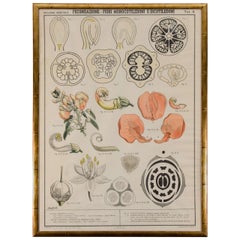
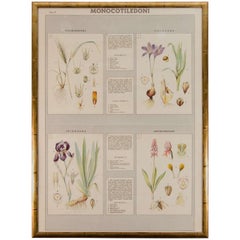
Early 20th Century Italian Botanical Print
Located in Long Island City, NY
Early 20th century Italian botanical print in gilded frame.
Eight available.
Category
20th Century Italian Prints
Materials
Paper
Set of Two Rare Botanical Engravings by D’Orbigny — 1849
Located in Fukuoka, JP
Set of Two Rare Botanical Engravings by D’Orbigny — Dictionnaire Universel d’Histoire Naturelle, Paris, 1849
An exquisite pair of original hand-colored botanical engravings from the...
Category
Antique 19th Century French Prints
Materials
Paper
Set of 12 Original Antique Botanical Prints, circa 1850
Located in St Annes, Lancashire
Wonderful set of 12 botanical prints
Lithographs after the original botanical drawings by Hooker.
Original color
Published, circa 1850
Unframed.
The measurement given is for one...
Category
Antique 1850s English Early Victorian Prints
Materials
Paper
More Ways To Browse
Tibetan Deity
Tiffany Gold Clock
Tiger Porcelain
Tip Tray
Tobacco Poster
Tonala Folk Art Pottery
Tool Chest Cabinet
Toraja Panel
Tramp Art Framed Art
Travel Clock Case
Used Adjustable Beds
Used Bath Water
Used Bridal Veil
Used Tennis Balls
Venetian Bombe
Vintage Apple Blossom
Vintage Asian Art Panels
Vintage Black Ceramic Cats