Items Similar to Flamingo
Swan – Antique hand-coloured lithograph, c.1828
Video Loading
Want more images or videos?
Request additional images or videos from the seller
1 of 11
Flamingo
Swan – Antique hand-coloured lithograph, c.1828
$155.59
£114.77
€130
CA$214.16
A$231.36
CHF 123.09
MX$2,783.93
NOK 1,558.55
SEK 1,425.33
DKK 990.59
About the Item
Flamingo
Swan – Antique hand-coloured lithograph, c.1828
Description:
A graceful early 19th-century ornithological plate depicting two elegant waterbirds: the Flamingo (Le Flamand ou Phoenicoptère) in the foreground and the Swan (Le Cygne) above. The flamingo is shown with its distinctive long, slender legs, curved bill, and pink plumage with deeper rose tones on the wings, standing in shallow water beside green reeds. Above, the swan is portrayed in a calm stance on a grassy islet, its long, arched neck and subtle grey shading suggesting a juvenile or a muted artistic rendering of the species’ white plumage. Both birds are set against a plain background, allowing their forms and colours to stand out vividly. The plate bears the designation “Pl. 167” at upper right, with the imprint “Lejeune, Éditeur” at the bottom.
This work was published in Brussels between 1828 and 1833 by Th. Lejeune as part of the expanded illustrated edition of Georges-Louis Leclerc, Comte de Buffon’s *Oeuvres complètes*. Buffon’s *Histoire naturelle* was a landmark in Enlightenment science, and this Brussels issue brought the text up to date with lithographic plates that were then carefully hand-coloured. The clear outlines and soft tonal shading seen here are characteristic of the lithographic style of the period, while the bright yet naturalistic colouring reflects the skill of the artisans employed for this edition.
Flamingos have long fascinated naturalists for their unusual feeding behaviour and vibrant colouration, derived from carotenoid-rich diets. Swans, by contrast, have been symbols of grace and purity in both literature and art for centuries. This pairing presents two of the most iconic and elegant waterbirds known to early zoologists.
Condition report:
Good condition with mild toning to the sheet and a few scattered foxing spots, most noticeable in the background. One faint, vertical water stain is visible above the flamingo. Colours remain well-preserved and clear. Comes in brown matting board.
Framing tips:
A pale ivory or soft beige mat will highlight the delicate pink of the flamingo and the subtle shading of the swan, while a narrow gilt or dark wood frame will give the piece a refined finish. Archival mounting and UV-protective glazing are recommended.
Technique: Hand-coloured lithograph on wove paper
Maker: Published by Th. Lejeune, Brussels, 1828–1833; after Buffon’s Oeuvres complètes (Plate 167)
- Dimensions:Height: 11.62 in (29.5 cm)Width: 8.51 in (21.6 cm)Depth: 0.12 in (3 mm)
- Materials and Techniques:Paper,Engraved
- Place of Origin:
- Period:
- Date of Manufacture:circa 1828
- Condition:Good condition with mild toning to the sheet and a few scattered foxing spots, most noticeable in the background. One faint, vertical water stain is visible above the flamingo. Colours remain well-preserved and clear. Comes in brown matting board.
- Seller Location:Langweer, NL
- Reference Number:Seller: BG-069341stDibs: LU3054346265162
About the Seller
5.0
Recognized Seller
These prestigious sellers are industry leaders and represent the highest echelon for item quality and design.
Platinum Seller
Premium sellers with a 4.7+ rating and 24-hour response times
Established in 2009
1stDibs seller since 2017
2,826 sales on 1stDibs
Typical response time: 1 hour
- ShippingRetrieving quote...Shipping from: Langweer, Netherlands
- Return Policy
More From This Seller
View AllAntique Bird Print of a Flamingo by Shaw, 1809
Located in Langweer, NL
Antique print titled 'Flamingo'. Small hand colored engraving of a flamingo. This print originates from 'Zoological Lectures Delivered at the Royal Institution' by George Shaw, 1809....
Category
Antique Early 19th Century Prints
Materials
Paper
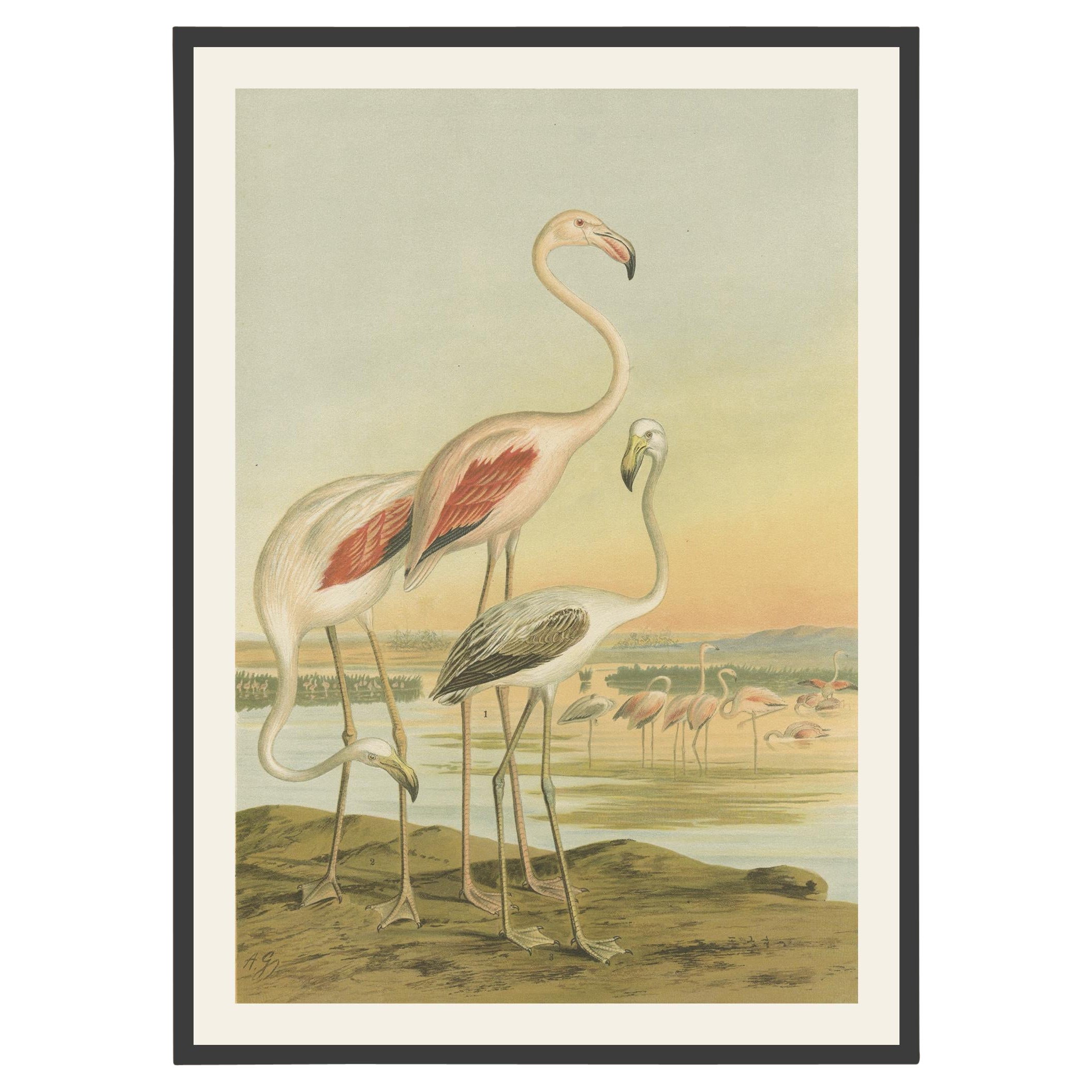
Antique Chromolithograph of Flamingos – Phoenicopterus roseus, c.1890
Located in Langweer, NL
Antique Chromolithograph of Flamingos – Phoenicopterus roseus, c.1890
A magnificent late 19th-century chromolithograph depicting the Greater Flamingo (Phoenicopterus roseus) in diff...
Category
Antique Late 19th Century German Prints
Materials
Paper
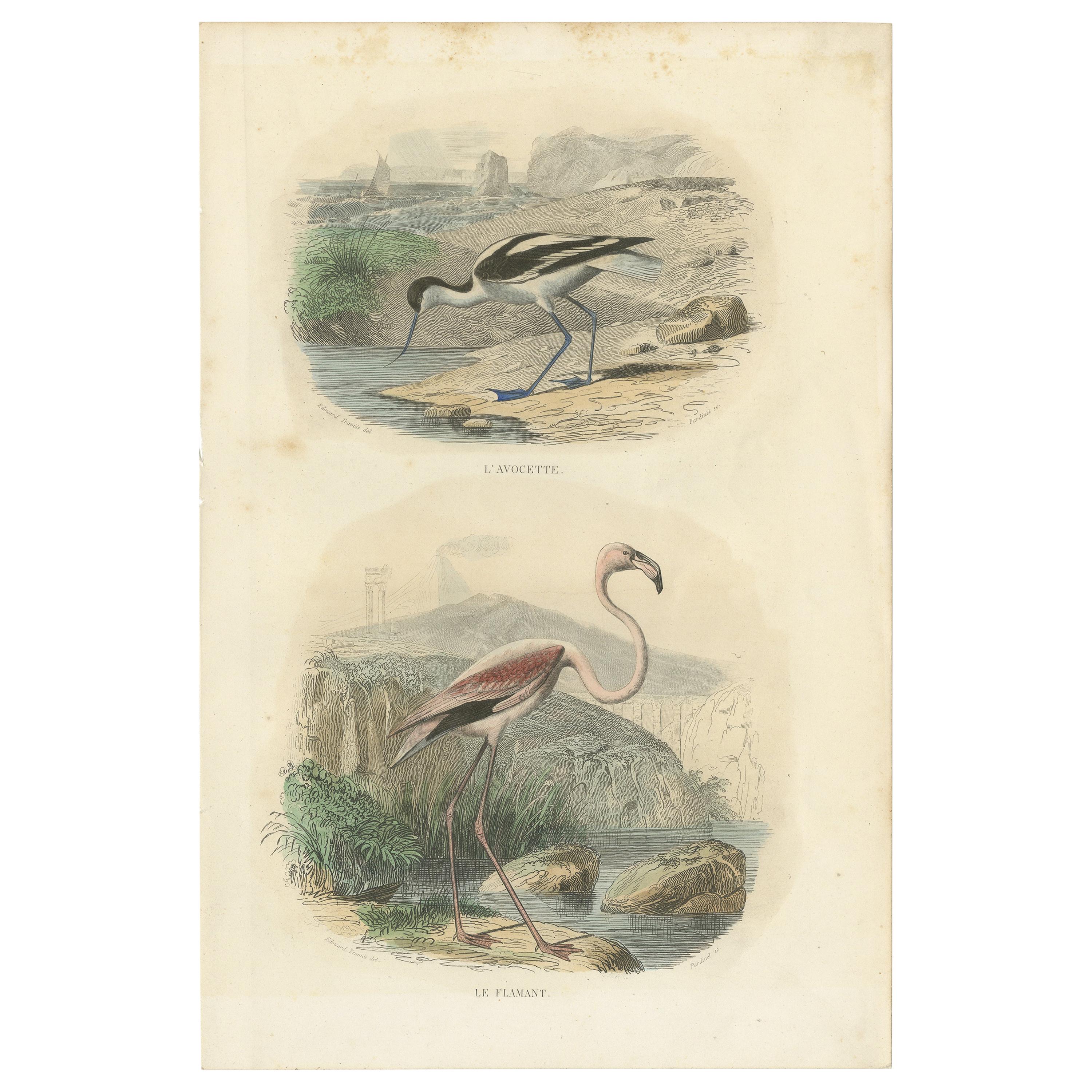
Antique Bird Print of the Pied Avocet and Greater Flamingo by Richard
1837
Located in Langweer, NL
Antique bird print titled 'l'Avocette - Le Flamant'. Original antique print of the pied avocet and greater flamingo. This print originates from Richard's 'New Edition of the Complete...
Category
Antique Mid-19th Century Prints
Materials
Paper
$95 Sale Price
20% Off
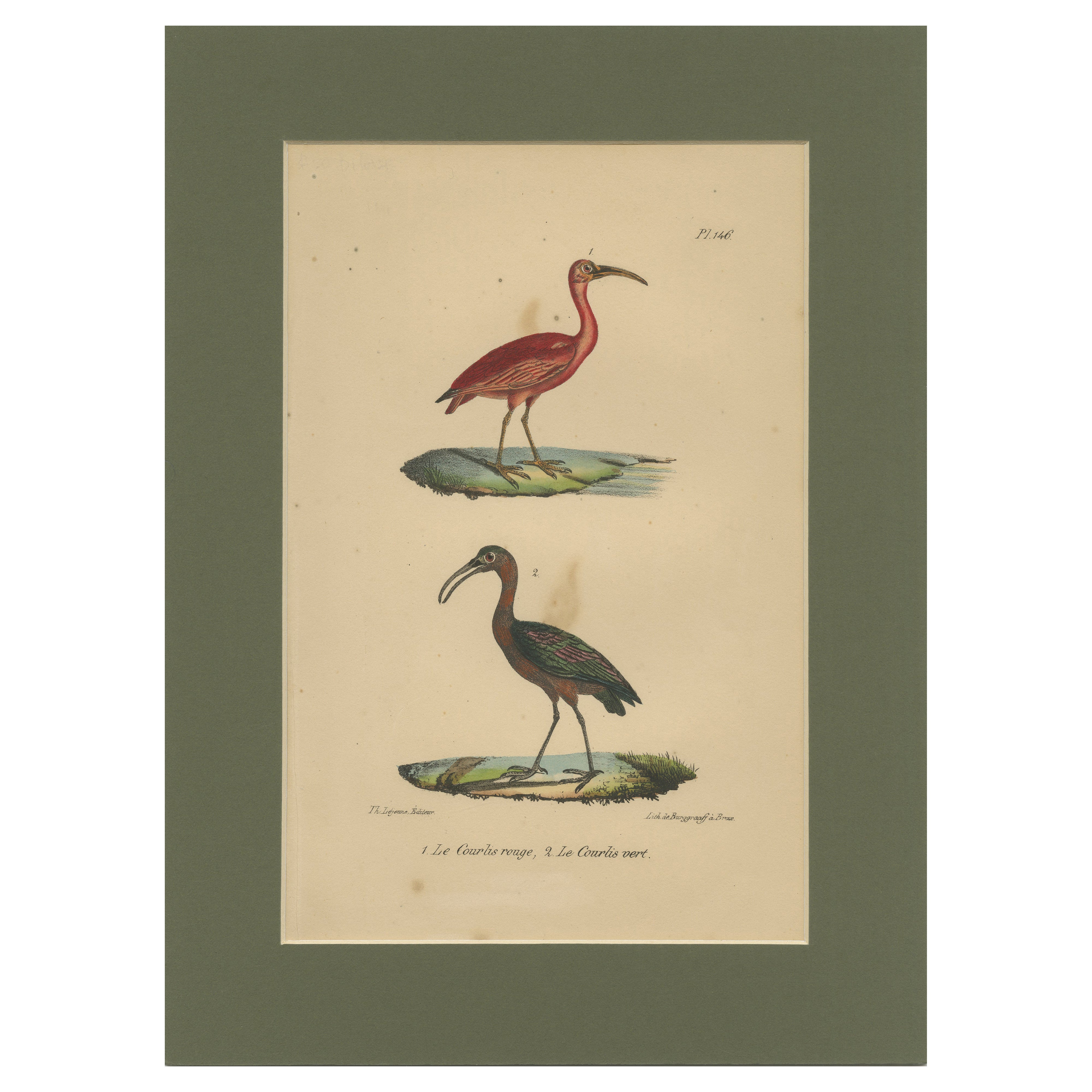
Scarlet Ibis
Glossy Ibis – Antique hand-coloured lithograph, c.1828
Located in Langweer, NL
Scarlet Ibis & Glossy Ibis – Antique hand-coloured lithograph, c.1828
Description:
This vibrant early 19th-century ornithological print depicts two striking wading birds: the Scarle...
Category
Antique 1820s French Prints
Materials
Paper
Antique Hand-Colored Engraving of the American Pelican, 19th Century
Located in Langweer, NL
Title: Der Amerikanische Pelican - Rare 19th Century Hand-Colored Engraving by Seligmann, Depicting the American Pelican
This rare hand-colored engraving, titled *Der Amerikanische ...
Category
Antique 1770s Prints
Materials
Paper

$517 Sale Price
20% Off
Antique Bird Print of a Saddle-Billed Stork and American Flamingo
1853
Located in Langweer, NL
Antique bird print titled 'Jabiru de Sénégal - Flammant Rouge'. Original print of a saddle-billed stork and American flamingo. This print originates from 'Histoire Naturelle des Oise...
Category
Antique Mid-19th Century Prints
Materials
Paper
$95 Sale Price
20% Off
You May Also Like
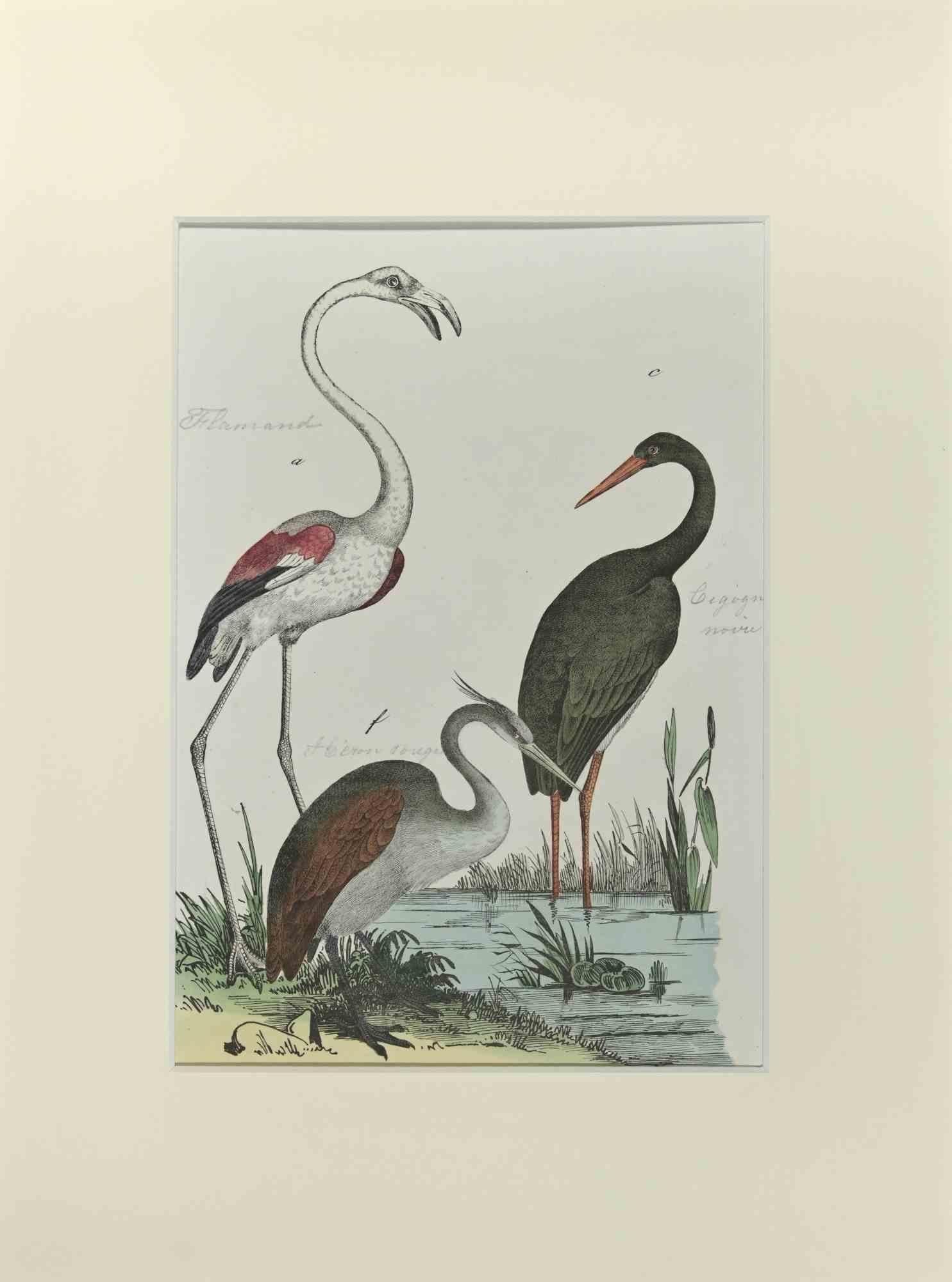
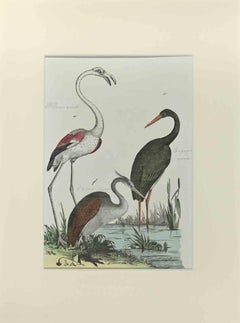
Flamingo - Etching by Johann Friedrich Naumann - 1840
Located in Roma, IT
Flamingo is an Etching hand colored realized by Gotthilf Heinrich von Schubert - Johann Friedrich Naumann, Illustration from Natural history of birds in pictures, published by Stuttg...
Category
1840s Modern Figurative Prints
Materials
Etching
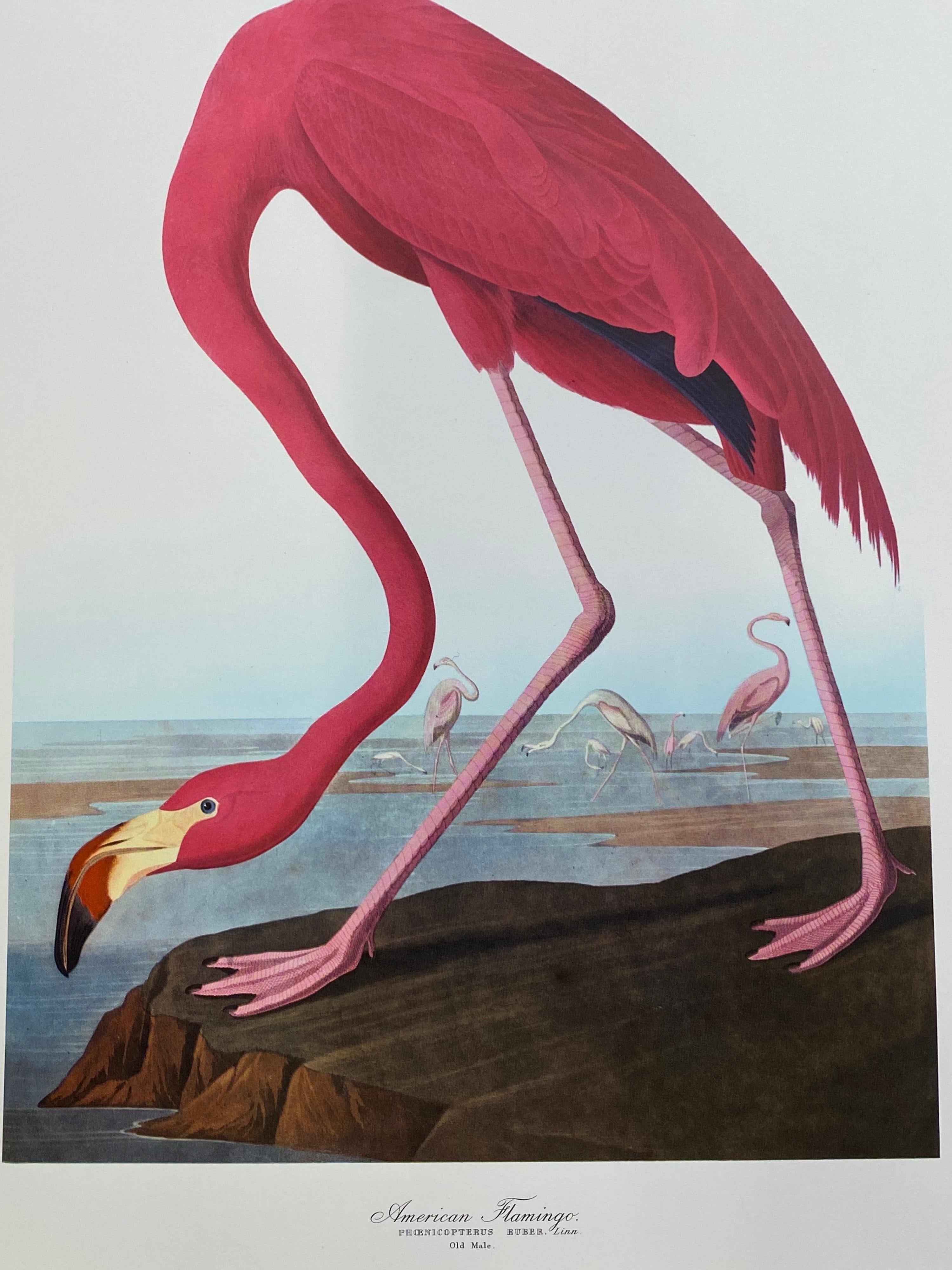
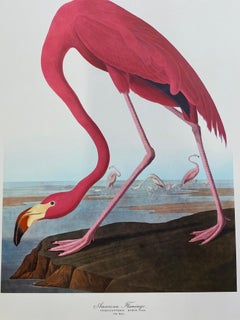
Large Classical Bird Color Print after John James Audubon, American Flamingo
Located in Cirencester, Gloucestershire
Classical Bird print,
after John James Audubon,
printed by Harry N. Abrams, Publishers, New York
unframed, 17 x 14 inches color print on paper
condition: very good
provenance: from...
Category
20th Century Victorian More Prints
Materials
Acrylic
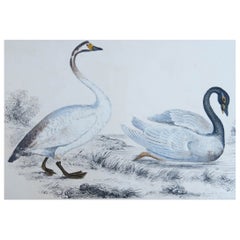
Original Antique Print of Swans, 1847,
Unframed
Located in St Annes, Lancashire
Great image of swans.
Unframed. It gives you the option of perhaps making a set up using your own choice of frames.
Lithograph after Cpt. brown with original hand color.
Published...
Category
Antique 1840s English Folk Art Prints
Materials
Paper
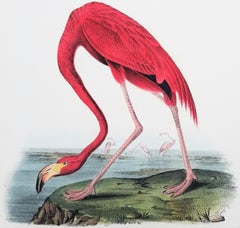
American Flamingo /// John James Audubon Natural History Ornithology Bird Litho
By John James Audubon
Located in Saint Augustine, FL
Artist: John James Audubon (American, 1785-1851)
Title: "American Flamingo" (Plate 375, No. 75)
Portfolio: The Birds of America, First Royal Octavo E...
Category
1840s Victorian Animal Prints
Materials
Watercolor, Lithograph
Pair of Hand-Colored Pelican Engravings
By George Edwards
Located in New York, NY
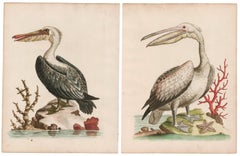
The Merican Pelican and The Pelican from George Edwards "A Natural History of Birds, Most of which have not been figured or described and others very little known..." published in Lo...
Category
1740s Animal Prints
Materials
Paper
"American Swan", Audubon Hand-colored First Octavo Edition Lithograph
By John James Audubon
Located in Alamo, CA
This is an original rare and extremely collectible 1st royal octavo edition John James Audubon hand-colored royal octavo lithograph entitled "American Swan", No. 77, Plate 384, from Audubon's "Birds of America". It was lithographed, printed and colored by J. T. Bowen and published in Philadelphia between 1840-1844. It depicts an adult white American Swan swimming in a body of water. Plants with yellow flowers are in the foreground and hills are in the background.
This original rare first edition hand-colored Audubon bird lithograph has a mildly wavy lower edge of the paper where it was previously bound. It is otherwise in excellent condition. The sheet measures 6.63" x 10.13". The original text pages 226-234 are included.
John James Audubon (1785-1851) was a naturalist and artist. He was initially unsuccessful financially prior to the publication of his famous work “The Birds of America”, spending time in debtor’s prison, once stabbing a disgruntled investor in self-defense. However, his obsession with birds and art motivated him to persist in his goal of documenting every bird in America via his watercolor paintings and publishing his works for all to enjoy. Audubon's first illustrations were published in a large elephant folio size. Due to their expense they were purchased in rather small numbers by the wealthy. To reach a larger audience, Audubon, with the help of his sons and J. T. Bowen, published a smaller octavo sized lithograph version, which were much more affordable.
With the success of his bird projects, Audubon then turned his attention to four-legged animals. He explored the Missouri River in 1843 sketching the four-legged animals he encountered in their natural setting. His expedition covered some of the same regions recently explored by Lewis and Clark, traveling from present day Alaska to Mexico. Audubon realized that this was an opportunity to document these animals in the still relatively pristine American wilderness, before man encroached on their environment.
Between 1845 and 1848, Audubon and his sons John Woodhouse Audubon and Victor Gifford Audubon produced a set of elephant folio sized lithographs that were primarily engraved and hand colored by J. T. Bowen in Philadelphia. The publication, which included text descriptions of the animals was published 3 years before Audubon died. As with the birds, this was followed by a three-volume set of 155 octavo-sized plates entitled “The Quadrupeds of North America” completed and published by Audubon’s sons, John, Jr. and Victor.
Audubon prints continue to be popular and a wise investment. The double elephant folio set...
Category
Mid-19th Century Naturalistic Animal Prints
Materials
Lithograph