Items Similar to Hanoverian Guard Hussar Officer Elegance, 19th Century Military Print
Want more images or videos?
Request additional images or videos from the seller
1 of 8
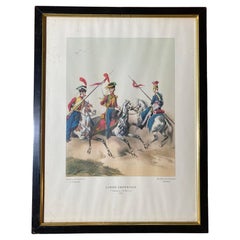
Hanoverian Guard Hussar Officer Elegance, 19th Century Military Print
$351.87
$439.8320% Off
£261.89
£327.3720% Off
€296
€37020% Off
CA$488
CA$610.0120% Off
A$525.38
A$656.7320% Off
CHF 281.35
CHF 351.6920% Off
MX$6,330.66
MX$7,913.3220% Off
NOK 3,549.88
NOK 4,437.3520% Off
SEK 3,248.72
SEK 4,060.8920% Off
DKK 2,256.07
DKK 2,820.0820% Off
About the Item
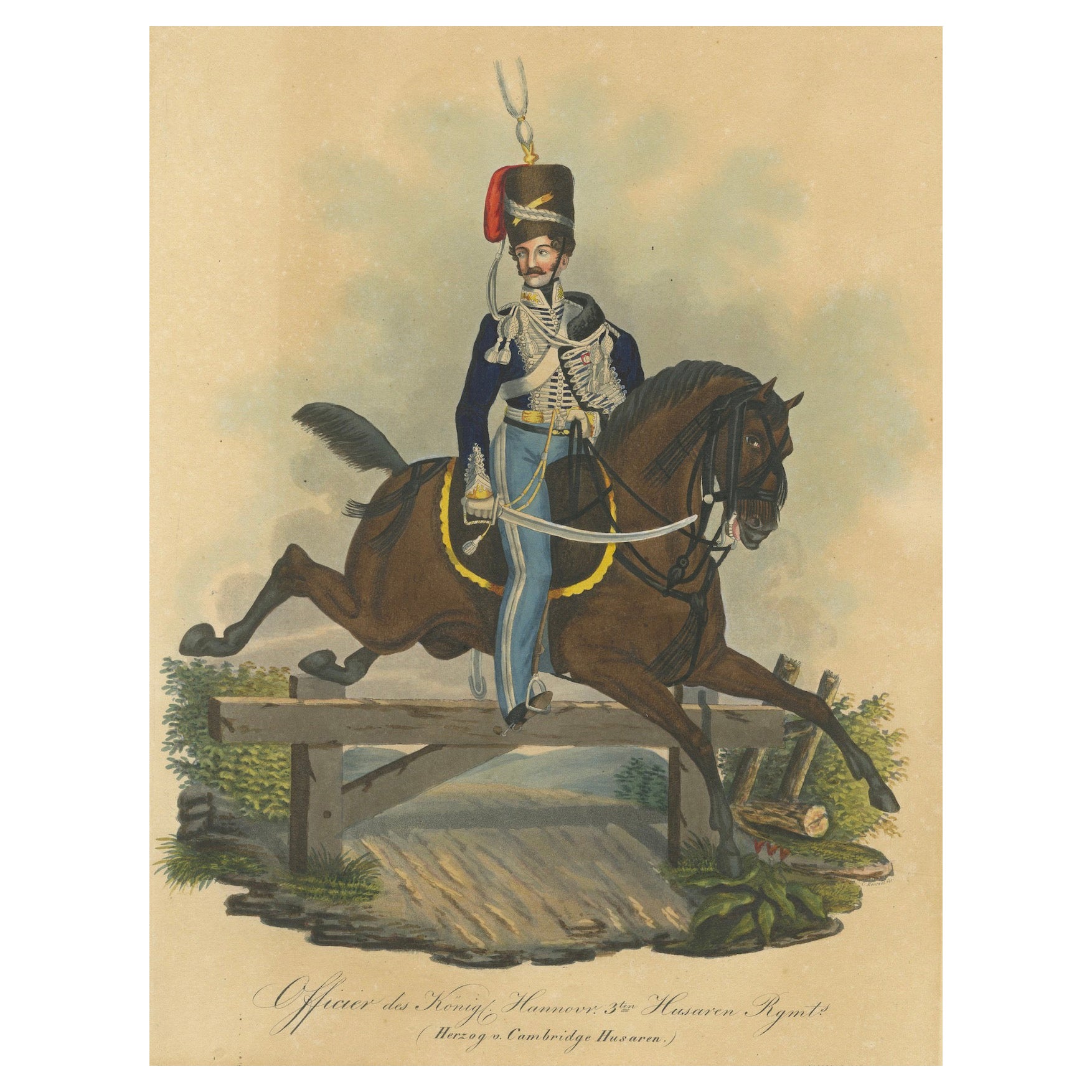
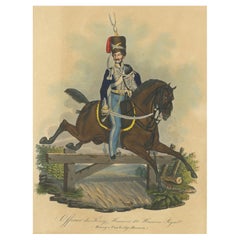
The title of this original antique print is the "Königl. Hannover. Garde Hussaren Regt.", which translates to "Royal Hanoverian Guard Hussar Regiment". This unit would have been part of the army of the Kingdom of Hanover, which, during various periods, was in personal union with the United Kingdom. The Guard Hussars would have been a prestigious cavalry unit, likely serving as both ceremonial guards and elite troops. The uniform, with its rich decoration and distinctive Hussar features, suggests a high ceremonial as well as functional military significance.
The King's German Legion was a British Army unit of mostly expatriate German personnel during the Napoleonic Wars. The illustration shows a military figure in a Hussar's uniform, characterized by the distinctive pelisse (a short fur-edged jacket) draped over the shoulder, a shako headgear with a plume, and elaborate braiding (frogging) across the front of the tunic. The officer is depicted on horseback, leaping over a barrier, which showcases the mobility and equestrian skills of Hussar units of that era. Hussars were light cavalry used for scouting, skirmishing, and in some cases, as shock troops. The style of the uniform and the nature of the illustration suggest it could be from the 19th century, which aligns with the period of the Napoleonic Wars.
The phrase "bei J.G. Schrader in Hannover" suggests that this print was published or produced by J.G. Schrader in Hanover. J.G. Schrader could refer to the publisher, printer and bookseller active in Hanover during the time the print was made. Hanover (Hannover in German) is a city in Germany that has historically been a center of cultural and intellectual life, which included the production and distribution of prints and books.
Given the style of the uniform and the historical context, it is likely that this print is from the 19th century, possibly related to the time of the Napoleonic Wars when the King's German Legion was active. Prints like these were commonly used for educational purposes, to document military uniforms, or to celebrate military achievements.
Even though it is signed L.Leopold, It is possible that this print is associated with Johann Heinrich Ramberg. Ramberg was a well-known artist from Hanover, Germany, active in the late 18th and early 19th centuries. He was particularly renowned for his illustrations and was commissioned to create a variety of works, including those that depicted military subjects.
The signature "f.p. Leopold fec." indicates the artist or engraver of the print, with "fec." being an abbreviation of the Latin "fecit," which means "made by" or "created by." , but more research is needed.
If Ramberg was indeed the artist, this print would likely have been part of a series of military illustrations, possibly commissioned by the state or for a military publication. Ramberg's style was quite detailed and expressive, fitting the characteristics of the print.
To confirm if this print was indeed made by Johann Heinrich Ramberg, more research is needed and one would typically reference a catalog raisonné of Ramberg's works, consult an art historian with expertise in Ramberg's oeuvre, or examine the print for any signatures or hallmarks of Ramberg's style. Unfortunately, I cannot confirm the artist's identity with certainty. However, given the time period and location, Ramberg is a plausible candidate for the creator of this print.
- Dimensions:Height: 12.6 in (32 cm)Width: 9.45 in (24 cm)Depth: 0 in (0.02 mm)
- Materials and Techniques:
- Period:
- Date of Manufacture:circa 1828
- Condition:Good. Minor foxing or soiling. A small remain of tape in the top, outside the image. Hand-colored lithograph highlighted with Arabic gum. Study the images carefully.
- Seller Location:Langweer, NL
- Reference Number:Seller: BG-13675-141stDibs: LU3054338280402
About the Seller
5.0
Recognized Seller
These prestigious sellers are industry leaders and represent the highest echelon for item quality and design.
Platinum Seller
Premium sellers with a 4.7+ rating and 24-hour response times
Established in 2009
1stDibs seller since 2017
2,828 sales on 1stDibs
Typical response time: 1 hour
- ShippingRetrieving quote...Shipping from: Langweer, Netherlands
- Return Policy
More From This Seller
View AllOfficer of the King
s German Legion (Duke of Cambridge
s Hussars), circa 1828
Located in Langweer, NL
This is an hand-colored illustration of an officer from the King's German Legion, specifically the 3rd Hussar Regiment, also known as the Duke of Cambrid...
Category
Antique 1820s Prints
Materials
Paper
$323 Sale Price
20% Off
Free Shipping
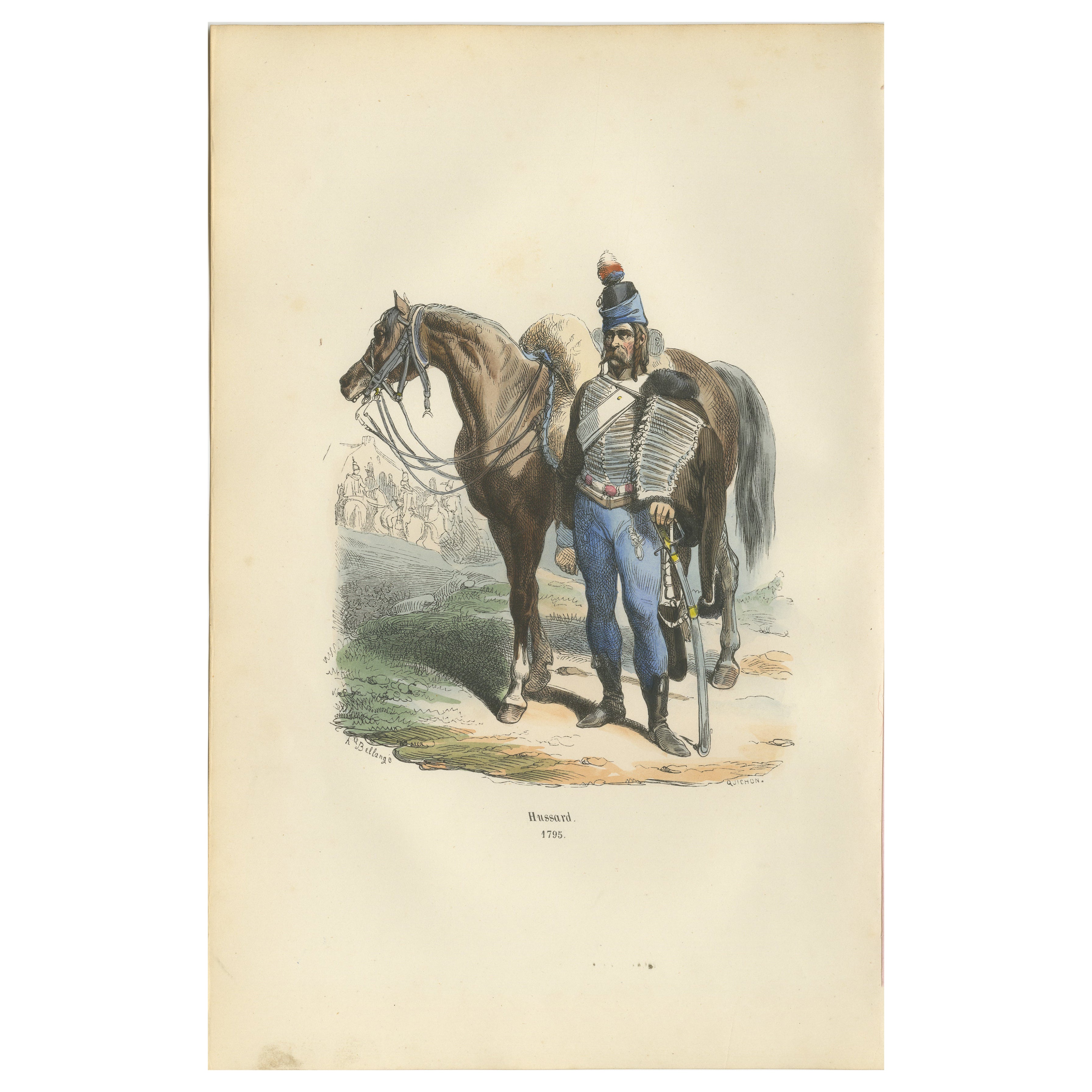
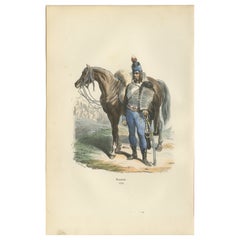
French Hussar with Horse 1795, Napoleonic Era Military Uniform Print, 1843
Located in Langweer, NL
French Hussar with Horse 1795, Napoleonic Era Military Uniform Print
This finely hand-colored 19th-century engraving depicts a French hussar accompanied by his horse, shown in the distinctive uniform of 1795 during the French Revolutionary period that directly preceded the rise of Napoleon Bonaparte. The figure is presented at rest, holding his sabre, while the saddled horse stands...
Category
Antique 1840s French Prints
Materials
Paper
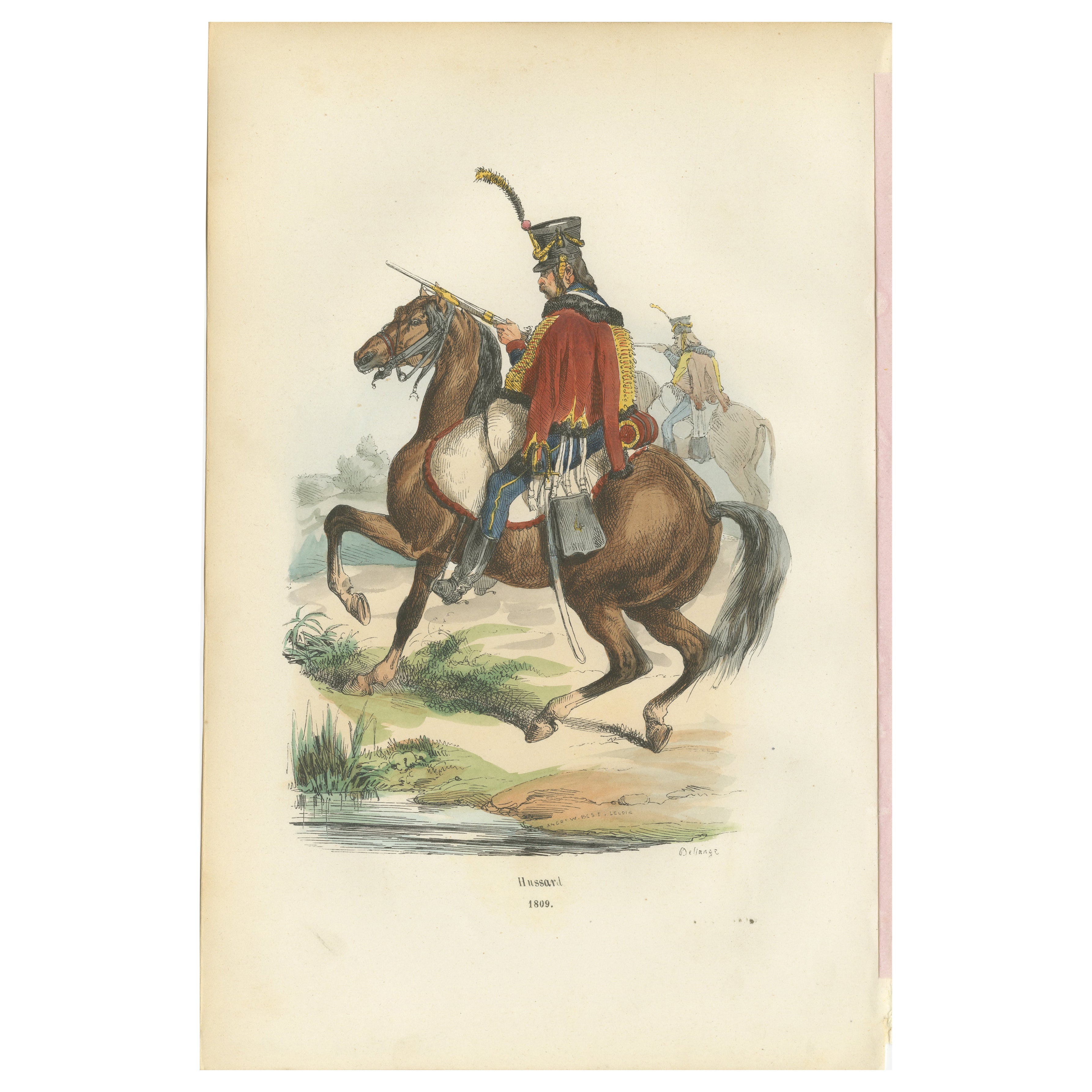
Hussar Cavalryman on Horseback, Napoleonic Military Print. Published in 1843
Located in Langweer, NL
Hussar Cavalryman on Horseback, Napoleonic Military Print, France 1809
This hand-coloured 19th-century military engraving depicts a French hussar in full mounted action, dated 1809,...
Category
Antique 1840s French Prints
Materials
Paper
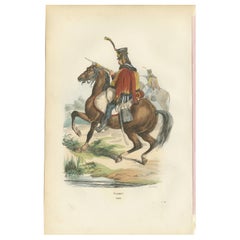
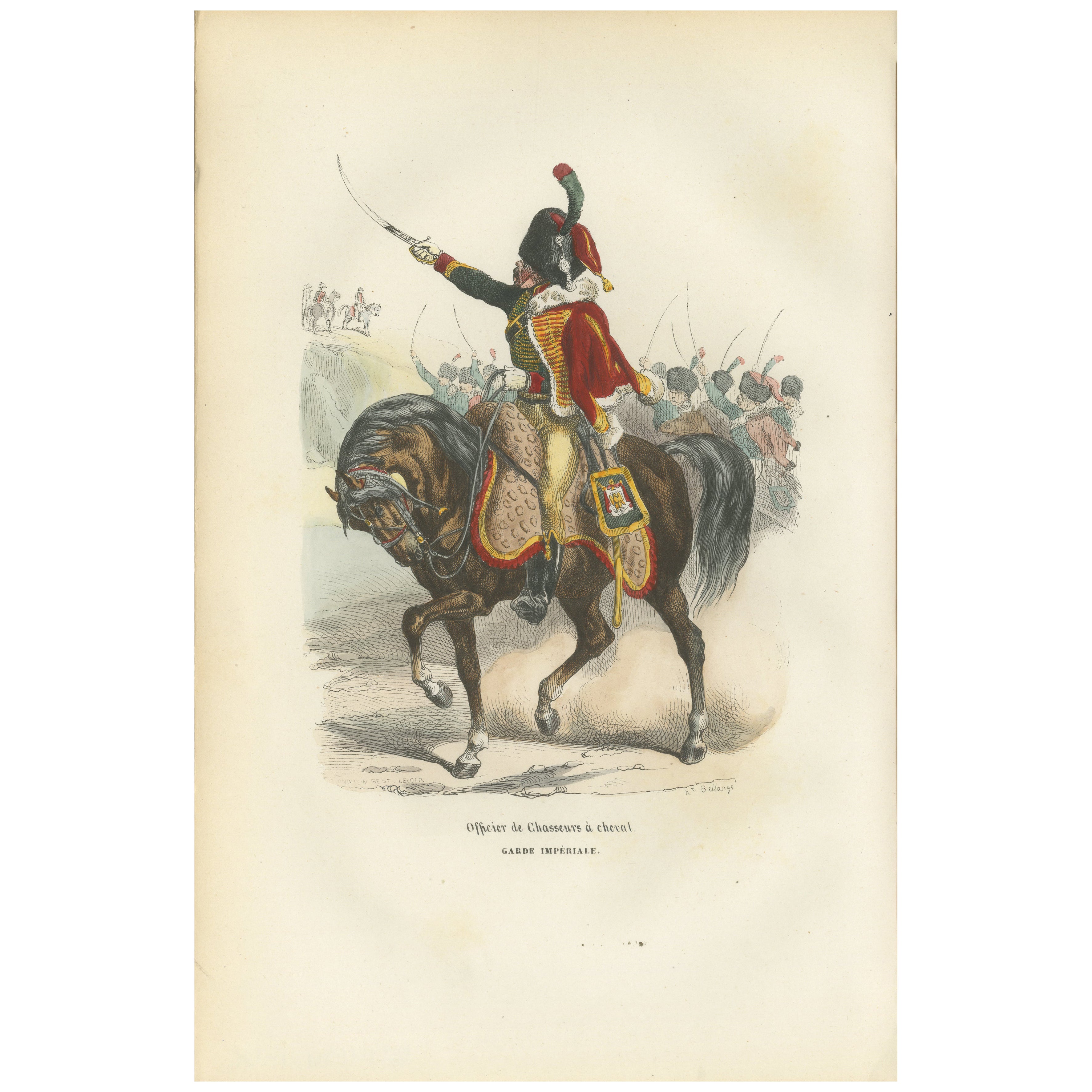
Officier de Chasseurs à Cheval, Garde Impériale – Napoleonic Cavalry Print 1843
Located in Langweer, NL
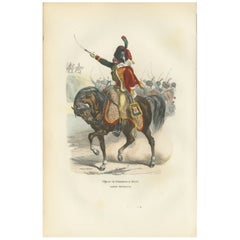
Officier de Chasseurs à Cheval, Garde Impériale – Napoleonic Cavalry Print 1843
This finely executed 19th-century hand-coloured military print depicts an officer of the Chasseurs à Cheval of Napoleon’s Imperial Guard, one of the most elite light cavalry units of the Grande Armée. The scene shows the officer mounted and in full action, raising his sabre while directing his men, a composition that emphasizes speed, command, and martial elegance. The Chasseurs à Cheval were personally favored by Napoleon and frequently served as his escort, reconnaissance force, and shock cavalry during key campaigns.
The uniform is rendered with great precision: the richly braided dolman, fur-edged pelisse, tall shako with plume, and ornate horse furniture...
Category
Antique 1840s French Prints
Materials
Paper
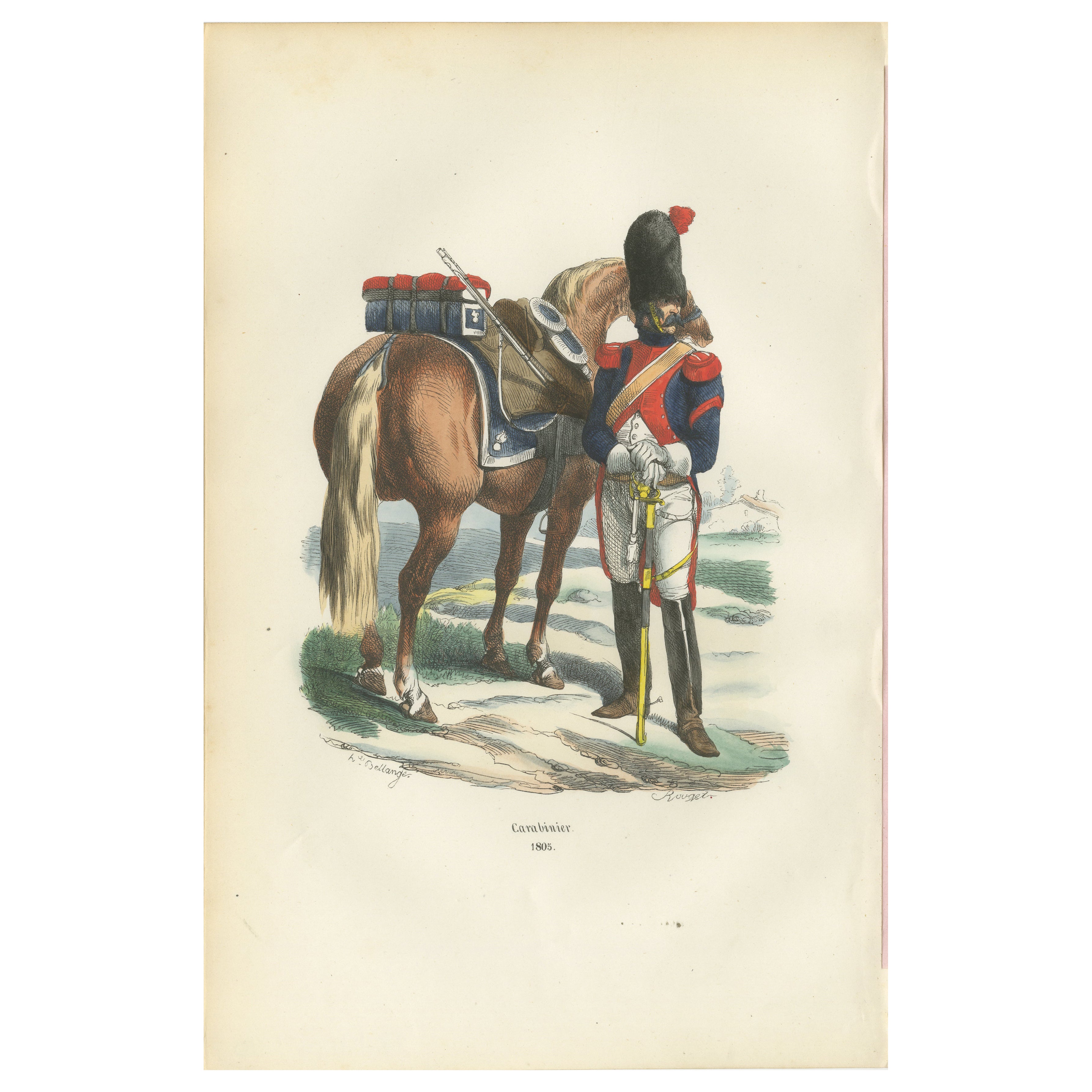
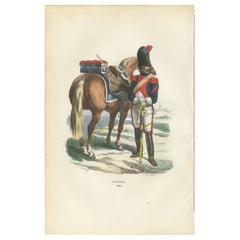
Napoleonic Carabinier 1805, Imperial Guard Heavy Cavalry Print, 1843
Located in Langweer, NL
Napoleonic Carabinier 1805, Imperial Guard Heavy Cavalry Print
Description:
This original hand-coloured 19th-century engraving depicts a Carabinier of the French heavy cavalry during the Napoleonic Wars, dated 1805, at the height of Napoleon Bonaparte’s imperial power. Shown standing beside his horse in full service uniform, the figure represents one of the most elite and physically imposing cavalry units of the Grande Armée. The tall bearskin headdress, red epaulettes, long sword, and carefully detailed equipment emphasize the prestige and battlefield authority of the Carabiniers.
The Carabiniers were renowned for their strength, discipline, and shock tactics, serving as heavy cavalry alongside the cuirassiers during Napoleon’s major campaigns, including Austerlitz. Unlike lighter cavalry units, they were intended to break enemy lines through sheer force and momentum, a role reflected in the solid stance of the soldier and the powerful build of the horse. The composition balances military precision with quiet authority, reinforcing the elite status of this corps within Napoleon’s army.
This print originates from *Histoire de l’Empereur Napoléon* by P.-M. Laurent de l’Ardèche, published in Paris in 1843, with illustrations after designs by Horace Vernet. Vernet was the foremost military art...
Category
Antique 1840s French Prints
Materials
Paper
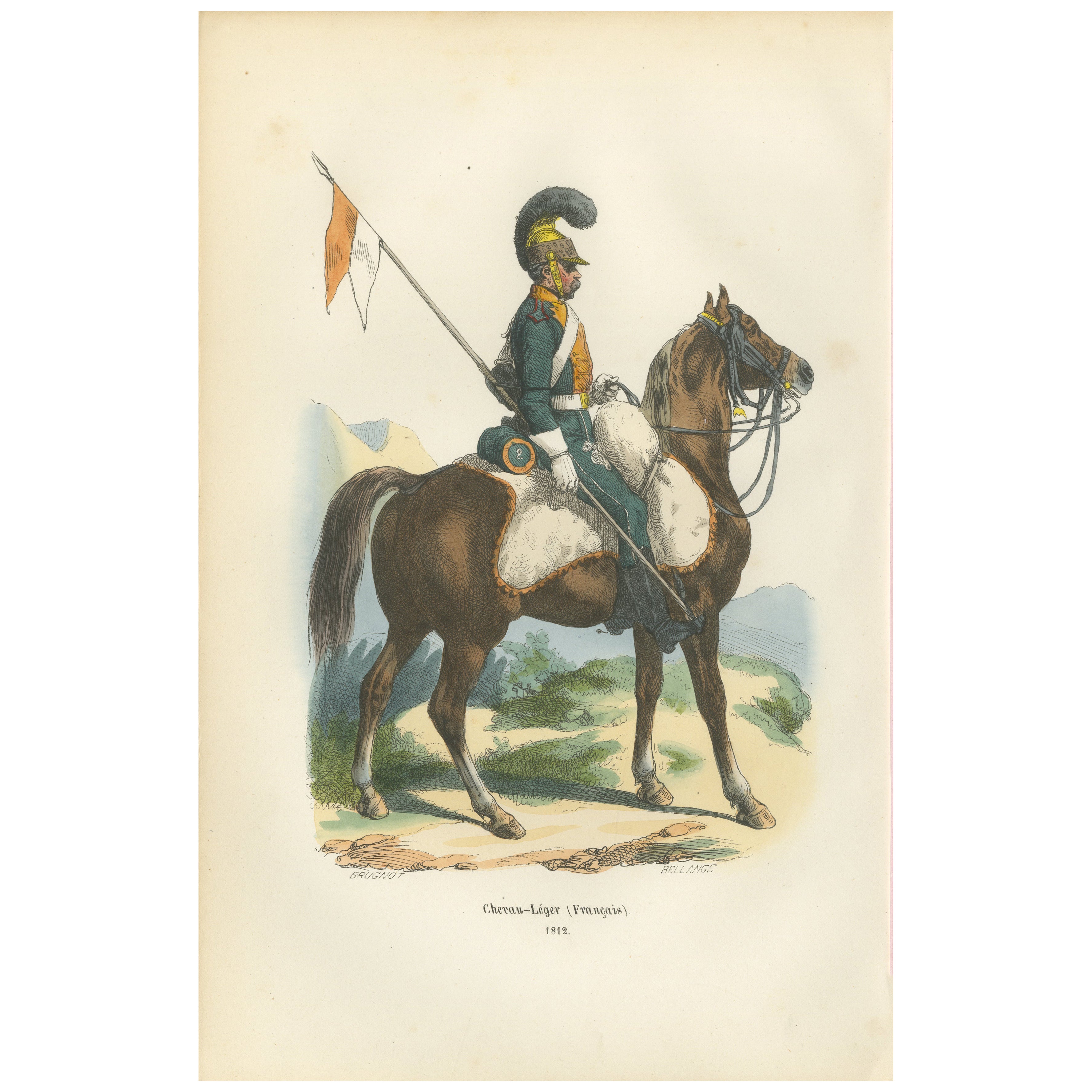
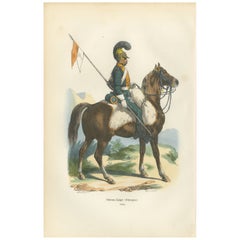
Chevau-Léger Français, Napoleonic Guard Cavalry Officer on Horseback, 1843
Located in Langweer, NL
Chevau-Léger Français, Napoleonic Guard Cavalry Officer on Horseback, 1843
This finely executed hand-colored print depicts a Chevau-Léger Français, a light cavalryman of the French ...
Category
Antique 1840s French Prints
Materials
Paper
You May Also Like
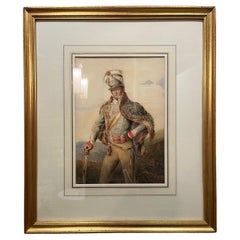
Circa 1810 Georgian English Hussan Officer in Full Military Attire
Located in Scottsdale, AZ
Circa 1810 Georgian English Hussan Officer in Full Military Attire
Beautiful print purchased in France. Age appropriate wear, see detailed photos or message us with questions.
Category
Antique 17th Century French Georgian Prints
Materials
Paper
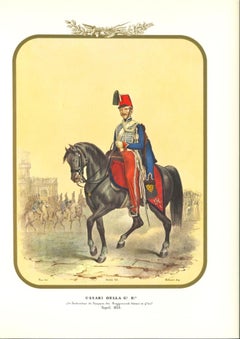
Hussars of the Royal Guard - Original Lithograph by Antonio Zezon - 1852
By Antonio Zezon
Located in Roma, IT
Hussars of the Royal Guard is a lithograph by Antonio Zezon. Naples 1852.
Interesting colored lithograph which describes a Troop Individual of the Hussars Regiment riding his horse....
Category
1850s Modern Figurative Prints
Materials
Lithograph
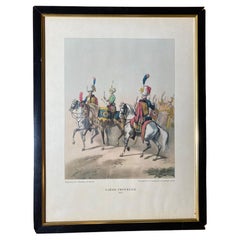
Print depicting soldiers of the Mounted Chasseurs of the Imperial Guard
Located in Bishop
s Stortford, GB
One of a Set of Four different scenes available. The image provided is a lithographic print depicting soldiers of the Mounted Chasseurs of the Imperial Guard (Cha...
Category
Early 20th Century Empire Prints
Materials
Glass
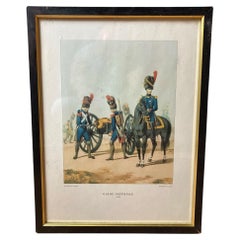
Military illustration titled Garde Impériale by the 19th-century French artis Al
Located in Bishop
s Stortford, GB
One of a Set of Four different scenes available. This print is a reproduction of a military illustration titled "Garde Impériale" by the 19th-century French artist Alf...
Category
Early 20th Century Empire Prints
Materials
Glass

Print of a 19th-century military illustration titled "Garde Impériale
Located in Bishop
s Stortford, GB
One of a Set of Four different scenes available.
This framed print is a 20th-century reproduction of a 19th-century military illustration titled "Garde Impériale, Artillerie à ...
Category
Mid-20th Century British Empire Prints
Materials
Glass
This print featuring soldiers from the Lithuanian Tartars of the Imperial Guard
Located in Bishop
s Stortford, GB
One of a Set of Four different scenes available. This print featuring soldiers from the Lithuanian Tartars of the Imperial Guard, a light cavalry squadron that served in the French A...
Category
Early 20th Century Empire Revival Prints
Materials
Glass
More Ways To Browse
Antique Bombay Chest
Antique Bombay Chests
Antique Chinese Hat Stand
Antique Copper Scale
Antique Drop Pull Handles
Antique Furniture Feet Styles
Antique Gong
Antique Grinding Stone
Antique Hand Carved Chinese Bar
Antique Keyhole Cover
Antique Korean Bandaji Chest
Antique Medical Art
Antique Merchant Chest
Antique Mounted Butterflies
Antique Patent
Antique Pine Server
Antique Postal Furniture
Antique Shaving Stand Furniture