Items Similar to Italian Mirror Frame with English Chromolithographic Floral Prints - 04
Want more images or videos?
Request additional images or videos from the seller
1 of 13
Italian Mirror Frame with English Chromolithographic Floral Prints - 04
$741.56
£550.65
€620
CA$1,018.79
A$1,107.63
CHF 587.27
MX$13,277.66
NOK 7,463.85
SEK 6,837.90
DKK 4,726.39
About the Item
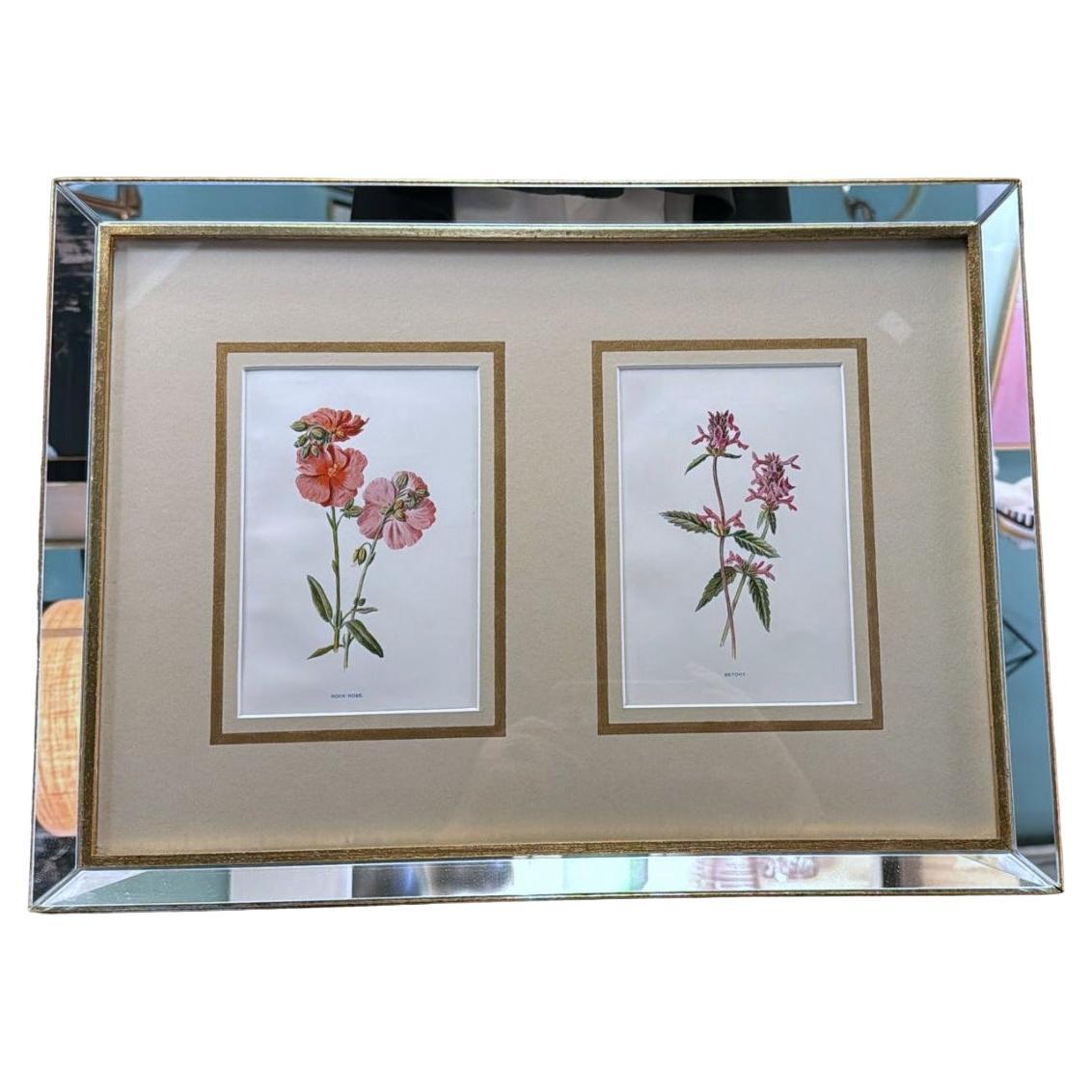
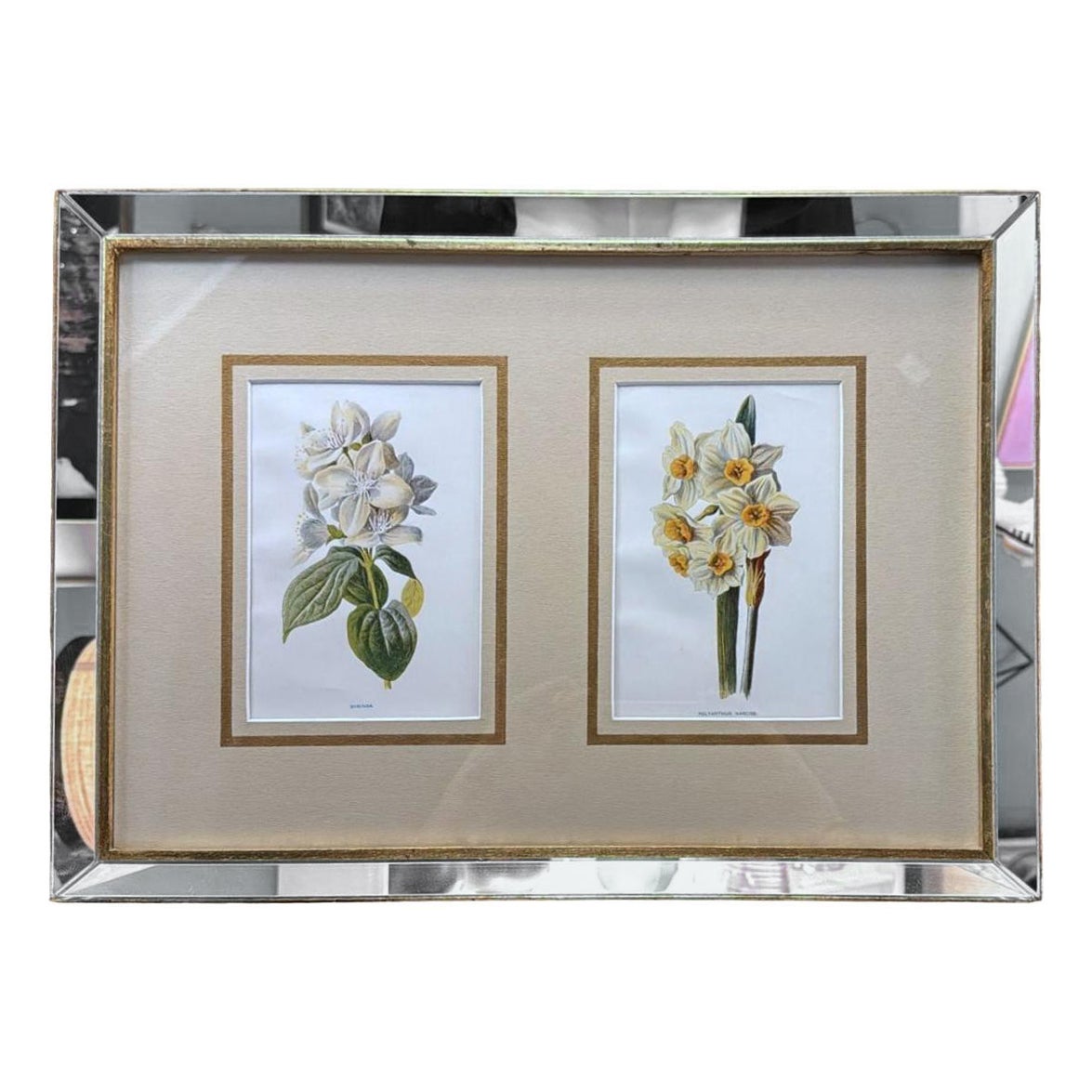
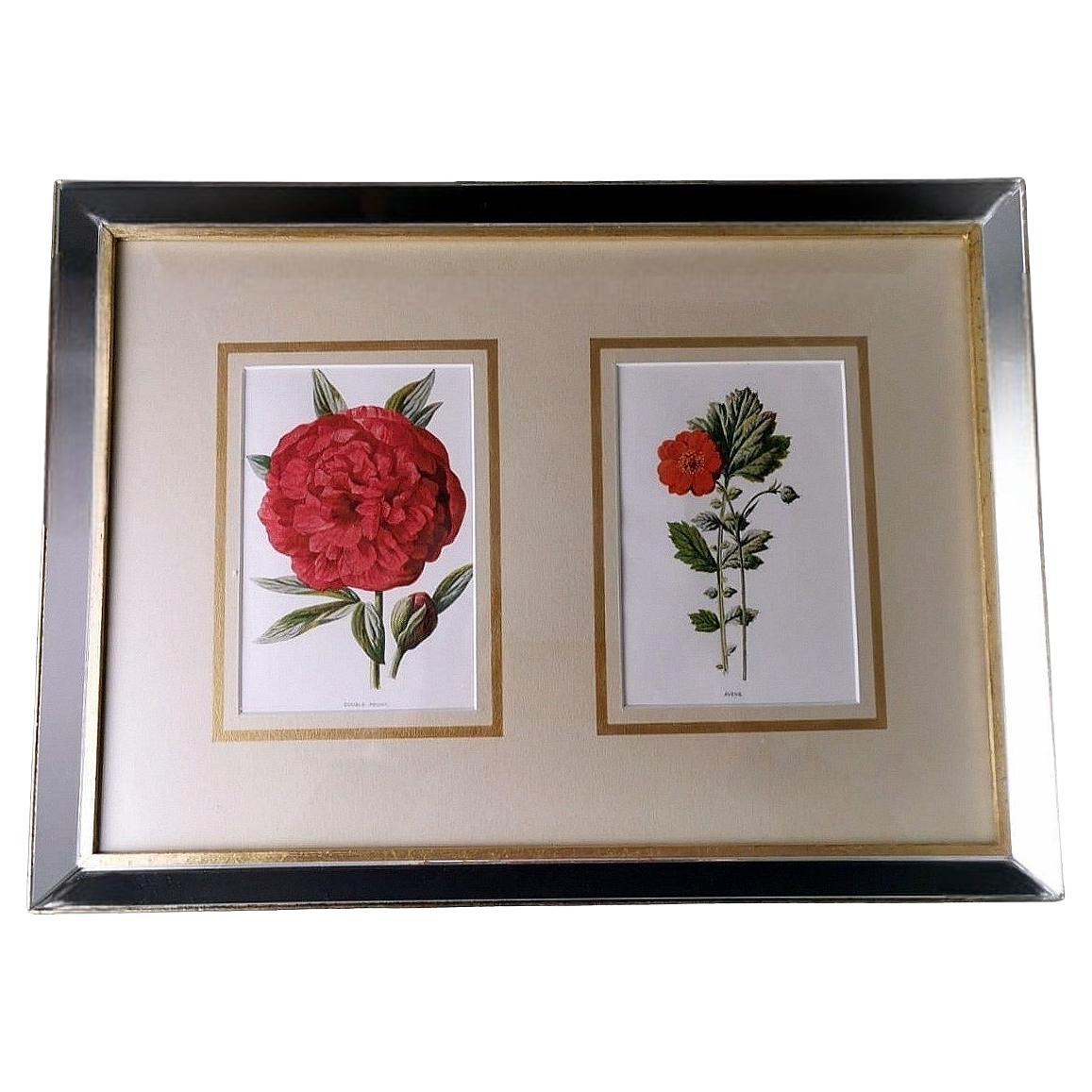
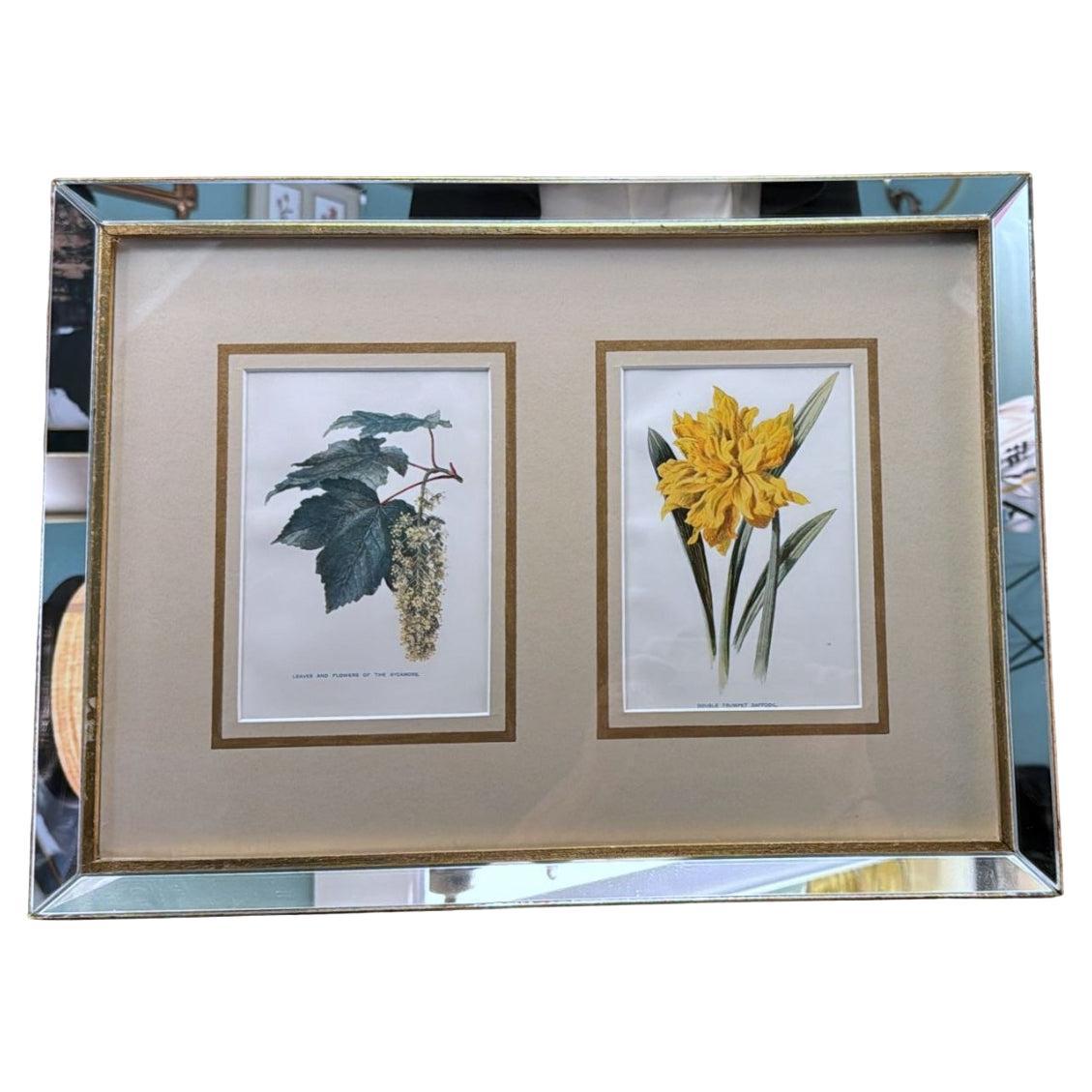
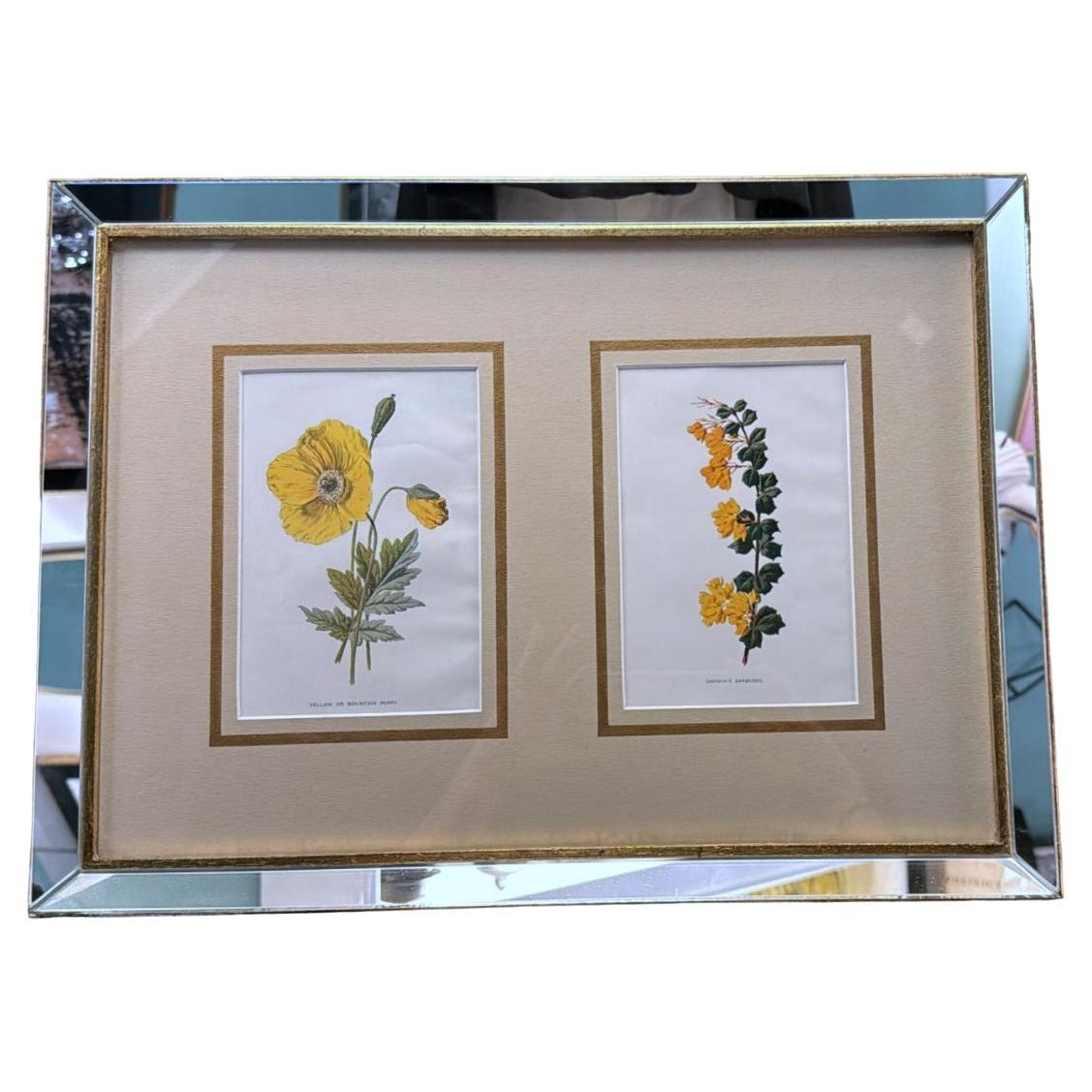
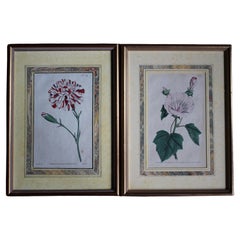
We kindly suggest reading the entire description, as it provides detailed technical and historical information to ensure the authenticity of our items. The frame enclosing the two prints is particularly unique and unusual. It was recently crafted by an experienced master cabinetmaker who has a workshop in one of the most "cool" neighborhoods of Florence: San Frediano, known for its charming and unique artisan workshops where handmade goods are produced. The master craftsman inserted four shiny mirrors on the sides of the flat part of the frame, tilting them outward. He also painted the outer part and the inner edge with gold, creating an overall optical effect that is bright, elegant, and sophisticated. The prints are enclosed within the frame by a refined cream-colored mat with a gold border. The prints are original paper artworks, not pages from a book. They were printed in London between 1900 and 1905 using the "chromolithography" technique (from the Greek chromo meaning color, lithos meaning stone and graphia meaning drawing), a method developed in 1837 that involves layering images of different colors, each engraved on a separate stone. This process allowed for vibrant tones and shades, successfully mimicking the colors of tempera paintings. The prints depict two beautiful and important flowers: on the left, the Clove Carnation, and on the right, flowers, seeds, and leaves of the Yew. The Clove Carnation is known as the carnation. This flower, belonging to the Dianthus genus, is highly prized for its ruffled petals and its spicy fragrance, similar to that of clove, from which its English name derives. The carnation holds various meanings in the language of flowers, depending on its color:
• Red carnation: Represents love, passion, and admiration.
• White carnation: Symbolizes purity, innocence, and loyalty.
• Pink carnation: Is often associated with maternal affection and tender love.
• Yellow carnation: Can signify disappointment or rejection.
• Striped carnation: Symbolizes refusal or disdain.
In general, the carnation is considered a symbol of lasting love and friendship due to its resilience and beauty. The carnation has an ancient history rich in symbolism. In Greek mythology, it is said that the carnation was the flower of Artemis, the goddess of the hunt. According to legend, a young shepherd played a flute during one of her hunts, and she, irritated by the sound, blinded him. Regretting her actions, she cried, and from her tears, carnations sprang up. The carnation also holds a strong religious connection in Christianity. It is said that carnations first bloomed when the Virgin Mary’s tears fell to the ground as she witnessed the crucifixion of her son, Jesus. For this reason, pink carnations are often associated with motherly love and devotion. Throughout history, the carnation has been used as a political and social symbol. For example, during the Carnation Revolution in Portugal in 1974, protesters placed carnations in the barrels of soldiers' guns to symbolize peace and the end of the dictatorship. Thanks to its resilience and ability to bloom again, the carnation has come to symbolize perseverance and enduring love, remaining one of the most symbolic and appreciated flowers worldwide. The Yew (Taxus baccata) is an evergreen plant known for its longevity, red bark, needle-like leaves, and small red fruits (which are technically arils, not berries). All parts of the plant are poisonous except for the aril surrounding the seed, though the seed itself is toxic. In the language of flowers and plants, the yew holds various meanings, most of which are related to its longevity and its mysterious, somber appearance:
• Death and immortality: The yew is associated with death but also with eternal life, as it is a long-living and vigorous tree. In many cultures, it is seen as a symbol of rebirth and immortality due to its ability to live for centuries.
• Protection: Because of its toxic nature, it was once believed that the yew could protect against evil and malevolent spirits.
• Ancient wisdom: Being a tree that can live for thousands of years, the yew is also seen as a symbol of ancient knowledge and wisdom.
The yew has a long history of symbolic and mythological significance, often connected to death and spirituality. It was considered sacred in many ancient cultures. In ancient Greece and Rome, the yew was associated with the underworld and death. It was planted in cemeteries because it was believed to guide the souls of the dead to the afterlife. In Celtic mythology, the yew was regarded as the tree of death and rebirth. The Druids considered the yew to be a sacred tree, and its wood was used in magical rites and rituals connected to death and transformation. The Celts believed the yew acted as a bridge between the world of the living and the world of the dead. In Norse mythology, the yew was associated with the god of war, Tyr, and with weapons. Ulysses’ bow in Homer’s Odyssey is said to have been made of yew wood, as it is very strong. The yew also has a darker reputation due to its toxicity. In the past, it was used to poison arrows and weapons. Despite this, the tree also symbolizes resurrection and the continuity of life. In many English and Irish churches, yews are planted in cemeteries as a symbol of life after death. Additionally, the yew has been used in traditional medicine, though with great caution due to its toxicity. More recently, certain compounds extracted from the yew have been used to develop cancer-fighting drugs, such as taxol. With its aura of mystery, the yew represents a combination of death and rebirth, protection, and immortality, making it one of the most symbolic and spiritually significant trees in human history. Our frame, featuring these two flowers, is perfect for decorating any room in the house, both for the symbolism behind the prints and for the splash of color they provide. Dimensions: Width 49 cm, Height 35 cm, Depth 3 cm. Each print measures 18x12 cm. For all our shipments, we use special packaging materials (custom-made wooden crates, polystyrene, etc.) to ensure maximum protection and safety of the items.
- Dimensions:Height: 13.78 in (35 cm)Width: 19.3 in (49 cm)Depth: 1.19 in (3 cm)
- Style:Late Victorian (Of the Period)
- Materials and Techniques:
- Place of Origin:
- Period:
- Date of Manufacture:1900-1905
- Condition:Wear consistent with age and use. The frame and print are in good condition.
- Seller Location:Prato, IT
- Reference Number:Seller: 158541stDibs: LU4632241977122
About the Seller
5.0
Platinum Seller
Premium sellers with a 4.7+ rating and 24-hour response times
Established in 1977
1stDibs seller since 2019
300 sales on 1stDibs
Typical response time: <1 hour
- ShippingRetrieving quote...Shipping from: PRATO, Italy
- Return Policy
More From This Seller
View AllItalian Mirror Frame with English Chromolithographic Floral Prints - 03
Located in Prato, Tuscany
We kindly suggest reading the entire description, as it provides detailed technical and historical information to ensure the authenticity of our items. The frame enclosing the two pr...
Category
Early 20th Century British Late Victorian Prints
Materials
Mirror, Wood, Paper

Italian Mirror Frame with English Chromolithographic Floral Prints - 01
Located in Prato, Tuscany
We kindly suggest reading the entire description, as it provides detailed technical and historical information to ensure the authenticity of our items. The frame that encloses the tw...
Category
Early 20th Century British Late Victorian Prints
Materials
Mirror, Wood, Paper
Italian Mirror Frame with English Chromolithographic Floral Prints -06
Located in Prato, Tuscany
We kindly suggest that you read the entire description, as with it we try to give you detailed technical and historical information to guarantee the authenticity of our objects.
The ...
Category
Early 20th Century British Late Victorian Prints
Materials
Mirror, Wood, Paper
Italian Mirror Frame with English Chromolithographic Floral Prints – 02
Located in Prato, Tuscany
We kindly suggest reading the entire description, as it provides detailed technical and historical information to ensure the authenticity of our items. The frame enclosing the two pr...
Category
Early 20th Century British Late Victorian Prints
Materials
Mirror, Wood, Paper
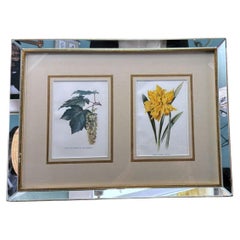
Italian Frame with Mirrors and English Chromolithographic Prints of Flowers - 05
Located in Prato, Tuscany
We kindly suggest reading the full description, as we aim to provide you with detailed technical and historical information to ensure the authenticity of our items. The frame enclosi...
Category
Early 20th Century British Late Victorian Prints
Materials
Mirror, Wood, Paper
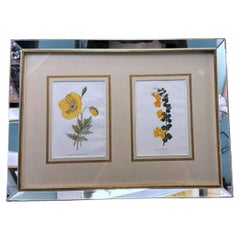
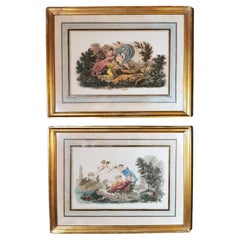
Nargeol Adrien Pair Prints Painted Watercolor With Gilded Frames
Located in Prato, Tuscany
We kindly suggest you read the whole description, because with it we try to give you detailed technical and historical information to guarantee the authenticity of our objects.
Pair of prints engraved by burin and painted in watercolor; both are a tribute to Cupid; the name Cupid - meaning desire, lust - was given by the Romans to the Greek god of love, actually called Eros. Alternatively, he was called just Love always by the Latins. As the son of Aphrodite, goddess of love, he, like his mother, was capable of any act, even deplorable. In the first print, which has been cut out and shaped, there are two young girls offering God a basket of fruit and a goblet of wine; in the second print a mature woman is about to be hit by Cupid's love arrow; both prints have been made with a beautiful burin engraving, then finished with delicate watercolors. The frames are handmade in gilded wood. The prints were made between 1850 and 1855 by Adrien Nargeol (see signature) a prolific and talented French engraver and were published in the "Journal des Demoiselles...
Category
Antique Mid-19th Century French Napoleon III Prints
Materials
Wood, Paper
You May Also Like
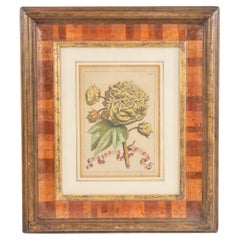
19th Century Italian Hand Colored Engraving of Flowers in an Inlaid Frame
Located in Queens, NY
Italian hand colored engraving print of flowers with Latin names within inlaid frame (late 18/19th Century).
Category
Antique 19th Century Italian Renaissance Paintings
Materials
Paper
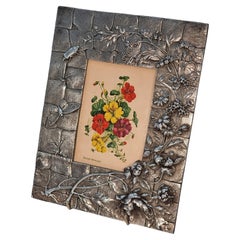
A floral watercolour and decorative pewter frame, c 1890
Located in Central England, GB
This fine watercolour is a still life study of colourful flowering nasturtiums. It is displayed in a most unusual Aesthetic movement heavy cast deep relief pewter frame decorated wit...
Category
Antique Late 19th Century French Louis Philippe Decorative Art
Materials
Pewter
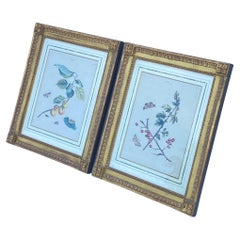
Pair of 18th Century Framed Botanicals
Located in Los Angeles, CA
This pair of 18th century hand tinted lithographs have butterflies and insects throughout. The images themselves are 12" by 9" Framed in 22k giltwood frames by Jerry Solomon.
Category
Antique 18th Century French Neoclassical Prints
Materials
Giltwood, Paper
$2,850 / set
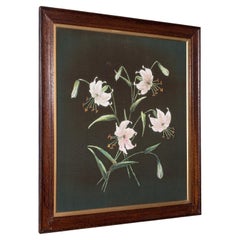
Antique Framed Panel, English, Hand Painted, Art Nouveau, Edwardian, C.1910
Located in Hele, Devon, GB
This is an antique framed panel. An English, hand-painted cotton screen, dating to the Edwardian period, circa 1910.
Elegantly presented examp...
Category
Early 20th Century British Paintings
Materials
Cotton
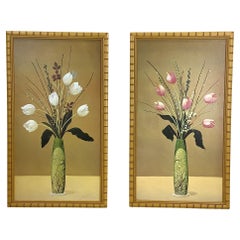
Pair Vintage Floral Artwork In Gold Frames
Located in Trenton, NJ
A beautifully preserved pair of mid-century floral still-life prints executed in the style of Hall Hampton. Each piece features tulip arrangements in tall green vases, rendered with ...
Category
Late 20th Century Regency Prints
Materials
Wood
Late 18 C W.Curtis Hand Coloured Botanical Lithograph Plates Faux Marble Mounts
Located in Lowestoft, GB
Decorative pair of late 18th century hand coloured lithograph plates of a Franklin Tartar and Black Hellebore.
Originally both part of the botanical book Flower Garden Displayed by ...
Category
Antique Late 18th Century English George III Decorative Art
Materials
Paper, Art Glass, Giltwood
More Ways To Browse
Used Litho Stones
Amida Buddha
Angel With Child
Antique Aviary
Antique Bank Signs
Antique Bread Bowl
Antique Cast Bronze Bells
Antique China Cats
Antique Chinese Lacquer Tray
Antique Chinese Mother Of Pearl Inlaid Table
Antique Chinese Silver Vases
Antique Edison Lamps
Antique Elephant Statues
Antique Gentlemans Chest
Antique Glass Canisters
Antique Guardian Angel
Antique Hitching Post
Antique Hitching Posts