Items Similar to King Günther von Schwarzburg: The Warrior Monarch, 1847
Want more images or videos?
Request additional images or videos from the seller
1 of 6
King Günther von Schwarzburg: The Warrior Monarch, 1847
$153.32
$191.6520% Off
£114.65
£143.3120% Off
€128
€16020% Off
CA$211.24
CA$264.0520% Off
A$230.39
A$287.9820% Off
CHF 122.04
CHF 152.5520% Off
MX$2,762.02
MX$3,452.5320% Off
NOK 1,554.30
NOK 1,942.8720% Off
SEK 1,421.29
SEK 1,776.6120% Off
DKK 975.41
DKK 1,219.2620% Off
About the Item
This handcolored original antique print features a figure labeled "Gunther de Schwarzbourg, roi des Romains," which identifies him as Günther von Schwarzburg, a German king. He is depicted in a traditional gothic archway that frames the illustration, reminiscent of a church's stained glass window.
In the illustration, Günther is clad in armor, with a chainmail coif and a helmet adorned with a crown, indicating his royal status. The blue tunic worn over his armor is embellished with a pattern of fleur-de-lis, a symbol often associated with royalty. He also has golden arm and leg guards, and his red belt stands out against the blue tunic. In his left hand, he holds what appears to be a scepter, topped with a figure of a lion, which is a symbol of sovereignty and courage.
At his feet, there is a crestfallen figure, which could represent a vanquished foe or symbolize the king's triumph over his enemies. The background behind the figure is a rich, red tapestry patterned with crosses, which complements the regal and martial theme of the image.
Given the historical and regal subject matter of the print, a fitting title for this image could be "King Günther von Schwarzburg: The Warrior Monarch." This title captures both his royal status and his martial appearance as depicted in the print.
The colors have a nice glow over them. Historically, egg whites, known as glair, and sometimes egg yolk were indeed used in illumination and painting, particularly in manuscripts, to give colors a brighter appearance and to add a sheen or gloss to the work. This technique was quite common during the Middle Ages and into the Renaissance.
Egg whites can be applied as a varnish over pigments to enhance their brightness and to protect the colors. This application could make the colors appear more vivid and also add a slight glossy sheen to the surface of the image.
Egg yolk, on the other hand, was commonly used as a binding agent in paint. It forms the basis of tempera paint, a medium that was widely used before the advent of oil painting. Egg yolk helps to create a durable and long-lasting color that adheres well to various surfaces.
In the context of the print from 1847, it's less likely that egg whites or yolks were used directly on the print, as by that time, commercial printing processes would have been more advanced and less reliant on such manual methods. However, if this print is a representation of an earlier style or is meant to mimic the appearance of hand-painted manuscripts, the original artists might have employed techniques or materials that gave a similar effect to those achieved with egg-based binders and varnishes.
- Dimensions:Height: 10.63 in (27 cm)Width: 7.09 in (18 cm)Depth: 0 in (0.02 mm)
- Materials and Techniques:
- Period:
- Date of Manufacture:1847
- Condition:Good. Overal very light toning and light soiling but the image itself clean and hand-colored almost 200 years ago and still in expliciet colors. Aged paper with typically warm, yellowish-brown hue, mostly around the edges. Study the image carefully.
- Seller Location:Langweer, NL
- Reference Number:Seller: BG-13635-31stDibs: LU3054337877802
About the Seller
5.0
Recognized Seller
These prestigious sellers are industry leaders and represent the highest echelon for item quality and design.
Platinum Seller
Premium sellers with a 4.7+ rating and 24-hour response times
Established in 2009
1stDibs seller since 2017
2,791 sales on 1stDibs
Typical response time: <1 hour
- ShippingRetrieving quote...Shipping from: Langweer, Netherlands
- Return Policy
More From This Seller
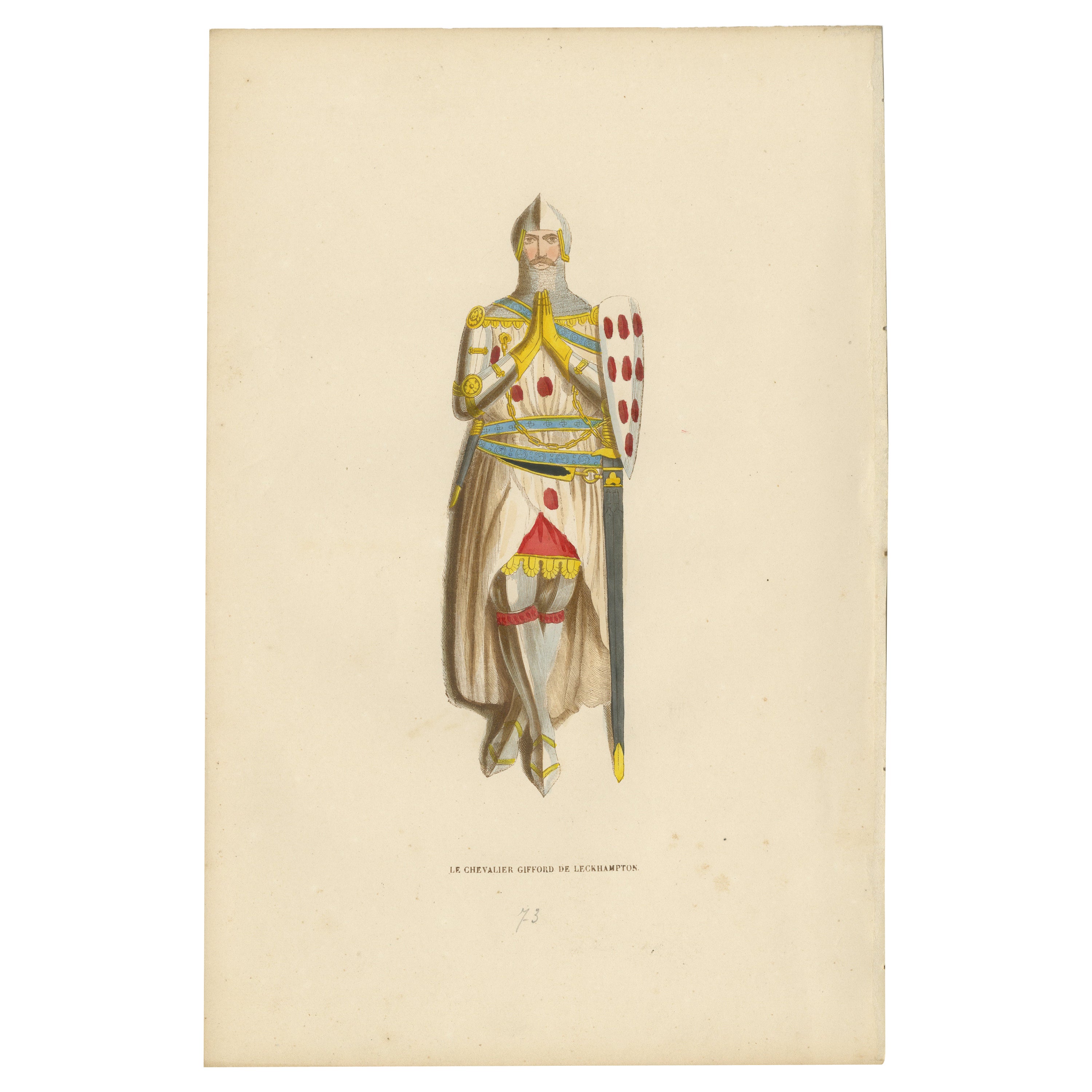
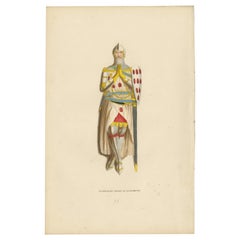
View AllEngraving of Le Chevalier Gifford de Léchampton: The Gallant Knight, 1847
Located in Langweer, NL
Title: "Le Chevalier Gifford de Léchampton: The Gallant Knight"
Description: This print portrays the knight Gifford de Léchampton in full regalia, stand...
Category
Antique 1840s Prints
Materials
Paper
$229 Sale Price
20% Off
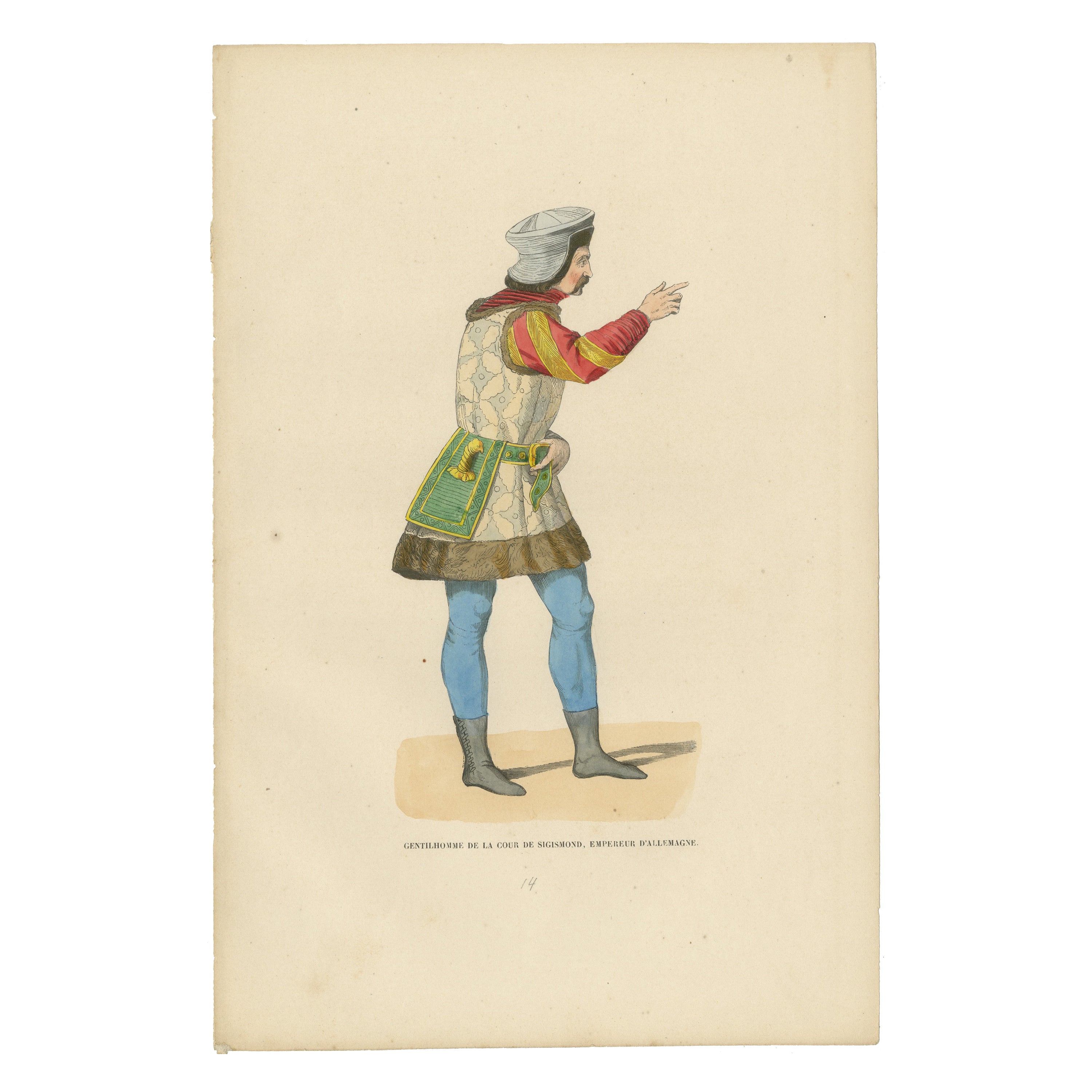
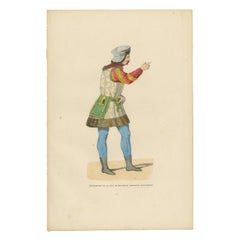
Courtly Splendor: A Nobleman at Emperor Sigismund
s Court, 1847
Located in Langweer, NL
The image depicts a man identified as a "Gentilhomme de la cour de Sigismond, empereur d'Allemagne," which translates to "Gentleman of the court of Sigismund, Emperor of Germany."
This individual is portrayed in a profile stance, dressed in attire that is indicative of the high-status courtiers during the time of Emperor Sigismund, who reigned in the early 15th century. He is wearing a turban-like headgear, which reflects the influence of Eastern fashion on European court attire, possibly due to the Ottoman influence or the general exchange of culture during the Crusades and subsequent interactions.
His doublet is richly patterned and he has puffed sleeves in red, which were fashionable among the nobility during the period. The garment is accented with a decorative belt that holds what appears to be a purse or a pouch. He also sports tight blue hose and pointed shoes, which complete the ensemble typical of a nobleman or a high-ranking court official in the Holy Roman Empire.
Egg whites can be applied as a varnish over pigments to enhance their brightness and to protect the colors. This application could make the colors appear more vivid and also add a slight glossy sheen to the surface of the image.
Egg yolk, on the other hand, was commonly used as a binding agent in paint. It forms the basis of tempera paint, a medium that was widely used before the advent of oil painting. Egg yolk helps to create a durable and long-lasting color that adheres well to various surfaces.
In the context of the print from 1847, it's less likely that egg whites or yolks were used directly on the print, as by that time, commercial printing processes would have been more advanced and less reliant on such manual methods. However, if this print is a representation of an earlier style or is meant to mimic the appearance of hand-painted manuscripts...
Category
Antique 1840s Prints
Materials
Paper
$153 Sale Price
20% Off
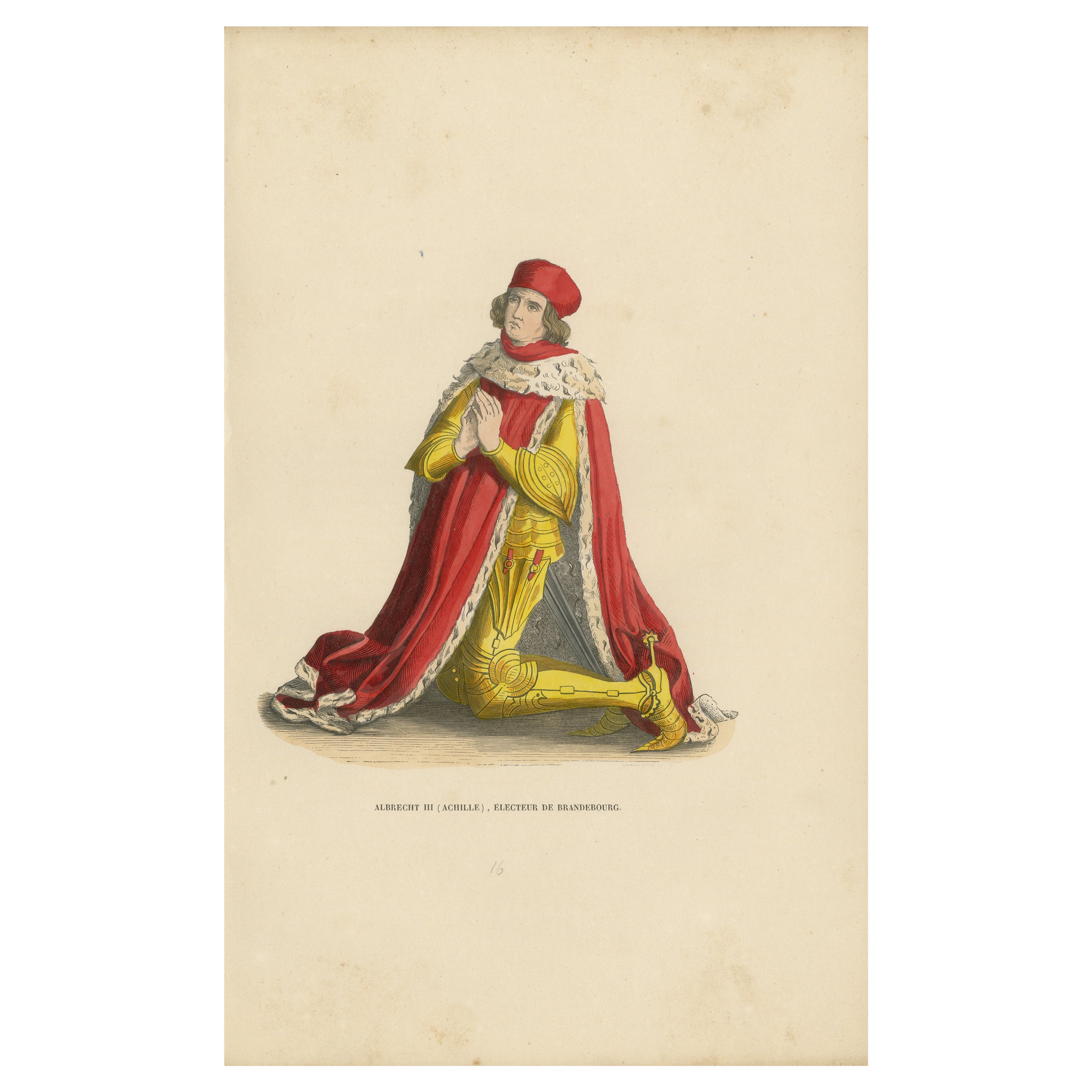
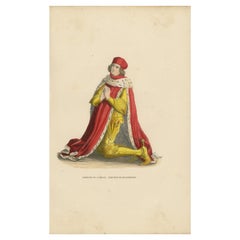
Albrecht Achilles: The Warrior Prince of Brandenburg in Prayer, 1847
Located in Langweer, NL
The image depicts Albrecht III Achilles, Elector of Brandenburg, known for being a significant figure in the early history of Brandenburg-Prussia.
Albrecht is shown in a kneeling po...
Category
Antique 1840s Prints
Materials
Paper
$153 Sale Price
20% Off
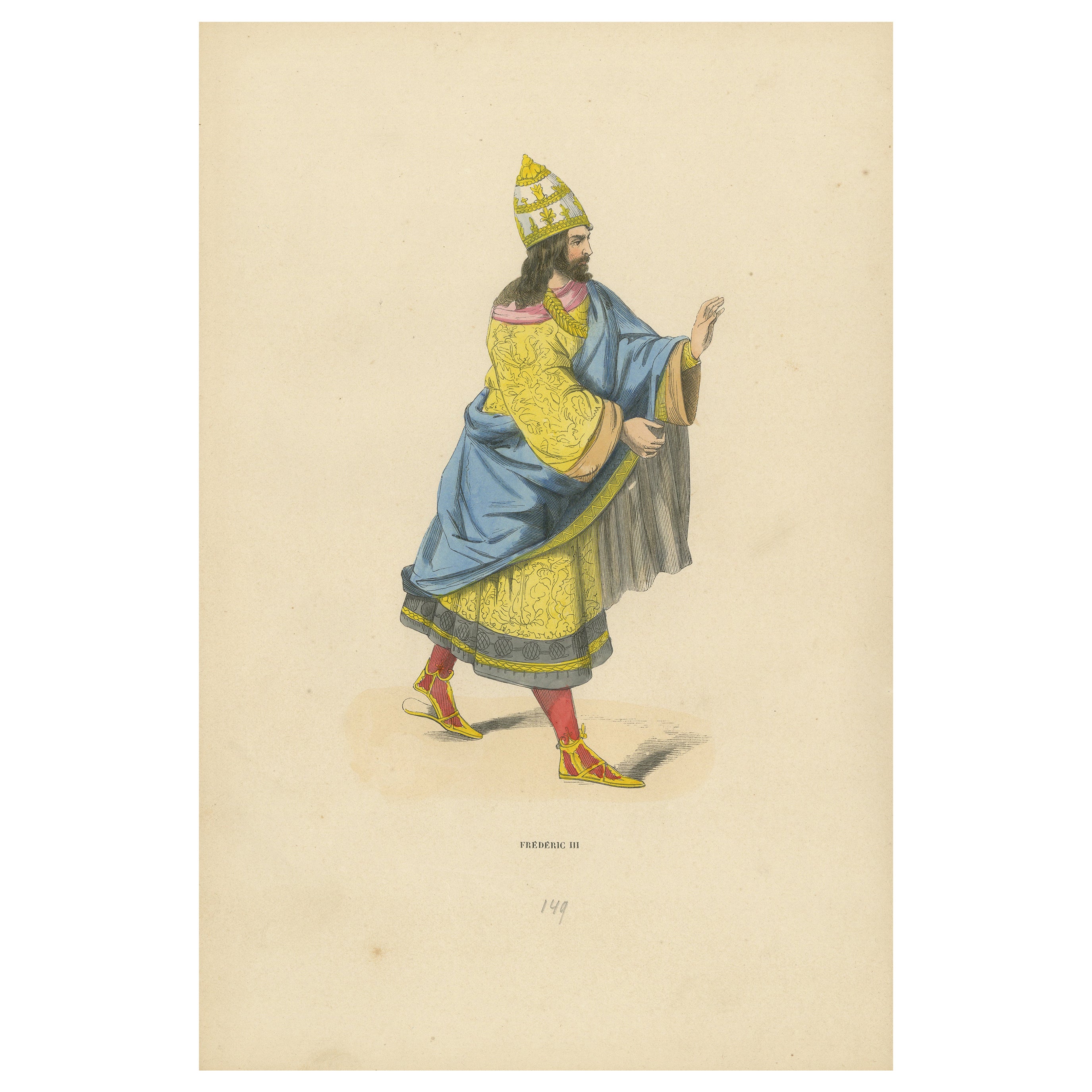
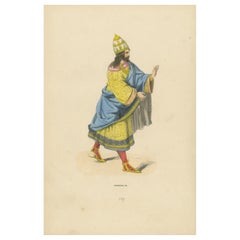
Imperial Majesty: Emperor Frederick III in
Costume du Moyen Âge, 1847
Located in Langweer, NL
Title: "Imperial Majesty: Emperor Frederick III in 'Costume du Moyen Âge'"
Description: This lithograph from the "Costume du Moyen Âge" collection, printed in 1847, depicts Emperor ...
Category
Antique 1840s Prints
Materials
Paper
$134 Sale Price
20% Off
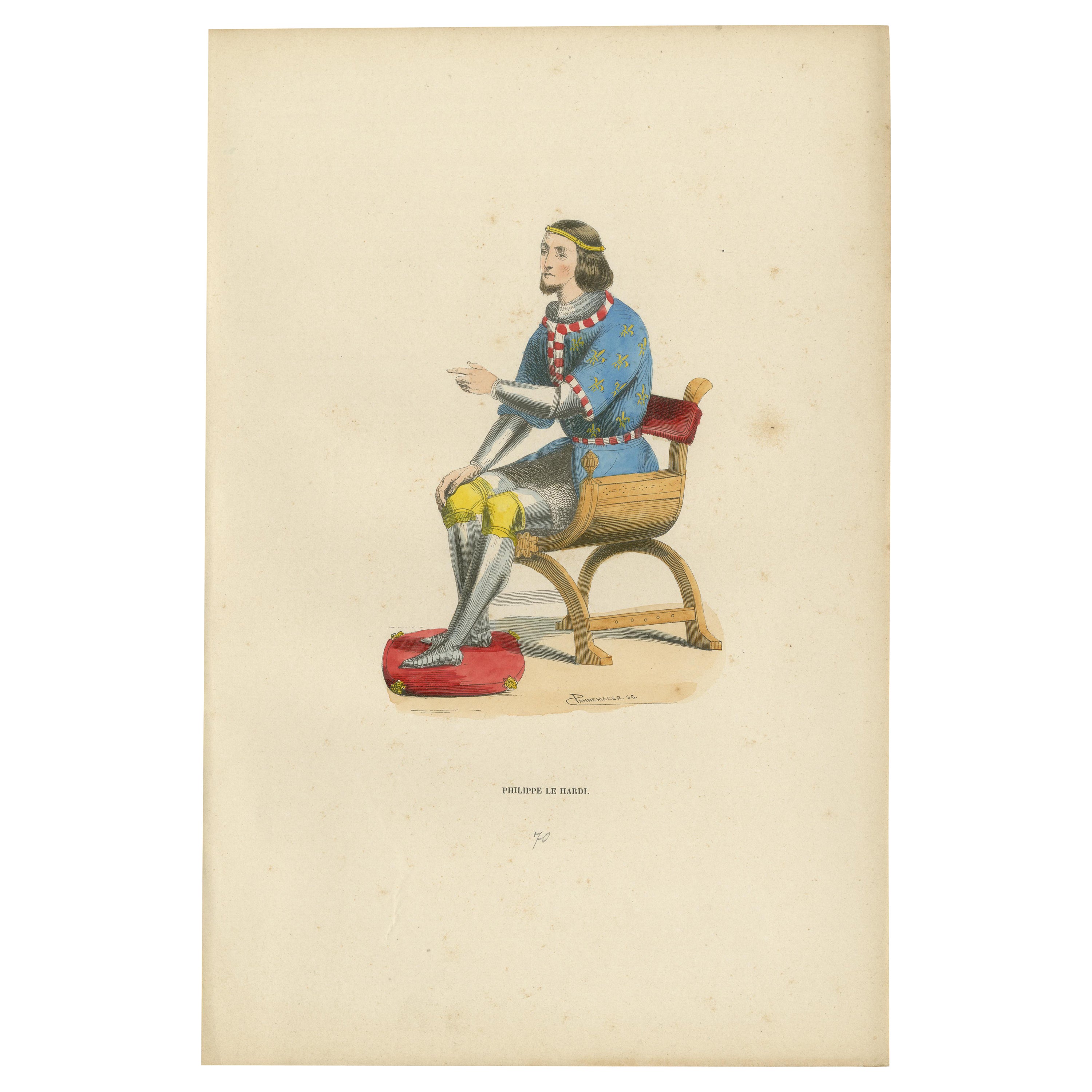
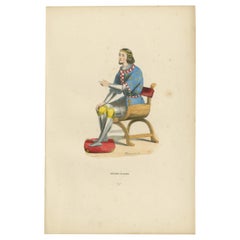
Old Engraving of Philippe le Hardi: The Bold Duke of Burgundy in Council, 1847
Located in Langweer, NL
Title: "Philippe le Hardi: The Bold Duke in Council"
Description: This print captures Philippe le Hardi, also known as Philip the Bold, Duke of Burgundy, seated in a posture of cons...
Category
Antique 1840s Prints
Materials
Paper
$153 Sale Price
20% Off
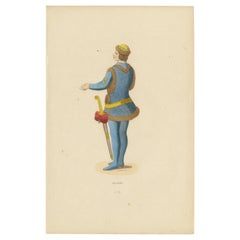
Medieval Knight: Heraldry and Valor in 15th Century Garb, 1847
Located in Langweer, NL
Title: "Chevalier" (Knight)
Description: This 1847 hand-colored engraving from the "Costume du Moyen Age" series depicts a "Chevalier," the French term for a knight. The image illus...
Category
Antique 1840s Prints
Materials
Paper
$143 Sale Price
20% Off
You May Also Like
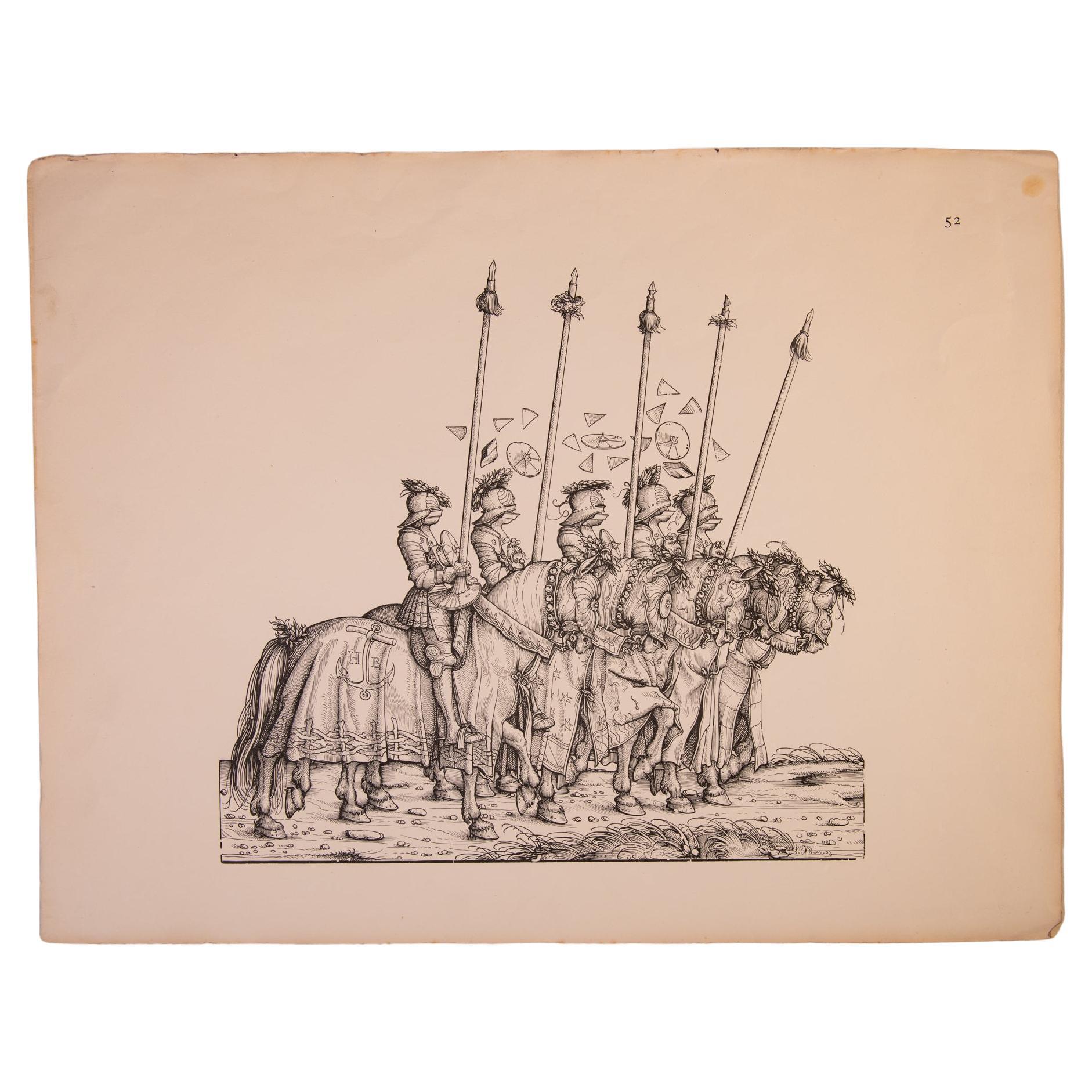
Engraving of Maximilian I° Roman Emperor
Located in Alessandria, Piemonte
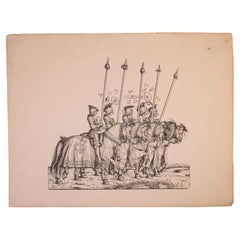
ST/728-1 . Engraving of Maximilian I°, beginning 1930, from the original engravings of the 16th and 17th centuries.
"Mounted knights in armour in a proce...
Category
Mid-20th Century Other Prints
Materials
Paper
Engraving of Maximilian I° Roman Emperor
Located in Alessandria, Piemonte
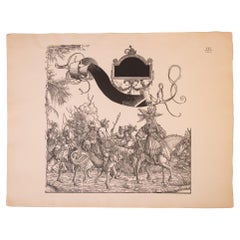
ST/728 /3 - Engraving of Maximilian I° - Procession (noy better specified) - from the original engravings of the 16th and 17th centuries by Albrecht Altd...
Category
Mid-20th Century Other Prints
Materials
Paper
Engraving of Maximilian I° Roman Emperor "Knights in a Parade"
Located in Alessandria, Piemonte
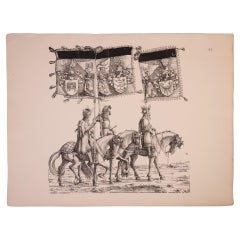
ST/728-2. Engraving of Maximilian I°, Roman emperor, from the original engravings "The triumph of Maximilian " of the 16th and 17th centuries by Albrecht...
Category
Early 20th Century European Other Prints
Materials
Paper
Original Antique Illuminated Print of St George. C.1880
Located in St Annes, Lancashire
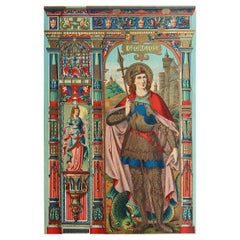
Wonderful print of St George
Illuminated Chromolithograph
Published circa 1880
Unframed.
Free shipping
The measurement is the paper size
Category
Antique 1880s English Gothic Prints
Materials
Paper
Le Impératrice Eugénie Lithograph, c.1850s
Located in Savannah, GA
A large hand-colored lithograph entitled “Le Impératrice, Compiegne,” after the painting by Jean Victor Adam (1801-1866), circa 1850s. Depicted is the Empress Eugénie de Montijo, wi...
Category
Antique Mid-19th Century French Other Prints
Materials
Glass, Wood, Paper

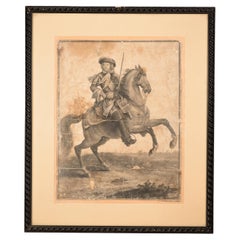
Grand Dauphin, Louis of France, son of Louis XIV. Framed engraving. BAZIN, N
Located in Madrid, ES
Grand Dauphin, Louis of France, son of Louis XIV. Framed engraving. BAZIN, Nicolas (following Jean Baptiste Martin l'Ancien). France, 1682.
It has faults.
Engraving depicting Louis...
Category
Antique 17th Century European Baroque Decorative Art
Materials
Other
More Ways To Browse
Fleur De Lis Stained Glass
Red Velvet Table
Richard Ginori Blue
Riding Crop Vintage
Russian Silver Marks
Ship Cabin
Siam Celadon
Silver Animal Ornaments
Silver Compendium
Silver Pen Tray
Small Oval Frame
Small Wood Carvings
Stickley Mahogany Furniture
Stickley Mahogany
Stone Balusters
Stone Mary
Stoneware 1870
Studio Pottery Figure