Items Similar to The Martyrdom of Father John Forest, Burned by Order of Henry VIII in 1538

Want more images or videos?
Request additional images or videos from the seller
1 of 6
The Martyrdom of Father John Forest, Burned by Order of Henry VIII in 1538
$421.64
$527.0520% Off
£315.29
£394.1120% Off
€352
€44020% Off
CA$580.91
CA$726.1420% Off
A$633.57
A$791.9620% Off
CHF 335.62
CHF 419.5320% Off
MX$7,595.57
MX$9,494.4620% Off
NOK 4,274.32
NOK 5,342.9020% Off
SEK 3,908.55
SEK 4,885.6820% Off
DKK 2,682.38
DKK 3,352.9820% Off
About the Item
Engraving of the burning at the stake of a Franciscan friar. Here is a detailed analysis, including a description and a translated version of the text:
The text at the bottom reads:
"P. IOANNES FOREST Minderbroeder ende biechtvader van Catharina Coninginne van Engelandt wort bij last van Henricus VIII met een laeckeen vyer verbrandt op den 23. Meij 1538."
"Father John Forest, a Franciscan friar and confessor to Queen Catherine of England, is burned by order of Henry VIII with a slow fire on May 23, 1538."
This engraving depicts Father John Forest, a Franciscan friar, tied to a stake and about to be burned at the stake. Father Forest is shown with his arms tied above his head, and his expression conveys a sense of resolve, suggesting that he is facing his fate with bravery and faith.
Two men in the foreground are setting up the firewood, preparing to light the flames. The detail with which the men are depicted suggests a sense of routine, perhaps hinting at the frequency of executions during this period of religious upheaval. In the background, a small figure is holding up a crucifix or a religious statue, emphasizing the religious element of the scene and the devotion of Father Forest even in the face of death. The setting sun and the dramatic cloud cover evoke a somber and emotional tone, consistent with Baroque artistic conventions.
Probable Maker and Source
This engraving likely dates to the late 17th century and could have been made by an artist like Romeyn de Hooghe, who was known for his politically and religiously charged prints. The engraving style and the subject of a Catholic martyr opposed to Henry VIII suggest that it was created as part of a series depicting the persecution of Catholic clergy during the English Reformation. Father John Forest was a known figure in the English Reformation, and his execution is well documented, as he was one of the notable martyrs who stood against Henry VIII's break with the Catholic Church.
Significance of the Engraving
This engraving is significant for several reasons:
1. **Historical Context**: It depicts the **martyrdom of Father John Forest**, who opposed Henry VIII's policies and remained loyal to the Catholic Church. He was executed for refusing to acknowledge the king as the supreme head of the Church of England.
2. **Religious Symbolism**: The emphasis on the friar's religious stance, coupled with the inclusion of the crucifix/statue, underscores the print's role as a **Catholic propaganda piece**. It evokes sympathy for those who faced persecution under Protestant reformers, highlighting their devotion even in the face of gruesome death.
3. **Artistic Detail**: The engraving's dramatic composition and the depiction of various figures involved in the execution contribute to its emotional impact. The Baroque style, characterized by movement, emotional tension, and dramatic lighting, is evident here in the interplay of light and shadow and the expressive poses of the figures.
Medium: Copper engraving on laid paper
Dimensions: Approximately 30 x 20 cm (image size)
Description: This evocative Baroque engraving portrays the martyrdom of Father John Forest, a Franciscan friar and confessor to Queen Catherine of England, who was burned at the stake on May 23, 1538, by order of Henry VIII. The scene shows Father Forest tied to a stake, with firewood being prepared around him. His expression conveys calmness and resolve, emphasizing his unwavering faith. The background features a figure holding a crucifix or religious statue, reinforcing the religious context of his death. Such engravings were used as Catholic propaganda during the Reformation, intended to evoke admiration for religious martyrs who resisted the Reformation. The detailed rendering of the figures and the dramatic atmosphere exemplify the emotional intensity of Baroque art.
Condition: Good, with age-related toning, minor creases, and intact margins.
Provenance: Likely part of a larger series or publication detailing the persecution of Catholic martyrs during the English Reformation.
Significance: An important historical and religious document highlighting the persecution of Catholic clergy who resisted Henry VIII's religious reforms. The engraving's detail, emotional depth, and dramatic composition make it a significant piece for understanding the religious conflicts of the Reformation era.
- Dimensions:Height: 11.42 in (29 cm)Width: 7.49 in (19 cm)Depth: 0 in (0.02 mm)
- Materials and Techniques:Paper,Engraved
- Period:1680-1689
- Date of Manufacture:circa 1680
- Condition:Condition: Good, with some age-related toning, small margins, and minor creases, especially in the right border. Please study the images carefully.
- Seller Location:Langweer, NL
- Reference Number:Seller: BG-13894-51stDibs: LU3054342372652
About the Seller
5.0
Recognized Seller
These prestigious sellers are industry leaders and represent the highest echelon for item quality and design.
Platinum Seller
Premium sellers with a 4.7+ rating and 24-hour response times
Established in 2009
1stDibs seller since 2017
2,788 sales on 1stDibs
Typical response time: <1 hour
- ShippingRetrieving quote...Shipping from: Langweer, Netherlands
- Return Policy
More From This Seller
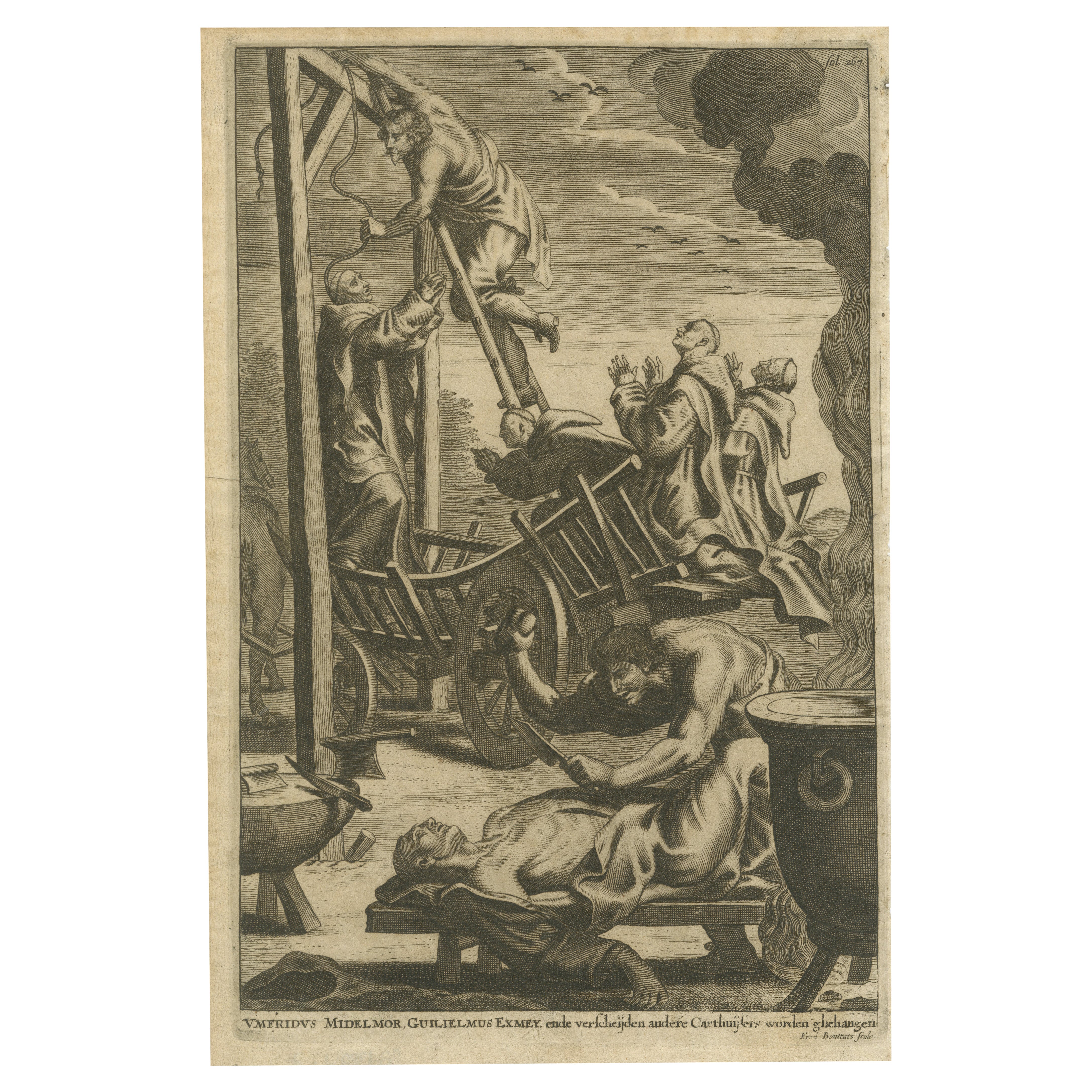
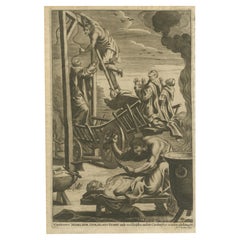
View AllThe Martyrdom of Carthusian Monks Humphrey Middlemore, William Exmew, and Others
Located in Langweer, NL
This engraving depicts a group of Carthusian monks being executed, likely by hanging, in a gruesome scene reminiscent of the religious persecution during the Reformation. Here is a detailed analysis, a translated version of the text, and context for the engraving:
The text at the bottom reads:
"VMFRIDVS MIDELMOR, GULIELMUS EXMEY, ende verscheijden andere Carthuysers worden gehanghen."
Translation: "Humphrey Middlemore, William Exmew, and various other Carthusians are hanged."
The engraving depicts the martyrdom of Humphrey Middlemore, William Exmew, and several other Carthusian monks, who are shown being hanged. In the foreground, one monk lies dead or unconscious on a bench, while another man—likely the executioner—prepares a knife, suggesting the process of drawing and quartering. A large cauldron stands...
Category
Antique 1680s Prints
Materials
Paper
$421 Sale Price
20% Off
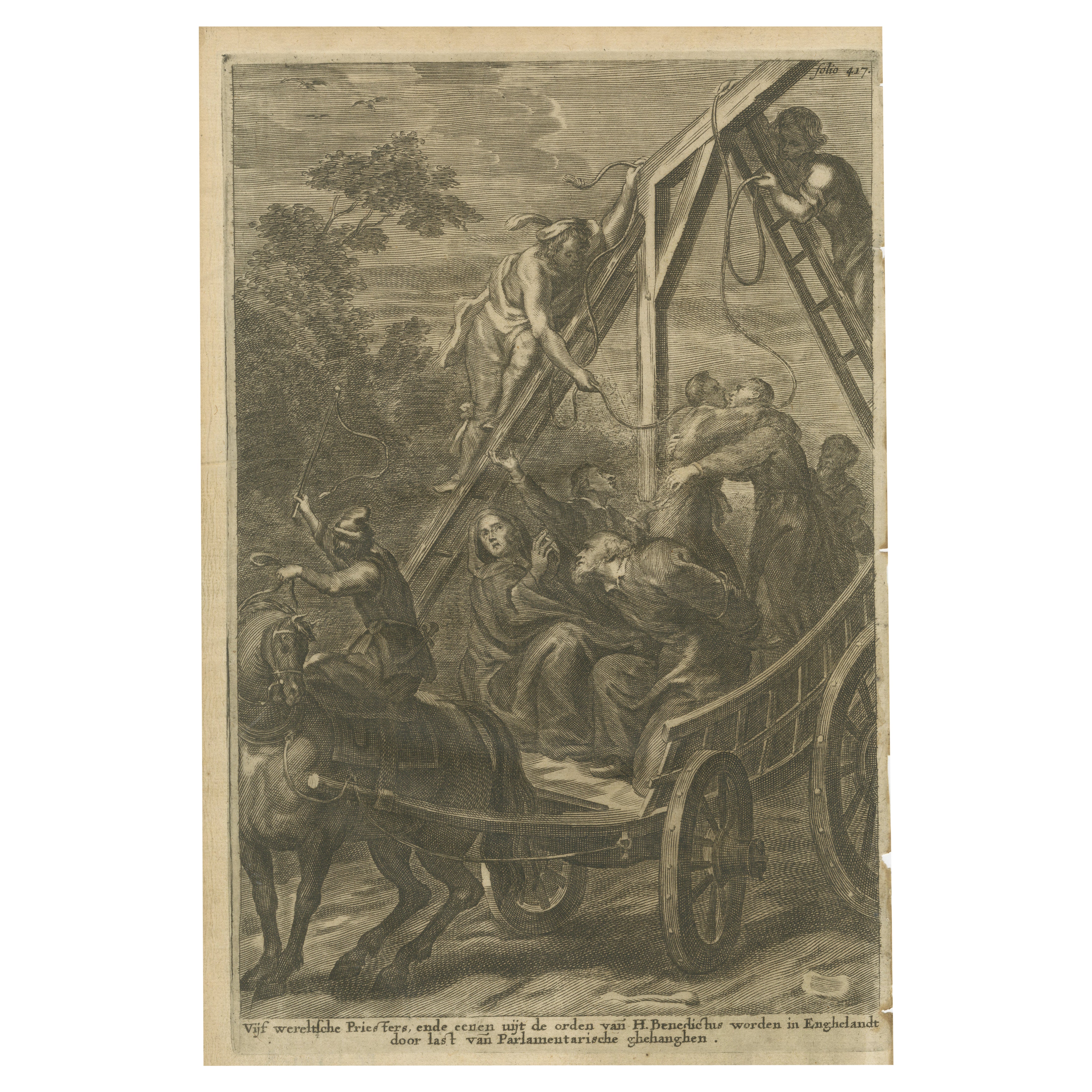
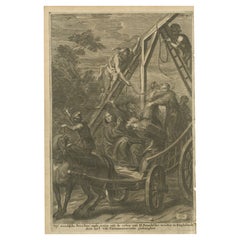
The Martyrdom of Secular Priests and One Benedictine Monk by Parlement, c.1680
Located in Langweer, NL
The engraving depicts a scene of execution involving multiple priests, likely reflecting religious persecution in England. Here is a detailed analysis, including a translated version...
Category
Antique 1680s Prints
Materials
Paper
$421 Sale Price
20% Off
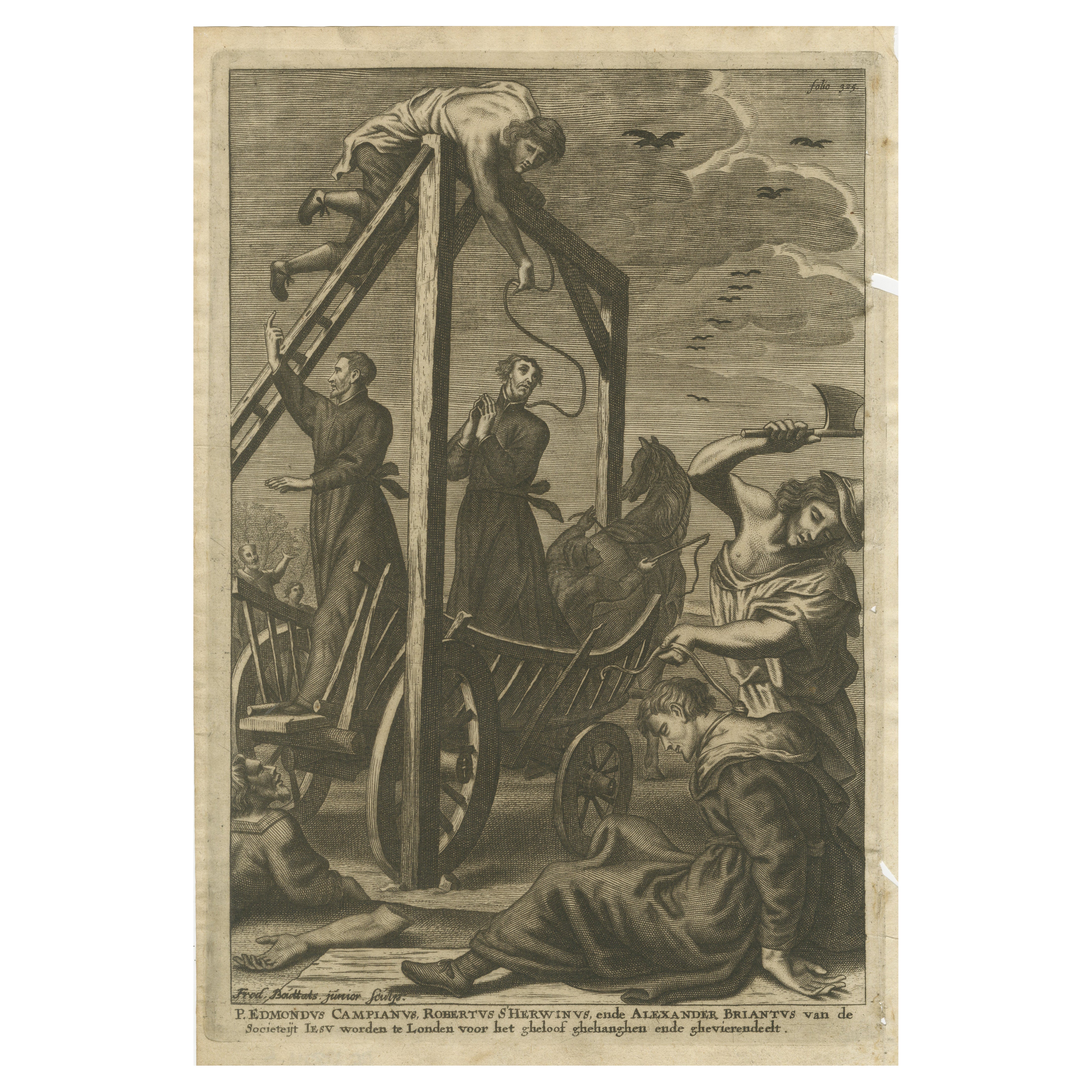
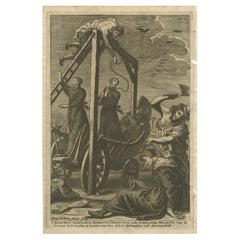
The Execution of Three Jesuit Martyrs in London in 1581, Published in ca.1680
Located in Langweer, NL
The engraving shows a scene of martyrdom involving members of the Jesuit Society.
The text at the bottom reads: "P. EDMONDUS CAMPIANUS, ROBERTUS SHERWINUS, ende ALEXANDER BRIANTUS ...
Category
Antique 1680s Prints
Materials
Paper
$421 Sale Price
20% Off
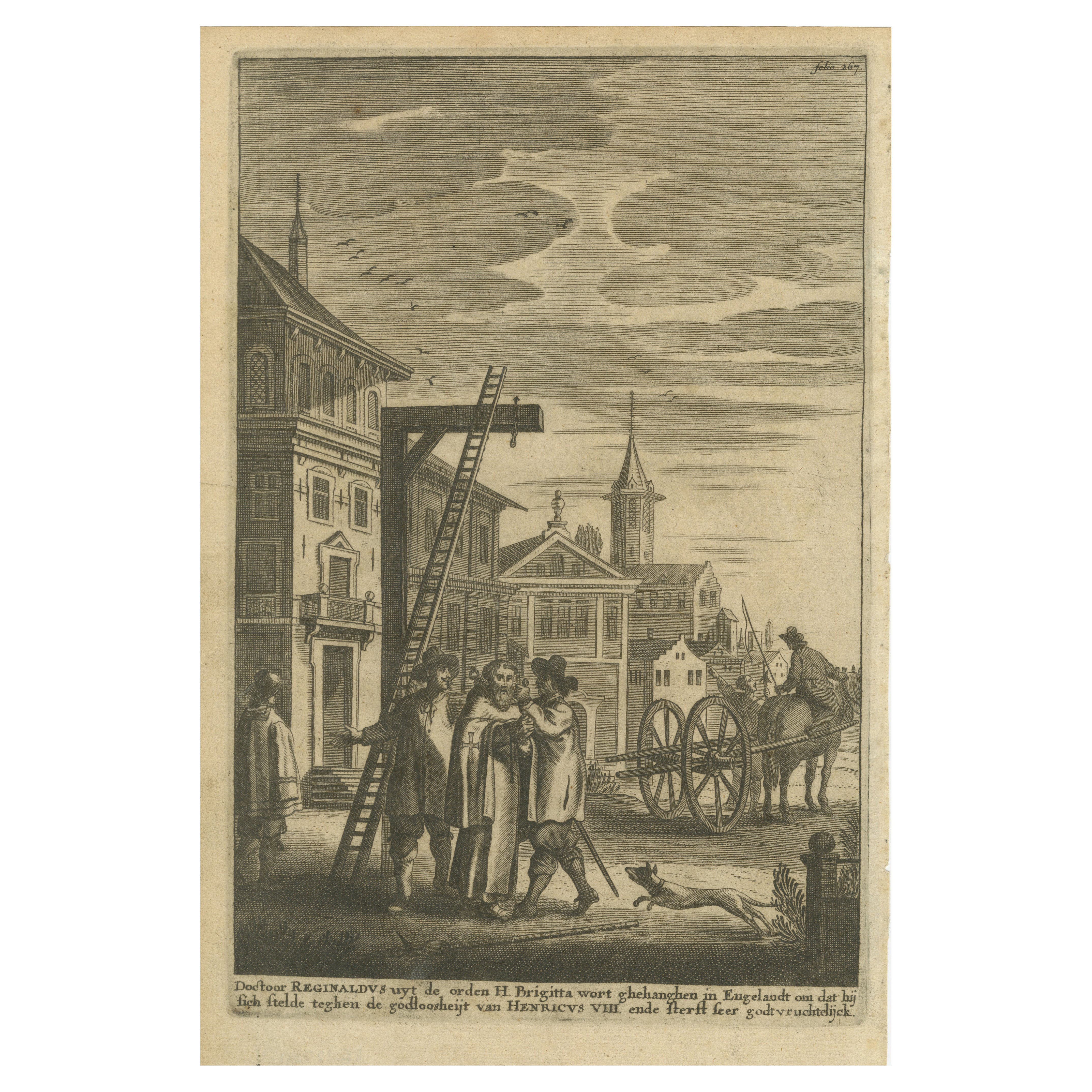
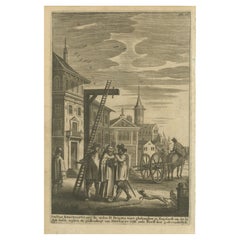
The Execution of Doctor Reginaldus for Opposing Henry VIII
s Reformation, c.1680
Located in Langweer, NL
The engraving depicts a historical execution scene, likely related to religious persecution. Below is a detailed description and analysis of the image and text:
The text at the bott...
Category
Antique 1680s Prints
Materials
Paper
$421 Sale Price
20% Off
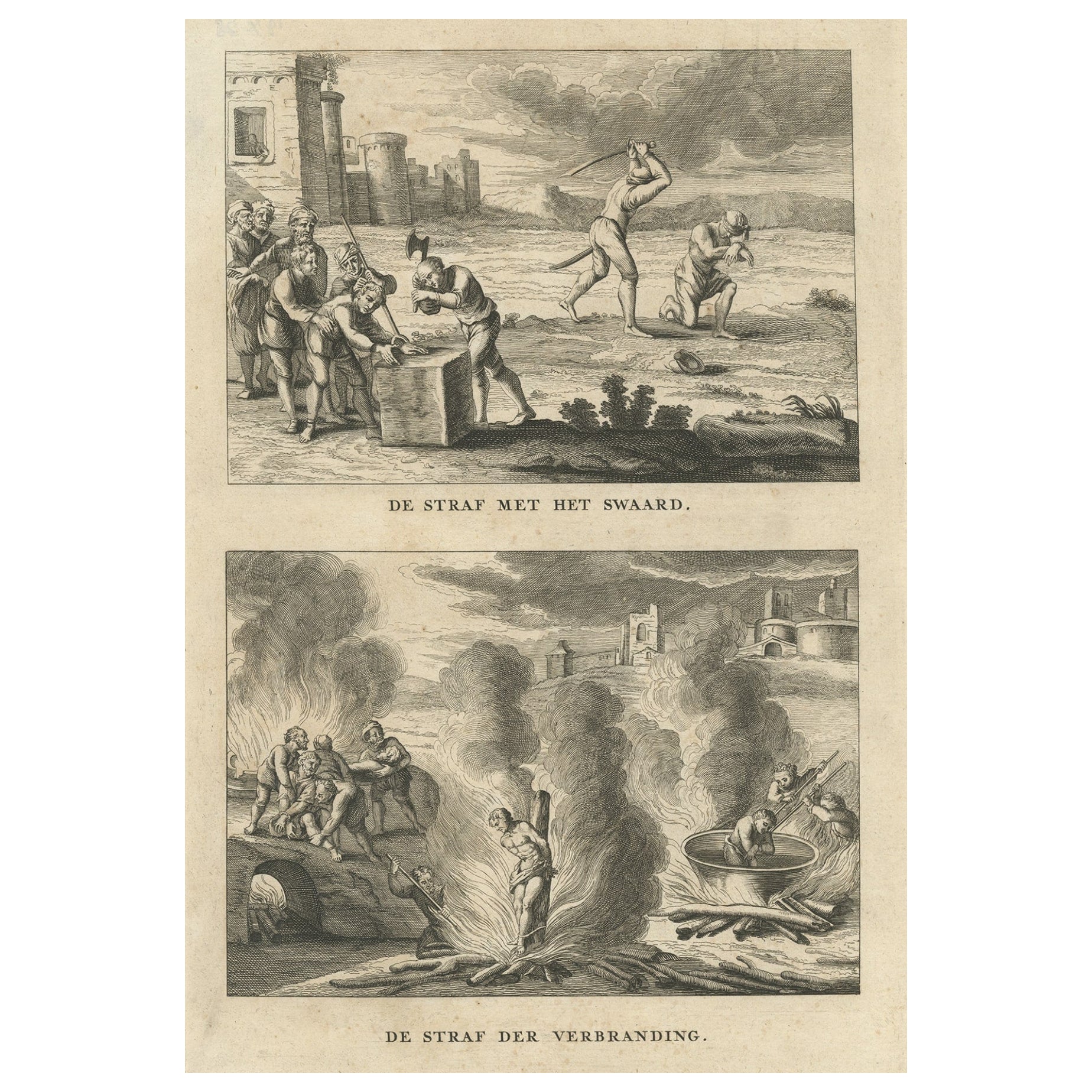
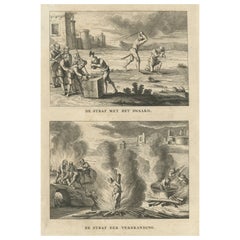
Print of Religious Punishments with the Sword and Fire, Incl Decapitating, 1731
Located in Langweer, NL
Two religious images on one sheet titled 'De straf met het Zwaard' and 'De Straf der Verbranding'. Punishment with the sword and fire. This print depicts religious punishments and or...
Category
Antique 1730s French Prints
Materials
Paper
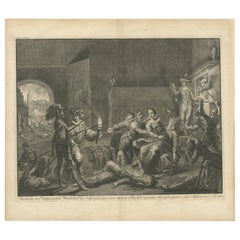
Old Print of the Cruelty of the Spaniards in Antwerp, Belgium
1576
, ca.1730
Located in Langweer, NL
Antique print titled 'Voorbeeldt van d'afgryselyke Wreedtheit der Spanjaarden, aan seekere Bruydt getoont, by 't plonderen van Antwerpen'.
Old print of the cruelty of the Spaniards in Antwerp, 1576. It was the time of the Sack of Antwerp, often known as the Spanish Fury at Antwerp, an episode of the Eighty Years' War. It is the greatest massacre in Belgian history. This print orginates from 'Geschiedenissen der Vereenigde Nederlanden (..)' by Jean le Clerc...
Category
Antique 1730s Prints
Materials
Paper
$344 Sale Price
20% Off
You May Also Like
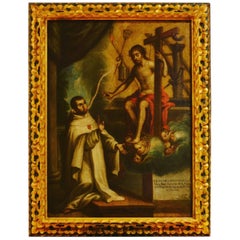
Fray Antonio de San Pedro by Manuel de Arellano, XVII Century
By Manuel de Arellano
Located in Mexico, DF
XVII century Mexican Painting by Arellano. "EL BENERABLE SIERVO D DIOS Fray Antonio de S. Pedro de la Sagrada Religion N. S. de la Merced"
Signed: Arellano fecit
Category
Antique 17th Century North American Spanish Colonial Paintings
Materials
Canvas
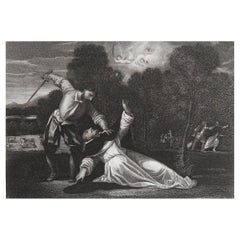
Original Antique Print of The Martyrdom of St.Peter After Giorgione. C.1850
Located in St Annes, Lancashire
Great image after Giorgione
Fine steel engraving
Published circa 1850
Unframed.
Free shipping
Category
Antique 1850s English Renaissance Prints
Materials
Paper
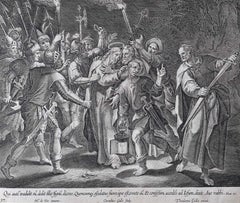
Theodoor Galle Martin de Vos 17th Century Engraving The Traitor
Located in London, GB
We have the full series of 52 prints (including title page) from Vita Passio et Resurrectio Iesu Christi listed. To find the others scroll down to "More from this Seller" and below it click on "See all from this Seller" and search for 'Collaert' - or message us as they may not all have been uploaded yet.
Theodoor Galle...
Category
17th Century Realist Figurative Prints
Materials
Engraving
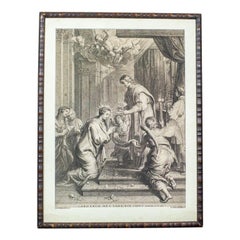
18th Century Engraving Depicting a Religious Scene
Located in Opole, PL
We present you an engraving based on a painting by a Flemish painter, Erasmus Quellin (1607-1678).
The template was made by Schelte Adams Bolswert (1581-1659).
The whole is closed ...
Category
Antique 18th Century Belgian Prints
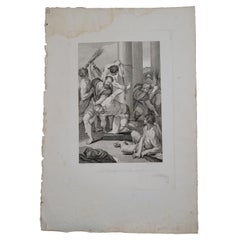
"the Flagellation of Jesus" After Ludovico Carracci by Guilio Tomba 1780-1841
Located in Norton, MA
Description:
Etching
"The Flagellation of Jesus"
after Ludovico Carracci by Guilio Tomba, 1780- 1841
Paper size: 13" W x 19" H (33 cm W x 48...
Category
Antique 19th Century Italian Other Prints
Materials
Paper
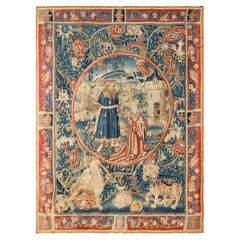
The Martyrdom of Santa Barbara - Bruges, 1530-50
Located in Bruxelles, BE
The Martyrdom of Santa Barbara
Wool and silk tapestry
Bruges, 1530-50
270 x 198 cm
Expertise by Professor Guy Delmarcel
This Flemish tapestry is a remarkable example of 16th-century craftsmanship, distinguished by its exceptionally well-preserved color palette.
The medaillon-shaped center stands out against a background of dark blue roses and acanthus leaves. It depicts the martyrdom of Saint Barbara, identified by the tower where she was imprisoned. According to legend, her father, Dioscorus, is about to behead her with a scimitar, while an angel descends from the heavens to strike him with lightning.
At the bottom, beneath Saint Barbara, two fantastical creatures. On the left is a griffon depicted with the body of a lion and the head and wings of an eagle. On the right is a creature with the body of a leopard, the head of an elephant adorned in a fancy blue cloak. Both animals face each other standing either side of a green hill top in the middle of the tapestry.
The lavish scene of the tapestry is framed by a border which is embellished with foliage, flowers and fantastical elephant heads in blue and white on a red background. The corners and center of the edges display goldsmith-objects. The vibrant brick-red colour and striking bluish-green leaves create a stunning visual impact, showcasing the outstanding state of conservation.
Professor Guy Delmarcel connects this tapestry to a series of textiles produced in Bruges after 1530, characterized by their fantastical nature scenes populated with imaginative creatures. Most feature similar roses and acanthus-leaves as well as other vegetation, with wild animals appearing ready to attack. Two almost identical pieces preserved at the Art Institute of Chicago (Bruges, 336 x 599 cm) and the Rijksmuseum in Amsterdam ("Tournai," 285 x 490 cm) serve as prime examples. The entire surface is filled with greenery, along with birds and fantastic animals.
This tapestry exemplifies the rich decorative style of the time, merging naturalistic and poetic elements with exotic animals that spark the imagination.
Other works of this type follow the theme of the "Closed Garden." In the lower register, fantastical creatures occasionally appear, as seen in the exquisite Bruges Tapestry displayed at the Museum of Decorative Arts in Paris, and in the example from the Burrell Collection in Glasgow. The Parisian tapestry from Bruges features a mythical animal in the lower register, dressed in blue fabric, which closely resembles the animal in our tapestry.
If Enghien or other centers produced similar pieces, several elements suggest a stronger connection to Bruges for two formal reasons:
The overall colour-palette of our tapestry fabric characterized by pronounced brick-red colours and bluish-green leaves, aligns more closely with Bruges than with Tournai or Enghien.
The intricate border design with the warm brick-red background, adorned with floral motifs, goldsmith-inspired elements such as incense burners and small bells, can be traced back to Bruges around 1530. This style, often associated with heraldic imagery, underscores the tapestry's connection to the city's rich artistic heritage. A comparable example is the tapestry featuring the Arms of Paolo Giovio, now part of the Prince of Liechtenstein's collection in Vaduz. This piece, set against a brick-red background, depicts arms and armors, cornucopias, boys riding grotesque dolphins, as well as various flowers and leaves.
All available literature dates this group of tapestries to the second quarter of the sixteenth century. A key formal element further supports this dating: the executioner, depicted preparing to behead Barbara, wields a Turkish scimitar, a reference to the frequent Ottoman incursions into Central Europe beginning with the 1529 siege of Vienna...
Category
Antique 16th Century Belgian Renaissance Tapestries
Materials
Wool, Silk
More Ways To Browse
Antique Wooden Dog
Antique Wooden Storage Box Boxes
Arabia Finland Sculpture
Arabic Glass
Archimede Seguso Black And White
Asia Erotic
Asian Jars With Lids
Austrian Cold Painted Cats
Bavent Normandy
Bernard Dog
Black Ceramic Lion
Black Ceramic Panther
Blackware Pottery
Blue And White Chinese Incense Burner
Blue Lacquered Chest
Blue Salt Glaze
Bombe Chest Marble Ormolu
Bone China Bowl