Items Similar to Military Procession with Spoils of War After Gerard de Lairesse Rossetti, ca1700
Want more images or videos?
Request additional images or videos from the seller
1 of 9
Military Procession with Spoils of War After Gerard de Lairesse Rossetti, ca1700
$1,321.10
£978.91
€1,100
CA$1,806.77
A$1,970.26
CHF 1,041.76
MX$23,700.34
NOK 13,220.10
SEK 12,116.10
DKK 8,380.64
About the Item
Military Procession with Spoils of War After Gerard de Lairesse Rossetti c1700
A large early 18th-century etching and engraving by Domenico Rossetti, after a composition by the celebrated Dutch painter Gerard de Lairesse. The print shows a dramatic military procession: a cart laden with captured arms, shields and trophies is pulled by two horses, while soldiers, prisoners and attendants march in a long frieze-like sequence through a landscape of ruins and broken architecture. The scene belongs to the iconography of the ancient Roman triumph, here interpreted through Lairesse’s theatrical Baroque style.
This dramatic triumphal procession is characteristic of Lairesse’s grand history compositions, engraved by Rossetti for a series illustrating The Soldier’s Life (Il Soldato, La Vita del Soldato), widely circulated between 1660 and 1736.
Rossetti’s engraving is notable for its rich line work, expressive figures and the abundance of classical detail—helmets, armour, banners, vases, captured standards and plundered goods. Prints of this type were produced in Italy around 1690–1730 for series illustrating the life of the soldier and the rituals of war, and remain important records of Lairesse’s compositions, many of which survive only through engravings.
This large double-page sheet retains a strong impression and imposing visual presence, making it a striking decorative piece for interiors influenced by antiquity, military history or the grandeur of Baroque painting.
Condition: Fair to good. Rich impression; vertical centerfold as issued; edge wear and small losses at corners; a few age spots in the upper area; otherwise stable for its age and suitable for professional framing.
Framing: Best floated in a deep shadow-box frame in black, walnut or antiqued gold. Museum glass recommended due to the large format and fine engraved detail.
Keywords: Gerard de Lairesse engraving, Domenico Rossetti print, military procession, spoils of war, Roman triumph, Baroque history painting, 18th century engraving, Italian etching, classical warfare art, prisoner of war, ancient ruins, Grand Tour art, antique military parade.
Technique: Etching and engraving
Maker: Domenico Rossetti after Gerard de Lairesse, Italy, c.1700
- Dimensions:Height: 21.66 in (55 cm)Width: 36.82 in (93.5 cm)Depth: 0.01 in (0.2 mm)
- Materials and Techniques:Paper,Engraved
- Place of Origin:
- Period:1700-1709
- Date of Manufacture:circa 1700
- Condition:Condition: Rich impression; vertical centerfold as issued; edge wear and small losses at corners; a few age spots in the upper area; otherwise stable for its age and suitable for professional framing.
- Seller Location:Langweer, NL
- Reference Number:Seller: BG-14177-71stDibs: LU3054347960772
About the Seller
5.0
Recognized Seller
These prestigious sellers are industry leaders and represent the highest echelon for item quality and design.
Platinum Seller
Premium sellers with a 4.7+ rating and 24-hour response times
Established in 2009
1stDibs seller since 2017
2,811 sales on 1stDibs
Typical response time: 1 hour
- ShippingRetrieving quote...Shipping from: Langweer, Netherlands
- Return Policy
More From This Seller
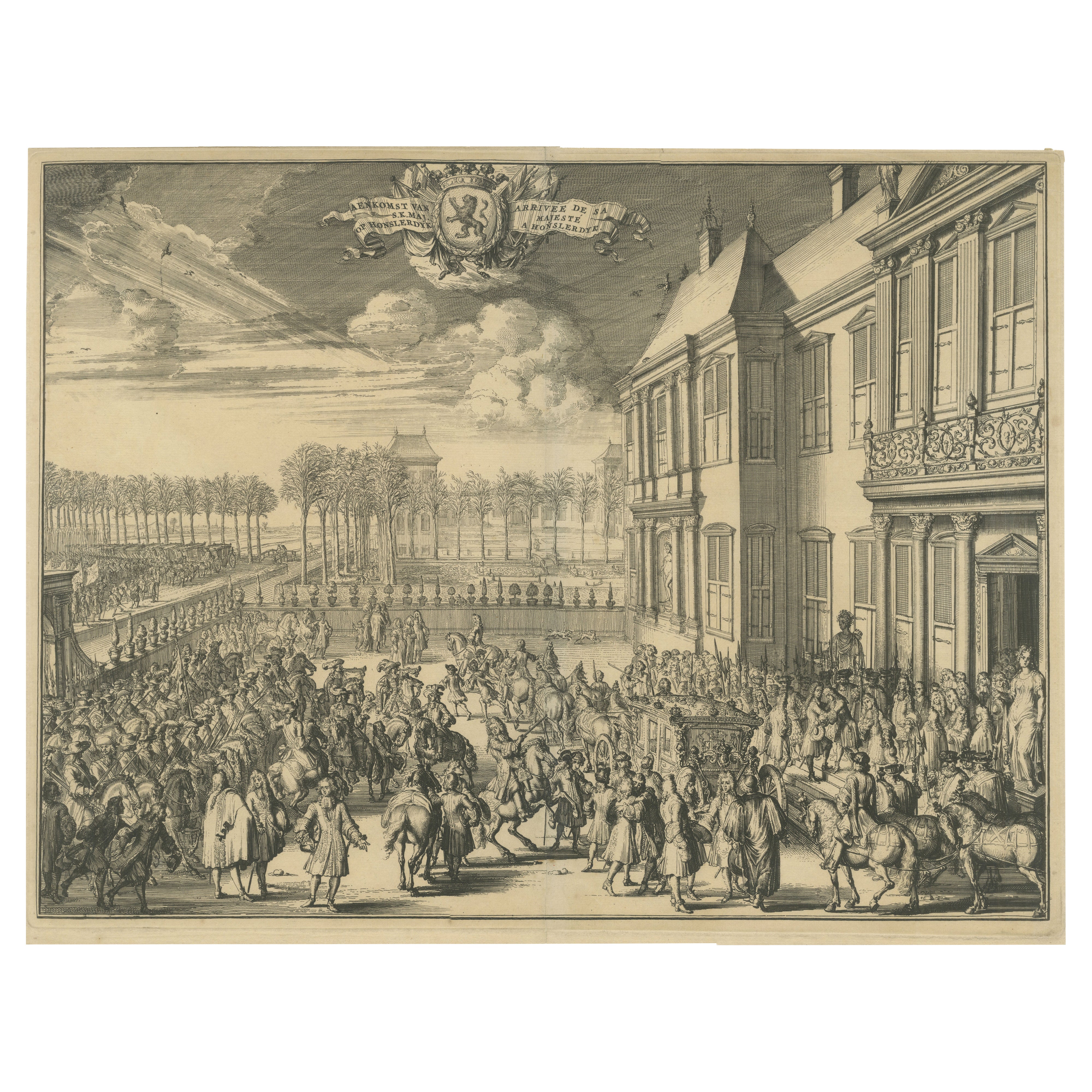
View AllHis Majesty’s Arrival at Honselaarsdijk – Grand Procession Engraving c.1690
Located in Langweer, NL
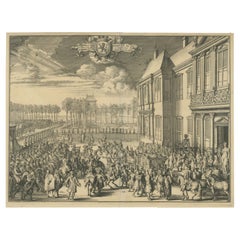
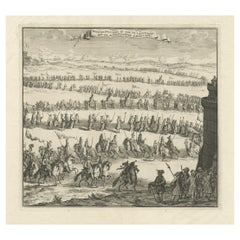
Title: Arrival of His Majesty in Honselaarsdijk – Grand Procession Engraving, circa 1690
Description:
This impressive large-format antique engraving depicts the grand arrival proces...
Category
Antique Late 17th Century Dutch Prints
Materials
Paper
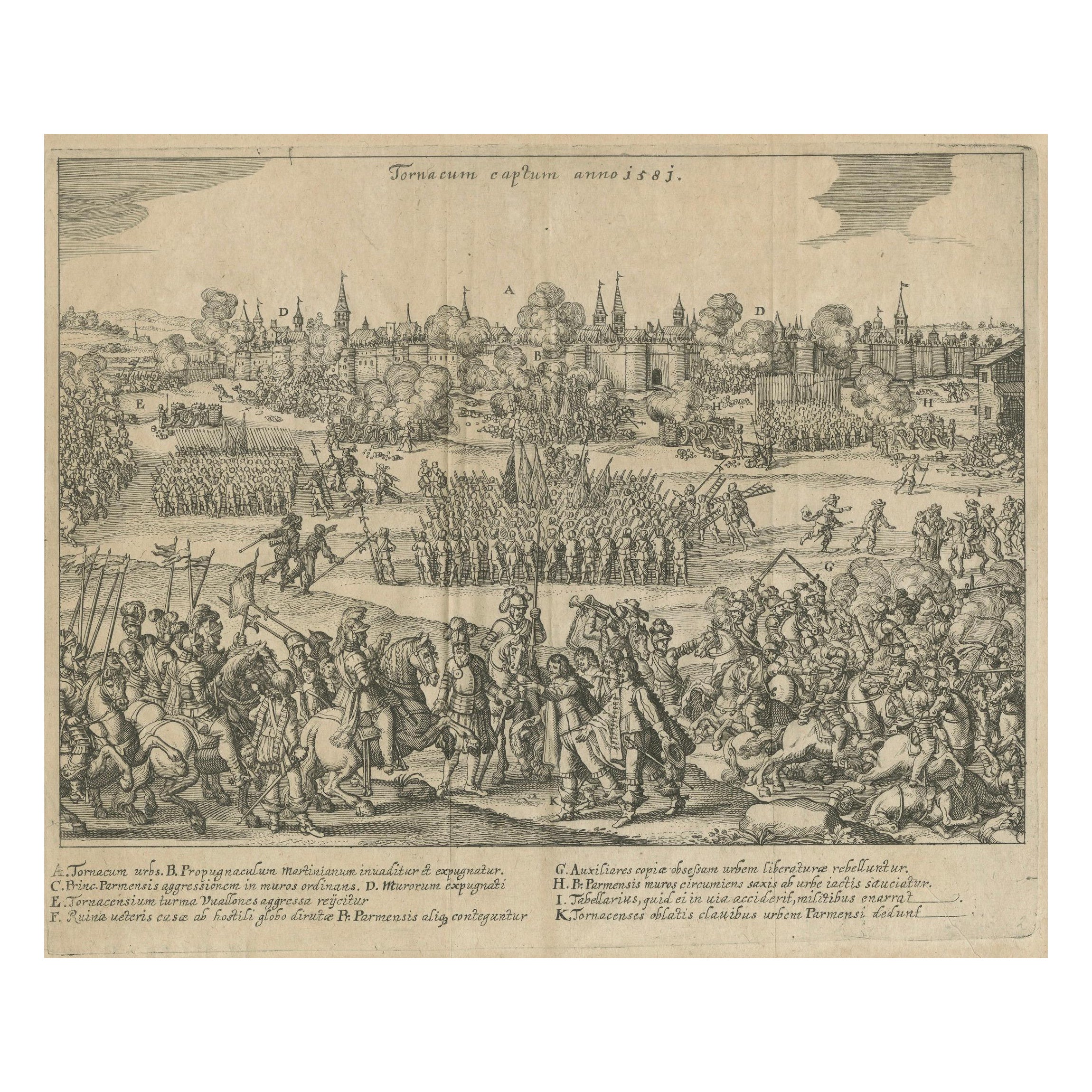
Capture of Tournai by Parma
s Forces, 1581: Siege and Conquest of the City
Located in Langweer, NL
This detailed engraving depicts the capture of Tournai by the forces of the Duke of Parma in 1581. The scene shows the siege and conquest of the city with meticulous illustrations of...
Category
Antique 16th Century Prints
Materials
Paper
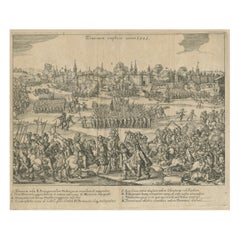
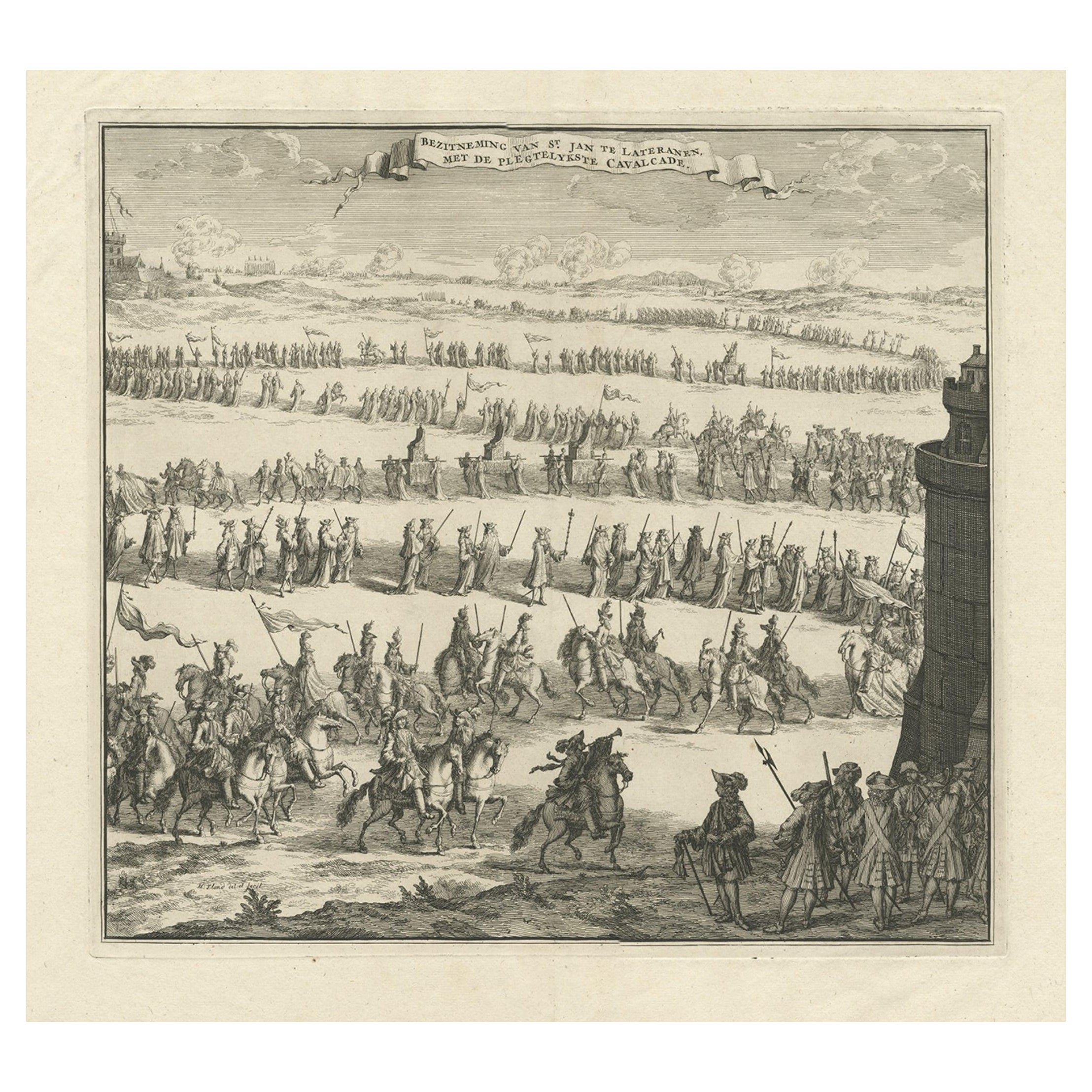
Procession of Horsemen and Cardinals During the Entrance of a New Pope, ca.1700
Located in Langweer, NL
Antique print titled 'Bezitneming van St. Jan te Lateranen, met de Plegtelykste Cavalcade'.
Procession of horsemen and cardinals during the entrance of a new pope in the Saint John...
Category
Antique Early 1700s Prints
Materials
Paper
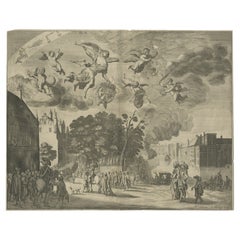
Arrival of the English King Charles II from Delft in The Hague, Holland, 1660
Located in Langweer, NL
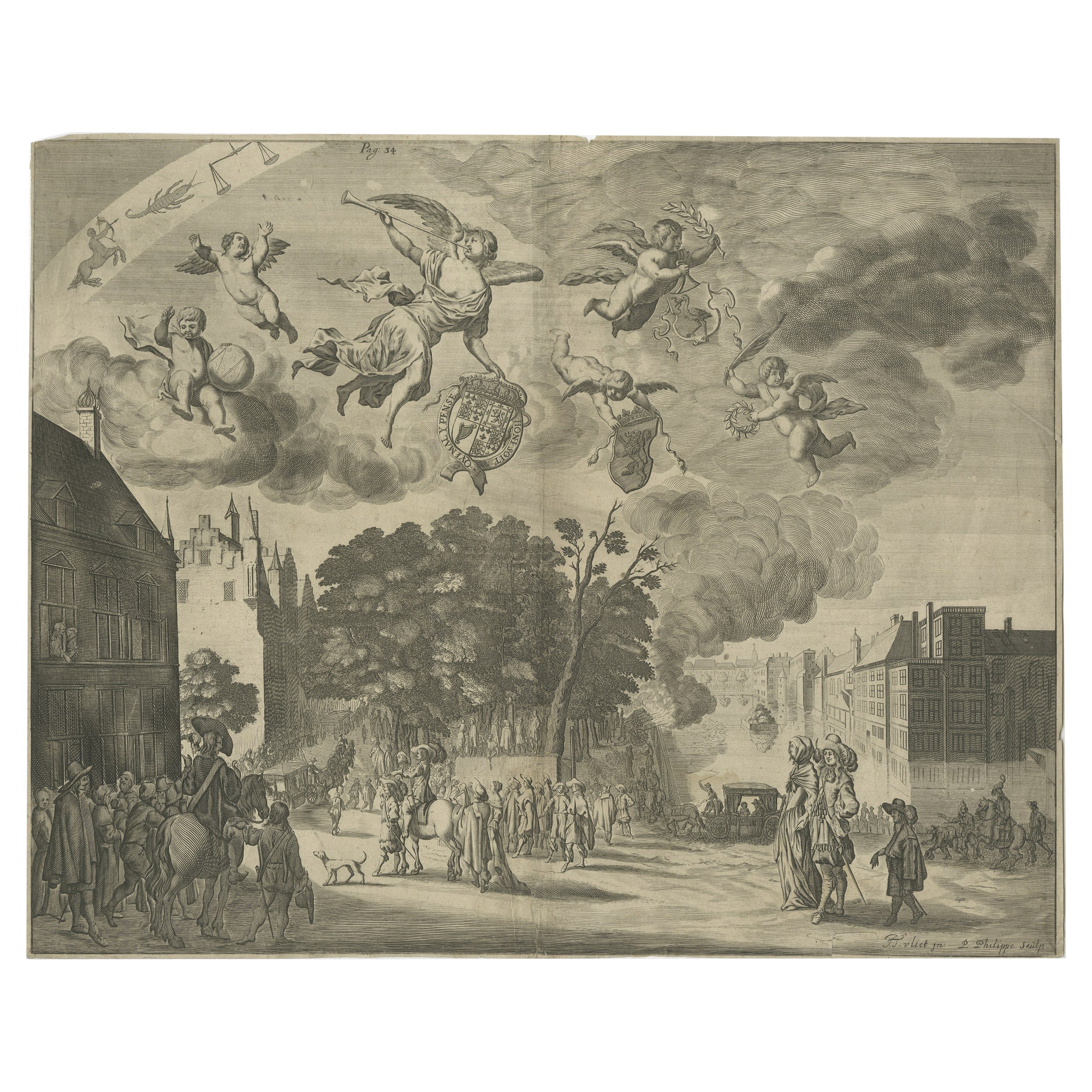
Antique engraving with the title Arrival of the English King Charles II from Delft in The Hague, 25 May 1660. Episode during his tour through and departure from the Netherlands. Arrival at the Vijverberg and Het Groene Zoodje, salute shots are fired at the Hofvijver. In the air the fame and putti with the arms of the English king, Holland and The Hague. On the left part of the signs of the zodiac. Marked at the top: Page. 34.
In the top the Arms of the King with the text: Honi soit qui mal y pense. This a maxim in the Anglo-Norman language, a dialect of Old Norman French spoken by the medieval ruling class in England, meaning "shamed be whoever thinks ill of it", usually translated as "shame on anyone who thinks evil of it" It has been used as the motto of the British chivalric Order of the Garter. In current French usage, the phrase may be used ironically to insinuate the presence of a hidden agenda or a conflict of interest.
Makers (mentioned on the engraving): Pieter Philippe after a design of: Jacob...
Category
Antique 1660s Prints
Materials
Paper
Heroic Roman Battle Scene, French Neoclassical Engraving, Napoleonic Era, 1804
Located in Langweer, NL
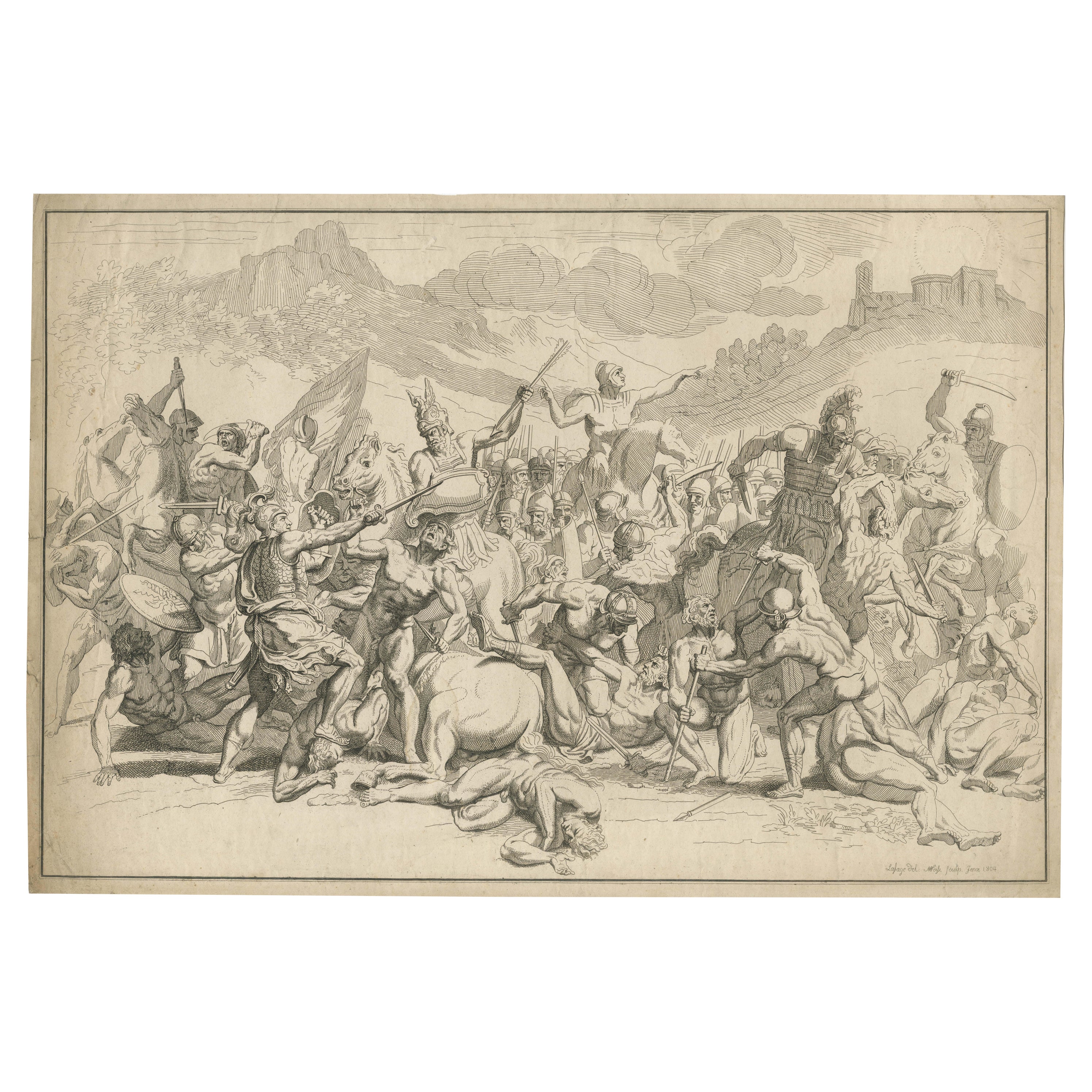
Heroic Roman Battle Scene, French Neoclassical Engraving, Napoleonic Era, 1804
Description:
This powerful large-format engraving depicts a dramatic classical battle rendered in the ...
Category
Antique Early 1800s French Prints
Materials
Paper
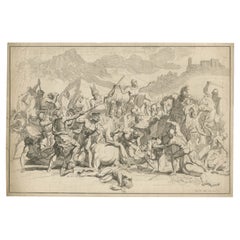
Battle of Turnhout 1597 – Dutch and English Victory over Spanish, Published 1700
Located in Langweer, NL
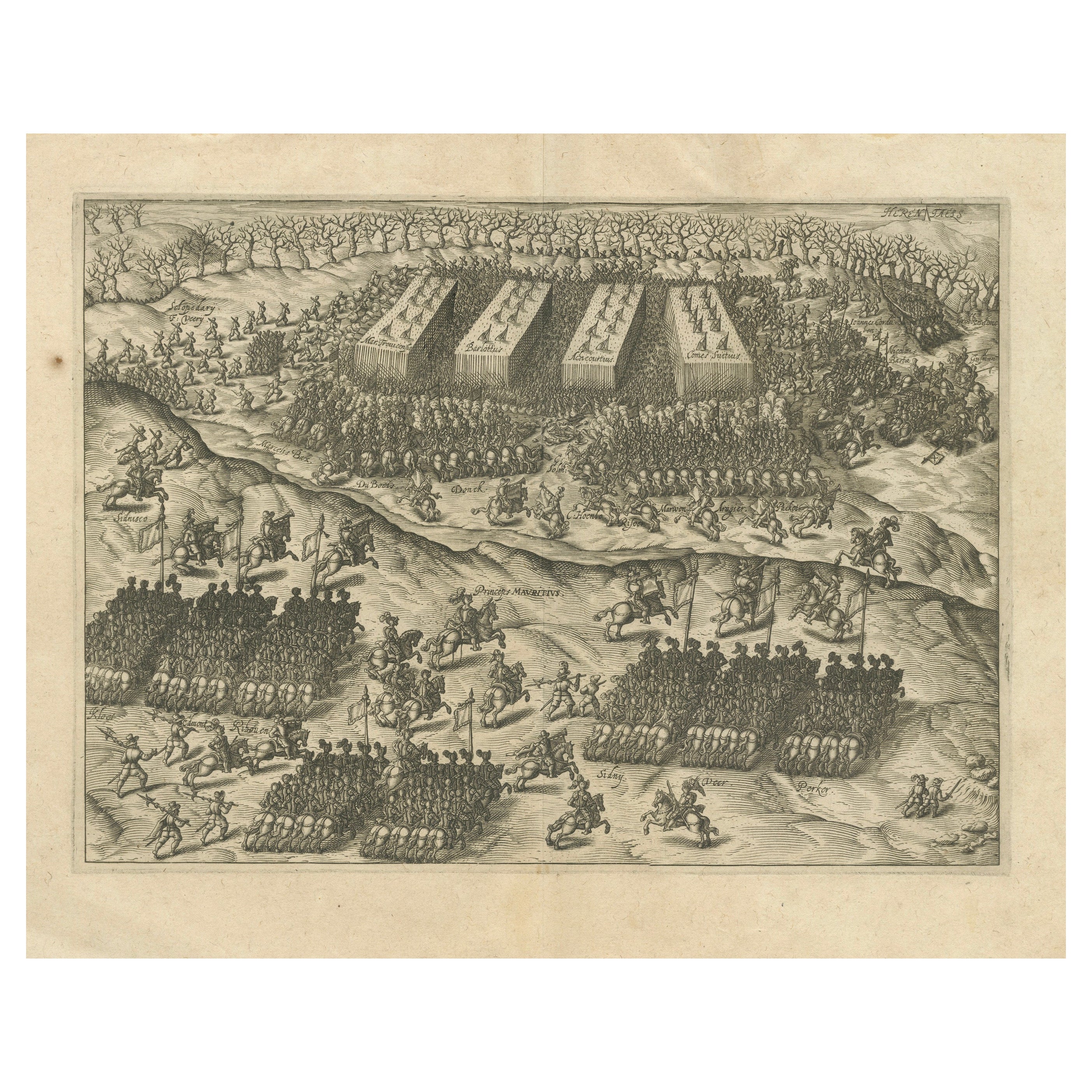
Battle of Turnhout 1597 – Dutch and English Victory over Spanish
This original antique engraving depicts the Battle of Turnhout, fought on January 24, 1597, during the Eighty Years’...
Category
Antique Early 18th Century Dutch Prints
Materials
Paper
You May Also Like
Original Antique Print After Jan Luyken, Amsterdam, Genesis XXXI, 1724
Located in St Annes, Lancashire
Wonderful copper-plate engraving after Jan Luyken
Published by Marten Schagen, Amsterdam. 1724
Text on verso
The measurement given is the paper size.
Category
Antique 1720s Dutch Renaissance Prints
Materials
Paper
Emperor Trajan Addressing the Roman Soldiers by Pietro Santi Bartoli - 1672
By Pietro Santi Bartoli
Located in Roma, IT
Emperor Trajan addressing the Roman soldiers is an artwork realized by Pietro Santi Bartoli (1635-1700) in 1672.
Etching.
Good condition.
The T...
Category
1670s Modern Figurative Prints
Materials
Etching
Emperor Trajan Addressing the Roman Soldiers by Pietro Santi Bartoli - 1672
By Pietro Santi Bartoli
Located in Roma, IT
Emperor Trajan addressing the Roman soldiers is an artwork realized by Pietro Santi Bartoli (1635-1700) in 1672.
Etching.
Good condition.
The T...
Category
1670s Modern Figurative Prints
Materials
Etching
"Allegory of Justice": A 17th Century Old Master Engraving by van Swanenburg
By Willem van Swanenburg
Located in Alamo, CA
This old master engraving entitled "Allegorie op de Rechtspraak" is by Willem van Swaanenburg after a painting by Joachim Wtewael, published by Ch...
Category
Early 1600s Old Masters Interior Prints
Materials
Engraving
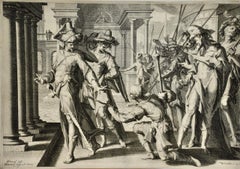
The Departure of the Israelites from Egypt
by Frans Francken the Younger
Located in Knokke, BE
Frans Francken the Younger
1581 - Antwerp - 1642
Flemish Painter
'The Departure of the Israelites from Egypt – The Exodus', c. 1610 - 1620
Medium: pen in sepia on paper
Dimensions: mage size 26 x 34,5 cm, frame size 55 x 65,5 cm
Biography: Frans Francken the Younger, born in Antwerp in 1581 and passing away on May 6, 1642, also in Antwerp, was a distinguished Flemish painter. He is recognized as the most prominent and productive member of the renowned Francken family of artists. Francken explored a wide range of subjects, creating large altarpieces for churches and producing smaller works depicting historical, mythological, and allegorical scenes. Notably, his depictions of collectors’ cabinets established a popular new genre of art during his era. He was known for collaborating with other artists, enriching their works with his skilled renderings of figures and narrative elements, complementing specialists in landscape, architectural scenes, and floral still-life painting.
Francken was born to Frans Francken the Elder and Elisabeth Mertens. His father was a pupil of Antwerp’s leading history painter, Frans Floris, and a significant creator of altarpieces in Flanders during his time. Francken received his artistic training under the guidance of his father. Additionally, it is possible that Frans and his brother, Hieronymus Francken II, received further instruction in the workshop of their uncle, Hieronymus Francken I, in Paris.
A versatile artist, Francken made significant contributions to various genres within Flemish art, introducing new themes and subjects. Many of his works comprised small-scale historical, allegorical, and biblical cabinet paintings, often emphasizing figures. He is credited with either inventing or popularizing several novel themes that gained popularity in Flemish painting, including genre scenes featuring monkeys (also known as singeries) and Kunstkammer or gallery paintings, presenting a plethora of natural and artistic treasures against a neutral wall. Francken introduced various other unconventional themes that later gained traction, such as the ‘Triumphal Procession of Amphitrite’ and ‘Croesus and Solon.’ He also produced a series of paintings depicting witches and witchcraft, including portrayals of witches’ sabbats.
His remarkable paintings are held in the collections of numerous major museums throughout Europe. Francken specialized in rendering the human figure, as evidenced by etched and engraved portraits of the artist by Anthony van Dyck (after Peter Paul Rubens), identifying him with the Latin inscription: ‘ANTVERIÆ PICTOR HVMANARVM FIGVRARVM’ (Figure painter of Antwerp). He was frequently invited to contribute figures to compositions by other esteemed artists, including landscape artists such as Tobias Verhaecht, Abraham Govaerts, and Joos de Momper...
Category
Early 17th Century Baroque Interior Paintings
Materials
Paper, Pen
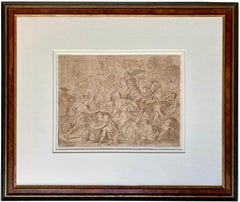
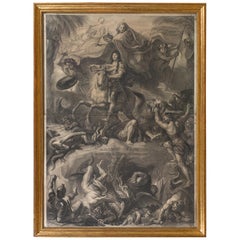
Louis XIV on Horseback, Engraved by Gerard Edelink after Charles Lebrun
Located in Saint-Ouen, FR
Louis XIV on horseback. Engraved by Gerard Edelink after Charles Lebrun,
circa 1680.
Engraving on two sheets pasted together and glued on canvas.
With frame and glass of the time.
Category
Antique Late 17th Century French Decorative Art
Materials
Crystal