Items Similar to Natural History Title Page, Insects
Serpents, Jan Jonston, Amsterdam 1660
Want more images or videos?
Request additional images or videos from the seller
1 of 10
Natural History Title Page, Insects
Serpents, Jan Jonston, Amsterdam 1660
$356.70
£264.31
€297
CA$487.83
A$531.97
CHF 281.28
MX$6,399.09
NOK 3,569.43
SEK 3,271.35
DKK 2,262.77
About the Item
Natural History Title Page, Insects
Serpents, Jan Jonston, Amsterdam 1660
This engraved title page introduces the Dutch edition of Jan Jonston’s natural history of reptiles, insects, serpents, and dragons, published in Amsterdam in 1660. The composition is a striking example of mid-17th-century scientific illustration combined with Baroque allegory, designed to announce the scope and ambition of the work to the reader.
At the center, the title text is framed by coiling serpents, while above and below a dense array of creatures fills the image: beetles, moths, butterflies, flies, worms, lizards, snakes, and fantastical reptiles. These animals are not arranged randomly but carefully staged to demonstrate variety, scale, and movement, reflecting the early modern desire to catalogue and understand the natural world. The inclusion of insects alongside serpents and dragons reflects the period’s broad and fluid categories of natural history, before modern biological classification.
The engraving combines scientific curiosity with visual drama. Large insects and reptiles dominate the foreground, while smaller creatures hover or crawl through the scene. The bold contrasts of light and dark and the precise line work give the image both clarity and theatrical impact. Such elaborate title pages served as visual summaries of the book’s contents and were intended to impress as much as to inform.
This Dutch edition was translated by M. Grausius and published by J.J. Schipper in Amsterdam. Works by Jonston were widely read and influential in 17th-century Europe, shaping early zoological knowledge and inspiring generations of naturalists, collectors, and illustrators. Today, title pages like this are especially prized for their strong graphic presence and their ability to stand alone as decorative works.
The print is offered as an authentic historical sheet, showing signs of age and use consistent with its origin from a bound volume. The image remains crisp and visually powerful.
Condition report:
Engraved title page on paper. Overall age toning with light surface wear. Minor stains and handling marks visible. Margins present with some wear. Impression remains strong and detailed. Condition consistent with age and reflected in price.
Framing tips:
A generous mat is recommended to isolate the image and soften the aged paper tone. Dark wood or black frames complement the dense engraving and enhance its dramatic character. A floated mount can also work well to emphasize the sheet as an early scientific artifact.
Technique: Engraving
Maker: Jan Jonston, Dutch edition published by J.J. Schipper, Amsterdam, 1660
- Dimensions:Height: 13.67 in (34.7 cm)Width: 8.31 in (21.1 cm)Depth: 0.01 in (0.2 mm)
- Materials and Techniques:Paper,Engraved
- Place of Origin:
- Period:Mid-17th Century
- Date of Manufacture:1660
- Condition:Engraved title page on paper. Overall age toning with light surface wear. Minor stains and handling marks visible. Margins present with some wear. Impression remains strong and detailed. Condition consistent with age and reflected in price.
- Seller Location:Langweer, NL
- Reference Number:Seller: PCT-393211stDibs: LU3054348089302
About the Seller
5.0
Recognized Seller
These prestigious sellers are industry leaders and represent the highest echelon for item quality and design.
Platinum Seller
Premium sellers with a 4.7+ rating and 24-hour response times
Established in 2009
1stDibs seller since 2017
2,811 sales on 1stDibs
Typical response time: 1 hour
- ShippingRetrieving quote...Shipping from: Langweer, Netherlands
- Return Policy
More From This Seller
View AllAntique Zoological Engravings of Reptiles, Fish
Insects, c.1800
Located in Langweer, NL
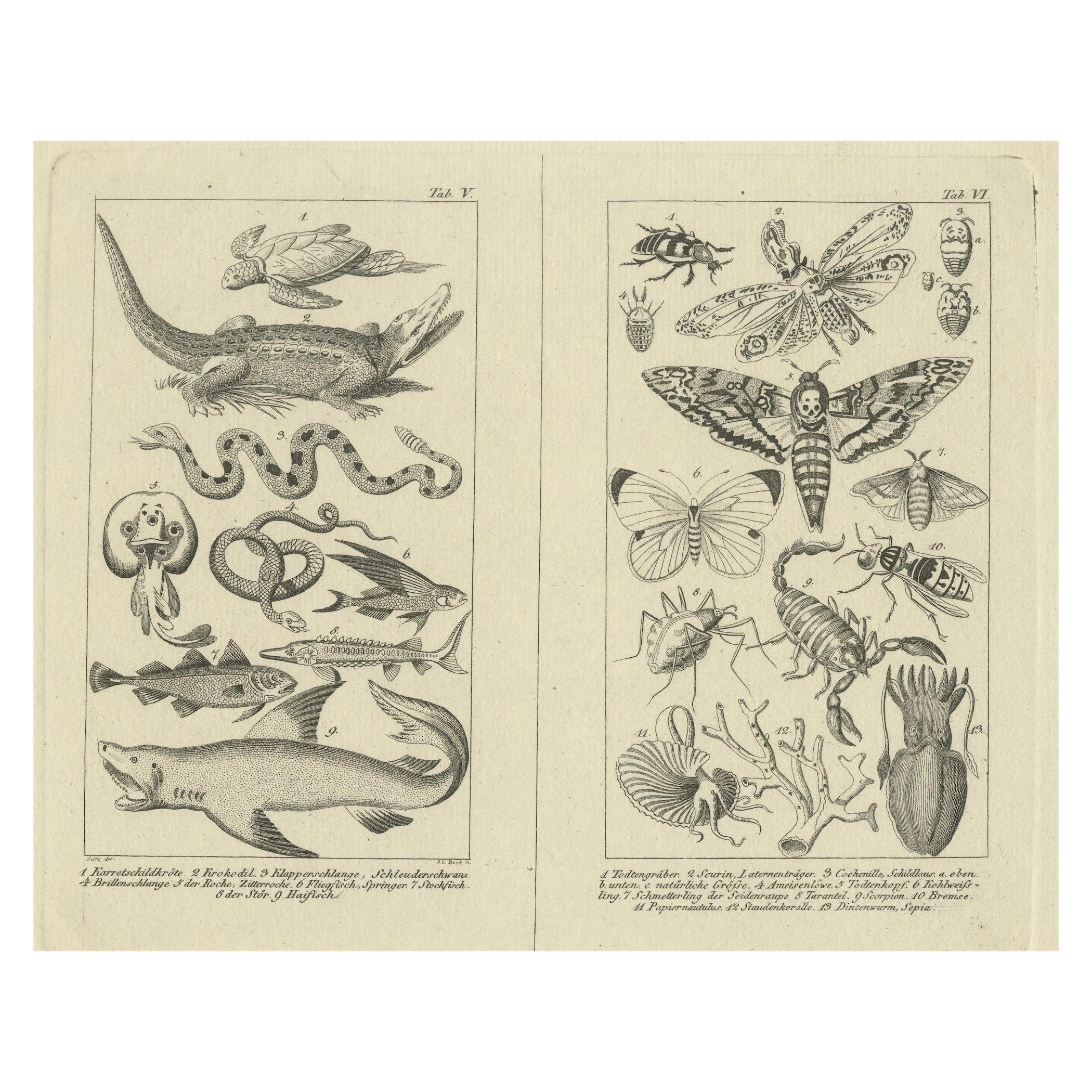
Antique Engravings of Reptiles, Fish, and Insects, Tab. V & VI, circa 1800
This fine double natural history engraving, titled “Tab. V” and “Tab. VI,” presents an engaging selection ...
Category
Antique Early 19th Century German Prints
Materials
Paper
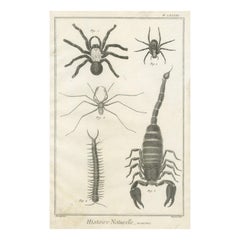
Antique Engraving of Spiders, Centipede and Scorpion by Diderot, ca.1770
Located in Langweer, NL
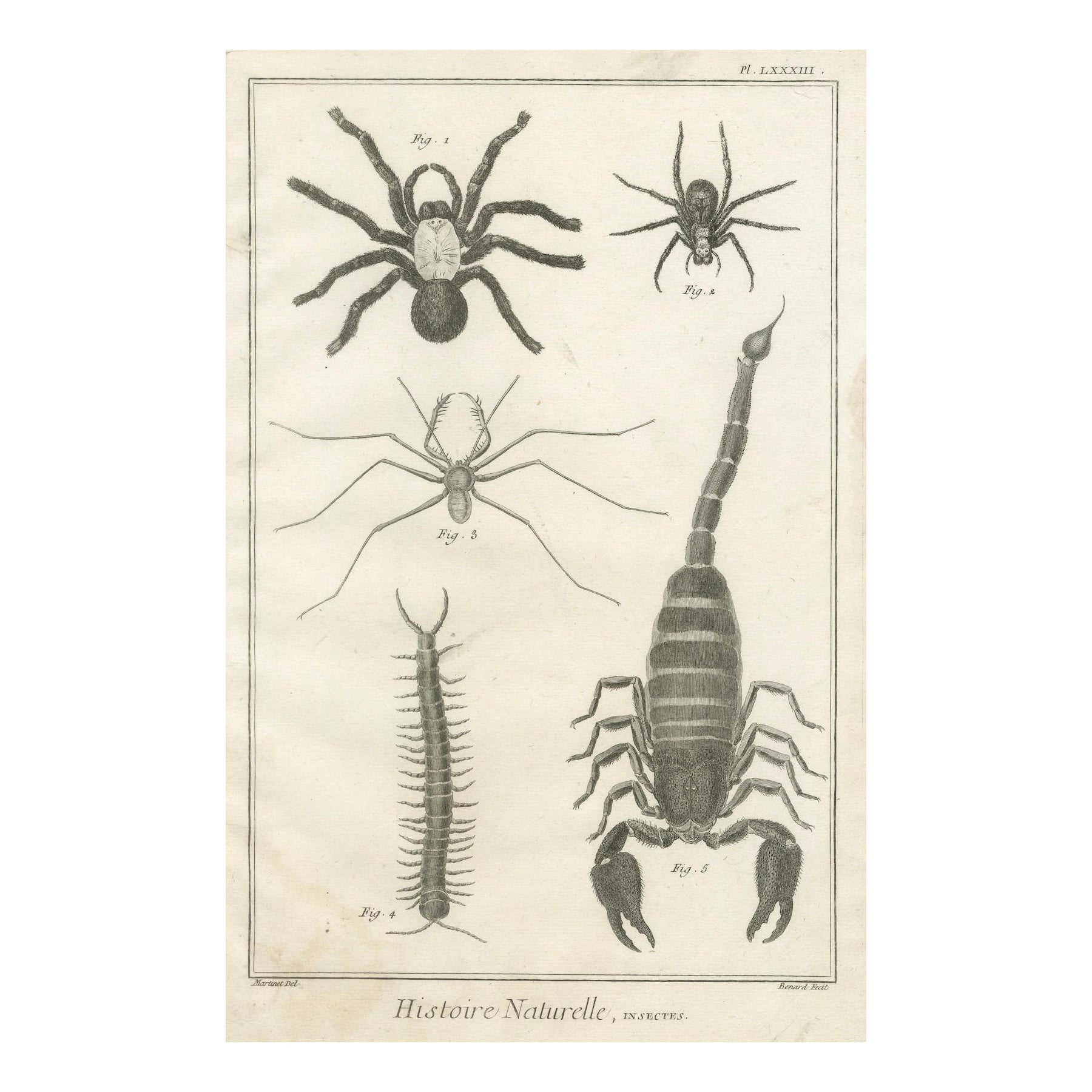
Antique Engraving of Spiders, Centipede and Scorpion from Diderot’s Encyclopédie, ca. 1770
An original copperplate engraving from Denis Diderot and Jean le Rond d’Alembert’s *Encycl...
Category
Antique 1770s French Prints
Materials
Paper
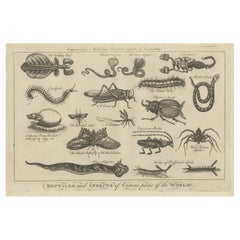
The Wonders of Nature: Exquisite 18th Century Engravings of Reptiles and Insects
Located in Langweer, NL
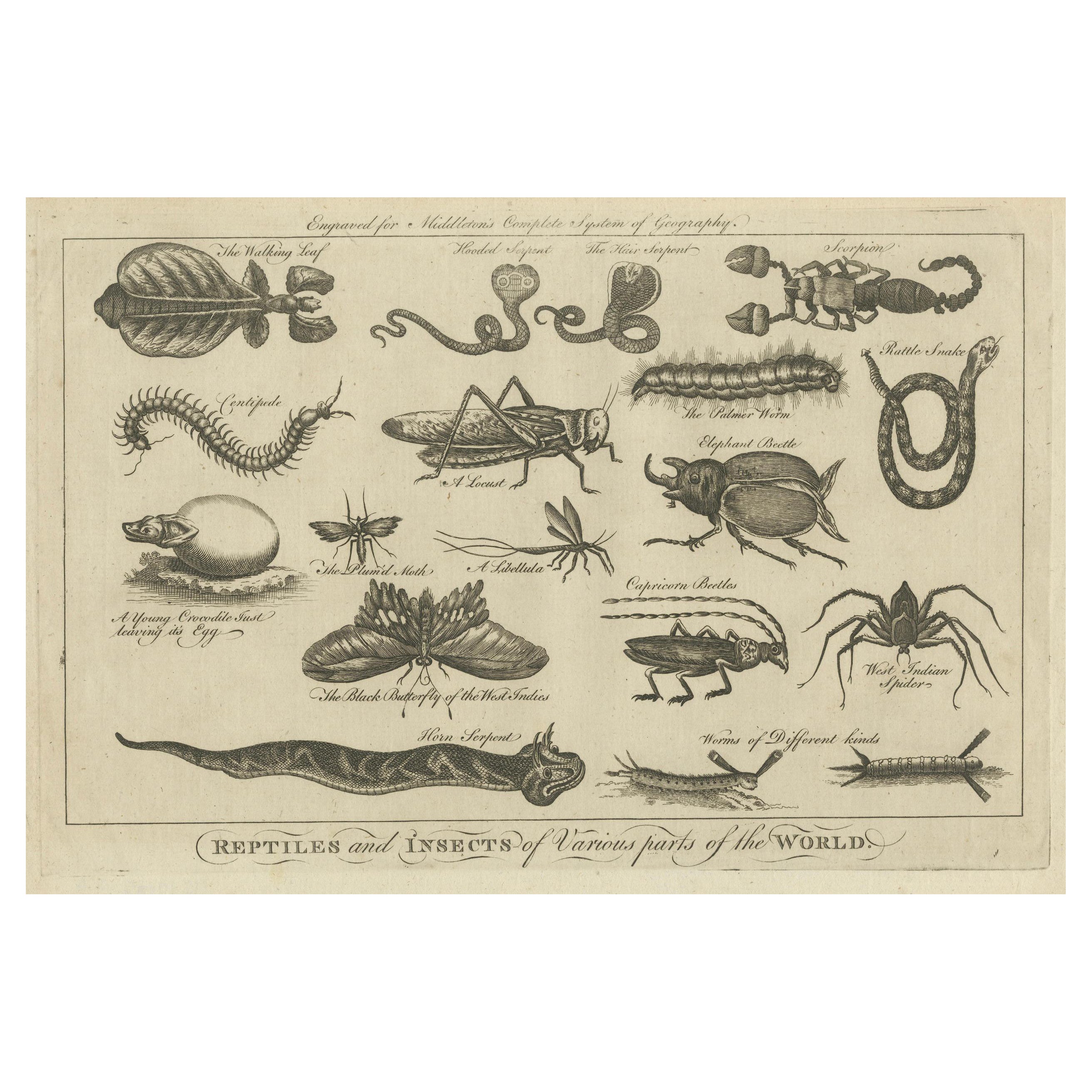
This print, titled "Reptiles and Insects of Various Parts of the World," is an 18th-century engraved work issued around 1778 in London for Middleton. It features an array of meticulo...
Category
Antique Late 18th Century Prints
Materials
Paper
$259 Sale Price
20% Off
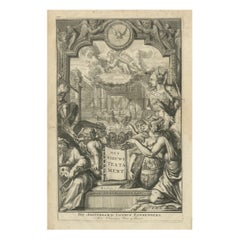
New Testament Title Page Engraving, Dutch Baroque, Circa 1703
Located in Langweer, NL
New Testament Title Page Engraving, Dutch Baroque, Circa 1700
This richly engraved allegorical title page introduces a Dutch edition of the New Testament, published in Amsterdam aro...
Category
Antique Early 18th Century Dutch Prints
Materials
Paper
Antique Print of Fish Species
No. 468
by Valentijn, 1726
By F. Valentijn
Located in Langweer, NL
Untitled print of various fish species from Indonesia. This print originates from 'Oud en Nieuw Oost-Indiën' by F. Valentijn.
Category
Antique Mid-18th Century Dutch Prints
Materials
Paper
Antique Copperplate Engraving of Serpents and Amphibians, 1805
Located in Langweer, NL
Title: Antique Copperplate Engraving of Serpents and Amphibians, 1805
Description:
This striking copperplate engraving from 1805 presents two captivating depictions of serpentin...
Category
Antique Early 1800s Prints
Materials
Paper
You May Also Like
Esper Antique 18th century Butterfly engraving with original hand-colouring
By JC Bock
Located in Melbourne, Victoria
A German copper-line engraving with original hand-colouring of butterflies. Printed on hand made laid paper. Engraved by JC Bock.
From Eugenius Esper's "Die Schmetterlinge in Abbild...
Category
Late 18th Century Naturalistic More Prints
Materials
Engraving
Decoration With Animals - Etching by Carlo Oraty - 18th Century
Located in Roma, IT
Decoration With Animals is an Etching realized by Carlo Oraty (18th century).
The etching belongs to the print suite “Antiquities of Herculaneum Exposed” (original title: “Le Antich...
Category
Late 18th Century Old Masters Still-life Prints
Materials
Etching
Esper Antique 18th century Moth engraving with original hand-colouring
By LG Klinger (engraver)
Located in Melbourne, Victoria
A German copper-line engraving with original hand-colouring of a moth, caterpillars and chrysalis. Printed on hand made laid paper. Engraved by JC Bock.
From Eugenius Esper's "Die S...
Category
Late 18th Century Naturalistic More Prints
Materials
Engraving
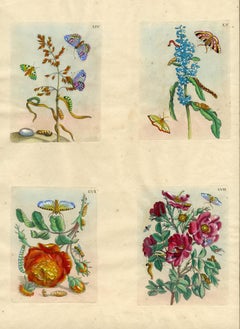
4 plates from The Wondrous Transformation of Caterpillars
their Strange Diet..
By Maria Sibylla Merian
Located in Middletown, NY
Four plates from The Wondrous Transformation of Caterpillars and their Strange Diet of Flowers. “Wolfsmelk Rupsen;" “Wolfsmilch, Raupe und Schmetterling" Amsterdam: J F Bernard, 1730. Each an engraving with hand coloring in watercolor and gouache printed on one sheet of watermarked Honig cream laid paper, each measures 6 1/4 x 5 inches (157 x 121 mm), sheet measures 20 5/8 x 14 inches (522 x 355 mm), full margins. With handling creases in the lower right sheet quadrant, as well as minor, loose cockling, otherwise in very good condition. The colors are superb with exceptionally fresh and bright saturation. Engraved between 1679 and 1683, printed 1730. Plates included: LIV, LV, LVI, & LVII.
MARIA SIBYLLA MERIAN was one of the most highly respected entomologists of the 17th century, and remains today one of the field's most significant figures. A German-born naturalist and scientific illustrator, she reared herself on the study of caterpillars, and made tremendous contributions to the knowledge of the life cycles of numerous species. Until her detailed and careful study of the process of metamorphosis it was thought that insects were "born of mud," through spontaneous generation.
Trained as a miniature painter by her stepfather, she published her first book of illustrations in 1675, at the age of 28. In 1679, Merian published the first volume of the two-volume series on caterpillars, The Wondrous Transformation of Caterpillars and their Strange Diet of Flowers; the second volume followed in 1683. Each volume contained 50 plates that she engraved and etched. In 1699, Merian traveled to Dutch Guiana...
Category
Early 18th Century Naturalistic Still-life Prints
Materials
Watercolor, Engraving
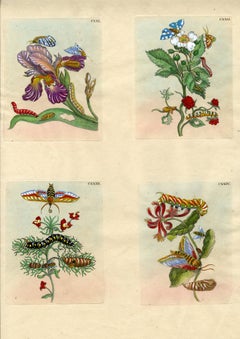
4 plates from The Wondrous Transformation of Caterpillars
their Strange Diet..
By Maria Sibylla Merian
Located in Middletown, NY
Four plates from The Wondrous Transformation of Caterpillars and their Strange Diet of Flowers. “Wolfsmelk Rupsen;" “Wolfsmilch, Raupe und Schmetterling" Amsterdam: J F Bernard, 1730. Each an engraving with hand coloring in watercolor and gouache printed on one sheet of watermarked Honig cream laid paper, each measures 6 1/4 x 5 inches (157 x 121 mm), sheet measures 20 5/8 x 14 inches (522 x 355 mm), full margins. With one 1.5 inch inch tear across the area of the top-left corner, well outside of image area. Handling creases in the lower right sheet quadrant, as well as minor, loose cockling, otherwise in very good condition. The colors are superb with exceptionally fresh and bright saturation. Engraved between 1679 and 1683, printed 1730. Plates included: CXXI, CXXII, CXXIII, & CXXIV.
MARIA SIBYLLA MERIAN was one of the most highly respected entomologists of the 17th century, and remains today one of the field's most significant figures. A German-born naturalist and scientific illustrator, she reared herself on the study of caterpillars, and made tremendous contributions to the knowledge of the life cycles of numerous species. Until her detailed and careful study of the process of metamorphosis it was thought that insects were "born of mud," through spontaneous generation.
Trained as a miniature painter by her stepfather, she published her first book of illustrations in 1675, at the age of 28. In 1679, Merian published the first volume of the two-volume series on caterpillars, The Wondrous Transformation of Caterpillars and their Strange Diet of Flowers; the second volume followed in 1683. Each volume contained 50 plates that she engraved and etched. In 1699, Merian traveled to Dutch Guiana...
Category
Early 18th Century Naturalistic Still-life Prints
Materials
Watercolor, Engraving
Interior of Animals - Etching by Juste Chevillet - 1771
Located in Roma, IT
Interior of Animals is an etching realized by Juste Chevillet in 1771.
The artwork Belongs to the suite "Histoire naturelle, générale et particulière avec la description du Cabinet...
Category
1770s Modern Figurative Prints
Materials
Etching