Items Similar to Persian-Turkish Faience Plate with Tulip and Artichoke Motif – J.Lessing, 1890
Want more images or videos?
Request additional images or videos from the seller
1 of 9
Persian-Turkish Faience Plate with Tulip and Artichoke Motif – J.Lessing, 1890
$407.26
£304.54
€340
CA$561.11
A$611.97
CHF 324.18
MX$7,336.63
NOK 4,128.60
SEK 3,775.30
DKK 2,590.94
About the Item
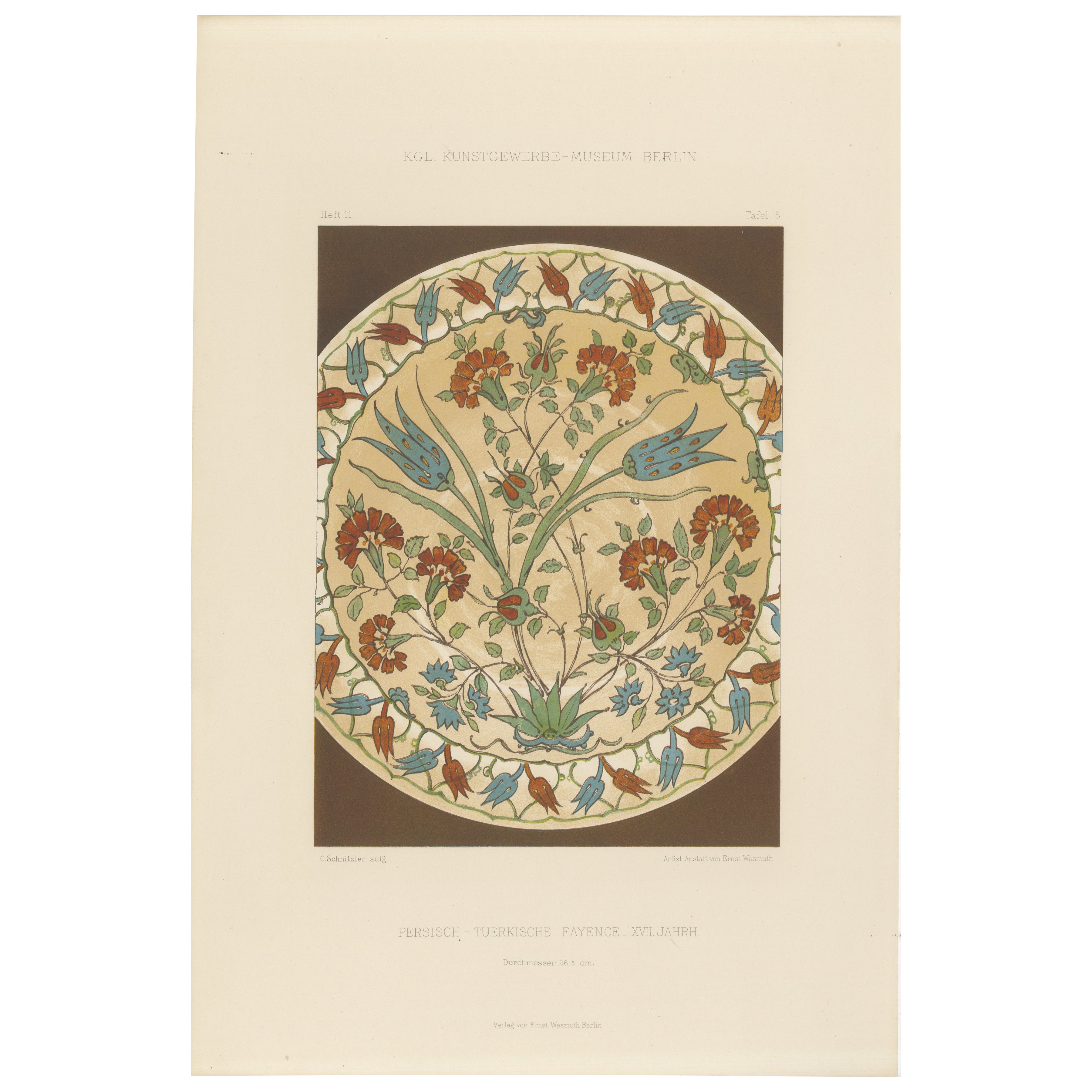
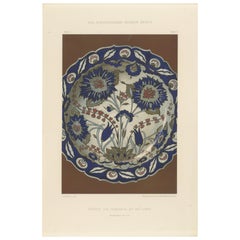
Persian-Turkish Faience Plate with Tulip and Artichoke Motif – Julius Lessing, Berlin 1890
Description:
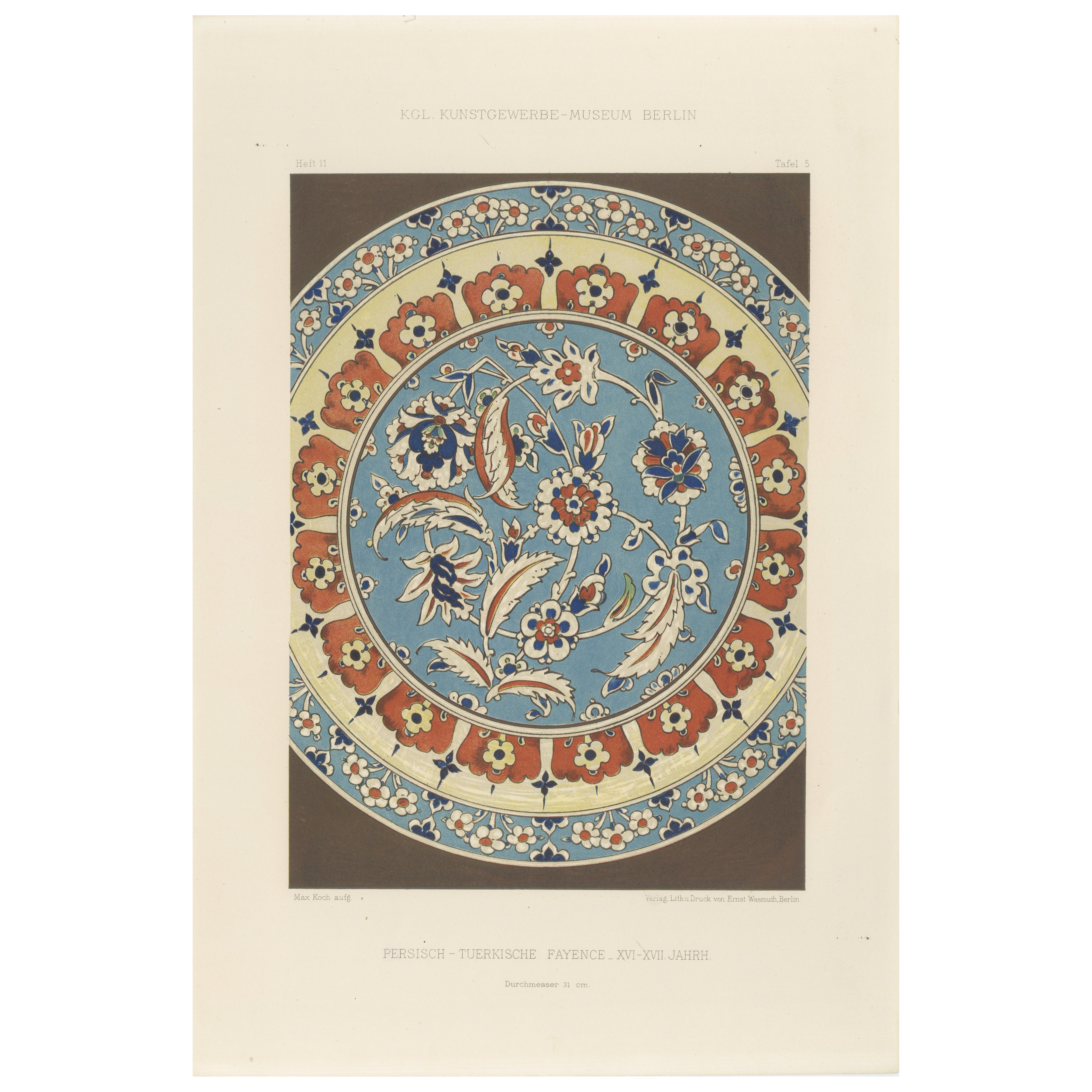
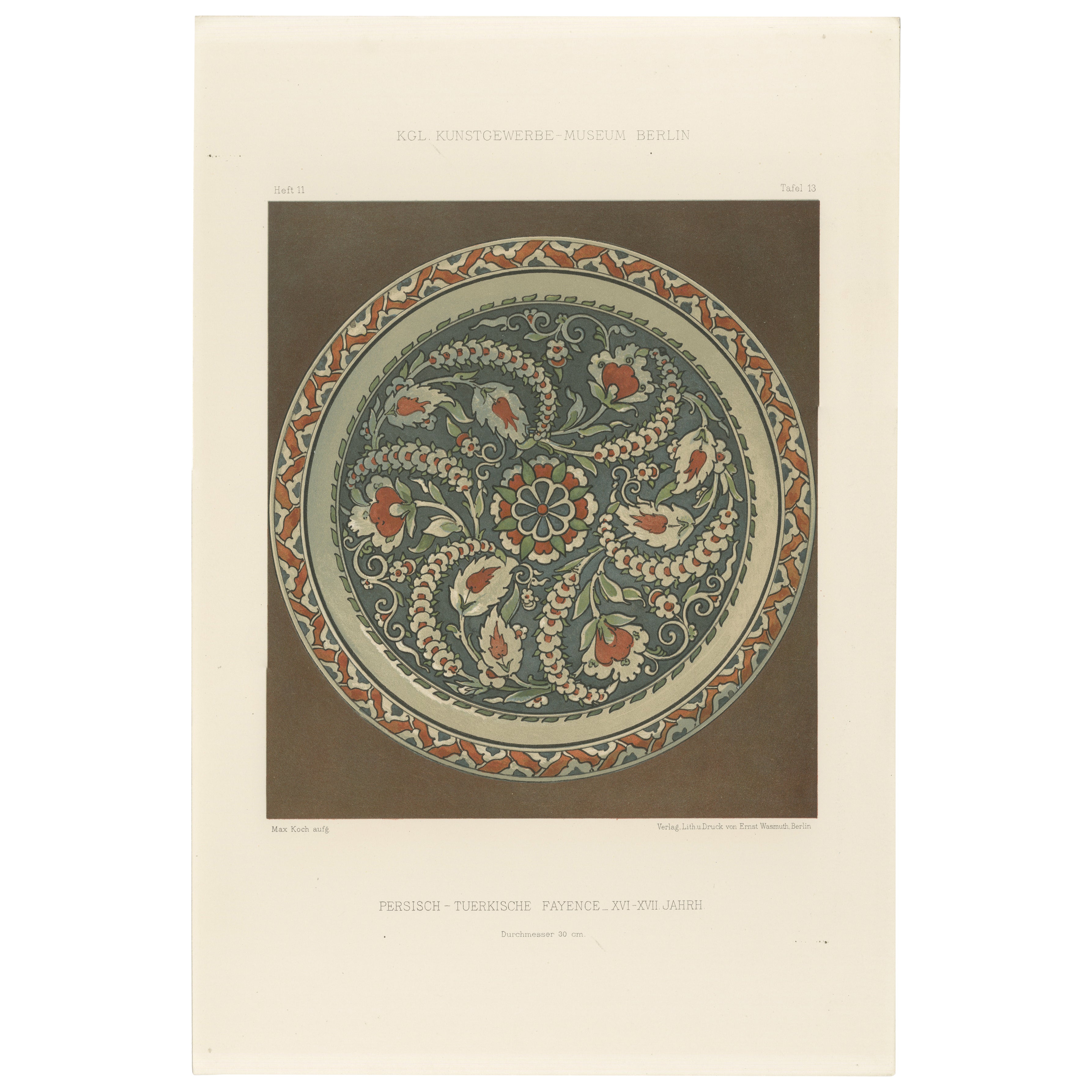
An exquisite chromolithograph from Julius Lessing’s Persisch-Türkische Fayencen (Persian-Turkish Faience), published by Ernst Wasmuth, Berlin, in 1890. Issued as part of Vorbilder-Hefte aus dem Königlichen Kunstgewerbe-Museum, Heft 11, this print reproduces a 16th–17th-century ceramic plate from the collection of the Royal Museum of Decorative Arts in Berlin.
The composition presents a symmetrical floral design dominated by three striking blue artichoke-like blossoms flanked by tulips and carnations, rising elegantly from a leafy base. These motifs are enclosed by a border of curling blue vines and stylized lotus forms, characteristic of Iznik pottery and Persian faience from the classical Ottoman era. The plate’s delicate harmony of form and color—muted blues, pale greens, and coral reds—reflects the refined aesthetics of Islamic ceramic art at its height.
Such pieces were admired for their balance between geometry and naturalism, representing the spiritual symbolism of nature within Islamic art. The plate’s stylized botanical ornament exemplifies the cross-cultural artistry that flourished under the Safavid and Ottoman empires, blending Persian influence with Turkish ceramic craftsmanship.
This lithograph was drawn by Max Koch and printed under the supervision of Julius Lessing (1843–1908), the visionary director of the Königliches Kunstgewerbemuseum Berlin. Lessing’s *Vorbilder-Hefte* series was a landmark project intended to preserve and disseminate world decorative traditions, influencing European art education and the development of Art Nouveau design.
Condition report:
Excellent preservation with crisp lines and rich, even coloration. Slight toning and faint handling traces in the margins. Image area pristine and well-centered.
Framing tips:
A light ivory mat with a narrow blue or teal inner border will beautifully enhance the delicate color balance. A giltwood or walnut frame will emphasize the artwork’s refined historic elegance, perfect for display alongside other faience plate designs.
Technique: Chromolithograph
Maker: Julius Lessing, Berlin, 1890
- Dimensions:Height: 19.3 in (49 cm)Width: 13 in (33 cm)Depth: 0.01 in (0.2 mm)
- Materials and Techniques:
- Place of Origin:
- Period:
- Date of Manufacture:1890
- Condition:Excellent preservation with crisp lines and rich, even coloration. Slight toning and faint handling traces in the margins. Image area pristine and well-centered.
- Seller Location:Langweer, NL
- Reference Number:Seller: BG-14139-41stDibs: LU3054347346032
About the Seller
5.0
Recognized Seller
These prestigious sellers are industry leaders and represent the highest echelon for item quality and design.
Platinum Seller
Premium sellers with a 4.7+ rating and 24-hour response times
Established in 2009
1stDibs seller since 2017
2,791 sales on 1stDibs
Typical response time: <1 hour
- ShippingRetrieving quote...Shipping from: Langweer, Netherlands
- Return Policy
More From This Seller
View AllPersian-Turkish Faience Plate with Carnation and Tulip Motif – J.Lessing, 1890
Located in Langweer, NL
Persian-Turkish Faience Plate with Carnation and Tulip Motif – Julius Lessing, Berlin 1890
A richly detailed chromolithograph from Julius Lessing’s Persisch-Türkische Fayencen (Pers...
Category
Antique 1890s German Prints
Materials
Paper
Persian-Turkish Faience Plate with Tulip and Carnation Design – J.Lessing, 1890
Located in Langweer, NL
Persian-Turkish Faience Plate with Tulip and Carnation Design – Julius Lessing, Berlin 1890
Description:
An elegant chromolithograph from Persisch-Türkische Fayencen (Persian-Turkis...
Category
Antique 1890s German Prints
Materials
Paper
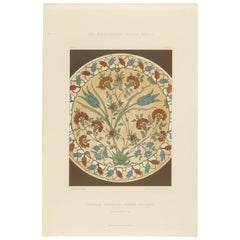
Persian-Turkish Faience Plate with Spiraling Floral Design – Julius Lessing 1890
Located in Langweer, NL
Persian-Turkish Faience Plate with Spiraling Floral Design – Julius Lessing, Berlin 1890
Description:
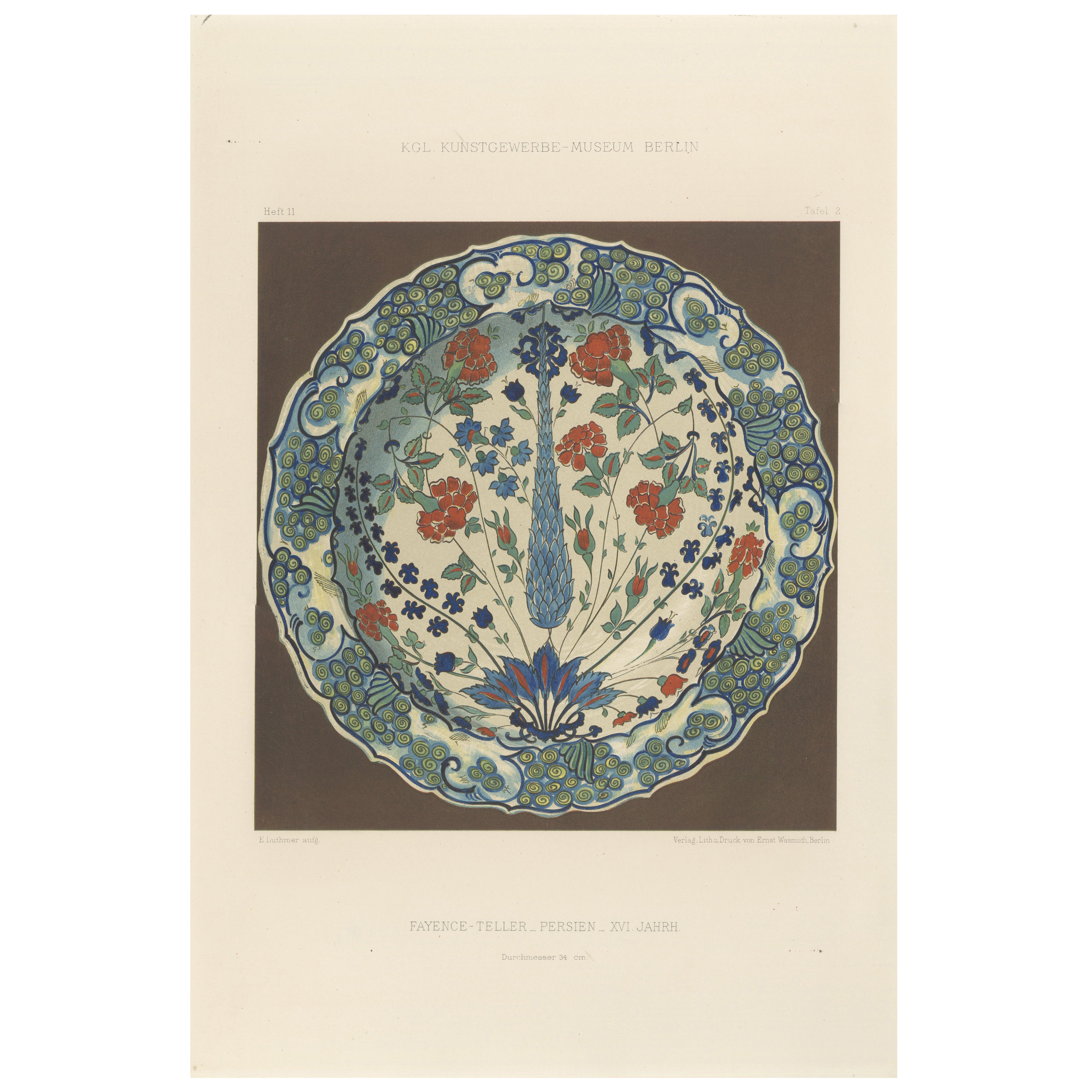
A superb chromolithograph from Persisch-Türkische Fayencen (Persian-Turkish Fai...
Category
Antique 1890s German Prints
Materials
Paper
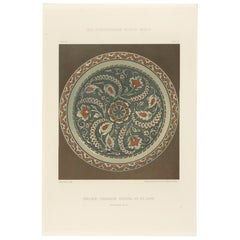
Persian-Turkish Faience Plate with Carnation Motif – Julius Lessing, Berlin 1890
Located in Langweer, NL
Persian-Turkish Faience Plate with Carnation Motif – Julius Lessing, Berlin 1890
Description:
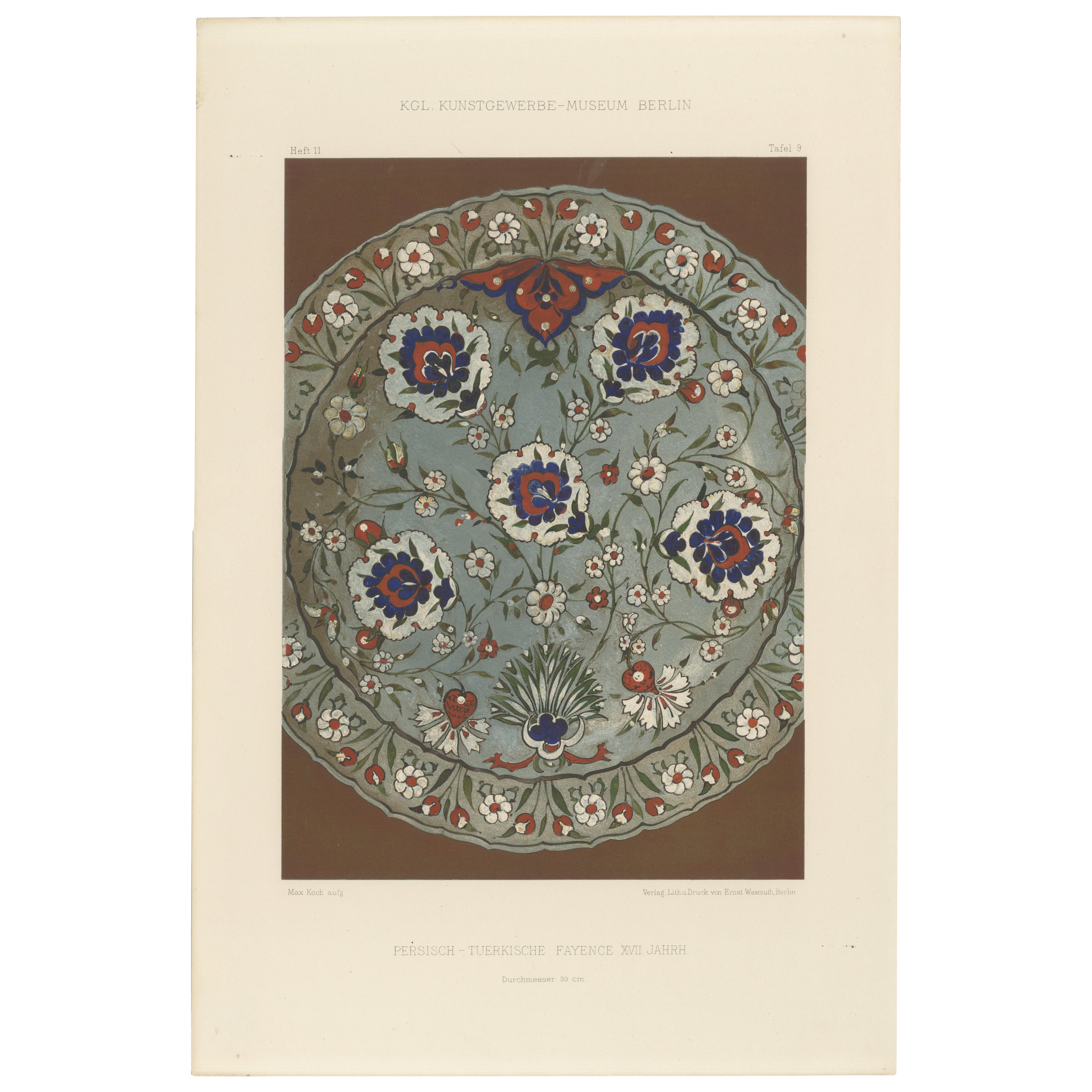
A richly detailed chromolithograph from Julius Lessing’s Persisch-Türkische Fayencen (Persian-Turkish Faience), published by Ernst Wasmuth in Berlin, 1890, as part of Vorbilder-Hefte aus dem Königlichen Kunstgewerbe-Museum, Heft 11. This plate (Tafel 9) reproduces a 16th-century faience dish from the celebrated collection of the Royal Museum of Decorative Arts in Berlin.
The print captures the exquisite ornamentation of an Iznik plate...
Category
Antique 1890s German Prints
Materials
Paper
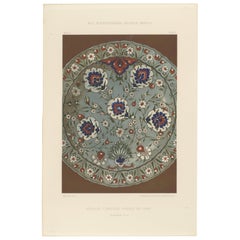
Persian Iznik-Style Faience Plate, Floral Design – Julius Lessing, Berlin 1890
Located in Langweer, NL
Persian Iznik-Style Faience Plate with Floral Design – Julius Lessing, Berlin 1890
Beautiful chromolithograph from Persisch-Türkische Fayencen. Teller (Persian-Turkish Faience Plate...
Category
Antique 1890s German Prints
Materials
Paper
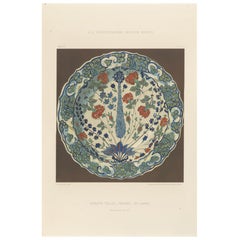
Damascus Faience Plate with Carnations and Tulips – Julius Lessing, Berlin 1890
Located in Langweer, NL
Damascus Faience Plate with Carnations and Tulips – Julius Lessing, Berlin 1890
Description:
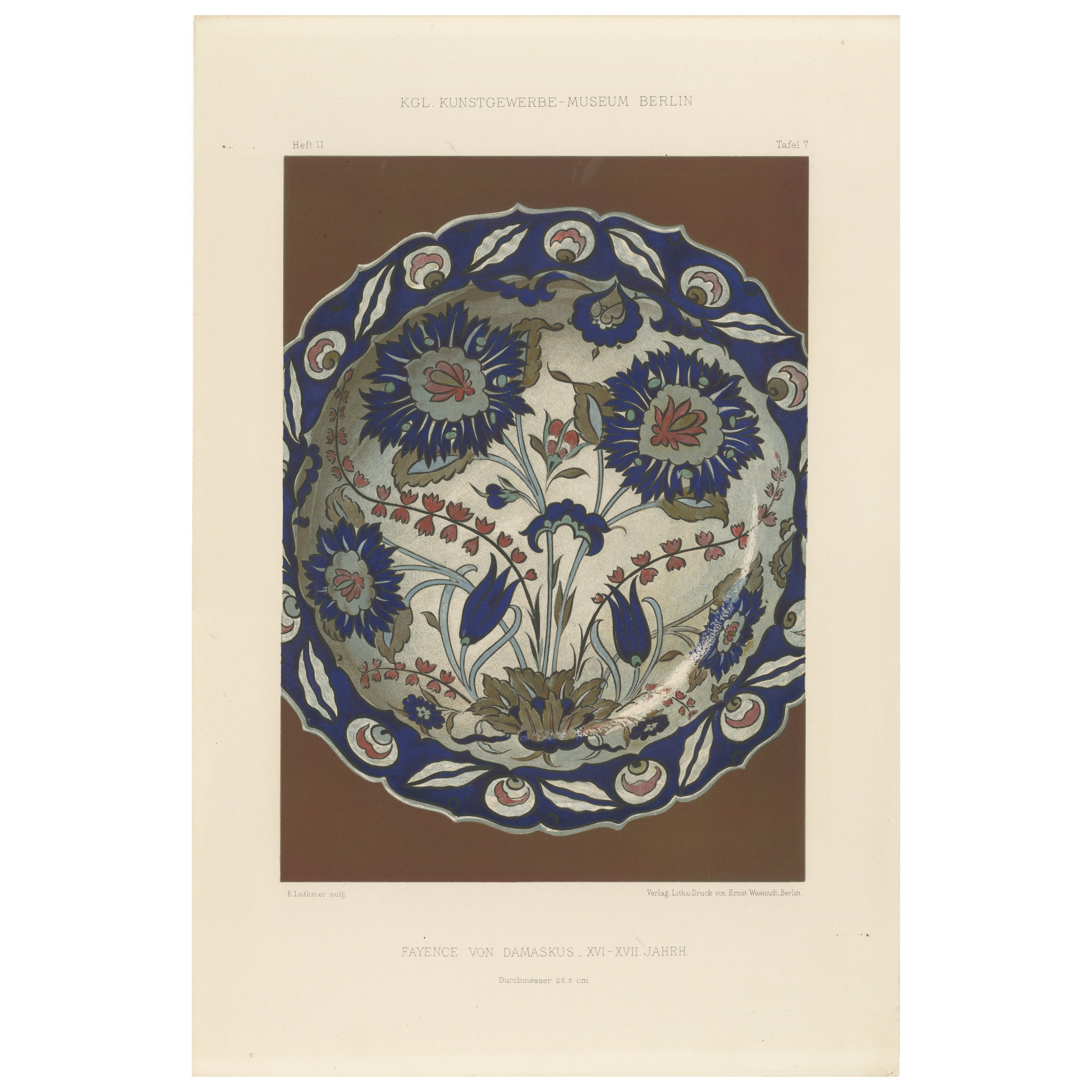
A striking chromolithograph from Julius Lessing’s Persisch-Türkische Fayencen (Persian-T...
Category
Antique 1890s German Prints
Materials
Paper
You May Also Like
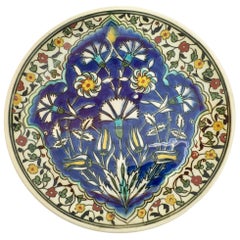
Turkish Ceramic Plate with Hand-painted Iznik Floral Design 1950s
By Iznik Pottery
Located in Moreno Valley, CA
Vintage Polychrome hand painted and handcrafted ceramic wall decorative plate with polychrome floral design.
This is an intricately, hand painted plate that was made in Turkey.
Turkey is famous for its kiln products, such as tiles and pottery, which are glazed and multicolored.
It has a beautifully hand painted flowers in burgundy, turquoise, light and dark blue and green foliage.
An Islamic ceramic plate in the Iznik style.
The back of the plate is stamped.
Hand-painted with natural minerals by Turkish artisans.
Great ceramic decorative Turkish ceramic Folk Art.
There is a hole and string for hanging this piece on the wall.
Size: 9" diameter x 1".
Hand made in Turkey circa 1950s
Under the direction of Ottoman Sultans, Iznik and Kutahya ceramics...
Category
Mid-20th Century Turkish Islamic Decorative Dishes and Vide-Poche
Materials
Ceramic
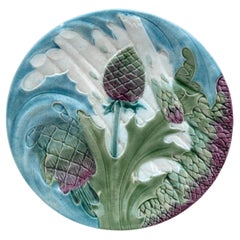
French Majolica Asparagus Plate Luneville Keller
Guerin, circa 1890
By Luneville
Located in Austin, TX
Majolica asparagus plate signed Luneville Keller
Guerin, circa 1890.
Category
Antique 1890s French Rustic Dinner Plates
Materials
Ceramic
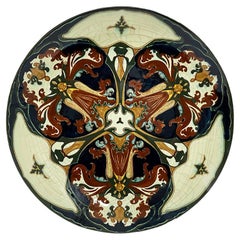
Dutch Rozenburg Earthenware Wall Plate, 1910
By Rozenburg Porcelain
Located in Delft, NL
Dutch Rozenburg earthenware wall plate, 1910
A Rozenburg earthenware wall plate, with floral decor
The wall plate has the Rozenburg hallmark...
Category
Early 20th Century Dutch Decorative Art
Materials
Earthenware
Rare Dutch Majolica Plate with Tulip, Early 17th Century
Located in AMSTERDAM, NH
A rare Dutch Majolica plate with a decoration of a tulip.
Northern Netherlands, probably made in the city of Rotterdam.
Made 1620 - 1640
Dutch majo...
Category
Antique Early 17th Century Dutch Renaissance Ceramics
Materials
Ceramic, Majolica
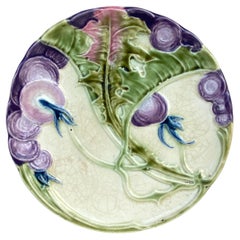
German Majolica Flowers Plate circa 1900
Located in Austin, TX
Small German Majolica Flowers Plate circa 1900.
Category
Antique Early 1900s German Rustic Dinner Plates
Materials
Ceramic
French Majolica Cornflower Plate Sarreguemines, Circa 1890
By Sarreguemines
Located in Austin, TX
French Majolica cornflower and wheat plate Sarreguemines, Circa 1890.
Category
Antique 1890s French Rustic Decorative Art
Materials
Ceramic