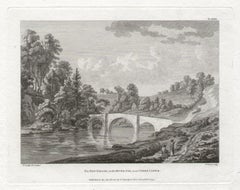
Items Similar to Reading from Holm Park — English River Landscape Engraving, Hearne
Byrne 1803
Want more images or videos?
Request additional images or videos from the seller
1 of 10
Reading from Holm Park — English River Landscape Engraving, Hearne
Byrne 1803
$284.83
£212.46
€240
CA$396.44
A$425.31
CHF 228.13
MX$5,120.62
NOK 2,875.78
SEK 2,622.32
DKK 1,828.98
About the Item
Reading from Holm Park — English River Landscape Engraving, Hearne
Byrne 1803
This refined early-19th-century English landscape presents a wide panoramic view across the Thames Valley, looking toward the town of Reading from Holm Park. The composition unfolds in calm horizontal layers: dense foliage in the foreground frames a gently winding river, beyond which lie open meadows, cultivated fields, and a distant townscape punctuated by church spires. The expansive sky and subtle tonal gradations lend the scene a quiet, contemplative mood characteristic of the Georgian picturesque tradition.
The view was drawn by Thomas Hearne FSA, one of the most respected British landscape draughtsmen of his era, admired for his accurate yet poetic depictions of Britain’s countryside and historic sites. It was engraved by William Byrne FSA, whose precise copperplate technique translates Hearne’s drawing into a balanced and harmonious print with excellent clarity and depth.
This plate was published in London on 1 January 1803 and forms part of the important series Britannia Depicta, issued between 1803 and 1817. The series was conceived as a visual survey of notable British views at a time when antiquarian study, national identity, and landscape appreciation were closely linked. As such, the print functions both as a historical document and as a timeless decorative landscape.
The restrained color palette and spacious composition make this print particularly suitable for modern interiors. It works well in libraries, studies, hallways, or living spaces, either as a standalone statement or combined with other English river views and topographical engravings of the Georgian period.
Condition report:
Very good condition for its age. Light, even toning to the paper with minor surface marks consistent with early-19th-century handling. No major defects observed. Please study the image carefully.
Framing tips:
A classic gilt, warm walnut, or dark oak frame enhances the period character. Use an off-white or lightly toned mat to preserve the calm tonal balance and add visual depth.
Technique: Copper engraving
Maker: William Byrne after Thomas Hearne, London, 1803
- Dimensions:Height: 8.82 in (22.4 cm)Width: 10.63 in (27 cm)Depth: 0.01 in (0.2 mm)
- Materials and Techniques:Paper,Engraved
- Place of Origin:
- Period:
- Date of Manufacture:1803
- Condition:Very good condition for its age. Light, even toning to the paper with minor surface marks consistent with early-19th-century handling. No major defects observed. Please study the image carefully.
- Seller Location:Langweer, NL
- Reference Number:Seller: BG-13600-771stDibs: LU3054348153152
About the Seller
5.0
Recognized Seller
These prestigious sellers are industry leaders and represent the highest echelon for item quality and design.
Platinum Seller
Premium sellers with a 4.7+ rating and 24-hour response times
Established in 2009
1stDibs seller since 2017
2,830 sales on 1stDibs
Typical response time: 1 hour
- ShippingRetrieving quote...Shipping from: Langweer, Netherlands
- Return Policy
More From This Seller
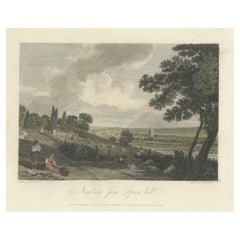
View AllQuiet Hills of Berkshire — Newbury from Speen Hill, Turner
Byrne 1805
Located in Langweer, NL
Quiet Hills of Berkshire — Newbury from Speen Hill, Turner & Byrne 1805
This atmospheric early-19th-century English landscape presents a pastoral view of Newbury as seen from Speen ...
Category
Antique Early 19th Century British Prints
Materials
Paper
Antique engraving of Hedsor on the Thames, Lord Boston’s estate, Tombleson, 1832
Located in Langweer, NL
Antique engraving of Hedsor on the Thames, Lord Boston’s estate, Tombleson, c.1832–1834
This finely detailed antique engraving depicts the River Thames at Hedsor in Buckinghamshire,...
Category
Antique 1830s British Prints
Materials
Paper
Antique Print of West Wycombe Park in Buckinghamshire, England, c.1785
Located in Langweer, NL
Antique print titled 'Vue du Pont, du Temple de Venus dans les Jardins de West-Wycomb (..)'.
Copper engraving of West Wycombe park, showing the bridge and temple.
West Wycombe Park is a country house built between 1740 and 1800 near the village of West Wycombe in Buckinghamshire, England. It was conceived as a pleasure palace for the 18th-century libertine and dilettante Sir Francis Dashwood, 2nd Baronet. The house is a long rectangle with four façades that are columned and pedimented, three theatrically so. The house encapsulates the entire progression of British 18th-century architecture from early idiosyncratic Palladian to the Neoclassical, although anomalies in its design make it architecturally unique...
Category
Antique 18th Century Prints
Materials
Paper
$455 Sale Price
20% Off
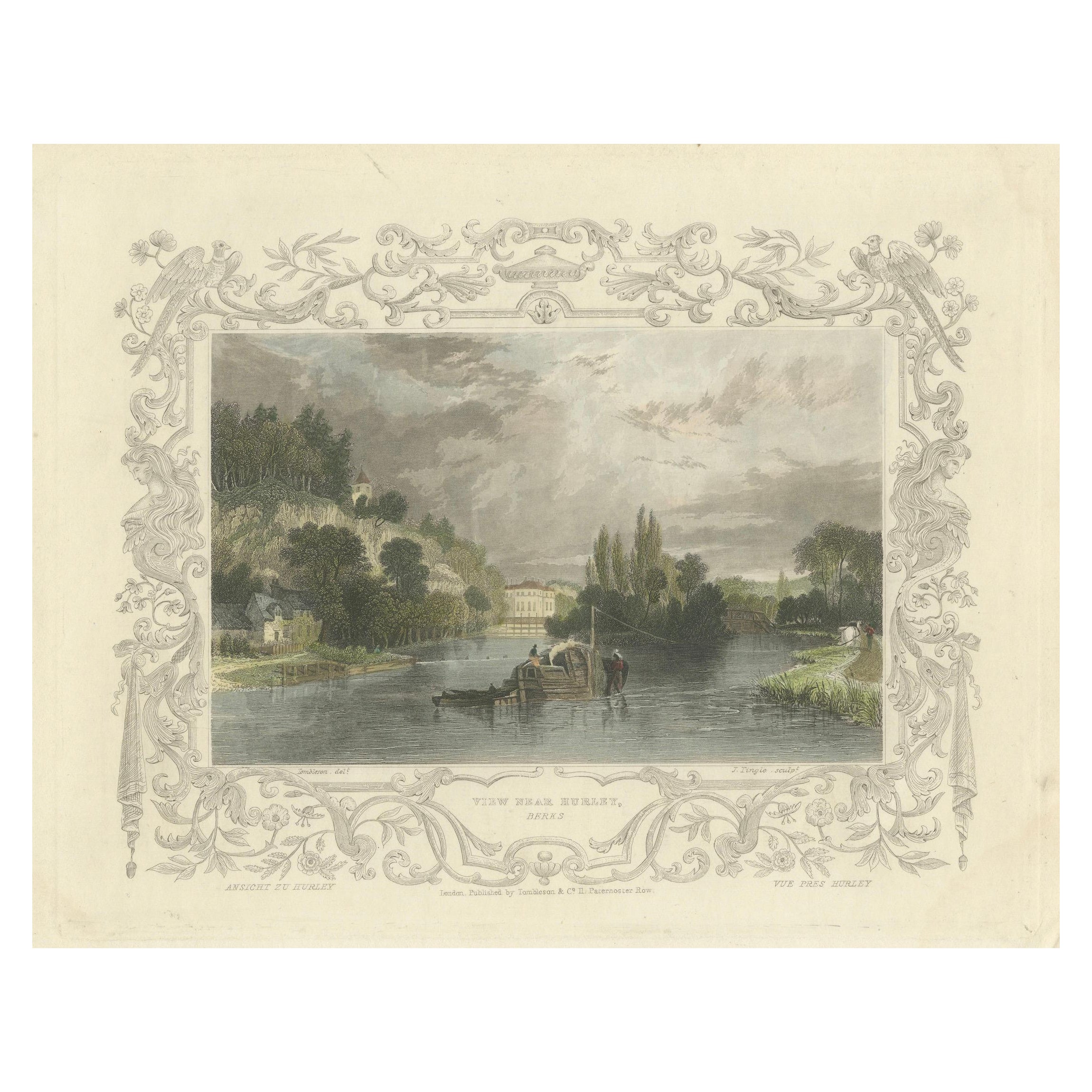
Antique engraving of the Thames near Hurley, Berkshire, Tombleson, c.1832–1834
Located in Langweer, NL
Antique engraving of the Thames near Hurley, Berkshire, Tombleson, c.1832–1834
This charming antique engraving presents a picturesque view of the River Thames near Hurley, a village...
Category
Antique 1830s British Prints
Materials
Paper
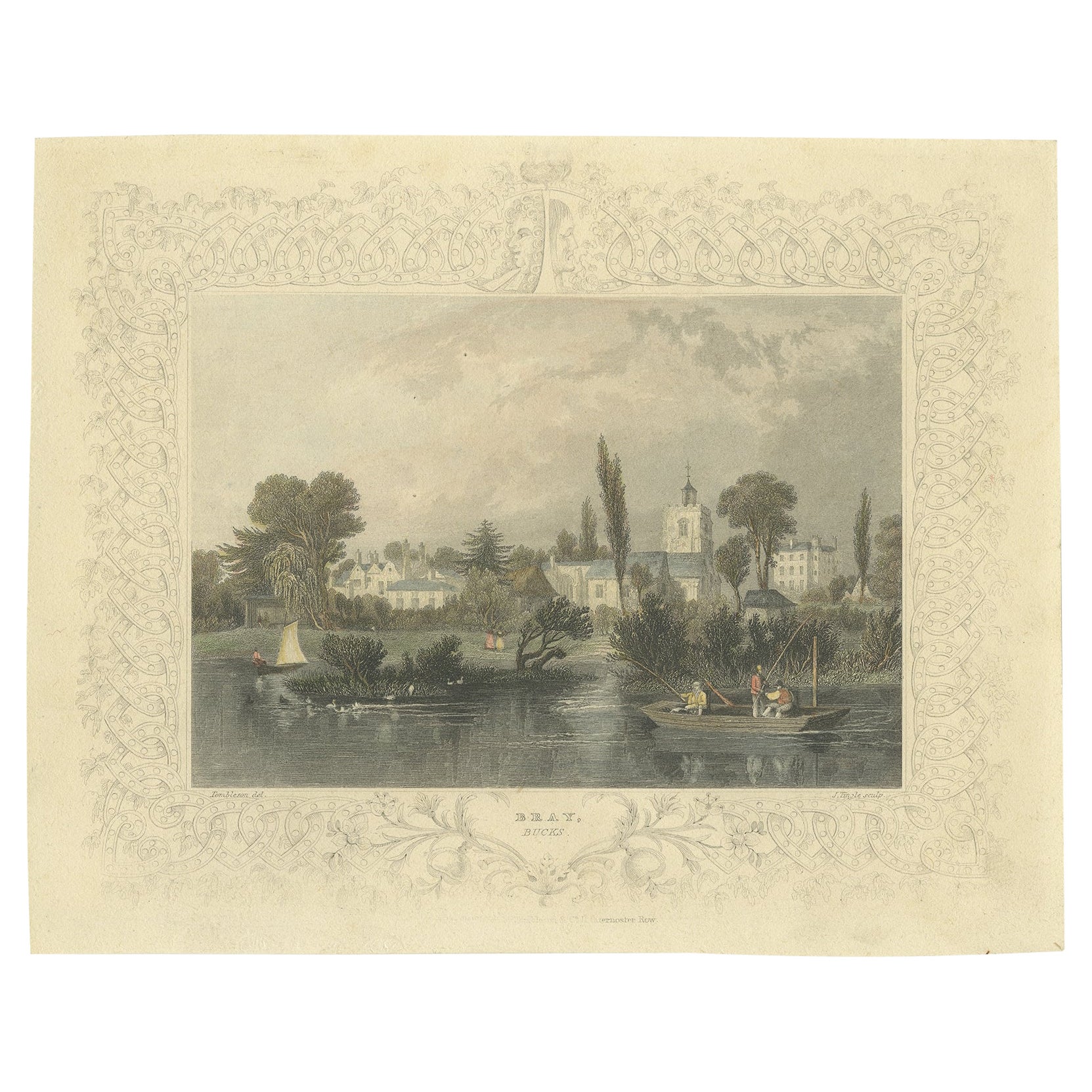
Old Print of View of Bray on Thames in the County of Berkshire, England, ca.1834
Located in Langweer, NL
Description: Antique print titled 'Bray, Bucks'. View of Bray, occasionally Bray on Thames, is a large suburban village and civil parish in the English county of Berkshire. This print originates from 'Tombleson's Thames' by William Gray...
Category
Antique 1830s Prints
Materials
Paper
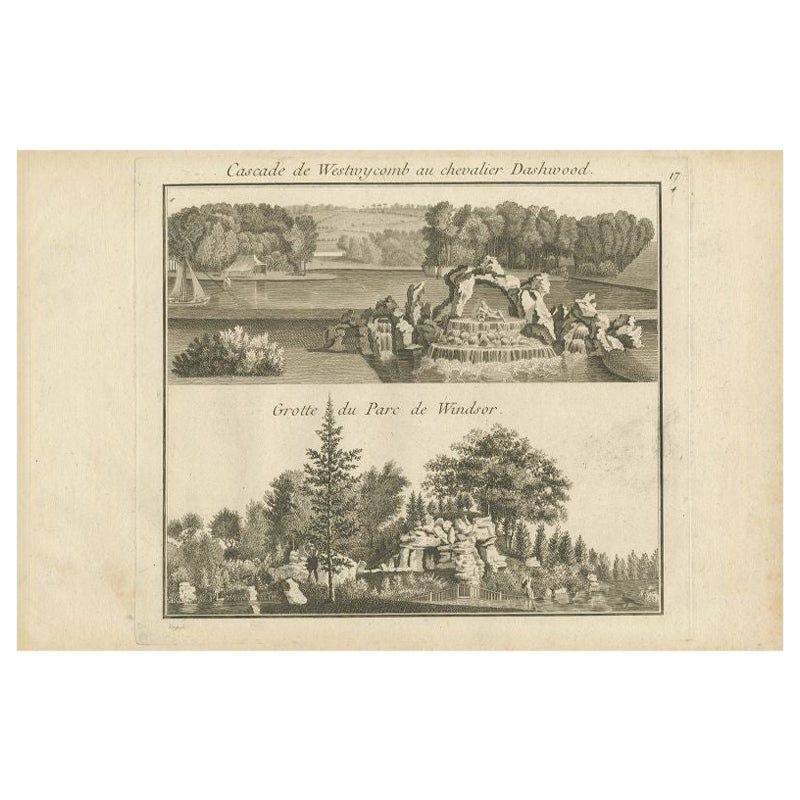
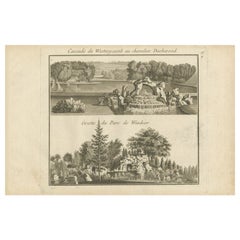
Antique Engraving of West Wycombe Park and Windsor Park in England, ca.1785
Located in Langweer, NL
Antique print titled 'Cascade de Westwycob au chevalier Dashwood - Grotte du Parc de Windsor'. Copper engraving showing the waterfall of West Wycombe park and the cabe of Windsor Par...
Category
Antique 18th Century Prints
Materials
Paper
$332 Sale Price
8% Off
You May Also Like
Newstead in Nottinghamshire. Paul Sandby C18th landscape engraving
By Paul Sandby
Located in Melbourne, Victoria
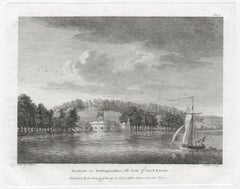
'Newstead in Nottinghamshire, the Seat of Lord Byron'
Engraving by Thomas Malton after Paul Sandby (1731-1809).
From Paul Sandby's 'The Virtuosi's Museum, Containing Select Views i...
Category
18th Century Naturalistic Landscape Prints
Materials
Engraving
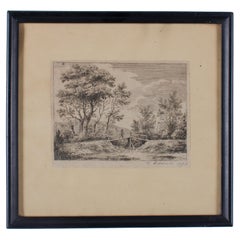
Edward Edwards R.A. Landscape Engraving, 1790
Located in Savannah, GA
Edward Edwards R.A.
(English, 1738-1806)
landscape engraving, published 1790
Paper: 6 by 4 ½ inches
frame: 9 ½ by 9 ¼ inches
Category
Antique 1790s British Prints
Materials
Glass, Wood, Paper
Set of Two Engravings from Nash
s "History of Worcestershire" /// Landscapes Art
By Treadway Russell Nash
Located in Saint Augustine, FL
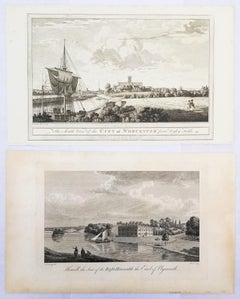
Artist: Treadway Russell Nash (English, 1724-1811)
Title: "The South View of the City of Worcester, from Digley Fields" and "Hewell, the Seat of the Right Honorable the Earl of Plymouth"
Portfolio: Collections for the History of Worcestershire
Year: 1781-1782 (First edition)
Medium: Set of Two Original Engravings on watermarked laid paper
Limited edition: Unknown
Printer: John Nichols, London, UK
Publisher: T. Payne and Son, J. Robson, B. White, Leigh and Sotheby, London, UK; Fletcher, Oxford, UK; and Lewis, Worcester, UK
Reference: Upcott III, page 1330
Sheet size (each): approx. 10.25" x 16.63"
Image size (each): approx. 7" x 12"
Condition: "The South View of the City of Worcester, from Digley Fields" has some minor foxmarks in margins. "Hewell, the Seat of the Right Honorable the Earl of Plymouth" has toning and uneven discoloration to its sheet. Have been professionally stored away for decades. They are both otherwise strong impressions, the first in excellent condition, and the second in good condition
Notes:
Provenance: private collection - Aspen, CO. "The South View of the City of Worcester, from Digley Fields" was engraved by English artist Thomas Sanders (Active: Mid-Late 18th Century) after a drawing by himself. "Hewell, the Seat of the Right Honorable the Earl of Plymouth" was engraved by English artist Michael Angelo Rooker (1743-1801) after a watercolor painting by English artist Paul Sandby (1731-1809). Comes from Nash's two volume "Collections for the History of Worcestershire", (1781-1782) (First edition), which consists of 75 engravings. Each work is printed from one copper plate in one color: black. There was a (Second edition) "with Additions" bound in with Volume II of this portfolio published by John White in (1799). And both the First and Second editions of "Collections for the History of Worcestershire" are based off Thomas Sanders' 1779-1781 "Perspective Views of the Market Towns within the County of Worcester". "The South View of the City of Worcester, from Digley Fields" has an unidentified watermark in the center of its sheet resembling "XV".
Biography:
Treadway Russell Nash (24 June 1724 – 26 January 1811) was an English clergyman, now known as an early historian of Worcestershire and the author of Collections for the History of Worcestershire, an important source document for Worcestershire county histories. He was a fellow of the Society of Antiquaries of London.
Treadway Russell Nash was born on 24 June 1724 born at Clerkenleap, in Kempsey, Worcestershire. His family were from Ombersley. They had lands there and at Claines, and had later bought lands in the Reformation around St Peter's, Droitwich. He was related to James Nash and John Nash, both MPs for Worcester. His father Richard, a grandson of Sir Rowland Berkeley, died in 1740, and Richard's eldest son in 1757. As a result, Treadway Russell Nash inherited the Russells' Strensham estates from his brother, as well as the Nash estates, and took both names.
He was educated from the age of twelve at King's School, Worcester, and became a scholar at Worcester College, Oxford aged fifteen. In March 1749, he accompanied his brother on a trip to the continent, to aid Richard's health. They visited Paris for about six weeks, before spending the summer "on the banks of the Loire". They then visited "Bourdeaux, Thoulouse, Montpelier, Marseilles, Leghorn, Florence, Rome, Naples, Bologna, Venice, Padua, Verona, Milan, Lyons, and again Paris"; such expeditions are often known as the Grand Tour.
On his return in late summer 1751, Nash took up a post as Vicar of Eynsham through his friend and future brother-in-law, John Martin. He also had an income as a tutor at Oxford. He took his Doctor of Divinity degree and left Oxford, having "gone out grand compounder", following the death of his brother. He also left his benefice at Eynsham in 1757. While at Oxford he had proposed a road from there to Witney (now the A40 and B4022), and also stood for Parliament. Nash married Margaret Martin...
Category
1780s Old Masters Landscape Prints
Materials
Laid Paper, Engraving, Intaglio
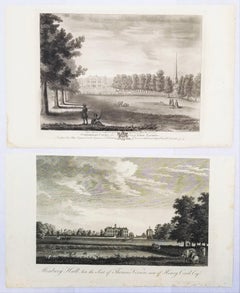
Set of Two Engravings from Nash
s "History of Worcestershire" /// Landscapes Art
By Treadway Russell Nash
Located in Saint Augustine, FL
Artist: Treadway Russell Nash (English, 1724-1811)
Title: "Henbury Hall, late the Seat of Thomas Vernon, now of Henry Cecil Esq." and "Ombersley Court, the Seat of Lord Sandys"
Portfolio: Collections for the History of Worcestershire
Year: 1781-1782 (First edition)
Medium: Set of Two Original Engravings and Etching with Aquatint on watermarked laid paper
Limited edition: Unknown
Printer: John Nichols, London, UK
Publisher: T. Payne and Son, J. Robson, B. White, Leigh and Sotheby, London, UK; Fletcher, Oxford, UK; and Lewis, Worcester, UK
Reference: Upcott III, page 1330
Sheet size (each): approx. 10.13" x 16.88"
Image size (each): approx. 8.13" x 12.63"
Condition: "Henbury Hall, late the Seat of Thomas Vernon, now of Henry Cecil Esq." has scattered light foxmarks in margins. The top edge is unevenly trimmed and a small taped tear to lower right corner. "Ombersley Court, the Seat of Lord Sandys" has light toning to sheet and some faint discoloration in right margin. A small light water stain to lower left corner. Have been professionally stored away for decades. They are both otherwise strong impressions in good condition
Notes:
Provenance: private collection - Aspen, CO. "Henbury Hall, late the Seat of Thomas Vernon, now of Henry Cecil Esq." was likely engraved by English artist James Ross (1745-1821) after a drawing by himself. "Ombersley Court, the Seat of Lord Sandys" was engraved by English artist Valentine Green (1739-1813) and English artist Francis Jukes (1745-1812) after a drawing by an unknown, likely English artist. The first work is an engraving; the second work is an etching with aquatint. Comes from Nash's two volume "Collections for the History of Worcestershire", (1781-1782) (First edition), which consists of 75 engravings. Each work is printed from copper plates in one color: black. There was a (Second edition) "with Additions" bound in with Volume II of this portfolio published by John White in (1799). And both the First and Second editions of "Collections for the History of Worcestershire" are based off Thomas Sanders' 1779-1781 "Perspective Views of the Market Towns within the County of Worcester". "Ombersley Court, the Seat of Lord Sandys" has an unidentified watermark in the center of its sheet. "Henbury Hall" is actually incorrectly misnamed; its correct name is "Hanbury Hall".
"PLATES, Drawn and engraved by J. Ross, unless otherwise expressed." - "A Bibliographical Account of the Principal Works Relating to English Topography", (1818) - William Upcott.
Biography:
Treadway Russell Nash (24 June 1724 – 26 January 1811) was an English clergyman, now known as an early historian of Worcestershire and the author of Collections for the History of Worcestershire, an important source document for Worcestershire county histories. He was a fellow of the Society of Antiquaries of London.
Treadway Russell Nash was born on 24 June 1724 born at Clerkenleap, in Kempsey, Worcestershire. His family were from Ombersley. They had lands there and at Claines, and had later bought lands in the Reformation around St Peter's, Droitwich. He was related to James Nash and John Nash, both MPs for Worcester. His father Richard, a grandson of Sir Rowland Berkeley, died in 1740, and Richard's eldest son in 1757. As a result, Treadway Russell Nash inherited the Russells' Strensham estates from his brother, as well as the Nash estates, and took both names.
He was educated from the age of twelve at King's School, Worcester, and became a scholar at Worcester College, Oxford aged fifteen. In March 1749, he accompanied his brother on a trip to the continent, to aid Richard's health. They visited Paris for about six weeks, before spending the summer "on the banks of the Loire". They then visited "Bourdeaux, Thoulouse, Montpelier, Marseilles, Leghorn, Florence, Rome, Naples, Bologna, Venice, Padua, Verona, Milan, Lyons, and again Paris"; such expeditions are often known as the Grand Tour.
On his return in late summer 1751, Nash took up a post as Vicar of Eynsham through his friend and future brother-in-law, John Martin. He also had an income as a tutor at Oxford. He took his Doctor of Divinity degree and left Oxford, having "gone out grand compounder", following the death of his brother. He also left his benefice at Eynsham in 1757. While at Oxford he had proposed a road from there to Witney (now the A40 and B4022), and also stood for Parliament. Nash married Margaret Martin...
Category
1780s Old Masters Landscape Prints
Materials
Laid Paper, Engraving, Intaglio, Etching, Aquatint
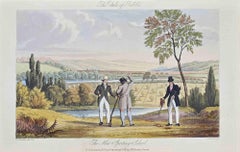
The Vale of Ribble - Etching by Joseph Banks - 1837
Located in Roma, IT
The Vale of Ribble is an artwork, realized by the artist Joseph Banks in 1837.
Etching colored. Titled and signed on plate .
Beautiful engraving with contemporary colouring. Editio...
Category
1830s Modern Figurative Prints
Materials
Etching
The New Bridge, On The River Dee, Wales. Paul Sandby C18th landscape engraving
By Paul Sandby
Located in Melbourne, Victoria
'The New Bridge, On The River Dee, Near Chirk Castle'
Engraving by Peter Mazell After Paul Sandby (1731-1809).
From Paul Sandby's 'The Virtuosi's Museum, Containing Select Views in...
Category
18th Century Naturalistic Landscape Prints
Materials
Engraving