Items Similar to Shipwreck Scene in Melanesia – Islanders Salvaging Wreckage, c.1845

Want more images or videos?
Request additional images or videos from the seller
1 of 9
Shipwreck Scene in Melanesia – Islanders Salvaging Wreckage, c.1845
$263.28
£197.10
€220
CA$362.44
A$396.22
CHF 209.62
MX$4,741.39
NOK 2,667.08
SEK 2,441.44
DKK 1,676.13
About the Item
Shipwreck Scene in Melanesia – Islanders Salvaging Wreckage, c.1845
This powerful hand-colored lithograph, titled “Océanie – Mélanésie,” is taken from Le Monde en Estampes: Types et Costumes des Principaux Peuples de l’Univers, published in Paris around 1845–1850 by Amédée Bedelet. Drawn by Leloir, lithographed by J. Bocquin, and printed by Lemercier, this composition captures a dramatic coastal episode that merges ethnographic curiosity with 19th-century Romantic storytelling.
The scene depicts a group of Melanesian islanders on a wild shore, salvaging the remains of a European shipwreck. In the distance, a vessel lies stranded among crashing waves, while survivors or scavengers struggle near the surf. The foreground focuses on six figures, each engaged with the unfamiliar objects brought by the sea — symbols of the encounter between the Western world and the Pacific islands.
One man, draped in an animal-skin cloak, kneels at the left, gazing into a mirror with a mix of wonder and self-examination. Beside him, an open chest spills luxurious fabrics, a blue coat, and metallic goods, evoking both temptation and curiosity. Another islander seated to the right tries on a European top hat, his expression caught between amusement and disbelief. A central figure stands tall, holding a spear and wearing a red headband, his posture proud and dignified as he surveys the scene. Behind them, others wade among the wreckage, framed by foaming waves and tropical vegetation.
This work epitomizes the Romantic imagination of the South Seas: mysterious, remote, and touched by the drama of human encounter. While intended for European audiences, it offers a fascinating 19th-century vision of cultural contact — not as a peaceful exchange, but as a moment of tension, fascination, and adaptation. The shipwreck setting provided artists like Leloir with an opportunity to explore themes of discovery and loss, rendered here with sensitivity to light, texture, and human expression.
Printed by the famed Lemercier studio, the lithograph demonstrates superb tonal balance and hand-applied coloring — from the earthy browns of skin and sand to the shimmering white of the surf and the vivid accents of red and yellow in garments and feathers.
Condition report: Very good impression with strong coloring and fine detail. Some light foxing and minor age toning in the margins; image area clean and bright. Wide borders preserved.
Framing tips: Ideal with a soft ivory or warm beige mat and a natural wood or dark oak frame. A thin inner mat in muted blue or grey will emphasize the sea and sky tones, enhancing the print’s atmosphere.
Technique: Hand-colored lithograph
Maker: J. Bocquin after Leloir, printed by Lemercier, Paris, circa 1845
- Dimensions:Height: 9.06 in (23 cm)Width: 11.82 in (30 cm)Depth: 0.01 in (0.2 mm)
- Materials and Techniques:
- Place of Origin:
- Period:
- Date of Manufacture:circa 1845
- Condition:Condition report: Very good impression with strong coloring and fine detail. Some light foxing and minor age toning in the margins; image area clean and bright. Wide borders preserved.
- Seller Location:Langweer, NL
- Reference Number:Seller: BG-13682-241stDibs: LU3054347442242
About the Seller
5.0
Recognized Seller
These prestigious sellers are industry leaders and represent the highest echelon for item quality and design.
Platinum Seller
Premium sellers with a 4.7+ rating and 24-hour response times
Established in 2009
1stDibs seller since 2017
2,793 sales on 1stDibs
Typical response time: <1 hour
- ShippingRetrieving quote...Shipping from: Langweer, Netherlands
- Return Policy
More From This Seller
View AllPolynesian and Maori Figures – Inhabitants of Nuku Hiva
New Zealand Canoe 1845
Located in Langweer, NL
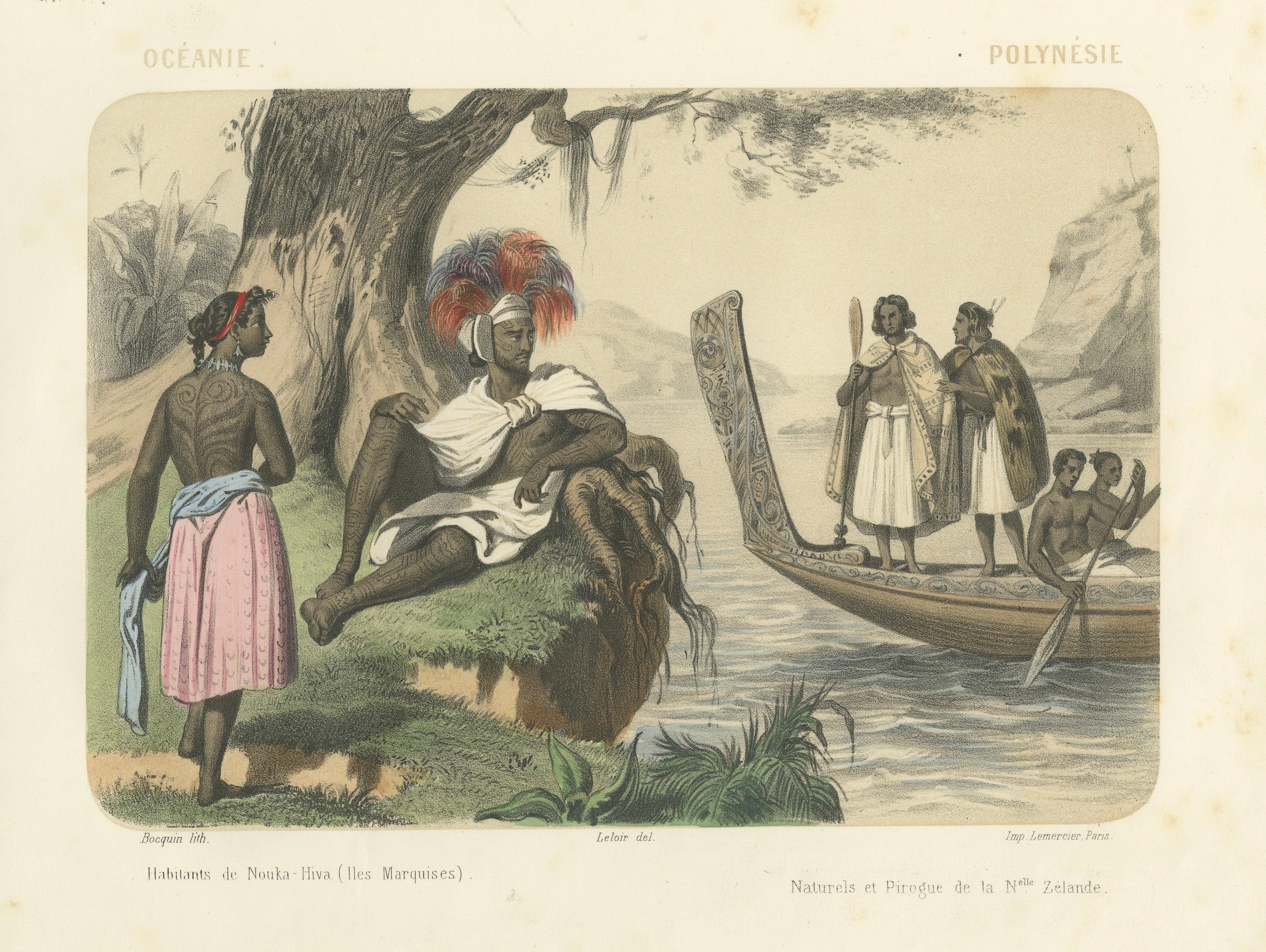
Polynesian and Maori Figures – Inhabitants of Nuku Hiva and New Zealand Canoe, c.1845
This beautifully hand-colored lithograph, titled “Océanie – Polynésie,” originates from Le Mond...
Category
Antique 1840s French Prints
Materials
Paper
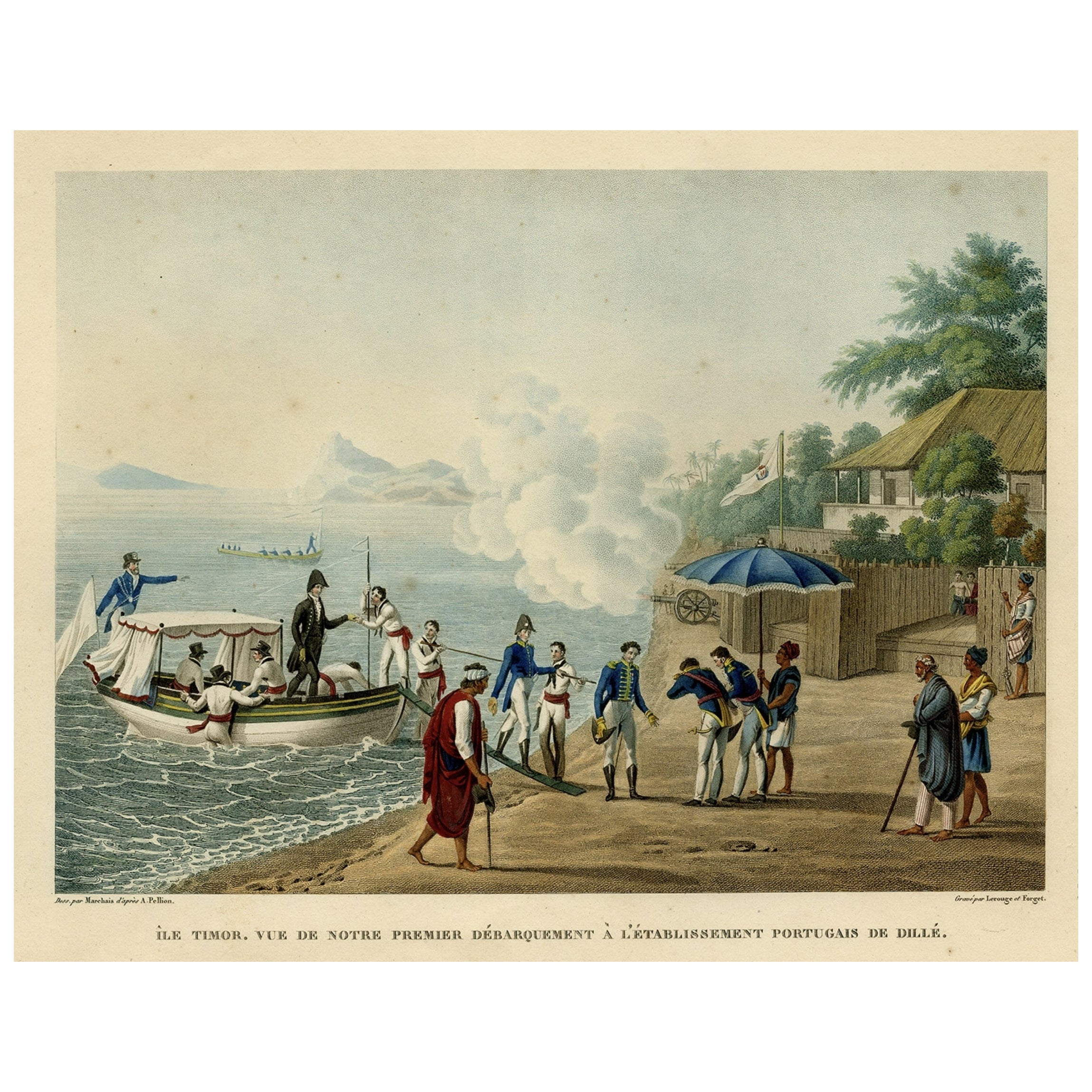
Print of the French Disembark at the Portugese Settlement of Dille, Timor, 1825
Located in Langweer, NL
Antique print, titled: 'Ile Timor. Vue de notre Premier Debarquement a l'Etablissement Portugais de Dille.' - ('Timor Island.
View of our first disembarkation at the Portugese se...
Category
Antique 1820s Prints
Materials
Paper
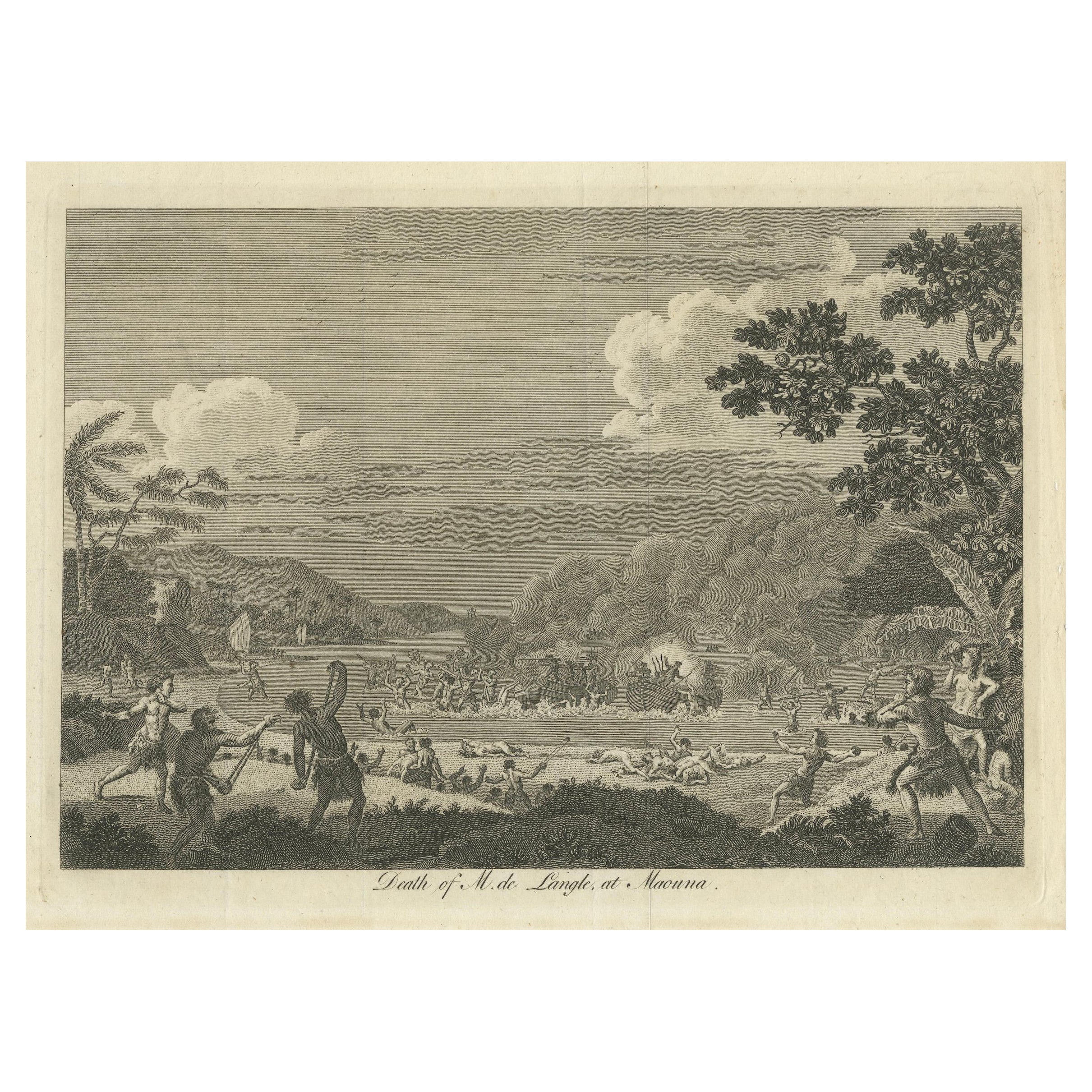
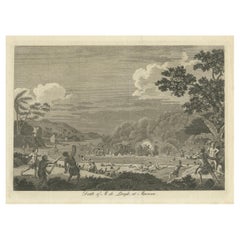
The Death of Commander Fleuriot de Langle and His Men at Maouna, Samoa, 1797
Located in Langweer, NL
The engraving depicts a harrowing and chaotic scene from an 18th-century exploration, specifically the tragic event involving Commander Fleuriot de Langle and his men. The scene is s...
Category
Antique 1790s Prints
Materials
Paper
$402 Sale Price
20% Off
Free Shipping
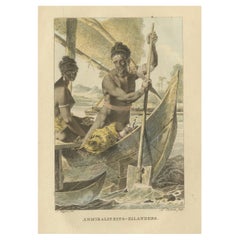
Antique Hand-Colored Engraving of Admiralty Islands, Papua New Guinea (c.1800)
Located in Langweer, NL
Admiraliteit-Eilanders – Antique Hand-Colored Engraving of Admiralty Islands, Papua New Guinea (c.1800)
Description:
A dynamic early 19th-century hand-colored ethnographic engraving...
Category
Antique Early 19th Century Dutch Prints
Materials
Paper
Noru Gal Derri
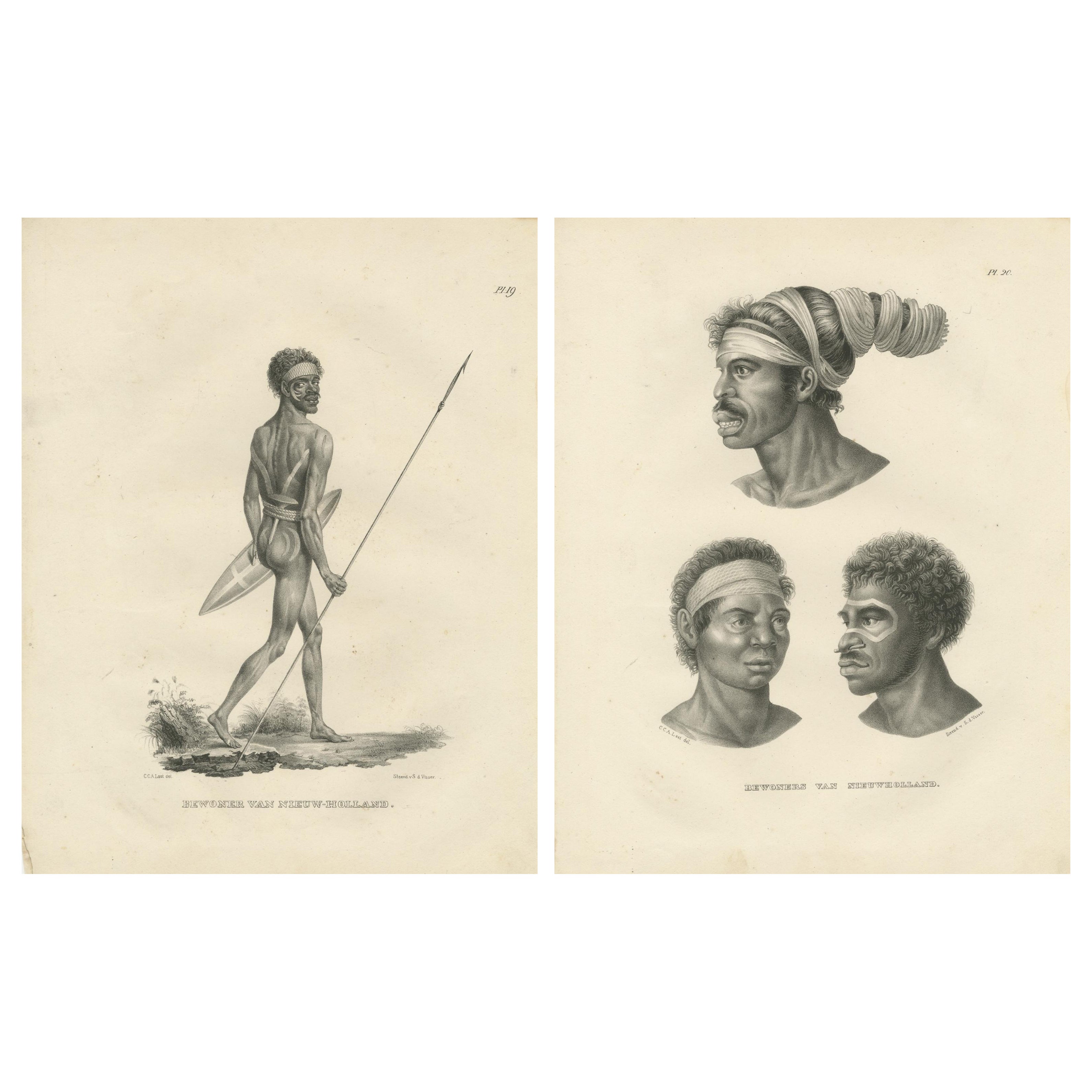
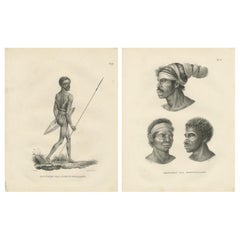
Australian Aborigines, Lithographs by Last, 1836, Nieuw-Holland
Located in Langweer, NL
These two lithographs are part of a series depicting Aboriginal people from Australia, originally drawn by the artist Nicolas-Martin Petit during the expeditions of French explorer N...
Category
Antique 1830s Prints
Materials
Paper
$573 Sale Price / set
20% Off
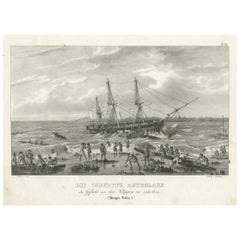
Old Print of The Corvette Astrolabe in Peril Near Cliffs, Tonga-Tabu, circa 1836
Located in Langweer, NL
Title: The Corvette Astrolabe in Peril Near the Cliffs, Tonga-Tabu
Description: This striking lithograph, circa 1836, captures a dramatic maritime moment during Dumont d’Urville’s...
Category
Antique 1830s Swiss Prints
Materials
Paper
You May Also Like
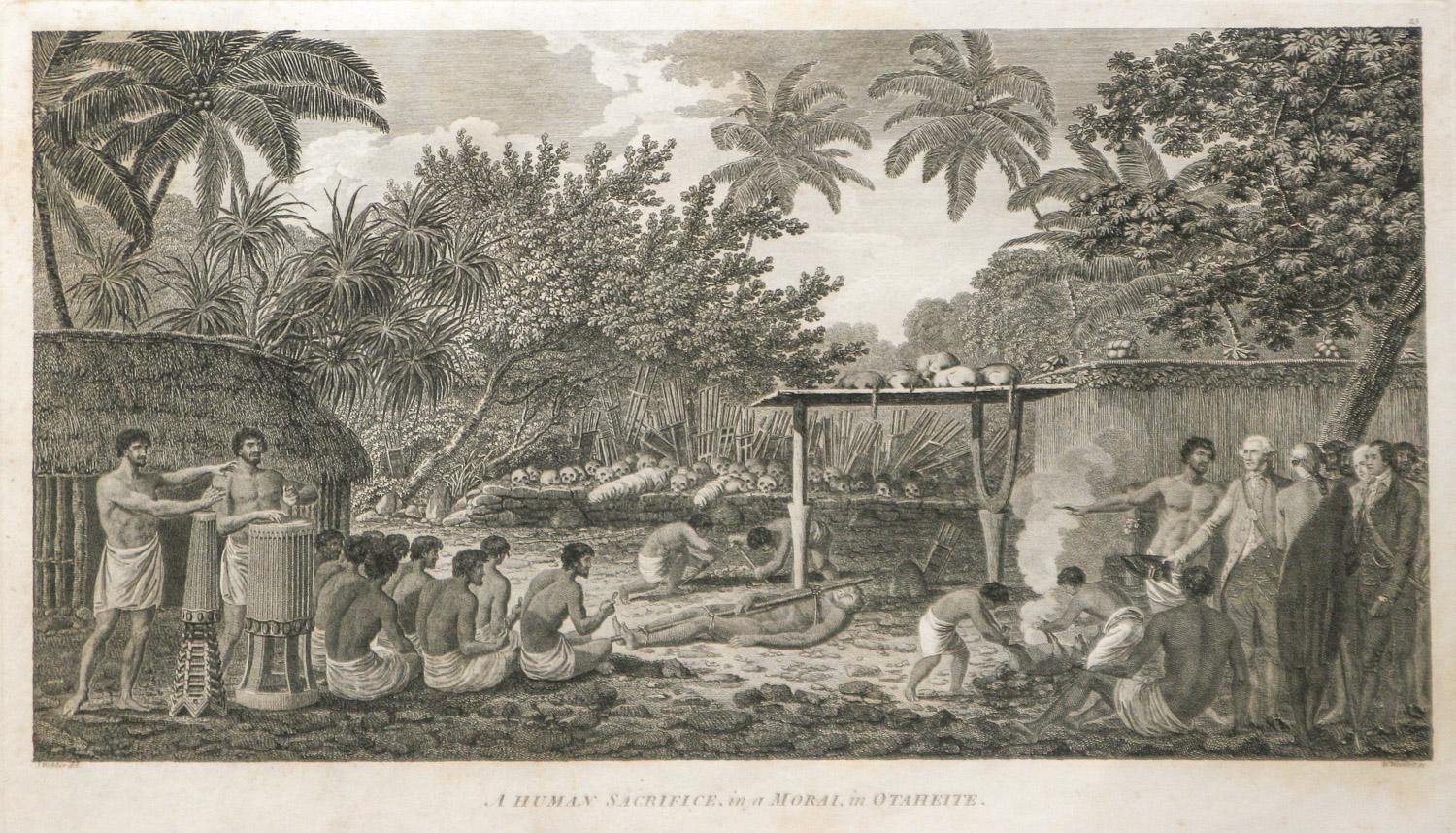
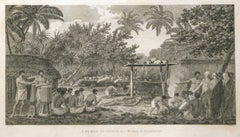
A Human Sacrifice, in a Morai, in Otaheite (Tahiti) 1784 James Cook Final Voyage
By John Webber
Located in Paonia, CO
A Human Sacrifice in a Morai in Otaheite (Tahiti) 1784 by John Webber is from the First Edition Atlas Accompanying Capt. James Cook and King; Third and Final Voyage of Captain...
Category
1780s Realist Figurative Prints
Materials
Engraving
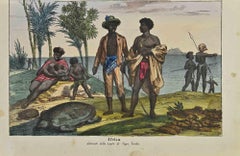
Ancient African Customs - Lithograph by Auguste Wahlen - 1844
Located in Roma, IT
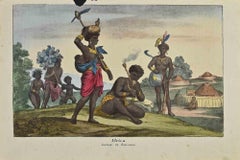
Africa is a lithograph realized by Auguste Wahlen in 1844.
Hand colored.
Good condition.
At the center of the artwork is the original title "Africa" and subtitle "Abitanti delle i...
Category
1840s Modern Figurative Prints
Materials
Lithograph
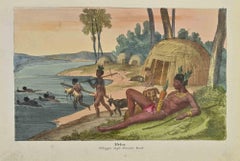
Ancient African Customs - Lithograph by Auguste Wahlen - 1844
Located in Roma, IT
Ancient African Customs is a lithograph made by Auguste Wahlen in 1844.
Hand colored.
Good condition.
At the center of the artwork is the original title "Africa" and subtitle "Vil...
Category
1840s Modern Figurative Prints
Materials
Lithograph
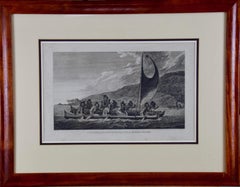
Sandwich Islands Canoe (Hawaii): Framed 18th C. Engraving Captain Cook
s Journal
By John Webber
Located in Alamo, CA
"A Canoe of the Sandwich Islands, the Rowers Masked" is an engraving created by Charles Grignion, from a drawing by John Webber (1752-1793), who was the artist on Captain James Cook's 3rd and final voyage of discovery. It is Plate 65 in the atlas of "A Voyage to the Pacific Ocean Undertaken by the Command of His Majesty, for Making Discoveries in the Northern Hemisphere", the official British Admiralty sanctioned journal published upon completion of the voyage in London in 1784 by Strahan & Cadell.
This famous image of ten Hawaiian rowers transporting a priest who is carrying a feather-covered image of Kukailimoku, the Hawaiian god of war. The priests and paddlers are all wearing gourd masks in their double-hulled canoe with an upright lateen woven sail. Each hull was shaped from a single large Koa log harvested from island rainforests, where they were carved before being transported to the coast.
This engraving is presented in a Koa wood frame and a white mat. There are occasional faint spots, but the print is otherwise in very good condition. Koa is the same wood as was used to make the canoe. Koa wood is legendary in Hawaii. Not only is this amazing wood native to Hawaii, but it is known for the deep rich colors and varied grain pattern. Koa has an honored heritage in Hawaii and is highly revered and sacred. The word “koa” means “warrior” in Hawaiian. The warriors of King Kamehameha the Great, created canoes and weapons from a wood plentiful on the Big Island of Hawaii. This wood became synonymous with the warriors themselves, and it became known as koa. The frame measures 20.75" high, 26.75" wide and 0.88" deep.
There are three other engravings listed from the official journal of Captain Cook's 3rd voyage available that are presented in identical Koa wood frames and mat (LU117324682022, LU117324684052, LU117324684062). They would make a wonderful grouping for a display of 2, 3 or 4 prints. A discount is available for a grouping depending on the number of items included.
Hawaii was discovered by Captain Cook (1728-1779) during this voyage. Hawaii was originally called The Sandwich Islands in honor of The Earl of Sandwich...
Category
1780s Landscape Prints
Materials
Engraving
Ancient African Customs - Lithograph by Auguste Wahlen - 1844
Located in Roma, IT
Ancient African Customs is a lithograph realized by Auguste Wahlen in 1844.
Hand colored.
Good condition.
At the center of the artwork is the original title "Africa" and subtitle ...
Category
1840s Modern Figurative Prints
Materials
Lithograph
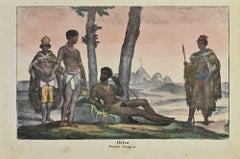
Ancient African Customs - Lithograph by Auguste Wahlen - 1844
Located in Roma, IT
Ancient African Customs is a lithograph made by Auguste Wahlen in 1844.
Hand colored.
Good condition.
At the center of the artwork is the original title "Africa" and subtitle "Cos...
Category
1840s Modern Figurative Prints
Materials
Lithograph