Items Similar to Social Hierarchy of the Nagai Tartars - An Etching by Geissler, ca. 1800
Want more images or videos?
Request additional images or videos from the seller
1 of 6
Social Hierarchy of the Nagai Tartars - An Etching by Geissler, ca. 1800
$450.38
$562.9720% Off
£336.89
£421.1120% Off
€376
€47020% Off
CA$620.60
CA$775.7420% Off
A$682.19
A$852.7320% Off
CHF 358.14
CHF 447.6820% Off
MX$8,111.68
MX$10,139.6020% Off
NOK 4,599.39
NOK 5,749.2420% Off
SEK 4,189.55
SEK 5,236.9320% Off
DKK 2,865.51
DKK 3,581.8920% Off
About the Item
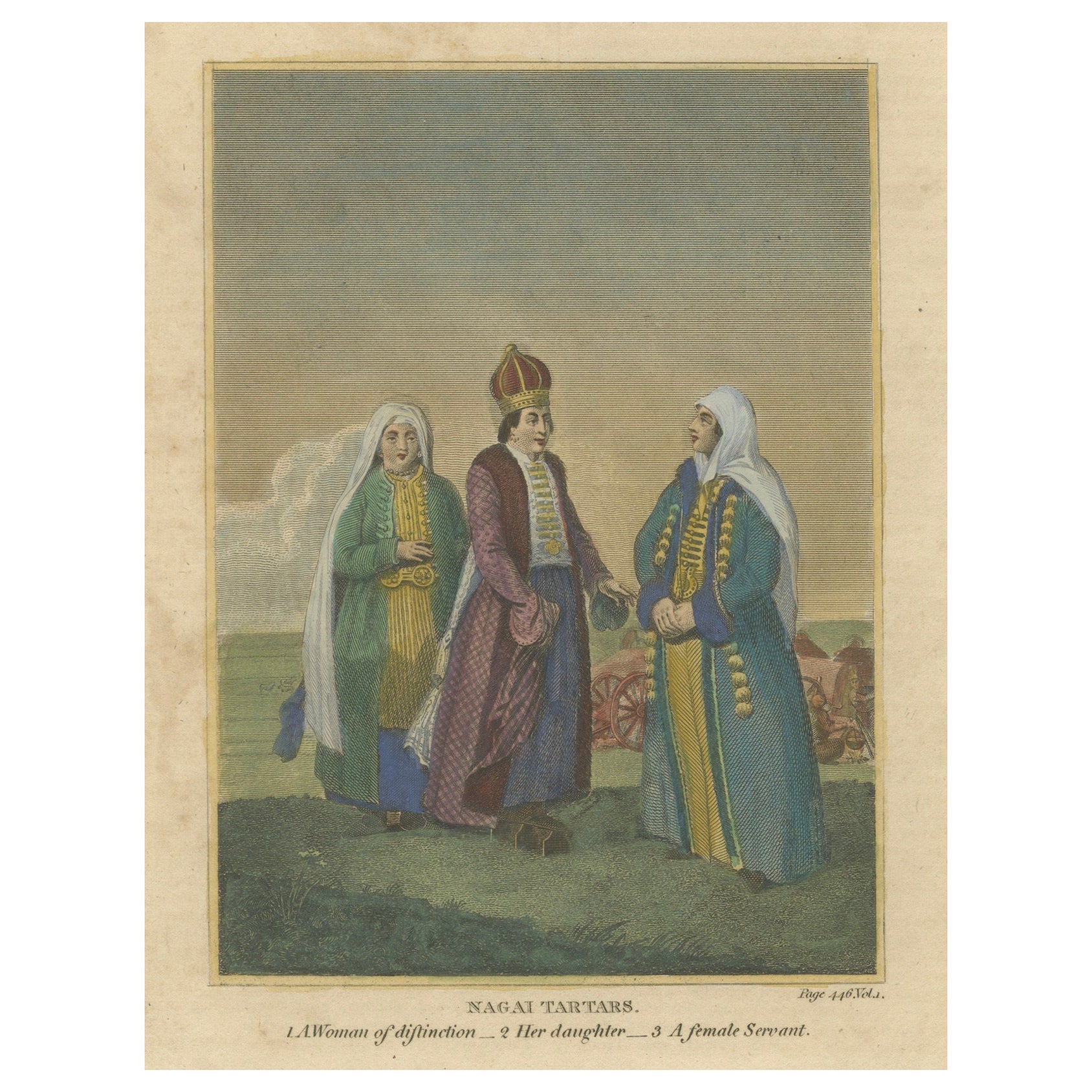
Title: "Social Hierarchy of the Nagai Tartars - An Etching by Geissler, ca. 1800"
Description: This etching by Christian Gottfried Heinrich Geissler, titled "Nagai Tartars," is a fine representation of the German School from around the year 1800.
It portrays three figures, labeled to indicate their social standing: a woman of distinction, her daughter, and a female servant, numerically annotated as 1, 2, and 3 respectively. The detailed depiction captures the intricate attire and cultural fashion of the period, reflecting the societal structure and familial roles within the Nagai Tartar community.
The women are adorned in traditional garments that signify their status and identity, while the setting suggests a backdrop typical of their environment, providing a glimpse into the life of the Tartar people at the turn of the 19th century.
The Nagai or Nogai Tartars were part of the Nogai Horde, a confederation that occupied the Pontic–Caspian steppe from about 1500 until they were displaced in the 17th century by the Kalmyks and Russians. They were named after Nogai Khan, a Mongol ruler, and were divided into groups such as the Budjak and Yedisan in the area north of the Black Sea. The Nogais were known to be pastoral nomads who grazed sheep, horses, and camels and were also involved in trade, raiding, and tribute. They spoke a form of Kypchak Turkic and were Muslim, although their religious institutions were not strongly developed. The societal structure of the Nogais was quite fluid, with personal prestige playing a significant role in their political organization. They were historically known for their slave raids across Eastern Europe, which were an important part of their economy.
The term "Tatar" broadly refers to Turkic-speaking peoples, mainly found in west-central Russia and other former Soviet Republics. It was originally used to refer to various nomadic groups from the vast Central and Northern Asian region then known as Tartary. The largest Tatar group is the Volga Tatar from the Volga region in Russia. There are several Tatar groups, including the Volga Tatars and the Crimean Tatars, with the latter being subdivided into groups such as the Tats and the Nogai.
The Tatars have a rich history that dates back to the 5th century when nomadic tribes in northeastern Mongolia around Lake Baikal were first recognized. They became part of Genghis Khan's army in the 13th century and were known to Europeans as Tatars. Following the disintegration of the Mongol Empire, the Tatars were particularly associated with the western part of the empire, the Golden Horde, which included most of European Russia. Throughout the centuries, they have developed a complex social organization and were known for their craftsmanship and trading skills.
The engraving "Nagai Tartars" is potentially from the English edition of Peter Simon Pallas's "Travels through the southern provinces of the Russian Empire," created around 1799-1801. It was produced by the German artist and printmaker Christian Gottfried Heinrich Geissler. More research needed.
- Dimensions:Height: 10.44 in (26.5 cm)Width: 7.88 in (20 cm)Depth: 0 in (0.02 mm)
- Materials and Techniques:Paper,Engraved
- Period:
- Date of Manufacture:circa 1800
- Condition:Very good. Light foxing, mainly outside the image, but overall very good, considering its age. Please study the images carefully.
- Seller Location:Langweer, NL
- Reference Number:Seller: BG-13597-131stDibs: LU3054337816572
About the Seller
5.0
Recognized Seller
These prestigious sellers are industry leaders and represent the highest echelon for item quality and design.
Platinum Seller
Premium sellers with a 4.7+ rating and 24-hour response times
Established in 2009
1stDibs seller since 2017
2,800 sales on 1stDibs
Typical response time: <1 hour
- ShippingRetrieving quote...Shipping from: Langweer, Netherlands
- Return Policy
More From This Seller
View AllNagai Tartars – Traditional Dress of Women of Distinction, c.1810 Engraving
Located in Langweer, NL
Nagai Tartars – Traditional Dress of Women of Distinction, c.1810
This delicately hand-colored copper engraving titled Nagai Tartars portrays three women of the Nogai Tatar ethnic g...
Category
Antique Late 18th Century Dutch Prints
Materials
Paper
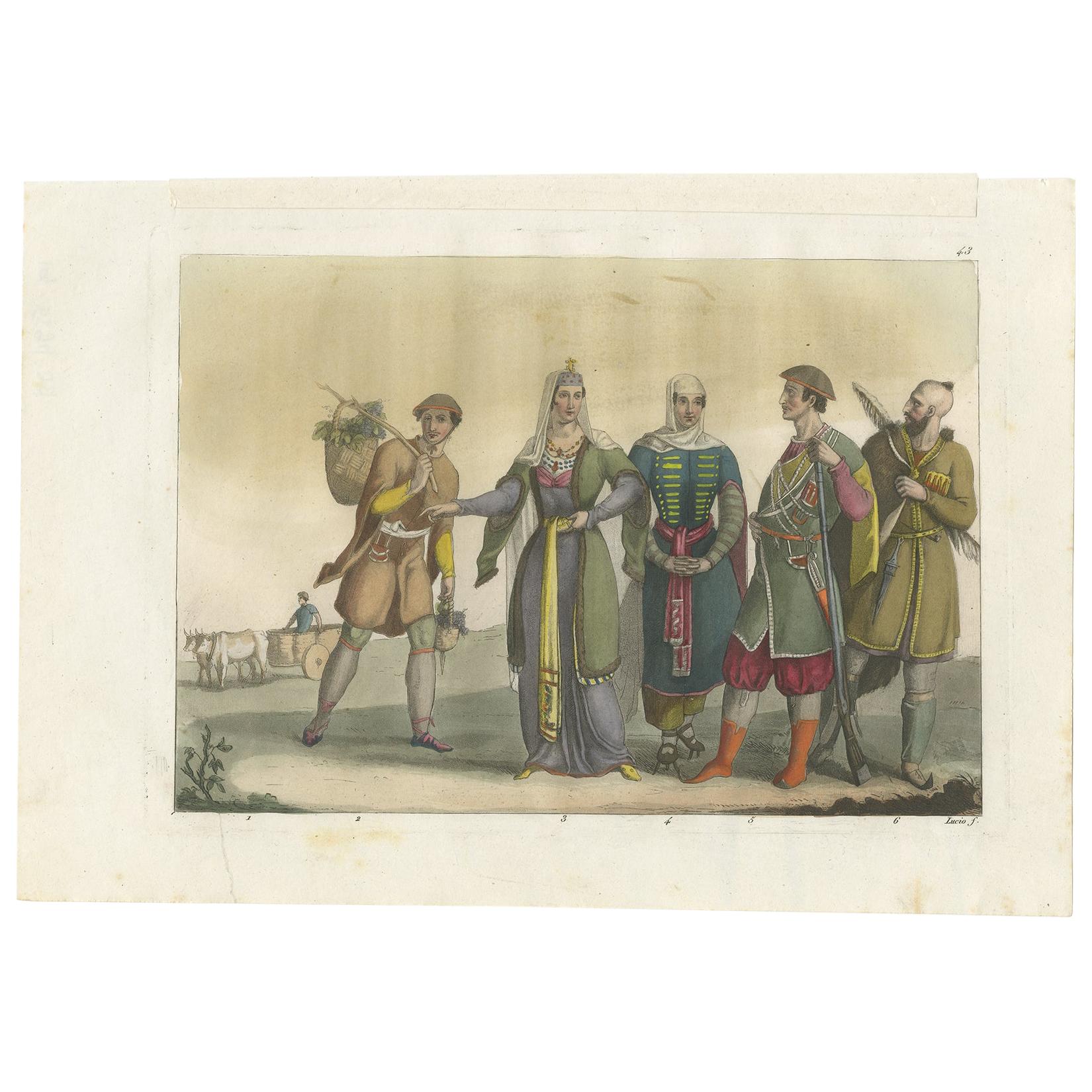
Antique Print of Natives of Imereti and Other People by Ferrario,
1831
Located in Langweer, NL
Original antique print of natives of Imereti and other people. This print originates from 'Costume Antico e Moderno: Palestine, China, India, Oceania' by Ferrario. Published 1831.
Category
Antique Mid-19th Century Prints
Materials
Paper
$287 Sale Price
20% Off
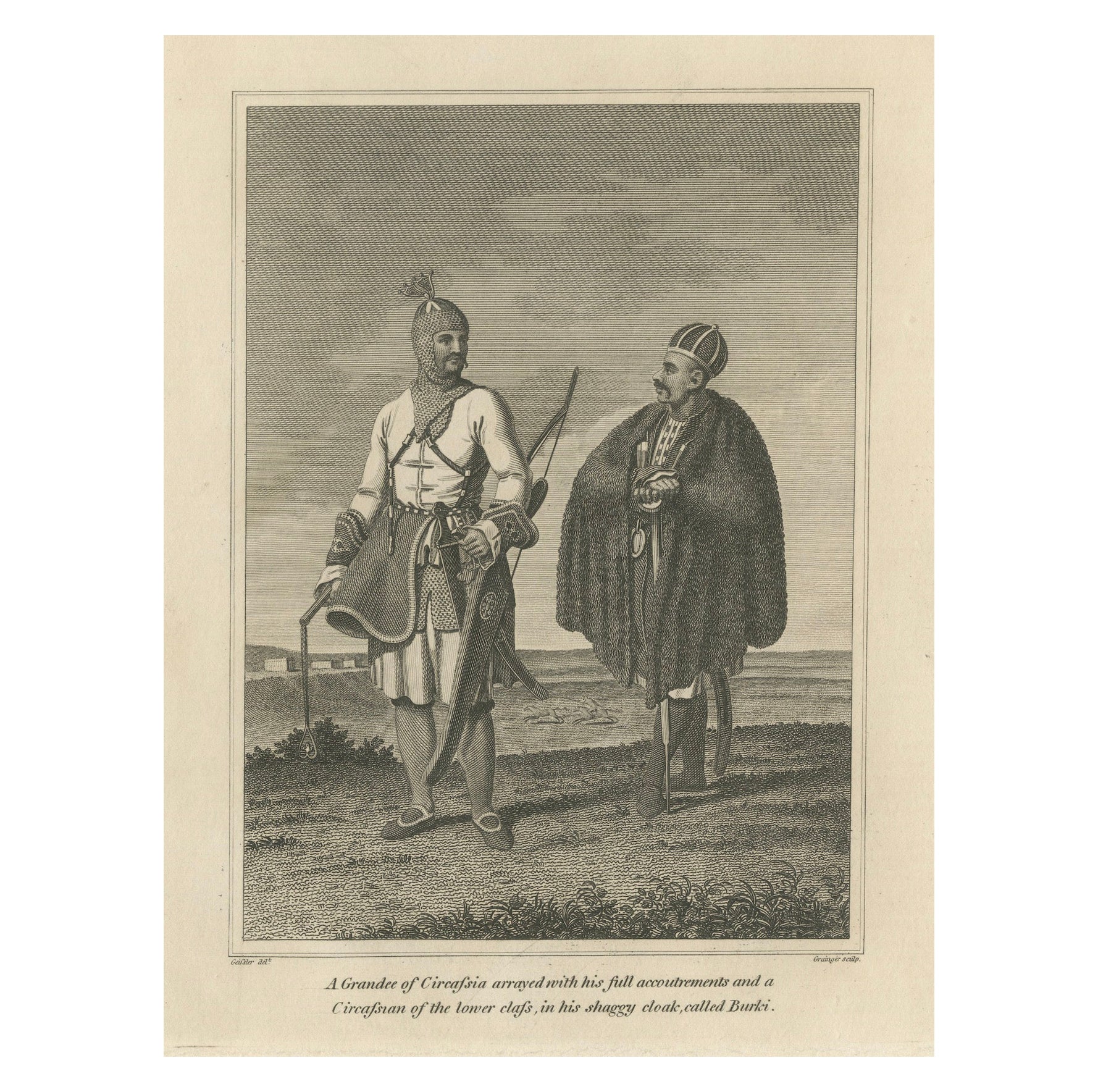
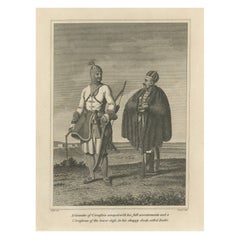
Circassian Grandee and Commoner – An 1800 Etching by Geissler
Located in Langweer, NL
Etching and engraving entitled 'A Grandee of Circassia arrayed with his full accoutrements and a Circassian of the lower class, in his shaggy cloak, called Burki'. Lettered 'Geissler...
Category
Antique Early 1800s Prints
Materials
Paper
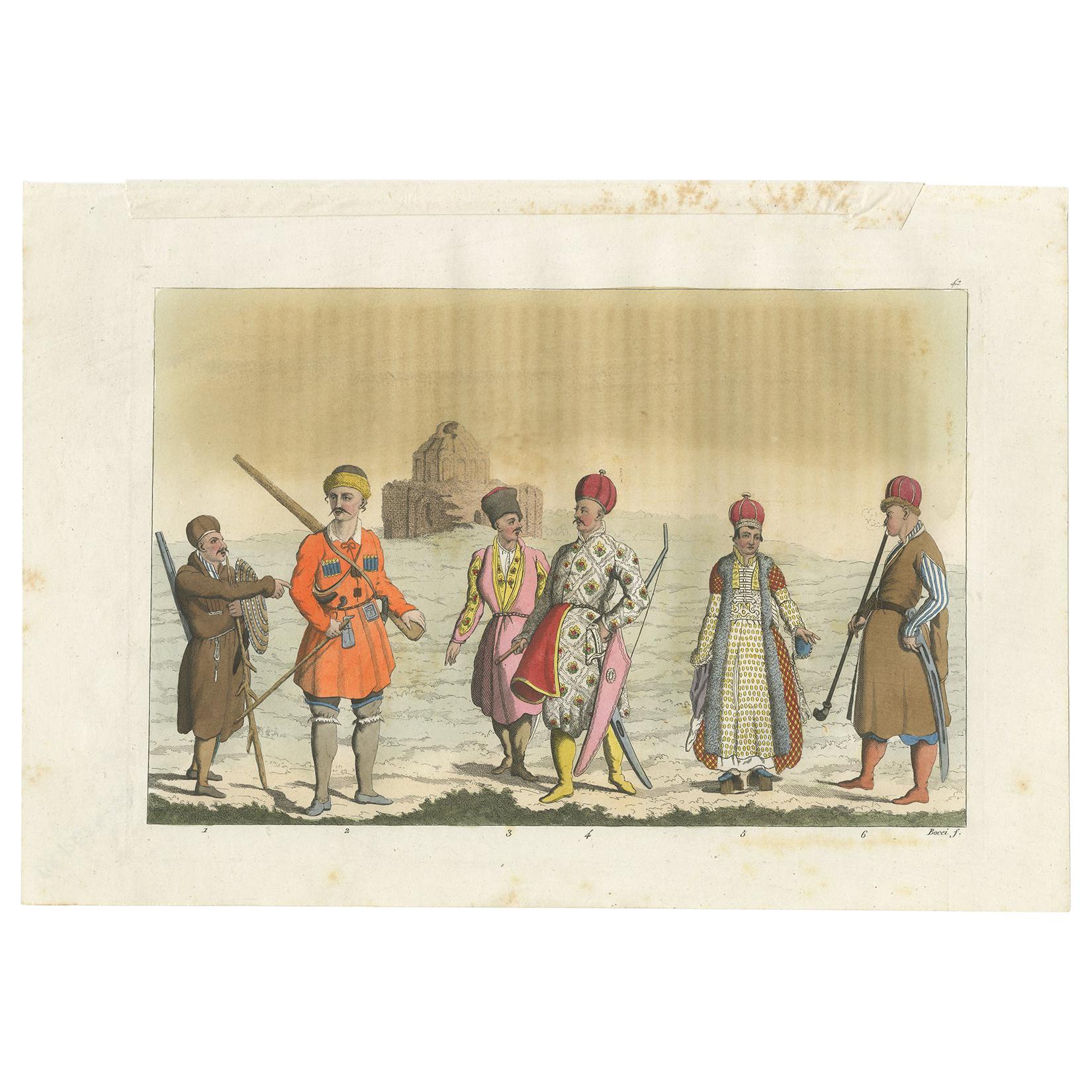
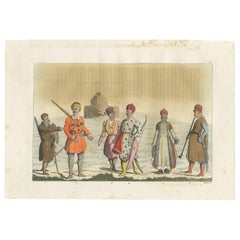
Antique Print of Ingush and Other People by Ferrario
1831
Located in Langweer, NL
Original antique print of Ingush and other people. This print originates from 'Costume Antico e Moderno: Palestine, China, India, Oceania' by Ferrario. Published 1831.
Category
Antique Mid-19th Century Prints
Materials
Paper
$287 Sale Price
20% Off
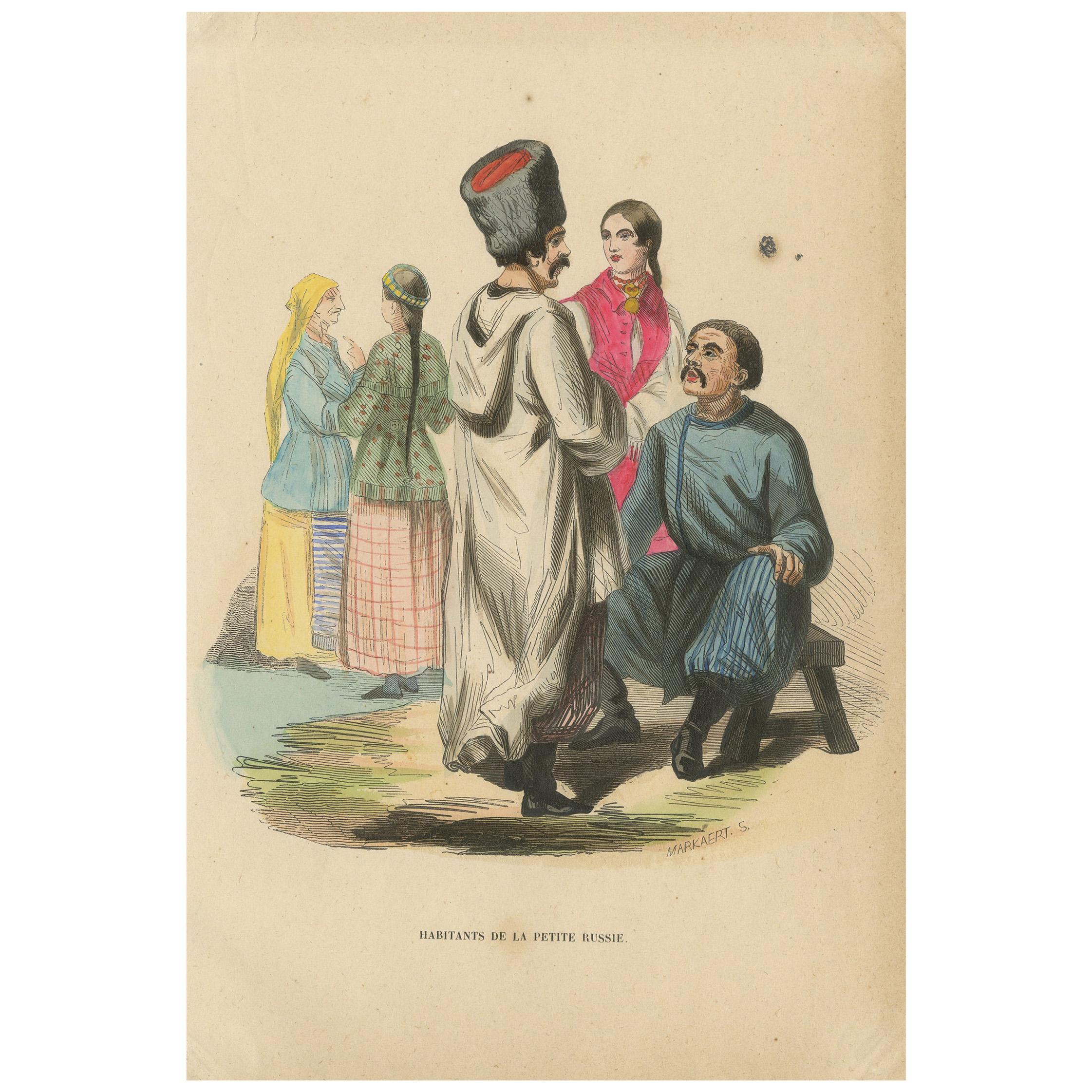
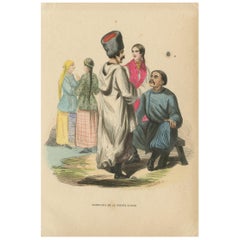
Antique Costume Print of Inhabitants of Little Russia by Wahlen, 1843
Located in Langweer, NL
Antique costume print titled 'Habitants de la petite Russie'. Original antique print of Little Russia. Little Russia, sometimes Little Rus is a geographical and historical term used ...
Category
Antique Mid-19th Century Prints
Materials
Paper
$95 Sale Price
20% Off
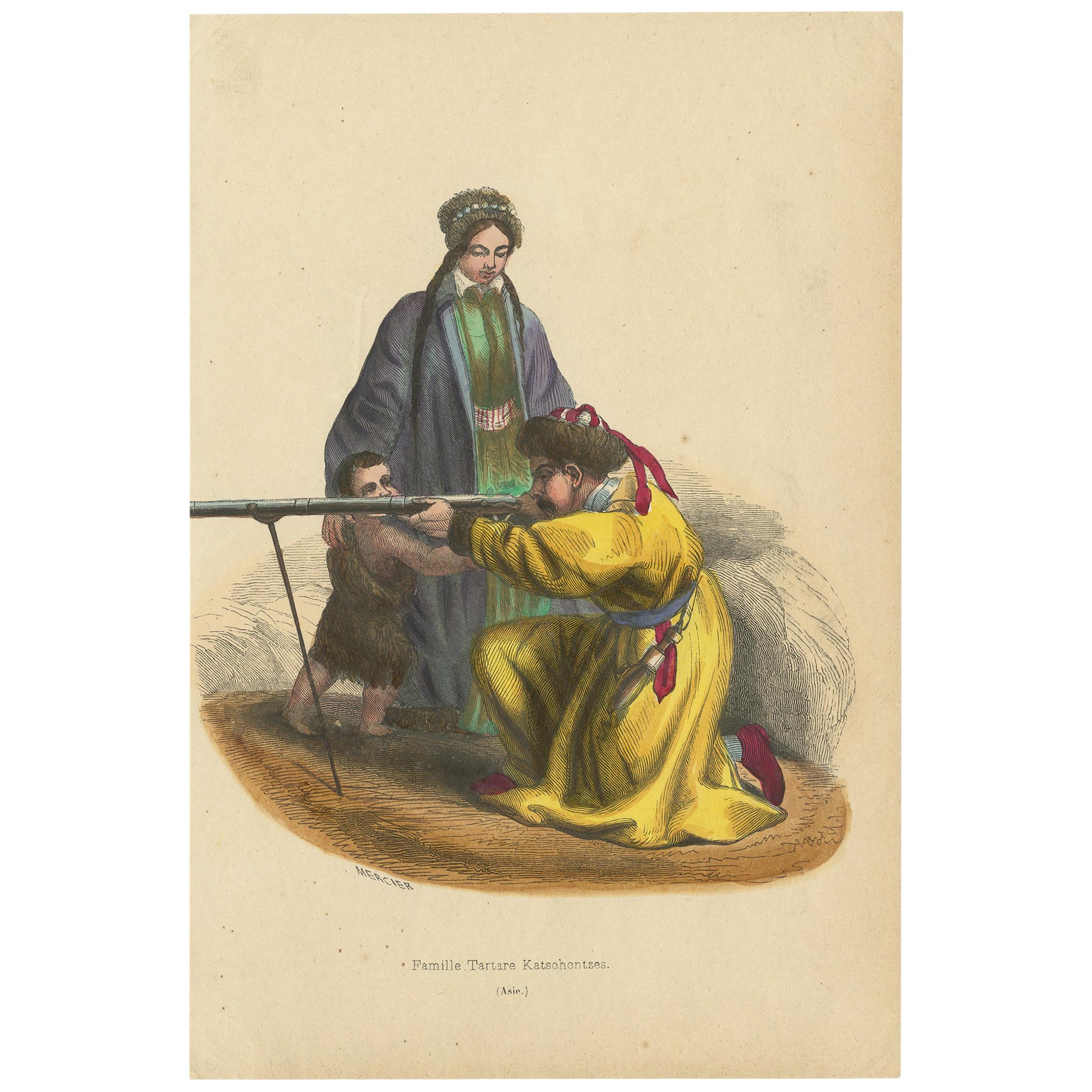
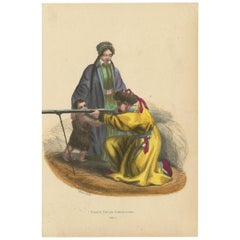
Antique Costume Print of a Tatar Family by Wahlen,
1843
Located in Langweer, NL
Antique costume print titled 'Famille Tartare Katschentzes'. Original antique print of a Tatar family. This print originates from 'Moeurs, usages et costumes de tous les peuples du m...
Category
Antique Mid-19th Century Prints
Materials
Paper
$95 Sale Price
20% Off
You May Also Like
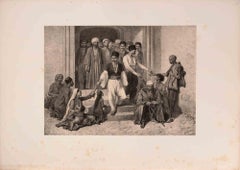
Tatars Faisant des Aumônes - Lithograph by Auguste Raffet - 1840
Located in Roma, IT
Lithograph on paper realized by Auguste Raffet in 1840.
It is part of the suite "Crimée".
The lithograph shows a group of Tatar men exiting a mosque or religious building, surround...
Category
1840s Modern Figurative Prints
Materials
Lithograph
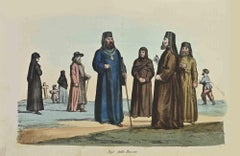
Popes of Russia - Lithograph by Auguste Wahlen - 1844
Located in Roma, IT
Popes of Russia is a lithograph made by Auguste Wahlen in 1844.
Hand colored.
Good condition.
At the center of the artwork is the original title "Popi della Russia".
The work is ...
Category
1840s Modern Figurative Prints
Materials
Lithograph
Famille Tatar en Crimée - Lithograph by Auguste Raffet - 1839
Located in Roma, IT
Etching on wove paper.
Signed and dated in the plate lower left.
This detailed etching by Auguste Raffet, one of the foremost French lithographers and etchers of the 19th century, ...
Category
1830s Modern Figurative Prints
Materials
Lithograph
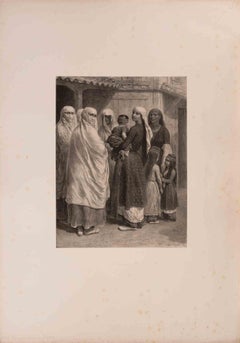
Femmes Tatars en Bessarabie - Lithograph by Auguste Raffet - 1842
Located in Roma, IT
Lithograph on paper realized by Auguste Raffet in 1842.
It is part of the suite "Crimée".
The scene depicts a group of Tatar women, standing together in a courtyard-like space.
Th...
Category
1840s Modern Figurative Prints
Materials
Lithograph
Théâtre des Variétés - Original Etching on Paper - 1820
By Godefroy Engelmann
Located in Roma, IT
Théâtre des Variétés is an original Hand-colored etching on paper realized in 1820 ca. and attributed to the french engraver Godefroy Engelmann.
With the description on the lower an...
Category
1820s Modern Figurative Prints
Materials
Etching
Paysans Russes (Contreforts d’Asie) - Lithograph by Auguste Raffet - 1830s
Located in Roma, IT
Lithograph on wove paper, realized between 1837 and 1845.
Signed in the plate.
Mild foxing in the margins and light edge toning; image field crisp, rich in tonal contrast and well ...
Category
1830s Modern Figurative Prints
Materials
Lithograph
More Ways To Browse
Oyster Burl
Painted Black Lacquer Chest
Painted Red Distressed
Paradis Paris
Pea Pod
Persian Calligraphy
Perugia Italy
Pink Glass Bird
Plaster Angels
Polychrome Chest Of Drawers
Portuguese Majolica Plate
Poseidons Trident
Purple Pedestal
Rabbit Chair By Stefano Giovannoni
Rabbit Figurine
Raku Tea
Ram Skull
Red Crystal Bowl