Items Similar to St. Anthony of Padua, c.1905 German Devotional Chromolithograph with Christ
Want more images or videos?
Request additional images or videos from the seller
1 of 10
St. Anthony of Padua, c.1905 German Devotional Chromolithograph with Christ
$588.44
£435.83
€490
CA$804.96
A$876.04
CHF 464.39
MX$10,539.42
NOK 5,889.93
SEK 5,388.87
DKK 3,733.88
About the Item
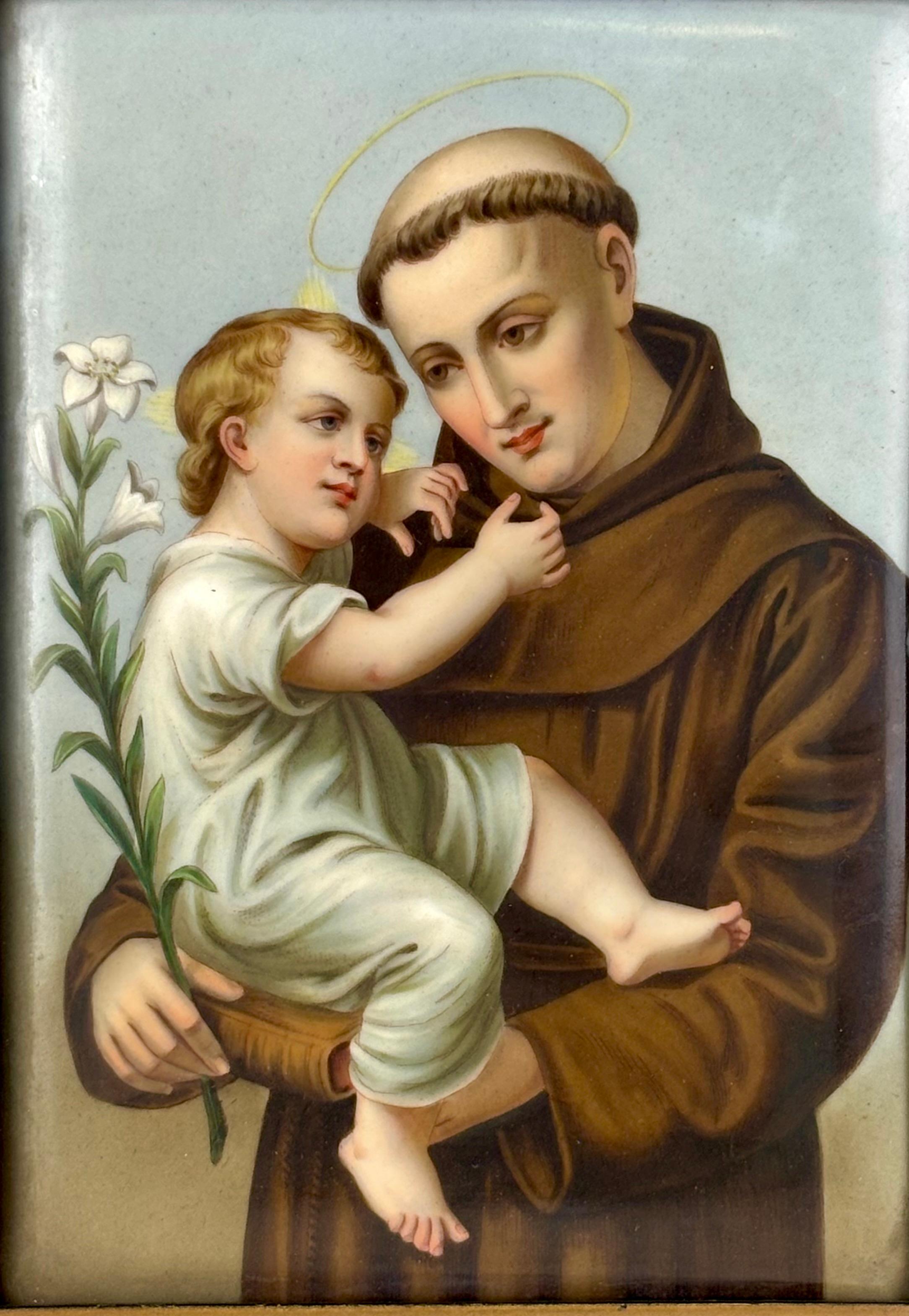
St. Anthony of Padua with Infant Christ, c.1905 German Chromolithograph (Seiberl)
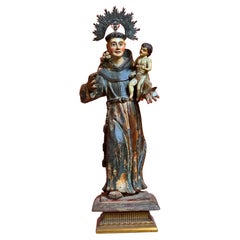
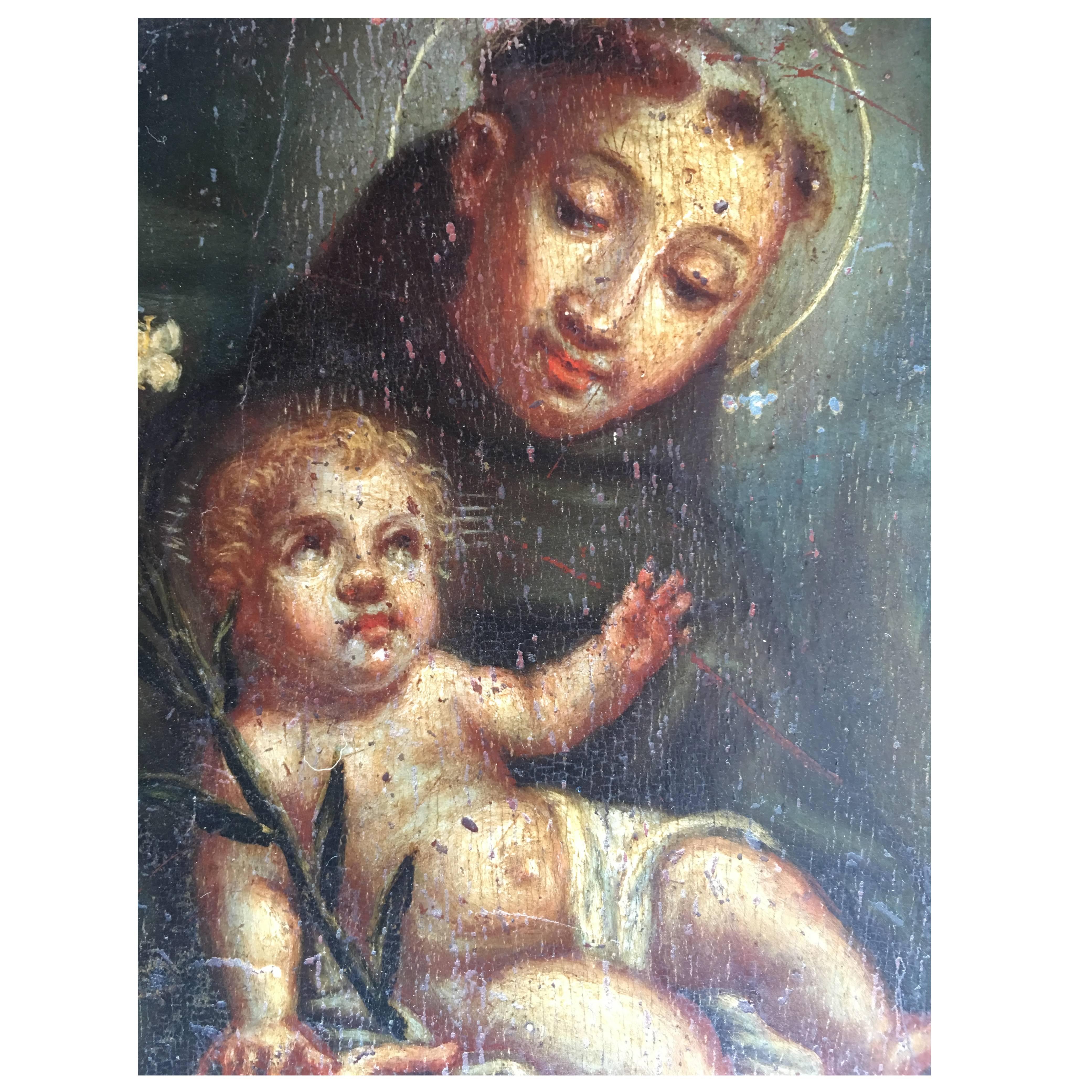
This beautiful early 20th-century chromolithograph of St. Anthony of Padua holding the Infant Christ is an authentic German devotional print produced around 1905–1925. Rendered after an artwork by Seiberl, a known religious painter active in Southern Germany, the print captures the characteristic softness, luminous colour transitions, and gentle emotional tone that made his compositions widely used in Catholic devotional imagery. The scene depicts St. Anthony embracing the Christ Child, both haloed, surrounded by lilies, roses, and soft landscape tones. This tender, intimate moment – with the Child Jesus touching the saint’s face – is one of the most iconic depictions of St. Anthony in Catholic art.
The multilingual caption along the lower margin identifies the print for international Catholic distribution: “Hl. Antonius von Padua. St. Anthony of Padua. St. Antoine de Padoue. S. Antonio di Padova. S. Antonio de Padua. Święty Antoni. Paduai Szt. Antal.” This reflects the global reach of German devotional publishers, who supplied churches, monasteries, and Catholic households throughout Europe and the Americas. The imprimatur line reads: “Imprimi permittitur. Ordinariatus episcopalis Limburgensis.” This confirms official ecclesiastical approval from the Episcopal Ordinariate of Limburg, a detail found only on genuine early 20th-century Catholic prints. The note “Printed in Germany” indicates production by a major German chromolithographic press, likely based in Munich, Cologne, or Stuttgart.
This work is unquestionably an original chromolithograph, not a modern reproduction. The image displays the telltale characteristics of true stone-layered chromolithography: velvety colour fields, soft gradients without digital dots, and a matte surface typical of early 20th-century lithographic stock. The fine stippled texture of the pigments, the crisp multilingual caption, the Seiberl signature, and the period imprimatur all confirm its authenticity. These devotional prints were highly valued in Catholic homes and parish buildings and were often hung near family altars; surviving examples in such vivid colour and clean condition are increasingly rare.
Condition Report: Very good condition. Colours strong and unfaded. Slight age toning to extreme margins and a few minor handling marks consistent with age. No tears, losses, creases, or repairs observed. Bottom captions and imprint remain sharp and fully legible.
Ideal for framing in a warm gilded or walnut frame to complement the luminous haloes and the warm brown tones of the habit. A cream or ivory mat enhances the devotional atmosphere and highlights the soft greens and floral details. A slim black frame with a wide mat gives a more contemporary presentation while preserving the spiritual character of the image.
Technique: Chromolithograph
Maker: German Devotional Press, after Seiberl, printed in Germany, c.1905
holy family
st anthony of padua
saint anthony print
seiberl
german devotional art
catholic art
religious art
devotional print
chromolithograph
antique lithograph
printed in germany
limburg imprimatur
imprimi permittitur
christ child
madonna and child
marian art
christian iconography
sacred art
19th century religious style
early 20th century chromolithograph
fine chromolitho
religious ephemera
padua
infant jesus
st anthony holding child
catholic devotional image
german lithograph
antique christian art
- Dimensions:Height: 20.87 in (53 cm)Width: 15.6 in (39.6 cm)Depth: 0.01 in (0.2 mm)
- Materials and Techniques:
- Place of Origin:
- Period:
- Date of Manufacture:ca.1905
- Condition:Very good condition. Colours strong and unfaded. Slight age toning to extreme margins and a few minor handling marks consistent with age. No tears, losses, creases, or repairs observed. Bottom captions and imprint remain sharp and fully legible.
- Seller Location:Langweer, NL
- Reference Number:Seller: BG-14165-11stDibs: LU3054347801862
About the Seller
5.0
Recognized Seller
These prestigious sellers are industry leaders and represent the highest echelon for item quality and design.
Platinum Seller
Premium sellers with a 4.7+ rating and 24-hour response times
Established in 2009
1stDibs seller since 2017
2,813 sales on 1stDibs
Typical response time: 1 hour
- ShippingRetrieving quote...Shipping from: Langweer, Netherlands
- Return Policy
More From This Seller
View AllSt. Aloysius Gonzaga, German Devotional Chromolithograph, ca.1900
Located in Langweer, NL
St. Aloysius Gonzaga, c.1900 German Devotional Chromolithograph (Printed in Germany)
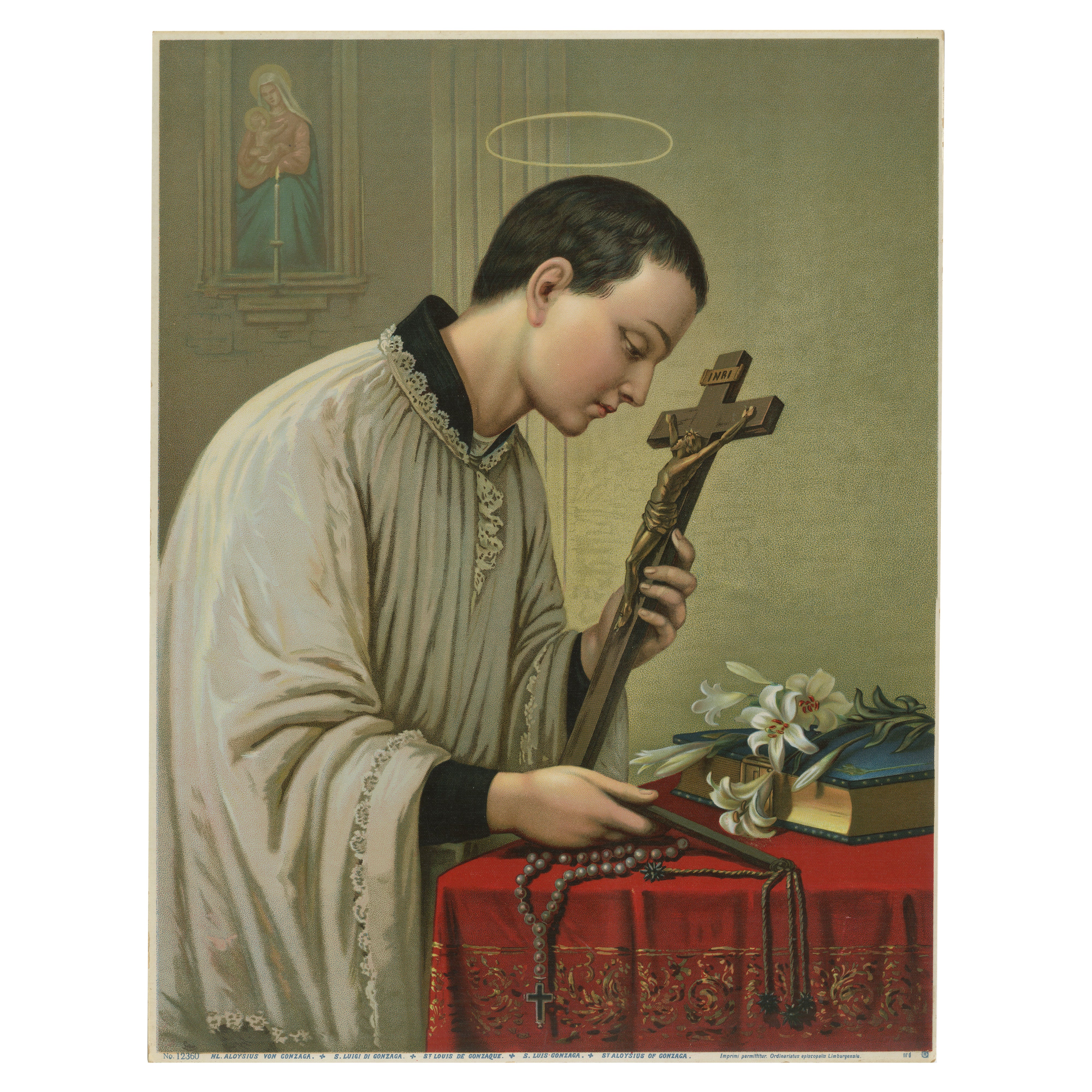
This early 20th-century German chromolithograph presents a serene and contemplative portrait of St. Aloysius Gonzaga, one of the most revered saints of the Catholic Church and patron saint of youth and purity. Produced around 1900 by a major German devotional press, the print displays the refined craftsmanship and rich colouring typical of the period’s finest chromolithographic work. The composition shows the young saint in quiet adoration of the crucifix, his head tilted in prayerful devotion, surrounded by classic symbols of sanctity and purity: lilies, rosary beads, devotional books, and the deep red cloth of an altar.
Unlike the more dramatic depictions from the same era, this version places Aloysius within a softly rendered church interior, with a framed image of the Virgin and Child visible behind him. His vestments are delicately modelled, with lace edging and soft shading achieved through multiple lithographic stones, each layer adding depth and texture to the fabric. The gentle gradation of colour in the background and the luminous golden halo around the saint reveal the technical mastery of German chromolithographers working circa 1900–1915.
The lower margin includes multilingual captions—“Hl. Aloysius von Gonzaga. St. Luigi di Gonzaga. St. Louis de Gonzague. St. Luis Gonzaga. St. Aloysius of Gonzaga.”—reflecting the widespread international distribution of German devotional prints. The imprimatur line, “Imprimi permittitur. Ordinariatus episcopalis Limburgensis,” confirms official Church approval for its publication. The imprint “Printed in Germany” situates the work in one of the major German centres of religious chromolithography, likely Munich or Cologne, where high-quality devotional images were produced for Catholic communities across Europe and the Americas.
This print is unquestionably an original chromolithograph. The velvety colour fields, stippled pigment textures, soft transitions, crisp typesetting, and characteristic matte paper all confirm authentic stone-based printing rather than modern offset or digital reproduction. Prints of St. Aloysius from this period were commonly displayed in Catholic schools, parishes, and youth chapels, making high-quality surviving examples increasingly desirable for both devotional use and collectors of sacred art.
Conditon Report: Very good condition. The colours remain bright and true, with light and even toning at the outer margins and minor handling marks typical of age. No tears, losses, creases, or repairs. The plate text and imprimatur remain sharp and fully legible.
Tips for Framing: Ideal for framing in a dark walnut or gilded frame to complement the warm reds and golds of the composition. A cream or ivory mat helps emphasize the saint’s pale vestments and the purity symbolized by the lilies. For a more modern presentation, a slim black frame with a wide mat creates elegant contrast while preserving the devotional atmosphere.
Technique: Chromolithograph
Maker: German Devotional Press, printed in Germany, c.1900
st aloysius gonzaga
saint aloysius
aloysius print
catholic saint art
devotional art
religious art
german chromolithograph
printed in germany
antique lithograph
chromolithograph
imprimi permittitur
church imprimatur
holy youth
lilies of purity
crucifix devotion
altar scene
early 20th century religious print
german devotional art
fine chromolitho
religious ephemera
antique christian art
Category
Early 20th Century German Prints
Materials
Paper
St Joseph and Child Jesus with Lily, Antique German Chromolithograph c.1900
Located in Langweer, NL
St Joseph and Child Jesus with Lily, Antique German Chromolithograph c.1900
This beautifully composed late 19th–early 20th century German chromolithograph presents a tender devotional scene of Saint Joseph with the Child Jesus, one of the most beloved themes in Catholic sacred imagery. Saint Joseph is seated in a humble workshop interior, gently resting his hand on his chest while the Christ Child offers him a white lily, the universal symbol of purity, obedience, and divine election. Both figures are encircled by radiant halos, reinforcing the sacred intimacy of this quiet, fatherly moment.
The composition is rich in symbolic detail: the carpenter’s tools behind Joseph reference his earthly labor and humility, while the soft pastoral landscape visible through the opening suggests God’s providence beyond the domestic sphere. The infant Christ, rendered with luminous skin tones and expressive gaze, embodies both innocence and divine authority. The lily rises vertically between them as a visual axis of spiritual virtue, creating a powerful yet gentle devotional message.
This print was produced using true chromolithography in Germany around 1900, a technique requiring multiple lithographic stones—one for each color layer. The softness of the tonal transitions, the saturated yet harmonious palette, and the velvety matte surface all confirm authentic period production. The lower margin bears the multilingual title “Hl. Joseph / St. Joseph / S. Giuseppe / S. José / Swięty Józef,” as well as the ecclesiastical approval line “Imprimi permittitur. Ordinariatus episcopalis Limburgensis,” confirming official Church authorization for devotional distribution. The imprint “Printed in Germany” further supports its origin within the great German religious printing houses of the era.
This type of high-quality devotional chromolithograph was originally intended for Catholic homes, chapels, schools, and religious institutions. Surviving examples in strong condition are now increasingly sought after by collectors of sacred art, Christian iconography, and historical devotional imagery.
Condition report
Very good condition. Strong, unfaded colors with excellent contrast. Light natural toning to the margins. Minor handling marks consistent with age. No tears, creases, restorations, or losses observed. The printed text and imprimatur remain crisp and fully legible.
Framing tips
This print presents beautifully in a warm gilt or dark walnut frame with a soft ivory mat to enhance the golden halos and the warm burgundy and olive tones of Joseph’s garments. For a more contemporary devotional presentation, a matte black frame with wide museum-style matting works equally well.
Technique: Chromolithograph
Maker: German devotional press, printed in Germany, circa 1900
SEO keyword block:
saint joseph
st joseph with child
holy family art...
Category
Antique Late 19th Century German Prints
Materials
Paper

St. Aloysius Gonzaga, Chromolithograph with Crown, Skull and Crucifix, 1899
Located in Langweer, NL
Adoration of the Magi, c.1900 German Chromolithograph (Printed in Germany)
This beautiful early 20th-century German chromolithograph depicts the Adoration of the Magi, one of the most cherished subjects in Christian art. Printed around 1900–1920 by a major German devotional press, the work displays the hallmarks of high-quality chromolithographic craftsmanship: deep, luminous color; soft tonal transitions; richly layered stone-based pigments; and a gentle atmosphere that recalls late 19th-century academic religious painting.
The composition presents the Virgin Mary seated with the Christ Child, Joseph beside her, and the Three Kings kneeling in reverence as they present their gifts of gold, frankincense, and myrrh. A young attendant appears in the doorway holding another offering. The figures are rendered with delicately modeled expressions, soft haloes, and meticulously detailed robes—particularly the embroidered white garment of the kneeling king and the golden cloak of the standing monarch. These chromatic effects were achieved through multiple lithographic stones, a technique that reached its peak among German devotional publishers during this period.
The multilingual caption along the lower margin identifies the print for international Catholic distribution: “Anbetung der Könige. Adoration of the Three Kings. L’adoration des rois mages. L’adorazione dei Magi. La adoración de los Reyes Magos. Pokłon Trzech Króli.” This reflects the broad export networks of German publishers who supplied churches, monasteries, and private devotional homes throughout Europe and the Americas. The note “Printed in Germany” confirms its origin, consistent with presses in Munich, Dresden, Cologne, and Limburg, known for producing richly colored religious chromolithographs from the late 19th to early 20th century.
This work is unquestionably an original chromolithograph, not a modern reproduction. The image shows true stone-layered color rather than digital or offset dots, and the paper retains the matte texture, subtle toning, and characteristic stippled pigment structure associated with genuine early 20th-century chromolithography. The presence of the multilingual caption, period typography, and the “Printed in Germany” imprint further authenticate the piece.
Condition Report: Very good condition. Colors vivid and unfaded. Minor age toning to outer margins and small handling marks consistent with age. No tears, losses, or repairs observed. The bottom title and imprint text are sharp and fully legible.
Tips for Framing: Ideal for framing in a gilded or walnut frame to complement the warm palette and ceremonial richness of the scene. A cream or ivory mat enhances the devotional character and highlights the luminous tones of the garments. A darker frame with a wide mat can also create a refined, museum-style presentation.
Technique: Chromolithograph
Maker: German Devotional Press, printed in Germany, c.1900
Keyword Block:
adoration of the magi
three kings
epiphany art
christ child
holy family
mary and jesus
st joseph
devotional art
catholic art
religious art
chromolithograph
german chromolithograph
printed in germany
antique lithograph
german devotional print
early 20th century religious print
nativity scene
christian iconography
epiphany print
anbetung der könige
fine chromolitho
religious ephemera
magi kings
christmas art
holy family scene
antique christian art...
Category
Antique Late 19th Century German Prints
Materials
Paper

St Mary Protectress of Innocents, Antique German Chromolithograph c.1900
Located in Langweer, NL
St Mary Protectress of Innocents, Antique German Chromolithograph c.1900
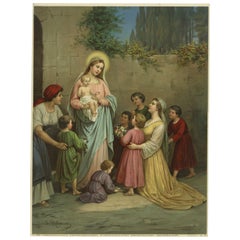
This exceptionally tender and beautifully composed late 19th–early 20th century German chromolithograph depi...
Category
Antique Late 19th Century German Prints
Materials
Paper
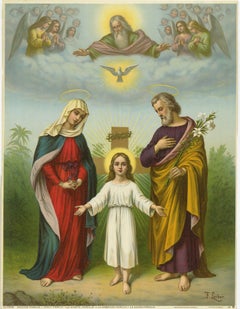
Holy Family with God the Father – Antique German Chromolithograph, 1900
Located in Langweer, NL
Holy Family with God the Father – Antique German Chromolithograph, 1900
This richly symbolic and beautifully composed antique German chromolithograph presents the Holy Family in a r...
Category
Early 20th Century German Prints
Materials
Paper
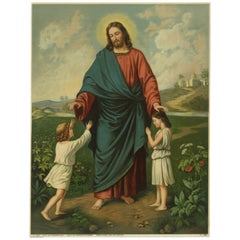
Antique Catholic Print of Jesus Blessing Children – Germany, c. 1890
Located in Langweer, NL
Jesus Blessing the Children – Antique German Catholic Chromolithograph, c. 1890
This beautiful late 19th-century German chromolithograph depicts one of the most tender and beloved scenes in Christian iconography: Jesus blessing the children. Christ stands centrally in a serene pastoral landscape, gently extending his hands in a gesture of protection and compassion, while two children approach Him with trust and reverence. The soft light of the halo frames His head, reinforcing the sacred presence, while the surrounding greenery and distant buildings create a peaceful biblical setting.
This image reflects the powerful theme from the Gospel of Matthew, “Let the little children come to me,” and was widely used in Catholic devotional culture for home altars, schools, and parish settings during the late Victorian period. The gentle facial expressions, flowing robes, and rich harmonious colors are all characteristic of high-quality German chromolithography from the late 19th century.
Chromolithography allowed for exceptional depth of color and painterly effects, closely imitating oil painting. This example shows especially fine tonal transitions in the robes, sky, and landscape, as well as excellent detail in the figures and foliage. The overall visual impression is warm, calm, and deeply devotional, making this print particularly appealing to Catholic art collectors and religious interiors.
Pieces of this type were often displayed in framed settings above prayer corners, in churches, or in Catholic family homes and have become increasingly collectible as surviving examples in good condition grow scarcer. Its subject matter gives it lasting spiritual and decorative appeal and makes it a timeless devotional artwork.
CONDITION REPORT
Good antique condition overall. Light even age toning to the paper, consistent with late 19th-century chromolithographs. Minor softening at the edges and faint handling traces visible upon close inspection. No major stains, no tears, and no restoration observed. The colors remain vibrant and well preserved.
FRAMING TIPS
This print would be beautifully enhanced with a classic gold-leaf or champagne-gilt wooden frame combined with a wide ivory or warm cream mat. For a more contemporary sacred interior, a soft walnut or dark oak frame with museum glass would provide excellent contrast and visual depth while keeping the devotional character intact.
TECHNIQUE
Chromolithography
MAKER
German devotional publisher, Germany, circa 1890
KEYWORD BLOCK
Jesus blessing children, Jesus the Friend of Children, antique catholic print...
Category
Antique Late 19th Century German Prints
Materials
Paper
You May Also Like
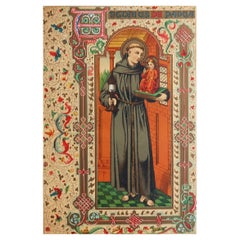
Original Antique Illuminated Print of St Anthony of Padua. C.1880
Located in St Annes, Lancashire
Wonderful print of St Anthony of Padua
Illuminated Chromolithograph
Published circa 1880
Unframed.
Foxing to the margin
Free shipping
The me...
Category
Antique 1880s English Gothic Prints
Materials
Paper
Enamel on Porcelain Depicting Saint Anthony with the Christ Ch
Located in Sant Celoni, ES
Fine 19th Century Enamel on Porcelain Depicting Saint Anthony with the Christ Child
Beautiful and finely detailed enamel painting on porcelain representing Saint Anthony of Padua wit...
Category
Mid-19th Century Figurative Paintings
Materials
Porcelain, Oil

Monumental Oil Painting of St. Anthony of Padua, 19th century
By Bartolomé Esteban Murillo
Located in Trenton, NJ
In this beautifully rendered devotional scene, St. Anthony of Padua kneels in awe as the Christ Child appears above him, accompanied by a host of cherubs that fill the upper portion ...
Category
Antique 19th Century Spanish Colonial Paintings
Materials
Canvas, Wood, Paint
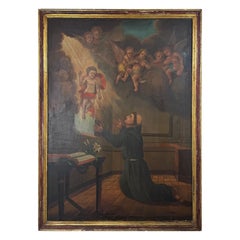
Saint Anthony of Padua with the Infant Jesus. Oil on canvas. Spanish school, 18t
Located in Madrid, ES
Saint Anthony of Padua with the Infant Jesus. Oil on canvas. Spanish school, 18th century.
Oil on canvas showing Saint Anthony of Padua (Lisbon, August 15, 1195 - Padua, June 13, 12...
Category
Antique 18th Century Spanish Neoclassical Religious Items
Materials
Other
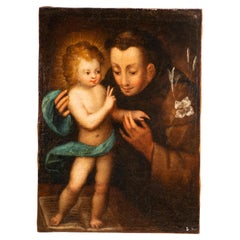
Original Oil on Panel of St. Anthony of Padua , by Unidentified Artist
Located in Miami, FL
Original oil on panel of Saint offering the Child, by an unidentified artist.
--This painting represents St. Anthony of Padua. The scene is one that is often chosen to represent ...
Category
Antique Mid-17th Century Spanish Baroque Religious Items
Saint Anthony of Padua with the Child, Hispano-Colonial School, 17th century
Located in Madrid, ES
Saint Anthony of Padua with the Child, Hispano-Colonial School, 17th century
polychrome wood with period base,
Baroque polychrome wood carving depicting Saint Anthony of Padua with ...
Category
Antique Early 17th Century Spanish Baroque Figurative Sculptures
Materials
Silver