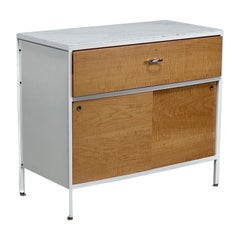
George Nakashima Slab Wall Shelf
About the Item
- Creator:George Nakashima (Designer)
- Dimensions:Height: 13 in (33.02 cm)Width: 60 in (152.4 cm)Depth: 17 in (43.18 cm)
- Period:
- Date of Manufacture:1960s
- Condition:Wear consistent with age and use.
- Seller Location:Dallas, TX
- Reference Number:1stDibs: LU85181321022
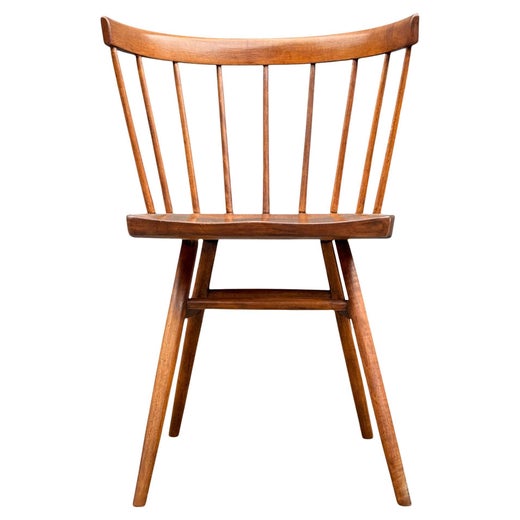
George Nakashima
A master woodworker and M.I.T.-trained architect, George Nakashima was the leading light of the American Studio furniture movement. Along with Wharton Esherick, Sam Maloof and Wendell Castle, Nakashima was an artisan who disdained industrial methods and materials in favor of a personal, craft-based approach to the design of chairs, coffee tables and other pieces. What sets Nakashima apart is the poetic style of his work, his reverence for wood and the belief that his furniture could evince — as he put it in the title of his 1981 memoir — The Soul of a Tree.
Born in Spokane, Washington, to Japanese immigrants, Nakashima traveled widely after college, working and studying in Paris, Japan and India, and at every stop he absorbed both modernist and traditional design influences.
The turning point in Nakashima’s career development came in the United States in 1942, when he was placed in an internment camp for Asian-Americans in Idaho. There, Nakashima met a master woodcarver who tutored him in Japanese crafting techniques. A former employer won Nakashima’s release and brought him to bucolic New Hope, Pennsylvania, where Nakashima set up a studio and worked for the rest of his life. (Master craftsperson Mira Nakashima keeps her father’s legacy alive at the George Nakashima Studio in New Hope today. She has been the artistic director of George Nakashima Woodworkers since her father's death, in 1990.)
Nakashima’s singular aesthetic is best captured in his custom-made tables and benches — pieces that show off the grain, burls and whorls in a plank of wood. He left the “free edge,” or natural contour, of the slab un-planed, and reinforced fissures in the wood with “butterfly” joints.
Almost all Nakashima seating pieces have smooth, milled edges. Nakashima also contracted with large-scale manufacturers to produce carefully supervised editions of his designs. Knoll has offered his Straight chair — a modern take on the spindle-backed Windsor chair — since 1946; the now-defunct firm Widdicomb-Mueller, the result of a merger between Widdicomb and Mueller Furniture, issued the Shaker-inspired Origins collection in the 1950s.
Nelson Rockefeller in 1973 gave Nakashima his single largest commission: a 200-piece suite for his suburban New York estate. Today, Nakashima furniture is collected by both the staid and the fashionable: his work sits in the collections of the Philadelphia Museum of Art, New York’s Metropolitan Museum of Art and the Smithsonian Institution, as well as in the homes of Steven Spielberg, Brad Pitt, Diane von Furstenberg and the late Steve Jobs.
Find vintage George Nakashima furniture for sale on 1stDibs.
You May Also Like
Late 20th Century Unknown Organic Modern Shelves and Wall Cabinets
Wood
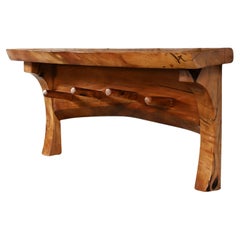
Vintage 1960s Italian Mid-Century Modern Shelves and Wall Cabinets
Bamboo, Wicker
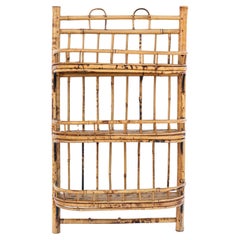
Late 20th Century American Shelves and Wall Cabinets
Bamboo, Rattan
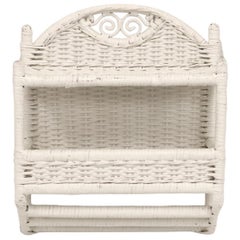
Antique 19th Century Italian Rococo Shelves and Wall Cabinets
Giltwood
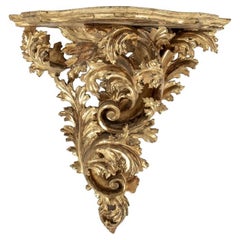
Early 20th Century Belgian Shelves and Wall Cabinets
Wood
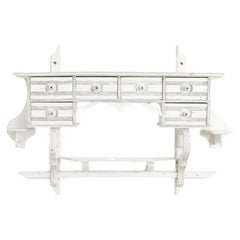
Vintage 1960s Mexican Shelves and Wall Cabinets
Brass, Tin
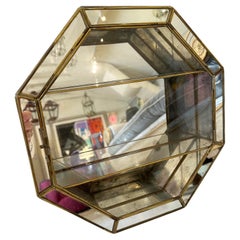
Antique Late 19th Century British Art Nouveau Shelves and Wall Cabinets
Bronze
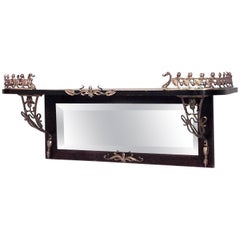
Antique 19th Century British Georgian Shelves and Wall Cabinets
Mahogany
20th Century Italian Shelves
Iron
20th Century American Industrial Shelves and Wall Cabinets
Iron
More From This Seller
View All1990s Rocking Chairs
Walnut
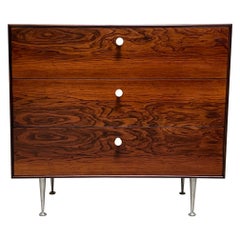
Vintage 1950s Dressers
Rosewood
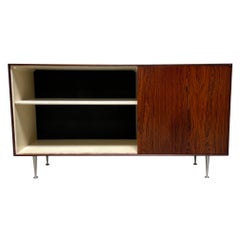
Vintage 1950s Cabinets
Rosewood
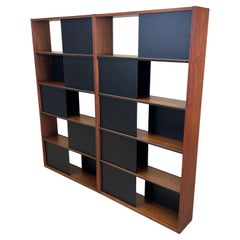
Vintage 1950s Bookcases
Walnut
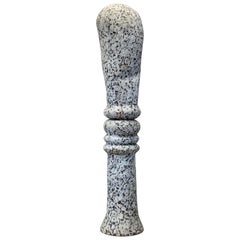
Vintage 1980s Ceramics
Ceramic
Vintage 1950s Commodes and Chests of Drawers
Metal
Still Thinking About These?
All Recently ViewedRead More
A New Exhibition Spotlights the Nuance of 1940s Art and Design
Works by a range of designers and artists prove that the constraints of the time didn't stifle creativity.
Kaleidoscopic Upholstery Makes This Edward Wormley Chair a Showstopper
What at first glance seems an unusual choice jibes perfectly with the designer's aesthetic.