Items Similar to 17th Century Fine Brussels Tapestry, Silk Wool, Green, Blue, Red, Battle Scene
Want more images or videos?
Request additional images or videos from the seller
1 of 21
17th Century Fine Brussels Tapestry, Silk Wool, Green, Blue, Red, Battle Scene
$19,260
£14,381.47
€16,565.50
CA$26,876.46
A$28,415.35
CHF 15,269.62
MX$341,272.68
NOK 191,202.80
SEK 174,964.67
DKK 123,707.79
About the Item
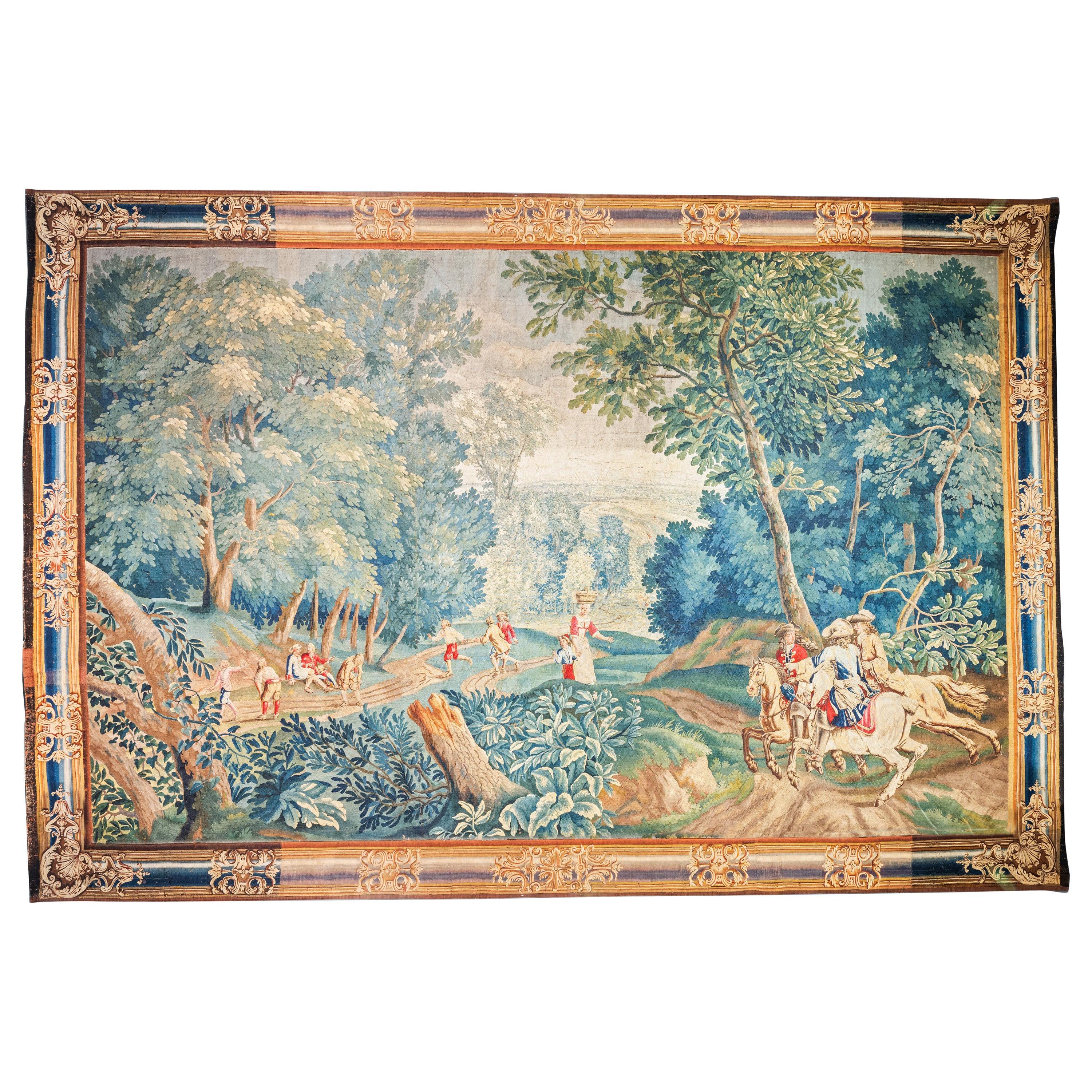
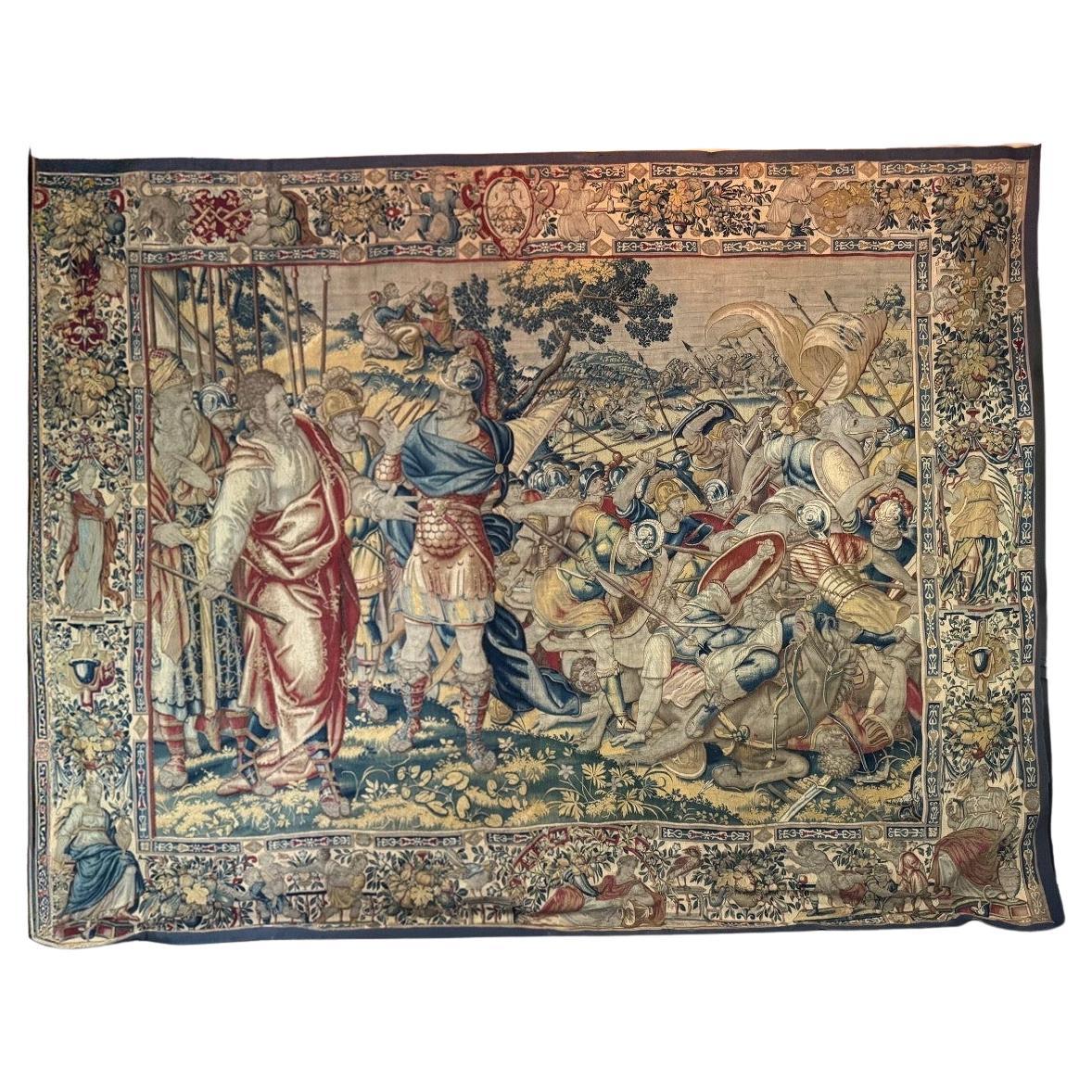
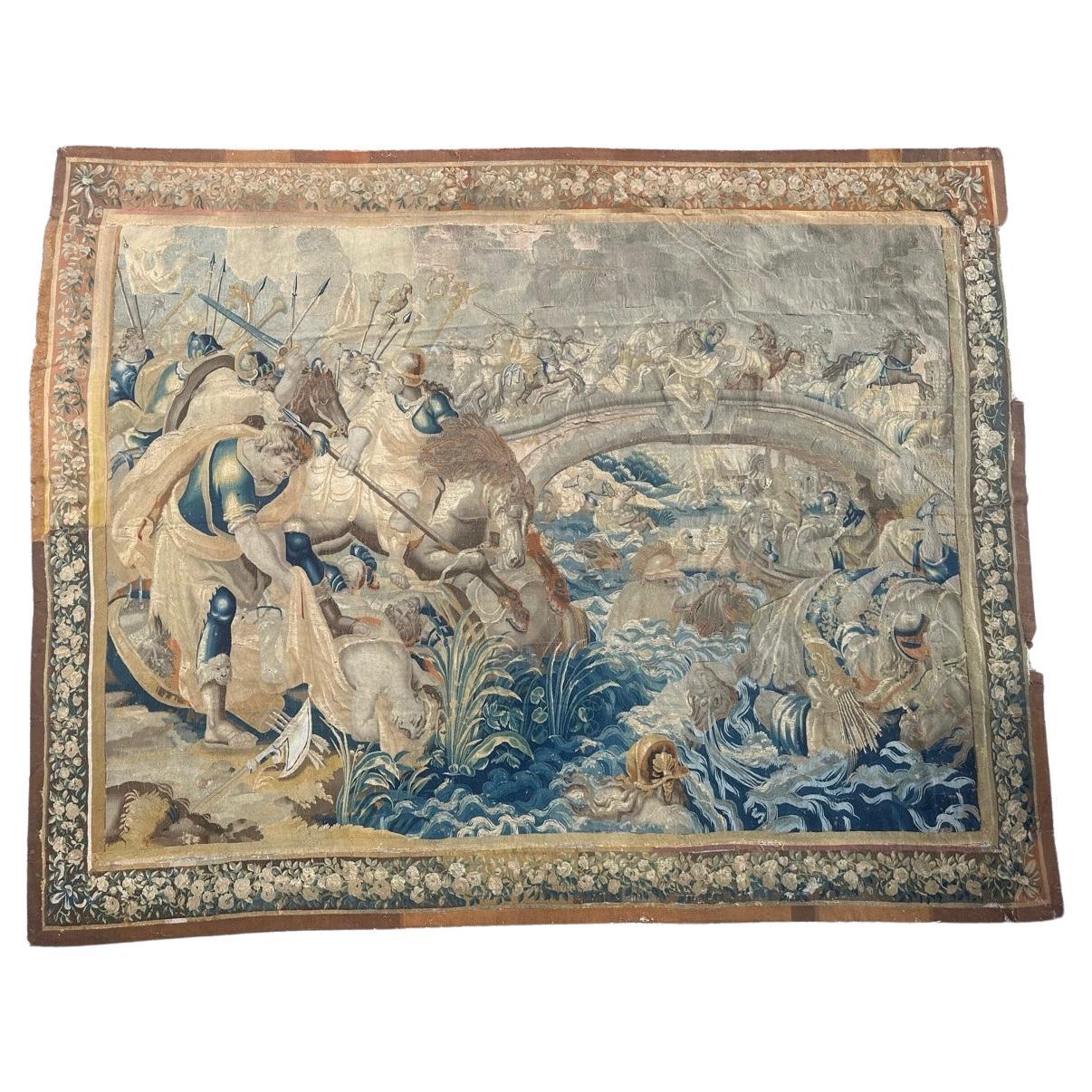
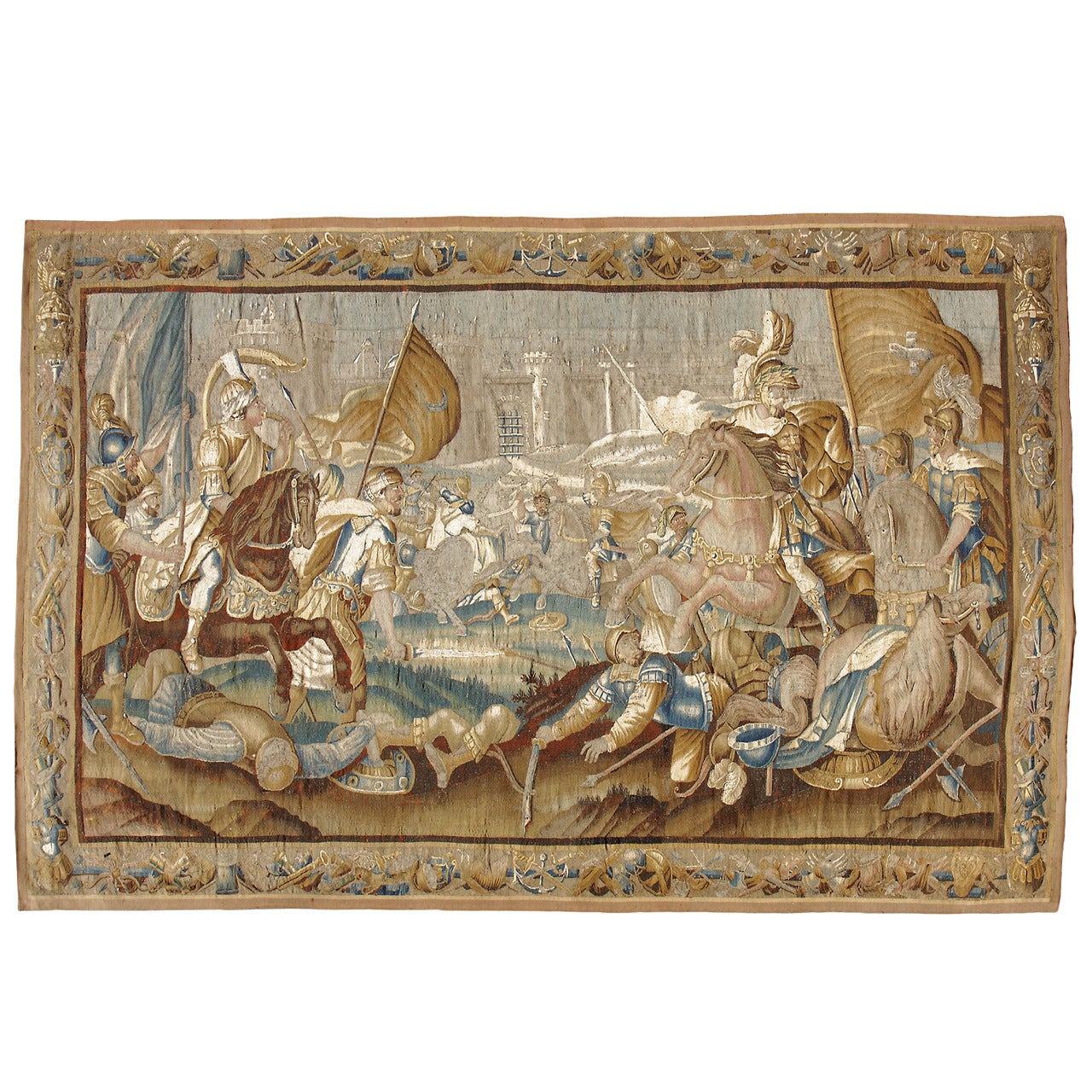
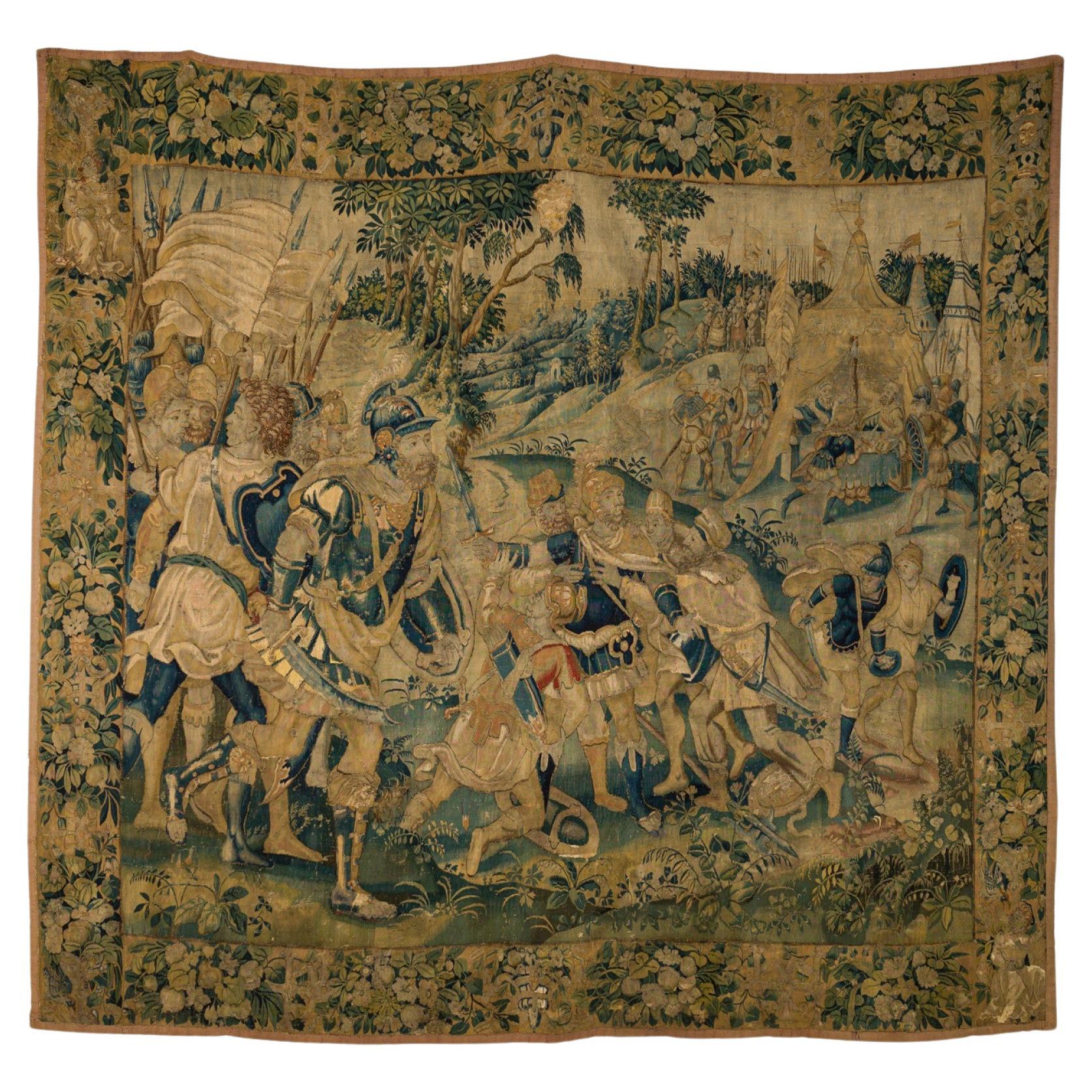
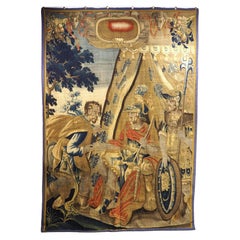
In the late 17th century, Brussels tapestry weavers achieved remarkable heights of artistry and technique, exemplified by a fine tapestry from circa 1680 that vividly depicts a dramatic battle scene. This masterpiece, crafted from a blend of silk and wool, showcases a rich array of colors—primarily blues, greens, and reds—that create a visually arresting narrative. The central motif of the tapestry is a dynamic and detailed battle scene, where the vibrant hues of blues, greens, and reds intertwine to convey the intensity and chaos of the conflict. The blues range from deep, somber tones that suggest a foreboding sky or tumultuous waters, to lighter, almost ethereal shades that might evoke a sense of movement or distance. Greens provide a lush, verdant backdrop, perhaps representing a forested terrain or rolling hills, and contrast strikingly with the reds that highlight the uniforms of the soldiers, the banners they bear, or the flashes of conflict. The tapestry’s execution in silk and wool adds a luxurious texture and depth to the image. The silk contributes a lustrous sheen to the colors, enhancing their vibrancy and making the reds particularly vivid. The wool, with its more subdued texture, provides a rich, tactile quality that adds to the overall grandeur of the piece. Framing this central battle tableau is an intricately detailed border that serves as both a decorative and narrative element. This border features a lively array of figures, fruits, and birds, rendered with the same meticulous attention to detail as the central scene. The figures, often depicted in an elegant and somewhat theatrical style, may include allegorical or mythological characters, adding layers of symbolism and context to the tapestry. The fruits, depicted in lush, vibrant colors, provide a contrast to the intensity of the battle, symbolizing abundance and prosperity. Birds, possibly rendered in mid-flight or perched gracefully, enhance the sense of movement and liveliness that permeates the artwork. The border’s detailed design serves to frame the central action, drawing the viewer's eye inward and providing a harmonious balance to the overall composition. It is not merely a decorative element but an integral part of the tapestry, enriching the narrative and adding to its visual complexity. In its entirety, this Brussels tapestry from the late 17th century stands as a testament to the skill and artistry of its creators. Its use of color, texture, and detailed border elements reflects the opulence and sophistication of the period, making it a significant example of the era's weaving artistry and a captivating portrayal of historical and artistic grandeur.
The Battle of Cannae: Hannibal's Masterstroke
The Battle of Cannae, fought in 216 BC during the Second Punic War, is one of the most celebrated and studied military engagements in history. The conflict took place between the forces of Carthage, led by the brilliant general Hannibal Barca, and the Roman Republic, commanded by consuls Lucius Aemilius Paullus and Gaius Terentius Varro. The battle occurred near the town of Cannae in southern Italy, and it remains a textbook example of military strategy and tactics.
At this time, Rome and Carthage were two of the most powerful states in the Mediterranean, and they were locked in a struggle for supremacy. The Second Punic War was part of a series of conflicts known as the Punic Wars, which were fought between Rome and Carthage over control of trade routes and territories.
Hannibal is especially famous for his daring and innovative military tactics, as well as his audacious journey across the Alps with an army that included war elephants. Despite his smaller army, Hannibal was a master of strategy, able to outthink and outmaneuver his enemies.
At Cannae, Hannibal faced a Roman force that was significantly larger than his own. However, he cleverly lured the Roman legions into a trap. By positioning his troops in a way that made the Romans think they had the advantage, Hannibal exposed their flanks. Once the Romans were committed to the battle, Hannibal’s forces quickly surrounded them in a maneuver known as a double envelopment. This tactic trapped the Roman soldiers in a deadly circle, preventing their escape and leading to one of the bloodiest days in ancient warfare.
The scale of the Roman defeat at Cannae was staggering. An estimated 50,000 to 70,000 Roman soldiers were killed, including the two consuls who led them. This devastating loss shocked Rome and forced it into a defensive posture for years. Many of Rome’s allies began to waver, and the Roman Republic was thrown into crisis.
Despite this, Rome eventually recovered and went on to win the Second Punic War, but the memory of Cannae lingered for generations. The battle solidified Hannibal’s reputation as one of history’s greatest military commanders. Even today, military academies study the Battle of Cannae to understand the principles of strategy, tactics, and leadership.
For someone unfamiliar with this story, the Battle of Cannae is a powerful example of how skill, ingenuity, and leadership can sometimes outweigh sheer numbers in determining the outcome of a conflict. It also illustrates the high stakes of ancient warfare and the dramatic impact that a single battle could have on the fate of nations. Tapestry Measures 8'5" (H) x 13'8" (W)
- Dimensions:Height: 164 in (416.56 cm)Width: 102 in (259.08 cm)Depth: 0.5 in (1.27 cm)
- Style:Aubusson (Of the Period)
- Materials and Techniques:
- Place of Origin:
- Period:Late 17th Century
- Date of Manufacture:1680
- Condition:Rewoven. Center has reweaves, some silk deterioration, normal with age. Overall in good condition for its age.
- Seller Location:Port Washington, NY
- Reference Number:Seller: E1113 Brussels Tapestry 8 5"x13 8" CHAMAN ANTIQUE RUG GALLERY1stDibs: LU964141071952
About the Seller
5.0
Vetted Professional Seller
Every seller passes strict standards for authenticity and reliability
Established in 1980
1stDibs seller since 2013
156 sales on 1stDibs
Typical response time: <1 hour
- ShippingRetrieving quote...Shipping from: Port Washington, NY
- Return Policy
More From This Seller
View All17th Century Fine Flemish Tapestry, Silk
Wool, Green, Blue, Red, Battle Scene
Located in Port Washington, NY
The tapestry shown here is a magnificent example of 17th-century European artistry, likely influenced by the grand tradition of tapestry weaving that flourished in France and Flander...
Category
Antique Mid-17th Century French French Provincial Tapestries
Materials
Wool, Silk
Early 18th Century Brussel Tapestry, Finely Woven, Red, Blue, Green, Silk
Wool
Located in Port Washington, NY
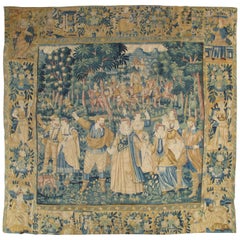
A handwoven Brussels tapestry of dancing peasants in a field with a boy playing jump rope and another with a bow and arrow.
The foreground shows lush trees and scenery. The border c...
Category
Antique Early 18th Century Belgian Aubusson Tapestries
Materials
Wool
Late 16th Century Flemish Historical Tapestry
Located in Port Washington, NY
This magnificent tapestry was woven in Flanders during the middle of the European Renaissance, in the late 1500s. At this time, Flanders was creating some of the best textiles in the world, and many of the rich wooded scenes with animals and hunting motifs began to appear. Tapestries subjects were thick forests and park lands, hunting scenes filled with deer, birds, exotic animals, and even mythological creatures. These were later referred to as Game Park tapestries...
Category
Antique 16th Century Belgian Tapestries
Materials
Wool
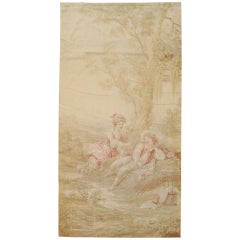
Antique 19th Century French Aubusson Tapestry, Handmade, Wall Hanging, Silk Fine
Located in Port Washington, NY
The Aubusson tapestry manufacture of the 17th, 18th and 19th centuries managed to compete with the royal manufacture of Gobelins tapestry and the privileged position of Beauvais tapestry. Tapestry manufacture at Aubusson, in the upper valley of the Creuse in central France, may have developed from looms in isolated family workshops established by Flemings that are noted in documents from the 16th century.
Typically, Aubusson tapestries depended on engravings as a design source or the full-scale cartoons from which the low-warp tapestry-weavers worked. As with Flemish and Parisian tapestries...
Category
Antique 19th Century French Aubusson Tapestries
Materials
Wool, Silk
$10,000 Sale Price
23% Off
Free Shipping
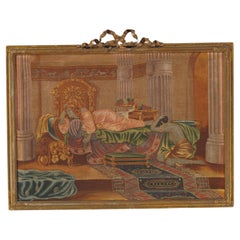
Antique Handcrafted needlepoint depicting a classical romanticized Orientalist
Located in Port Washington, NY
This needlepoint is a handcrafted piece depicting a classical or romanticized Orientalist scene, possibly inspired by Ancient Rome, Persia, or the Ottoman Empire.
The woman lounging ...
Category
Early 20th Century French Tapestries
Materials
Wool, Silk
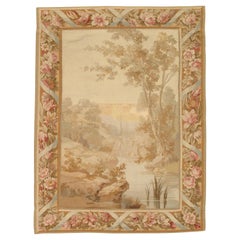
19th Century Aubusson Tapestry, Handmade, Ivory, Taupe, Cream
Located in Port Washington, NY
Aubusson tapestry is tapestry manufactured at Aubusson, in the upper valley of the Creuse in central France. The term often covers the similar products made in the nearby town of Felletin, whose products are often treated as "Aubusson". The industry had probably developed since soon after 1300 in looms in family workshops, perhaps already run by the Flemings that are noted in documents from the 16th century.
Aubusson tapestry of the 19th century managed to compete with the royal manufacture of Gobelins tapestry and the privileged position of Beauvais tapestry, although generally regarded as not their equal.
As with Flemish and Parisian tapestries...
Category
Antique Late 19th Century French Aubusson Tapestries
Materials
Wool
You May Also Like
Brussels tapestry, battle scene, second half of the 16th century
Located in Honnelles, WHT
Brussels tapestry, battle scene, second half of the 16th century
Category
Antique Late 18th Century Belgian Louis XIII Drawings
Materials
Wool
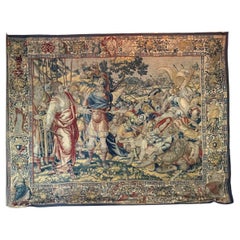
Gorgeous Antique Large 17th century Aubusson Tapestry historical battle scene
By Royal Manufacture of Aubusson
Located in Saint Ouen, FR
Very beautiful and rare 17th century French Aubusson tapestry with a nice design in style of Louis XVI, featuring a historical battle probably from Alexander or a Roman battle, conqu...
Category
Antique 17th Century French Aubusson Tapestries
Materials
Silk, Wool
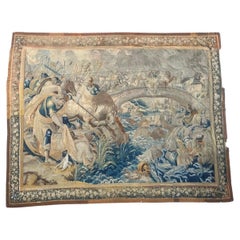
A Monumental 17th Century Flemish Tapestry – The Battle of Jerusalem
Located in Tarzana, CA
Monumental 17th Century Flemish Tapestry – The Battle of Jerusalem
Brussels or Oudenaarde, Circa 1680–1700
Wool and silk, polychrome weave
After designs in the French Baroque tradit...
Category
Antique 18th Century and Earlier Belgian Tapestries
Materials
Wool, Silk, Tapestry
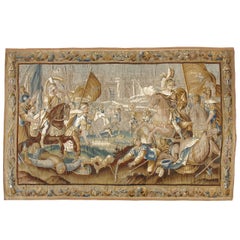
Flemish 17th Century Tapestry Titled, Assassination of Alexander the Great
Located in Queens, NY
Antique Flemish (17th Century) rectangular woven tapestry depicting a tumultuous crowd scene of Greek militia bordered by a dense floral decoration, titled "The Assassination of Alex...
Category
Antique 17th Century European Biedermeier Tapestries
Materials
Wood
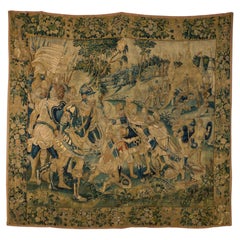
17th Century Brussels Silk and Wool Tapestry Depicting a Roman Scene
Located in Dallas, TX
Hand-woven in the 1600s in Brussels, Belgium, this silk and wool tapestry depicts a citizen paying homage to a Roman general. During the 17th century, Brussels tapestries were highly...
Category
Antique 17th Century Belgian Tapestries
Materials
Wool, Linen, Silk
Vintage Tapestry Depicting Royal Soldiers in Battle 8
X 3
6"
Located in Los Angeles, US
A wall hanging tapestry, simply put, is a textile specifically designed and woven to portray an artistic scene with the intent of hanging it on a wall. Antique tapestries, those that...
Category
Early 2000s Unknown Other Tapestries
Materials
Wool, Cotton
More Ways To Browse
17th Century Battle Scene
Chaye Simon
Egyptian Tent
Feuilles De Choux Tapestry
Helmi Vuorelma
Henri Gineste
Heron Silk Tapestry
Kandinsky Tapestry
Klee Drummer Boy
Large Scale Textile Art
Louis Xv Beauvais Tapestry
Moroccan Veil
Native American Woven Tapestry
Needlepoint Bell Pull
Octave Landuyt
Paul Klee Drummer
Paul Klee Tapestry
Persian Termeh