Items Similar to A Monumental 17th Century Flemish Tapestry – The Battle of Jerusalem
Want more images or videos?
Request additional images or videos from the seller
1 of 12
A Monumental 17th Century Flemish Tapestry – The Battle of Jerusalem
$126,000
£95,103
€108,990.23
CA$175,865.23
A$191,589.52
CHF 101,179.17
MX$2,299,983.90
NOK 1,289,138.50
SEK 1,178,224.19
DKK 814,143.74
About the Item
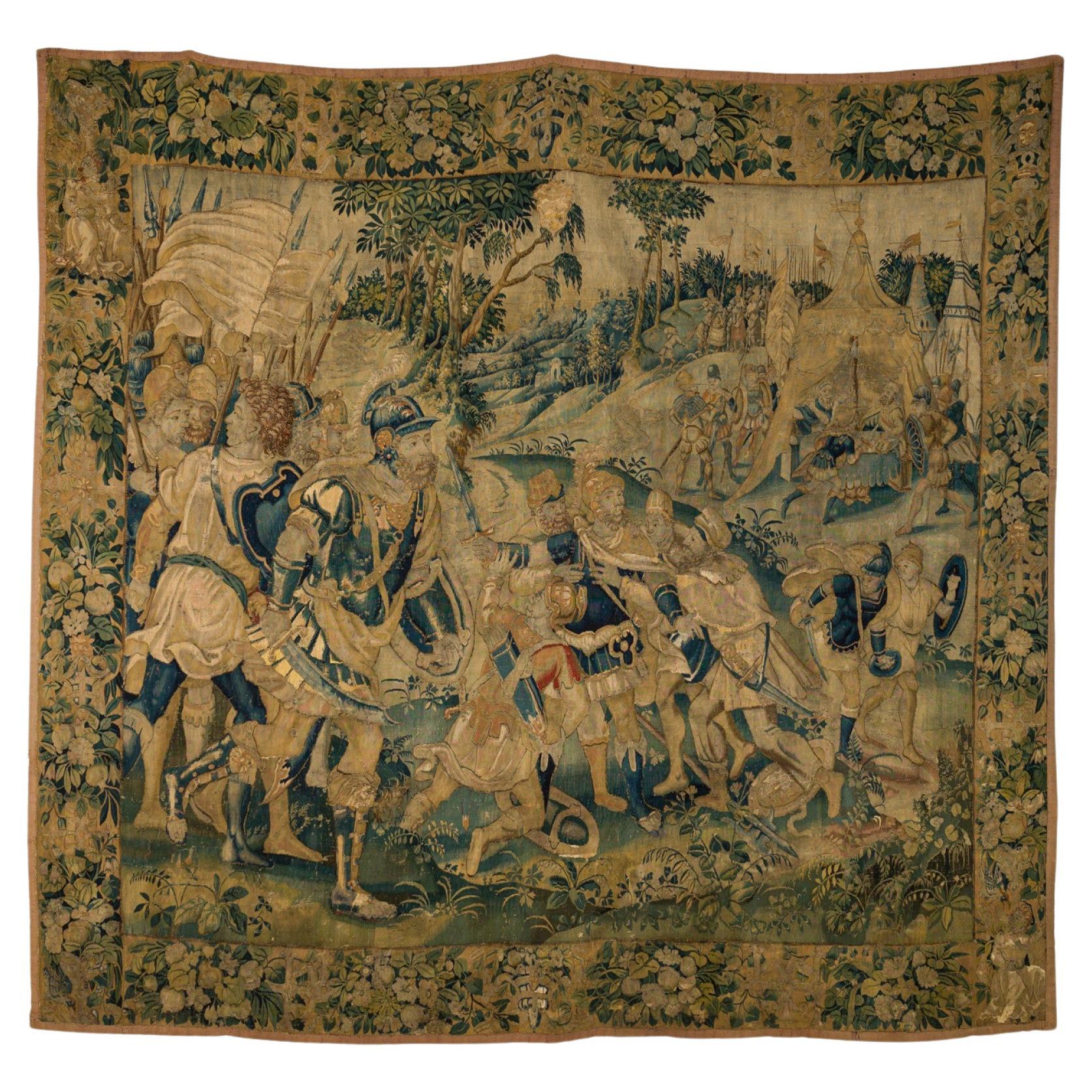
Monumental 17th Century Flemish Tapestry – The Battle of Jerusalem
Brussels or Oudenaarde, Circa 1680–1700
Wool and silk, polychrome weave
After designs in the French Baroque tradition
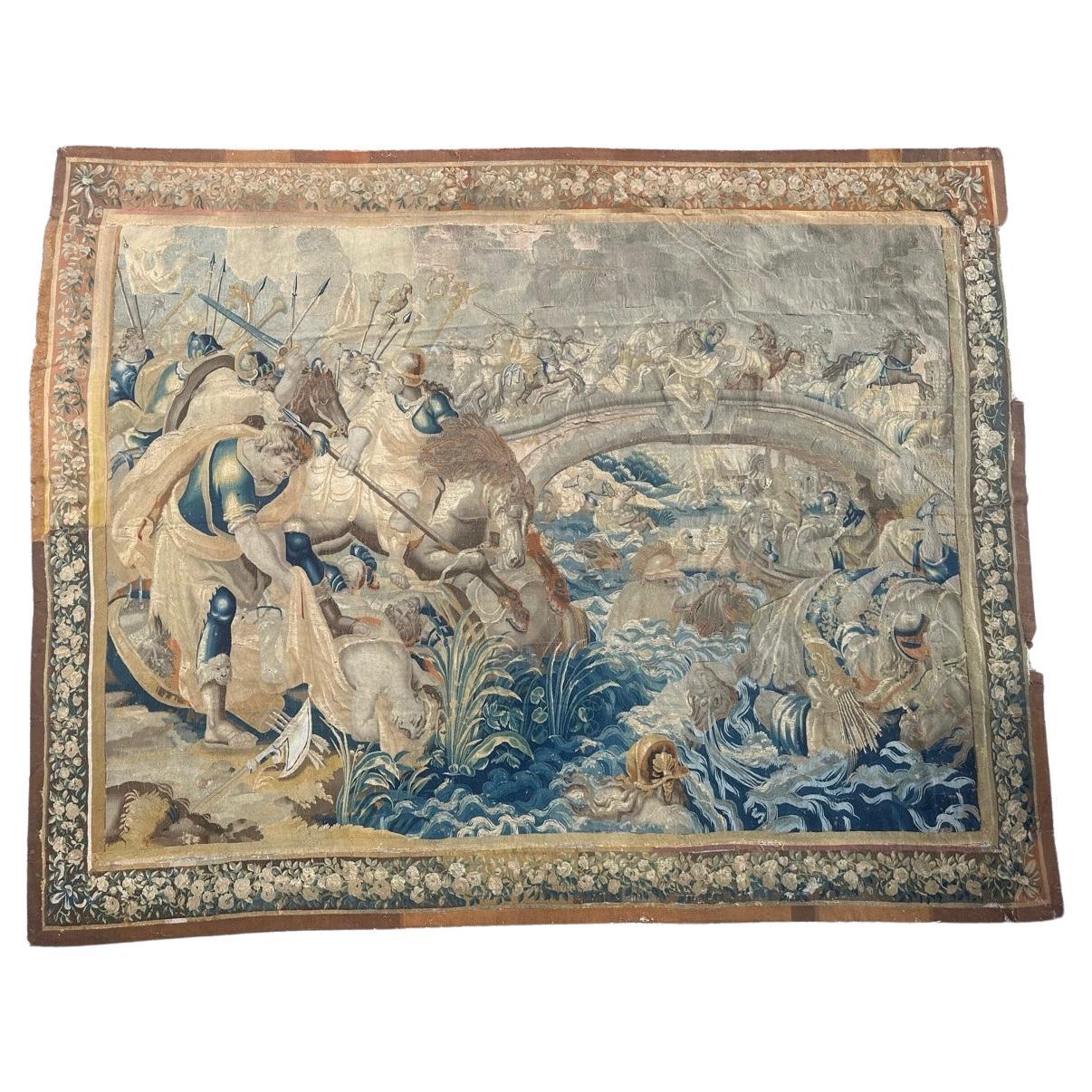
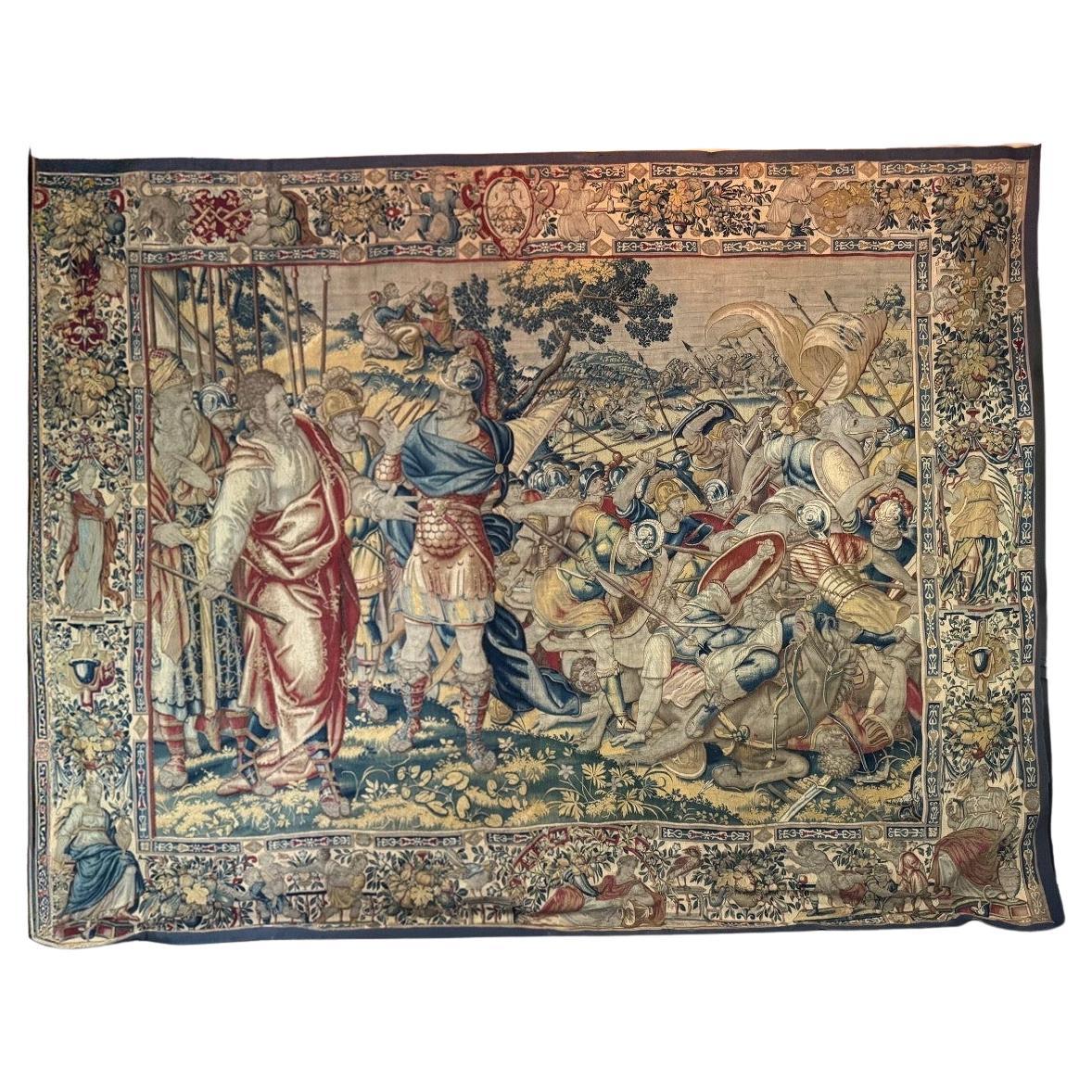
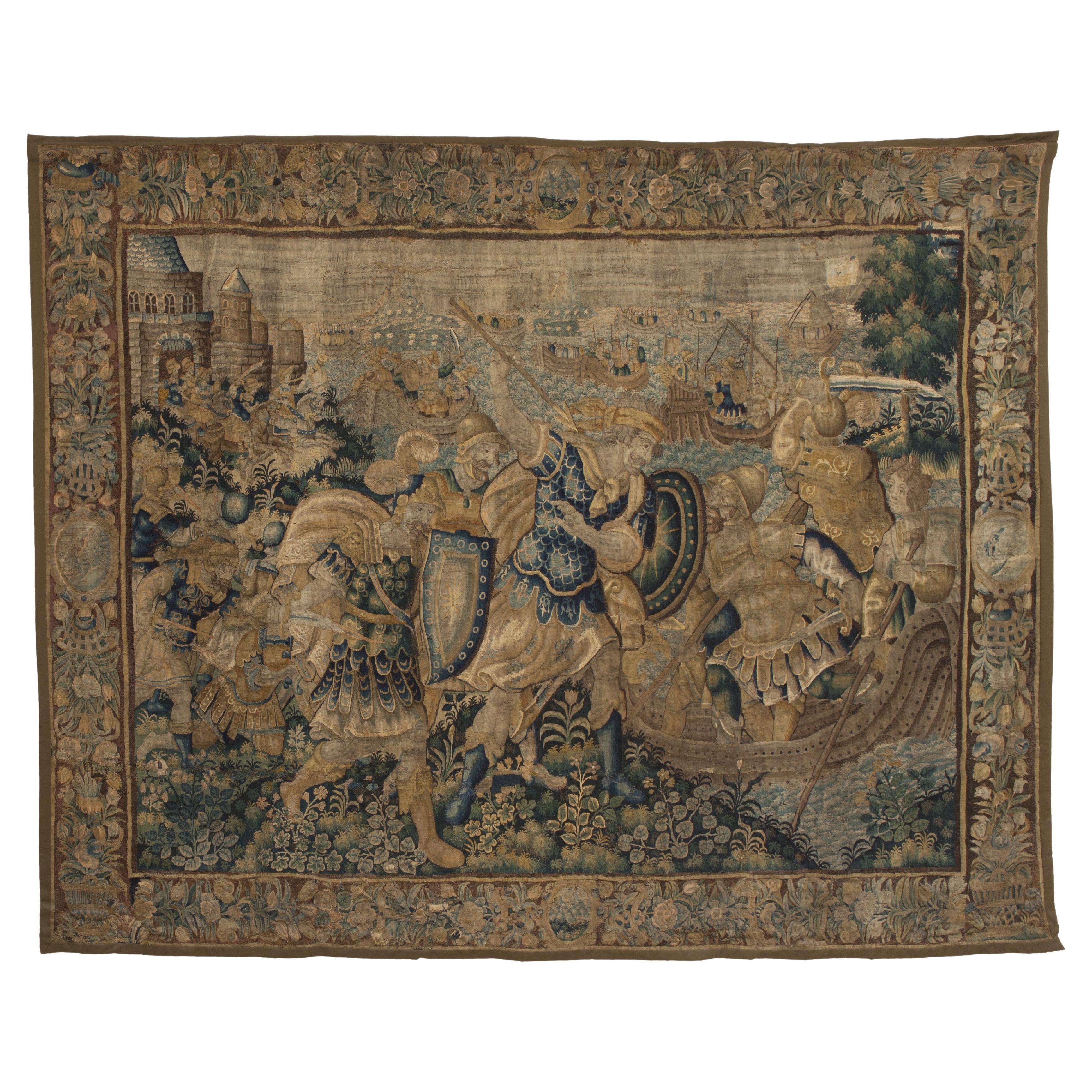
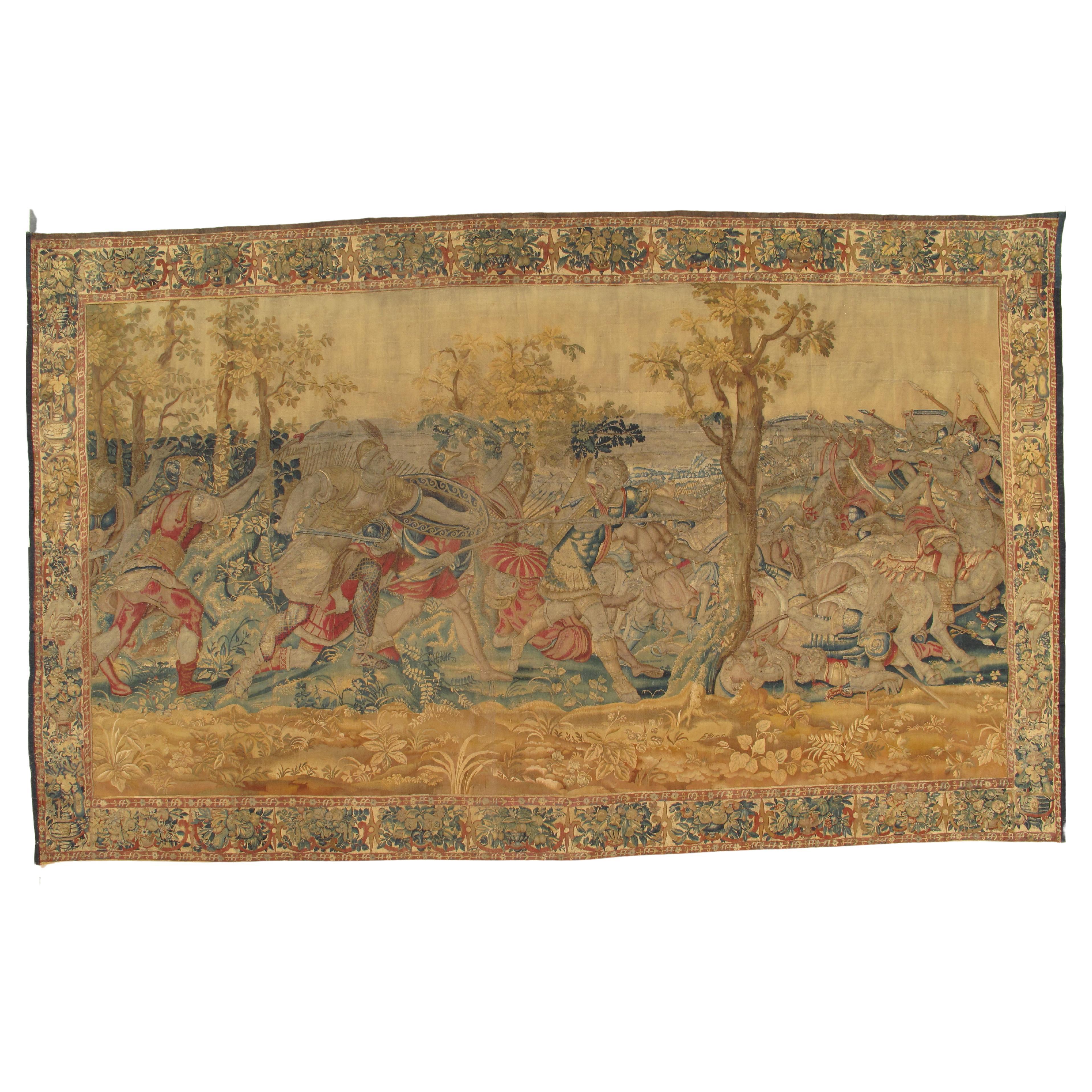
This exceptional and monumental Flemish tapestry portrays The Battle of Jerusalem, a pivotal moment in ancient history and a powerful symbol of victory, conquest, and divine authority. The scene depicts Roman legions in fierce conflict as they storm the fortified walls of Jerusalem, an episode most famously recorded in the First Jewish–Roman War (70 A.D.) under the command of Titus. The triumph became an enduring imperial motif throughout European art.
At the center of the composition, a mounted Roman commander—distinguished by his gilded cuirass and elaborate plumed helmet—leads his cavalry into the fray beneath a sweeping military standard. Surrounding him, soldiers brandish spears and shields in dramatic action against the defenders struggling on the ground. Fallen warriors, captured armor, and scattered war instruments emphasize the fierce brutality of this climactic siege.
A backdrop of monumental stone walls with battlements, towers, and siege equipment completes the narrative, clearly situating the episode at the gates of Jerusalem.
The tapestry retains its magnificent, fully intact martial “trophy” border, densely decorated with:
• Helmets, cuirasses, and swords
• Cannons, trumpets, and shields
• Victory emblems and classical motifs
This border style was strongly associated with elite commissions and princely display within the courtly circles of the late Baroque era, emphasizing themes of triumph, empire, and authority.
Artistic Importance
• Likely inspired by engravings after Charles Le Brun, whose historical battle compositions set the visual language for Louis XIV’s court and influenced Flemish workshops
• Represents a moment of profound historical weight that resonated strongly in Christian Europe, symbolizing the inevitability of imperial and divine conquest
• Of a scale and quality suitable for palace reception halls or high aristocratic residences
• High silk highlights remain, enhancing the modeling of the horses and armor with subtle luminosity
- Dimensions:Height: 120 in (304.8 cm)Width: 198 in (502.92 cm)Depth: 2 in (5.08 cm)
- Materials and Techniques:
- Place of Origin:
- Period:
- Date of Manufacture:circa 1670
- Condition:Wear consistent with age and use.
- Seller Location:Tarzana, CA
- Reference Number:Seller: T-10011stDibs: LU9862959896
About the Seller
5.0
Gold Seller
Premium sellers maintaining a 4.3+ rating and 24-hour response times
Established in 1965
1stDibs seller since 2013
58 sales on 1stDibs
Typical response time: <1 hour
- ShippingRetrieving quote...Shipping from: Tarzana, CA
- Return Policy
More From This Seller
View AllFlemish Tapestry Depicting a Cavalry Battle before a Fortress, Brussels, c. 1700
Located in Tarzana, CA
A large Flemish tapestry, likely 17th century (Baroque period), woven in wool and silk. The central scene depicts an epic battle narrative with armored knights on horseback, shields ...
Category
Antique Late 17th Century European Baroque Tapestries
Materials
Tapestry, Wool, Silk
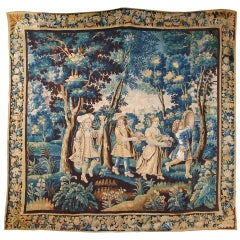
Very Fine Late 17th Century Allegorical Flemish Brussels Baroque Tapestry
Located in Tarzana, CA
A very fine late 17th century allegorical Flemish Brussels Baroque tapestry
Period: Late 17th century
Country: Brussels, Belgium
Measures: Depth 0.75"
Width 111"
Height 10...
Category
Antique 17th Century Belgian Baroque Tapestries
Materials
Wool, Tapestry
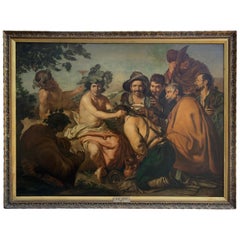
"The Triumph of Bacchus" after Diego Velázquez, Signed M. De Saivin 1897
By Diego Velã¡zquez
Located in Tarzana, CA
The Triumph of Bacchus" late 19th century oil painting on canvas after Diego Velázquez.
Signed and dated: M. De Saivin, 1897
Dimensions:
Ca...
Category
Antique 1890s Spanish Paintings
Materials
Canvas, Wood
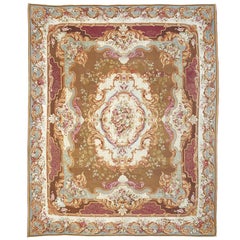
Large and Ornate 19th Century French Aubusson Rug
By Royal Manufacture of Aubusson
Located in Tarzana, CA
A monumental 19th century French palace size handwoven Aubusson rug. The classical rectangular rug presents with crisp detailing and deep coloration in Beige, Brown, Maroon, and Teal...
Category
Antique Late 19th Century French Aubusson Western European Rugs
Materials
Wool
$36,600 Sale Price
53% Off
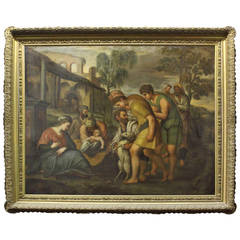
A 19th Century Continental Oil on canvas Depicting Baby Jesus and Mary
Located in Tarzana, CA
Period: 19th Century
Material: Oil on canvas.
Category
20th Century Unknown Paintings
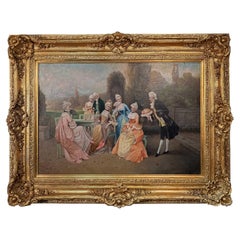
Large 19th Century French Oil on Canvas by Jules Garson
Located in Tarzana, CA
A 19th century French oil painting on canvas depicting classical figures in landscape, with a standing gentleman presenting bouquet of flowers to a sitting lady.
Signed: Jules Garson...
Category
Antique Late 19th Century French Paintings
Materials
Canvas
You May Also Like
Gorgeous Antique Large 17th century Aubusson Tapestry historical battle scene
By Royal Manufacture of Aubusson
Located in Saint Ouen, FR
Very beautiful and rare 17th century French Aubusson tapestry with a nice design in style of Louis XVI, featuring a historical battle probably from Alexander or a Roman battle, conqu...
Category
Antique 17th Century French Aubusson Tapestries
Materials
Silk, Wool
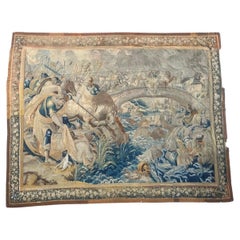
Brussels tapestry, battle scene, second half of the 16th century
Located in Honnelles, WHT
Brussels tapestry, battle scene, second half of the 16th century
Category
Antique Late 18th Century Belgian Louis XIII Drawings
Materials
Wool
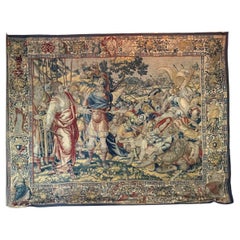
17th Century Fine Brussels Tapestry, Silk Wool, Green, Blue, Red, Battle Scene
Located in Port Washington, NY
In the late 17th century, Brussels tapestry weavers achieved remarkable heights of artistry and technique, exemplified by a fine tapestry from circa 1680 that vividly depicts a dramatic battle scene. This masterpiece, crafted from a blend of silk and wool, showcases a rich array of colors—primarily blues, greens, and reds—that create a visually arresting narrative. The central motif of the tapestry is a dynamic and detailed battle scene, where the vibrant hues of blues, greens, and reds intertwine to convey the intensity and chaos of the conflict. The blues range from deep, somber tones that suggest a foreboding sky or tumultuous waters, to lighter, almost ethereal shades that might evoke a sense of movement or distance. Greens provide a lush, verdant backdrop, perhaps representing a forested terrain or rolling hills, and contrast strikingly with the reds that highlight the uniforms of the soldiers, the banners they bear, or the flashes of conflict. The tapestry’s execution in silk and wool adds a luxurious texture and depth to the image. The silk contributes a lustrous sheen to the colors, enhancing their vibrancy and making the reds particularly vivid. The wool, with its more subdued texture, provides a rich, tactile quality that adds to the overall grandeur of the piece. Framing this central battle tableau is an intricately detailed border that serves as both a decorative and narrative element. This border features a lively array of figures, fruits, and birds, rendered with the same meticulous attention to detail as the central scene. The figures, often depicted in an elegant and somewhat theatrical style, may include allegorical or mythological characters, adding layers of symbolism and context to the tapestry. The fruits, depicted in lush, vibrant colors, provide a contrast to the intensity of the battle, symbolizing abundance and prosperity. Birds, possibly rendered in mid-flight or perched gracefully, enhance the sense of movement and liveliness that permeates the artwork. The border’s detailed design serves to frame the central action, drawing the viewer's eye inward and providing a harmonious balance to the overall composition. It is not merely a decorative element but an integral part of the tapestry, enriching the narrative and adding to its visual complexity. In its entirety, this Brussels tapestry from the late 17th century stands as a testament to the skill and artistry of its creators. Its use of color, texture, and detailed border elements reflects the opulence and sophistication of the period, making it a significant example of the era's weaving artistry and a captivating portrayal of historical and artistic grandeur.
The Battle of Cannae: Hannibal's Masterstroke
The Battle of Cannae, fought in 216 BC during the Second Punic War, is one of the most celebrated and studied military engagements in history. The conflict took place between the forces of Carthage, led by the brilliant general Hannibal Barca, and the Roman...
Category
Antique Late 17th Century Belgian Aubusson Tapestries
Materials
Wool, Silk
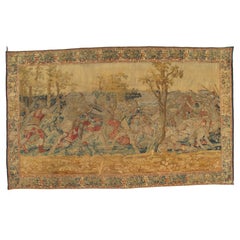
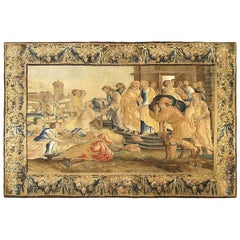
17th Century Flemish Allegorical Tapestry Depicting the Arrival of Jesus
Located in New York, NY
A Flemish allegorical tapestry from the first half of the 17th century, possibly mythological or biblical, envisioning a scene in which various fi...
Category
Antique 17th Century European Tapestries
Materials
Wool
$99,995 Sale Price
50% Off
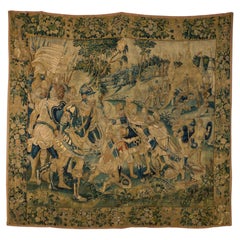
Flemish 17th Century Tapestry Titled, Assassination of Alexander the Great
Located in Queens, NY
Antique Flemish (17th Century) rectangular woven tapestry depicting a tumultuous crowd scene of Greek militia bordered by a dense floral decoration, titled "The Assassination of Alex...
Category
Antique 17th Century European Biedermeier Tapestries
Materials
Wood
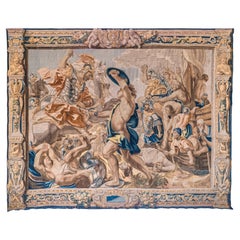
Impressive Scale Mid-17th Century Flemish Tapestry Depicting Alexander The Great
By Jacob Jordaens
Located in Dubai, AE
Spectacular large scale mid-17th Century Flemish tapestry created after the 1630s design by Jacob Jordaens (d. 1678). Several tapestries of identical design were produced based on dr...
Category
Antique 17th Century Belgian Baroque Tapestries
Materials
Wool, Silk
More Ways To Browse
Antique Epaulettes
Antique Freight Elevator
Antique Marble Tray
Antique Rosewood Bureau
Antique Shaving Stand
Antique Spode Bowls
Antique Statue Of Liberty
Antique Thai Buddha Statue
Antique Wooden Cabinet With Drawers
Architectural Wall Hanging
Art Glass Rooster
Artist Maquette
Asian Room Divider Panels
Barovier Toso Cordonato D Oro
Black And Ormolu Clocks
Blonde Art Deco Furniture
Burslem Doulton
Butterfly Dish