Items Similar to 19th Century Biscuit Porcelain, Four Seasons, after Thorvaldsen, Bing
Gröndahl
Want more images or videos?
Request additional images or videos from the seller
1 of 11
19th Century Biscuit Porcelain, Four Seasons, after Thorvaldsen, Bing
Gröndahl
$3,219.20per set
£2,407.42per set
€2,689per set
CA$4,435.90per set
A$4,839.45per set
CHF 2,562.46per set
MX$57,990.40per set
NOK 32,634.35per set
SEK 29,841.69per set
DKK 20,479.92per set
About the Item
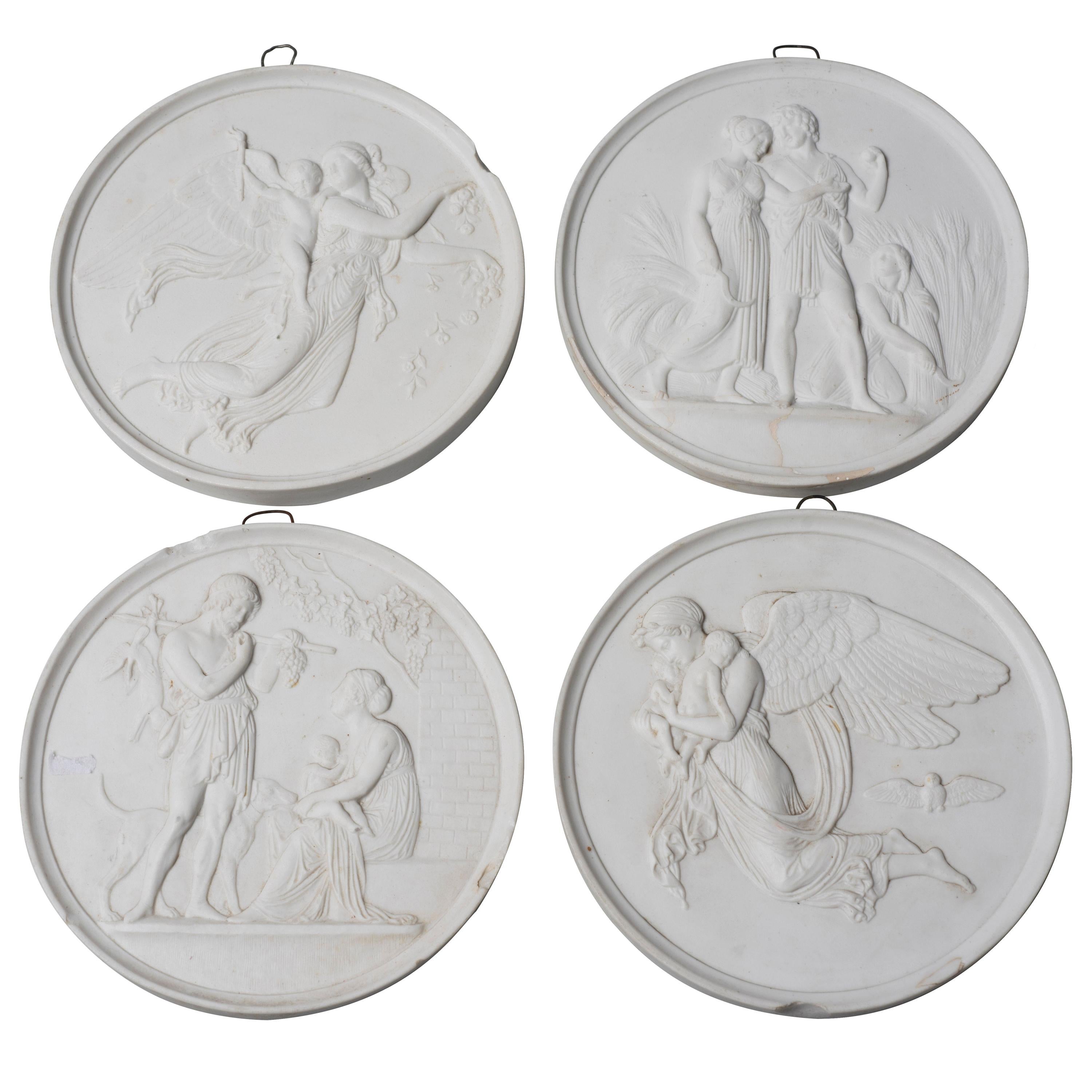
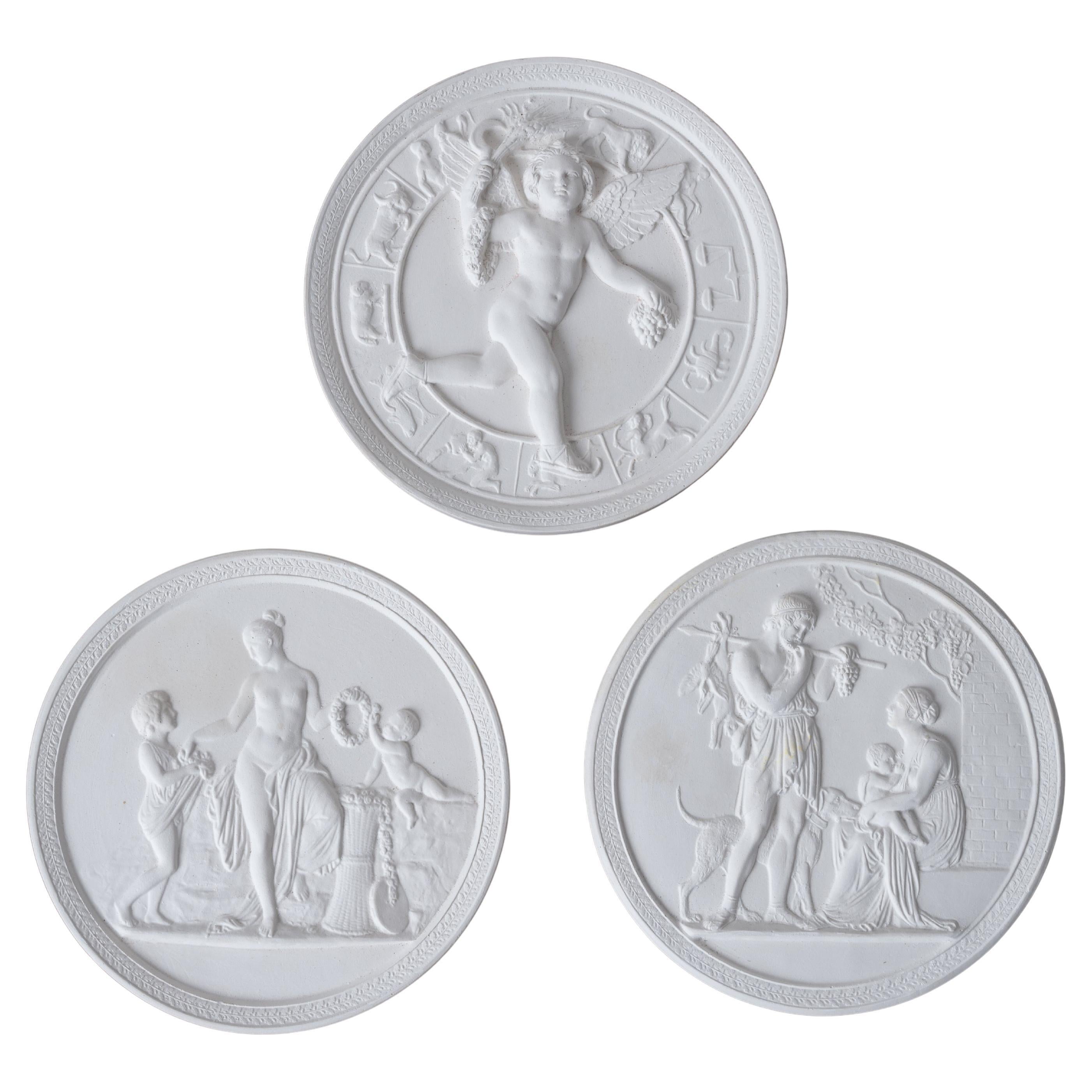
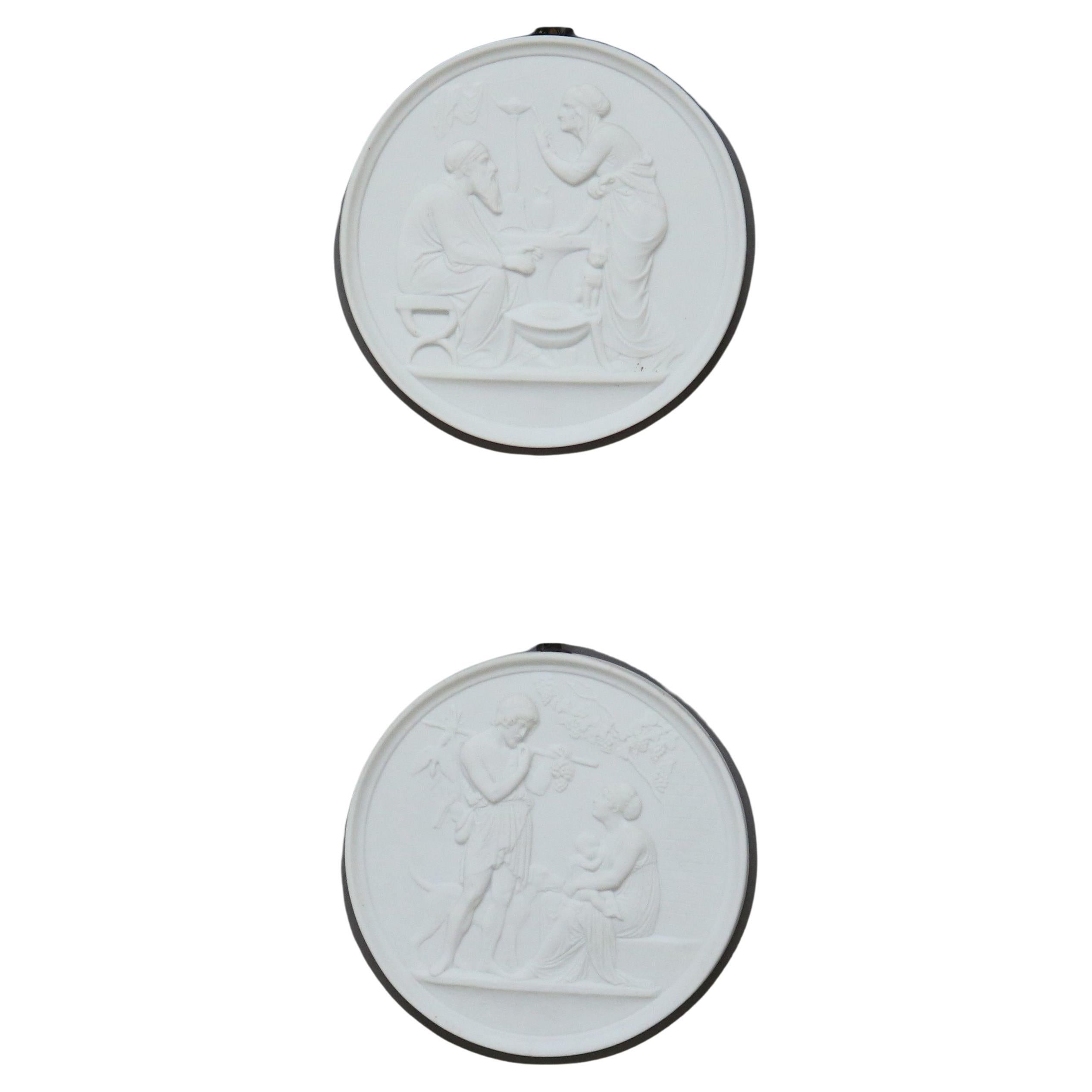
Late 19th Century Biscuit Porcelain, Four Seasons, after Bertel Thorvaldsen, by Bing
Gröndahl
Since antiquity, the cycle of the four seasons has served artists as a potent metaphor for the rhythms of nature and the progression of human life. From ancient Greek poetry to Renaissance frescoes, Spring, Summer, Autumn, and Winter have appeared not merely as descriptive markers of the year but as embodiments of growth, maturation, decline, and repose. Within this long cultural tradition, Bertel Thorvaldsen—a central figure of nineteenth-century classicism—created a series of reliefs that distill these themes with a clarity that is both serene and deeply humane.
Thorvaldsen’s reliefs are deceptively simple. Each season is represented through an intimate domestic vignette rather than grand allegory, and yet the scenes resonate with symbolic weight. In Spring, a young girl weaves a wreath of fresh blossoms. The gesture is tender and unhurried, suggesting the delicate unfolding of life at its earliest stage. Her figure, graceful and unburdened, echoes the youthful vitality of the season itself. Thorvaldsen’s crisp contour lines and calm composition recall ancient Greek bas-reliefs, but the emotional register is gentler, more personal: this is not an idealized goddess of fertility, but a child absorbed in her task.
In Summer, the tone shifts toward fullness and warmth. A couple, clearly in love, harvests the season’s bounty together. Their shared labor and affectionate posture convey not only the literal abundance of summer but also the richness of human connection at its height. The scene encapsulates the season’s dual symbolism: nature at its ripest and the human heart at its most open. Thorvaldsen captures this harmony in balanced forms and fluid contours, demonstrating how classical restraint can coexist with emotional immediacy.
Autumn introduces a sense of maturity bordering on contemplation. A family sits beneath heavy clusters of ripe grapes, enjoying the rewards of a successful harvest. The motif of grapes, long associated with both celebration and transience, underscores autumn’s dual nature: richness tinged with the awareness of its inevitable end. The familial grouping suggests continuity across generations, a quiet acceptance of the yearly cycle. Thorvaldsen’s handling of the drapery and gestures is particularly elegant here; the figures appear to settle naturally into the composition, as if absorbed in a moment of contentment that cannot quite disguise its impermanence.
The cycle concludes with Winter, which stands apart in both tone and design. Here, an elderly couple withdraws into the warm refuge of their home. The details are pared back: outlines are simpler, the setting more austere. This reduction is deliberate. Winter, in Thorvaldsen’s vision, is not merely coldness but introspection—the final stage of the human journey, when life contracts into essential forms. And yet it is not a scene of desolation. The couple’s closeness conveys tenderness and mutual care. The brazier offers warmth, and the small kitten poised beside it introduces a flicker of life and curiosity. It is the kitten, with its alert gaze toward the viewer, that momentarily breaks the distance and reintroduces the sense of lived presence. In this subtle gesture, Thorvaldsen acknowledges the onlooker’s presence and gently invites reflection on the relationship between observer and observed.
Across the entire cycle, Thorvaldsen employs the language of classicism—clarity of line, balanced composition, and restrained emotion—but adapts it to the intimacy of everyday life. Instead of heroic mythological figures, he presents ordinary people engaged in humble acts: weaving, harvesting, resting, keeping warm. These simple narratives allow the seasons’ symbolic meanings to unfold quietly, without didactic insistence. The viewer feels almost like an unseen guest peering into private worlds. In the first three scenes, this sense of closeness draws the viewer into the rhythms of the household; yet in the winter relief, the reduced detail and inward-turned figures create a respectful distance, as if one were observing a moment beyond intrusion.
Ultimately, Thorvaldsen’s “Four Seasons” is a meditation on time—its cycles, its gifts, and its unavoidable passing. By grounding universal themes in the tenderness of domestic life, he transforms the ancient allegory into something both timeless and deeply human. Each relief becomes a reminder that the seasons of nature mirror the seasons of our own existence, and that beauty persists not despite transience but because of it.
- Dimensions:Height: 0.79 in (2 cm)Diameter: 11.42 in (29 cm)
- Sold As:Set of 4
- Style:Neoclassical (Of the Period)
- Materials and Techniques:
- Place of Origin:
- Period:
- Date of Manufacture:Late 19th Century
- Condition:Wear consistent with age and use.
- Seller Location:Dresden, DE
- Reference Number:1stDibs: LU10227247776152
About the Seller
No Reviews Yet
Vetted Professional Seller
Every seller passes strict standards for authenticity and reliability
Established in 1992
1stDibs seller since 2025
- ShippingRetrieving quote...Shipping from: Madrid, Spain
- Return Policy
More From This Seller
View All19th Century Buscuit Porcelain Sculpture, Young Shepard, after Thorvaldsen
Located in Dresden, DE
Shepherd Boy
after Bertel Thorvaldsen
Biscuit porcelain
Late 19th century
33.5 x 14 x 18 cm
After Thorvaldsen's plaster model from 1817 in the Thorvaldsen Museum, Copenhagen, inve...
Category
Antique Late 19th Century Neoclassical Figurative Sculptures
Materials
Porcelain
19th Century Italian Sculpture, Venus of Capua, Terracotta, Chiurazzi
By Fonderia Chiurazzi
Located in Dresden, DE
19th Century, Terracotta Italian Sculpture of Venus with a Pearl from Fonderia Chiurazzi
After the famous Venus of Capua
Her twisted torso, draped in cloth from the waist down, le...
Category
Antique Late 19th Century Italian Neoclassical Figurative Sculptures
Materials
Terracotta
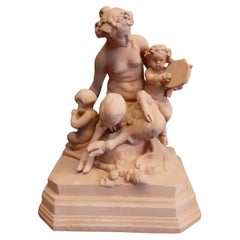
Rococo Terracotta sulpture of Female Faun with Faun children, Clodion
By Claude Michel Clodion
Located in Dresden, DE
Terracotta scultpture from Clodion France, of a Female Faun sitting with children faun at her side, and a tambourine in her hand...
Category
Antique Late 18th Century French Rococo Figurative Sculptures
Materials
Terracotta
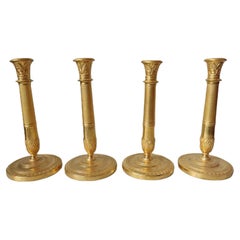
Four Gilded Early 19th Century French Candlesticks
Located in Dresden, DE
This exceptionally beautiful and rare set of four Charles X–period candlesticks is a remarkable survivor of early 19th-century craftsmanship. Each piece features finely chased detail...
Category
Antique Early 19th Century French Charles X Candlesticks
Materials
Gold Plate, Bronze
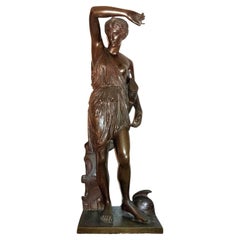
French Bronze "Wounded Amazon", early 19th century
Located in Dresden, DE
This early 19th-century bronze sculpture of a "Wounded Amazon" is a refined reproduction after the original cast by Ferdinand Barbedienne. It bears the inscription “Reduction Mécaniq...
Category
Antique Early 19th Century French Neoclassical Figurative Sculptures
Materials
Bronze
19th Century Bronze sculpture of Diana of Gabii, Grand Tour
Located in Dresden, DE
Diane of Gabii is a sculpture of a woman richly adorned in drapery. The statue most likely represents goddess Artemis, the virgin goddess of hunting and the wild, and is attributed t...
Category
Antique 19th Century European Grand Tour Figurative Sculptures
Materials
Bronze

You May Also Like
Bing
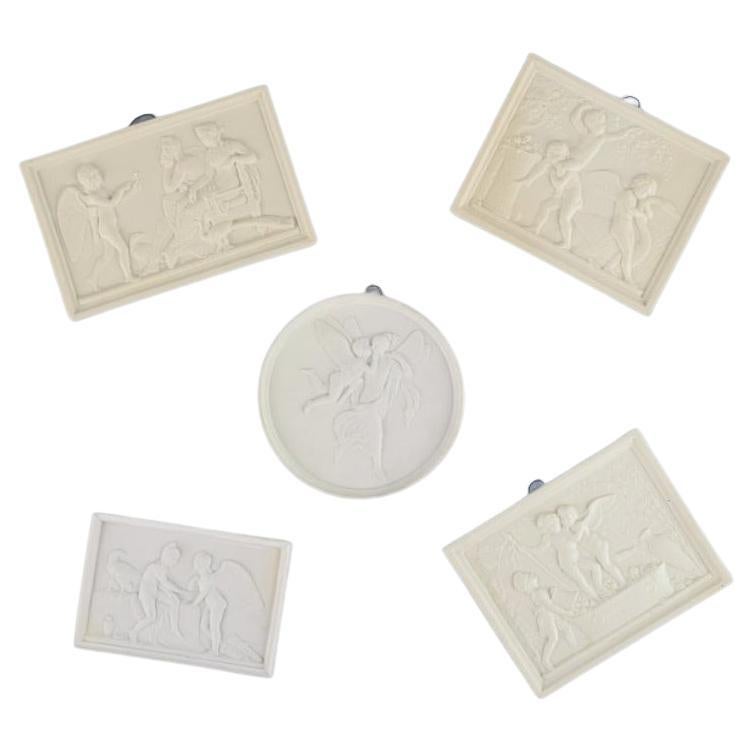
Grøndahl and Royal Copenhagen. Five wall reliefs after Thorvaldsen
Located in København, Copenhagen
Bing & Grøndahl and Royal Copenhagen.
A set of five wall reliefs after Thorvaldsen.
From the 1870s/1880s.
Marked.
In good condition, all with older professionally executed restoratio...
Category
Antique 1870s Danish Neoclassical Revival Decorative Art
Materials
Ceramic
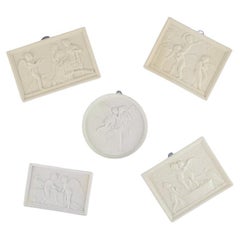
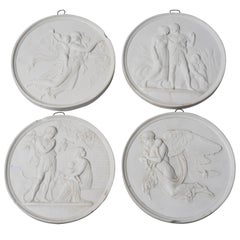
Neoclassical Medals, Italy, 19th Century
Located in Roma, IT
Neoclassical Medals are beautiful decorative objects.
Four circular plates in the precious biscuit porcelain with mythological subjects, and an evident Neoclassical taste. Realize...
Category
Antique 19th Century Italian Neoclassical Decorative Art
Materials
Porcelain
$1,077 / set
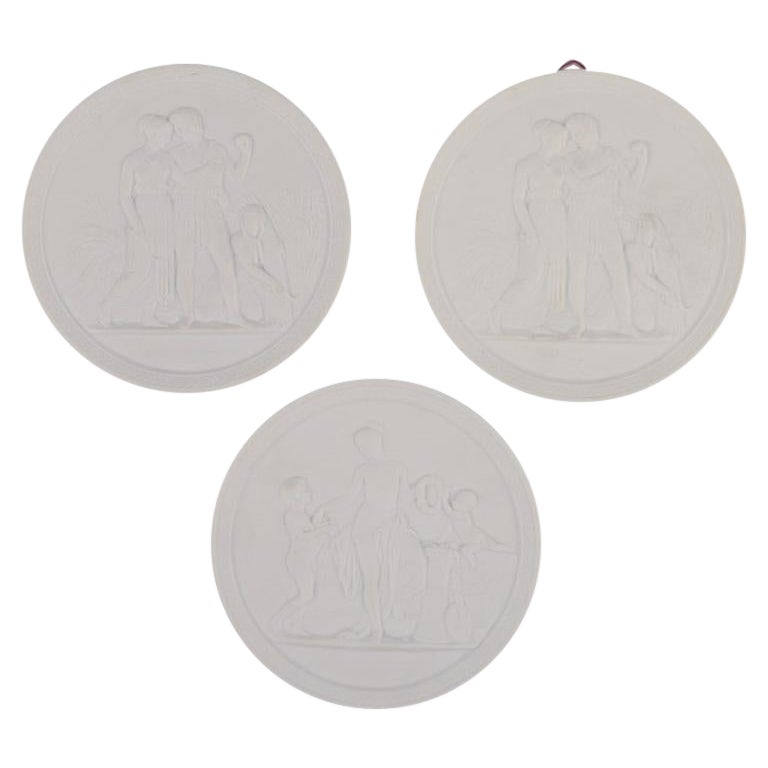
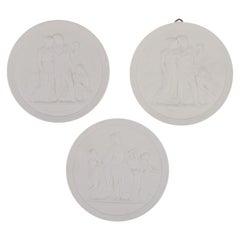
Royal Copenhagen. Three biscuit plates with motifs by Bertil Thorvaldesen.
Located in København, Copenhagen
Royal Copenhagen.
Three biscuit plates with motifs after Bertil Thorvaldesen.
Dating: 1958 and 1960.
Marked.
First factory quality.
Perfect condition.
Dimensions: Diameter: 14.0 cm.
Category
Mid-20th Century Danish Neoclassical Decorative Art
Materials
Ceramic
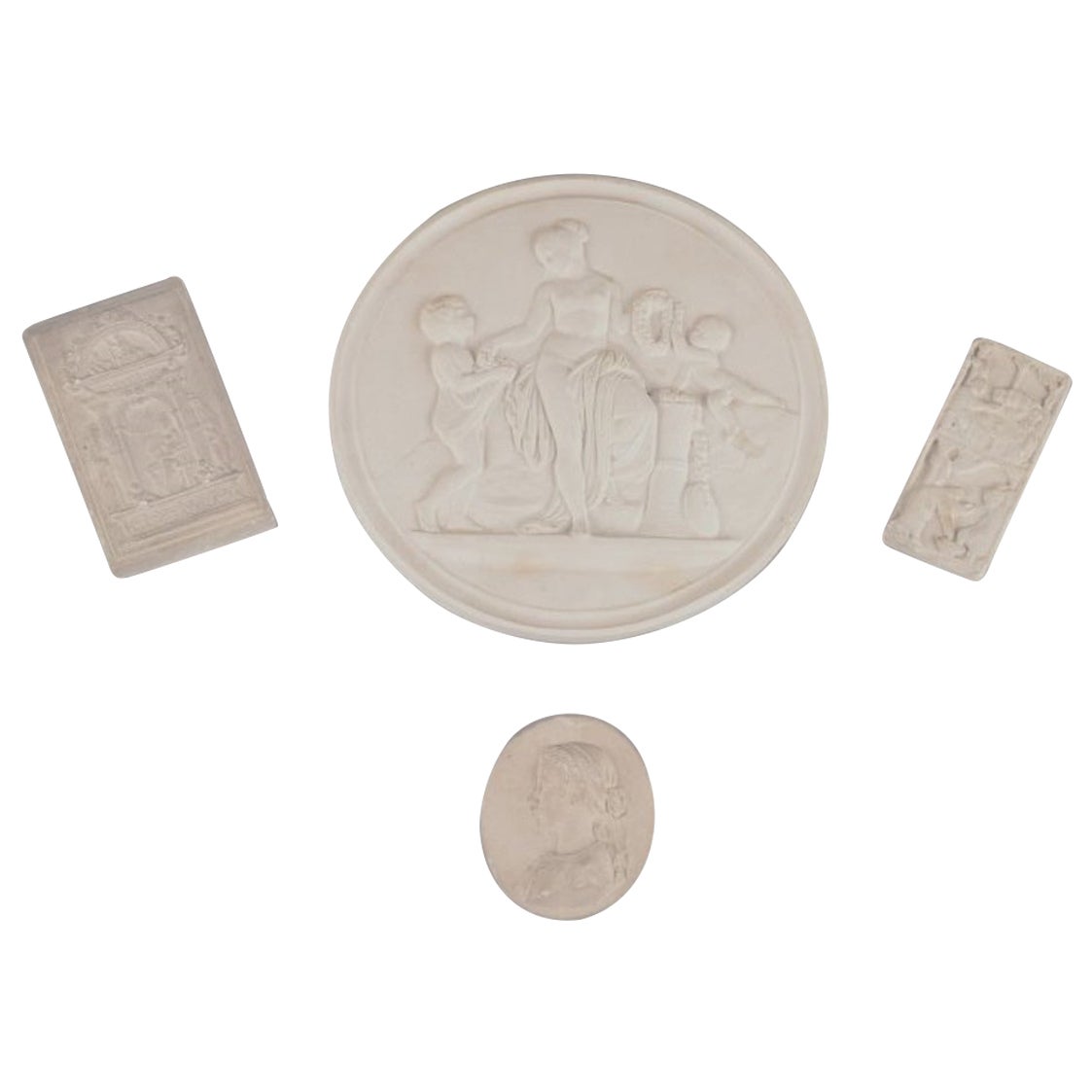
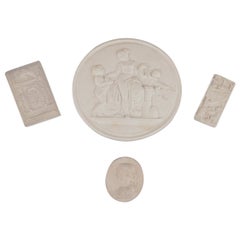
Four plaster wall reliefs. Approx. 1900
Located in København, Copenhagen
Four plaster wall reliefs. Large round plaque with Bertel Thorvaldsen motif, religious motif, and a woman in profile.
Circa 1900.
In excellent condition.
Hanging attachments on the b...
Category
Early 20th Century Scandinavian Decorative Art
Materials
Plaster
$240 / set
Bertel Thorvaldsen - Bing
Grøndahl Roundels, 19th Century
By Bertel Thorvaldsen
Located in Savannah, GA
A set of 3 Bing & Grøndahl bisque roundels after Bertel Thorvaldsen, 19th Century.
5 ⅜ inches wide by ½ inches deep
Category
Antique 19th Century European Wall-mounted Sculptures
Materials
Plaster

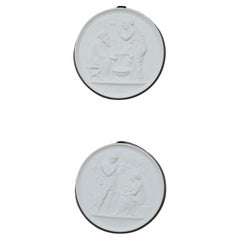
Pair of Antique Parian Ware Classical Bisque Porcelain Plaques C1880
Located in Big Flats, NY
Pair of Antique Parian Ware Classical Bisque Porcelain Plaques C1880
Measures- 5.75"H x 5.75"W x .5"D
Category
Antique Late 19th Century Porcelain
Materials
Porcelain
$440 Sale Price / set
20% Off