Want more images or videos?
Request additional images or videos from the seller
1 of 6
Early 20th Century Pictorial Khotan Rug
Price:$3,500
$5,120List Price
About the Item
- Dimensions:Width: 68 in (172.72 cm)Length: 108 in (274.32 cm)
- Style:Khotan (Of the Period)
- Materials and Techniques:Wool,Vegetable Dyed
- Place of Origin:
- Period:
- Date of Manufacture:circa 1930s
- Condition:Wear consistent with age and use.
- Seller Location:Chicago, IL
- Reference Number:Seller: R23331stDibs: LU92803540882
About the Seller
5.0
Platinum Seller
Premium sellers with a 4.7+ rating and 24-hour response times
Established in 1992
1stDibs seller since 2012
577 sales on 1stDibs
Authenticity Guarantee
In the unlikely event there’s an issue with an item’s authenticity, contact us within 1 year for a full refund. DetailsMoney-Back Guarantee
If your item is not as described, is damaged in transit, or does not arrive, contact us within 7 days for a full refund. Details24-Hour Cancellation
You have a 24-hour grace period in which to reconsider your purchase, with no questions asked.Vetted Professional Sellers
Our world-class sellers must adhere to strict standards for service and quality, maintaining the integrity of our listings.Price-Match Guarantee
If you find that a seller listed the same item for a lower price elsewhere, we’ll match it.Trusted Global Delivery
Our best-in-class carrier network provides specialized shipping options worldwide, including custom delivery.You May Also Like
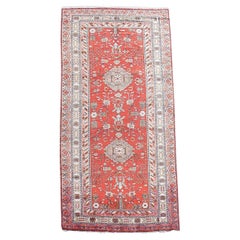
Antique Khotan Rug, Early 20th Century
Located in San Francisco, CA
Antique Khotan Rug, Early 20th Century
Additional Information:
Dimensions: 6'7" W x 13'8" L
Origin: East Turkestan
Period: Early 20th Century
Rug ID: 10157
Category
Early 20th Century East Turkestani Central Asian Rugs
Materials
Wool
Antique Khotan Rug, Early 20th Century
Located in San Francisco, CA
Antique Khotan Rug, Early 20th Century
Woven in an oasis town of the Tarim Basin in Xinjiang, a Turkic-speaking autonomous region in the far west of China, this piece is remarkably faithful to the drawing of much earlier Khotan...
Category
Early 20th Century East Turkestani Central Asian Rugs
Materials
Wool
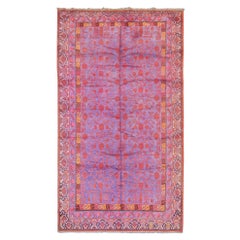
Early 20th Century Handmade Khotan Accent Rug in Brown
Located in New York, NY
An antique East Turkestan Khotan accent rug handmade during the early 20th century primarily bitonal in shades of brown. The small ivory motifs add a...
Category
Early 20th Century East Turkestani Rustic Chinese and East Asian Rugs
Materials
Wool
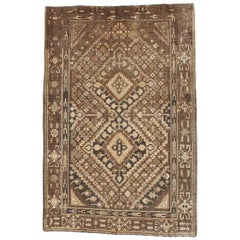
Early 20th Century Handmade East Turkestan Khotan Accent Rug
Located in New York, NY
An antique East Turkestan Khotan accent rug handmade during the early 20th century.
Measures: 4' 9" x 8' 11"
Category
Early 20th Century East Turkestani Rustic Central Asian Rugs
Materials
Wool
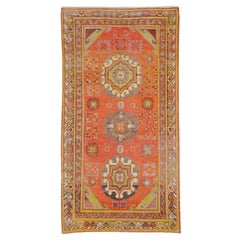
Zabihi Collection Early 20th Century Rich Blue Samarkand Khotan Rug
Located in New York, NY
Early 20th Century Blue Color Antique Khotan Gallery size rug
Details
rug no. j2674
size 6' 10" x 13' 2" (208 x 401 cm)
Category
Early 20th Century East Turkestani Bohemian Chinese and East Asian Rugs
Materials
Wool
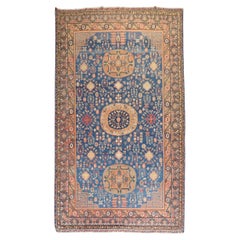
$15,000
Free Shipping
W 82 in L 168 in
Zabihi Collection Ivory Early 20th Century Khotan Gallery Size Rug
Located in New York, NY
Authentic early 20th century Khotan rug with repetitive pomegranate motif on an ivory ground. Dominant accents in apricot and brown, circa 1920
Measures: 5'9" x 11'6"
Khotan, a...
Category
Early 20th Century East Turkestani Chinese Chippendale Central Asian Rugs
Materials
Wool
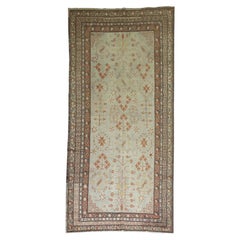
$5,750
Free Shipping
W 69 in L 138 in
Early 20th Century Khotan Wool Vase Design Watermelon Antique Rug
Located in New York, NY
An early 20th century full pile antique Khotan rug featuring a watermelon color field and green border. This piece is not worn like other Samarkand rugs found as previous owner kept ...
Category
Early 20th Century East Turkestani Bohemian Chinese and East Asian Rugs
Materials
Wool
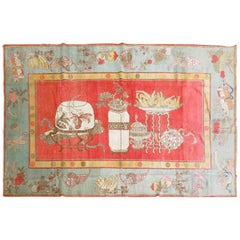
$8,500 Sale Price
22% Off
Free Shipping
W 71 in L 115 in
Galerie Shabab Collection Early 20th Century Handmade East Turkestan Khotan Rug
Located in New York, NY
An antique East Turkestan pictorial vase Khotan rug handmade during the early 20th century.
Measures: 4' 9" x 8' 7".
Category
Early 20th Century East Turkestani Rustic Chinese and East Asian Rugs
Materials
Wool
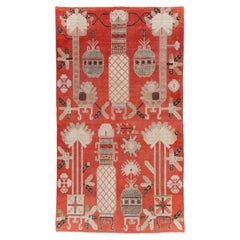
$6,375
W 57 in L 103 in
Early 20th Century Handmade East Turkestan Khotan Gallery Carpet
Located in New York, NY
An antique East Turkestan Khotan gallery carpet handmade during the early 20th century.
Measures: 6' 8" x 13' 1".
Category
Early 20th Century East Turkestani Rustic Chinese and East Asian Rugs
Materials
Wool
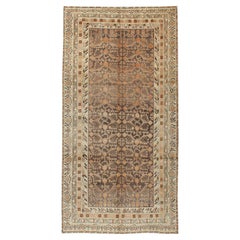
Early 20th Century Handmade East Turkestan Pomegranate Khotan Runner
Located in New York, NY
An antique East Turkestan Khotan rug in runner format with a pomegranate design handmade during the mid-20th century.
Measures: 2' 2" x 7' 6"
Central Asian Rugs
Carpets:
Central Asia is a vast area stretching from Northeastern Persia to western China, and from northern Afghanistan to the southern edge of Russia. The carpets can be usefully divided into three groups: the nomadic Turkmen rugs of Turkmenistan, northern Afghanistan, and northeastern Persia; the non-Turkmen tribal pieces from Kazakhstan, Uzbekistan, and Kirghizstan; and the urban creations of Khotan, Yarkand, and Kashgar, oasis cities of Western China (Xinjiang Province).
Commercially, the most important group is from Khotan, the easternmost of the Chinese Turkestan cities. The craft of rug weaving is primarily in the hands of Muslim Uighurs. Khotan carpets mix purely Central Asian design themes with Chinese elements. Native Khotan devices include pomegranate trees, upright flowers, round medallions, and yellow or red grounds. Chinese motives include triangular fretwork corners, swastika fretwork, and Yun-Tsao Tou (clouds and rain) diagonally striped polychrome borders. Cotton foundations, asymmetrical (Persian) knots, and medium weaves are standard. Some vintage Khotan are in horizontal, pictorial layouts with multiple various vases and plants. Saphs (multiple prayer niche panel carpets) are also a Khotan specialty. Others employ stepped and layered lozenge medallions, singly or in pairs. Still others, almost all antique, feature a stylized version of the allover Persian Herati design. Many of the oldest pieces employ brown wool wefts. Antique and vintage Khotans are almost always in the k’ang (double square) layout, conforming to the local household plans. Only relatively recently has the 6’ by 12’ or 7’ by 16’ format been replaced by the 9’ by 12’ size. As a result, an antique room size Khotan carpet is very uncommon. Reds are cinnamon, tomato and rust, never wine reds, crimson, or scarlet. Yarkand, farther west on the old Silk Road specializes in multi-medallion long carpets while Kashgar, farthest west and most under Persian influence, has traditionally knotted allover pattern pieces with finer weaves, often with silk piles, and enriched with medal thread, on cotton foundations. Extant Kashgars go back to the 17th century, but the carpet craft in Chinese Turkestan must be much older as fragments have been recovered from local tombs of the early C.E. period. Kashgars are the rarest of all East Turkestan rugs. Most available vintage East Turkestan carpets are interwar Khotans, many with pleasingly soft decorative palettes.
The non-Turkmen nomads include the Kazakh, Kirghiz, Uzbek, and Karakalpak groups. Like the Turkmen, they were once all seasonally migratory, dwelling in round felt tents (yurts), but have been settled, at least partially, in the villages, and have taken up crafts and agriculture instead of sheep herding. As a result, carpet production has transitioned from domestic tent use to commercial sale, but the roots of long traditions are still evident. The Uzbeks weave...
Category
Early 20th Century East Turkestani Modern Central Asian Rugs
Materials
Wool
More From This Seller
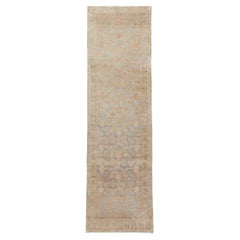
View AllEarly 20th Century Khotan Rug
Located in Chicago, IL
A beautiful early 20th century East Turkestan Khotan rug with several medallions with stylized flowers woven in muted colors inducing gold, crimson, pink, and brown against a coral c...
Category
Vintage 1930s East Turkestani Khotan Central Asian Rugs
Materials
Wool
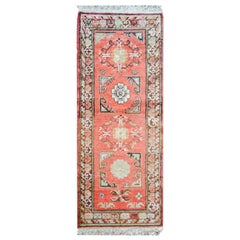
Handsome Early 20th Century Khotan Rug
Located in Chicago, IL
A handsome early 20th century Central Asian Khotan rug with three circular medallions in the center amidst a field of stylized flowers and trees-of-life surrounded by a border contai...
Category
Vintage 1930s Central Asian Khotan Central Asian Rugs
Materials
Wool
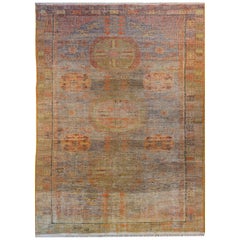
Amazing Early 20th Century Khotan Rug
Located in Chicago, IL
An amazing early 20th century Central Asian Khotan rug with a wonderful burnt red or orange abrash background with a large central pale indigo medallion surrounded by a field of tree...
Category
Vintage 1930s East Turkestani Khotan Central Asian Rugs
Materials
Wool
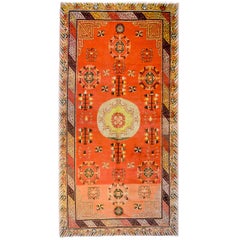
Exceptional Early 20th Century Khotan Rug
Located in Chicago, IL
An early 20th century Central Asian Khotan rug with a beautiful orange field of pomegranate, trees-of-life, and floral patterns. The border is wonderfully rendered consisting of a Bu...
Category
Vintage 1920s Central Asian Khotan Central Asian Rugs
Materials
Wool
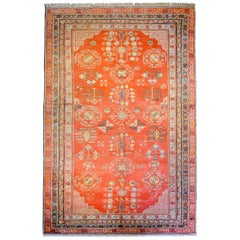
Extremely Rare Early 20th Century Pictorial Chinese Rug
Located in Chicago, IL
An extremely rare early 20th century pictorial Chinese rug depicting Chinese scholar's objects like potted peonies and chrysanthemums, citron (Buddha's Fingers) with a censor, and a peach, all symbols of longevity and prosperity. The border is wonderful, with a wide floral and vine pattern running in a circular fashion around the rug. The rare quality of this rug lies not in the imagery, but in the color. Most Central Asian rugs utilize crimsons, golds, oranges, and natural brown wools, however this example is woven mostly in varying shades of indigo, reminiscent of traditional Chinese blue and white pottery.
Category
Vintage 1920s Chinese Khotan Central Asian Rugs
Materials
Wool

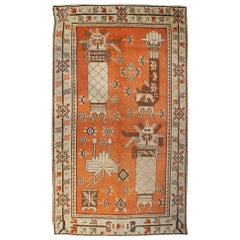
Early 20th Century Pictorial Khotan Rug
Located in Chicago, IL
A wonderful and bold early 20th century central Asian pictorial Khotan rug made for the Chinese market with wonderful Buddhist symbols. Details includ...
Category
Vintage 1930s East Turkestani Khotan Central Asian Rugs
Materials
Wool
Still Thinking About These?
All Recently ViewedMore Ways To Browse
1970s Glass Dining Table And Chairs
Chrome Coffee Table 1970
Vintage Bauhaus Chair
80s Furniture
Vintage Chesterfield
Baroque Walnut Table
Beige Pedestal
Boucle Dining Chair
Circa 1825
Forged Iron Table
Marble Rounded Dining Table
Midcentury Rosewood Dining Table
Spanish Dining Table And Chairs
Stickley Oak
Swedish Antique Chairs
Danish Modern Extendable Dining Table
Dinner Plates England
French Black Coffee Table