December 7, 2025When a person reencounters a house they once knew, the experience can evoke memories in the most inspiring ways. Such was the case for U.S.-born, U.K-based interior designer Henri Fitzwilliam-Lay. Not long ago, she had a flash of recognition upon seeing photos of a home in Gassin, in the South of France. She had once stayed in that very house, and now, more than two decades later, British clients who had recently bought it were engaging her to reimagine it as their new family retreat.
Set in a medieval hilltop town with views of the sea, the 3,300-square-foot structure, built in the 1980s in Provençal style, retained a certain charm but required reinterpretation. Its main challenge was an awkward layout that made it all but usable as a family getaway. Its decoration, meanwhile, felt tired and too on the nose in its adherence to local aesthetic traditions. The clients wanted more ease, as well as a more sophisticated, nuanced authenticity — rooms with warmth, tactile details and a sense of place that felt timeless rather than thematic.

cabinets displaying vintage French pottery, including Vallauris pieces. Above the fireplace is a Julian Chichester mirror, and over each cabinet is a Ronan Bouroullec print. Photos by Ingrid Rassmusen
Fitzwilliam-Lay was ideally placed to take on this task. Not only had she spent two weeks in that house 25 years ago, but she and her family also have a home a 15-minute drive away, in Ramatuelle. “So, I’m very much embedded in the area,” she says, noting that this enabled her to bring local knowledge and a network of contractors and tradespeople to the project.
Fitzwilliam-Lay established her London studio in 2004, after careers as a fashion stylist and art director for brands like Bergdorf Goodman and Brooks Brothers. Since then, she has built a reputation for creating residential interiors layered with personality, blending the vintage and the new with a touch of irreverence. “We like to create a little story in our minds,” she says. “I’d say there’s always a cinematic quality to our work.”

For this house, inspiration began with a 2001 catalogue for the Steven Meisel photography exhibition Four Days in LA: The Versace Pictures, comprising a series of highly stylized, glamorous images of models placed in opulent interiors. “I bought the book, featuring Amber Valletta looking fabulous, and started to play around when we were designing the rooms,” Fitzwilliam-Lay recalls. “It felt like something you can really do in a holiday home.”

The clients — a midlife couple with college-age children — wanted a home they could use throughout the year, suitable for indoor-outdoor living, with generous entertaining spaces. “They’re quite like us, in that they like to go there out of season,” says the designer, who deployed materials that work as well on winter days as in high summer: local flagstone floors, terracotta tiles and an artisanally applied limewash on the walls that complements the soft Provençal light. “Wintertime in the South of France can be wet and gloomy,” she explains. “So, we wanted it to feel snuggly.”


In terms of decor, Fitzwilliam-Lay went for a layered look defined by a textured, eclectic aesthetic that blends contemporary finds with antique gems.
In the entrance, an air-conditioning unit is cleverly concealed by a custom console whose shelves hold a mix of old and new pots; characterful vintage table lamps, bought from the home’s previous owners, have been updated with custom shades. On the walls, delicate shell sconces from Rose Uniacke glow in harmony with the classic, softly luminous Charles Edwards pendant lanterns, while an antique shell console from LCT Home, placed near plates found at London’s Battersea Antiques Fair, is both playful and decorative.
In the main hall, where stairs lead up to the primary bedroom, a refined hexagonal table set beneath a sculptural pendant light with a leaf motif becomes a central navigation point.

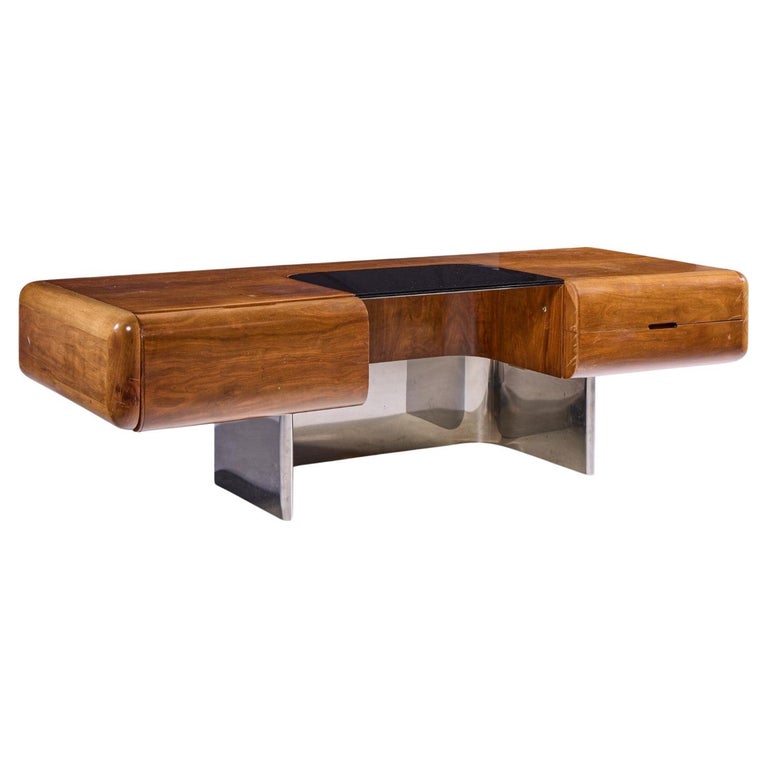
The sunny living room, says Fitzwilliam-Lay, epitomizes the spirit of the entire project — languid, sensuous and reminiscent of the inspirational Meisel images. A 1970s Tommaso Barbi coffee table here is one of her favorite finds. A jute rug adds to the softness of the room’s lines and materials; the sofas, upholstered in linen, lend it an easy elegance.
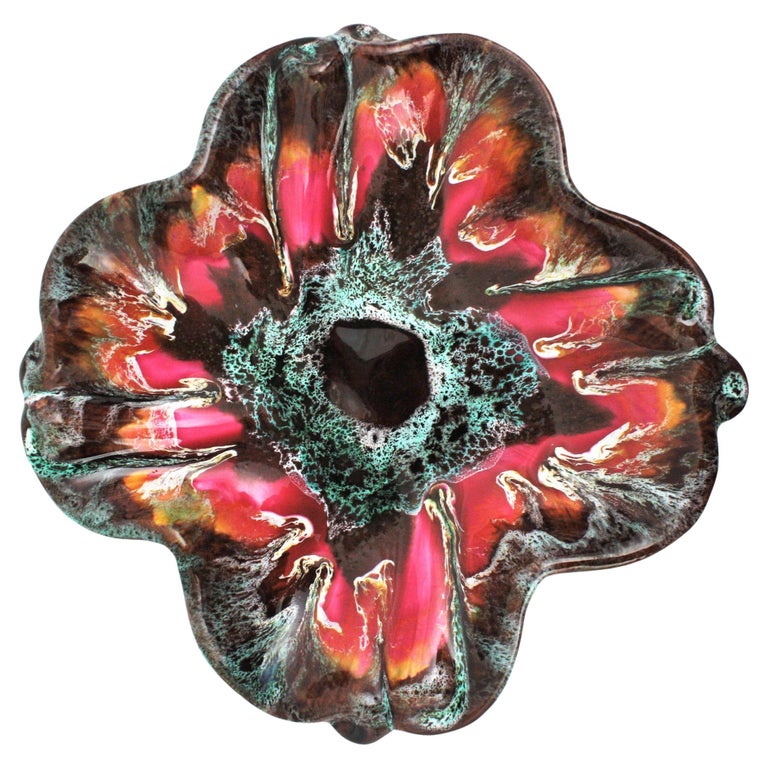
Flanking the limestone fireplace are a pair of custom painted-wood cabinets — one concealing a television, the other used for storage. To display on top of the cabinets, Fitzwilliam-Lay collected vintage French pottery, much of it Vallauris and found locally.


For the dining room, which, like the rest of the house, combines modernity with vintage touches, Fitzwilliam-Lay sourced a large table by Julian Chichester and a green seagrass rug, whose hue echoes that of a custom credenza hand-painted by trompe l’oeil specialist Ian Harper. To this, she added a set of vintage Thonet chairs, sourced through Vintiques, as well as brass equestrian sculptures and a framed map, both French-flea-market finds.
In the primary bedroom, a mirror-topped vintage desk introduces a sophisticated serenity. A vintage brass chair upholstered in Christopher Farr’s Wanderer fabric provides sculptural punctuation. A vintage glass-topped metal table was unearthed from the underbrush in Fitzwilliam-Lay’s own French garden.


The cumulative result of the designer’s work is a home that feels generous and comfortable, both rooted in Provençal tradition and gently cosmopolitan. Ultimately, it is designed for lingering. The calm palette, soft textures and collection of unique pieces create a rhythm that defines life in the Côte d’Azur.
“I really like that not everything was planned and prescribed,” Fitzwilliam-Lay concludes. “The minute you layer things that are slightly offbeat, unintended, that give a house a sense of history and timelessness, that’s really pleasing.”