Articoli simili a 18th Century, Pair of Italian Paintigs with Still Life by Angelo Vacca
Vuoi altre immagini o video?
Richiedi altre immagini o video al venditore
1 di 20
18th Century, Pair of Italian Paintigs with Still Life by Angelo Vacca
34.500 €IVA inclusa
Informazioni sull’articolo
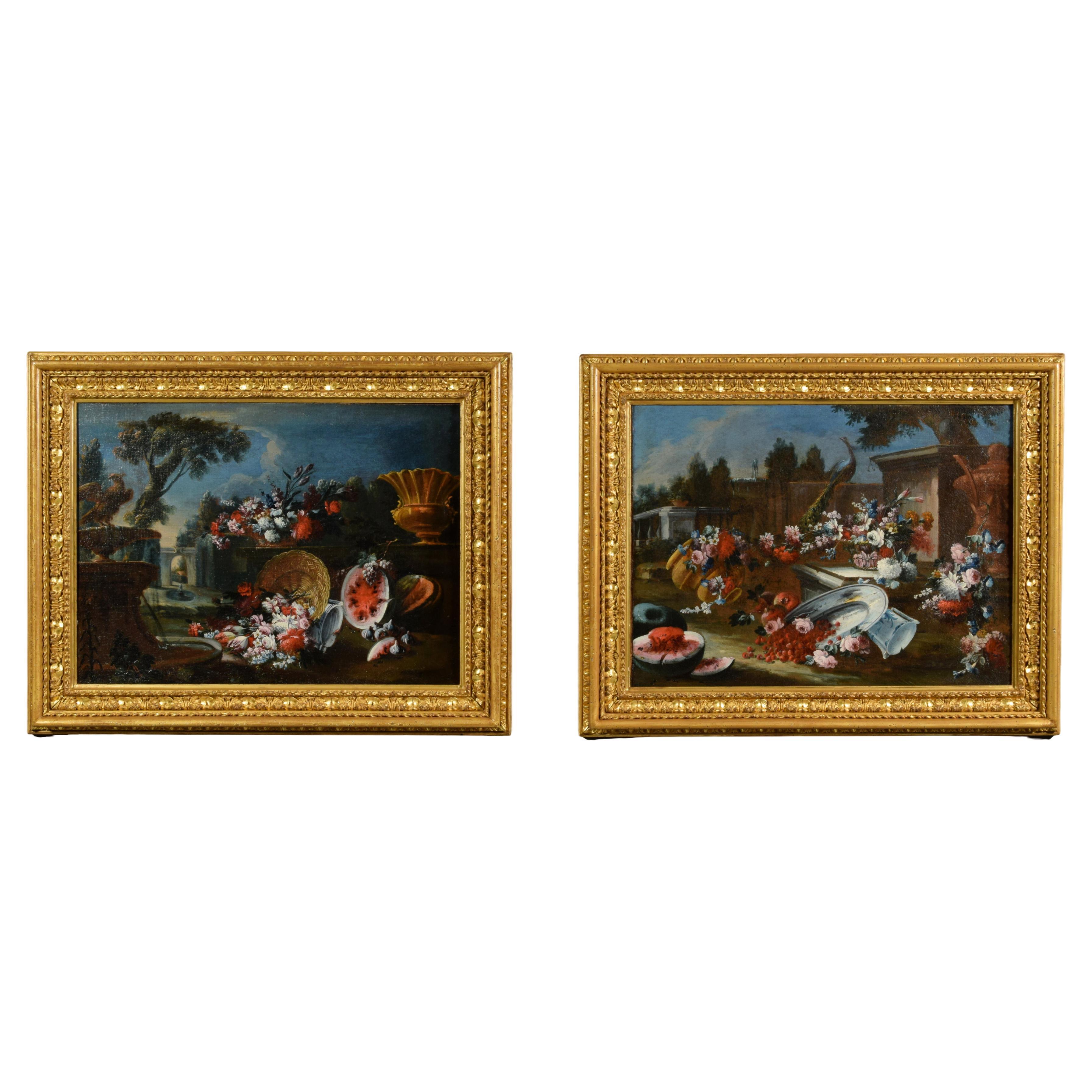
18th Century, Pair of Italian Paintigs with Still Life attr. by Angelo Bartolomeo Vacca sr
Oil on canvas, cm W 105,5 x H 75,5 x D 7; only canvas cm W 93,5 x H 63
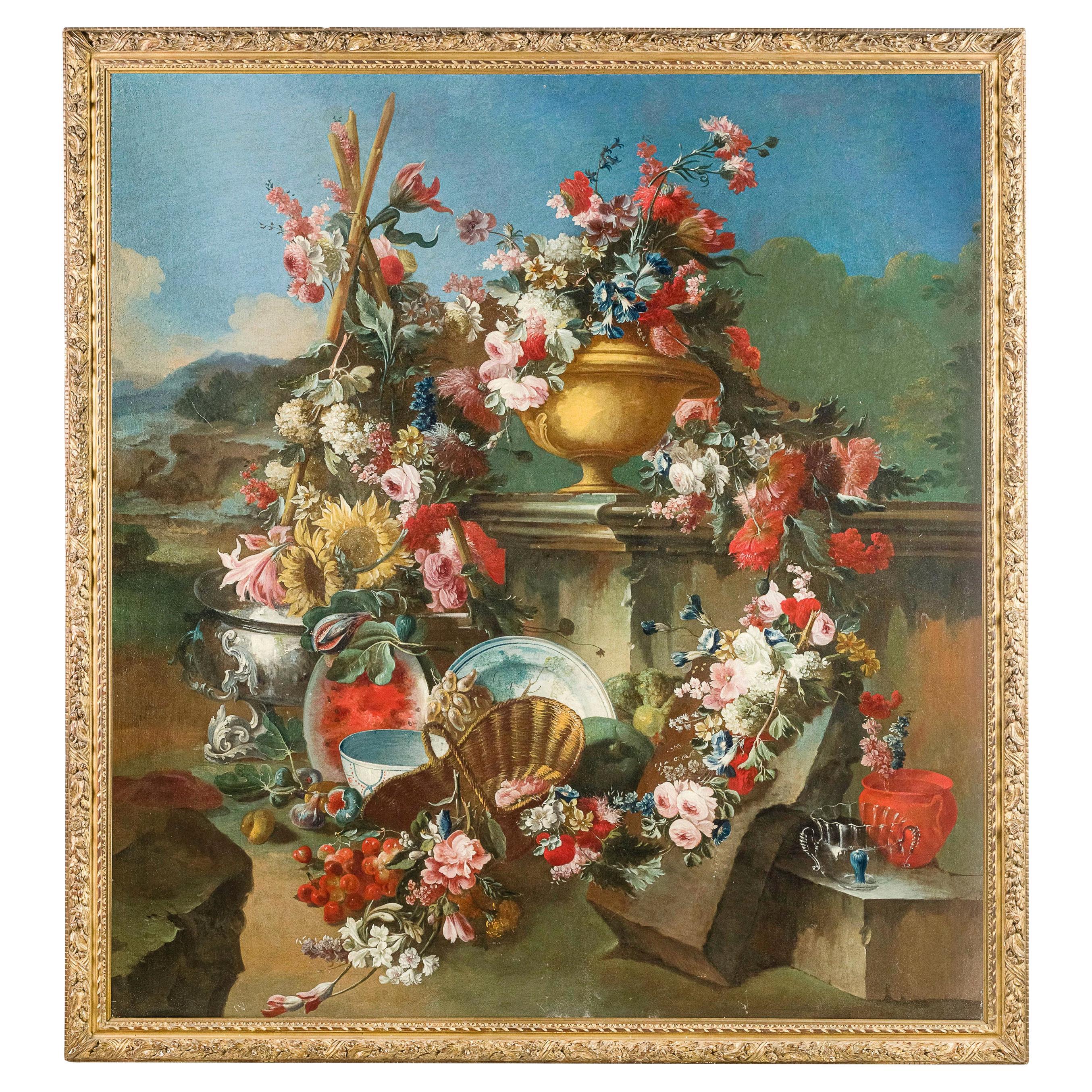
The paintings, made in oil on canvas and in good condition, depict two still lifes with compositions of flowers and fruits. Stylistically they are attributable to the painter Angelo Bartolomeo Vacca senior (Italy, Turin, 11 July 1746 - 30 December 1814) active in Turin, in Italy, in the second half of the eighteenth century.
The painting presented here on the left depicts a ceramic vase with blue decorations filled with a sumptuous composition of flowers that falls softly towards the ground. In the foreground on the right, a serving dish is placed obliquely on a low wall and on it are placed some fruits: white, black grapes, a mushroom, peaches. Above the wall other flowers chromatically balance the composition. On the left in the foreground, an architectural base surmounted by a vase emerges from the frame, on which some flowers and bluebells bring light and color. The still lifes described are inserted in a context of outdoor garden, with large trees with lush green fronds, some rocks that draw a path that is lost in the distance. The clear blue sky gives brightness to the whole.
Pendant of this painting is the still life presented here on the right. In a similar and similar landscape, a large terracotta vase decorated with acanthus leaves in bas-relief stands in the centre of the canvas. Inside the vase are collected a set of flowers of the same type and color of the painting analyzed above. On the ground lie other cut flowers, vine leaves and black grapes, some peaches. In the foreground on the right, a plant in backlight, similar to the base described above, acts as a fifth to the scene, creating vivacity and depth to the composition, played on several levels of perspective. The still life of flowers, with its bright and saturated colors, stands out against a darker background, recreated by the insertion of a large tree with lush foliage. The sky, serene and light tones, is marked by some vaporous cloud.
The two paintings are very close to some works by Angelo Vacca made for prestigious clients and royal palaces.
The figure and the work of the painter Angelo Vacca senior are still little known within the complex Turin painting of the second eighteenth century. He was born in 1746 to Giorgio Vacca, descendant of the marquises Vacca di Saluzzo and rich shopkeeper of Turin, and Margherita Navés. From his marriage (1777) to Margherita Cometto he had five children, Luigi, Felice, Giovanni, Carlo and Simplicio, all painters. In 1780 Angelo Vacca’s career as a painter was already well underway: he already appeared in the Royal Almanac, a sign that was then known and established within the artistic community of the sub-Alpine capital. His name also appears among the artists of the Academy of Painting in Turin; in 1792 he was among the Academy’s Councillors; in 1794 among the Academy’s Promoters; in 1788 he had even become Prior of the Academy; in 1797 he was again among the Councillors. On 18 October 1778 he appears on the register of the brothers of the Compagnia di San Luca. On 9 December 1787, he was registered with the Professors of the Arts of Drawing.
Vacca senior worked a lot in Turin at the service of the Savoys and noble families and also in some centers of the province. "Beloved", is remembered " virtuous Painter in every genre", capable both in the portrait as in the landscape, in the still life, in the miniature, and in the scenographic design: a versatile and eclectic artistic personality, certainly not common.
Some documented, signed and dated works by Angelo Bartolomeo Vacca senior are known, while others have been attributed to him with reasonable certainty by critics.
Among the most significant works are those paid in 1789 for the parade apartment of the Dukes of Aosta, Royal Palace of Turin, in which he paints paintings depicting allegorical cherubs of refined pictorial rendering and purely French taste that testify to his skill and mastery of the media.
Also for the Royal Palace, in the apartment of Madama Felicita (the sister of Vittorio Amedeo III of Savoy), he created a series of overlapping depicting putti and still lives. Also datable around 1789, they are of fundamental importance for the history of still life in Piedmont, because in them you can read very well the stylistic transition from the rocaille ways of Michele Rapous, with whom it has often been confused, to the still life of neoclassical taste.
Angelo Vacca developed a very vast and articulated artistic activity also for churches, theatres and Piedmontese palaces. In 1787 he painted for the Teatro Carignano, in the Royal Castle of Rivoli, in the Sala dei Falconieri (formerly the Apartment of the Dukes of Aosta) between 1783/1784; he was in Stupinigi between 1790 and 1791. We also find it active for the Church of the Madonna del Pilone and in the building in Via dell'Arsenale in Turin.
The works in question are presented inside frames in gilded wood and carved in baroque style.
We apologize for any translation errors from Italian. Please contact us to have the expertise in Italian.
- Dimensioni:Altezza: 76 cm (29,93 in)Larghezza: 106 cm (41,74 in)Profondità: 7 cm (2,76 in)
- Stile:Neoclassico (Del periodo)
- Materiali e tecniche:
- Luogo di origine:
- Periodo:
- Data di produzione:Late 18th Century
- Condizioni:Usura compatibile con l’età e l’utilizzo.
- Località del venditore:IT
- Numero di riferimento:1stDibs: LU4405233521302
Informazioni sul venditore
5,0
Venditore professionale selezionato
Ogni venditore supera rigorosi standard di autenticità e affidabilità
Fondazione nel 1980
Venditore 1stDibs dal 2019
57 vendite su 1stDibs
Tempo di risposta standard: <1 ora
- SpedizioneRecupero del preventivo…Spedizione da: Italia
- Politica di reso
Alcune parti di questa pagina sono state tradotte automaticamente. 1stDibs non può garantire che le traduzioni siano corrette. L’inglese è la lingua predefinita del sito.
Altro da questo venditore
Mostra tuttoXVIII secolo, Coppia di nature morte italiane, attribuita a Francesco Lavagna
Di Francesco Lavagna
Francesco Lavagna (Italia, Napoli 1684-1724)
Coppia di dipinti raffiguranti composizione di natura morta con fiori e anguria e giardino sullo sfondo
I dipinti, di ottima fattura e ...
Categoria
Di antiquariato/d’epoca, Inizio XVIII secolo, Italiano, Barocco, Dipinti
Materiali
Tela
18° secolo, Due nature morte con fiori e frutta da dipinti italiani
Pittore piemontese della seconda metà del XVIII secolo
Due "Nature morte con composizione di fiori, frutta e funghi".
Misure: Cornice: cm L 63 x H 74 x P 8,5
cornici cm L 39,5 x ...
Categoria
Di antiquariato/d’epoca, XVIII secolo, Rococò, Dipinti
Materiali
Tela, Legno dorato
18° secolo, Dipinto italiano con natura morta di Francesco Lavagna
Di Francesco Lavagna
Dipinto italiano del XVIII secolo con natura morta di Francesco Lavagna.
Il raffinato e imponente dipinto, accompagnato da una cornice in legno intagliato e dorato, raffigura una so...
Categoria
Di antiquariato/d’epoca, Inizio XVIII secolo, Italiano, Rococò, Dipinti
Materiali
Tela
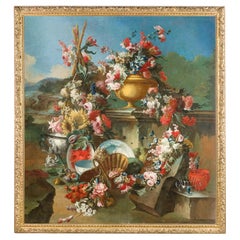
Late 18th, Italian Still Life by Michele Antonio Rapos
Di Michele Antonio Rapos
Michele Antonio Rapos (Turin, 1733–1819), Still Life with Flowers and Fruit
Oil on canvas; frame: cm W 127 x H 101 x D 7; tela cm W 106 x H 80
This fine painting, presented in an i...
Categoria
Di antiquariato/d’epoca, Fine XVIII secolo, Italiano, Rococò, Dipinti
Materiali
Tela
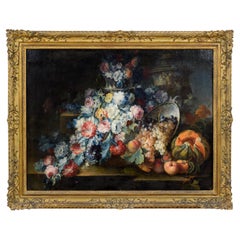
Dipinto di natura morta italiano del XVIII secolo attribuito a Francesco Lavagna
Di Francesco Lavagna
Francesco Lavagna (Italia -Napoli 1684-1724)
"Natura morta con fiori, anguria ed erme con giardino sullo sfondo"
Il dipinto, di ottima fattura e in buone condizioni, raffigura una s...
Categoria
Di antiquariato/d’epoca, Inizio XVIII secolo, Italiano, Barocco, Dipinti
Materiali
Tela
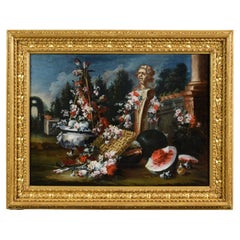
Natura morta con fiori di Michele Antonio Rapos, 18° secolo, Italia
Di Michele Antonio Rapos
XVIII secolo, coppia italiana di nature morte con fiori e frutta di Michele Antonio Rapos
Misure: Olio su tela, diametro 71 cm, con cornice diametro 80 cm x L 5 cm
Le due tele circ...
Categoria
Di antiquariato/d’epoca, Fine XVIII secolo, Italiano, Rococò, Dipinti
Materiali
Tela
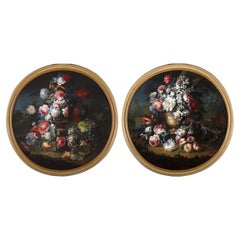
33.600 € Prezzo promozionale
20% in meno
Spedizione gratuita
Ti potrebbe interessare anche
Coppia di nature morte italiane dipinte a olio su legno del XVII secolo
Una bella coppia di nature morte italiane dipinte a olio su legno del XVII secolo. Ogni dipinto è inserito nelle cornici rettangolari originali in legno dorato screziato con un raffi...
Categoria
Di antiquariato/d’epoca, XVII secolo, Italiano, Dipinti
Materiali
Legno
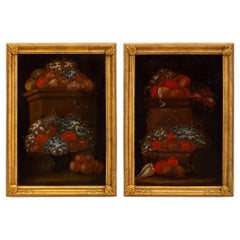
Coppia di nature morte italiane della fine del XVIII secolo olio su tela
Una coppia tradizionale di nature morte olio su tela, ognuna delle quali raffigura un'urna in stile neoclassico con disegni di figure umane. Ogni urna è adornata con fiori all'intern...
Categoria
Di antiquariato/d’epoca, Fine XVIII secolo, Italiano, Dipinti
Materiali
Tela, Legno dorato, Pittura
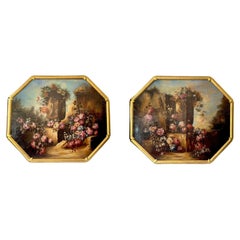
Coppia di olii del periodo rococò italiano raffiguranti composizioni floreali, metà del XVIII sec.
La coppia di oli su tela raffigura composizioni floreali, una in un cesto, l'altra in un vaso, entrambe su plinti, ognuna con abitazioni e montagne in lontananza, una con un uccello ...
Categoria
Di antiquariato/d’epoca, Metà XVIII secolo, Italiano, Rococò, Dipinti
Materiali
Pittura
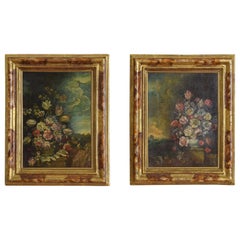
Coppia di tele ad olio con natura morta "Bodegón" di Anonimo spagnolo del XVIII secolo
Coppia di nature morte anonime spagnole "bodegón" del XVIII secolo, olio su tela con cornice, provenienti da Maiorca.
Categoria
Di antiquariato/d’epoca, XVIII secolo, Spagnolo, Dipinti
Materiali
Tela
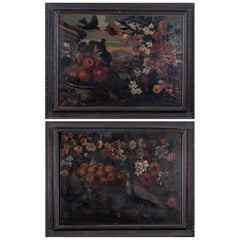
coppia di dipinti olio su tela e legno dorato del XIX secolo continentale
Una coppia elegante e di alta qualità di dipinti olio su tela e legno dorato del XIX secolo. Ogni splendida natura morta a pastello è incastonata nella sua cornice originale in legno...
Categoria
Di antiquariato/d’epoca, XIX secolo, Dipinti
Materiali
Legno dorato, Pittura
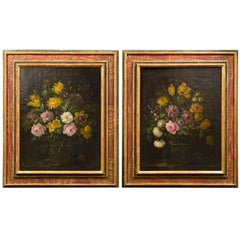
Coppia di nature morte floreali italiane
Coppia di nature morte floreali di scuola italiana, inizio XIX secolo, in cornice fiorentina.
Categoria
Di antiquariato/d’epoca, XIX secolo, Italiano, Barocco, Dipinti
Materiali
Tela
8483 € / set