Articoli simili a MCM German artist astratto Paul Magar - Pittura cubista e orfista su tavola
Caricamento del video
Vuoi altre immagini o video?
Richiedi altre immagini o video al venditore
1 di 22
MCM German artist astratto Paul Magar - Pittura cubista e orfista su tavola
3068,88 €
Informazioni sull’articolo
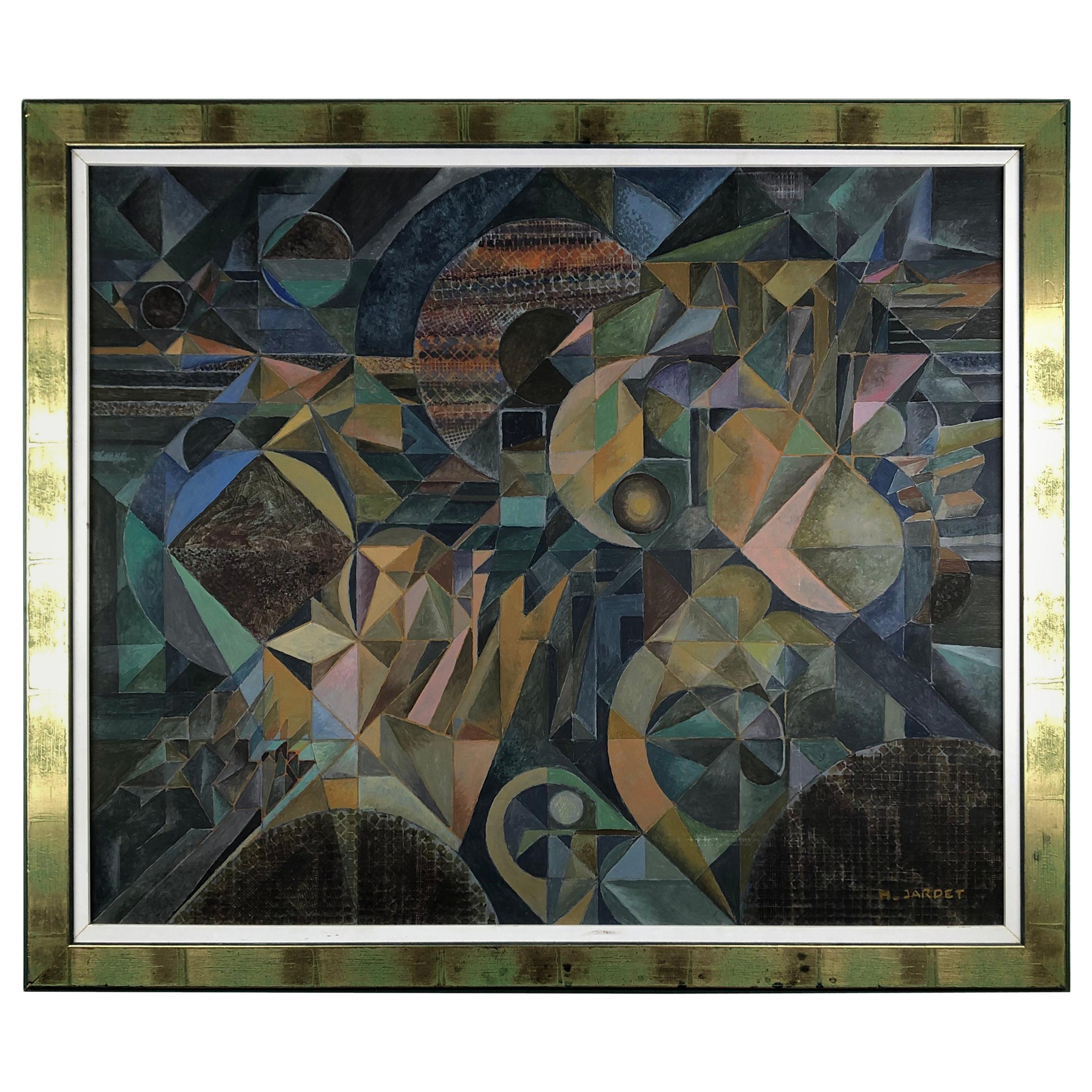
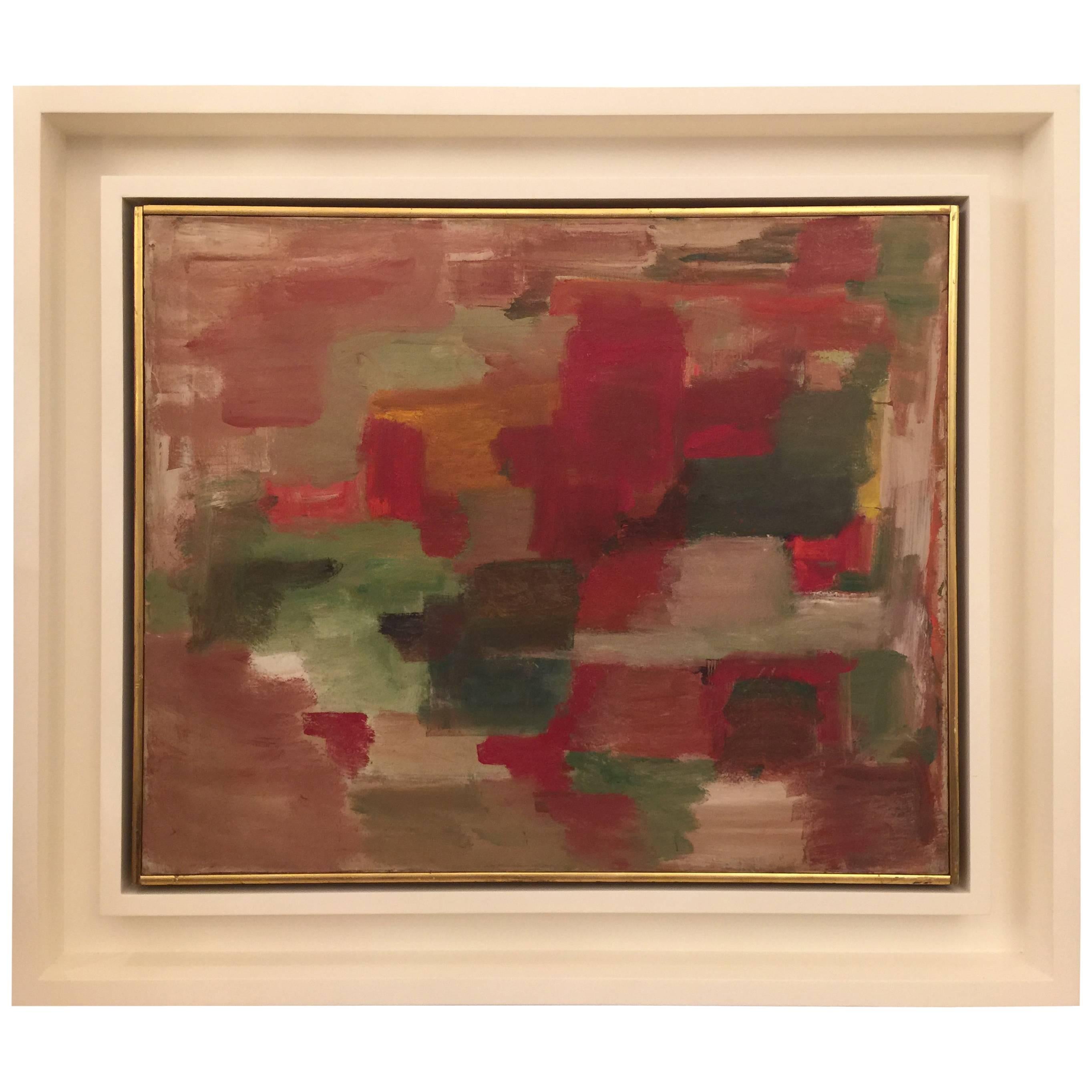
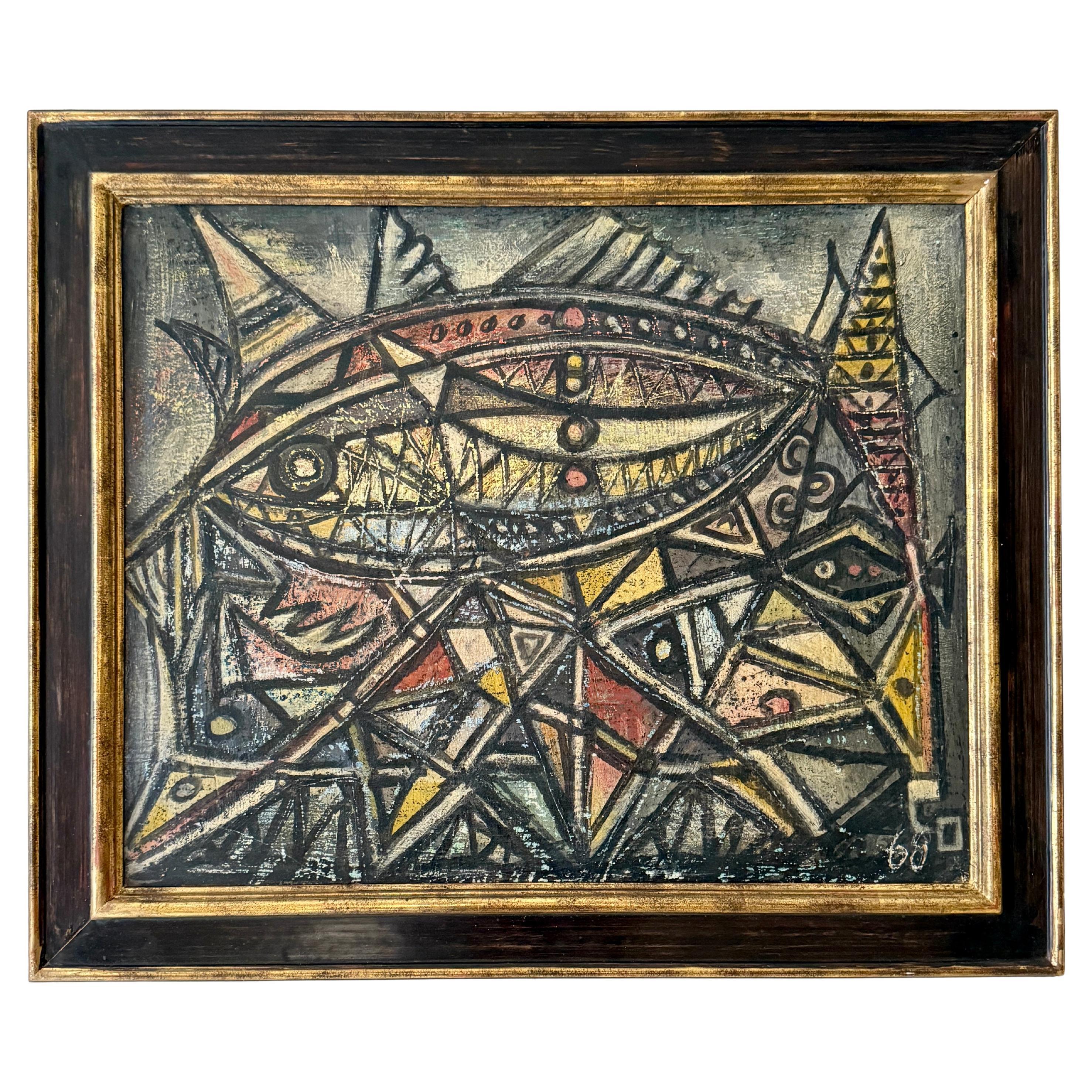
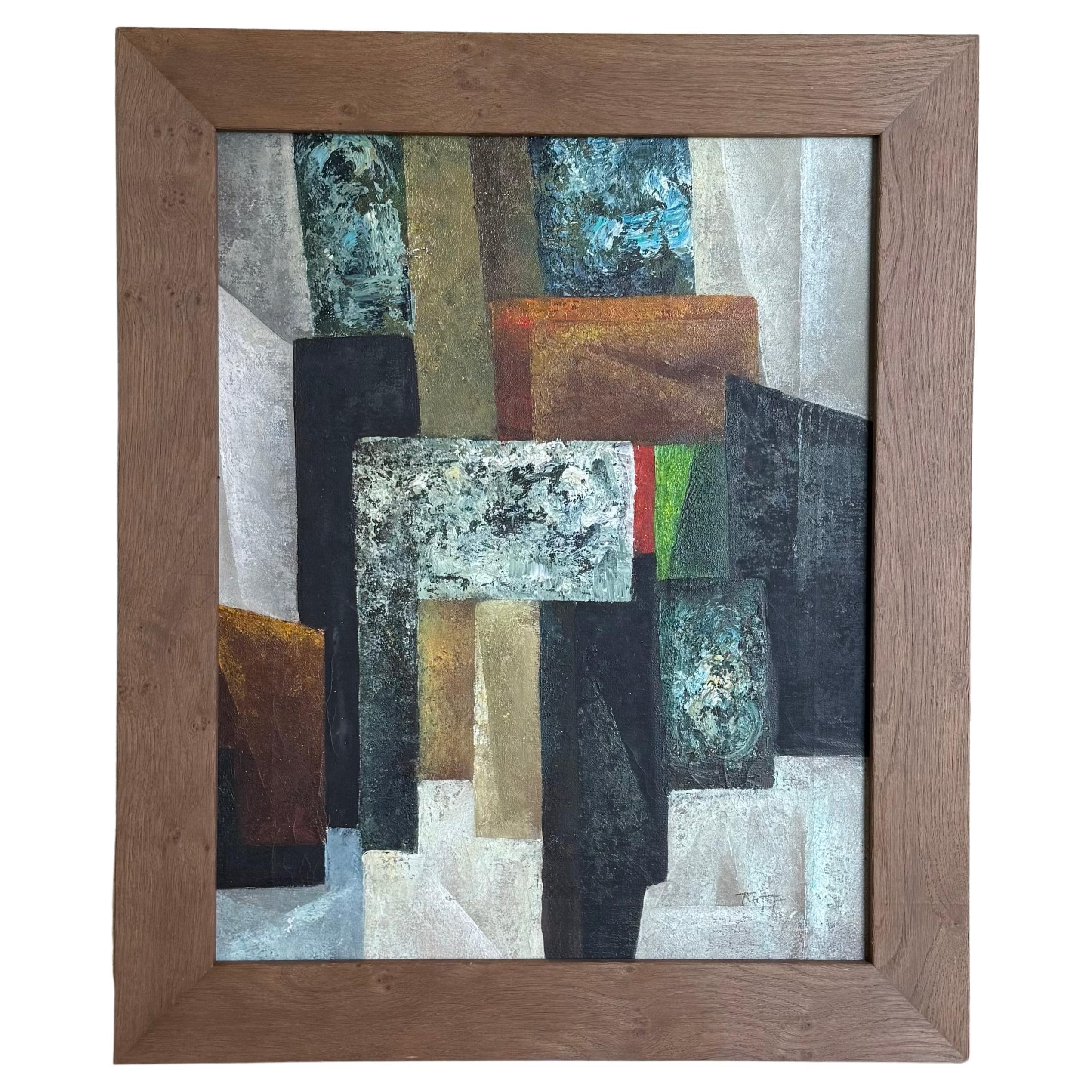
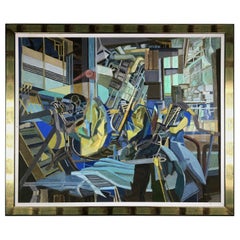
Paul Magar (1909-2000) Germany. Oil on board Titled: "On the Beach " Magar a painter from Trier, studied under Wendling and Klewer. Mid-Century Modern Cubist influenced, geometric abstraction oil painting on board of three figures. Signed lower right, title Am Strand or "On the Beach", Privatbesitz or "Private Collection" and stamped Paul Mayer Bad Godesberg on verso. Frame 25" h x 35.13" w x 1.5"d Board 19.75"h x 30"w.
Magar started with realism, and engaging with Cubism, Orphism, abstraction, and Pop Art after World War II, he developed into one of the most interesting artists of his generation in the Rhineland. His colorful paintings, his motifs of landscapes and cities, of people and situations, as well as his distinctive pictorial structures, are unmistakable. His art conveys sensuality and spirituality, formal power, and a unique affirmation of life. Paul Magar seeks traces of harmony and beauty in the world and in art, for which he has found his own unique visual language. His images linger in the mind…
School of Werner Drewes (German-American)... Drewes was a painter, printmaker, and art teacher. Considered to be one of the founding fathers of American abstraction, he was one of the first artists to introduce concepts of the Bauhaus school within the United States
Hugo Borger wrote... Magar's distinctive artistic style is rooted in his very nature. A fundamental characteristic is his inherently conservative approach. On this foundation, he constructs the visual structures of his painterly worldview. These structures are multifaceted in their geometric calculations, which possess the unique quality of dividing large forms into distinct areas. These areas are juxtaposed as dynamic forces and brought to life through the use of color values. In this realm, Paul Magar has developed an independent and internally consistent color culture and successfully brought it to vibrant expression... High technical skill is evident in Magar's paintings; his nuanced, almost atmospheric use of color is immensely captivating. Through the overlapping of his lines, the shifting of his contours, and the constructed mathematical spatial order, the artist Paul Magar achieves a compelling three-dimensional spatial reality..."
Paul Magar was one of the most distinguished artists of his generation in Bonn and the Rhineland region as a whole. After losing all of his early work in the war, he started painting again in 1947. Inspired in particular by French and German modern artists, he developed his own unique signature from the 1950s. Starting with Realism, he consistently reduced his vocabulary of form and preoccupied himself intensively with Cubism, Orphism and abstraction. His pictures are characterized by clear structures, well-balanced compositions and colourfulness. In his work, he interpreted his travels all over the world as well as views of local towns, landscapes, religious scenes and impressions of the world of technology and traffic. Even in small format, his especially atmospheric paintings have an almost monumental harmonious effect
Bio:
From 1922, Paul Magar attended the Friedrich-Wilhelm-Gymnasium, a classical secondary school in Trier, where he graduated in 1931.
During his time at the Gymnasium, his particular interest in art and archaeology awakened. He had lively discussions with his drawing teacher, Walter Langhans, about art and cultural history, or about Le Corbusier, who was still relatively unknown at the time. The classical philologist Josef Steinhausen, who taught Latin and Greek, also had a strong influence on the young student. From 1931 to 1932, Magar worked in an archaeological study group, attended the School of Applied Arts in Trier, and became a master student of Heinrich Dieckmann. In 1932, he left Trier and attended the School of Applied Arts in Aachen to study with Jan Thorn Prikker.
However, Thorn Prikker died in 1932, and Magar attended the class of Anton Wendling, becoming his master student in 1934 – a relationship that later developed into a lifelong friendship. For political reasons, Paul Magar was initially denied a graduation certificate. In the same year, Wendling and his colleagues were dismissed by the National Socialists, and the school was closed. Between 1934 and 1938, he spent some time in Nuremberg, dedicating himself to stained glass painting, then returned to Trier and set up his first studio on Fleischstraße.
He drew and painted intensively, creating his first murals and frescoes on public buildings. In 1938, he moved to Berlin and studied at the Academy of Fine Arts under Maximilian Klever until his financial resources were exhausted.
After Paul Magar's death, his estate remained in Bad Godesberg for some time before finding its new home in Cologne in 2005.
To mark his 100th birthday in 2009, the book "Paul Magar – A Survey of the Work of a Rhenish Artist – 1909–2000" was published by Wienand Verlag in Cologne, with text by Frank Günter Zehnder.
In 2018, Kai von Westerman directed the film "Paul Magar Returns." Various videos are available on the website of Kunst
Kultur Bad Godesberg.
In August 2020, a commemorative plaque for Paul Magar was installed at the house at Plittersdorfer Straße 75 in Bonn-Bad Godesberg. He lived and worked there with his wife and muse, Elsbeth.
In 2021, another of his oil paintings, "Encounter in the Park," was donated to the August Macke House museum in Bonn.
A street in the new Rheinaupark residential area in Bonn-Bad Godesberg has been named after Paul Magar.
There is a Paul Magar Square in Konz near Trier.
In Altenahr, a plaque on his birthplace commemorates Paul Magar.
‘I paint harmony,’ Paul Magar once said. He wants to undo the destruction of the world that manifested itself during his lifetime and creative period, to prove the compatibility of seemingly contradictory elements. At one point, Paul Magar believed that with his art he could only piece together the fragments of a shattered world. Today he knows that ultimately, harmony is indestructible, and he imbues his paintings with it as a message…”
The Bonn museum director Walter Holzhausen called Paul Magar's paintings “intelligent painting with a touch of mathematics.”
- Simile a:Bauhaus (Laboratorio/Atelier)Werner Drewes (Artista)
- Dimensioni:Altezza: 63,5 cm (25 in)Larghezza: 89,24 cm (35,13 in)Profondità: 3,81 cm (1,5 in)
- Stile:Mid-Century moderno (Del periodo)
- Materiali e tecniche:
- Luogo di origine:
- Periodo:
- Data di produzione:1960s
- Condizioni:Usura compatibile con l’età e l’utilizzo. In very nice condition , Frame has been recently painted off white.
- Località del venditore:St. Louis, MO
- Numero di riferimento:1stDibs: LU820248203102
Informazioni sul venditore
5,0
Venditore Platino
Venditori Premium con valutazione 4.7+ e tempi di risposta entro 24 ore
Fondazione nel 1993
Venditore 1stDibs dal 2006
983 vendite su 1stDibs
Tempo di risposta standard: <1 ora
Associazioni
20th Century Specialists
- SpedizioneRecupero del preventivo…Spedizione da: St. Louis, MO
- Politica di reso
Alcune parti di questa pagina sono state tradotte automaticamente. 1stDibs non può garantire che le traduzioni siano corrette. L’inglese è la lingua predefinita del sito.
Altro da questo venditore
Mostra tuttoArtista Abelardo Zaluar, Pittura astratta geometrica
Abelardo Zaluar (brasiliano, 1924-1987) artista della modernità di metà secolo. Questo gioiello di dipinto si intitola "Arca" ed è firmato e datato 1973. L'incorporazione da parte di...
Categoria
Vintage, Anni 1970, Brasiliano, Mid-Century moderno, Dipinti
Materiali
Acrilico
Jean Isy de Botton 1959 "Natura morta" - Olio su tela "Divertissement"
Di Jean Isy de Botton
Splendido dipinto a olio su tela del 1959 di Jean Isy de Botton, una natura morta di influenza cubista intitolata "Divertissement". Incorniciato in una cornice d'epoca dorata da muse...
Categoria
Vintage, Anni 1950, Francese, Mid-Century moderno, Dipinti
Materiali
Tela, Legno dorato, Pittura
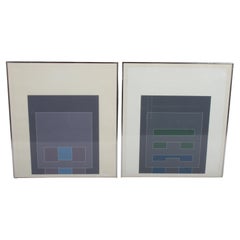
Robyn Denny (1930-2014) Stampe britanniche UNTITLED II e IV - Suite Waddington
Di Robyn Denny
Artista britannica Robyn Denny (1930-2014), coppia di serigrafie astratte geometriche incorniciate della Waddington Suite 1968-1969, Untitled II & IV, originariamente vendute dalla F...
Categoria
Vintage, Anni 1960, Inglese, Mid-Century moderno, Arte contemporanea
Materiali
Metallo
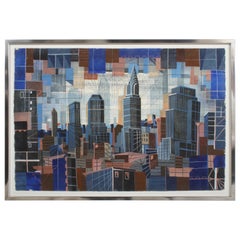
Quadro d
arte cubista del 1940 con il profilo di New York dell
artista Theodore Hancock
Di Theodore Hancock
Raro dipinto cubista a guazzo del 1949, firmato Mid-Century Modern, raffigurante grattacieli, tetti e lo skyline della città di New York, compreso il Chrysler Building, del pittore T...
Categoria
Vintage, Anni 1940, Americano, Mid-Century moderno, Dipinti
Materiali
Carta
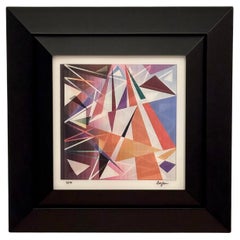
Yaacov Agam " Battaglia antica " Agamograph Kinectic OP-Art Signed LTD. ED. #28/99
Di Yaacov Agam
Il maestro d'arte cinetica israeliano Yaacov Agam (1928-) ha chiamato questo bellissimo pezzo "Antica Battaglia", in quanto porta con sé il caos appuntito e multiprospettico di un ta...
Categoria
Anni 1990, Americano, Mid-Century moderno, Arte contemporanea
Materiali
Plastica, Legno
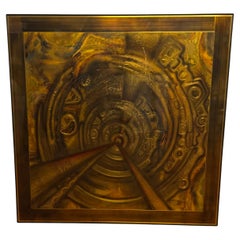
Unica grande opera di Bernhard Rohne 1970 Infinity - Acquaforte in ottone brutalista
Di Bernhard Rohne, Mastercraft
Bernhard Rohne Artista tedesco/canadese . Scultura da parete in ottone dal design unico e originale del 1970, intitolata INFINITY (Boundless Curved Space). L'incisione artigianale de...
Categoria
Vintage, Anni 1970, Canadese, Mid-Century moderno, Sculture da parete
Materiali
Ottone
Ti potrebbe interessare anche
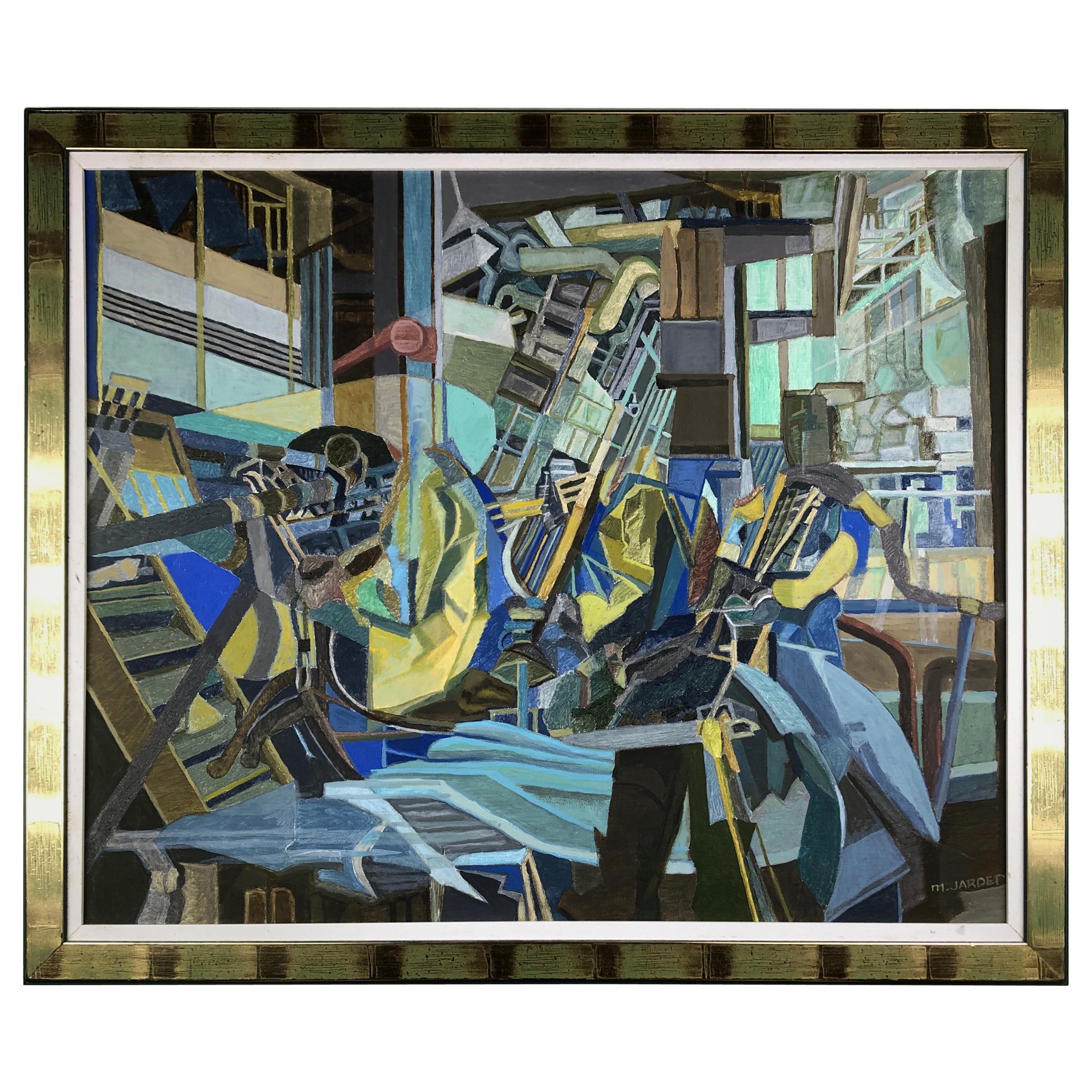
Olio su tela Pittura cubista astratta alla maniera di Jacques Villon
Di Jacques Villon
Un dipinto astratto cubista di grande impatto e dai colori vivaci, eseguito alla maniera di Jacques Villon, firmato e datato in basso a destra "M. I.". Jardet". Quest'opera dinamica ...
Categoria
Metà XX secolo, Francese, Mid-Century moderno, Dipinti
Materiali
Legno dorato, Tela
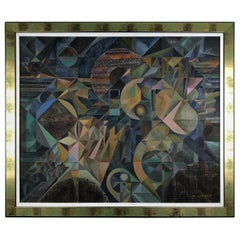
Pittura ad olio astratta/cubista Havers
Quadro cubista/astratto di Havers incorniciato su misura. anni '60 circa Questo straordinario pezzo ha colori vivaci e una ricca consistenza. Incorniciatura professionale seleziona...
Categoria
Vintage, Anni 1960, Olandese, Mid-Century moderno, Dipinti
Materiali
Tela, Legno
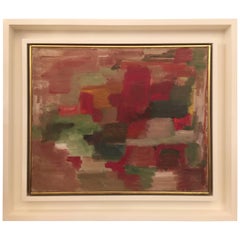
Pittura cubista francese, 1968 Composizione geometrica astratta con linee audaci
Un sorprendente dipinto cubista francese, datato 1968, che incarna l'energia dinamica dell'astrazione europea del dopoguerra. La composizione è dominata da audaci forme geometriche, ...
Categoria
Vintage, Anni 1960, Francese, Art Déco, Dipinti
Materiali
Pittura
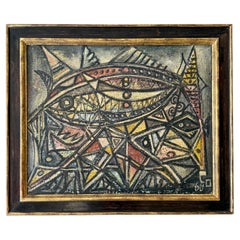
Un dipinto astratto originale della metà del secolo, olio su tela, circa 1950
Un dipinto astratto a blocchi di colore originale della metà del secolo scorso, firmato dall'artista, metà del XX secolo. Olio su tela. Toni di liquirizia, ceruleo, ocra, crema e un ...
Categoria
Metà XX secolo, Mid-Century moderno, Dipinti
Materiali
Tela, Legno, Pittura
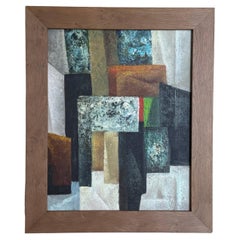
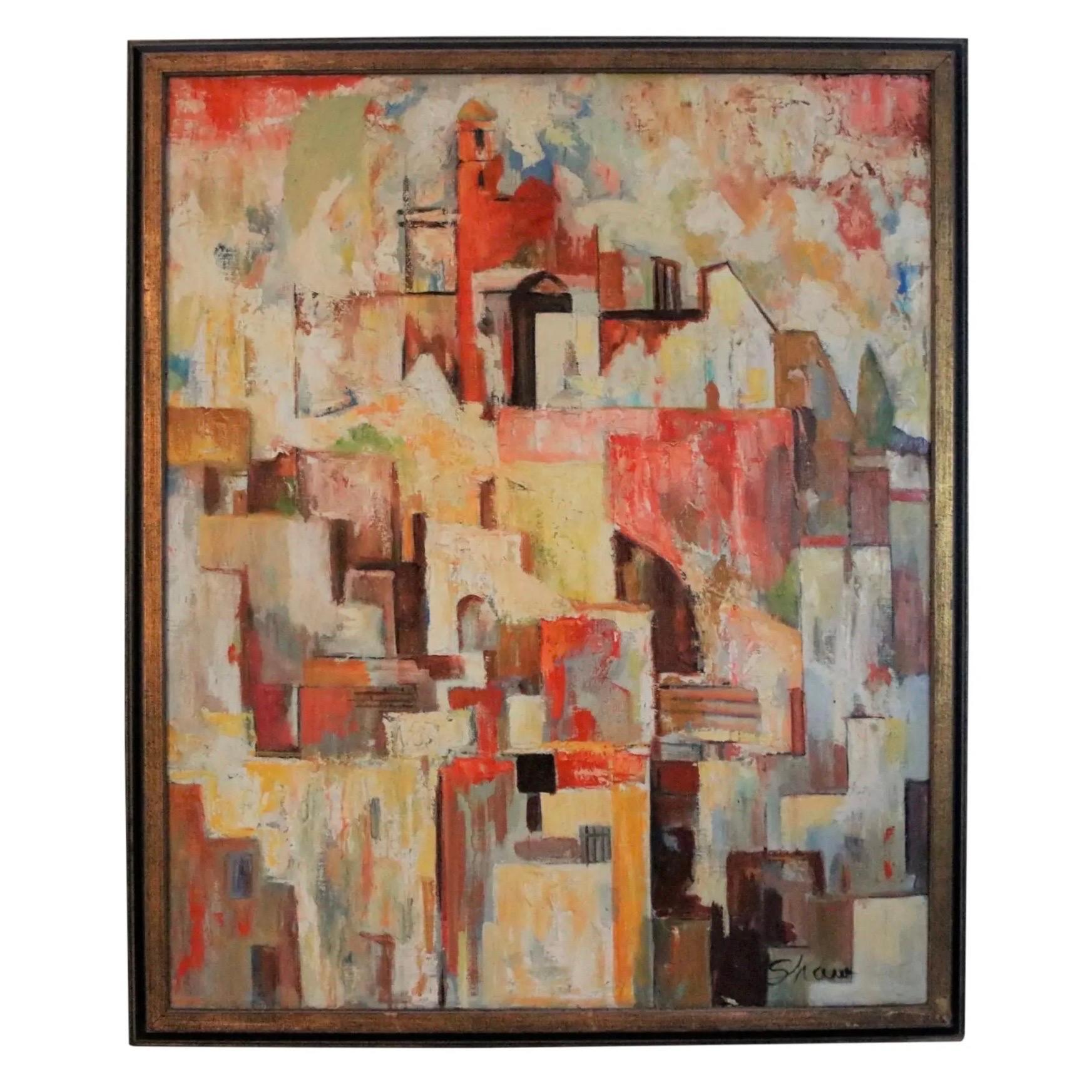
Pittura cubista su tela di Harry Shaw dei primi del Novecento
Un olio cubista su tela dell'artista quotato Harry Shaw, (1897-1989). Una scena vibrante caratterizzata dal colore cremisi raffigura San Miguel de Allende in Messico; una città di ep...
Categoria
Inizio XX secolo, Americano, Mid-Century moderno, Dipinti
Materiali
Tela, Pittura
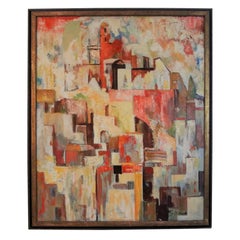
Olio su tela Pittura cubista astratta alla maniera di Jacques Villon
Di Jacques Villon
Un audace e colorato dipinto cubista astratto alla maniera di Jacques Villon
Firmata e datata in basso a destra: "M. I. Jardet"
Presentato in una straordinaria cornice moderna.
Ques...
Categoria
Metà XX secolo, Francese, Mid-Century moderno, Dipinti
Materiali
Tela, Legno
3437 € Prezzo promozionale
20% in meno