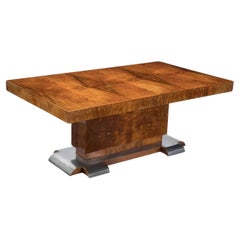
Articoli simili a Antique Art Deco Epstein Burr Walnut Dining Table Epstein 20th Century
Caricamento del video
Vuoi altre immagini o video?
Richiedi altre immagini o video al venditore
1 di 14
Antique Art Deco Epstein Burr Walnut Dining Table Epstein 20th Century
3797,99 €
Informazioni sull’articolo
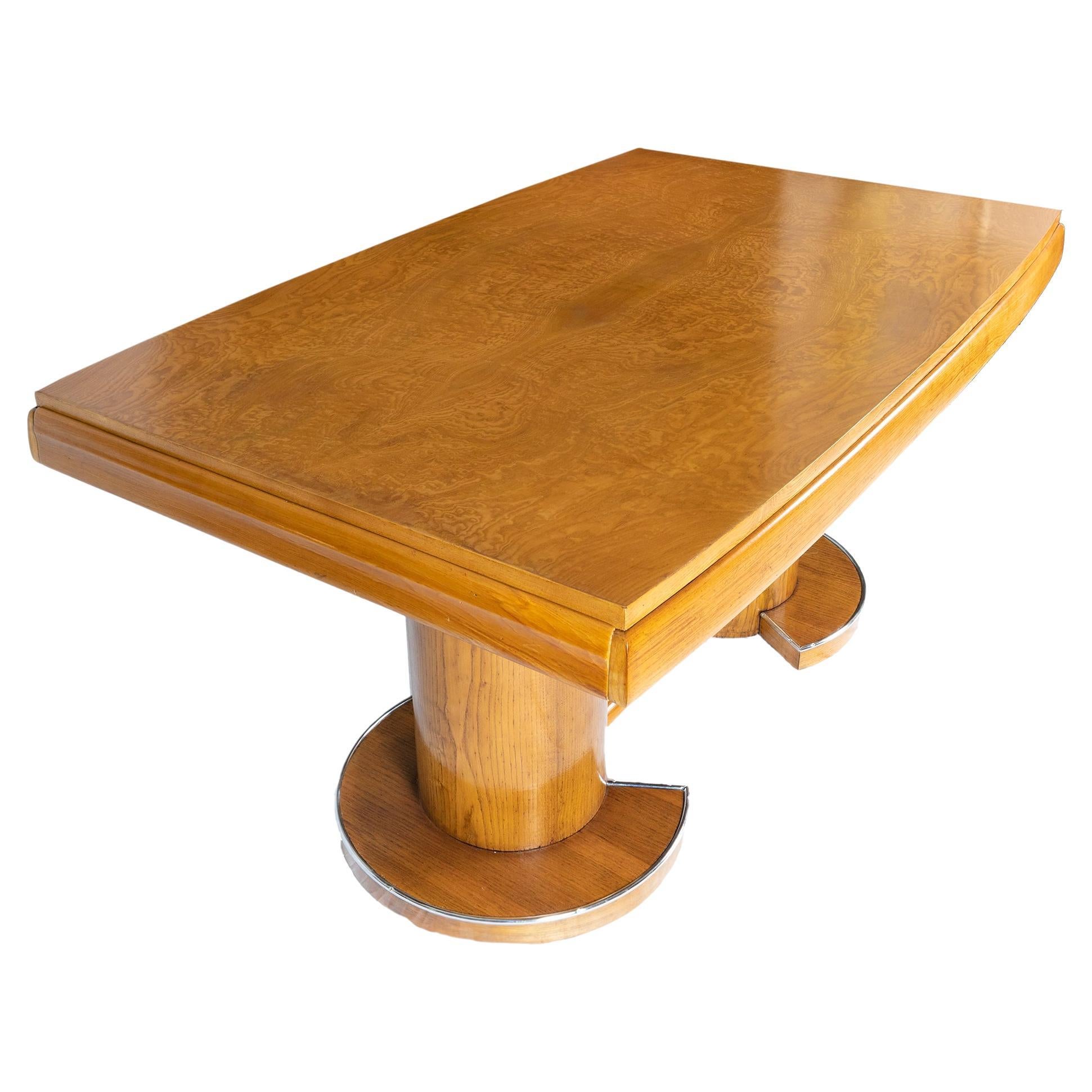
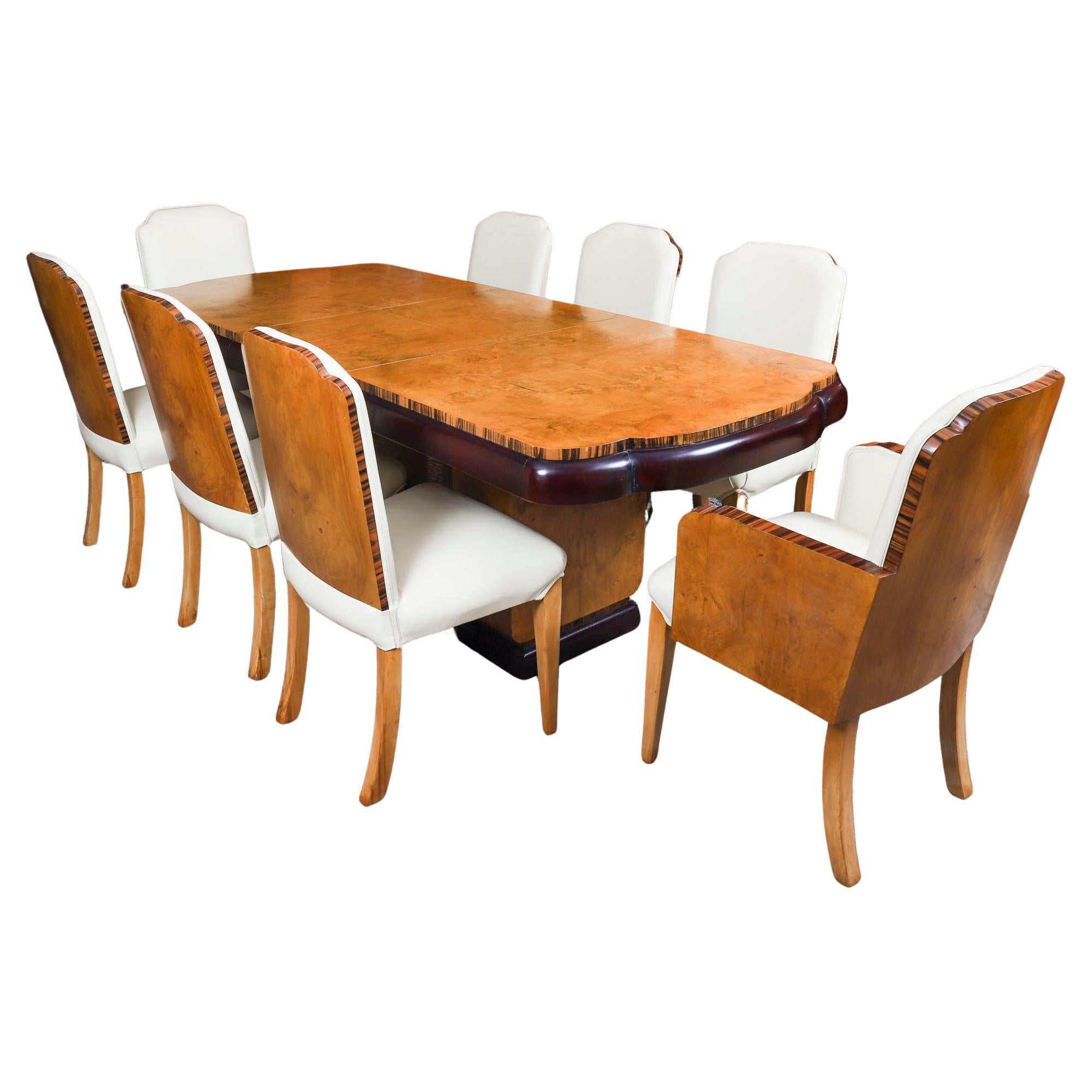
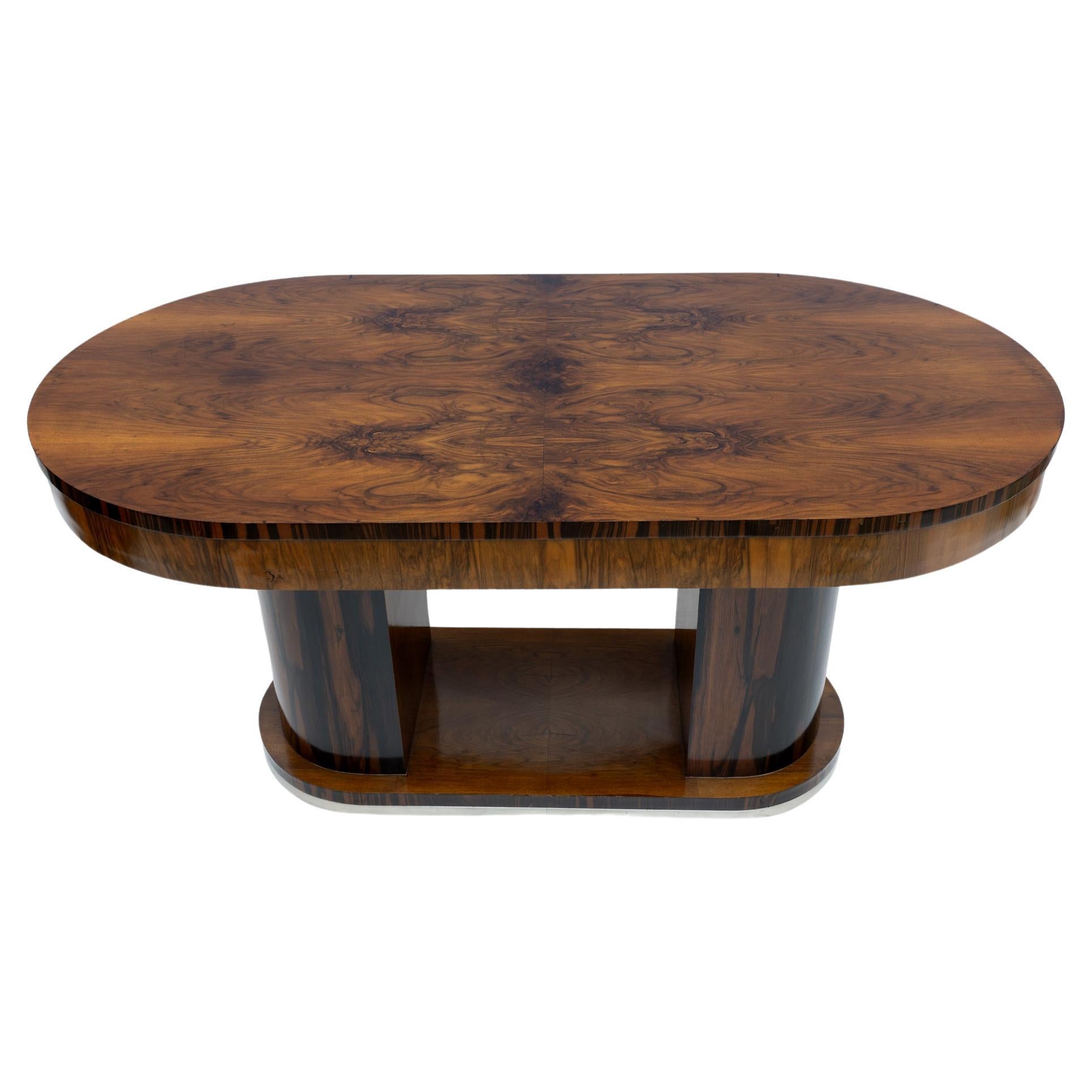
A truly stunning antique Art Deco burr walnut and Coromandel dining table,
attributed to the world renowned cabinet makers Harry
Lou Epstein, circa 1920 in date.
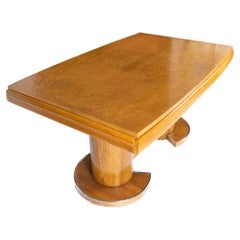
The rectangular shaped table features stunning burr walnut top with rounded corners and coromandel banding, and stands on a decorative a pair of plinth bases.
It has one leaf with folds into the under side of the table when not in use.
This is a fabulous example of the Art Deco period and will enhance any room in which it is placed.
Condition:
In excellent original condition having only been beautifully cleaned and waxed, in our workshops, please see photos for confirmation.
Dimensions in cm:
Height 76 cm x Width 220 cm x Depth 97 cm - Fully Opened
Height 76 cm x Width 166 cm x Depth 97 cm - Leaf Removed
Dimensions in inches:
Height 2 foot, 6 inches x Width 7 foot, 3 inches x Depth 3 foot, 2 inches - Fully Opened
Height 2 foot, 6 inches x Width 5 foot, 5 inches x Depth 3 foot, 2 inches - Leaf Removed
Epstein furniture
was originally founded in East London by Polish immigrants in the 1890s. The firm passed to brothers Harry and Lou Epstein and the pair turned their attention to the production of Art Deco forms from the 1930s until the 1950s.
Finished to high standards, most pieces were custom-made in veneers of burr maple, sycamore or walnut. The design of the famous ‘cloud’ seat furniture is credited to Epstein and the company also popularized the uniquely British taste in suite furniture.
Following World War II, Epstein had showrooms in London, Manchester and Glasgow. A conservative Art Deco style became the company`s trademark after the war and most pieces were made from bleached walnut. Art Deco pieces are not signed.
From the 1960s, some pieces were labelled ‘H.
L. Epstein’ or ‘Epstein
Goldman’.
Art Deco or Deco,
is an influential visual arts design style which first appeared in France during the 1920s, flourished internationally during the 30s and 40s.
It is an eclectic style that combines traditional craft motifs with Machine Ageimagery and materials. The style is often characterized by rich colours, bold geometric shapes, and lavish ornamentation.
Deco emerged from the Interwar period when rapid industrialization was transforming culture. One of its major attributes is an embrace of technology. This distinguishes Deco from the organic motifs favored by its predecessor Art Nouveau.
Historian Bevis Hillier defined Art Deco as "an assertively modern style...[that] ran to symmetry rather than asymmetry, and to the rectilinear rather than the curvilinear; it responded to the demands of the machine and of new material...[and] the requirements of mass production".
During its heyday Art Deco represented luxury, glamour, exuberance, and faith in social and technological progress.
Coromandel wood or Calamander wood
is a valuable wood from India, Sri Lanka and South East Asia. It is of a hazel-brown color, with black stripes (or the other way about), very heavy and hard. It is also known as Macassar Ebony or variegated ebony and is closely related to genuine ebony, but is obtained from different species in the same genus; one of these is Diospyros quaesita Thwaites, from Sri Lanka. The name Calamander comes from the local sinhalese name, 'kalu-medhiriya', which means dark chamber; referring to the characteristic ebony black wood.
Coromandel wood has been logged to extinction over the last 2 to 3 hundred years and is no longer available for new work in any quantity. Furniture in coromandel is so expensive and so well looked after that even recycling it is an unlikely source. A substitute, Macassar Ebony, has similar characteristics and to the untrained eye is nearly the same but it lacks the depth of colour seen in genuine Coromandel.
Walnut
Burr Walnut
Walnut is a hard, dense, tight- grained wood that polishes to a very smooth finish. It is a popular and attractive wood whose colour ranges from near white in the sapwood to a dark hew in the heartwood. When dried in a kiln, walnut wood tends to develop a dull brown colour, but when air-dried can become a rich purplish-brown. Because of its colour, hardness and grain, it is a prized furniture and carving wood. Walnut veneer was highly priced and the cost would reflect the ‘fanciness’ of the veneer – the more decorative, then the more expensive and desirable.
Burr walnut refers to the swirling figure present in nearly all walnut when cut and polished, and especially in the wood taken from the base of the tree where it joins the roots. However the true burr is a rare growth on the tree where hundreds of tiny branches have started to grow. Burr walnut produces some of the most complex and beautiful figuring you can find.
Our reference: A4852b
- Creatore:Harry Lou Epstein Furniture Co (Ebanista)
- Dimensioni:Altezza: 76 cm (29,93 in)Larghezza: 220 cm (86,62 in)Profondità: 97 cm (38,19 in)
- Stile:Art Déco (Nello stile di)
- Materiali e tecniche:
- Luogo di origine:
- Periodo:
- Data di produzione:circa 1920
- Condizioni:
- Località del venditore:London, GB
- Numero di riferimento:Venditore: A4852b1stDibs: LU950648042262
Informazioni sul venditore
5,0
Venditore Platino
Venditori Premium con valutazione 4.7+ e tempi di risposta entro 24 ore
Fondazione nel 1983
Venditore 1stDibs dal 2012
1444 vendite su 1stDibs
Tempo di risposta standard: <1 ora
Associazioni
LAPADA - The Association of Arts
Antiques Dealers
- SpedizioneRecupero del preventivo…Spedizione da: London, Regno Unito
- Politica di reso
Alcune parti di questa pagina sono state tradotte automaticamente. 1stDibs non può garantire che le traduzioni siano corrette. L’inglese è la lingua predefinita del sito.
Altro da questo venditore
Mostra tuttoAntique Art Deco Burr Walnut Dining Table
8 Chairs Epstein 20th Century
Di Harry
Lou Epstein Furniture Co
A truly stunning antique Art Deco burr walnut and Coromandel dining suite attributed to the world renowned cabinet makers Harry
Lou Epstein, comprising a dining table with the ...
Categoria
Inizio XX secolo, Britannico, Art Déco, Set sala da pranzo
Materiali
Pelle, Macassar, Noce
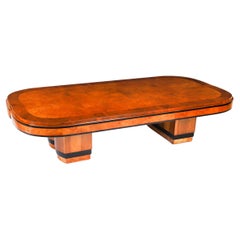
Tavolino da caffè in radica di noce Art Deco Circa 1920
Si tratta di un superbo tavolino d'epoca in noce Art Deco, datato circa 1920.
Il piano del tavolo è di forma rettangolare con angoli arrotondati e decorazione a fasce. È caratterizz...
Categoria
Vintage, Anni 1920, Art Déco, Tavolini bassi
Materiali
Noce
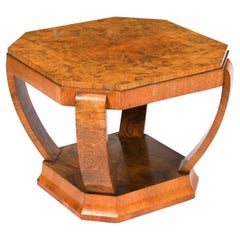
Antico tavolino in radica di noce Art Deco del XX secolo
Si tratta di un superbo tavolino antico in radica di noce Art Deco, datato circa 1920.
Ha un meraviglioso piano di forma quadrata con angoli tagliati ed è sollevato da quattro suppo...
Categoria
Inizio XX secolo, Art Déco, Tavolini bassi
Materiali
Noce
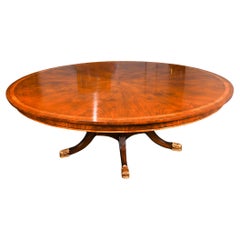
Tavolo da pranzo vintage a fiamma in mogano Regency Revival metà del XX secolo
Un bellissimo tavolo da pranzo Regency Revival in mogano a fiamma risalente alla metà del XX secolo.
Il tavolo è di qualità favolosa, in ottime condizioni, può ospitare comodamente ...
Categoria
Metà XX secolo, Inglese, Neo-Regency, Tavoli da pranzo
Materiali
Similoro
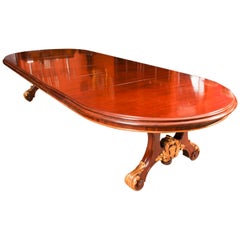
Antico tavolo da pranzo allungabile vittoriano in mogano a due basi del XIX secolo
Di Wylie
Lochhead
Un fantastico tavolo da pranzo antico vittoriano a due piedistalli in mogano e dorato con il marchio impresso dei rinomati ebanisti e rivenditori Wylie & Lochhead, datato circa 1850....
Categoria
Di antiquariato/d’epoca, Anni 1850, Inglese, Vittoriano, Tavoli da pranzo
Materiali
Mogano
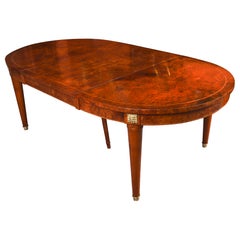
Tavolo da pranzo in radica di noce vintage da 7 piedi in stile Impero francese del XX secolo
Un imponente tavolo da pranzo vintage in radica di noce in stile Impero francese, risalente alla metà del XX secolo.
Il piano circolare in radica di noce presenta una bordatura tras...
Categoria
Metà XX secolo, Neoimpero, Tavoli da pranzo
Materiali
Noce
Ti potrebbe interessare anche
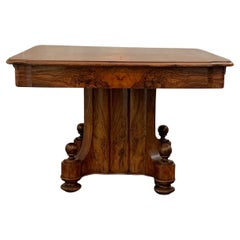
Tavolo da pranzo in noce Art Déco, anni
30
Tavolo Art déco La base con 4 piedini a forma di "cipolla" portano una pigna in cima e collegano la base lavorata a onde intagliate in legno massiccio di spessore generoso e poi impi...
Categoria
Vintage, Anni 1930, Italiano, Art Déco, Tavoli da pranzo
Materiali
Noce, Nodo
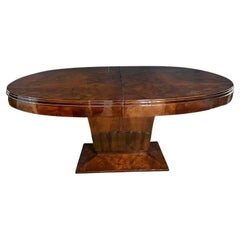
Tavolo da pranzo francese Art Deco in radica di noce
Il piano ovale del tavolo da pranzo mette in mostra la bellezza del legno di noce burlato. È sostenuta da una gamba ampia e prominente, che poggia su una base rettangolare. La parte ...
Categoria
Vintage, Anni 1940, Francese, Art Déco, Tavoli da pranzo
Materiali
Nodo
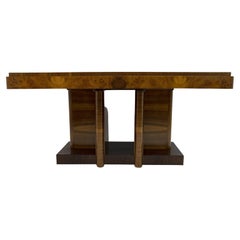
Tavolo da pranzo in noce Art Déco, 1925
Tavolo da pranzo Art Déco in noce e radica,
Restaurata e lucidata con gommalacca, produzione italiana degli anni Venti.
Il tavolo ha due allunghe e raggiunge, quando è aperto, la mis...
Categoria
Vintage, Anni 1920, Italiano, Art Déco, Tavoli da pranzo
Materiali
Noce
Tavolo da pranzo in noce in stile Art Déco Gaston Poisson
Un elegante tavolo da pranzo Art Deco realizzato in noce con una finitura chiara di impiallacciatura chiara con due allunghe e dettagli in ferro cromato sui piedi della base rotonda....
Categoria
XX secolo, Francese, Art Déco, Tavoli da pranzo
Materiali
Metallo
4219 € Prezzo promozionale
40% in meno
Tavolo da pranzo in noce Art Déco, 1940
Tavolo da pranzo Art Déco in noce e radica,
Restaurato e lucidato a gommalacca, produzione italiana degli anni '40.
Categoria
Vintage, Anni 1940, Italiano, Art Déco, Tavoli da pranzo
Materiali
Noce
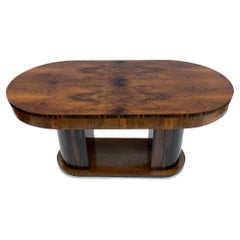
Tavolo da pranzo francese Art Deco attribuito a Dominique Bellissimo legno di radica e nichel
Di Dominique
Elegante tavolo da pranzo francese in stile Art Déco, attribuito a Dominique, non firmato, Francia, anni '30 circa. È costruito con un bellissimo legno burlato e ferramenta placcata ...
Categoria
Vintage, Anni 1930, Francese, Art Déco, Tavoli da pranzo
Materiali
Metallo