Articoli simili a Pucci De Rossi for H Dolin Stuart Signed Battista Occasional Table, 1987
Caricamento del video
Vuoi altre immagini o video?
Richiedi altre immagini o video al venditore
1 di 16
Pucci De Rossi for H Dolin Stuart Signed Battista Occasional Table, 1987
2437,24 €
Informazioni sull’articolo
Pucci De Rossi for H Dolin Stuart Signed Battista Occasional Table, 1987
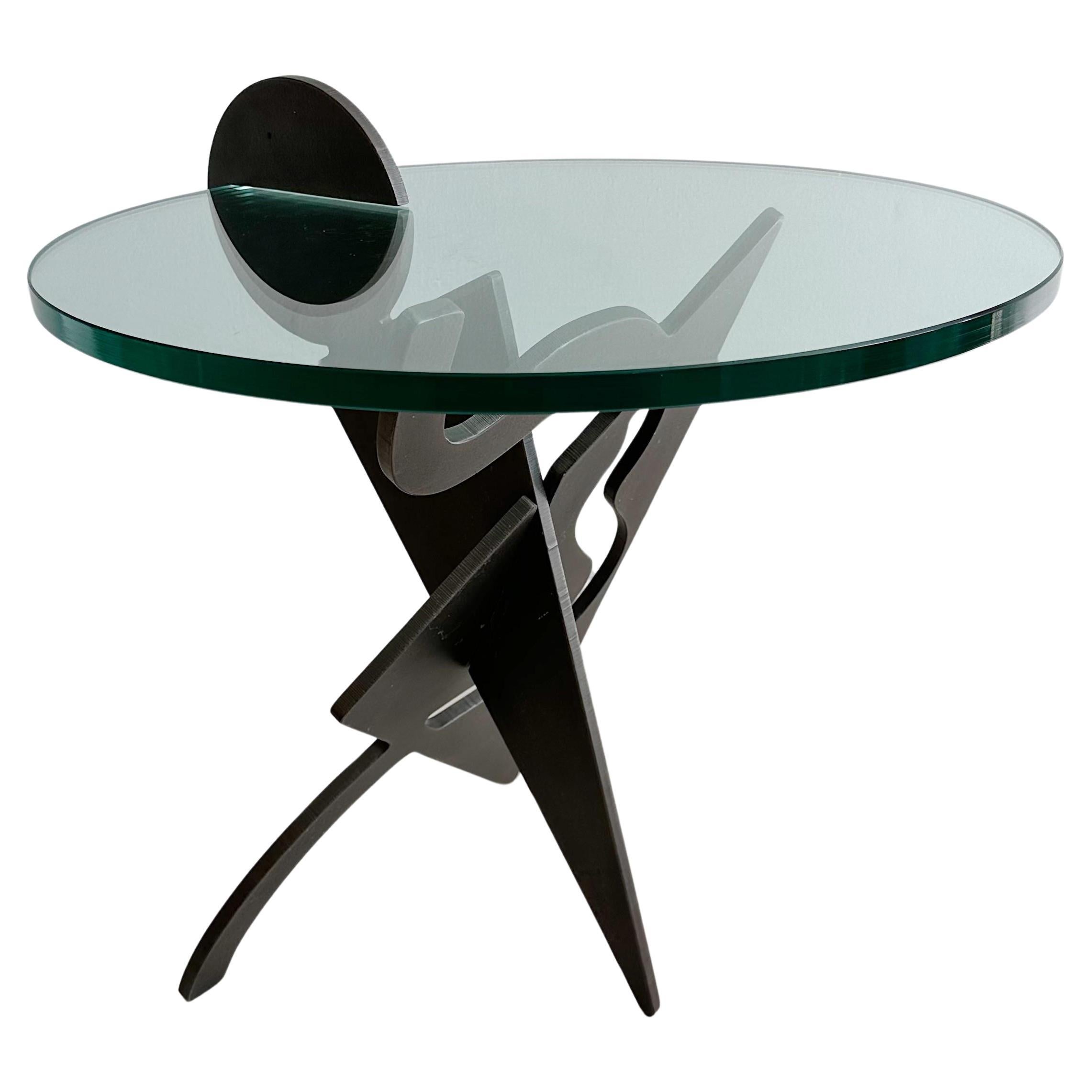
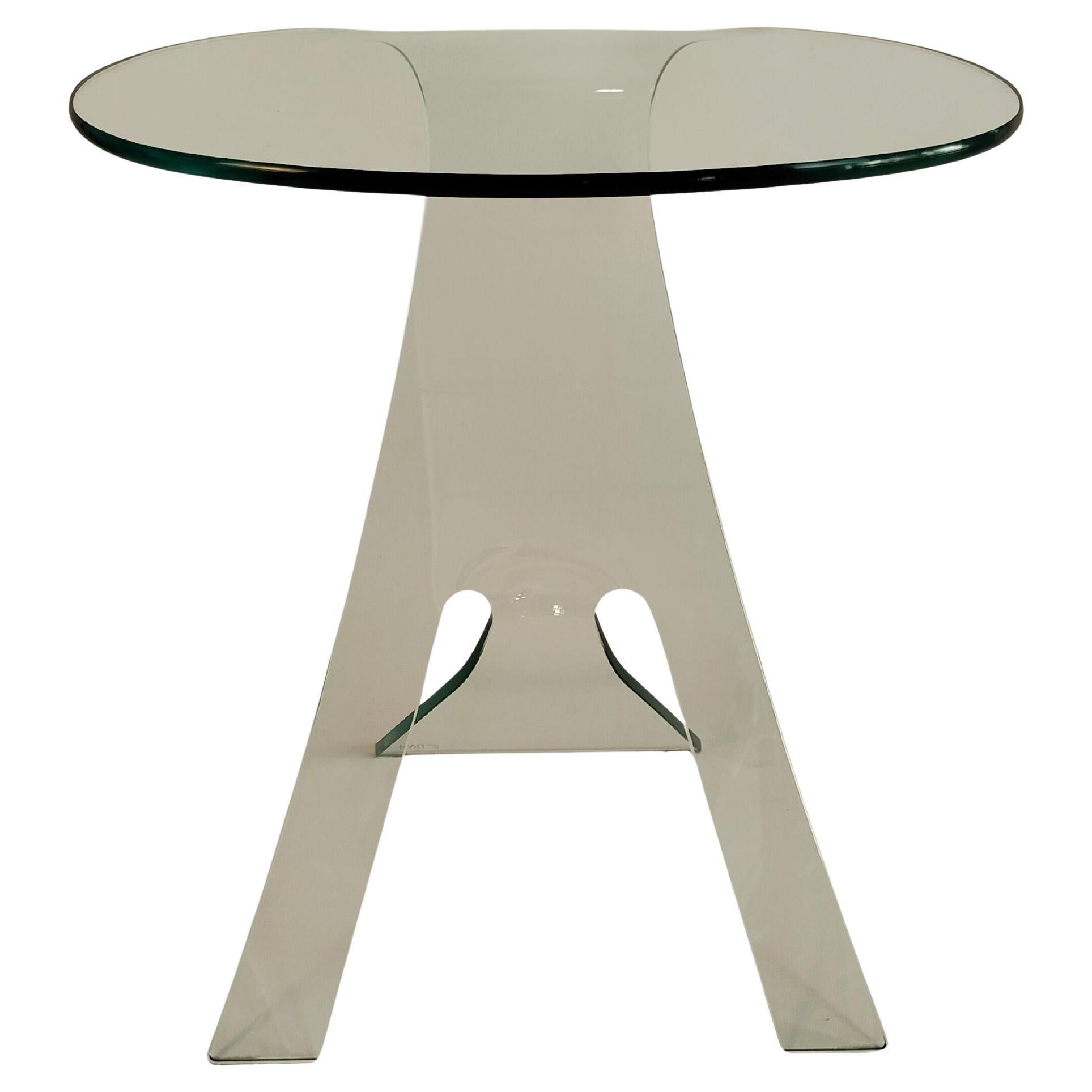
A delightful postmodern sculptural side table with an interlocking charcoal color metal base with glass top by Italian-born, Paris-based designer and artist Pucci de Rossi. Signed and dated 1987 at the base.
The. table measures 28" high x 23-1/2" wide x 22" deep overall. The glass top is 3/4' thick and measures 22" diameter. The glass top surface is 24-3/8" high.
There are some light scratches in the glass that are not distracting when viewed at a normal distance. There is a chip at the edge of the glass that presents as green but is hidden where the glass attaches under the frame so it is not seen. Otherwise, light scratches as expected in an item of this age, See photos for full condition. In rather remarkable condition for its vintage.
Among the army of designers from the 1980s and ’90s plucked from the archive in recent years — Ettore Sottsass, Nathalie du Pasquier, and their Memphis cohort, to name a few — there are still many that remain ripe for rediscovery. Our latest find is Pucci de Rossi, the Italian-born artist and designer who intrigued and confused the Parisian design world with his Brutti Mobili (Ugly Furniture). A clear predecessor to a whole cohort of artist-designers working today — think Misha Kahn’s mixed media chimeras — Pucci de Rossi didn’t invent the concept of functional art, but his work from the 1970s to 1990s certainly laid some groundwork.
Born in the Northern Italian city of Verona, Pucci was a tinkerer at heart. The trajectory of his practice simply followed what kind of materials were available to him at the time. In the early days, under the tutelage of American sculptor Brooks Walker, he worked with found objects, gathering old furnishings and discarded objects to create Frankenstein-like medleys inspired by the Surrealist paintings of Dalí and De Chirico at his home on the banks of the Adige river. “Pucci began his artistic life before the arrival of Postmodern design,” writes Nancy Huston in a monograph dedicated to his work, “at a time when no one raised the problems of the relationship between artists and artisans, and the word ‘design’ had not yet undergone the inflation that we know today.”
A contemporary of the Memphis movement, he held Ettore Sottsass and his ilk in high regard, but, recalls his widow, gallerist Mathilde Baralhé: “Pucci did not define himself as a designer but more as a visual artist, he designed his own objects and very rarely worked for serialization. He was therefore not constrained by any technical specifications and could let his imagination run wild. He was a creator of forms in space which kept a function to his creations. Pucci was a sculptor who played with furniture, shapes, materials and styles.”
In the 1970s, Pucci left Vicenza and moved to Paris with his first wife, the French writer and artist Laure Vernière. Arriving in the capital signaled a creative boom time for Pucci. From his flat in the Bastille district, he would scour the streets collecting detritus from the artisans and craftspeople that populated the neighborhood, which he would then transform into his infinitely kinetic assemblages: “Zinc torn off the roof by the roofers, abandoned furniture, debris of all sorts could be found on the sidewalks. All these materials, tools, bistro awnings, old signs, ordinary wood, wire, plastic… were a gold mine for me… I could find everything in the neighborhood. After, came the idea,” he once said.
In the monograph, Huston describes these amalgams as anthropomorphic furniture. “The seats can’t stand still,” she writes. “Structures are crossed by fluid forms; struck by a cramp, a Chippendale leg becomes taut, its lion’s claws have dropped their ball. The seats become animated, their backs, their legs and their arms start to move. An Art Nouveau curve balances a molding with a right angle, improbable compartments with their knobs act as the left arm. Under the undulating seat are four disparate legs: a baroque scroll, a baluster and two geometric volumes. Asymmetrical, dislocated, lop-sided, the monster leaning on its crutch seems to raise its shoulder to start a burlesque dance or to flee, like Dr. Frankenstein’s creature or the furniture of Maupassant’s short story.”
Despite his prolificacy, it wasn’t until the mid-80s that Pucci could be tacked on to a coherent design movement. As his profile grew, he became known as the continental answer to the group called ‘The London Scrapdealers’ — an ad hoc movement made up of André Dubreuil, Tom Dixon, Mark Brazier Jones and Nick Jones who similarly employed found objects and contorted junk metal in their work. It was a mode of working that was unstudied and untaught, a reaction to the 1980s chrome-plated minimalism. “People were fed up with the minimal, they wanted curves and what they liked was the salvaging aspect, messed up, Arts
Crafts, to use the English term. We didn’t do drawings, we executed spontaneously,” Dubreuil said of the early Postmodernists. Finally, the style Pucci had been nurturing for decades was having a moment.
It was around this time that Pucci began working with Paris gallery Néotu, where he would produce a succession of collections in his proto-Nickelodeon aesthetic. Distorted furniture inspired by Dali (Hommage à Dalí, 1989), deconstructivist-style three-dimensional collages in metal and wood (Introibo ad altare dei, 1987) lamps spliced with shards of glass (Le Gardien du trésor, 1985), undulating plywood monoliths (Trois Fois rien,1991) and steampunk-like assemblages of wooden artifacts gleaned from forgotten chairs (Remake, 1993) all became examples of Pucci’s dogged eclecticism.
Paris also introduced Pucci to the kind of patrons who would allow his creative impulses to run free. The most influential among them was auctioneer Jean-Claude Binoche, known for his contemporary art and design sales, who commissioned Pucci to design the dining room and office in his Paris home, and later on, his sprawling Palazzo in Venice, which would become the most fully realized expression of Pucci’s idiosyncratic melding of art and design. A built-in sleigh bed formed in the shape of baroque scrolls, hand-painted technicolor murals on the building’s ancient rafters and furniture plucked from Pucci’s various collections over the years made up the extravagantly bizarre Venetian home.
“A man apart, gifted with overflowing ingenuity and inventiveness. It was not always easy to follow his thoughts every day, he was always thinking about the meaning of things, of life, of himself,” recalls Mathilde, who lived with Pucci at his Bastille apartment until he passed away in 2013.
Of his legacy, she writes: “The object that reflects this feeling is the J.A.R. mirror (Jamais Assez De Reflection/Never Enough Reflection), on one side a mirror, on the other a self-portrait. But unlike many other artists, Pucci was not self-centered, he was very available with his friends and relatives. He was very sensitive to people. He could be light and deep at the same time. He followed the impulses of his heart. But he was also a bon vivant who liked to party. What I liked about him was his humor, his mischievousness and the offbeat vision he had of the world: ‘I have to constantly change the reality that surrounds me, my work is an example of this and it is perhaps the way of expressing myself that suits me best’ [he once said]. Living with Pucci was like living a daydream. He was an everyday poet.”
Source: Sight Unseen
- Creatore:Pucci De Rossi (Designer)
- Dimensioni:Altezza: 71,12 cm (28 in)Larghezza: 59,69 cm (23,5 in)Profondità: 55,88 cm (22 in)
- Stile:Postmoderno (Del periodo)
- Materiali e tecniche:
- Luogo di origine:
- Periodo:1980-1989
- Data di produzione:1987
- Condizioni:Usura compatibile con l’età e l’utilizzo. There are some light scratches in the glass that are not distracting when viewed at a normal distance. There is a chip at the edge of the glass that presents as green and but is hidden where the glass attaches under the frame.
- Località del venditore:Cathedral City, CA
- Numero di riferimento:Venditore: OC98651stDibs: LU8352245433332
Informazioni sul venditore
5,0
Venditore professionale selezionato
Ogni venditore supera rigorosi standard di autenticità e affidabilità
Fondazione nel 2000
Venditore 1stDibs dal 2023
25 vendite su 1stDibs
Tempo di risposta standard: <1 ora
- SpedizioneRecupero del preventivo…Spedizione da: Cathedral City, CA
- Politica di reso
Alcune parti di questa pagina sono state tradotte automaticamente. 1stDibs non può garantire che le traduzioni siano corrette. L’inglese è la lingua predefinita del sito.
Altro da questo venditore
Mostra tuttoTavolo a Y laccato John Dickinson, anni
70 ca.
Di John Dickinson
Tavolo a Y laccato John Dickinson, anni '70 ca.
Si tratta di un raro tavolo a Y (modello 118) in resina laccata, progettato da John Dickinson. Questo tavolo è speciale e si adatta a...
Categoria
Vintage, Anni 1970, Americano, Organico moderno, Tavolini laterali
Materiali
Resina, Lacca
Paul Frankl per Johnson Furniture Tavolo d
angolo in sughero e mogano, 1951 ca.
Di Johnson Furniture Company, Paul Frankl
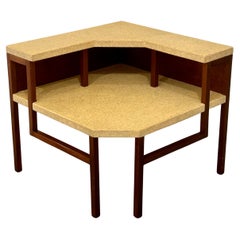
Paul Frankl per Johnson Furniture Tavolo d'angolo in sughero e mogano, 1951 ca.
Un tavolo angolare di grandi dimensioni unico nel suo genere, perfetto per due divani più grandi di m...
Categoria
Metà XX secolo, Americano, Mid-Century moderno, Tavolini da appoggio
Materiali
Mogano, Sughero
Mastercraft USA Consolle elegante in lacca nera e ottone, anni
70 circa
Di Maitland Smith
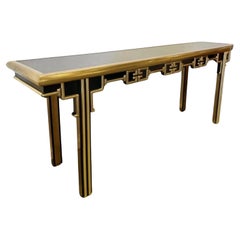
Mastercraft USA Consolle elegante in lacca nera e ottone, anni '70 circa
Splendida e lunga consolle Mastercraft in lacca nera e ottone con motivo a chiave greca. Si tratta di un pe...
Categoria
Vintage, Anni 1970, Americano, Hollywood Regency, Consolle
Materiali
Ottone
Karim Rashid Sgabello in vinile argentato per IDEE Edizione limitata firmata e numerata
Di Idée Japan, Karim Rashid
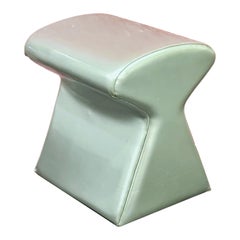
Sgabello Shroom di Karim Rashid progettato per IDEE, Giappone, nel 1998. Questa versione in vinile argentato è stata realizzata in edizione limitata ed è firmata e numerata #4/57 sul...
Categoria
Anni 1990, Giapponese, Futurista, Sgabelli
Materiali
Tappezzeria, Sintetico, Schiuma, PVC
Lampada da tavolo oversize di Yasha Heifetz Rotaflex, 1950 ca.
Di Heifetz Rotaflex, Yasha Heifetz, Heifetz
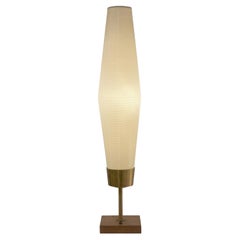
Lampada da tavolo Yasha Heifetz Rotaflex, 1950 ca.
Una rara versione della lampada Heifetz Rotaflex con un paralume in plastica filata che si trova all'interno di un recipiente in o...
Categoria
Metà XX secolo, Americano, Mid-Century moderno, Lampade da tavolo
Materiali
Metallo, Ottone
Lee Rosen Design Technics Vaso con incisione e decorazioni astratte, 1950 ca.
Di Lee Rosen, Design Technics
Lee Rosen per Design Technics Vaso con incisione e decorazione astratta, 1950 ca.
Si tratta di uno splendido e unico vaso Design Technics di Lee Rosen, caratterizzato da una forma b...
Categoria
Metà XX secolo, Americano, Mid-Century moderno, Vasi
Materiali
Ceramica, Terracotta
Ti potrebbe interessare anche
Tavolo Occasionale "Battista" di Pucci De Rossi (1947-2013)
Di Pucci De Rossi
Pucci De Rossi
(1947-2013)
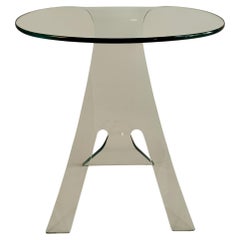
Tavolo occasionale con due pannelli a incastro di acciaio spesso ⅝ tagliati in forme astratte con un pezzo di vetro nuovo da 3/4" x24" che scorre nel tavol...
Categoria
Vintage, Anni 1980, Americano, Mid-Century moderno, Tavolini laterali
Materiali
Acciaio da gioielleria
Tavolo Scultura Pucci De Rossi "Tristano e Isotta" H. Dolin Stuart Francia 1987
Di Pucci De Rossi
PUCCI DE ROSSI (1947-2013) & H. DOLIN STUART
Tavolo "Tristano e Isotta", disegnato nel 1978, prodotto nel 1987, struttura in acciaio laccato grigio e piano in vetro.
Edizione Neotù
H...
Categoria
Vintage, 1980s, French, Moderno, Tavoli
Materiali
Ferro
Tavolino Kioko De Pas, D
urbino, Lomazzi stile postmoderno anni
80
Di Gionathan de Pas
Donato D’Urbino
Paolo Lomazzi, Zanotta
Tavolino Kioko disegnato da De Pas, D'urbino, Lomazzi. Questa tabella è stata pubblicata nei primi anni '90. Le gambe sono probabilmente in alluminio. Il piano del tavolo è in legno ...
Categoria
Vintage, Anni 1980, Italiano, Postmoderno, Tavolini laterali
Materiali
Acciaio
FIAM Italia Tavolino "Grillo" di Vittorio Livi, cristallo curvato, Italia, 1980
Di FIAM, Vittorio Livi
Tavolino Grillo in vetro curvato disegnato da Vittorio Livi per FIAM Italia negli anni ’80 ca. Un’unica lastra in vetro curvato con misure 62x53x39 cm e spessore 12 mm. Design modern...
Categoria
Vintage, 1980s, Italian, Postmoderno, Tavolini da appoggio
Materiali
Cristallo
960 € Prezzo promozionale
37% in meno
Tavolo da pranzo "Orrido Canyon" di Mireille Rivier
Mireille Rivier
Paolo Pallucco, Italia 1987
Di Pallucco, Paolo Pallucco
Mireille Rivier
Tavolo da pranzo "Orrido Canyon" di Mireille Rivier & Mireille Rivier & Paolo Pallucco, Italia 1987
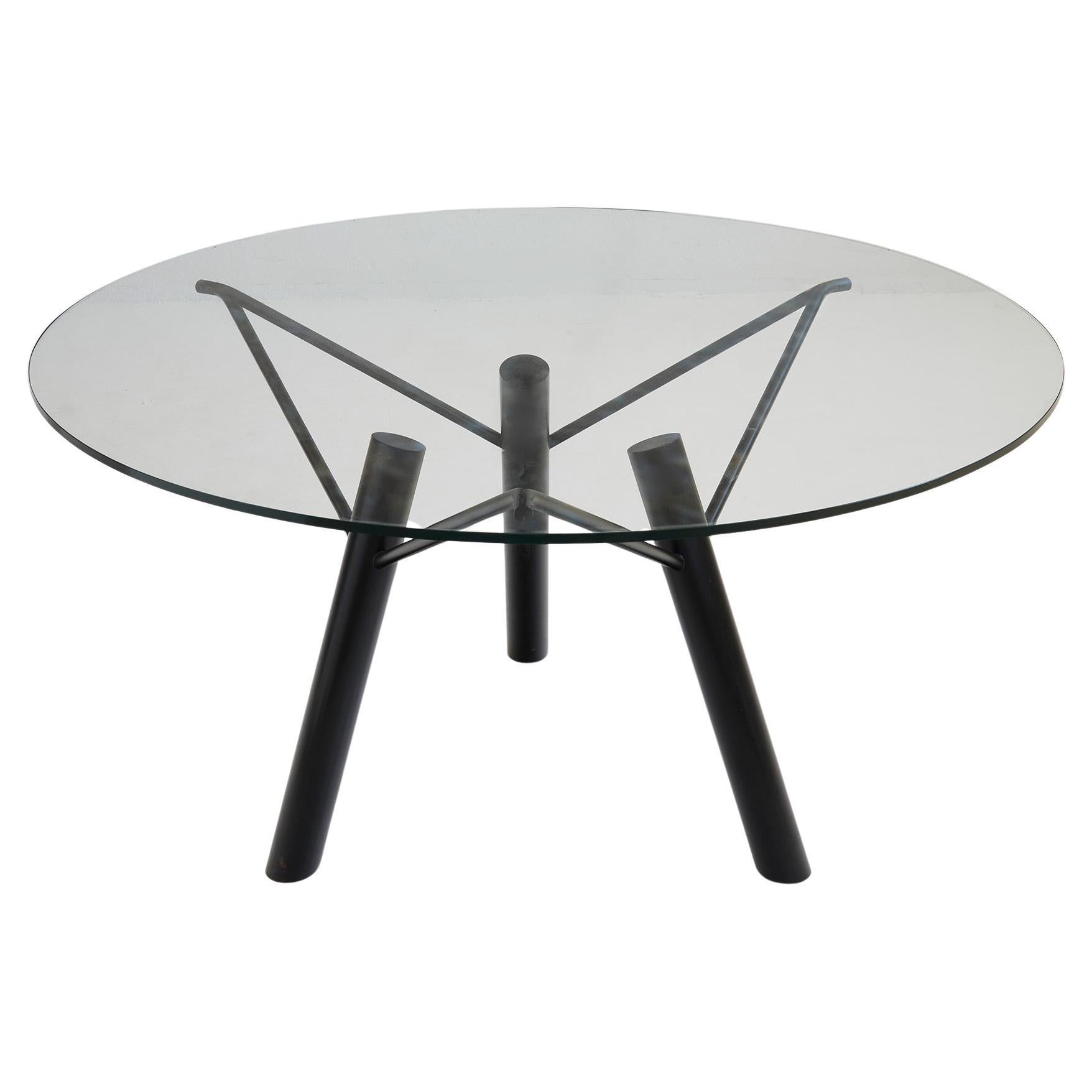
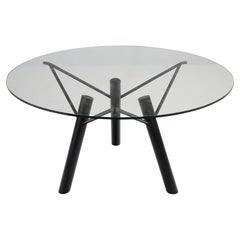
Presenta una base dalla forma scultorea con tre gambe cilindriche angolate. Il pi...
Categoria
Vintage, Anni 1980, Italiano, Postmoderno, Tavoli da pranzo
Materiali
Metallo
Tavolo scultoreo postmoderno di Poggioli, Italia, anni
70
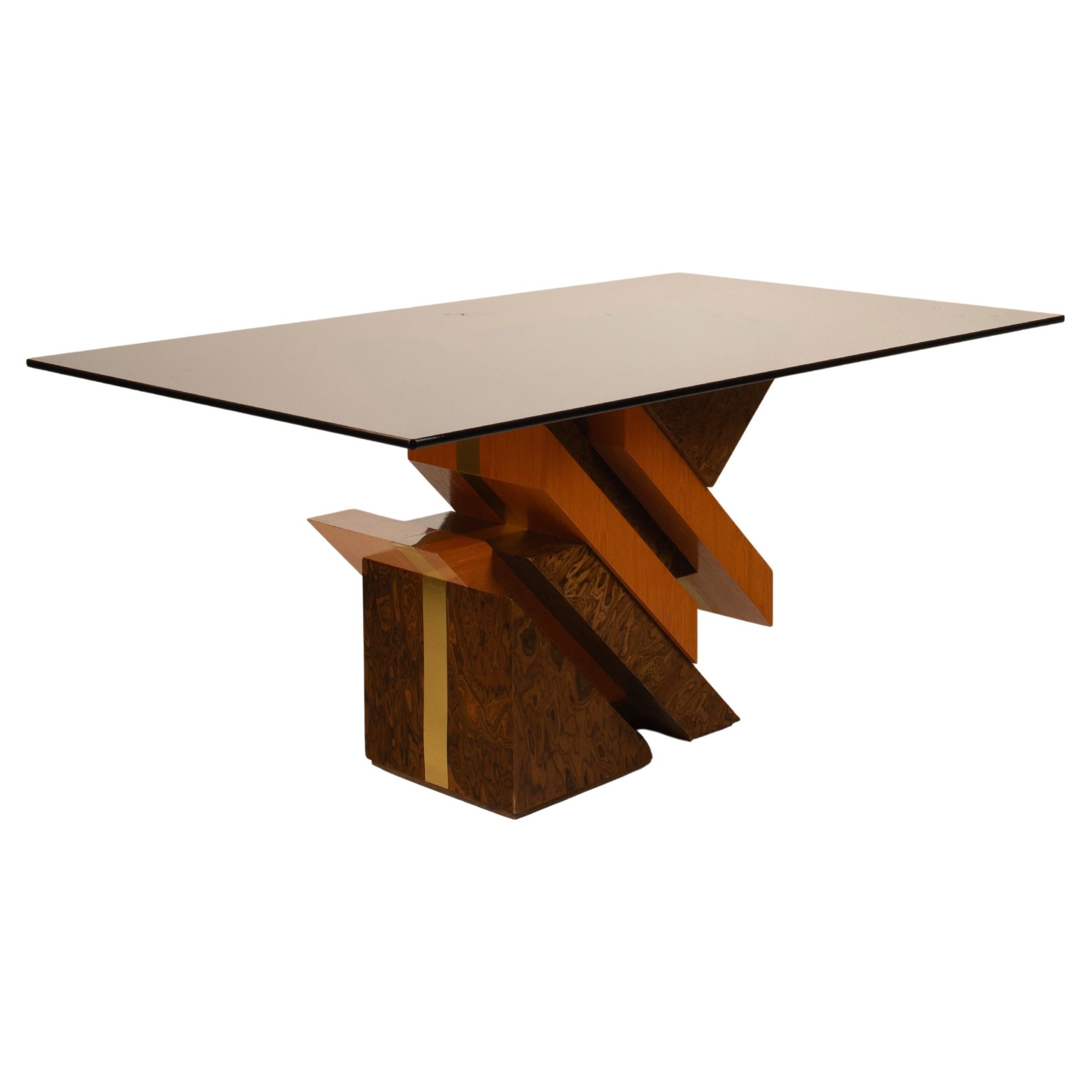
Questo straordinario tavolo scultoreo, realizzato in Italia da Poggioli negli anni '70, rappresenta una delle espressioni più audaci del design decorativo postmoderno italiano. Il pe...
Categoria
Vintage, Anni 1970, Italiano, Hollywood Regency, Tavoli da pranzo
Materiali
Ottone