Articoli simili a Erhard
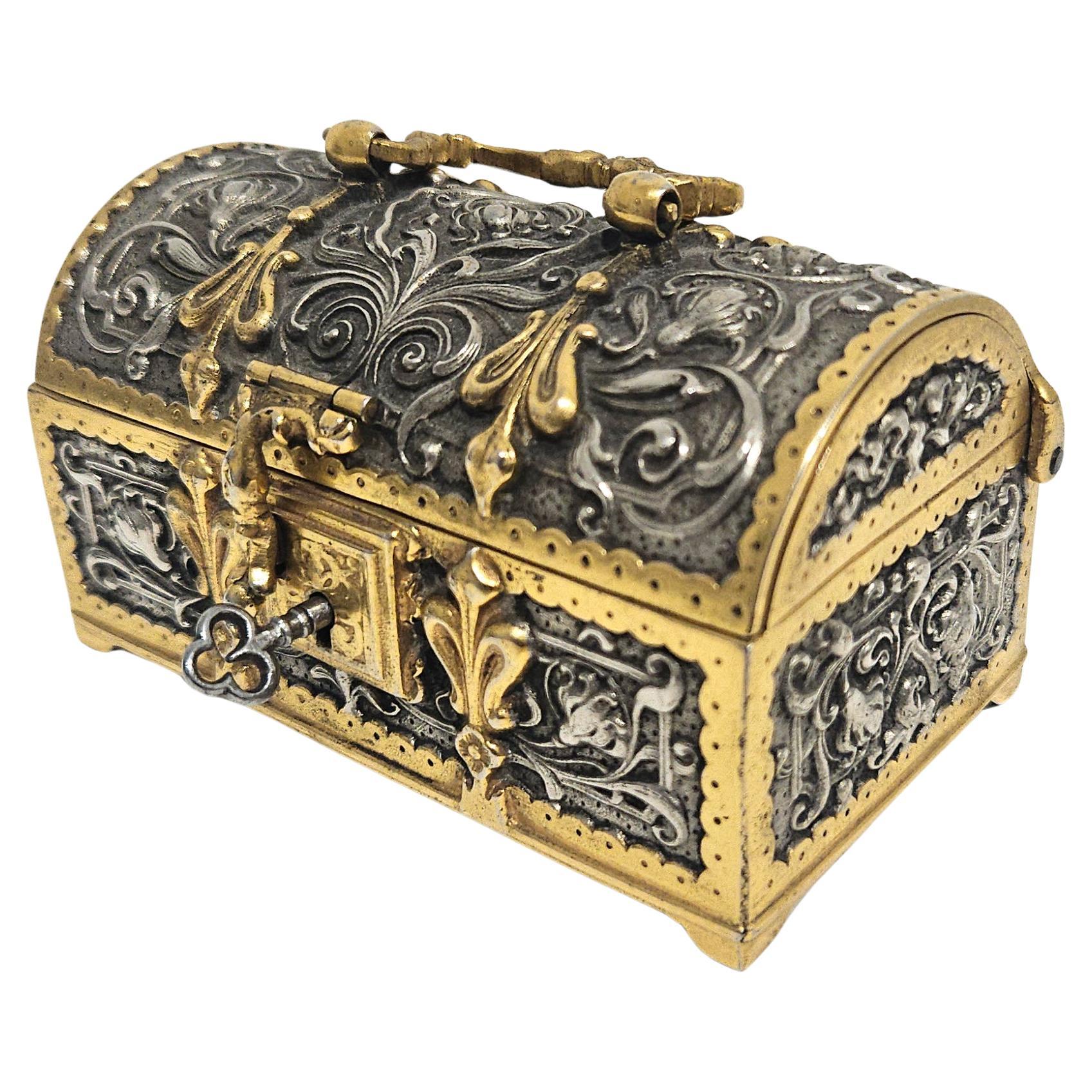
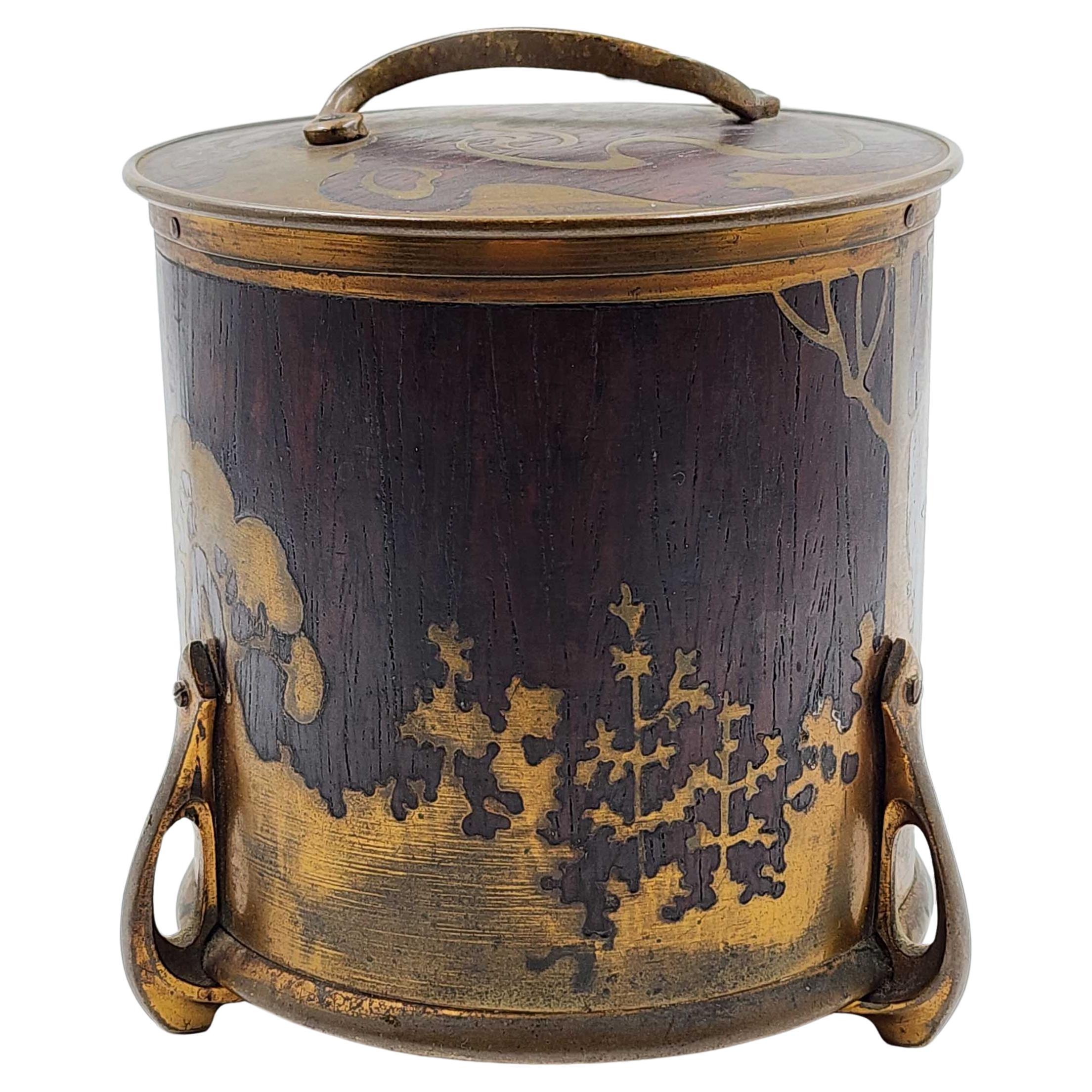
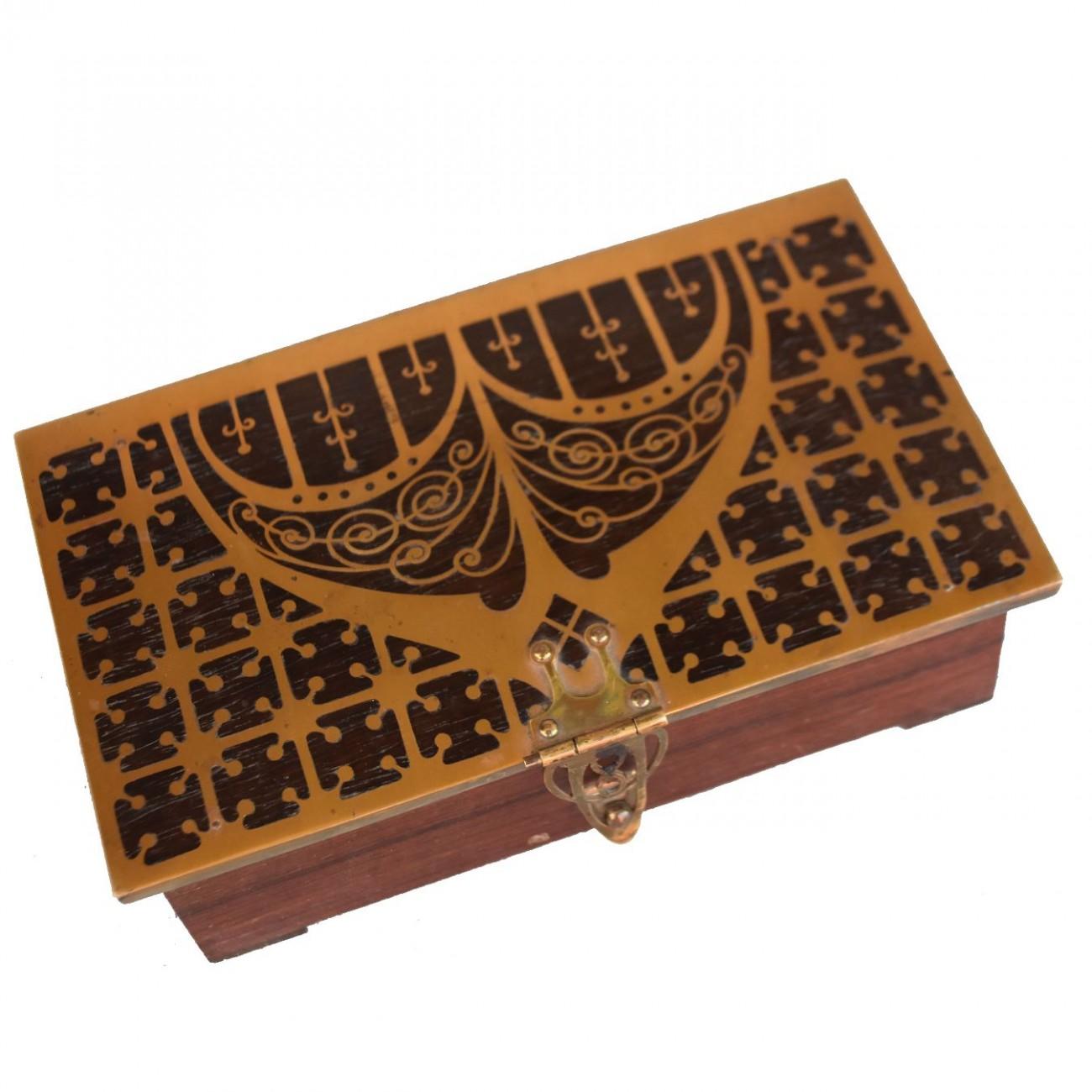
Söhne Art Nouveau Jugendstil Jewelry Casque w/ Inlaid Brass Rose Design
Caricamento del video
Vuoi altre immagini o video?
Richiedi altre immagini o video al venditore
1 di 14
Erhard
SöhneErhard
Söhne Art Nouveau Jugendstil Jewelry Casque w/ Inlaid Brass Rose Designc. 1904
c. 1904
3034,61 €
Informazioni sull’articolo
Erhard
Söhne, 19th Century
Art Nouveau Jugendstil Casque with Inlaid Brass Rose Design, c. 1904
6 x 9 x 6 inches
The company Erhard
sons was established by Carl Gottlieb Erhard and his two sons in Schwäbisch Gmünd in 1844. Carl Gottlieb Erhard, the priest-son from Großheppach, setteled in Schwäbisch Gmünd when he marriged Debler-Tochter. He became a partner of the company Teilhaber der Firma Gerber
Co, and acquired it with a settlement of 100.000 guilders in 1843. He established the company Erhard
Söhne with help of the sons Carl and Julius in 1844, which is today the oldest producing factory in the city continued in sixth generations as the single family business.
Carl Gottlieb Erhard procured to fill the market gap that the fire gilt hardwares were bought abroad at very expensive price. So he gathered highly trained experts for his business around a market, also his sons got the best education as Ziseleur and engraver. Julius was the creative one, Carl the commercial leader, on this occasion.
Their business wrote the history of the city henceforth. They especially specialized on fashionable accessoires (Galanteriewaren) of all the type out of brass and bronze, sometimes silver-plates or gilds. Highest skill was applied in their miniature-works, especially Doll-room-furnitures were sought-after items for the collectors, which inclue bookbinders, glove, buttons, buckles, etc.
At the beginning their main markets were England, America and the German states which ware not unified yet. In 1864 the factory was enlarged. The company tried new inventions again and again and was called "Testing factory". Soon the company had 3000 employees that it build another factory-building in 1900.
Besides the specialization at the processing of bronze, brass, copper and tin, also articles of noble-metal were manufactured. With the world-patent for the manufacture of brass-inlay (1904), the production of doll-room-accessories and furnitures out of gilt brass, that the big export-hit was between 1900 and 1910 into the USA, the business finally won world-format, and the invention of the Schleuderaschers (spin-ashtray), Roulette type ash tray (1938). The company was granted the patent for the thermo-mug in 1956. The extensive product spectrum of the business included extravaganzas - churches-use, luxury-goods, cult-appliances, jewelry and game-merchandise as well as electrotype-plastic copies of historic culture-objects.
This company is very known in the collector-scene as much sought after items for the antique doll-rooms since the company produced the highest quality Ormolu doll-room-accessories and furnitures until mid-1920s. Golden years of the company were the first years of the 20th century. When it was put on the mechanical engineering more and more and with the game-merchandise-production, it went downhill.
Since 1945, the company Erhard
sons was in particular decisive at the development and production the world-wide in use of brought Unimog (Universal-Motor-Gerät) involves. After the World War II it is an important factory of tanks under the name Erhard Automotive for usefulness-vehicles.
Today, the company is all over Europe from motor vehicle-sharing on topmost technical level one of the leading manufacturers. The transition of the manual Einzelanfertigung of historistischem art-trade to the mass-production of later industry-design joins with it with the history of the business at the same time.
Erhard
Sohne had the world-patent for the manufacture of brass-inlay in 1904. Since then they designed and manufuctured high-quality brass-inlay boxes and items which represented very unique and noble German Art-Nouveau style at its peak.
Some important works by Erhard
Sohne were illustrated in "MODERN ART OF METALWORK. Bröhan-Museum State Museum of Art Nouveau, Art Deco and Functionalism (1889-1939), Berlin" published by Bröhan-Musuem in 2001. The Bröhan-Musuem is one of the most prominent museums specialised in Art Nouveau, Art Déco and the Berlin Secession.
Informazioni sul venditore
5,0
Venditore Oro
Venditori Premium con valutazione 4,3+ e tempi di risposta entro 24 ore
Fondazione nel 1975
Venditore 1stDibs dal 2022
44 vendite su 1stDibs
Tempo di risposta standard: <1 ora
- SpedizioneRecupero del preventivo…Spedizione da: Beachwood, OH
- Politica di reso
Alcune parti di questa pagina sono state tradotte automaticamente. 1stDibs non può garantire che le traduzioni siano corrette. L’inglese è la lingua predefinita del sito.
Altro da questo venditore
Mostra tuttoPiediera inglese a doppia impugnatura del XVIII secolo
Piediere inglese a doppia impugnatura, 18° secolo
Ottone
12 x 18 x 17 pollici
Categoria
XVIII secolo, Altra arte
Materiali
Ottone
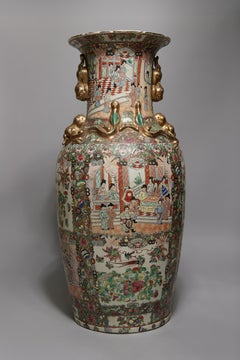
Monumentale vaso cinese a medaglione Famille Rose, XX secolo
Monumentale vaso cinese a medaglione Famille Rose, XX secolo
Porcellana
36 x 18 pollici
La Famille rose è una porcellana cinese del XVIII secolo, caratterizzata da uno smalto di col...
Categoria
XX secolo, Altra arte
Materiali
Porcellana
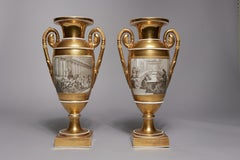
Coppia di urne d
oro in Porcelaine de Paris con scene di storia romana
Coppia di urne francesi in Porcelaine de Paris con scene di storia romana, inizio XIX secolo
13 x 6,5 x 5 pollici
Sulla base di un'urna c'è scritto "Tibrius Gracchus Ferme Le Temple...
Categoria
Inizio XIX secolo, Altra arte
Materiali
Porcellana
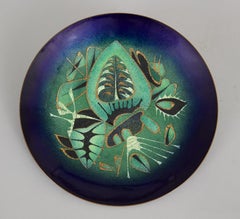
Motivi botanici, piatto decorativo blu e verde di metà secolo, Scuola di Cleveland
Kenneth Bates (americano, 1904-1994)
Motivi botanici, 1953
Smalto
Firmato e datato sul fondo
9 pollici
Descritto in un numero del 1967 di Ceramics Monthly come il "decano degli sma...
Categoria
Anni 1950, Altra arte
Materiali
Smalto
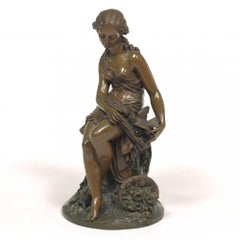
Giovane ragazza con colombe e cesto di fiori, bronzo francese del XIX secolo
Isidore Romain Boitel (francese, 1812 - 1861)
"Jeune fille aux colombes et à la corbeille de fleurs".
Giovane ragazza con colombe e cesto di fiori
Bronzo
Firmato sulla base, marchio...
Categoria
Metà XIX secolo, Sculture figurative
Materiali
Bronzo
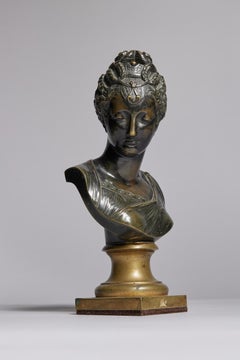
Busto di Diane de Poitiers, scultura in bronzo di nobildonna francese
Dopo Jean Goujon (francese, 1510-1568)
Busto di Diane de Poitiers
Bronzo con base dorata
9 x 3,75 x 2,75 pollici
Provenienza: Rimosso da una residenza privata presso l'Hotel Pierre.
...
Categoria
XIX secolo, Sculture figurative
Materiali
Bronzo
Ti potrebbe interessare anche
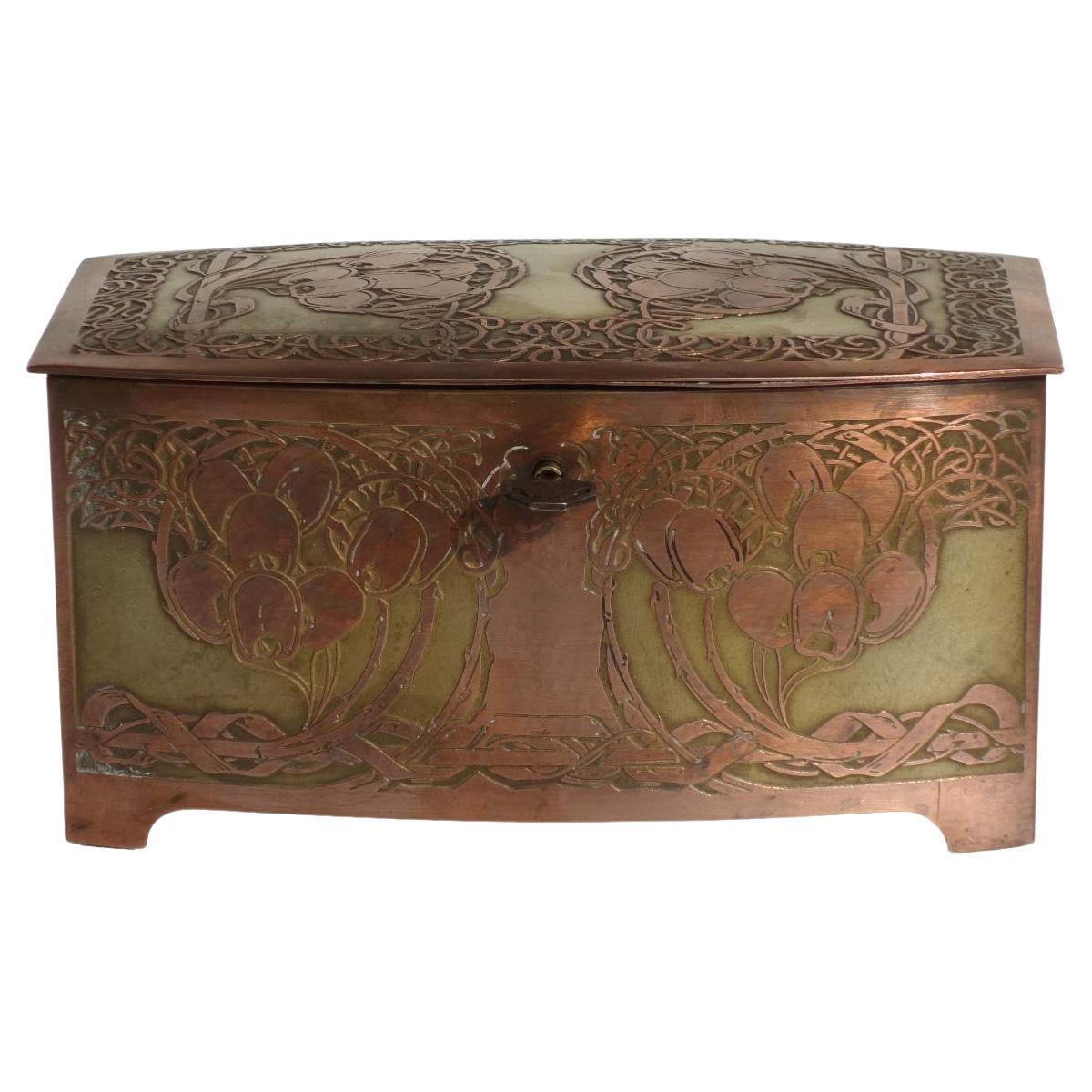
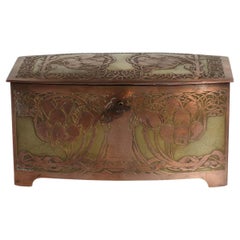
1900 Erhard and Sohne Secessionista Jugendstil Art Nouveau Rame Ottone Cofanetto
Di Erhard
Söhne
Cofanetto Jugendstil
Germania, 1900-1909
Cofanetto in Rame e Ottone
Decoro floreale
Completo di chiave
Marcho impresso sotto la base
Oggetto raro
Eccellente stato di Conservazione
Categoria
Di antiquariato/d’epoca, Early 1900s, German, Secessione di Vienna, Port...
Materiali
Ottone, Rame
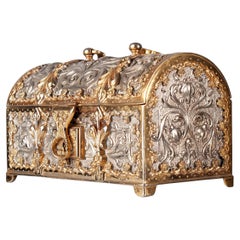
Cofanetto per gioielli in ottone Jugendstil con rivestimento in velluto di Erhard
Söhne, Germania
Di Erhard
Söhne
Cofanetto portagioie Jugendstil del 1900 in ottone dorato e argento con interno foderato in velluto blu di Erhard & Söhne, Germania
Da parte di: Erhard & Söhne
Materiale: ottone, ra...
Categoria
Di antiquariato/d’epoca, Inizio Novecento, Tedesco, Jugendstil, Portagioie
Materiali
Metallo, Ottone, Rame, Zinco
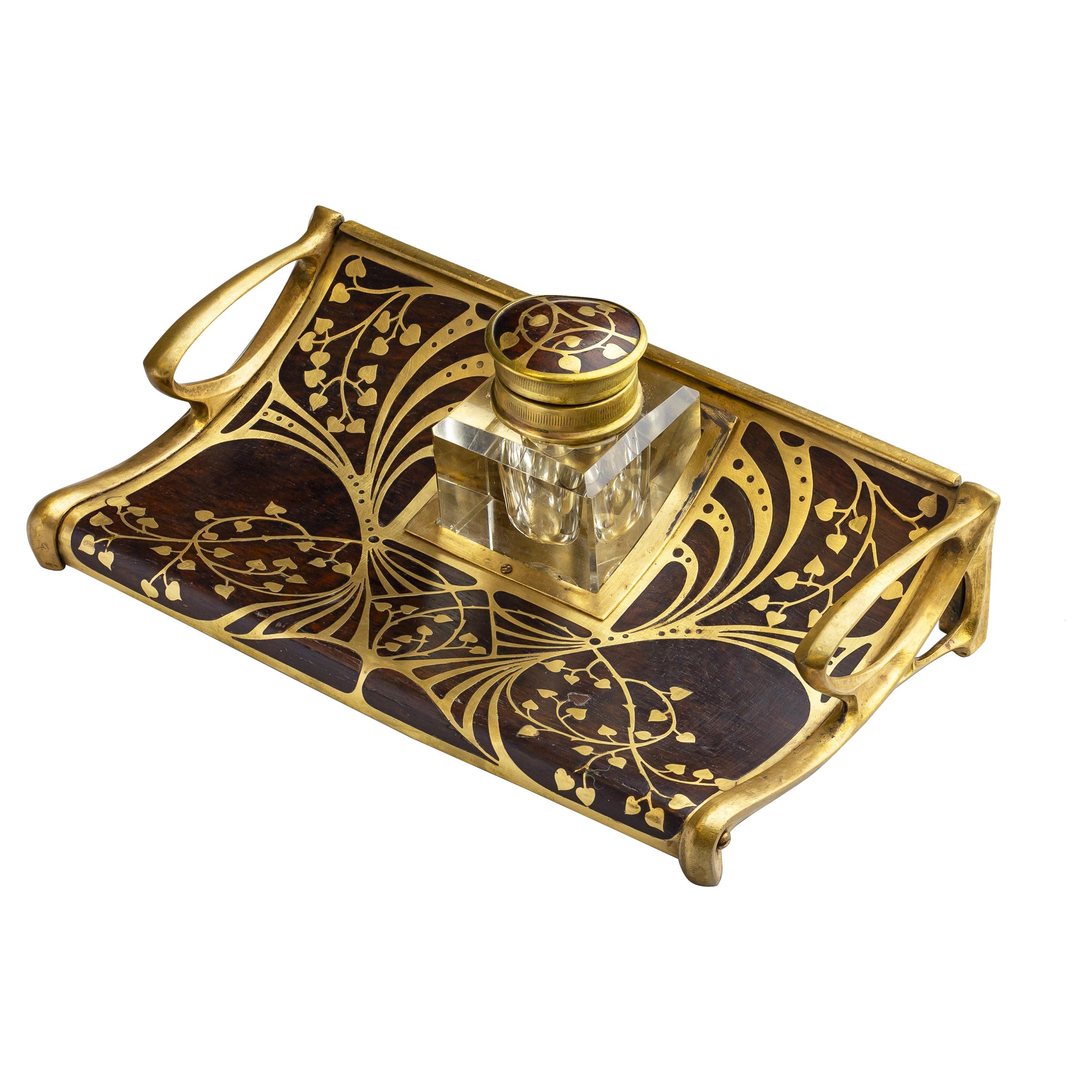
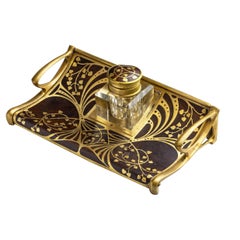
Calamaio e vassoio Jugendstil Attribuito a Erhard
Söhne
Realizzato in Germania durante l'epoca dell'Art Nouveau, questo calamaio in ottone e palissandro con supporto è attribuito ai produttori Erhard & Söhne. L'ornato supporto in stile "J...
Categoria
Inizio XX secolo, Tedesco, Jugendstil, Accessori da scrivania
Materiali
Ottone
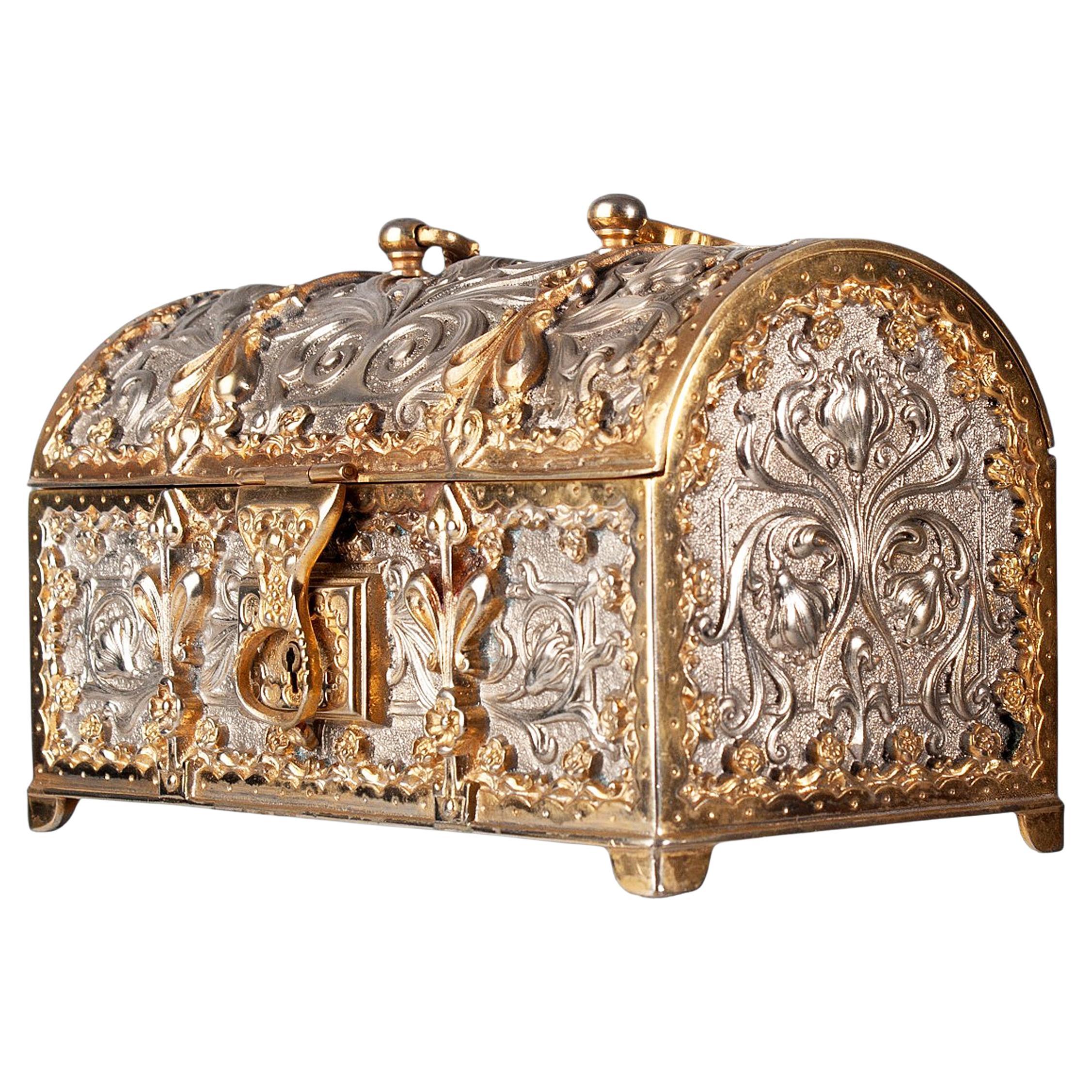
Cofanetto portagioie Erhard
Sohne Art Nouveau, Germania, 1905 ca.
Di Erhard
Söhne
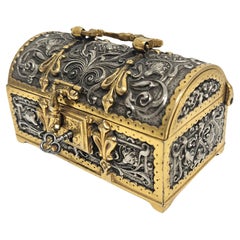
Un bellissimo scrigno in stile liberty realizzato da Erhard and Sohne in Germania nel 1905 circa.
Lo scrigno è squisitamente realizzato con dettagli foliati, in stile Gothic reviva...
Categoria
Inizio XX secolo, Tedesco, Art Nouveau, Scatole decorative
Materiali
Ottone
Humidor Jugandstil Erhard
Söhne, Germania, 1920 ca.
Di Erhard
Söhne
Humidor Jugandstil, Erhard & Söhne, Germania, 1920 ca.
Si tratta di una scatola per humidor in stile Jugendstil, prodotta da Erhard & Söhne in Germania, intorno al 1920. La scatola h...
Categoria
XX secolo, Tedesco, Art Déco, Portasigari e humidor
Materiali
Ottone
1900 Scatola in palissandro Art Nouveau di Erhard
Soehne
Di Erhard
Söhne
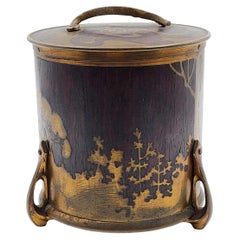
Scatola in palissandro e coperchio in ottone intarsiato Art Nouveau di Erhard e Soehne, circa 1900.
Categoria
Inizio XX secolo, Austriaco, Art Nouveau, Scatole decorative
Materiali
Rame