Articoli simili a Surrealist Antiquity Theme (Nude Women and Horses)
Vuoi altre immagini o video?
Richiedi altre immagini o video al venditore
1 di 14
David LaxSurrealist Antiquity Theme (Nude Women and Horses)ca. 1965
ca. 1965
1039,62 €
Informazioni sull’articolo
David Lax (1910-1990)
Surrealist Antiquity Theme, ca. 1965,
Ink on paper, cut and mounted to brown textured illustration board.
Panel measures 10 x 18 inches. Framed measurement 13 x 21 inches.
Signed lower right.
David Lax (1910-1990) was a well-known American painter and art educator; he was regarded
as one of America’s most outstanding combat artists in World War II.1
Background
Personal Life
David was born May 15, 1910, in Peekskill, NY, to Benjamin Lax (1881-1916) and Sarah
Davidson (1881-1963).2
The couple emigrated to the U.S. from Russia/ Poland around 19033
and, after a few years in Brooklyn, NY, purchased a farm in upstate Putnam County.4,5 When
Lax was about six years old, his father fell out of an apple tree during a harvest and was killed.
His mother was forced to sell the farm, and the family moved to the East Harlem section of New
York City [NYC].6 Widow Sarah scrabbled first as a door-to- door peddler, and then as
proprietor of a pastry/coffee shop, to support her three young children.7
David was free to roam the scary East Side streets, becoming a bit of a scrapper, gambler, street
urchin, and hooligan.8,9
He recognized early on, though, that he had artistic talent, 10 and by the
time he finished grade school, he knew what he wanted to do with his life.11 He won an art
scholarship to one of New York’s most prestigious high schools and was a student of several
scholars of note.12
David’s mother remarried when he was sixteen, and about the time he
graduated from high school, he moved out into his own scantily furnished room. The description
of his meager quarters and his existence therein gives one a good hint as to what would become
his personal life for most of the next 22 years. .. “a little room too small for painting, and there
was no daylight to speak of… I could, however, work on book illustrations.” …“Those were
never published, but the doing of them served to keep intact the tenuous thread of my hopes to
paint at a time when the possibility of being a serious artist was beyond reach.”13
In his remarkably moving 1976 autobiography, One Man Show: A Personal Adventure in
American Art,
14 David recounts one intense survival story after another… dwelling in often
ramshackle—or even dangerous lodgings, living just hand to mouth… scraping together a few
dollars here and there to have a decent meal or pay some bills, at one low point even shoplifting
art supplies 15 ... and throughout all that stressful existence—- capitalizing on every opportunity--
meeting and grooming an extensive coterie of acquaintances, friends, sponsors, and benefactors
who enabled him to move onward and upward. There were delays along the way, but no
circumstance could ever stop this determined, innovative man from exercising his genius-— all
he lived for was to be able to paint and paint well.
David’s first marriage in August 1935 to the daughter of a friend of his landlord in Florida ended
within two years in a bitter divorce.16 Lax waited until he was about forty to marry again. He wed
an attractive girl from Greenville, Mississippi whom he met at a friend’s cocktail party. 17
Kathleen Tatum had served as a Navy WAVE in the WWII Pacific Theater and had earned a
B.S. degree in social studies at Columbia University.18They had a very happy marriage—
traveling to diverse locations and enjoying a host of close friends in the art and entertainment
world.19 Kathleen succumbed to cancer and died in October 1973.20 David survived until July
1990. They had no children. 21
Education
Early Career
It was recognized when he was quite young that David had artistic talent. By the time he was
ready to enter high school, it clearly showed. He first came to the attention of the public via a
newspaper photo taken of a nude snowman that he sculpted on the street near his home.22 At age
15, he won a scholarship to NYC’s prestigious Ethical Culture School and eventually became an
apprentice of Victor Frisch, an Austrian sculptor and portraitist who was once court sculptor to
the Hapsburg monarchy and a one-time assistant of Auguste Rodin.
23
After graduation from the Ethical Culture School in 1928, David served six months as an art
department assistant in the newly opened Fieldston branch of Ethical. Bored with academic life,
he moved on.24 In 1929, after about six months in a no-future job as a “display man” doing
window cutouts of fashion figures and movie lobby displays, Lax was hired by Alfredo Valente,
part owner of a glass carving studio in Brooklyn.25 While at Glass-Craft, he became an expert
designer in the art of sandblast glass carving. Some productions from Glass-Craft ended up in the
Waldorf Astoria Hotel, the Chrysler Building, and the Empire State Building.
26 David spent most
of his spare time painting and became a student of famed artist Alexander Archipenko27, who
was running a small school in NYC. After two and a half years of his working at Glass-Craft, the
firm fell victim to the Depression and folded.
1931-1942: The Painter Matures
To live as cheaply as possible, in about 1931, Lax took the remnant of his savings account
($500) rescued from a failed NYC bank and journeyed south to be a boarder on the Florida
homestead of a friend.28 He stayed at a farm near Tallahassee for more than a year soaking in the
South and painting everything he saw—including many unique portraits of African Americans.
He then returned to New York City to replenish his funds by selling off what he had painted. At
that time, he made the acquaintance of Irving Mills,
29 NYC theatrical impresario and owner of
various musical enterprises. Mills, who was to become one of his long-time sponsors, hired
David as art department director for Mills Artists, Inc. This company acted as business manager
and publicity/advertising agent for many popular and up-coming orchestras and performers:
Duke Ellington, Cab Calloway, Ina Ray Hutton, Lucky Millinder, and others.30 In eight months
of exciting work with Mills Artists, Lax became acquainted with many musicians and show
people who were to become close friends and supporters in later years.
Before returning to Florida, Mills offered to provide Lax his living expenses ($50 per month+
frames and supplies) in return for half interest in any portraits he produced and sold.31This
arrangement proved very satisfactory, and David produced more than a hundred-fifty creations in
the next few years in Tallahassee. He prospered in his southern environs, which he called the
“Sweet Country,” and even bought a piece of land on which he built a studio/cottage.
32 A shortlived romance and unfortunate divorce brought his creativity to a low point.
Heartsick, in 1937, he moved back north to the Gaspé Peninsula of Quebec, Canada. There he
painted prolifically for about a year along with Boris Chezar, a friend he had met at GlassCraft.33 After a short time back in NYC and consultation with Irving Mills and gallery owners
who were showing/selling his work, Lax moved to Quebec City where during 1938-39 he
painted alongside Irving Mills’ son Robby.34 It was during this time that he produced his
“Waiting” and “Dreaming” paintings, “famous among connoisseurs” and of which his famed
former teacher Alexander Archipenko said: “Lax, like Rembrandt uses shadows not simply for
their effects as form or pigmentation, but as a composer creating melancholy melodies. He
creates the music of the shadows.”35,36 In spring 1940, Lax had his first “one-man show,” which
opened at the Grand Central Gotham Gallery run by NYC dealer Erwin S. Barrie. The show was
mostly successful—not as much financially as it was with critics; he finally began to be noticed
in the art world.37,38
In spring 1941, after Lax returned from short painting forays to Louisiana and rural
Pennsylvania, Irving Mills set him up with an assignment to do portraits for Hollywood notables.
He was off to the West, with his stipend raised to $75 a month. Mills set him up in a studio in
Hollywood’s Laurel Canyon, and there David painted portraits of the rich and famous39
-- in the
off-hours living quite the wild life as a bachelor (..”our lives were a round-robin of dreams, food,
and women”).40Lax did not “have his heart in” the portrait mission, however, and by mid-1942
he joined many other patriotic and adventurous young men by enlisting in the U.S. Army.41
World War II: Combat Artist
After induction and some basic training, Lax was initially assigned to a Military Police battalion
with jurisdiction over the New York City port area. After an on-duty altercation in which he was
injured, it became obvious that his light weight and slight frame put him at some risk doing
typical MP work. David had been drawing the whole time and soon became a big attraction
among his fellow GIs who were quite impressed with his ability to render caricatures with little
effort. His popularity with the men soon came to the attention of his superiors, and they gave him
a place and supplies where he could provide this entertainment.42
David had more ambitious ideas. During leave time, he used the NYC Public Library to do
research on the history of artists in wartime. He was surprised to discover quite a legacy dating
back through all the wars in which the United States had been involved. Soon, he said, “More
than anything, I wanted to carry on in my own way this tradition of the artist and war.”43
Early in the War, the government, from the President on down, had come to realize the
importance of military art and photography for morale and propaganda purposes. A War Art
Advisory Committee was formed with prominent artists and the military recommending the
establishment of an “Artists Corps.” This effort received a lot of opposition from Congress, and
the military finally had to sidestep the legislative thicket by assigning qualified art-talented
draftees into Historical subsections attached to the various Services (Quartermaster, Ordnance,
Engineers, Transportation, etc. ) or Combat Arms (Infantry, Armored Divisions, Air Force,
etc.).44 Lax assembled a portfolio of his recent soldierly art as well as some of his civilian work.
Blessed by his commander, that sampling was sent off to the Army Historical Section in
Washington, with a request for assignment overseas as a combat artist.45
The overseas assignment did not come through, but stateside assignments did. He was first
transferred to the Fort Dix, NJ Special Services command to paint wall murals and decorate
service clubs.46 Lax’s art work at Fort Dix and later USO-like work coordinating entertainment
for troops at Camp Shanks, NY, was so impressive that it got him promoted to Corporal, then
Sergeant, and eventually it came to the attention of people recruiting artists for the Army
Transportation Corps.
47
By serendipity, though, not art, Lax managed to get an overseas assignment because he had a
working knowledge of French he had learned from his step-father and step-brothers.48 He arrived
in England aboard the then-troop-ship Queen Elizabeth in the early summer of 1943. Shortly
before his departure, he again impressed his superiors by substituting for an ill soldier and, in
jiffy time, producing a large, raised relief plaster model of all the ports and rail lines of Western
Europe. He was promoted to Staff Sergeant.49
After a few months in Britain doing routine Transportation Corps trucking and delivery missions
in and out of London, Lax capitalized on some connections he had made during his Ft. Dix work.
Senior officers helped him wangle an appointment with Brig General Frank S. Ross, Army Chief
of Transportation, ETO, headquartered in London. General Ross told him that he understood
from his aides that he wanted to do paintings of Transportation Corp operations. “How will that
help us win the war?” he asked. Lax answered, “You know we’re going to win, sir, but history
will want to know how, sir.” “Sharp answer,” Ross shot back, “Colonel Decker will write up
your orders.” David had won his “commission” as the Transportation Corps Historical Branch
artist. He became who General Ross referred to as “the sonofabitch who paints.”50
Over two years, in multiple European Theater combat and support locations, Lax produced
hundreds of canvases depicting all sorts of Transportation Corps activities 51,52
---to name a few:
“Barge Building” (the assembly of Knockdown (BK) barges on England’s Totne’s River),
“Harbor Craft” (square-nosed motorized floating boxes attached to barges to facilitate their
movement around ports and harbors), “Sea-Train Operations, ETO” (loading of specially
designed LSTs with rails in their holds); “Railway Workshop” (military roundhouse-locomotive
repair facility); “Casualty Before Aachen,” (wounded soldier on the battlefield); “Hospital
Train,” (evacuation of the battle wounded); “Incident at Coutances” (explosion of a gasoline
tanker truck); “Motor Convoy” (truck convoy entering battle scarred town); ”Port Clearance, Le
Havre” (mine and harbor debris removal); Railroading in the ETO,” (railway train under attack);
“Arrival in England” (debarkation of American troops from the troop ship Queen Mary). Scores
of these scenes were shipped back to the States for display in war bond sales, recruiting
publicity, etc.
Just before D-Day, Lax teamed up with Corporal (later S/Sgt. and Lieutenant) Irwin Swerdlow,
who was writing popular stories about Transportation Corp activities for the widely read Yank,
the Army Weekly. In one issue, they published a three page spread of David’s combat art
captioned by Swerdlow, and it was an immediate success. Lax became a frequent contributor to
Yank and was given the distinct honor of being its front cover artist for the VE Day, Victory
Edition, May 13, 1945.
53,54
For his extraordinary WWII service, David Lax was awarded the Bronze Star, the ETO
Operations Medal, five battle participation stars, a Certificate of Merit, the U.S. Defense
Command Medal, the Good Conduct Medal, and a General Communication Award. He mustered
out as a Technical Sergeant, and was later commissioned to be a Major in the U.S. Army
Reserve.55
Back From the War: The Humanist View
Shortly after his return from the War, David had a good chance to catch up on the art world he
had left behind and to evaluate what others had been producing. He met up with his old GlassCraft associate Alfredo Valente, who had become one of NYC’s leading photographers. Valente
had arranged with Promenade magazine to do a series of illustrated monthly stories about the
work of contemporary artists. Lax agreed to collaborate to help write the stories and evaluations
while Valente focused more on the illustrations.56
David Lax was an avid proponent of humanism in art. “All painters basically are observers,” he
thought,57 but to him art was pointless unless it could represent “the human condition, man’s
hopes, dreams, fate.”58 He was very critical of his contemporaries, most of whom he felt had
failed to meet his standard of what art should be. Throughout his autobiography, laced with
much self-criticism, one can watch Lax strive toward meeting that high standard himself.
“During those years in the Deep South… I painted almost two hundred canvases, none of which
caught the character of the land and its people as they seem in retrospect… Immersed in life
there, yet intellectually apart, like Gorki in the Russian Revolution, I remained a bystander,
painting by rote..” 59
Of his work in Pennsylvania coal mines, he wrote, “I painted and painted but never once was
able to capture what I saw and felt. Again I was trapped by liberalism. Portraits of the seamed
faces of the miners told nothing of their lives or my responses as humanistic revelation. How
could I show the feelings of a strong-man, hands in pockets, laid off from work by an economy
that didn’t even know he existed? How could I tell in paint of the violence of one man to
another… how men, driven by hopelessness and discontent, frustrated by poverty and ignorance,
battered each other in drunken brawls? What visual forms would tell the whole tawdry story?
After six months work, frustrated by my own inadequacy, I destroyed every canvas.”60
And, upon his return from WWII, he said-- “Originally it had been my intention to paint the war
from the soldier’s point of view, how a man in the ranks would see it, but my observation of
Europe put another light on things. I did succeed in painting a military operational record of the
Transportation Corps activities. Now an ex-soldier free to paint anything, I would work on a
series of canvases stigmatizing the evils of man.” 61
1945-1949: “Denunciation”
Such was the backdrop for “Denunciation,” a grim and controversial series of Lax paintings62
concerning man’s fate and the moral degradation of war. The paintings were first conceived
about July 1944 while David was recovering in a military hospital from a serious eye injury he
suffered in London in an on-duty accident brought on by a V-1 rocket attack.63 Later, in 1945, he
personally witnessed and, particularly as a Jew, was absolutely traumatized by the “human toll of
the Holocaust while riding on a train with 1,500 survivors of the Belsen concentration camp, and
passing Dachau, where thousands of bodies had just been discovered in railroad cars.” 64 About
Normandy, he reminisced--“Walking through the U.S. graveyard at Ste. Mere Eglise, I
experienced spasms of self-pity and sorrow. Tears flowed when I read the familiar names [and
hometowns] on the dog-tags attached to the markers… There but for the grace of God, lay I. My
jeep hit sixty as I fled.”65
Upon his return stateside, he was also repulsed by America’s lack of knowledge of, and concern
about, what had really happened to the world since 1939. Economic disruption, housing
shortages, unemployment, greed, corruption, and, generally, people’s various struggles to get
back on their own feet distracted them from absorbing the meaning and lessons of the war.66
Here was Lax’s chance to truly shake things up with his art— to say it like he felt it was. “How
could I paint pretty pears and peaches after what I had seen? I was sick of art which doesn’t
concern itself with humanity and our times." 67 “Before me was an America preying on itself—
an obvious sequel to events abroad… I was naively convinced that the art connoisseurs of
America could hardly await my pictorial conceptions and commentaries.” 68
His four years’ work on “Denunciation” was largely sponsored by the generosity of a good
friend and associate, Irving Grossman, owner of Laurel Process Company, which printed most of
the advertising material used by Mills Artists in promotion of bands and show personalities.
Grossman and others in his family made sure that David’s savings did not run out while he toiled
in completing 15 of the 20 paintings originally conceived. 69 In return, David painted family
portraits and provided considerable assistance to a Grossman printing project-- re-publication of
all Philippine grade-school textbooks— most of which had been systematically destroyed by the
Japanese.70 In May 1949, toward the end of Lax’swork on the “Denunciation” paintings,
Grossman suddenly died of a heart attack. Just a short time later, Irving’s brother, Lester, died.
David was absolutely devastated. 71
The “Denunciation” exhibition opened at NYC’s Grand Central Art Galleries on Armistice Day,
Nov. 11, 1949. Newspaper ads, special press releases, subway/bus placards, and individual
invitations abounded to announce the event. Even though the canvases were controversial and
decidedly anti-war, no show in the gallery’s history had aroused as much public interest and
attendance.72 Earlier in 1949, he had told the press, “These paintings have been wife and child to
me. I nurtured them, petted them, spanked them, and watched them take on form and substance.
I’ve poured myself into these canvases. I suppose you might call this series a work of love—
almost at first sight.” 73 But the love of artists was pretty much David’s alone—or he certainly
felt that way. He reported, “while the ordinary people, who came in unprecedented numbers,
were concerned with the human condition depicted in the canvases, the cognoscenti of the art
world were looking for something else…. my intention to force the direction of art into channels
which would focus on man rather than on form, was far from realized.” 74 Before it was shipped
to Chicago and then to Los Angeles, the exhibition was held over a week to accommodate public
pressure for it to stay in New York, but to Lax the verdict was in— in his opinion, he had not
succeeded in his goal to “humanize” the art world. A major Chicago newspaper criticized
“Denunciation” as a “chamber of horrors.”75Two decades later, though, due largely to
“Denuciation,” Lax became regarded as an art hero by some—- a true master of relevance.76
Quite depressed by the feeling of failure and the recent death of his Grossman sponsors, and
lacking funds to pay the next month’s rent, David quite bitterly shrank away from notice. He
completely withdrew from the “rat race,“ as he termed it. He promised himself that he would no
longer “pay any attention whatever to the esthetic values or opinions of the art world.” He was
through with private backers, patrons, art investors or galleries. "Engaging myself heavily in
commercial assignments," he said, "my art activities at this time had but one purpose---
money.”77
1950-1977: Art Educator
Fortunately, David’s spirits rebounded a bit, and fairly soon he obtained employment as an art
therapist in the Curative Workshop at the NY Regional Office of the Veterans Administration.
There, for the next six years, Lax worked closely with GIs, using the arts to help them
rehabilitate from mental and physical wounds they had received in the war he had documented
so well. He also managed to do some important painting-- several large wall murals for the V.A.,
and a series of canvases depicting street life in New York City.
78 He worked some for Mills
Music, Inc. and was also a consultant for Caltex’ International Publication Service. His finances
improved significantly. 79
In the mid-fifties, David and his new wife decided that they might want to move out of New
York City. They found a small mountaintop cottage on eleven acres near Red Hook in rural
Dutchess County. For some time they lived there only temporarily, on a seasonal basis, but they
looked for an opportunity to make the move permanent. In 1956-57, Lax got wind of the possible
establishment of a new community college in Poughkeepsie, NY, only 25 miles south of his
mountaintop. In the spring of 1958, he met with the President of the soon-to-be-opened Dutchess
Community College (DCC). The DCC administration had plans for an arts program— both for
technical/practical applications and for the fine arts. David, of course, felt more comfortable with
the fine arts concept, but he knew right off that DCC was a place in which he could make a big
difference.80 He was hired as an assistant professor, originally “a one man band teaching all
aspects of fine art (the commercial program came a few years later) to a student body of several
hundred young people and a group of adults who worked in a nearby IBM plant.” Instruction
went on day and night.81
By the early 1970s, under Lax’s dedicated leadership-- having built from scratch both a physical
infrastructure and a curriculum, the DCC arts program—one of the first in a State University of
New York community college, had become well-established and much respected. It was
employing a faculty of nearly a hundred and fifty members and serving the needs of thousands of
students.82 Lax became Chairman of the Arts Department soon after its establishment, and by the
time of his retirement in 1977, he was a much loved Professor Emeritus.83,84
Showings, Memberships, Honors,
Donations
By 1971, Lax had participated in more than 65 different “one man shows” including the
Corcoran Gallery of Art in Washington DC and New York’s Gallery of Modern Art.85,86 David
was a Member of the following: Grand Central Art Galleries, Washington Irving Gallery,
Associated American Artists, Dutchess County, NY Art Association, Dutchess County, NY
Council of the Arts, and the Tallahassee Art Association. He was a Fellow of the International
Association of Artists
Letters.
87,88 Special honors included: Ethical Culture School of Art
Prize (1928); Mills Painting Fellowship (1932-42); Grossman Sponsorship (1945-50); Who’s
Who In American Artists (1940-1970 inclusively).89
Lax donated the “Denunciation” series of 15 canvases to the State University of New York in
1972. In 2010 when SUNY decided to decentralize its art collection, DCC President Dr. D.
David Conklin requested that they be given to DCC, citing Lax’s long ties to the College. It is
currently displayed in DCC’s Hudson Hall.90,91 David also made a donation of more than 100 of
his paintings to the Rochester Institute of Technology in 1983.92
Publications by David Lax
David Lax: Paintings
Sculpture, Grand Central Art Galleries, New York, 1940
A Series of Paintings of the Transportation Corps, U.S. Army, in the Battle of Europe by David
Lax, Galerie Borghese, Paris, France, 1945
Denunciation: A Series of Paintings Concerning Man’s Fate by David Lax, Laurel Process Co.
Grand Central Art Galleries, NYC, 1949
David Lax, 1970: 60 Selected Paintings Since Denunciation, Washington Irving Gallery, NYC,
1970
New York City in the Fifties: Paintings by David Lax, Washington Irving Gallery, NYC, 1971
One Man Show: A Personal Adventure in American Art, Washington Irving Gallery, NYC, 1976,
353 pp., [autobiography]
References (see Sources below)
- Creatore:David Lax (1910 - 1990, Americano)
- Anno di creazione:ca. 1965
- Dimensioni:Altezza: 33,02 cm (13 in)Larghezza: 53,34 cm (21 in)Profondità: 2,54 cm (1 in)
- Tecnica:
- Movimento e stile:
- Periodo:
- Condizioni:
- Località della galleria:Wilton Manors, FL
- Numero di riferimento:1stDibs: LU245217403842
Informazioni sul venditore
4,9
Venditore Platino
Venditori Premium con valutazione 4.7+ e tempi di risposta entro 24 ore
Fondazione nel 2007
Venditore 1stDibs dal 2015
445 vendite su 1stDibs
Tempo di risposta standard: 3 ore
- SpedizioneRecupero del preventivo…Spedizione da: Wilton Manors, FL
- Politica di reso
Alcune parti di questa pagina sono state tradotte automaticamente. 1stDibs non può garantire che le traduzioni siano corrette. L’inglese è la lingua predefinita del sito.
Altro da questo venditore
Mostra tuttoStudio di nudo
Di Federico Castellon
disegno a doppia faccia del 1950 circa dell'artista spagnolo Federico Castellon (1914-1971). Inchiostro su carta ondulata, il foglio misura 10 x 13 pollici; 21,5 x 24,5 pollici in co...
Categoria
Metà XX secolo, Cubismo, Disegni e acquarelli (nudo)
Materiali
Carta, Inchiostro
519 € Prezzo promozionale
20% in meno
Figure femminili astratte
Joseph Kardonne (1911-1985). Donna nuda, 1989. Acquerello su carta, il foglio misura 10 x 14 pollici; 15 x 18 pollici con l'intelaiatura originale che presenta alcuni segni di foxing...
Categoria
Metà XX secolo, Cubismo, Dipinti astratti
Materiali
Inchiostro, Acquarello
Donna cubista nuda
Joseph Kardonne (1911-1985). Donna nuda, 1946, 9,25 x 12,5 pollici. Acquerello su carta, misure del foglio pollici. Firmato, datato e intitolato in basso a destra. Condizioni eccel...
Categoria
Metà XX secolo, Cubismo, Dipinti astratti
Materiali
Acquarello
Donna cubista nuda
Joseph Kardonne (1911-1985). Donna nuda, 1966, 9 x 12 pollici. Acquerello su carta, misure del foglio pollici. Firmato, datato e intitolato in basso a destra. Condizioni eccellenti...
Categoria
Metà XX secolo, Cubismo, Dipinti astratti
Materiali
Acquarello
Donna cubista nuda
Joseph Kardonne (1911-1985). Donna nuda, 1966, 9 x 14 pollici. Acquerello su carta, misure del foglio pollici. Firmato, datato e intitolato in basso a destra. Condizioni eccellenti...
Categoria
Metà XX secolo, Cubismo, Dipinti astratti
Materiali
Acquarello
Astratto Donna Nudo Interno
Joseph Kardonne (1911-1985).
Donna nuda, 1949.
Guazzo su carta, il foglio misura 13,5 x 13,5 pollici. L'immagine misura 12 x 12 pollici.
Firmato, datato e intitolato in basso a d...
Categoria
Metà XX secolo, Astratto, Dipinti astratti
Materiali
Carta, Gouache
Ti potrebbe interessare anche
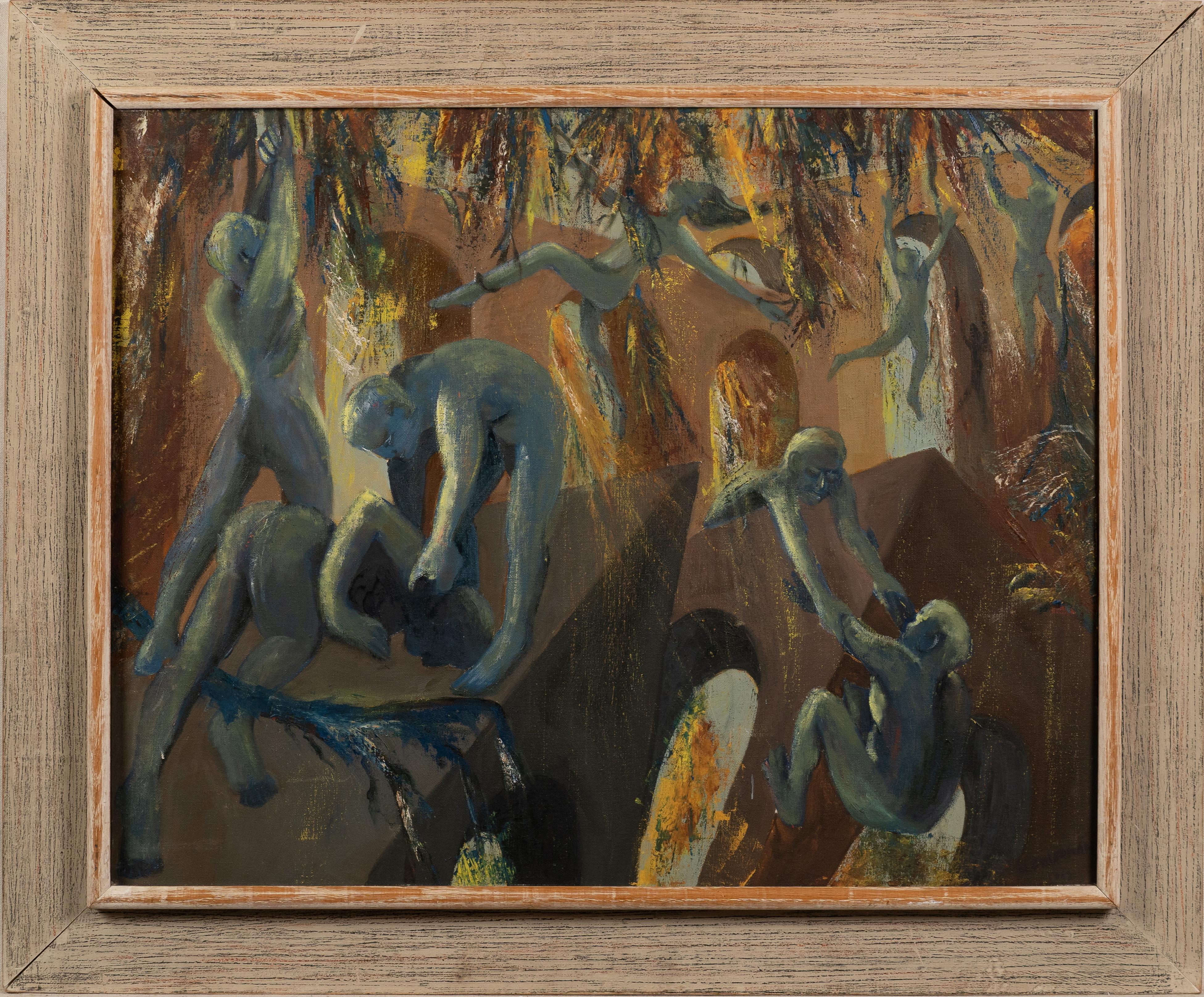
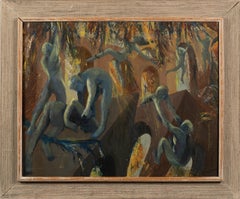
Vintage Surreal Signed Nude Figures Framed Original Modernist Oil Painting
Antico dipinto ad olio di paesaggio astratto modernista americano con nudo. Olio su tela. Incorniciato. Firmato in modo illeggibile.
Categoria
Fine XX secolo, Moderno, Dipinti astratti
Materiali
Tela, Olio
897 € Prezzo promozionale
20% in meno
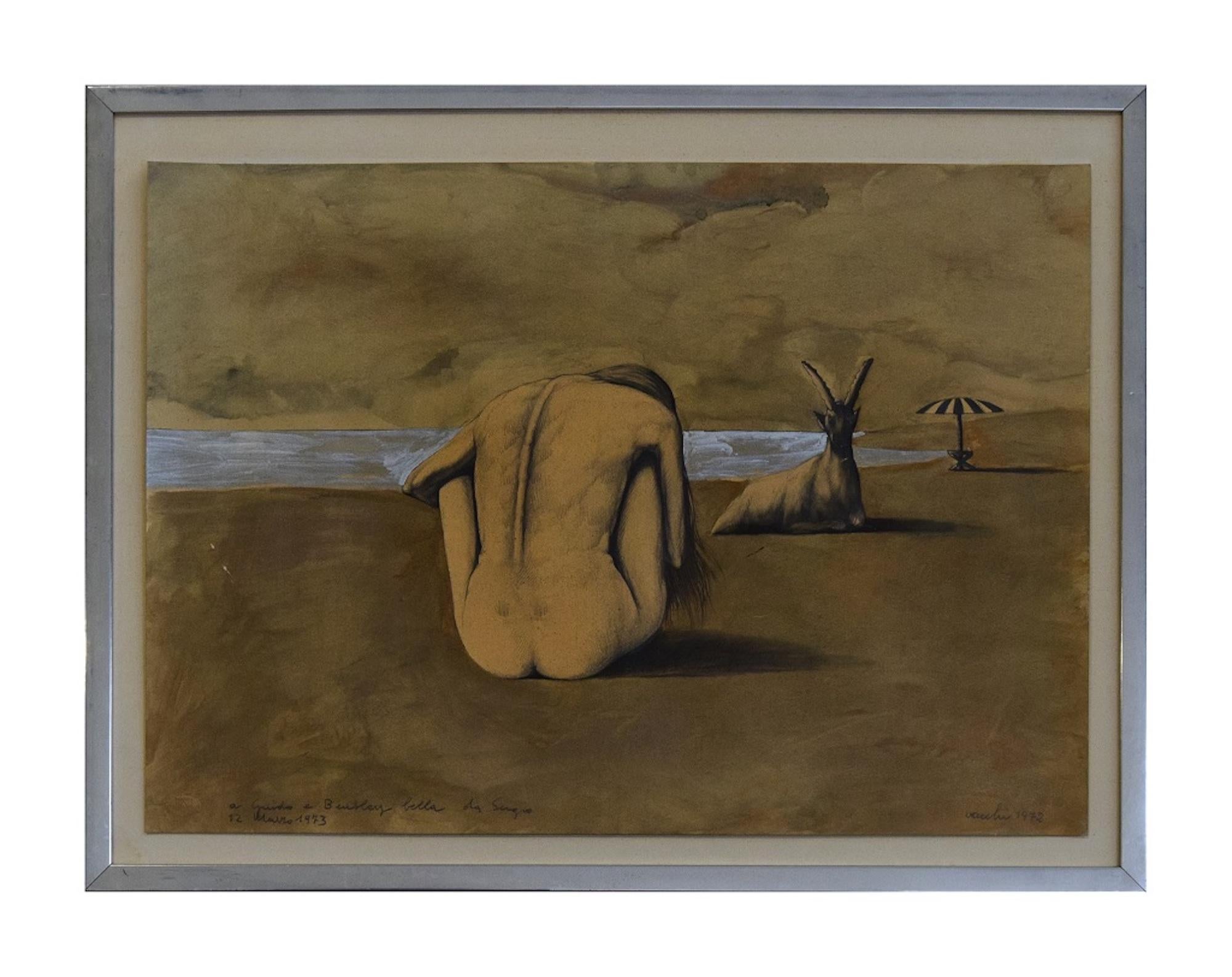
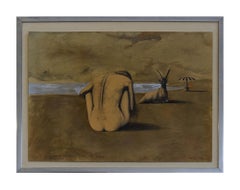
Senza titolo - Donna nuda / Tecnica mista originale di Sergio Vacchi - 1973
Di Sergio Vacchi
Senza titolo - Donna nuda è un'opera d'arte originale realizzata da Sergio Vacchi nel 1973.
Tecnica mista su carta. Firmato a mano e datato in basso a destra. Dedica dell'artista ai...
Categoria
Anni 1970, Contemporaneo, Tecnica mista
Materiali
Tecnica mista
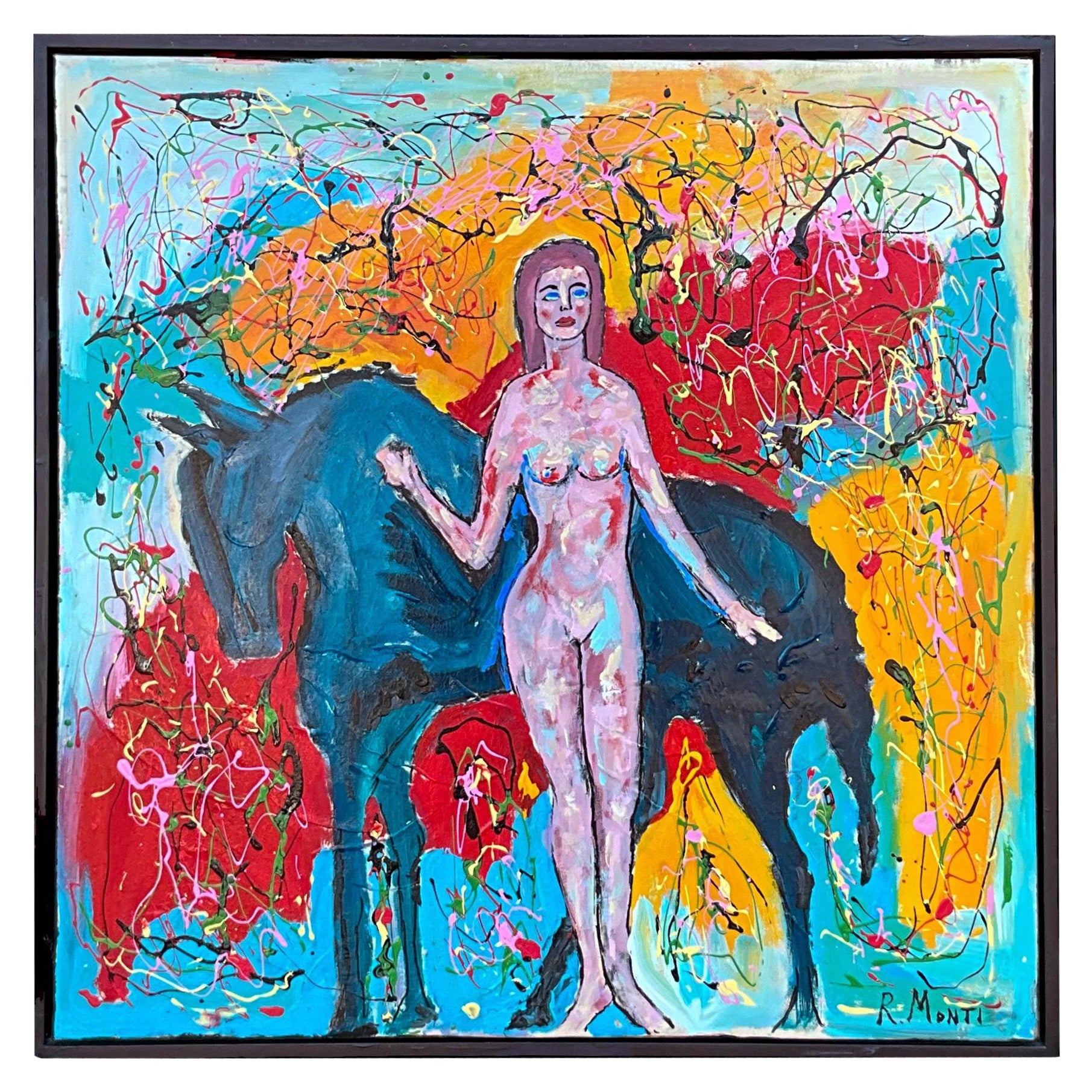
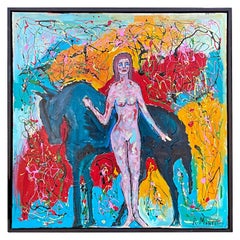
Olio astratto moderno su tela con cornice, firmato e di grandi dimensioni - Nudo femminile con cavallo
Si tratta di un dipinto a olio astratto moderno di grandi dimensioni raffigurante un nudo femminile con un cavallo e uno sfondo colorato. È firmato R. Montis. È incorniciato in una s...
Categoria
Fine XX secolo, Americano, Moderno, Arte contemporanea
Materiali
Tela, Legno, Pittura
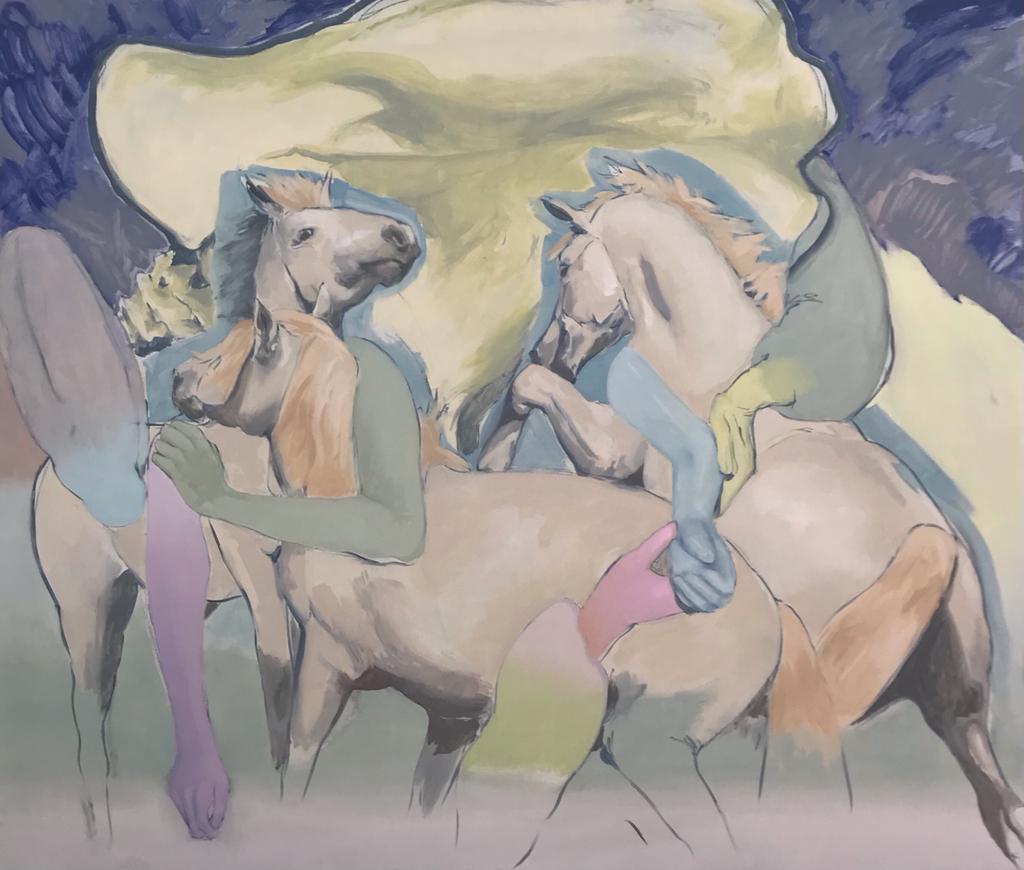
"Sueño con un centauro 2" centauro, vintage, surrealista, pittura figurativa
Avvolto da tele tese, Gonzalo García rivela i fantasmi sempre presenti del nostro passato e del nostro presente in un delicato turbinio di colori, luce e carne. Queste rappresentazio...
Categoria
Anni 2010, Contemporaneo, Dipinti figurativi
Materiali
Olio, Lino
Nudo e cavallo - Pittura a olio di Sebastiano Sanguigni - Anni 2000
Olio su tela realizzato da Sebastiano Sanguigni (1931-2012).
Firmato a mano.
Ottime condizioni.
Categoria
Inizio anni 2000, Contemporaneo, Dipinti figurativi
Materiali
Olio
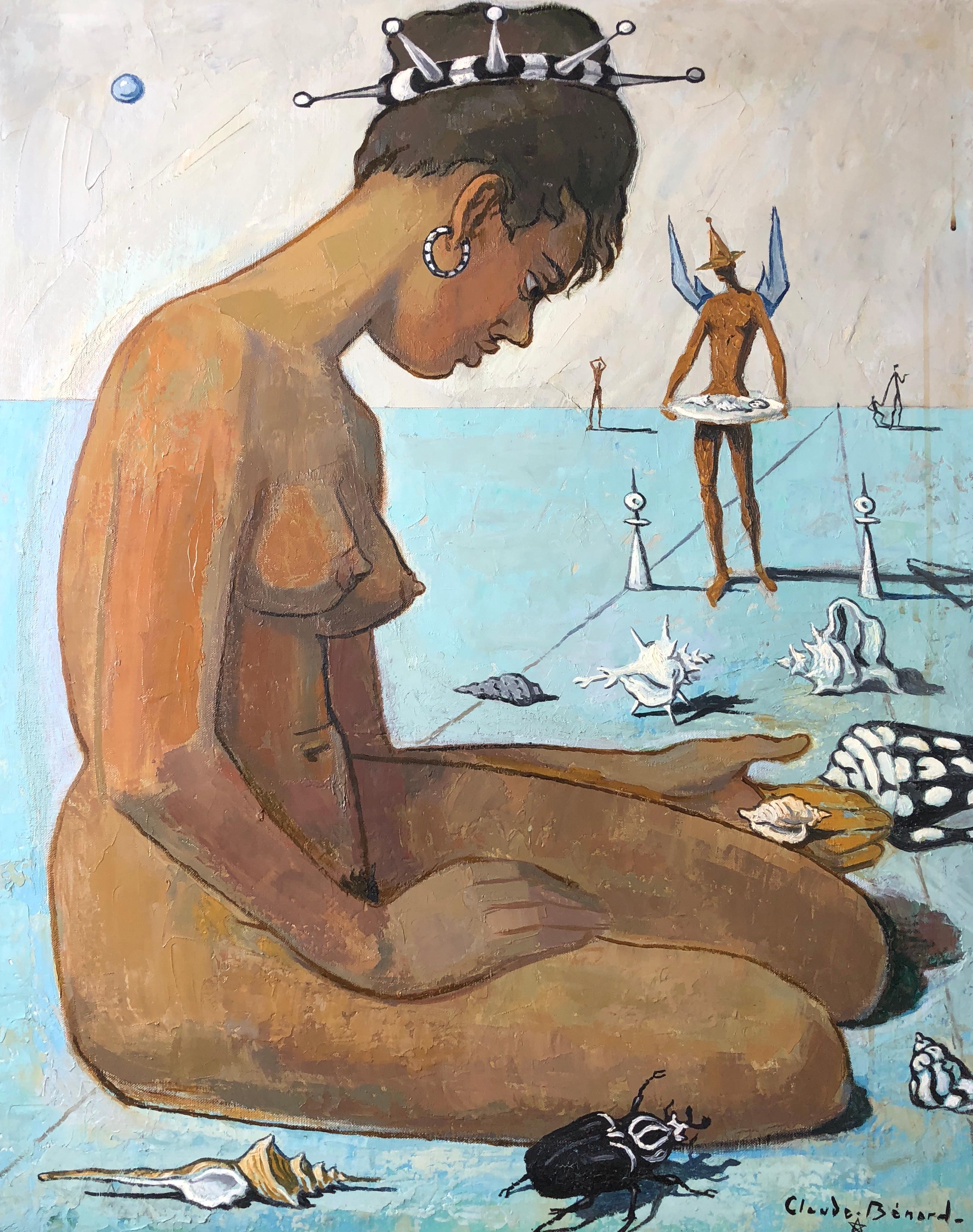
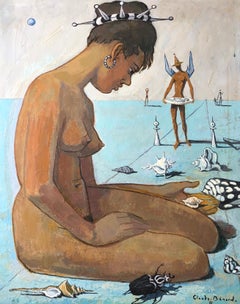
Donna nudista, pittura a olio surrealista firmata
Di Claude Benard
Donne nudiste, Pittura a olio firmata
Dell'artista francese Claude Benard, (1926 - 2016)
Firmato dall'artista in basso a sinistra,
Pittura a olio su tela, senza cornice
dimensioni de...
Categoria
Metà XX secolo, Surrealismo, Dipinti (paesaggio)
Materiali
Olio
1403 € Prezzo promozionale
63% in meno