Vuoi altre immagini o video?
Richiedi altre immagini o video al venditore
1 di 6
Giacomo ModoloDown with flowers
2200 €IVA inclusa
Informazioni sull’articolo
The lights of The Lights Of Sinners are glimmers that burn out at dawn: when a new day supplants the dreams of the night, scattering the remnants of a bonfire or a ritual, or like the warm ash of a cigarette just extinguished. Latent energy of an emotion that has only just been released in that place. Intrigued by its ever-dimmer glow, we move a step closer to definitive evanescence, to the edge of oblivion: we know that everything is about to go out, and that this moment corresponds to a unique episode from which we cannot withdraw. All that remains is to observe. To draw near to the fires to probe the residual heat, to verify the traces in the precise place where a story or an event was consumed—perhaps destined to be forgotten forever.
We move along the indistinct margin of ambiguity. Along a dangerous outline of suggestions, to be interpreted within their aura of mystery. We are fully immersed in a discourse that Giacomo Modolo has developed starting from photographic images, elaborated into abstract sub-movements that shift the original model onto a plane of slight hallucination. An atmosphere in which traditional narration gives way to figures without predetermined points of reference, thus opening the field to experimental operations of internal, mutating painting, allowing the figures to detach themselves from the need for a mass-media space and to assume a symbolic role.
Some works live on nocturnal blues and autumnal greens; others, chameleonic, absorb information from their surroundings; others still weave their own web in space and themselves determine the environment from which they derive. Painting is an organism. It metabolizes everything—its own evolution and its digestive waste.
An oracle, which could bear the face of the work Shaman, rises among the fumes and speaks to us of aspects of the recent past that we failed to grasp, events that reverberate in the artist’s present: thus, hyperstitions of the intimate spheres release flows of color, from diluted and at times highly acidic fragments of abstract expressionism. Something difficult to grasp and to hold on to reveals itself, only to slip away again, between matter and humanity. Between these two words lies the final prophecy and all of Modolo’s ultimate tensions, crystallized so that they do not flatten into the background of a neutral silence. His physical, anguished, and liquid way of painting, in this exhibition, is suited to making the subject appear through drawing that unfolds into reasoned compositions, yet not subjected to the absolute control of calculation.
In Dancers of Anger, memories are sacrificed to the inadequacies of the present, and in Rising Moon the moon occupies a sky once belonging to Van Gogh’s swirling stars. On the nocturnal mantle, dreams and desires rise toward it, nebulized by a city that consumes itself within its own rules; remnants of sacrifices ascend toward the rosy pearl, the silent lady left alone at the bar.
This transitional phase of Modolo’s research, following the abstract and graphic periods, is characterized by the effort to find a synthesis among the different tendencies of his art: expression, graphics, abstraction. The colors may appear more restrained than in other series, distant from the vibrant chromaticism of the 2021/2023 tigers, more tightly drawn into a unified vision given by drawing in interrelation with greens, earth tones, and certain blues—darker and more considered. Drawing assumes a central role; indeed, compared to previous works, there is a structural prevalence of drawing as a form of tracing images from different contexts, not to deny painterly quality, but rather to better emphasize the distinctive characteristics of the research. In truth, it takes little before the composition begins to tremble, the sky to thicken… The artist tends no longer to contain the chromatic storms that erupt from baroque backgrounds in Under the Black Flag, Sinner, To Love, and above all Tell Me About. Modolo’s natural painterly exuberance overflows the drawing, for example in the somewhat electric fluorescent fumes of Burning House: above all from the yellow of the flames—it is worth emphasizing—but also from the use of color, which remains a powerful gesture of openness to life, heightened by the unpredictable and indecipherable aspect of every subject lingering at the edges of an indefiniteness that universalizes it.
LOS (The Lights Of Sinners) evokes a personal world, tied to events from the recent past capable of casting their shadow on the present and representing the difficulties of today. Every detail, every figure is conditioned by a sentimental vision of memory, diluted in some intoxicating substance and mixed with the glimmers of the horizon, with intense vegetation and its innervated forms, with the unhealthy planes of urban contexts, with the exuberance of a grand evening spent at a concert. The scenes are always organic, and the compositions, carefully constructed within suburban cloisonné, disintegrate and give way under the liquid pressure of consumption, because the line is not the limit of things, but the mediation between communicating tonal values. At other times, the liquidity is such that it appears without frames, solely through gesture: fluid, pure, it leads the viewer into its own world, guiding them toward greater awareness, and not at all toward an ahistorical deviation.
It is as if in the canvases the artist seeks to give expression to a forgotten reality, magical, yet existing as a natural fact. He proceeds from ordinary things: an ashtray with a lit cigarette (Ashtray), a statuette of the Madonna (To Love), to reveal forms that speak of an imperceptible or higher state, one that corresponds to the profound constitution of the vast secret of art.
But the magic comes from something that is fading; faith is like the cigarette… We must understand why. It now seems that something has gone, that there is no time left except to grasp the energetic transformation that exhales from the remains of what has just occurred, in order to turn it into another awareness.
From images to image
With LOS, Giacomo Modolo experimented with a different approach to the model, both through a more structural use of drawing and by drawing from a vast personal archive of photographs and including found images of all kinds, even cinematic frames.
Never before has the connection between these media—photography and cinema—and Modolo’s painting been so close. If previously the initial image could serve as a cue for ideas and sensations, now it dictates a substantial rule from which the process of mutation begins: reestablishing a natural relationship with the model, where its reproduction does not entail the restitution of a formal, structural, conceptual wholeness, but rather acts as a mirror through which the reality in which it is placed is revealed.
In the jungle of images that assails us, there is no hierarchy nor difference between inside and outside, between private and public. As Mark Fisher also explained, the artist is aware that subjectivities are fragmented in the face of the industrial entertainment complex. A regime of liberal anarchism prevails, total and devoid of intimacy, in which we act and live an impersonal and abstract social life. Hence the need to bring vision back within a perimeter of depth and stability. This is a consequence of the anxieties produced by the visual saturation triggered by the digital. Insofar as Modolo relates himself to social phenomena, he is an artist of the current of The Other Individuality.
In this regard, in the work with the policemen, Dancers of Anger, we see the transformation of the subject following a sense of appropriation of the artist’s inner vision. The way in which Modolo’s painting tends to blur toward abstraction or liquidity directly concerns the intangible, grainy, and depthless system through which images present themselves to us via the media mechanisms of consumption. Modolo captures the aspects that make reality precarious, uses their characteristics to re-present it critically, without neglecting the more intimate tensions that he pours into the work, revitalizing the semblance that imposes itself within the painting.
In the work Five Lost Roses, Modolo started from a cinematic frame, which he revitalized, favoring its dis-possession from the medium and using the colors of Under the Black Flag, another work with which it enters into dialogue. A black band at the bottom signals its origin: extracted from an infinite film reel, that cinema of life in which one cannot stop participating and which one cannot refuse to watch.
In the daily flow of images, in this senseless and unstoppable looking, we lose our position as privileged observers. Having lost the central point of view, now overturned into mere final objects of vision, it is not we who look, but we who are the object of observation. Baudrillard specified this reversal of roles, which Modolo restores by returning to the observer their primary role as an active subject capable of attributing meaning to what they intentionally choose to look at.
Having recovered the point of view, dismantled the screens from which images originate, Modolo highlights the essence of being in the world, triggering new and unexpected meanings, giving rise to an aesthetic revelation.
Domenico Russo
- Creatore:Giacomo Modolo (1988, Italiano)
- Dimensioni:Altezza: 70 cm (27,56 in)Larghezza: 50 cm (19,69 in)
- Tecnica:
- Movimento e stile:
- Periodo:
- Condizioni:
- Località della galleria:Torino, IT
- Numero di riferimento:1stDibs: LU2929217439122
Informazioni sul venditore
Novità su 1stDibs
Iscritto negli ultimi sei mesi.
Ancora nessuna recensione
Venditore professionale selezionato
Ogni venditore supera rigorosi standard di autenticità e affidabilità
Venditore 1stDibs dal 2025
- SpedizioneRecupero del preventivo…Spedizione da: Torino, Italia
- Politica di reso
Alcune parti di questa pagina sono state tradotte automaticamente. 1stDibs non può garantire che le traduzioni siano corrette. L’inglese è la lingua predefinita del sito.
Altro da questo venditore
Mostra tuttoRedemption run
The stylistic and conceptual choices of Giacomo Modolo’s research place the discourse on Form at the forefront, particularly through the depiction of felines, the undisputed protagon...
Categoria
2010s, Espressionista, Dipinti (paesaggio)
Materiali
Oil
Roots
Giacomo Modolo (1988), after graduating at the Art School of Vicenza, obtained his bachelor degree in Graphic Arts at the Academy of Fine Arts in Venice on February 2011 and, at the ...
Categoria
2010s, Contemporaneo, Dipinti figurativi
Materiali
Oil
The Collector
Giacomo Modolo (1988), after graduating at the Art School of Vicenza, obtained his bachelor degree in Graphic Arts at the Academy of Fine Arts in Venice on February 2011 and, at the...
Categoria
2010s, Contemporaneo, Dipinti (ritratto)
Materiali
Oil
Sacrifice
The stylistic and conceptual choices of Giacomo Modolo’s research place the discourse on Form at the forefront, particularly through the depiction of felines, the undisputed protagon...
Categoria
2010s, Espressionista, Dipinti (paesaggio)
Materiali
Oil
5830 €
Land Snatch II
Giacomo Modolo (1988), after graduating at the Art School of Vicenza, obtained his bachelor degree in Graphic Arts at the Academy of Fine Arts in Venice on February 2011 and, at the ...
Categoria
2010s, Contemporaneo, Dipinti (paesaggio)
Materiali
Tecnica mista
Wolf cut land
Giacomo Modolo (1988), after graduating at the Art School of Vicenza, obtained his bachelor degree in Graphic Arts at the Academy of Fine Arts in Venice on February 2011 and, at the ...
Categoria
2010s, Contemporaneo, Dipinti (paesaggio)
Materiali
Acrylic
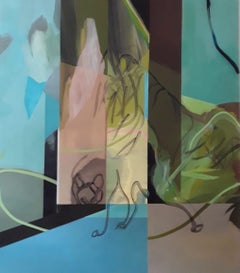
Ti potrebbe interessare anche
Studio dei fiori
Un'opera d'arte di un notevole espressionista astratto di seconda generazione, Joseph Stefanelli.
L'arte di Joseph Stefanelli, radicata nella formazione accademica e ispirata al mov...
Categoria
Anni 1990, Espressionismo astratto, Dipinti astratti
Materiali
Tela, Carboncino, Acrilico
Studio dei fiori
I dipinti di Suzanne Chamlin sono il frutto delle sue osservazioni e della sua immaginazione. Dipingendo sul posto, Chamlin esplora le sue espressioni di luce e colore.
Il processo ...
Categoria
Anni 2010, Contemporaneo, Dipinti astratti
Materiali
Olio, Pannello in legno
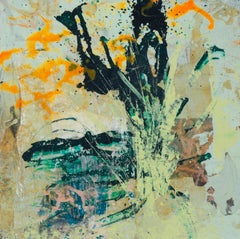
Fiori per me
Paula Valenzuela
Fiori per me, 2022
Acrilico e tecnica mista su pannello
Dimensioni senza cornice: 12 x 12 pollici
Dimensioni della cornice: 13 x 13 x 1 pollici
Lo stile caratterist...
Categoria
XXI secolo e contemporaneo, Astratto, Dipinti astratti
Materiali
Tecnica mista, Acrilico, Pannello
Pittura astratta a olio su tela di grandi dimensioni con toni floreali
"La Nature è la percezione indiretta della personificazione umana, dell'emozione e dell'immaginazione che viene enfatizzata nel colore, nella struttura, nei modelli e nelle linee che...
Categoria
Anni 2010, Contemporaneo, Dipinti astratti
Materiali
Tecnica mista, Olio
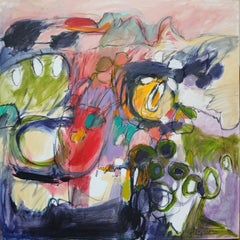
Arte contemporanea francese di Claudie Baran - Quando i fiori ti fanno sentire strano
Olio su tela
Incorniciato - 122 x 112 x 4 cm
Categoria
Anni 2010, Contemporaneo, Dipinti figurativi
Materiali
Tela, Olio
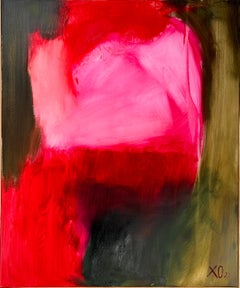
Fiori 24.2.24, Pittura, Olio su tela
Di Eva Hoffmann
In questo dipinto a olio, l'espressionismo e l'impressionismo si fondono con elementi simbolici. Ho applicato con passione ogni pennellata per rappresentare emozioni e ricordi. I pot...
Categoria
Anni 2010, Espressionista, Dipinti
Materiali
Olio