Salta e passa al contenuto principale
Vuoi altre immagini o video?
Richiedi altre immagini o video al venditore
1 di 12

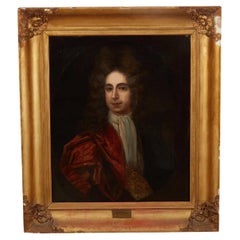
Sir Godfrey Kneller
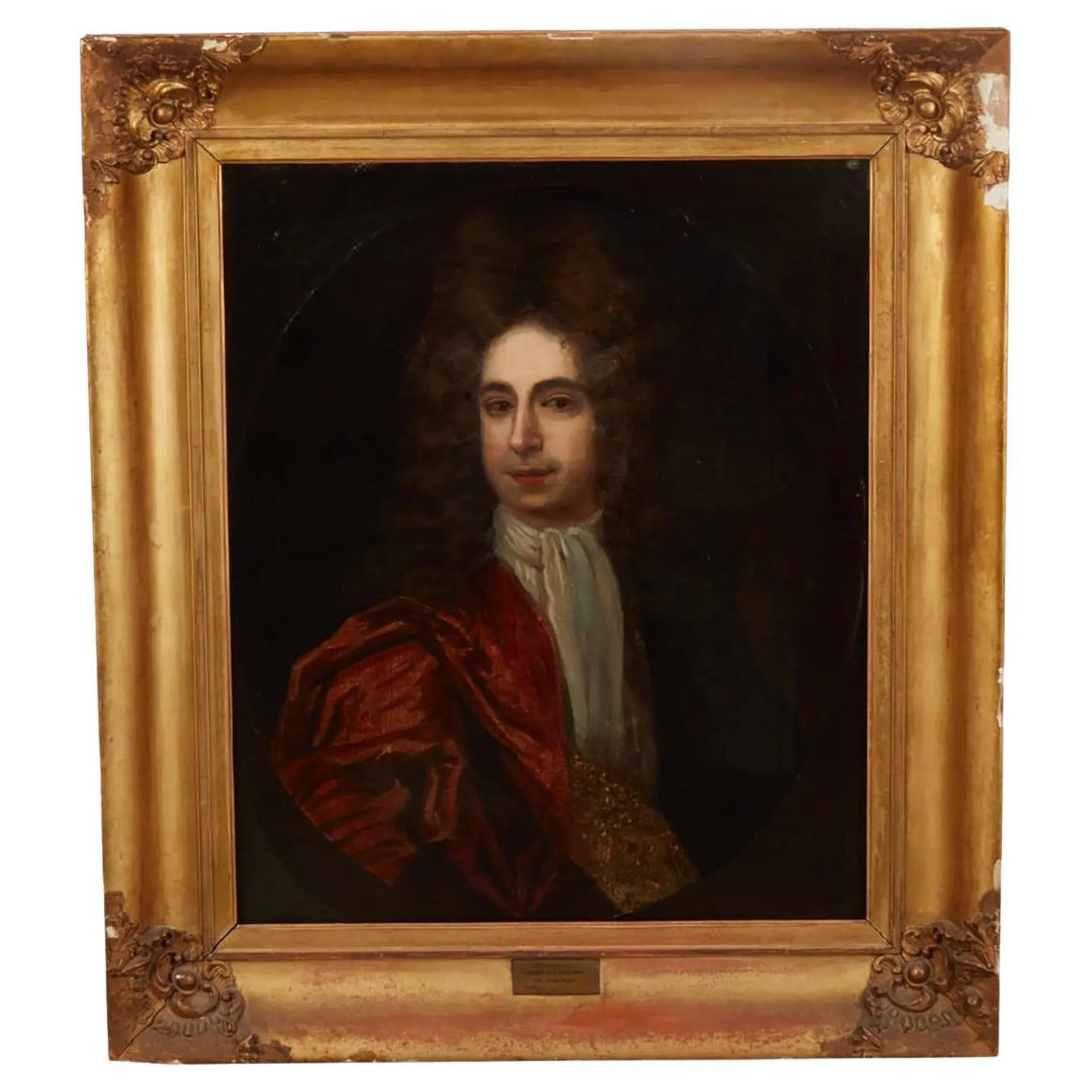
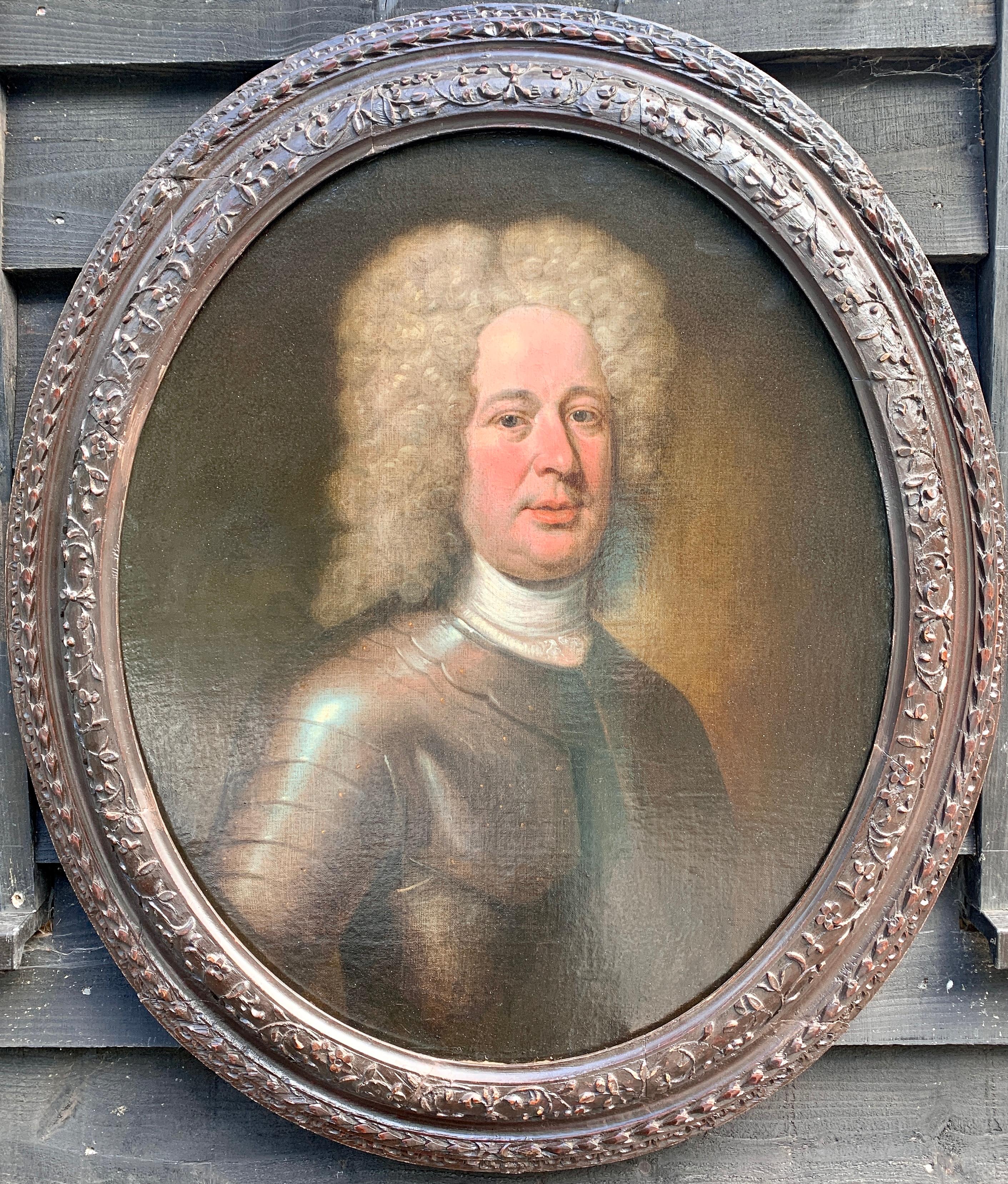
Portrait of a Gentleman in a Red Coat and Periwig, c.1715-1725; Godfrey Kneller

circa 1715-1725

11.510,82 €

Informazioni sull’articolo

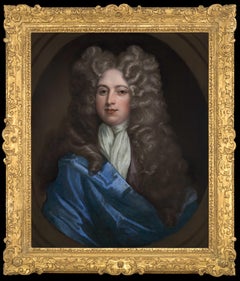
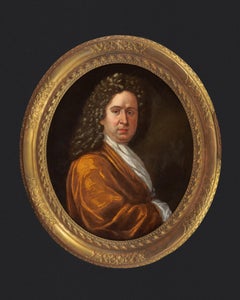
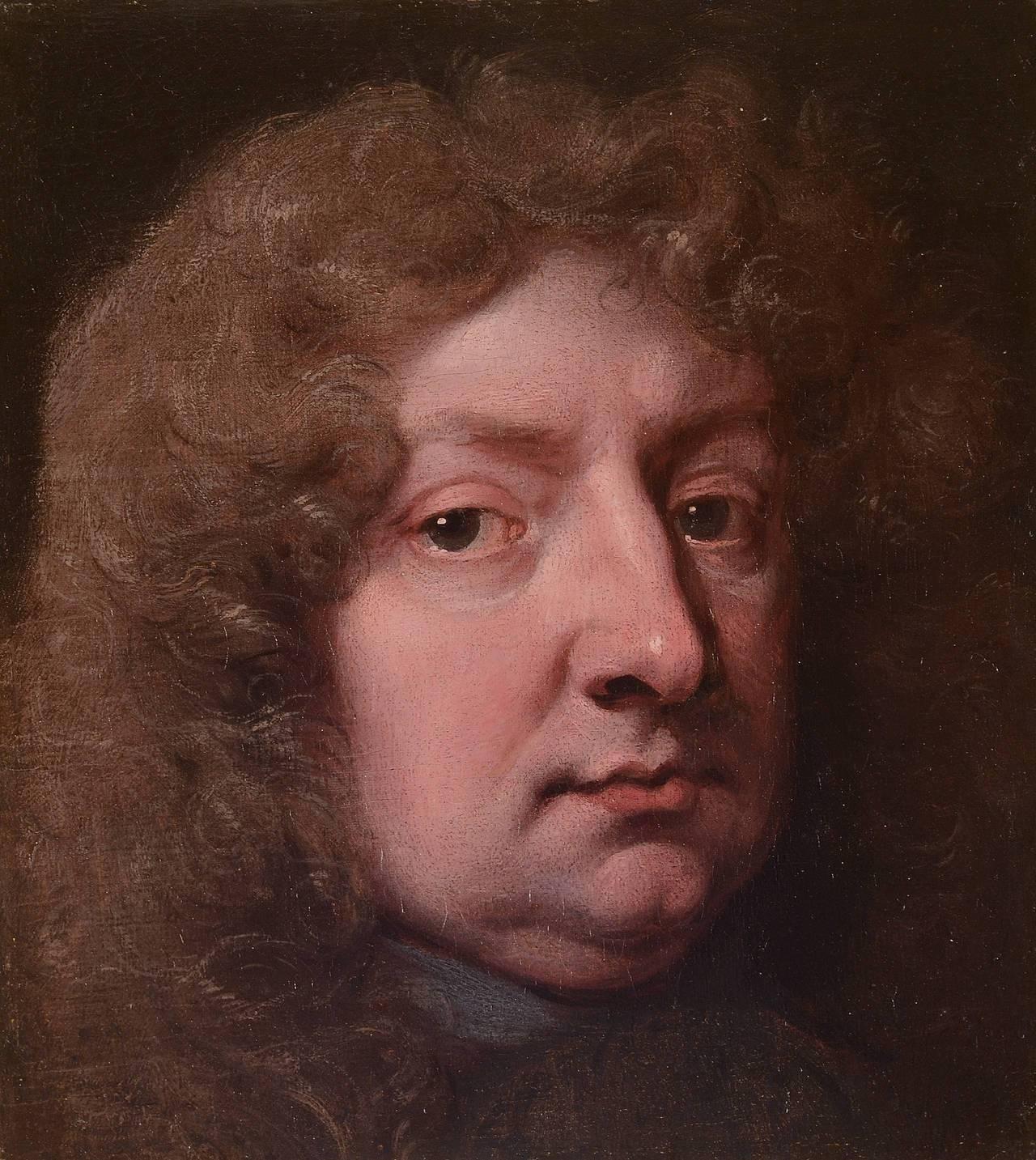
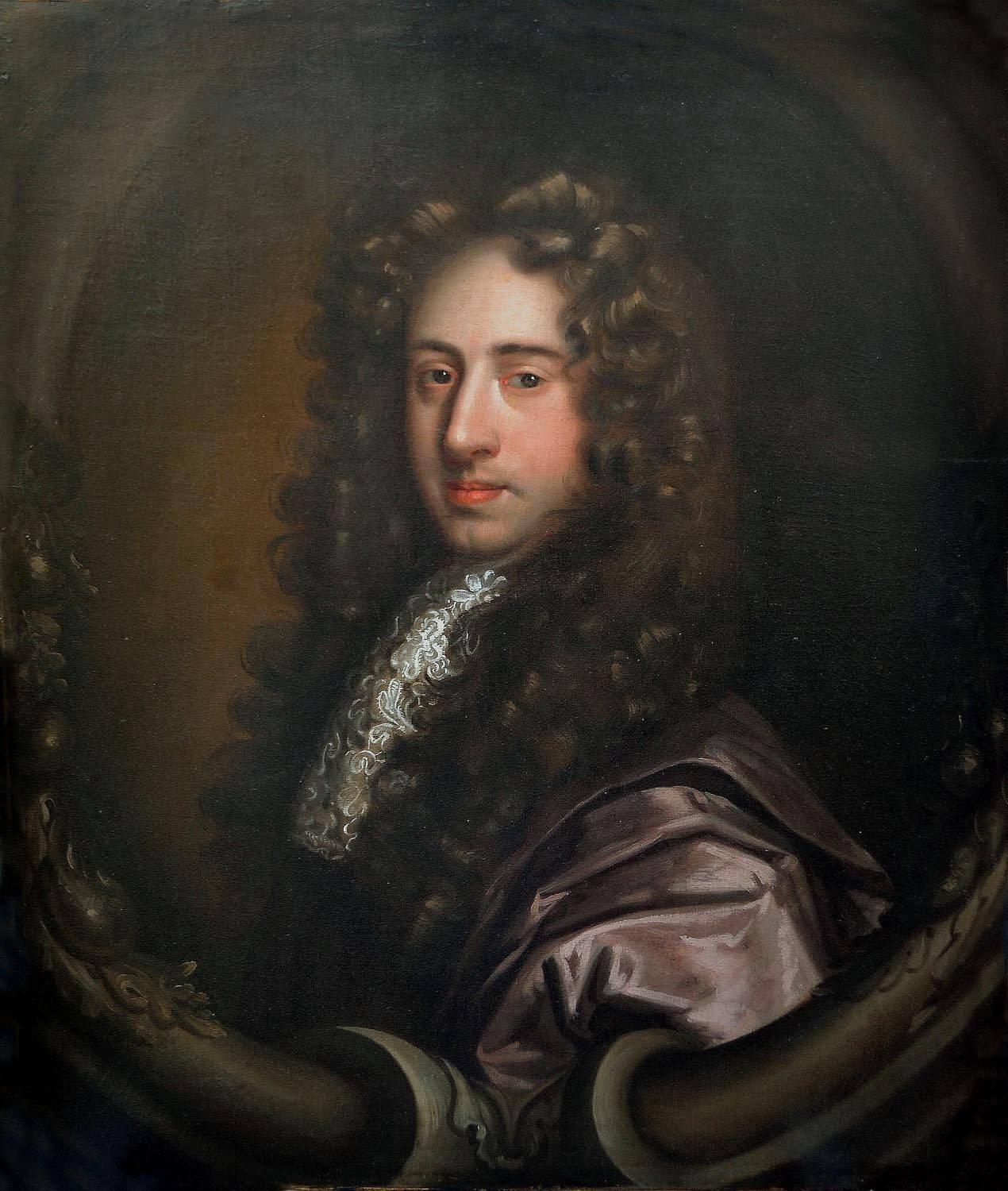
Portrait of a Gentleman in a Red Coat and Periwig, c.1715-1725 Studio of Sir Godfrey Kneller (1646–1723) This portrait of a gentleman, presented by Titan Fine Art, is a fine and well-preserved example of early eighteenth-century English portraiture, painted in London around c. 1715–1725 and attributable to the Studio of Sir Godfrey Kneller. It belongs to a moment when Kneller’s visual language had become synonymous with authority, stability, and social legitimacy, and when his studio functioned as the principal engine of elite portrait production in Britain. By the second decade of the eighteenth century, Kneller had dominated English portraiture for over forty years. Appointed Principal Painter to the Crown under Charles II and retained in that role through successive reigns, he was responsible not only for royal and aristocratic likenesses but also for shaping how Britain’s expanding professional classes wished to be seen. His London studio was large, highly organised, and staffed by painters trained to reproduce his manner with consistency and refinement. Portraits emerging from this environment were not regarded as secondary or inferior by contemporaries; rather, they were understood as authoritative products of Kneller’s enterprise, sanctioned by his name and style. The present painting exemplifies this late studio practice. The sitter is shown bust-length within an oval format, set against a dark, unobtrusive background that allows the head to emerge with quiet emphasis. The face is constructed through soft tonal gradations rather than firm linear outlines, especially evident in the modelling of the cheeks, jawline, and eye sockets. The eyelids are slightly heavy, the gaze steady but reserved, and the mouth closed and unemphatic. It contains the hallmarks of Kneller’s studio production: • The psychological restraint—suggesting composure, self-command, and social confidence, • The wig is painted as mass and atmosphere, with highlights flicked on top of darker underlayers and curls dissolving into shadow at the edges. • The lips are soft, fleshy, and gently blurred at the edges, with a subtle highlight on the lower lip and no hard contour. This kind of softness is much closer to Kneller’s late studio formula. • The nose is rounded and atmospheric, built from warm shadows and highlights with very little linear insistence (classic Kneller studio modelling). • The eyelids are softly swollen and shadowed, with transitions built by tone rather than line. The sclerae are muted and integrated into the flesh, not crisply defined. This “sleepy authority” is one of the most recognisable Kneller studio traits. • The cravat is painted with confident, economical strokes: folds suggested rather than described, with light catching the high points and dissolving elsewhere. The red coat its blue lining are subordinated to the face, handled broadly and efficiently, which again fits Kneller studio hierarchy of finish. This is a high-quality Kneller studio painting, likely executed by a well-trained later assistant who had fully absorbed Kneller’s facial formulas and tonal methods, possibly working from a sitting or studio pattern. The sitter’s costume provides a secure basis for dating. He wears a full powdered periwig, with long curls cascading to the shoulders and chest, a style fashionable from the first decade of the eighteenth century and especially prevalent among senior professional men in the years following 1710. The wig is painted as an atmospheric mass, with highlights and shadows suggesting volume rather than describing each curl individually, again consistent with Kneller’s studio conventions. His red coat, almost certainly of wool broadcloth, is cut with wide skirts and turned-back cuffs, reflecting current London fashion and signalling expense and confidence. Red was a conspicuous and deliberate choice, associated with authority and status rather than military identity in the absence of armour or insignia. Beneath the coat, a blue-grey lining introduces tonal contrast, while a white linen cravat, loosely tied, reflects the relaxed elegance favoured in the post-Restoration period, as lace neckwear gradually gave way to simpler linen forms. The sitter’s appearance, combined with the sobriety of the composition, suggests a man whose status derived from profession, office, or property rather than hereditary rank alone. He may plausibly have been a lawyer, judge, senior civil servant, physician, or prosperous landowner with strong ties to London. Such men formed a significant portion of Kneller’s clientele, particularly during the reigns of Queen Anne and George I, when Britain’s administrative, legal, and financial institutions were expanding rapidly. Around the time this portrait was painted, London was adjusting to the Hanoverian succession of 1714, the political realignments that followed, and the growing prominence of financial markets and public credit, developments that would soon culminate in the South Sea Bubble of 1720. For men navigating these worlds, portraiture served as a visual assertion of stability, loyalty, and social legitimacy in a period of change. Technically, the painting demonstrates a confident hierarchy of finish characteristic of Kneller’s workshop. The face and cravat are carefully worked, while the coat and background are handled more broadly, creating a controlled focus on the sitter’s identity rather than his material surroundings. The paint surface remains in notably good condition, with no evident disruption to the modelling or balance of tones, allowing the original intention of the artist to be read clearly. This level of preservation is increasingly rare in works of this type and period. The portrait is further distinguished by its contemporary carved and gilded oval frame, which appears original or very close in date to the painting. The bold leaf-and-shell ornament and egg-and-dart inner moulding are consistent with early eighteenth-century London frame-making and likely originate from a workshop supplying Kneller and his circle. The close fit between canvas and frame suggests that the two were conceived together, reinforcing the painting’s historical integrity and enhancing its visual impact. This work offers a valuable insight into the mechanisms of artistic production, social aspiration, and visual culture in early Georgian England. As a product of the Studio of Sir Godfrey Kneller, it embodies the aesthetic ideals that defined elite portraiture at the time: restraint, authority, and technical assurance. At the same time, it remains a compelling and immediate likeness of an individual navigating the professional and political world of early eighteenth-century London. Its combination of high-quality studio execution, excellent condition, period frame, and rich historical context makes it a significant and engaging example of British portrait painting from this formative period. Set with a fine carved and gilded period frame. Measurements: Height 96cm, Width 83cm framed (Height 37.75”, Width 32.75” framed)
  • Creatore:
    Sir Godfrey Kneller (1646 - 1723, Britannico)
  • Anno di creazione:
    circa 1715-1725
  • Dimensioni:
    Altezza: 96 cm (37,8 in)Larghezza: 83 cm (32,68 in)Profondità: 6 cm (2,37 in)
  • Tecnica:
  • Movimento e stile:
  • Periodo:
  • Condizioni:
    The condition is very good and can be hung and enjoyed immediately. The painting has passed a strict condition assessment by a professional conservator prior to going on sale.
  • Località della galleria:
    London, GB
  • Numero di riferimento:
    1stDibs: LU1199117394422

Altro da questo venditore

Mostra tutto
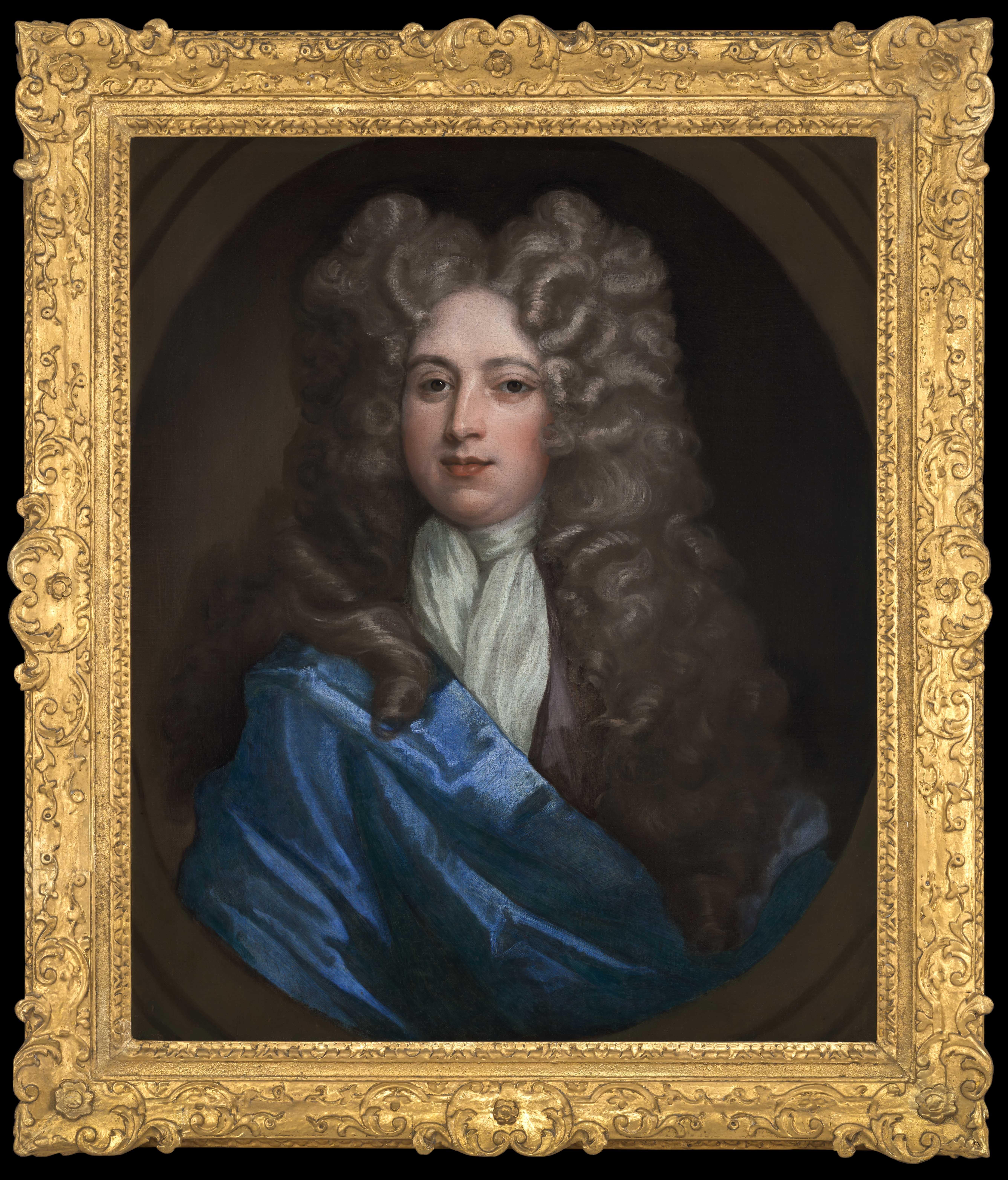
c.1700 Gentleman Portrait with Wig and Blue Cloak, Thomas Murray Oil Painting
Portrait of a Gentleman with Periwig and Blue Cloak c.1695-1710 Attributed to Thomas Murray (1663–1734) This accomplished oil-on-canvas portrait, presented by Titan Fine Art, was al...
Categoria

XVII secolo, Antichi maestri, Dipinti (ritratto)

Materiali

Tela, Olio

Portrait of a Gentleman in a Blue Coat Standing by a Curtain c.1695, Netscher
Portrait of a Gentleman in Blue Coat Standing by Curtain c.1695 Attributed to Constantyn Netscher (c.1668-c.1723), not signed The gentleman in this portrait has been depicted standi...
Categoria

XVII secolo, Antichi maestri, Dipinti (ritratto)

Materiali

Tela, Olio

Ritratto di gentiluomo, Sir Henry Hobart, mantello e cravatta blu, tela ad olio Wissing
Di Willem Wissing
Ritratto di gentiluomo, Sir Henry Hobart Mantello e cravatta blu c.1683-1684 Attribuito a Willem Wissing (1656-1687) Questo impressionante ritratto, presentato da Titan Fine Art, ra...
Categoria

XVII secolo, Antichi maestri, Dipinti (ritratto)

Materiali

Tela di cotone, Olio

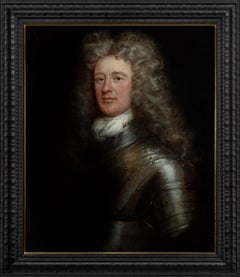
Ritratto di gentiluomo, David Erskine, 13° Laird of Dun, con indosso un armatura c.1700
Il gentiluomo in questo squisito ritratto a olio su tela, presentato da Titan Fine Art, è raffigurato con la grandiosità caratteristica della English School. An He è ritratto con un...
Categoria

XVII secolo, Antichi maestri, Dipinti (ritratto)

Materiali

Olio, Tela

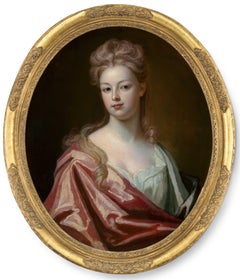
Ritratto di signora, Mrs Wray in abito di seta e benda rosa c.1698, olio su tela
Di Michael Dahl
Ritratto di una signora, Mrs Wray in abito di seta e benda rosa, 1698 ca. Circolo di Michael Dahl (1659-1743) Questa deliziosa opera, presentata da Titan Fine Art, è un ottimo esemp...
Categoria

XVII secolo, Antichi maestri, Dipinti (ritratto)

Materiali

Tela di cotone, Olio

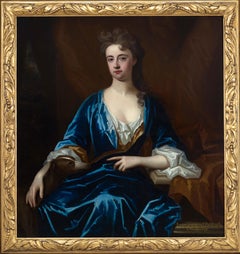
Ritratto di Lady, Barbara Herbert, Contessa di Pembroke, 1708 circa, dipinto di grandi dimensioni
Ritratto di Barbara Herbert, contessa di Pembroke c.1708 Charles d'Agar (1669-1723) Questo magnifico ritratto di grandi dimensioni, presentato da Titan Fine Art, raffigura la nobil...
Categoria

XVII secolo, Antichi maestri, Dipinti (ritratto)

Materiali

Tela di cotone, Olio

Ti potrebbe interessare anche

William Lord Russell
Di Sir Godfrey Kneller
Sir Godfrey Kneller 1646-1723, era un ritrattista inglese di origine tedesca. Allievo di Bol e Rembrandt, nacque a Leida, viaggiò a Roma, Venezia, Amburgo e poi a Londra dove divenne...
Categoria

Fine XVII secolo, Barocco, Dipinti (ritratto)

Materiali

Tela, Olio

Antico ritratto del 18° secolo di un gentiluomo in rosso - Attr. A Johan Van Diest
Antico ritratto del 18° secolo di un gentiluomo in rosso - Attr. A Johan Van Diest (olandese, 1695-1757)
Categoria

Di antiquariato/d’epoca, XVIII secolo, Tedesco, Coloniale olandese, Dipinti

Materiali

Tela, Legno dorato

Ritratto di William Russell, Lord Russell, Olio su tela
Di Sir Godfrey Kneller
Stile di Sir Godfrey Kneller 1646 - 1723 Ritratto di William Russell, Lord Russell Olio su tela Dimensioni dell'immagine: 12 x 11 pollici (30 x 28 cm) In una cornice dorata intagliat...
Categoria

Fino al XVIII secolo, Dipinti (ritratto)

Materiali

Tela, Olio

Ritratto di gentiluomo, olio su tela inglese del XVII secolo
Di (Circle of) Mary Beale
(Circle of Mary Beale) 1633 - 1699 Ritratto di un gentiluomo Olio su tela Dimensioni dell'immagine: 30 x 25 pollici Cornice dorata contemporanea Mary Beale era la figlia di un...
Categoria

XVII secolo, Dipinti (ritratto)

Materiali

Tela, Olio

Dipinto a olio del XVIII secolo Ritratto inglese di un gentiluomo in armatura che indossa una parrucca
Di studio of Sir Godfrey Kneller
Eccezionale ritratto di James Bellevue dell'inizio del XVIII secolo. Si è sempre pensato che il ritratto fosse opera di Sir Godfrey Kneller, noto per aver dipinto James Bellevue per...
Categoria

Inizio Settecento, Antichi maestri, Dipinti (ritratto)

Materiali

Tela, Olio

Ritratto di gentiluomo con cappotto cremisi - Quadro d arte britannico del XIX secolo
Questo raffinato ritratto a olio è attribuito alla cerchia di Joshua Reynolds. Dipinto intorno al 1800, è un mezzo ritratto di un bel giovane con un cappotto di velluto cremisi. Il d...
Categoria

Inizio XIX secolo, Realismo, Dipinti (ritratto)

Materiali

Olio