Articoli simili a c.1700 Gentleman Portrait with Wig and Blue Cloak, Thomas Murray Oil Painting
Vuoi altre immagini o video?
Richiedi altre immagini o video al venditore
1 di 13
Thomas Murrayc.1700 Gentleman Portrait with Wig and Blue Cloak, Thomas Murray Oil Paintingcirca 1695-1710
circa 1695-1710
10.459,07 €
Informazioni sull’articolo
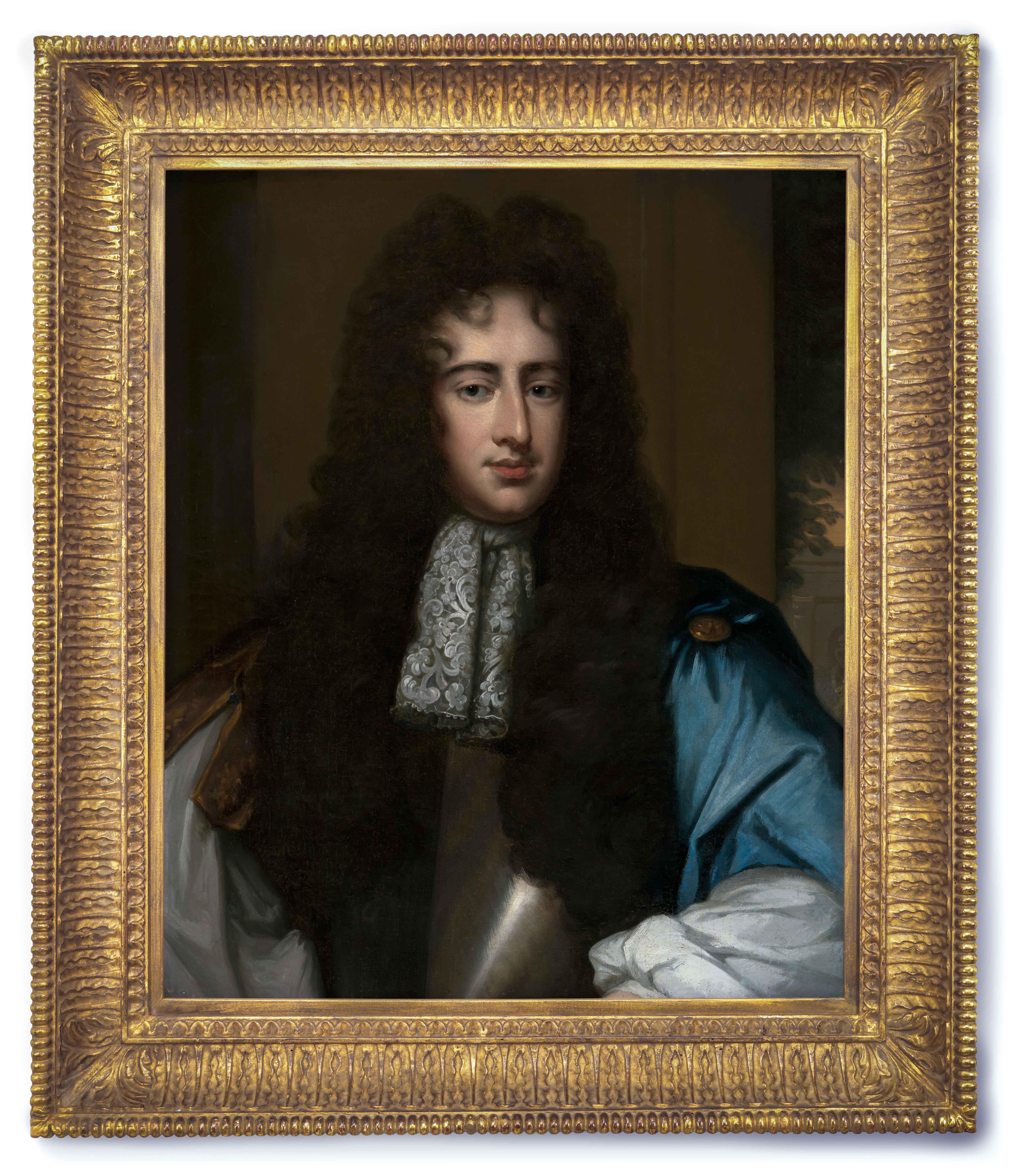
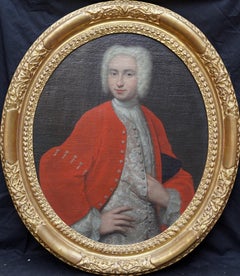
Portrait of a Gentleman with Periwig and Blue Cloak c.1695-1710
Attributed to Thomas Murray (1663–1734)
This accomplished oil-on-canvas portrait, presented by Titan Fine Art, was almost certainly commissioned to assert social identity, respectability, and continuity. Such portraits were typically displayed in principal rooms of country houses or town residences, functioning as statements of lineage and status. The sitter appears to be a member of the professional or landed gentry, rather than a courtier or aristocrat. He may plausibly have been a lawyer, landowner, administrator, or merchant-gentleman—someone whose position depended upon education, property, and reputation rather than inherited title alone.
Life for such a man around 1700 was shaped by a period of profound political and social transition. The Glorious Revolution of 1688 had established a constitutional monarchy, strengthening Parliament and redefining loyalty and authority. Under William III and later Queen Anne, England was increasingly engaged in continental conflict, culminating in the War of the Spanish Succession (1701–1714). At the same time, commerce expanded, London grew rapidly, and polite culture—clubs, coffeehouses, and professional networks—played an ever greater role in shaping elite male identity. A gentleman of this class would likely have divided his time between estate management or professional duties, participation in local governance or parish affairs, and periodic engagement with the cultural and political life of London.
The portrait is attributed to Thomas Murray (1663–1734), the Scottish-born painter who enjoyed a successful career in London during the late Stuart and early Georgian periods. Murray trained under John Riley, one of the leading portraitists of his generation, and, like his master, specialised primarily as a face-painter. Contemporary sources indicate that Murray frequently worked within a collaborative studio practice, painting the head while assistants completed wigs, drapery, and backgrounds. The present work accords closely with this documented method.
The handling of the sitter’s face is refined and restrained. The flesh is modelled through soft tonal transitions rather than linear definition, producing a calm, dignified expression. Heavy upper eyelids, muted highlights, and the carefully controlled construction of the nose and mouth are all characteristic of Murray’s securely attributed portraits and of the broader Riley tradition. The upper eyelid is heavy and slightly swollen, with a soft crease rather than a drawn line whilst the lower lid is defined by a cool grey-blue tone (likely black + lead white), not by a line. The eye socket is built tonally, not architecturally. The mouth is particularly telling: the upper lip is thin and tightly controlled, the philtrum is understated, almost suppressed, the lower lip is modelled with red lake + white, and softly glazed. This technique is very characteristic of Murray’s heads, and since it is finished with greater care than the surrounding elements, while the wig, blue drapery, and dark recessive background are executed more schematically, this reinforces the likelihood of collaborative production typical of Murray’s professional practice. This quiet, disciplined manner distinguishes the painting from the more assertive and theatrical style of Sir Godfrey Kneller, whose work dominated court portraiture at the time.
The sitter’s costume and hair provide a secure date of c. 1695–1710. He wears a full-bottomed curled wig, still fashionable at the turn of the century but already softened from the rigid, architectural wigs of the 1670s and 1680s. The narrow white cravat corresponds to late William III and early Queen Anne taste, before the emergence of broader and more relaxed neckwear after about 1715. Draped across the figure is a rich blue mantle, likely painted with smalt, a pigment widely used in late 17th-century England and now characteristically subdued through age. Blue drapery of this type conveyed dignity, loyalty, and social standing, and was frequently employed in portraits of gentlemen of means.
On the reverse of the canvas are several later labels, including a handwritten inscription naming “Thomas Murray” accompanied by incorrect life dates. These annotations were most likely added in the 19th or early 20th century, a period when works were frequently re-identified during estate inventories, sales, or family reorganisations. The inaccurate dates may reflect imperfect knowledge or reliance on secondary sources, and possibly confusion between sitter and artist—an error not uncommon in later provenance traditions. While these labels cannot be treated as documentary proof, they suggest a persistent association of the work with the name Thomas Murray and do not contradict the stylistic and chronological evidence supporting the present attribution.
The painting survives in a fine carved and gilded period frame, richly ornamented with scrolling foliage. Frames of this quality were integral to the original presentation of portraits in elite interiors, enhancing both their visual impact and their function as symbols of permanence and authority.
Taken together, the stylistic evidence, technical handling, costume analysis, and later attributional history support the identification of this painting as a portrait attributed to Thomas Murray. As such, it stands as a compelling and historically resonant example of English portraiture around 1700, offering insight into the professional practices of a significant painter and the social world of the gentleman he portrayed.
Measurements: Height 93cm, Width 80cm framed (Height 36.5”, Width 31.5” framed)
- Creatore:Thomas Murray (1663 - 1734)
- Anno di creazione:circa 1695-1710
- Dimensioni:Altezza: 93 cm (36,62 in)Larghezza: 80 cm (31,5 in)Profondità: 6 cm (2,37 in)
- Tecnica:
- Movimento e stile:
- Periodo:
- Condizioni:The condition is very good and can be hung and enjoyed immediately. The painting has passed a strict condition assessment by a professional conservator prior to going on sale.
- Località della galleria:London, GB
- Numero di riferimento:1stDibs: LU1199117387512
Informazioni sul venditore
5,0
Venditore professionale selezionato
Ogni venditore supera rigorosi standard di autenticità e affidabilità
Fondazione nel 1998
Venditore 1stDibs dal 2019
45 vendite su 1stDibs
- SpedizioneRecupero del preventivo…Spedizione da: London, Regno Unito
- Politica di reso
Alcune parti di questa pagina sono state tradotte automaticamente. 1stDibs non può garantire che le traduzioni siano corrette. L’inglese è la lingua predefinita del sito.
Altro da questo venditore
Mostra tuttoRitratto di gentiluomo, Sir Henry Hobart, mantello e cravatta blu, tela ad olio Wissing
Di Willem Wissing
Ritratto di gentiluomo, Sir Henry Hobart Mantello e cravatta blu c.1683-1684
Attribuito a Willem Wissing (1656-1687)
Questo impressionante ritratto, presentato da Titan Fine Art, ra...
Categoria
XVII secolo, Antichi maestri, Dipinti (ritratto)
Materiali
Tela di cotone, Olio
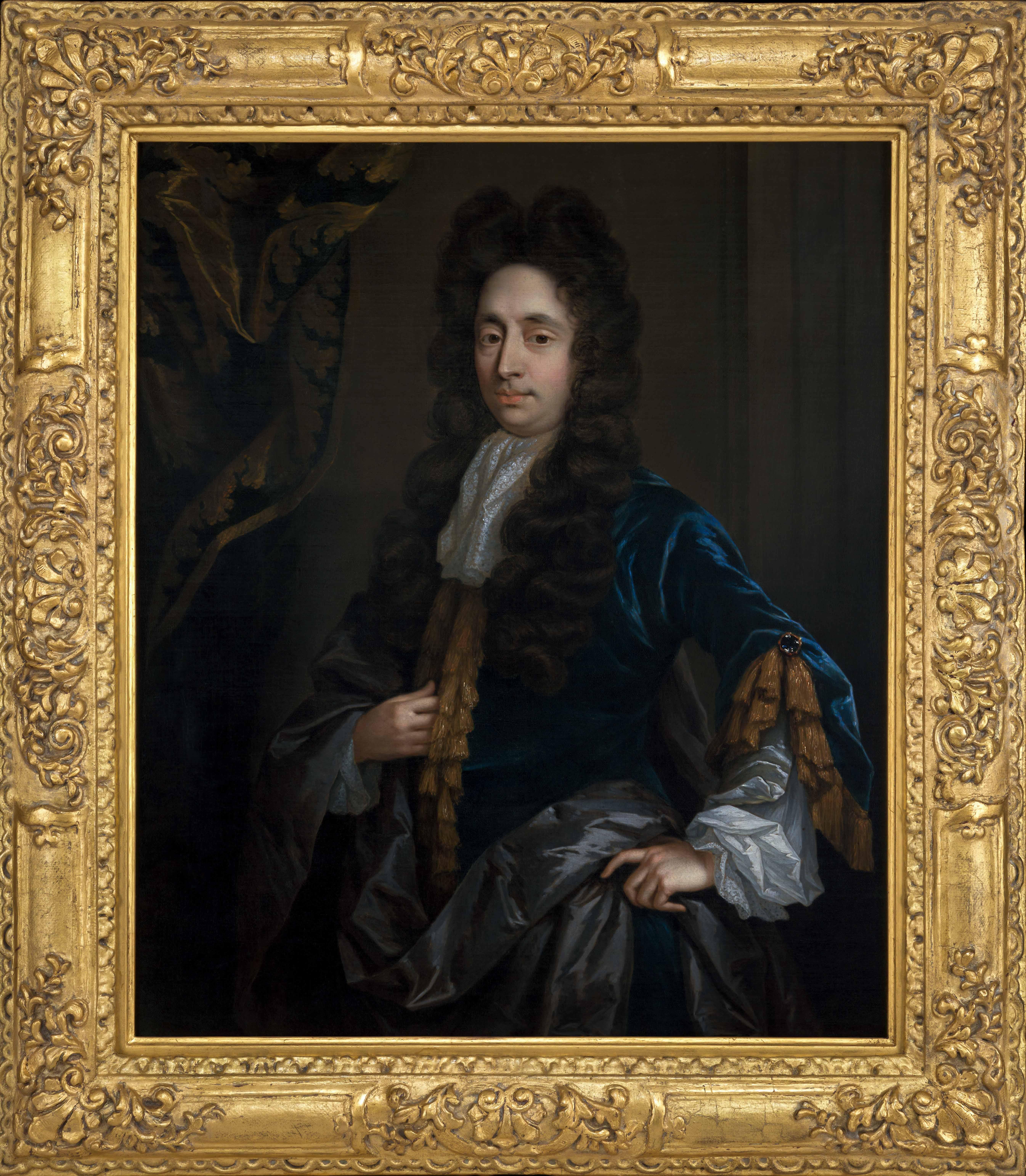
Portrait of a Gentleman in a Blue Coat Standing by a Curtain c.1695, Netscher
Portrait of a Gentleman in Blue Coat Standing by Curtain c.1695
Attributed to Constantyn Netscher (c.1668-c.1723), not signed
The gentleman in this portrait has been depicted standi...
Categoria
XVII secolo, Antichi maestri, Dipinti (ritratto)
Materiali
Tela, Olio
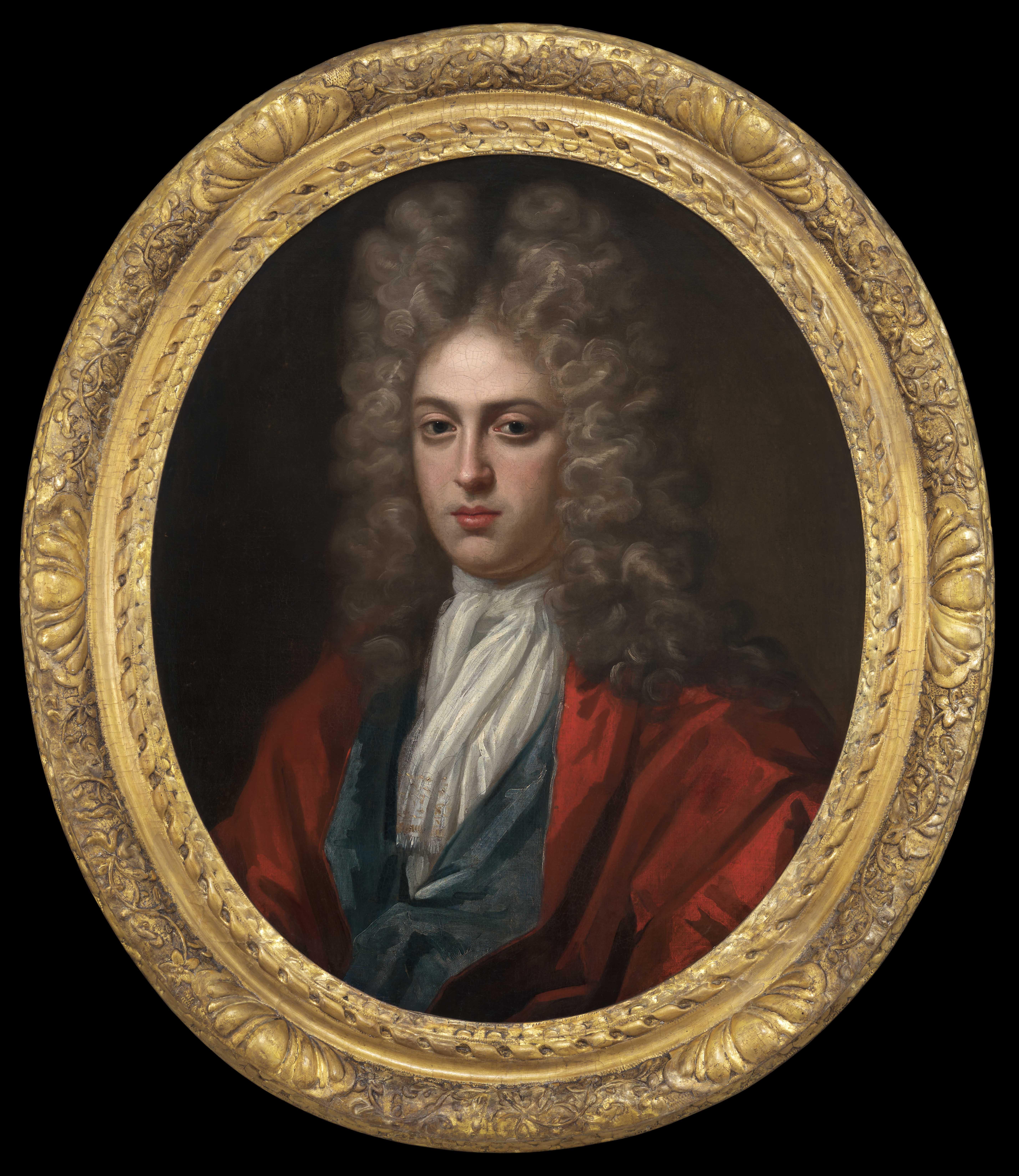
Portrait of a Gentleman in a Red Coat and Periwig, c.1715-1725; Godfrey Kneller
Di Sir Godfrey Kneller
Portrait of a Gentleman in a Red Coat and Periwig, c.1715-1725
Studio of Sir Godfrey Kneller (1646–1723)
This portrait of a gentleman, presented by Titan Fine Art, is a fine and wel...
Categoria
XVIII secolo, Antichi maestri, Dipinti (ritratto)
Materiali
Tela, Olio
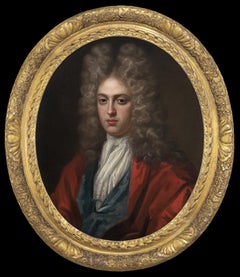
Ritratto di gentiluomo, David Erskine, 13° Laird of Dun, con indosso un
armatura c.1700
Il gentiluomo in questo squisito ritratto a olio su tela, presentato da Titan Fine Art, è raffigurato con la grandiosità caratteristica della English School. An He è ritratto con un...
Categoria
XVII secolo, Antichi maestri, Dipinti (ritratto)
Materiali
Olio, Tela
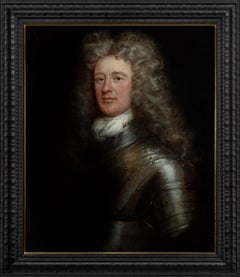
Ritratto di gentiluomo in armatura, mantello blu, spilla con diamante c.1700 Cornice intagliata francese
Di Joseph Vivien
Ritratto di gentiluomo in armatura e mantello azzurro con spilla di diamanti c.C. 1700
Attribuito a Joseph Vivienne (1657-1735)
Il personaggio di questo superbo ritratto, offerto d...
Categoria
XVII secolo, Antichi maestri, Dipinti (ritratto)
Materiali
Olio, Tela di cotone
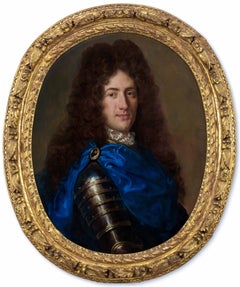
Ritratto di gentiluomo blu e mantello, Ritratto di signora, cornici dorate intagliate di pregio
Ritratto di un gentiluomo con mantello blu e Ritratto di una signora in abito rosso c.1697
Thomas Thomas (1663-1735)
Questi affascinanti ritratti sono squisiti esempi di ritrattisti...
Categoria
XVII secolo, Antichi maestri, Dipinti (ritratto)
Materiali
Olio, Tela

Ti potrebbe interessare anche
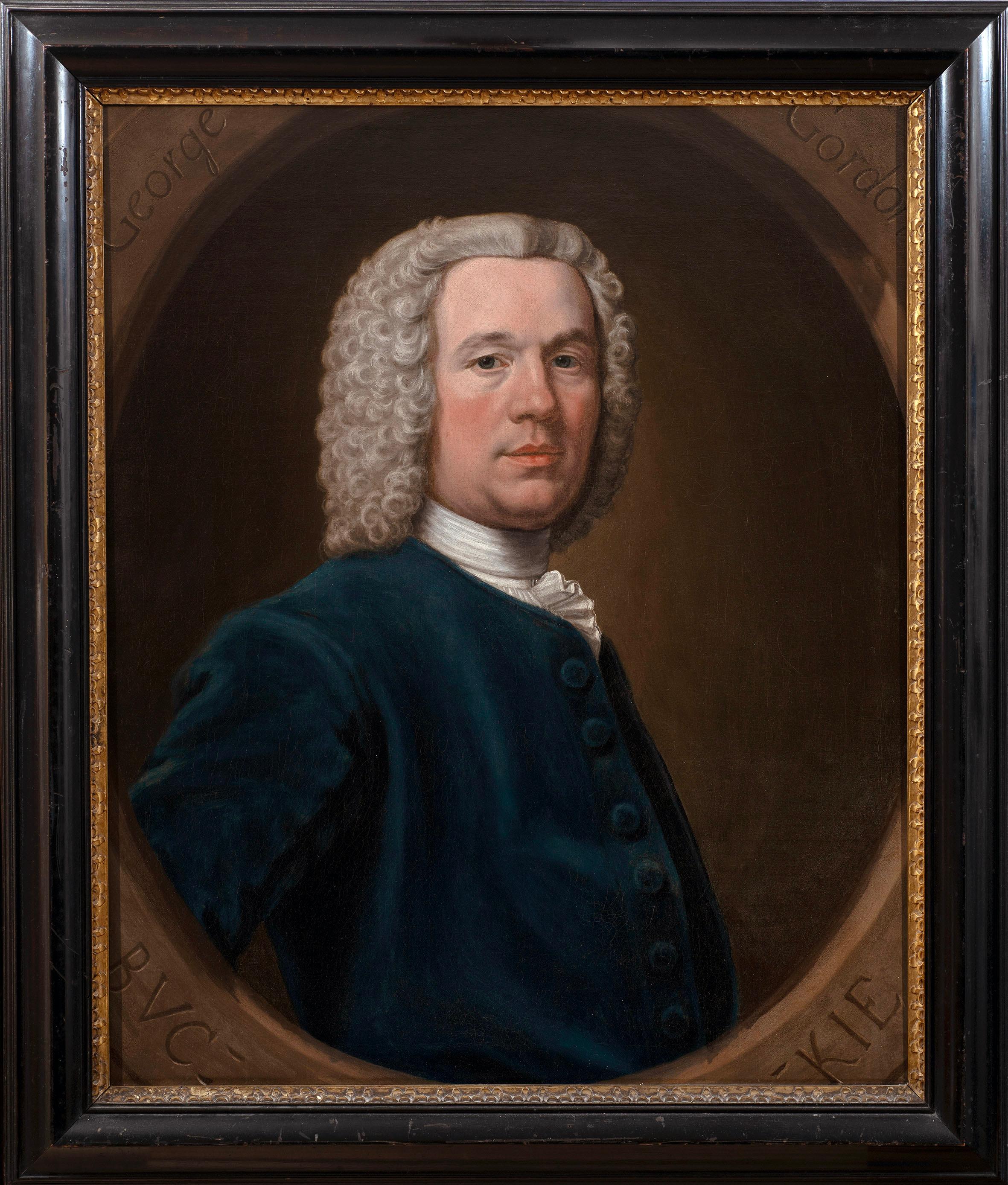
Ritratto di George Gordon, 7° Laird di Buckie (1707-1756)
Di John Alexander
John Alexander (scozzese, 1686-1766)
Ritratto di George Gordon, 7° Laird di Buckie (scozzese, 1707-1756), 1743 ca.
Olio su tela
In una cornice ebanizzata intagliata, con leggero bor...
Categoria
Anni 1740, Antichi maestri, Dipinti (ritratto)
Materiali
Olio
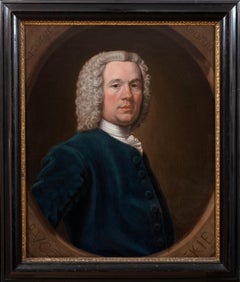
7011 € Prezzo promozionale
20% in meno
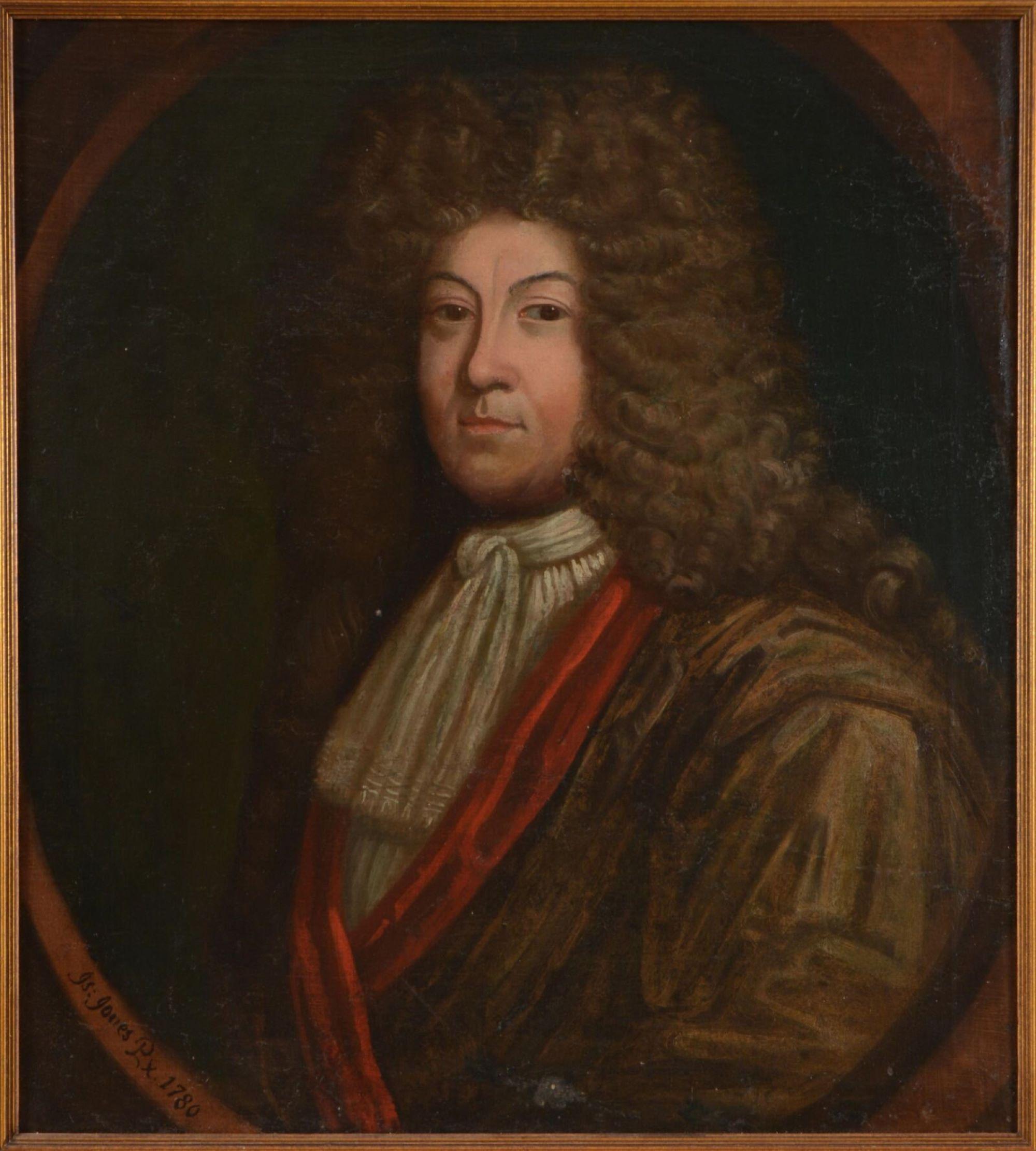
1780 Antico dipinto a olio su tela del 18° secolo Ritratto di un nobiluomo Firmato
Questo olio su tela originale è un raffinato e caratteristico ritratto britannico del XVIII secolo, firmato e datato in basso a sinistra: "Js. Jones P.X. 1780". L'opera ritrae un gen...
Categoria
Fine XVIII secolo, Impressionismo, Dipinti (ritratto)
Materiali
Olio
3635 € Prezzo promozionale
50% in meno
Ritratto di gentiluomo, olio su tela inglese del XVII secolo
Di (Circle of) Mary Beale
(Circle of Mary Beale)
1633 - 1699
Ritratto di un gentiluomo
Olio su tela
Dimensioni dell'immagine: 30 x 25 pollici
Cornice dorata contemporanea
Mary Beale era la figlia di un...
Categoria
XVII secolo, Dipinti (ritratto)
Materiali
Tela, Olio
Ritratto di grandi dimensioni del XVII/XVIII secolo di Mr. Gilbert Charity, fondatore della Carità
Ritratto di Mr. Gilbert (ritenuto il fondatore di 'Gilberts Charity, Bridgwater, Somerset)
Artista della English School, fine XVII/inizio XVIII secolo
dipinto a olio su tela, senza cornice
tela: 30 x 25 pollici
Provenienza: Per discendenza dalla famiglia dell'autore. L'autore si è sposato con Jean Collard...
Categoria
Fine XVII secolo, Antichi maestri, Dipinti (ritratto)
Materiali
Olio, Tela
1869 € Prezzo promozionale
20% in meno
Ritratto a tre quarti di Sir John Wynn, 5° Baronetto, olio su tela
Di John Vanderbank
Sir John Wynn, 5° Baronetto
Dimensioni della tela: 50 x 40" (127 x 102 cm)
Dimensioni esterne del telaio: 58 x 48" (147 x 122 cm)
Sir John Wynn, 5° Baronetto (1628 - 11 gennaio 1719...
Categoria
Anni 1710, Scuola inglese, Dipinti (ritratto)
Materiali
Olio
Ritratto ovale di un gentiluomo - Quadro ad olio d
arte French Old Master c1700
Di Nicolas de Largillière
Questo superbo ritratto a olio ovale French Old Master è attribuito alla cerchia di Nicolas De Largilliere. Dipinto intorno al 1700, è un ritratto a mezza lunghezza di un gentiluomo ...
Categoria
Inizio Settecento, Antichi maestri, Dipinti (ritratto)
Materiali
Olio
5609 € Prezzo promozionale
20% in meno