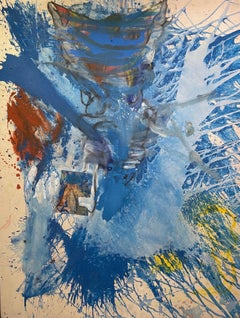
Articoli simili a Robert Natkin, Abstract Expressionist work on historic Wells Street Gallery card
Vuoi altre immagini o video?
Richiedi altre immagini o video al venditore
1 di 6
Robert NatkinRobert Natkin, Abstract Expressionist work on historic Wells Street Gallery card1957
1957
6497,10 €
Informazioni sull’articolo
Hand signed and dated on the front
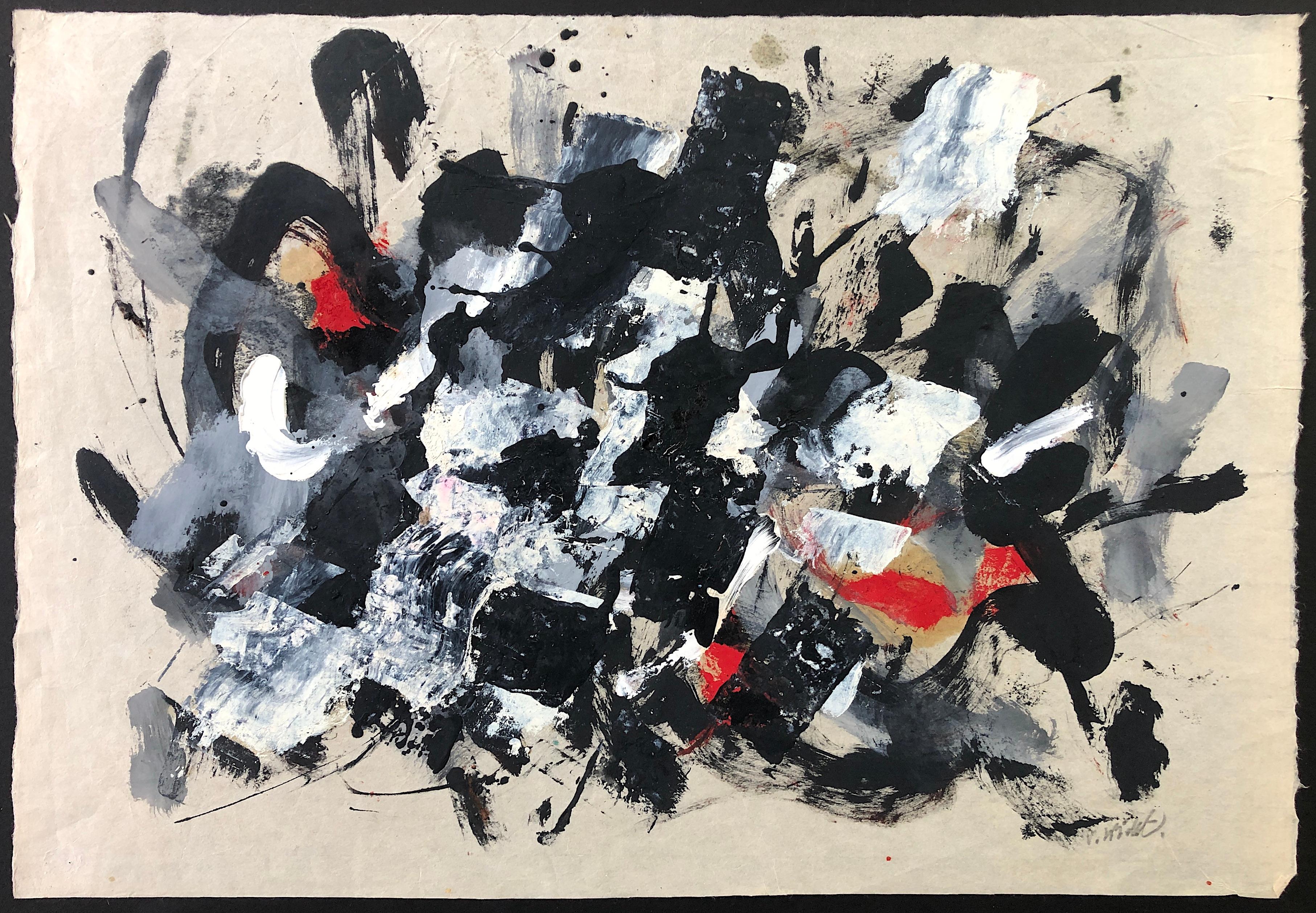
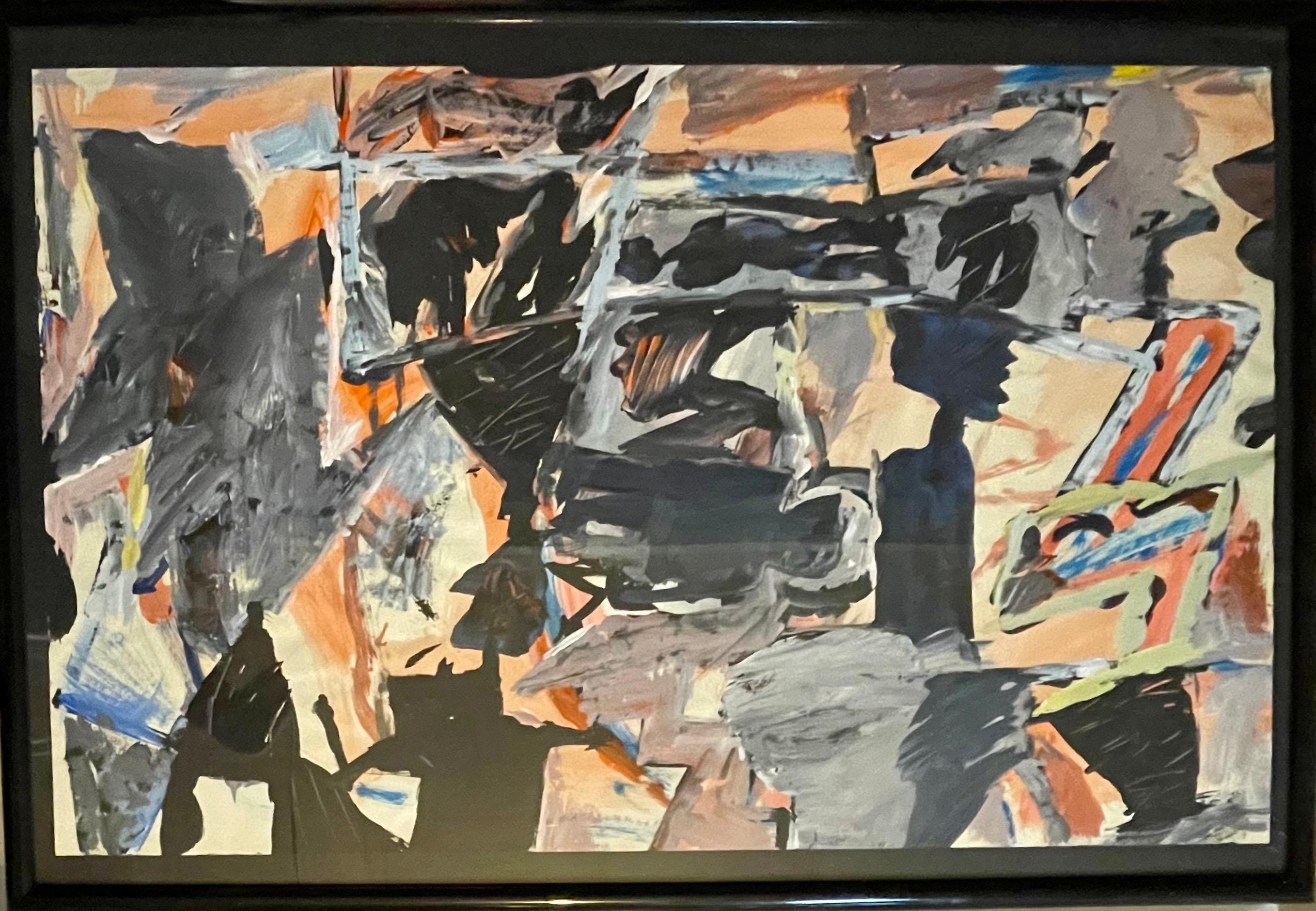
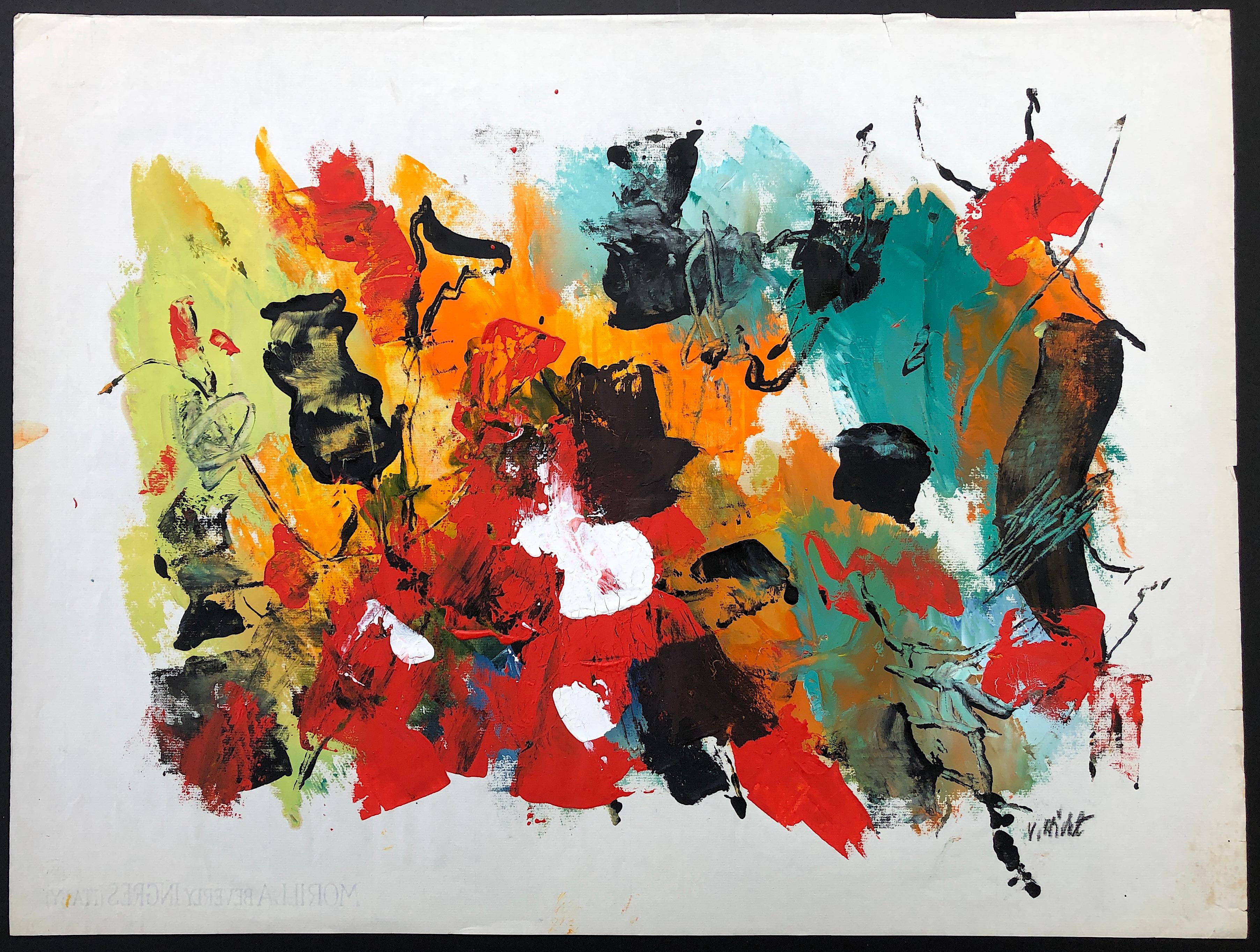
This gem of a work is a piece of Ab Ex history! This rare and poignant early work, was painted on the back of an invitation card to Natkin's historic exhibition at the famous cooperative Gallery - the Wells Street Gallery in Chicago famous for thing Natkin one of his first - if not very first - one man show. The Wells Street Gallery (1957–1959) was one of Chicago's vanguard galleries of the late 1950s. In the summer of 1957, a group of artists led by painter Robert Natkin opened a co-operative gallery at an old storefront at 1359 North Wells Street, Chicago. The gallery was tagged "an avant-garde exhibition place filled with the most advanced abstractions in town," by the Chicago Sunday Tribune. The Wells Street Gallery played a major role in granting young artists like sculptor John Chamberlain and painter Robert Natkin their first one-person exhibitions at a time when too few galleries in Chicago, or elsewhere for that matter, where interested in the work of abstract artists. The gallery closed after only two years, but made a historic contribution in advancing abstract art in Chicago. This was originally gifted by Natkin to a friend, and was not offered for sale at the time. Natkin works from the Wells Street Gallery era are particularly uncommon and desirable. Highly collectible, a real gem with historic provenance.
This work has been elegantly framed in a museum quality wood frame under UV plexiglass.
Measurements:
Framed
10.25 inches by 13.25 inches by 1.5
Artwork:
5.25 inches by 8.25 inches
Robert Natkin Biography:
ROBERT NATKIN (1930–2010)
Described as the “author of a dappled infinite,” Robert Natkin created some of the most innovative color abstractions of the late twentieth century (Carter Ratcliff, “The Dappled Infinite,” Art
Antiques 38 [December 2015]). Populated by stripes, dots, grids, and an array of free-floating forms, his lightfilled canvases are sensuous, playful, and visually complex, representing “a unique formal universe of unparalleled beauty” (Louis A. Zona, “Foreword: Robert Natkin: Crescendos of Whispers,” in Robert
Natkin: A Retrospective: 1952–1996, exhib. cat. [Youngstown, Ohio: Butler Institute of American Art, 1997]).
Born in Chicago, Natkin was the son of Russian-Jewish immigrant parents who worked in the garment industry. At age five, he began going to the movies (often six times a week), an activity that, in addition to providing him with a measure of respite from his dysfunctional family, would later influence his work as a painter. In 1945, Natkin’s family moved briefly to Oak Ridge, Tennessee, where Natkin decided to pursue a career as an artist. A natural draftsman, he initially wanted to become an illustrator, like Norman Rockwell, whose work he’d seen in the Saturday Evening Post. However, while attending the school of the Art Institute of Chicago from 1948 to 1952, Natkin was afforded the opportunity to study the museum’s world-class collection of French post-impressionist art and decided to turn his attention to painting instead. During these formative years, Natkin was inspired by the examples of Pierre Bonnard and Henri Matisse, who used decorative patterning and arbitrary color to evoke mood. Most importantly, he also discovered the work of Paul Klee, the SwissGerman artist whose whimsical, semi-abstract paintings reflected his belief that “art does not reproduce the visible but makes visible”––a credo that nurtured Natkin’s burgeoning interest in emotional content. As a student, Natkin was also a frequent visitor to the Field Museum of Natural History, where he was attracted to the stylized shapes of American Indian art and Peruvian textiles.
An article on Abstract Expressionism, published in Life magazine in 1949, was equally vital in determining Natkin’s evolution as a painter. In 1952, he lived briefly in New York, where he saw and was influenced by the bold canvases of Willem de Kooning. Following this, Natkin spent a few months in San Francisco before returning to Chicago, where he worked at the Newberry Library while painting in his spare time. He initially focused on portraits and expressionist figure pieces, but by 1954–55 he was producing his earliest abstract work and fraternizing with a group of artists that included the painter Judith Dolnick (b. 1934), who he married in 1957. During that same year, Natkin and Dolnick established the Wells Street Gallery in a dilapidated storefront in Chicago’s Old Town, where they exhibited their own work as well as that of other progressive-minded local artists, among them the sculptor John Chamberlain and the photographer Aaron Siskind, as well as painters from New York, including de Kooning, Jackson Pollock, and Mark Rothko. Although Natkin never embraced the concept of “action painting” as exemplified in the work of Pollock, he did, for a time, explore de Kooning’s agitated, gestural brushwork, as apparent in canvases such as Keep It Quiet (1957; private collection, formerly Hirschl
Adler Galleries, New York). (For Natkin’s Chicago period, see Robert Natkin in Chicago: The 1950s, exhib. cat. [Chicago: McCormick Gallery, 2015]).
In 1959, aware of the limited patronage for abstract art in Chicago, Natkin and Dolnick moved to New York, where Natkin joined the stable of artists associated with the Poindexter Gallery, known for its support of emerging painters and sculptors. On the occasion of his début exhibition at Elinor F. Poindexter’s gallery in late 1959, the critic Dore Ashton praised the “bright, experimental boldness” of Natkin’s paintings and observed that he “obviously enjoys attacking a large canvas, filling its field with many forms and many colors, making them glide and slip, before and behind, each other” (“Natkin’s Avant-Garde Paintings on View,” New York Times, January 7, 1960). Natkin’s reputation in Manhattan art circles was further enhanced when he was included in the exhibition, Americans Under 35, held at the Whitney Museum of American Art in 1960.
Immersed in the dynamism of the New York art world, where Abstract Expressionism and Color-Field painting were the dominant styles of the day, Natkin’s aesthetic approach continued to evolve. In 1961, he adopted a serial approach to painting, a practice he would adhere to throughout his career. (For an overview of the salient characteristics of Natkin’s serial work, see Robert Natkin: A Retrospective: 1952–1996). In his earliest cycle, known as the Apollo series (which Natkin worked on intermittently into the early 1970s), he used vertical stripes of varying thicknesses and textures to suggest the interplay of color and light while creating a strong architectonic quality, as apparent in works such as Beatrice (1964; National Gallery of Australia, Canberra). During the mid-1960s––in response to the color theories of Josef Albers, contemporary jazz, and his admiration for Chicago architects such as Frank Lloyd Wright and Louis Sullivan––Natkin retained the upright format of his Apollo paintings in his Straight Edge and Step canvases, imbuing them with a heightened sense of order and structure by using masking tape to create clearly defined areas of form and color.
Natkin embarked on his next thematic group, the Field Mouse series, in 1968. Based on Ezra Pound’s translation of a Chinese poem which dealt with the fleeting passage of time, the Field Mouse paintings represented a new stage in Natkin’s artistic evolution: moving away from the cool and contemplative approach of the Apollo works, he developed a more intricate style (indebted to Klee), depicting diamonds, polygons, ovals, squiggles and other shapes against textured, delicately toned backgrounds interspersed with seemingly randomly placed dots and daubs of pigment and areas of crosshatching, as in Between the Sapphire
The Sound Unfurls the Rose of Vision (1969; Harvard Art Museums,
Cambridge, Massachusetts). The inclusion of several of Natkin’s luminous canvases from the Field Mouse series in the exhibition, Timeless Paintings from the USA, held at Galerie Facchetti in Paris in 1968, was instrumental in bringing him to the attention of art aficionados in Europe.
In 1970, following a retrospective exhibition of his work at the San Francisco Museum of Art (now the San Francisco Museum of Modern Art), Natkin and his family relocated to West Redding, Connecticut. One year later, while serving as artist-in-residence at the Kalamazoo Art Center in Michigan, Natkin put aside his brushes and began to use sponges, soaked in acrylic paint and wrapped in pieces of cloth or netting, which he would apply to his support with different levels of pressure, a technique that enhanced the decorative quality of his paintings. The artist first applied this methodology to his Intimate Lighting series, which was influenced by an exhibition of cubist painting that he saw at The Metropolitan Museum of Art in New York. The year 1971 also marked a pivotal moment in Natkin’s career in that he had the first of many one-man shows at the venerable André Emmerich Gallery in New York.
In the ensuing years, Natkin continued to develop his repertory of cyclical paintings, reviving older themes, such as his Apollo pieces, while exploring new subjects, as in his Bath and Color Bath paintings, which were inspired by the light and architecture he encountered on a visit to Bath, England, in 1974. (The Bath paintings were executed in understated monochromatic tones, while the Color Bath paintings feature a range of soft-toned hues woven together to evoke a diaphanous curtain of light.) In 1977, following his retrospective exhibition at the Moore College of Art in Philadelphia a year earlier, Natkin visited the Paul Klee Foundation in Bern, Switzerland. Returning to America, he embarked on the Bern series, using rags and sponges (on both canvas and paper) to create spirited yet very intimate canvases featuring the geometric and biomorphic shapes of his earlier Field Mouse pictures, rendered now in strong, saturated primary colors, as well as black.
The Bern paintings were followed by the Hitchcock series, Natkin’s greatest and most engaging cycle in which he paid homage to the director, Alfred Hitchcock––a raconteur who, like Natkin, also used recurring themes and devices to express aspects of the human condition. As Leda Natkin Nelis has observed, her father had “long been a fan of Hitchcock’s films which, despite their entertaining surface plots, teem with darker undertones and contradictions. As the artist points out, the director succeeds, despite the playfulness of his films, to depict and romanticize man’s more somber side. Like Hitchcock, Natkin likes to interlock pleasure—and beauty––with mystery and paradox” (L.N.N. [Leda Natkin Nelis], “Bern
Hitchcock Series,” in Robert Natkin: A Retrospective: 1952–1966, n.p.).
Natkin began the Hitchcock series during the early 1980s and continued to explore the theme for the remainder of his career. (For the Hitchcock paintings, see Michael Dillon, intro., Robert Natkin: Recent Paintings from the Hitchcock Series, exhib. cat. [London: Gimpel Fils, 1988] and Peter Fuller, Robert Natkin: Recent Paintings from the Hitchcock Series, exhib. cat. [New York: Gimpel
Weitzenhoffer, 1984). Taking his cue from Hitchcock’s practice of synthesizing different story lines into a cohesive narrative, Natkin sought to imbue his Hitchcock canvases with carefully considered arrangements of shapes that, as Carter Ratcliff has observed, lead “the viewer from one point to the next and the next, until the work is fully seen . . . In the ‘Hitchcock’ paintings . . . his forms show a heretofore-unseen inclination to settle into configurations evoking rather specific urban settings. Or forms flatten into patterns suggestive of maps with strong inclinations of the proper path for the eye to follow” (Ratcliff, “The Dappled Infinite”). These qualities––as well as the vibrant chromaticism associated with the Hitchcock cycle––can be found in works such as Danae (1995), in which seemingly weightless forms merge, mingle, and intersect with one another to evoke a sensation of joyous exuberance. The Green One and Night Rumble (their whimsical titles reflecting the lingering impact of Klee’s provocative wordplay) likewise exemplify Natkin’s penchant for light, texture, pattern, and gorgeous, emotive color, as well as his ability to create improvisational works of art while retaining an underlying sense of form and structure.
In 1981, Natkin was the subject of a major monograph written by the British art critic Peter Fuller, an early champion of his work (see Peter Fuller, Robert Natkin [New York: Abbeville Press, 1981]). An inventive, energetic, and opinionated artist, Natkin also voiced his own thoughts about contemporary art, writing articles on painters ranging from Klee and Arshile Gorky to Jasper Johns and Franz Kline for journals such as Modern Painters.
The subject of numerous one-man shows in America, Europe, and Japan, as well as a participant in numerous group exhibitions devoted to late-twentieth-century painting (most recently, Expanding Boundaries: Lyrical Abstraction: Selections from the Permanent Collection, held at the Boca Raton Museum of Art in Florida in 2009), Natkin died in Danbury, Connecticut, on April 20, 2010. Examples of his work can be found in major public collections throughout the United States and abroad, including the Institute of Contemporary Art, Boston; The Metropolitan Museum of Art, New York; the Museum of Modern Art, New York; The Solomon R. Guggenheim Museum, New York; the Whitney Museum of American Art, New York; and the Centre Pompidou, Paris. In addition to his paintings, Natkin also left behind a colossal, 20 x 42 foot mural, executed in 1992 for the lobby of 1211 Avenue of the Americas in New York’s Rockefeller Center.
- Creatore:Robert Natkin (1930-2010, Americano)
- Anno di creazione:1957
- Dimensioni:Altezza: 13,34 cm (5,25 in)Larghezza: 20,96 cm (8,25 in)
- Tecnica:
- Movimento e stile:
- Periodo:
- Condizioni:
- Località della galleria:New York, NY
- Numero di riferimento:1stDibs: LU1745217380632
Robert Natkin
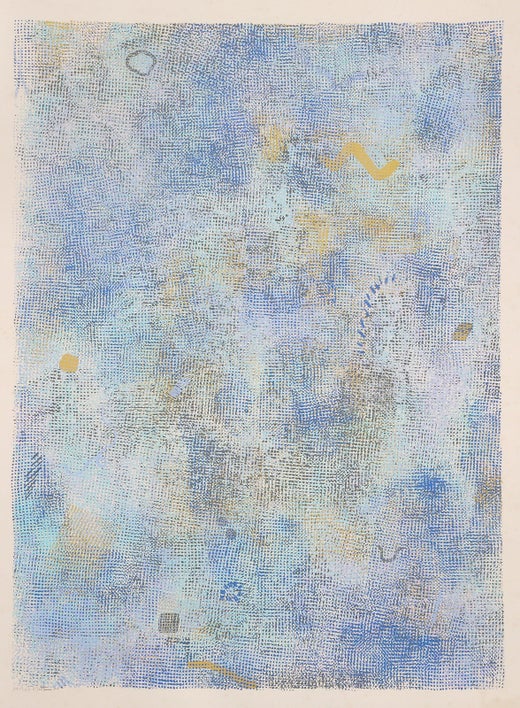
Robert Natkin è nato a Chicago il 7 novembre 1930 in una famiglia numerosa di immigrati ebrei russi. Nel 1945 la famiglia si trasferì in Tennessee, ma presto tornò a Chicago dove Natkin avrebbe frequentato l'Art Institute of Chicago (1948-1952). La collezione di dipinti post-impressionisti del museo, in particolare quelli di Pierre Bonnard e Henri Matisse e le astrazioni stravaganti di Paul Klee, influenzarono notevolmente il giovane artista. Le influenze di Natkin al di fuori del mondo dell'arte includono frequenti viaggi al Field Museum of Natural History, dove è stato esposto a tessuti stilizzati dei nativi americani e peruviani. Introdotto all'Espressionismo Astratto a New York nel 1952, Natkin fu particolarmente attratto dalle opere di Willem de Kooning, di cui iniziò a emulare i segni agitati, anche se dopo essere tornato a Chicago nel 1953 abbandonò i legami con l'action painting e iniziò a formare quello che sarebbe diventato il suo familiare motivo di astrazione a campi di colore. Nel 1957 I. Johns, ora sposato con l'artista Judith Dolnick, aprì la Wells Street Gallery che esponeva le opere di artisti di Chicago che la pensavano come lui, tra cui lo scultore John Chamberlain e il fotografo Aaron Siskind, oltre ad artisti di New York che ammiravano. A causa del poco mecenatismo, tuttavia, l'impresa ebbe vita breve e, alla ricerca di maggiori opportunità, la coppia si trasferì a New York nel 1959. Natkin continuò a sviluppare audaci e luminosi campi di colore e texture nei suoi dipinti trovando successo tra la scuderia di artisti emergenti della Poindexter Galleries. Immerso nella dinamica scena artistica di New York negli anni '60 e '70, Natkin ha continuato a evolvere il suo stile attraverso la serie Apollo, la serie Field Mouse e la serie Intimate Lighting che comprende Remembrance is the Secret of Redemption, Forgetfulness Leads to Exile. Seguirono altre serie in una carriera lunga e di successo. Natkin è morto a Danbury, nel Connecticut, il 20 aprile 2010. Robert Natkin è stato protagonista di numerose mostre personali ed è stato incluso in molte altre mostre collettive. Le sue opere fanno parte delle collezioni permanenti di decine di musei nazionali e internazionali, tra cui il Museum of Modern Art di New York, l'Art Institute di Chicago, il Los Angeles County Museum of Art, la National Gallery of Australia e il Centre Pompidou di Parigi. Inoltre, il colossale murale di Natkin di 20 x 42 piedi, realizzato nel 1992, si trova nell'atrio del Rockefeller Center di New York.
Informazioni sul venditore
5,0
Venditore Oro
Venditori Premium con valutazione 4,3+ e tempi di risposta entro 24 ore
Fondazione nel 2007
Venditore 1stDibs dal 2022
477 vendite su 1stDibs
Tempo di risposta standard: 1 ora
- SpedizioneRecupero del preventivo…Spedizione da: New York, NY
- Politica di reso
Alcune parti di questa pagina sono state tradotte automaticamente. 1stDibs non può garantire che le traduzioni siano corrette. L’inglese è la lingua predefinita del sito.
Altro da questo venditore
Mostra tuttoPittura su tela a collage III (firmata e iscritta al collega artista e curatore)
Di Robert Goodnough, 1917-2010
Robert Goodnough
Pittura su tela a collage III, 1983
Collage di tela dipinta su cartone (firmato due volte e iscritto all'artista e curatore Matthew Rose)
Firmata sulla parte anterio...
Categoria
Anni 1980, Espressionismo astratto, Dipinti astratti
Materiali
Tela, Tecnica mista, Olio
Pittura espressionista astratta su tela senza titolo - firmata a mano
Gail Winegar
Dipinto espressionista astratto senza titolo, 1998 ca.
Pittura a olio su tela
Firmato a mano dall'artista sul retro
Si tratta di un'opera unica
Telaio incluso
in una cor...
Categoria
Anni 1990, Espressionismo astratto, Dipinti astratti
Materiali
Tela, Olio
Lightness (dipinto espressionista astratto), firmato a mano e timbrato dalla Proprietà
Di Ben Wilson
Ben Wilson
Leggerezza, 1980 circa
Olio su tavola di masonite
21 × 25 × 3/10 pollici
Timbrata dalla proprietà dell'artista, firmata a mano dall'artista sul fronte e timbrata dalla pro...
Categoria
Anni 1980, Espressionismo astratto, Dipinti astratti
Materiali
Olio, Tavola
Senza titolo Pittura espressionista astratta su carta arte moderna di metà secolo
Di Rolph Scarlett
Rolph Scarlett
Pittura espressionista astratta senza titolo, 1960 ca.
Guazzo, inchiostro, acquerello su carta. Firmato a mano, con etichetta originale della galleria Jonas Aarons
23 ...
Categoria
Metà XX secolo, Espressionismo astratto, Disegni e acquarelli astratti
Materiali
Acquarello, Gouache
Anthony Padovano Disegno espressionista astratto Firmato, rinomato scultore Incorniciato
Anthony Padovano
Disegno espressionista astratto senza titolo, 1971
Disegno con lavaggio a inchiostro su carta
Firmato e datato con lavaggio a inchiostro
Provenienza: Graham Gallery,...
Categoria
Anni 1970, Espressionismo astratto, Disegni e acquarelli astratti
Materiali
Inchiostro di china, Inchiostro
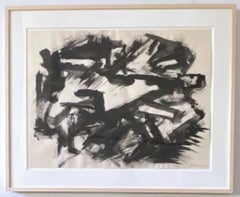
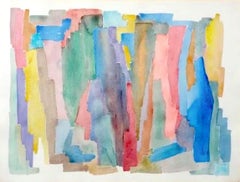
Acquerello astratto (de-accesso dal Museum of Modern Art (MOMA), con etichetta)
Robert The Duran
Senza titolo #1 (con etichetta del Museum of Modern Art (MOMA)), 1974
Acquerello su carta
Include le etichette della galleria in affitto del Museum of Modern Art e d...
Categoria
Anni 1970, Astratto, Disegni e acquarelli astratti
Materiali
Acquarello
Ti potrebbe interessare anche
Senza titolo-059 tecnica mista su carta di John von Wichts
Di John von Wicht
Questa opera d'arte astratta fa parte di un gruppo di oltre 100 pezzi selezionati personalmente dall'artista e regalati a un caro amico nel 1969. Si prega di notare che questo quadro...
Categoria
Anni 1960, Espressionismo astratto, Disegni e acquarelli astratti
Materiali
Carta, Tecnica mista
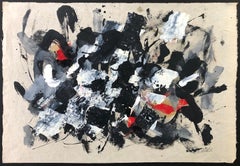
Grande dipinto esterno di Harry Bertschmann, espressionista astratto svizzero-americano
Di Harry Bertschmann
Harry Bertschmann (svizzero-americano, nato nel 1931).
Pittura acrilica su carta.
Firma dell'artista in basso a destra.
Provenienza: Joy Moos Gallery (questo è stato esposto alla Out...
Categoria
XX secolo, Espressionismo astratto, Dipinti astratti
Materiali
Carta, Acrilico
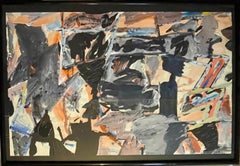
Senza titolo-052 tecnica mista su carta di John von Wichts
Di John von Wicht
Questa opera d'arte astratta fa parte di un gruppo di oltre 100 pezzi selezionati personalmente dall'artista e regalati a un caro amico nel 1969. Si prega di notare che questo quadro...
Categoria
Anni 1960, Espressionismo astratto, Disegni e acquarelli astratti
Materiali
Carta, Tecnica mista
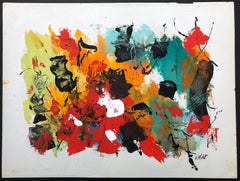
Quadro espressionista astratto senza titolo Stonington ME
Di Desmond McLean
Desmond McLean (1929-2015).
Senza titolo, 1960 circa
Tecnica mista su carta.
Foglio che misura 11 x 14 pollici. Nastro adesivo agli angoli della tavola di supporto che misura 17...
Categoria
Metà XX secolo, Espressionismo astratto, Tecnica mista
Materiali
Carta, Gouache, Carboncino
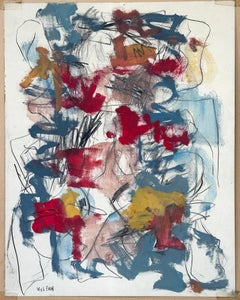
Pittura ad olio espressionista astratta Moderna Monoprint WPA Artista ebreo
Di Louis Wolchonok
Louis Wolchonok era un pittore realista sociale e membro della Woodstock Art Association. Le sue opere sono state esposte al Whitney Museum of American Art, alla National Academy of ...
Categoria
XX secolo, Moderno, Dipinti astratti
Materiali
Carta, Olio
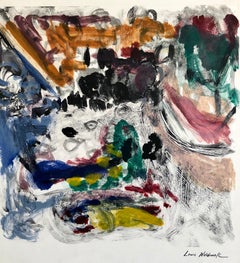
F.A.I.P. collage astratto ad olio di Bill Saylor
F.A.I.P. (2011)
Olio su tela con collage
Titolato, firmato e datato "F.A.I.P. / Bill Saylor / 2011" verso la tela.
Ha esposto nel 2017 in "Animal Farm", una mostra collettiva presso...
Categoria
Anni 2010, Astratto, Dipinti astratti
Materiali
Tela, Tecnica mista, Olio