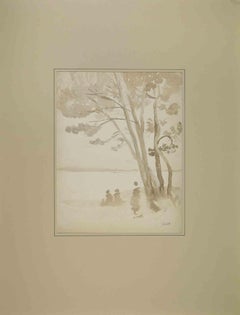
Articoli simili a Love Scene Under a Tree / - At the breast of Mother Nature -
Vuoi altre immagini o video?
Richiedi altre immagini o video al venditore
1 di 6
Emil OrlikLove Scene Under a Tree / - At the breast of Mother Nature -1912
1912
2800 €IVA inclusa
Informazioni sull’articolo
Emil Orlik (1870 Prague - 1932 Berlin), Love Scene Under a Tree, 1912. Mixed media on paper, 14.5 cm x 25 cm (sheet size), 35.5 cm x 46 cm (frame), signed “ORLIK.” lower right and dated “[19]12.” Framed with passe-partout under glass.
- Image in very good condition, frame with minor scratches
- At the breast of Mother Nature -
A young woman with a pageboy haircut leans her back against a tree, which is thus associated with her, a connection that is further emphasized by the color of her dress, which matches the bark of the tree. At the same time, however, the tree also serves as a frame that highlights her, particularly accentuating her pink bare skin. She has half removed her transparent top, exposing her large breasts. They are kissed by the man lying between her bare legs, who is tenderly embraced by the smiling woman, while the branches, which also stand for her, enclose his entire body.
In this erotic subject, which is extremely rare in Emil Orlik's oeuvre, the artist lends the contemporary love scene an allegorical depth that is a homage to the feminine. The young woman becomes Mother Nature, approaching the man who has entered her sacred grove. Through his masterful use of brushstrokes, Emil Orlik succeeds in lending the scene an intense sense of vitality.
About the artist
Emil Orlik grew up in Prague and studied at Heinrich Knirr's painting school in Munich from 1889 to 1891 and then at the Munich Art Academy from 1891 to 1893. From 1894 to 1896, Orlik returned to Prague, where he did a year of military service and became friends with Reiner Maria Rilke, who inspired him to design books. In 1896 Orlik returned to Munich, where he developed an artistic friendship with Bernhard Pankok. The following year, Orlik opened a studio in Prague, which he ran until 1904. In 1898 he undertook a nearly year-long study trip to England, Scotland, Holland, Belgium and Paris. In 1904, Orlik became a teacher at the Vienna Museum of Decorative Arts. He had been a member of the Vienna Secession since 1899 and published in the Jugendstil magazine 'Ver Sacrum'. In 1905 he was appointed professor at the Berlin Museum of Decorative Arts, where he succeeded Otto Eckmann as head of the graphics class until Eckmann's death in 1932. George Grosz, Hanna Höch and Karl Hubbuch were among his students.
In 1900 Orlik made a year-long trip to Japan, which had a lasting influence on his art. In 1904 he published the portfolio "From Japan" and from 1905 to 1910 he illustrated the six-volume edition of the works of the English diplomat Lafcadio Hearn, who lived in Japan. In 1912 he made his second trip to Japan, which also took him to Egypt, Sudan, Ceylon, China, and Korea. His artistic impressions were reflected in the portfolios "Journey to Egypt" (1921) and "Journey to Japan" (1921). The late 1920s were also marked by numerous trips to America, France, Spain, Italy and Yugoslavia.
In addition to his artistic work as an interior designer, which included designs for costumes and stage sets for Max Reinhardt's Deutsches Theater, Orlik was primarily a graphic artist and sought-after portraitist. He painted portraits of Gerhard Hauptmann, Henrik Ibsen, Bernhard Pankok, Gustav Mahler, Max Klinger, Rainer Maria Rilke, Ernst Barlach, Lovis Corinth, Otto Dix, Käthe Kollwitz, Max Slevogt, Franz Werfel, Rudolf Steiner, Thomas Mann, Albert Einstein, Franz Marc and Alfred Döblin, among others. His virtuosity as a portraitist led Orlik to be hired as a portraitist for the Brest-Litovsk Peace Conference, which resulted in the portfolio "Caricatures from Brest-Litovsk" (1918).
GERMAN VERSION
Emil Orlik (1870 Prag - 1932 Berlin), Liebesszene unter einem Baum, 1912. Mischtechnik auf Papier, 14,5 cm x 25 cm (Blattgröße), 35,5 cm x 46 cm (Rahmen), unten rechts mit „ORLIK.“ signiert und auf „[19]12“ datiert. Mit Passepartout unter Glas gerahmt.
- Bild in sehr gutem Zustand, Rahmen mit leichteren Kratzern
- Am Busen von Mutter Natur -
Eine junge Frau mit Pagenschnitt lehnt mit dem Rücken an einem Baum, der auf diese Weise ihr zugeordnet ist, was zusätzlich durch die Farbe des Kleides unterstrichen wird, die der Borke des Baumes entspricht. Zugleich ist der Baum aber auch ein sie hervorhebender Rahmen, der ihre rosafarbene nackte Haut besonders zur Geltung bringt. Sie hat ihr transparentes Oberteil zur Hälfte abgestreift und ihre großen Brüste freigelegt. Sie werden von dem zwischen ihren nackten Beinen liegenden Mann geküsst, wobei der Mann zärtlich von der lächelnden Frau umarmt wird, während die ebenfalls für sie einstehenden Zweige seinen ganzen Körper umschließen.
In diesem für das Oeuvre Emil Orliks äußerst raren erotischen Sujet verleiht der Künstler der zeitgenössischen Liebesszene eine allegorische Tiefe, die eine Huldigung des Weiblichen ist. Die junge Frau wird zur Mutter Natur, die den Mann nähert, der sich dazu in ihren heiligen Hain begeben hat. Durch die virtuos gesetzten Strichlagen gelingt es Emil Orlik, der Szenerie eine intensive Lebendigkeitswirkung zu verleihen.
zum Künstler
In Prag aufgewachsen studierte Emil Orlik von 1889 bis 1891 in München an der Malschule von Heinrich Knirr und anschließend, von 1891 bis 1893, an der Münchner Kunstakademie. Von 1894 bis 1896 hielt sich Orlik wieder in Prag auf, leistete dort den einjährigen Militärdienst ab und freundete sich mit Reiner Maria Rilke an, der ihn zur Buchgestaltung inspirierte. 1896 ging Orlik abermals nach München, wo sich eine künstlerische Freundschaft mit Bernhard Pankok entwickelte. Im Folgejahr eröffnete Orlik ein Atelier in Prag, das er bis 1904 führte. 1898 unternahm er eine nahezu einjährige Studienreise nach England, Schottland, Holland, Belgien und Paris. 1904 wurde Orlik Lehrer am Wiener Kunstgewerbemuseum. Er war bereits seit 1899 Mitglied der Wiener Secession und veröffentlichte in der Jugendstilzeitschrift ‚Ver Sacrum‘. 1905 erfolgte der Ruf zum Professor an das Berliner Kunstgewerbemuseum, wo er als Nachfolger Otto Eckmanns bis zu seinem Todesjahr, 1932, die Graphiklasse leitete. Dort gehörten George Grosz, Hanna Höch und Karl Hubbuch zu seinen Schülern.
Im Jahre 1900 unternahm Orlik eine seine Kunst nachhaltig prägende einjährige Japanreise. Anschließend hielt er Vorträge über Japan, gab 1904 das Mappenwerk ‚Aus Japan‘ heraus und illustrierte von 1905 bis 1910 die sechsbändige Werkausgabe des in Japan ansässigen englischen Diplomaten Lafcadio Hearn. 1912 erfolgte die zweite Japanreise, die über Ägypten, Sudan, Ceylon, China und Korea führte. Die künstlerischen Eindrücke schlugen sich in den Mappenwerke ‚Reise nach Ägypten‘ (1921) und ‚Reise nach Japan‘ (1921) nieder. Auch die späten 20er Jahre waren von zahlreichen Reisen nach Amerika, Frankreich, Spanien, Italien und Jugoslawien geprägt.
Neben seiner künstlerischen Tätigkeit als Raumgestalter, zu denen auch Entwürfe für Kostüme und Bühnenbilder für das Deutsche Theater von Max Reinhardt gehören, war Orlik vor allem Grafiker und ein gefragter Porträtist. Er porträtierte unter anderen Gerhard Hauptmann, Henrik Ibsen, Bernhard Pankok, Gustav Mahler, Max Klinger, Rainer Maria Rilke, Ernst Barlach, Lovis Corinth, Otto Dix, Käthe Kollwitz, Max Slevogt, Franz Werfel, Rudolf Steiner, Thomas Mann, Albert Einstein, Franz Marc und Alfred Döblin. Seine Virtuosität als Porträtkünstler führte dazu, dass Orlik als Porträtist für die Friedenskonferenz in Brest-Litowsk engagiert wurde, woraus das Mappenwerk ‚Karikaturen aus Brest-Litowsk‘ (1918) hervorging.
- Creatore:Emil Orlik (1870 - 1932, Ceca)
- Anno di creazione:1912
- Dimensioni:Altezza: 14,5 cm (5,71 in)Larghezza: 25 cm (9,85 in)Profondità: 1 cm (0,4 in)
- Tecnica:
- Movimento e stile:
- Periodo:
- Condizioni:
- Località della galleria:Berlin, DE
- Numero di riferimento:1stDibs: LU2438217399452
Informazioni sul venditore
5,0
Venditore professionale selezionato
Ogni venditore supera rigorosi standard di autenticità e affidabilità
Fondazione nel 2014
Venditore 1stDibs dal 2023
23 vendite su 1stDibs
- SpedizioneRecupero del preventivo…Spedizione da: Berlin, Germania
- Politica di reso
Alcune parti di questa pagina sono state tradotte automaticamente. 1stDibs non può garantire che le traduzioni siano corrette. L’inglese è la lingua predefinita del sito.
Altro da questo venditore
Mostra tuttoBosco / - Il dramma interiore del paesaggio
Eduard Peithner von Lichtenfels (1833 Vienna - 1913 Berlino), Bosco, 1884. Acquerello e penna e inchiostro su carta da disegno, 30,4 cm x 22,5 cm, firmato, datato e iscritto dall'art...
Categoria
Anni 1880, Disegni e acquarelli (paesaggio)
Materiali
Carta
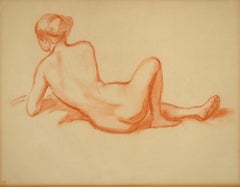
Nudo femminile di spalle, intorno al 1900 / - Il contorno dell
Art Nouveau
Di Ludwig von Hofmann
Ludwig von Hofmann (1861 Darmstadt - 1945 Pillnitz), Nudo femminile di spalle, 1900 circa. Disegno a gesso rosso su carta da disegno filigranata, 36 cm x 44 cm (dimensioni del foglio...
Categoria
Inizio Novecento, Art Nouveau, Disegni e acquarelli (nudo)
Materiali
Carta
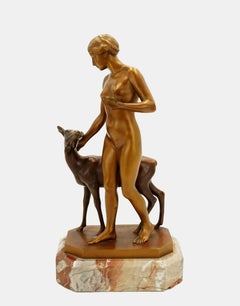
Idillio nella foresta / - Anima gemella -
Di Rudolf Kaesbach
Rudolf Kaesbach (1873 Gladbach - 1955 Berlino), Idillio nella foresta, 1915 circa. Bronzo, patina oro e marrone dorato, con zoccolo in fusione, montato su una base di marmo (alta 5 c...
Categoria
Anni 1910, Jugendstil, Sculture (nudo)
Materiali
Bronzo
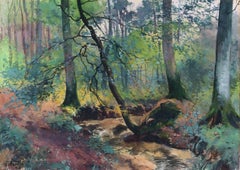
Paesaggio forestale estivo, 1915 / - La passeggiata nel bosco
Stanislas Warnie (1879-1958), Paesaggio forestale estivo, 1915. Acquerello, 31,5 cm x 45 cm (passepartout), 50,5 cm x 63,5 cm (cornice), firmato "S. Warnie" in basso a sinistra e dat...
Categoria
Anni 1910, Art Nouveau, Disegni e acquarelli (paesaggio)
Materiali
Acquarello
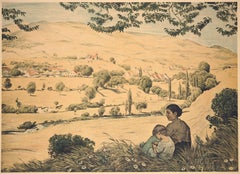
Paesaggio estivo della Germania meridionale / - Il profilo del paesaggio - Il profilo del paesaggio.
Hans Thoma (1839 Bernau - 1924 Karlsruhe), Paesaggio estivo della Germania meridionale, 1897 circa. Algrafo su carta a trama forte, pubblicato da Breitkopf und Härtel a Lipsia come "...
Categoria
Anni 1890, Realismo, Stampe figurative
Materiali
Carta
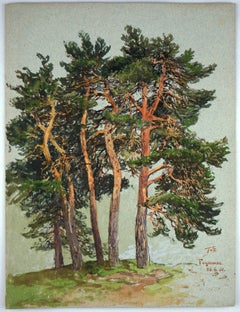
Pineta norvegese - Il bagliore interiore degli alberi
Themistokles von Eckenbrecher (1842 Atene - 1921 Goslar), pineta norvegese, 1901. Acquerello su carta blu-verde, 30 x 22 cm. Firmato, datato e iscritto di suo pugno "TvE. Fagermes [c...
Categoria
Inizio Novecento, Naturalismo, Disegni e acquarelli (paesaggio)
Materiali
Acquarello
Ti potrebbe interessare anche
Sotto l
albero - Disegno di Gabriele Galantara - Anni 1910
Di Gabriele Galantara
Disegno a inchiostro di china realizzato da Gabriele Galantara nel 1910.
Non firmato.
Ottime condizioni.
Categoria
Anni 1910, Moderno, Disegni e acquarelli figurativi
Materiali
Carta, Inchiostro
Madre con bambino sotto un albero
Di Guillaume Dulac
Madre con bambino sotto un albero", matita su carta d'arte, dell'artista francese Guillaume Dulac (1920 circa). Artista noto per i suoi squisiti disegni, molti dei quali sono schizzi...
Categoria
Anni 1920, Disegni e acquarelli (ritratto)
Materiali
Carta, Matita
572 € Prezzo promozionale
30% in meno
"Nel parco" litografia originale
Di Emil Orlik
Medium: litografia originale. Questa litografia di Emil Orlik è nota anche come "On the Victoria Embankment, London". Questa impressione su carta intelata è stata stampata nel 1900 e...
Categoria
Inizio Novecento, Stampe e riproduzioni
Materiali
Litografia
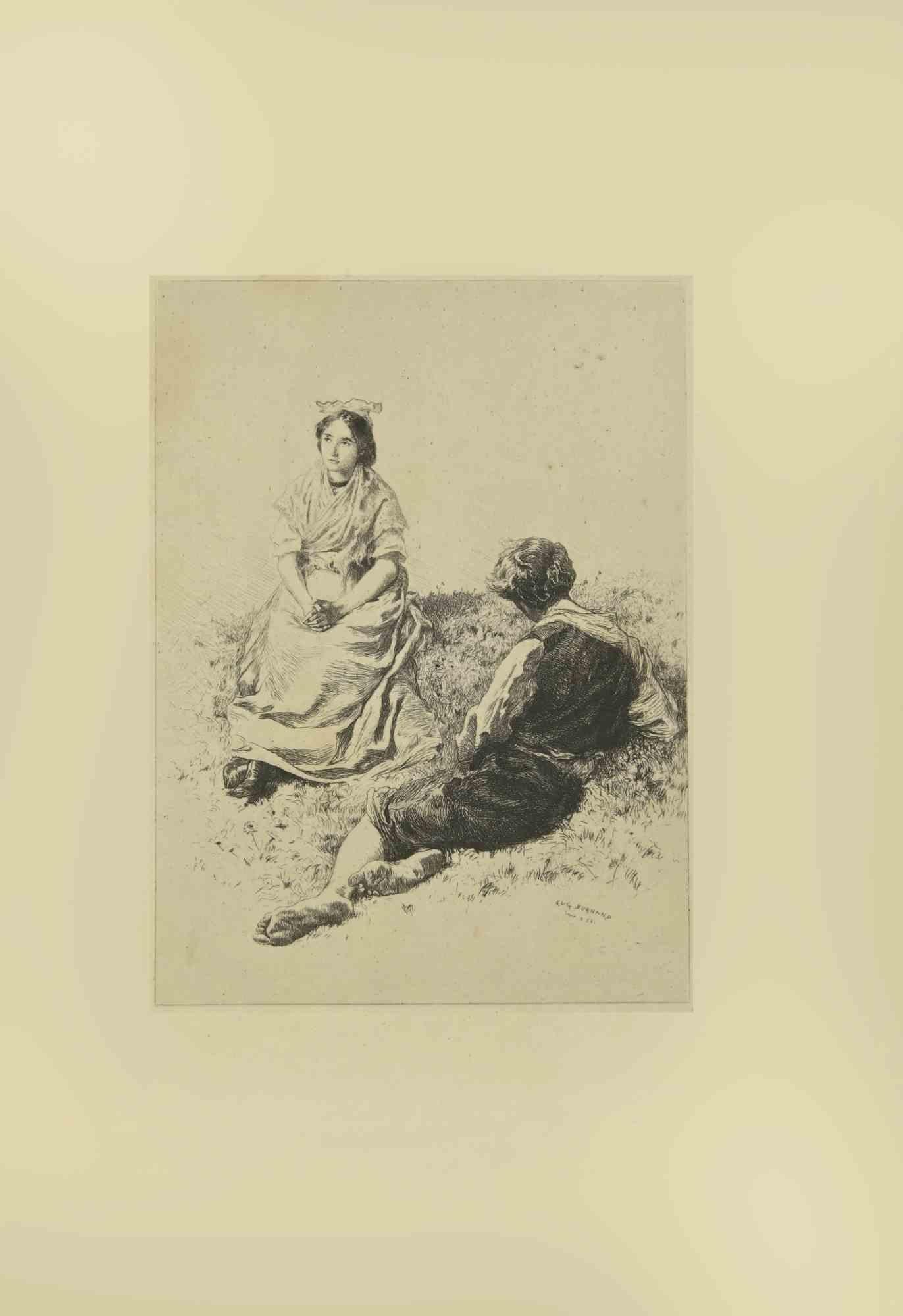
Amanti in un prato - Acquaforte di Eugène Burnand - Fine del XIX secolo
Gli amanti nel prato è un'incisione realizzata da Eugène Burnand (1850-1921) alla fine del XIX secolo.
Firmato sul piatto.
Buone condizioni con foxing.
L'opera d'arte è realizzat...
Categoria
Fine XIX secolo, Moderno, Stampe figurative
Materiali
Incisione, Acquaforte
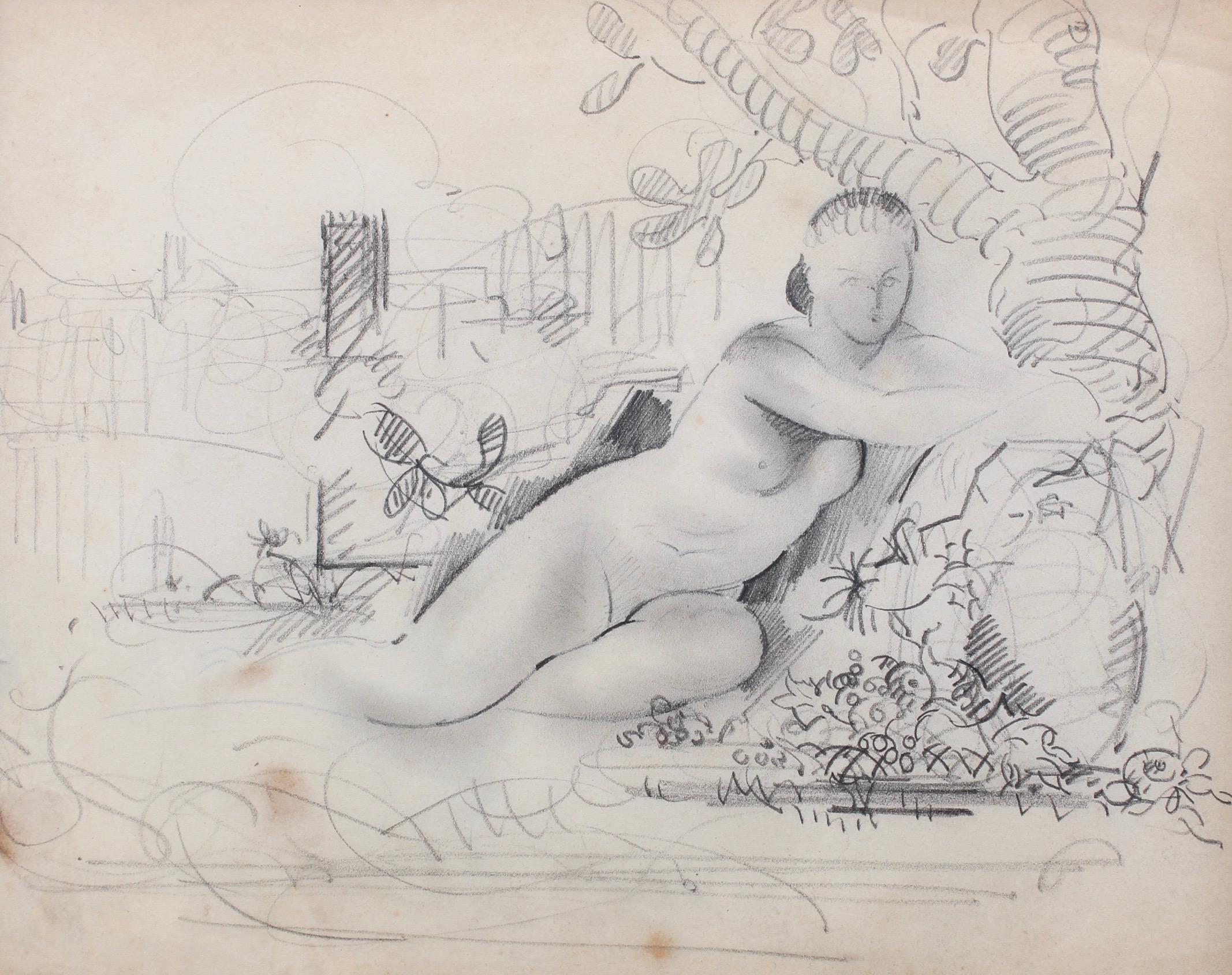
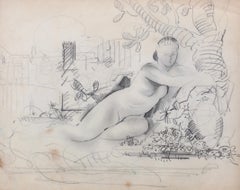
Nudo e albero in posa
Di Guillaume Dulac
Nudo e albero in posa, matita su carta d'arte, dell'artista francese Guillaume Dulac (1920 circa). Artista noto per i suoi squisiti disegni - molti sono schizzi per i suoi dipinti a ...
Categoria
Anni 1920, Disegni e acquarelli (nudo)
Materiali
Carta, Matita
373 € Prezzo promozionale
20% in meno
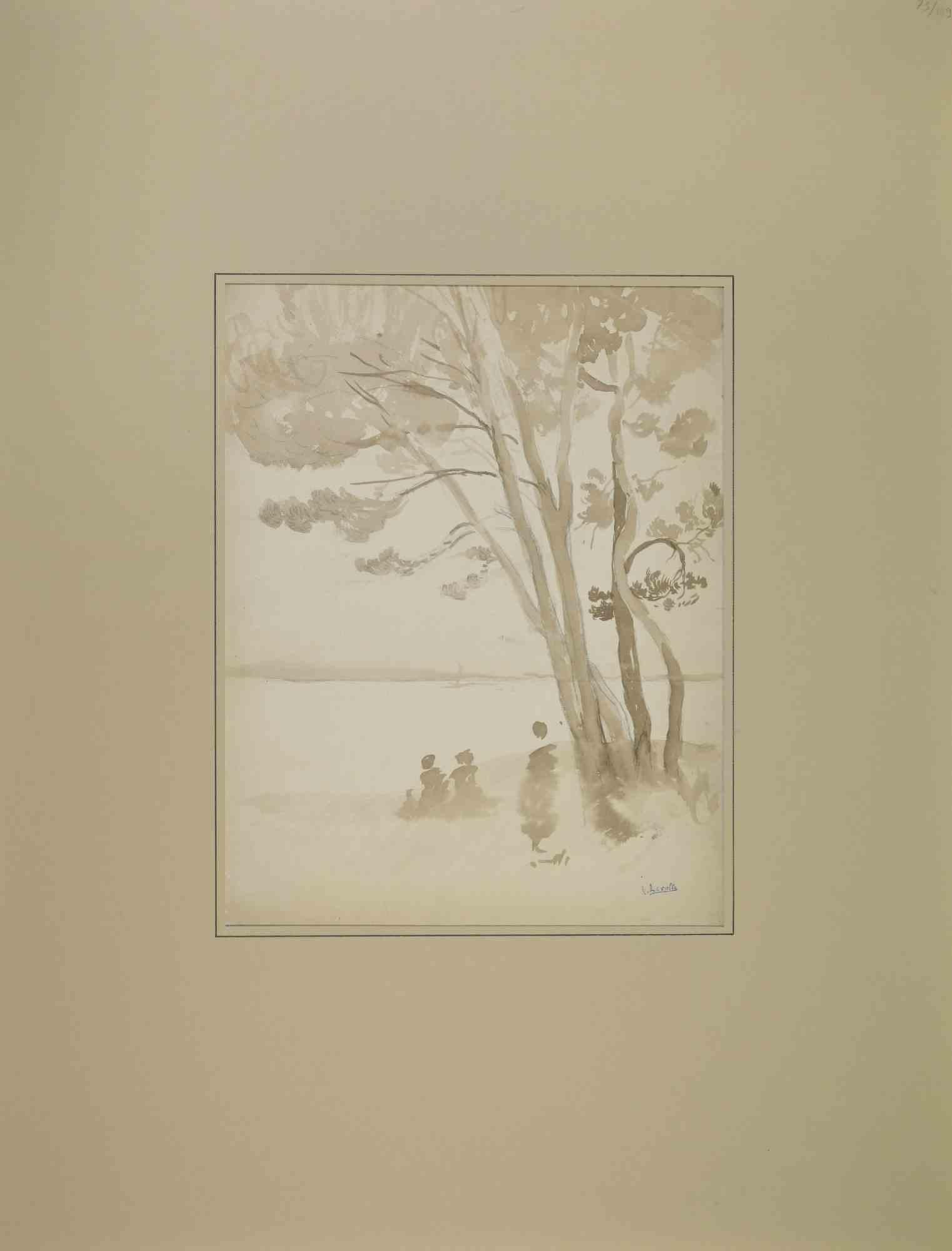
L
albero - Disegno di Henry Lerolle - Inizio del XX secolo
Di Henry Lerolle
L'albero è un disegno realizzato da Henry Lerolle all'inizio del XX secolo.
Acquerello.
Buone condizioni.
Firmato a mano.
Categoria
Inizio XX secolo, Moderno, Disegni e acquarelli figurativi
Materiali
Acquarello